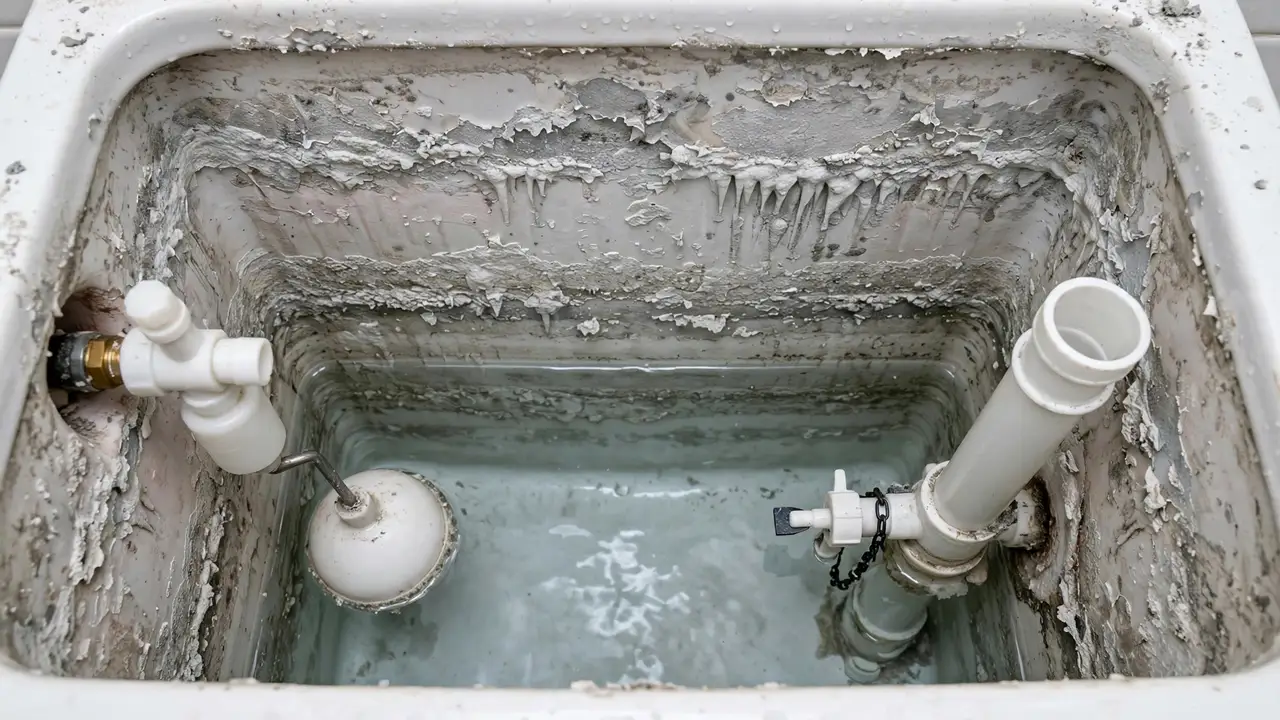
Lift the cistern lid on a hard-water home and the inside tells the story. White crust creeps up the walls, the flush feels weaker than it used to, and the parts doing the work sit in water that never really leaves.
That is why putting vinegar in a toilet tank has become such a shared habit. The hack going around promises an emptied tank, gallons of vinegar and an overnight miracle. Australian plumbers do use vinegar in cisterns, but measured, brief and aimed at the scale itself — and that difference is the whole story.
Why people pour vinegar in the tank
Every refill brings dissolved minerals into the cistern, and repeated wetting and evaporation leave them behind. Perth First Plumbing describes the result plainly. White, grey or chalky crust is mineral scale, left by the calcium and magnesium in the water, and thick deposits can interfere with parts that need to move or seal properly.
House Digest, which published the version of this hack now circulating, starts from the same problem. Mineral buildup inside the tank can weaken flushing and water flow, and white vinegar’s acetic acid breaks the buildup down without harsher products or hard scrubbing.
The signs a cistern is due for attention are practical ones. Look for a visible waterline crust, slimy film or coloured marks, a stale smell that survives a clean bowl, or a flush that has grown weaker, noisier or slower. Light deposits removed early are far easier than hardened buildup tackled late.
The hack going around, and why it doesn’t translate
House Digest’s method, published at the start of November, runs like this. Turn off the water supply, flush to empty the tank, then fill the tank with distilled white vinegar — a bit over one and a half gallons, around 5.7 litres — so every deposit sits submerged. Leave it a minimum of 30 minutes, and eight to twelve hours for a heavy first clean, then repeat every six months.
That method was written for a large American tank, and the numbers are the giveaway. No Australian plumber fetched for this guide fills a cistern with neat vinegar. The two Australian plumbing businesses whose cistern guides were read in full work in cups and minutes instead — a measured dose left a few hours, a soak of half an hour to an hour, a paste applied to the crust itself.
So the honest answer to the hack is not that vinegar is wrong for a cistern. It is that the Australian version of the job looks different, and the safety question has to be answered before any method is worth following.
Is it safe for the parts inside?
This is where the fetched sources need care, because they answer two different questions.
On brief exposure, they agree. EngineerFix, which examined the question directly, calls vinegar safe for brief, controlled cleaning treatments, and notes modern components are often made from synthetic materials designed to resist short-term contact with mild acids. Neighbourhood Plumbing, a Melbourne business, answers its own readers the same way — one to two cups of white vinegar left a few hours breaks down limescale and mineral deposits without damaging the internal components.
On prolonged exposure, the same sources draw the line. EngineerFix puts it precisely. The risk of component degradation rises significantly with prolonged, continuous exposure, such as leaving a high concentration of vinegar sitting in the tank for days or weeks. Its own guide still allows a long soak for severe buildup, up to twelve hours — the warning is aimed at vinegar that lives in the cistern, not at one supervised clean.
Both Australian plumbers aim their stronger warning at a different product entirely. Perth First Plumbing advises against leaving a strong chemical tablet in the cistern indefinitely, and says bleach-based tablets are not a good routine solution because prolonged chemical exposure can shorten the life of rubber seals and flappers. EngineerFix makes the same comparison from the other side, calling chlorine-based tablets the greater risk and a supervised vinegar clean the gentler alternative.
Read together, the pattern is consistent. Vinegar used briefly and flushed away is the gentle option these sources describe. Anything left soaking in a cistern for days, weeks or indefinitely is where seals and fittings get hurt.
The Australian way to do it
Before you start
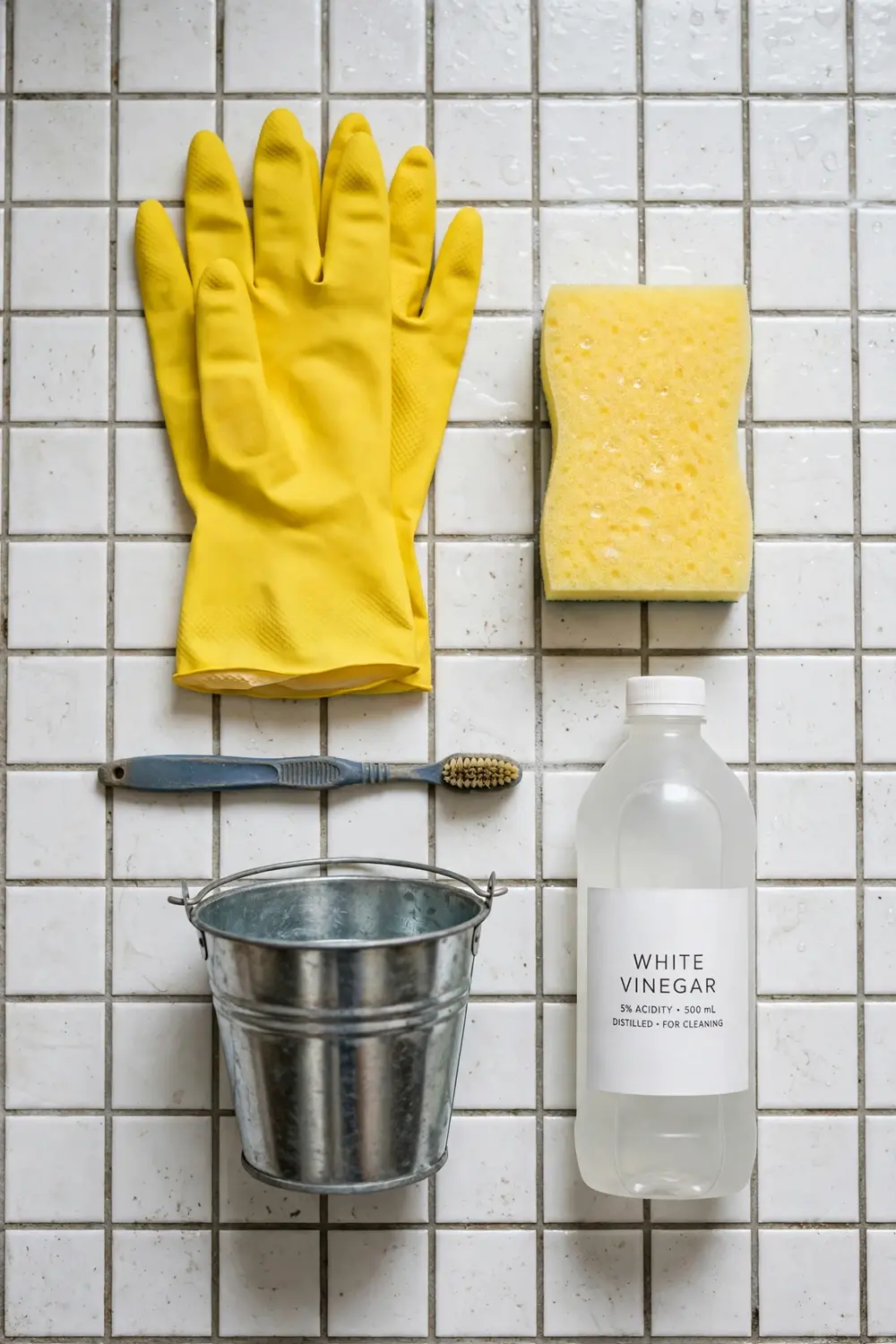
Perth First Plumbing’s supplies list for this job is short. You will need:
- Rubber gloves
- A soft sponge or microfibre cloth
- An old soft-bristled toothbrush
- A small bucket
- White vinegar and bicarbonate of soda
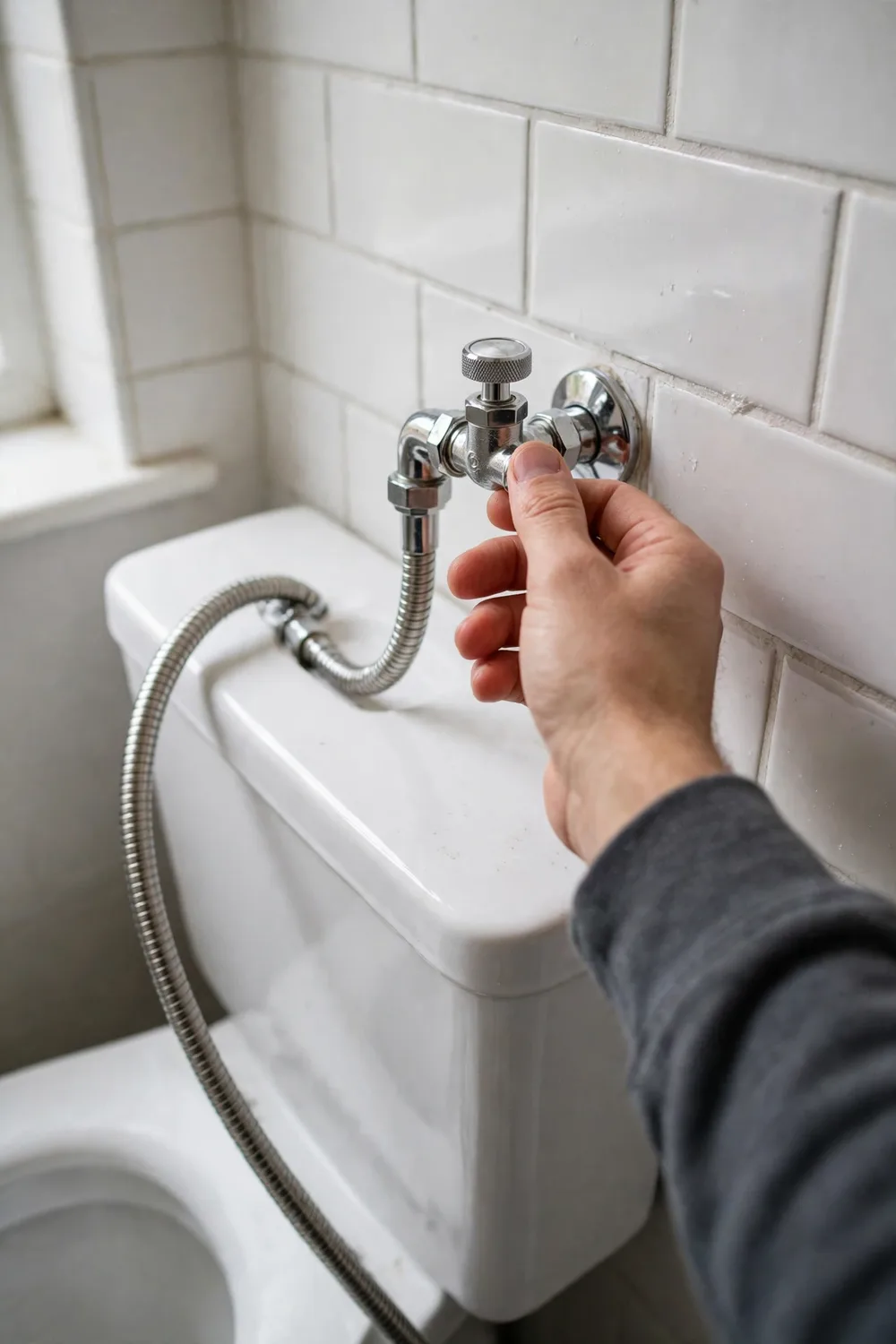
Turn off the isolation valve behind or beside the toilet, gently, then flush to empty the cistern and sponge up what remains at the bottom. One rule from Perth’s guide governs the whole job — never force a seized valve. If it will not move normally, stop there rather than risk a damaged valve or a leaking supply line.
Lift an exposed cistern lid straight up with both hands and set it on a towel. Ceramic lids are heavy, easy to chip and not always simple to replace.
The maintenance dose
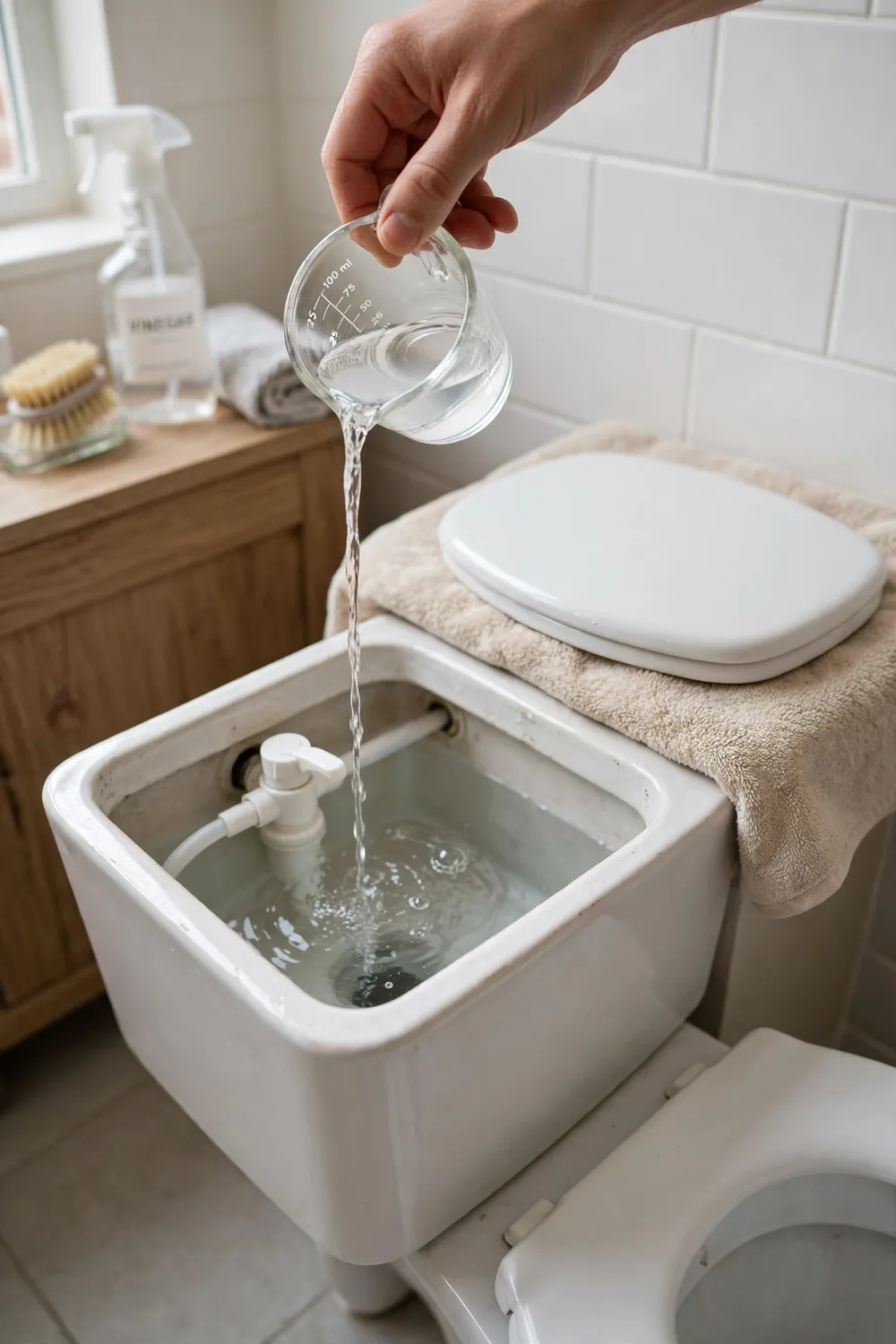
Neighbourhood Plumbing’s prevention method is the smallest version of the hack, and the one closest to a habit worth keeping.
- Amount: 1 to 2 cups of white vinegar, poured into the cistern
- Contact time: a few hours
- Finish: flush it through
- Rhythm: every few months
The point of the dose is timing. The acidity works on deposits before they harden, so the cistern never reaches the crusted state that tempts people toward the gallon version.
The descale soak
When scale is already established, the same business describes a descale rather than a dose. With the water off and the cistern empty, pour in white vinegar enough to cover the mineral deposits, and let it sit at least 30 minutes — an hour for tougher buildup. Scrub the surfaces with a brush to loosen what has softened, turn the water back on, and flush a few times to rinse the solution out completely.
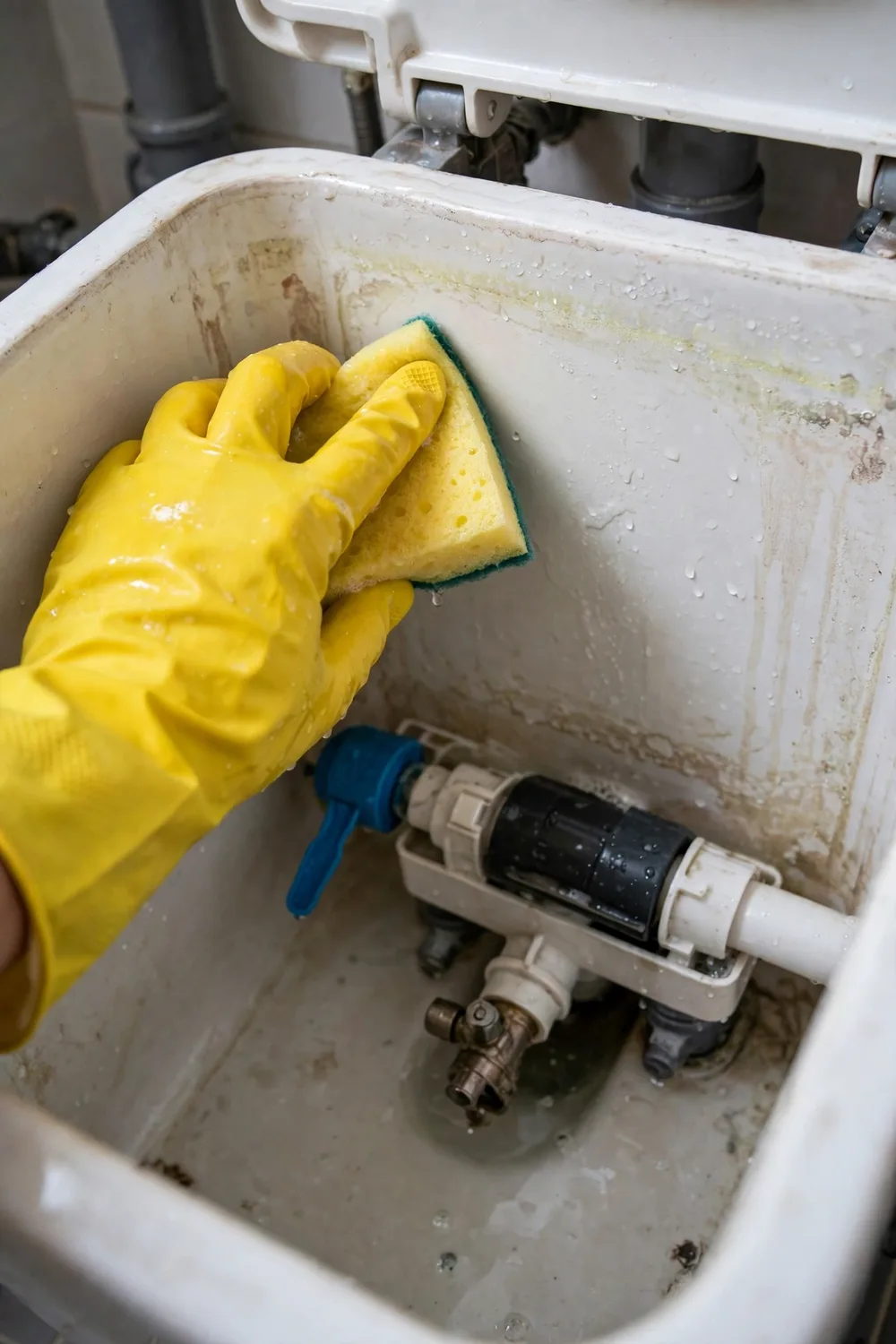
Perth’s guide adds the wall technique around any soak. Wipe the walls from the waterline down with a damp sponge or cloth, and work around the mechanism rather than scrubbing at moving parts, cables, seals or valve openings.
Stubborn crust gets a paste
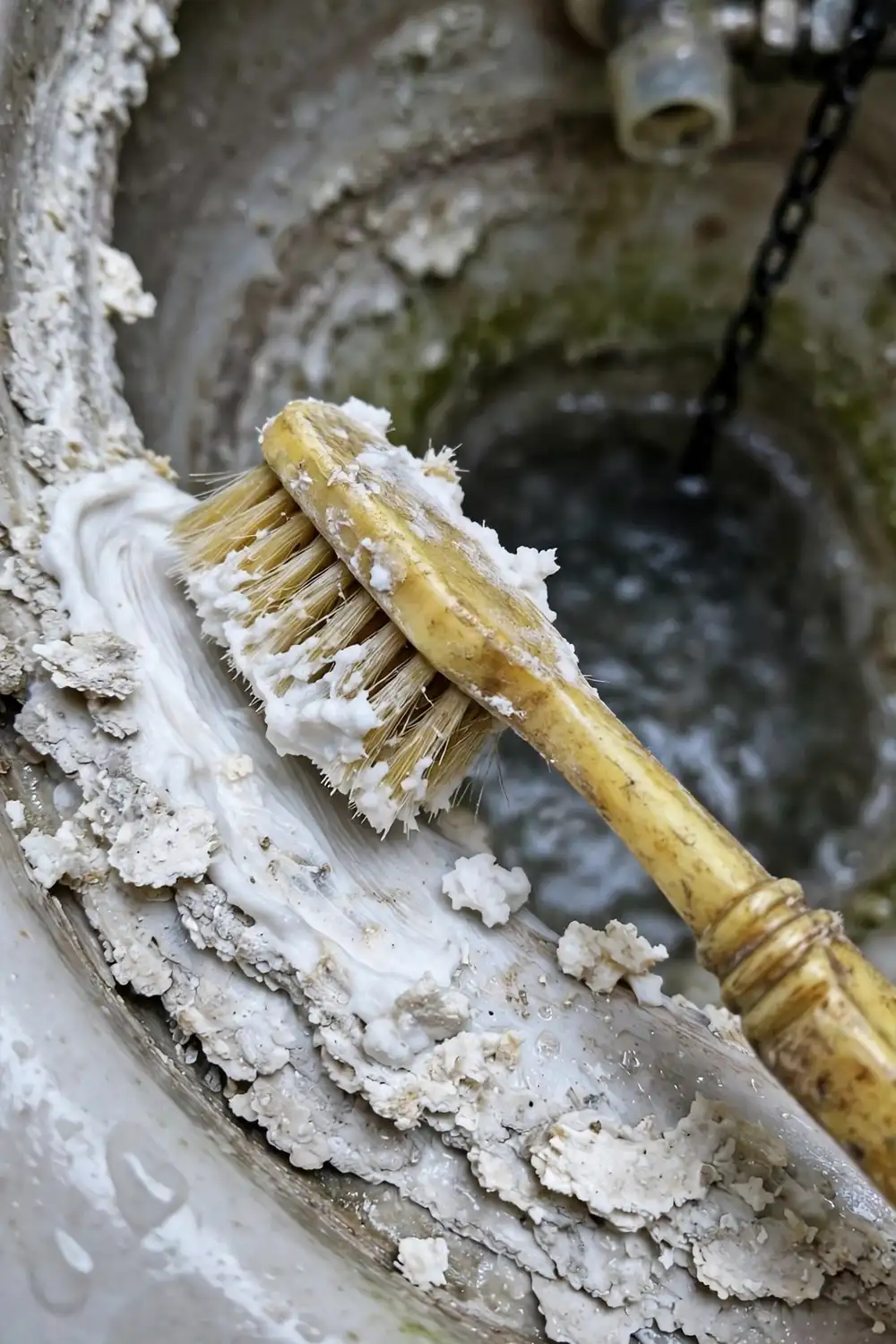
For scale that survives wiping, Perth First Plumbing changes the tool rather than the strength. Make a mild paste with white vinegar and bicarbonate of soda and apply it to the affected surface. Leave it 15 to 30 minutes, loosen the deposit gently with the soft toothbrush or sponge, and rinse.
The same approach handles the coloured staining a cistern collects. Pink film and mould-type staining inside the cistern get diluted white vinegar and a soft brush around corners and the flush-valve area. Mould growing on bathroom surfaces beyond the cistern is a different job, covered in our guide to removing mould from the bathroom.
Concealed cisterns stay cautious
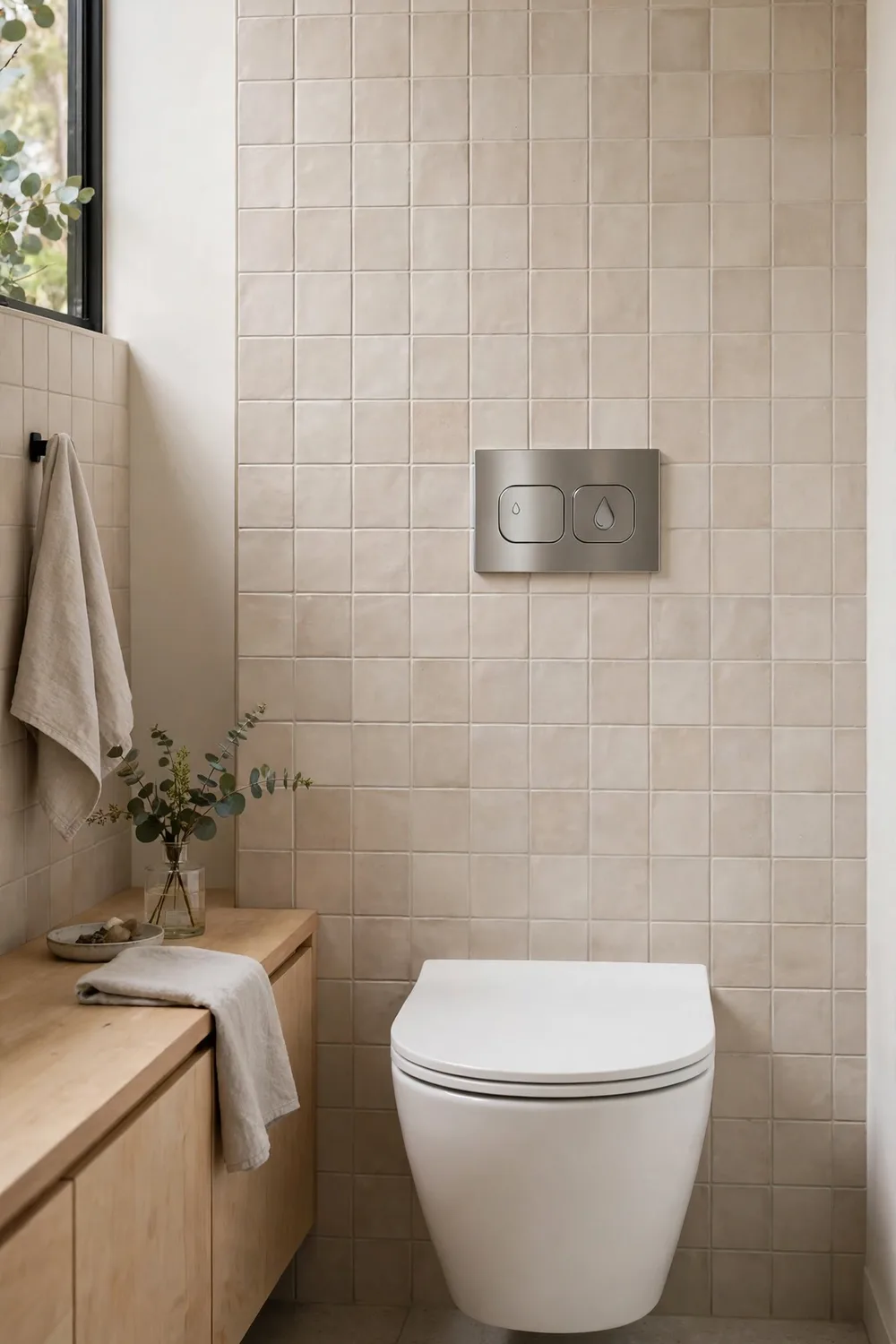
A concealed cistern is reached through the flush-plate opening or a service panel, and Perth’s limits are strict. Clean only the surfaces you can clearly see and safely reach, with a soft cloth and diluted vinegar. Never force a stuck panel, never dismantle valves blindly, and if something shifts, leaks or fails to refill, stop and call a licensed plumber.
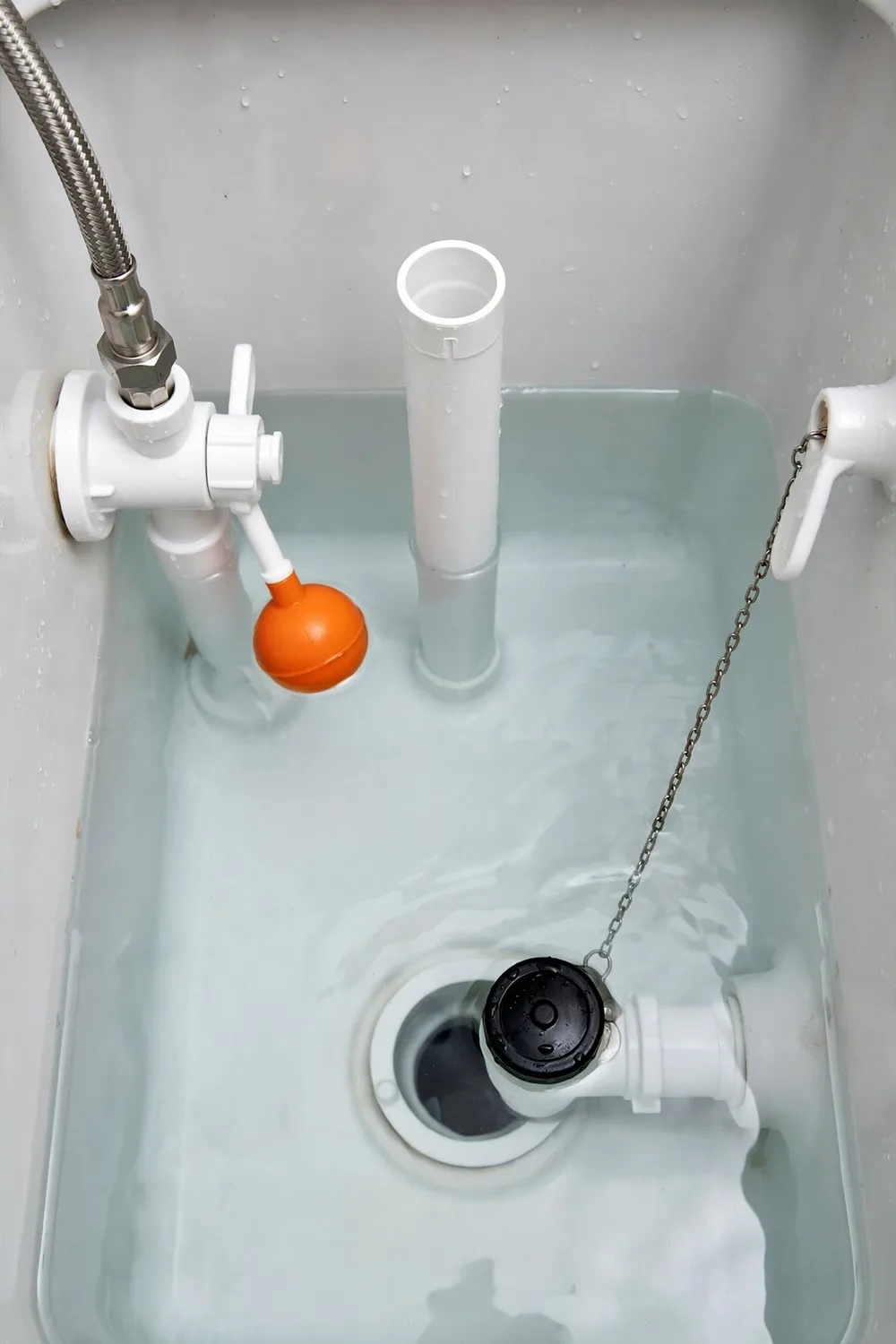
When the job is done, rinse or wipe away the loosened dirt, replace the lid, reopen the valve slowly and flush two or three times. The cistern should fill and stop normally, with no continuous trickle, no unusual noise and no water around the base or the supply connection. The bowl, for its part, is a separate job with its own method, covered in our vinegar cleaning hacks.
When to stop and call a plumber
Cleaning has a clear edge, and Perth First Plumbing marks it. If persistent running, weak flushing or slow filling continues after a clean, the component itself is likely faulty — scale is only one possible cause, and no amount of vinegar repairs a worn seal or a failed valve.
Call a licensed plumber when:
- The isolation valve is seized or a connection weeps once the water is back on
- The cistern keeps running, fills slowly or stays empty after cleaning
- A concealed cistern’s panel resists, or something inside shifts or leaks
- Rust, odour or staining returns within days rather than months
There is also a legal edge worth knowing. Western Australia’s Building and Energy guidance, as Perth First Plumbing reports it, allows homeowners to wipe, brush and rinse accessible surfaces and to replace a cistern washer. Replacing a fill valve, altering a supply connection or repairing a cracked cistern is licensed plumbing work in WA, not an extension of cleaning. Other states run their own rules, so treat the WA position as the worked example rather than a national one.
What not to put in a cistern
Our bathroom cleaning hacks give the routine rule, and it still stands — for everyday cleaning, the tank is best left alone, and nothing should live in the cistern between cleans. This article covers the bounded exception, an occasional descale that goes in, works and gets flushed out. The products below fail that test outright.
Bleach-based tablets are the clearest no. They sit in the water continuously, which is exactly the prolonged chemical exposure both Australian plumbers and EngineerFix warn degrades seals and flappers. Neighbourhood Plumbing extends the same caution to washing-up liquid, essential oils and thick gel-based cleaners, which can clog internal mechanisms, damage rubber seals and interfere with the flushing system.
One rule sits above all of these. Never mix vinegar with bleach or with a bleach-based product, in a cistern or anywhere else — the combination releases chlorine gas. If a bleach tablet has been in the cistern, it comes out and the water is flushed through before vinegar goes anywhere near it.
How often does a cistern need it?
The fetched Australian advice, kept per source:
- Perth First Plumbing: a light wipe every few months and a thorough clean about twice a year is a reasonable starting point for most homes, timed by how quickly residue returns rather than the calendar
- Neighbourhood Plumbing: clean the cistern at least once every three to six months, tightening to every one to three months in a hard-water area, with the vinegar dose every few months in between
Perth First Plumbing adds a diagnostic. If scale returns within weeks, repeated scrubbing is treating the symptom rather than the source, and the water itself is the conversation to have next.
Frequently asked questions
Can I put vinegar in a toilet cistern?
Yes — that is Neighbourhood Plumbing’s own answer to its readers. Pour in one to two cups of white vinegar, let it sit for a few hours, then flush. It breaks down limescale and mineral deposits, and on that business’s advice it does so without damaging the internal components. A descale of established scale uses enough vinegar to cover the deposits, for 30 minutes to an hour, as the method section sets out.
Is It Safe to Put Vinegar in Your Toilet Tank?
For brief, controlled cleaning treatments, yes, on EngineerFix’s examination — modern components are commonly made from synthetic materials that resist short-term contact with mild acids. The same source draws the limit clearly. Risk rises with prolonged, continuous exposure, such as a high concentration of vinegar left in the tank for days or weeks, which is why this guide’s methods are measured in cups and minutes and always end with a flush.
Is it safe to put vinegar in your toilet tank overnight?
The Australian plumbers fetched for this guide do not use an overnight fill, and this guide does not recommend one. Their methods run from a 30-minute descale to a dose left a few hours, which is enough time for vinegar to work on household scale. EngineerFix allows a soak of up to twelve hours for severe buildup in its own guide, while warning against continuous exposure over days or weeks — so an occasional supervised soak is a different thing from vinegar living in the cistern, and the measured Australian methods are the safer default.
What should I not put in the cistern?
Neighbourhood Plumbing names washing-up liquid, essential oils and any thick, gel-based cleaners, which can clog the mechanisms and damage rubber seals. Perth First Plumbing and EngineerFix both warn against bleach-based tablets left sitting in the cistern, the continuous exposure that shortens seal and flapper life. And never mix vinegar with bleach in the cistern — the combination releases chlorine gas.