Bathroom grime is sneaky. A shower screen clouds over a week at a time, grout darkens a shade a month, and then one Saturday you see the room properly and wonder when it got away from you.
The reset does not need a cupboard of speciality products. These bathroom cleaning hacks run on two pantry staples and a handful of small habits — nothing exotic, nothing with a warning label doing the heavy lifting, and every method chosen because it holds up as gentle maintenance rather than a one-off miracle.
Work through the five cleaning hacks first, then the five habit hacks that stop the grime coming back. Ten minutes of routine beats a heroic deep clean every time.
The hacks
1. Bicarb soda for bathroom surfaces
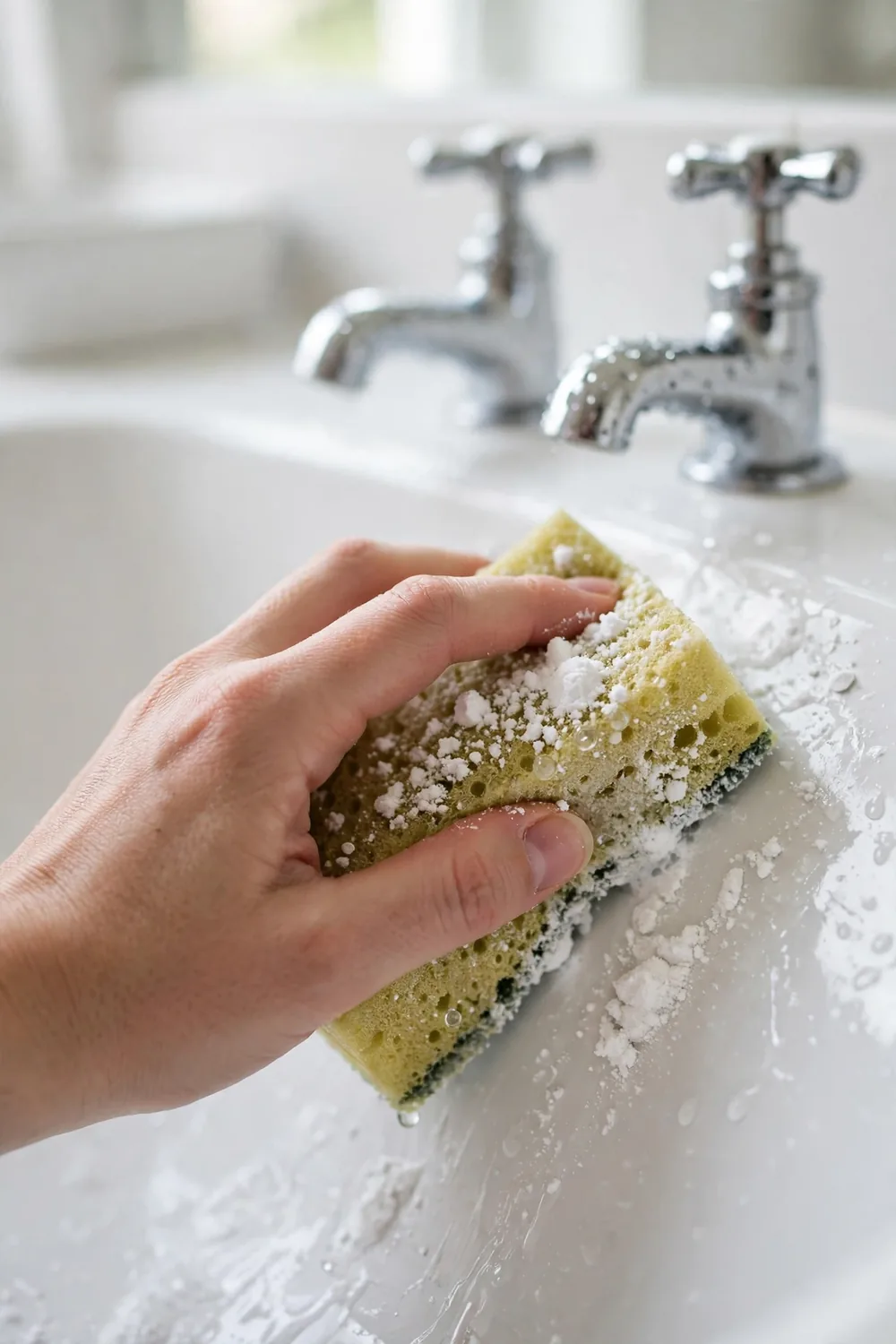
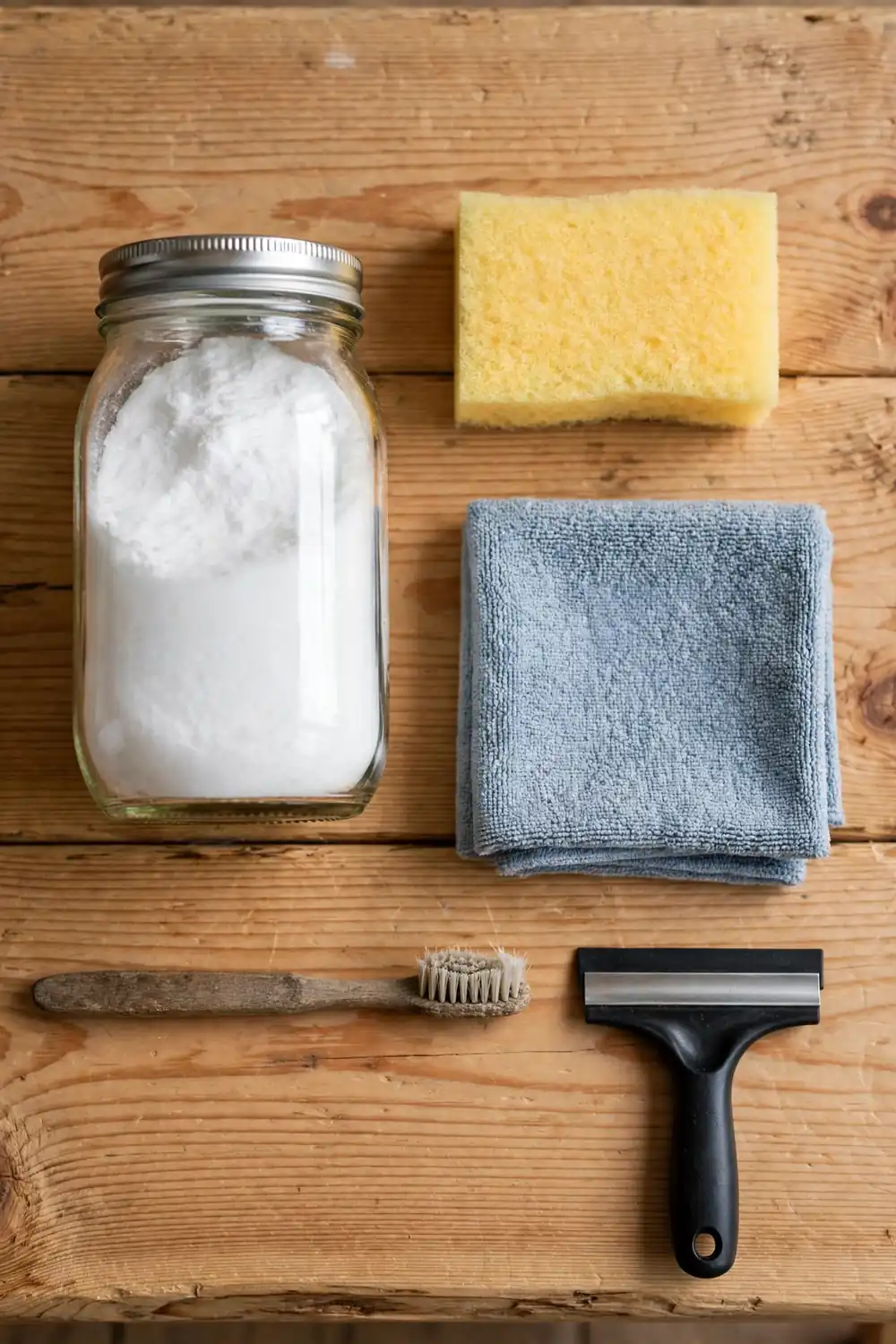
The oldest trick in the room is still the most useful. Bicarb soda on a damp sponge lifts soap film and light grime from basins, benchtops and the tiles around your taps, then rinses away clean.
It works because bicarb is a gentle abrasive that does not scratch, and it absorbs odours while it is there. Keep a shaker or a small open box beside the sink and the hack is always within reach.
- Best on — basins, benchtops, bath surrounds, tap bases
- How — sprinkle on a damp sponge, wipe, rinse, blot dry
- Skip it on — nothing in the everyday bathroom, it is that mild
- Keep handy — a shaker by the sink beats digging in the pantry
2. Bicarb for tub rings
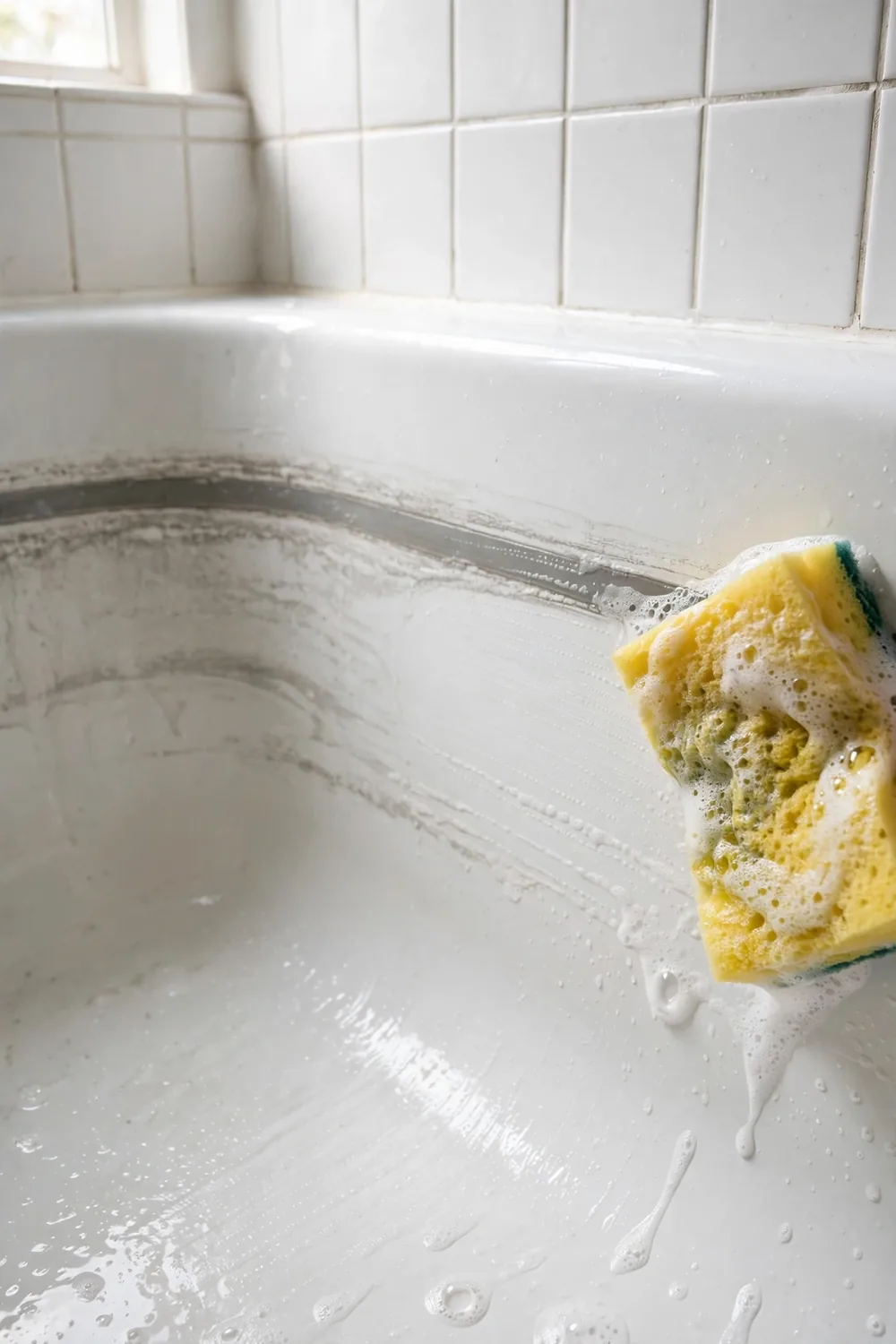
That grey ring at the waterline is bath oils, conditioners and skin doing what they do. It looks stubborn, but it is soft grime, and bicarb on a damp sponge shifts it without scouring the surface underneath.
Work around the ring with light pressure and rinse well. Porcelain and fibreglass tubs both take this happily, and doing it straight after a bath, while the ring is warm and soft, halves the effort.
- The target — waterline rings from oils and conditioners
- Timing — right after a bath, while the grime is soft
- Pressure — light; let the powder do the work
- Finish — rinse and wipe dry so the next ring starts slower
3. Bicarb-and-water grout paste
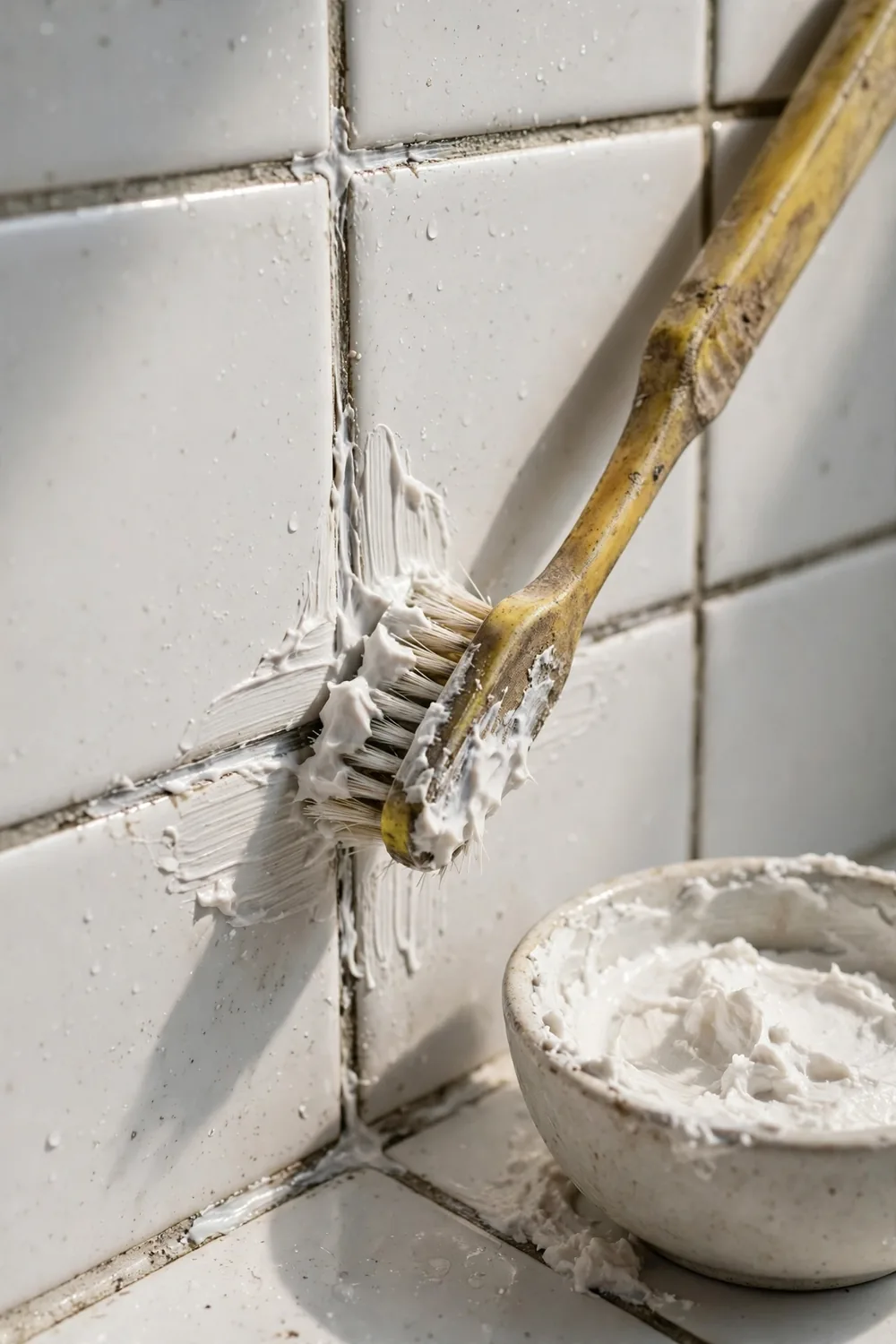
What is the best thing to clean grout with? For everyday bathroom grout, a simple paste of bicarb soda and water, worked in with an old toothbrush, is the gentle maintenance answer most bathrooms actually need.
Mix the paste thick, spread it along the lines, and scrub in short strokes. This is upkeep, not resurrection — it keeps sound grout bright and stops surface grime settling in. Grout that is cracked, crumbling or carrying mould deep in the line is a different job entirely, and no paste fixes it.
- The paste — bicarb and water, mixed to toothpaste thickness
- The tool — an old toothbrush or a small grout brush
- The scope — bathroom grout only, sound lines, surface grime
- Not this — cracked grout or deep mould, which needs its own treatment
4. The drain fizz routine
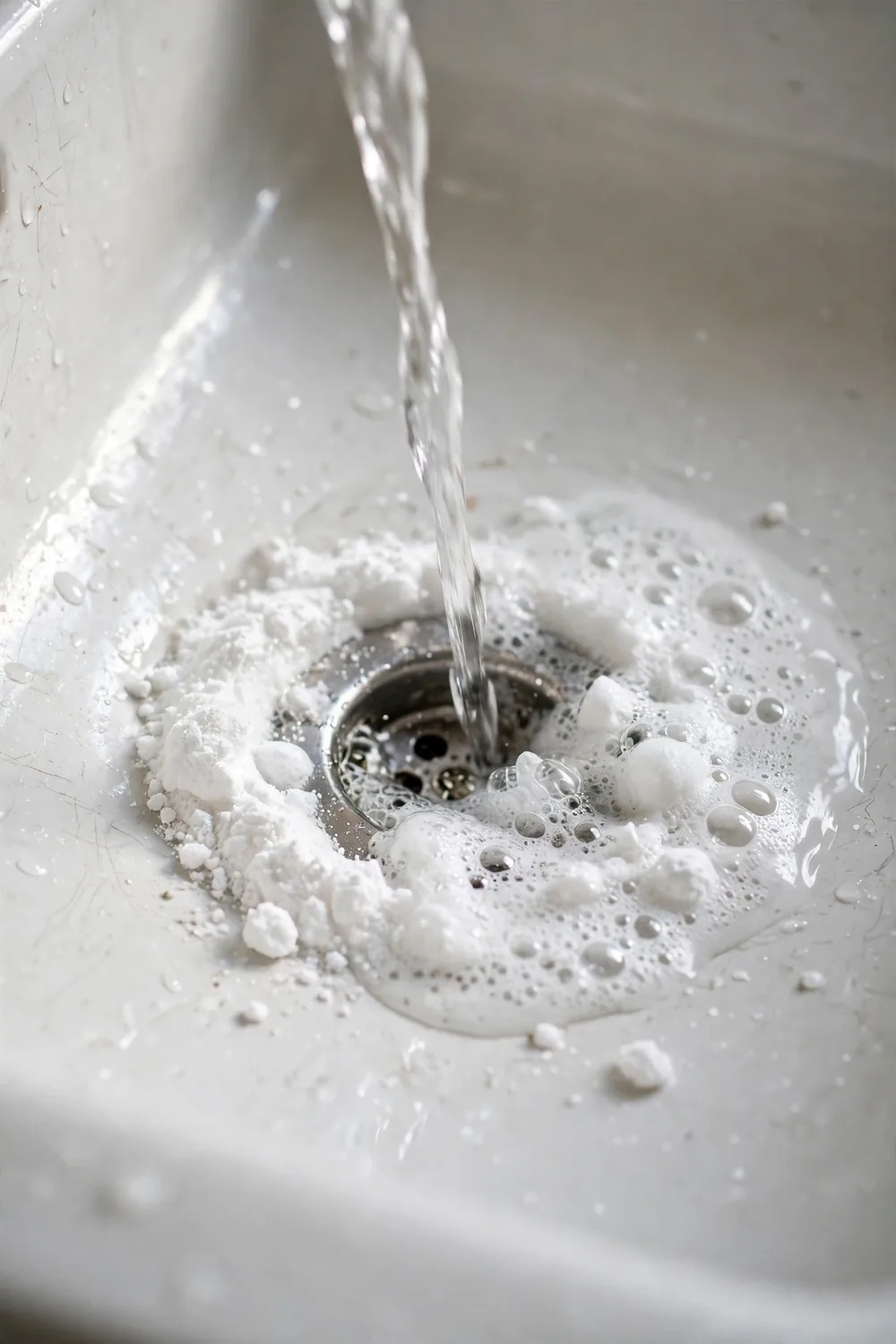
Slow, smelly bathroom drains usually carry a lining of soap and hair product build-up. Half a cup of bicarb tipped down the drain, followed by half a cup of white vinegar, fizzes on contact, and that agitation can loosen loose surface film while the bicarb freshens the smell.
Be honest about the chemistry while you are at it. Bicarb and vinegar neutralise each other as they fizz, so the routine’s real workers are the loosening, the deodorising and the kettle of hot water you finish with. Let it sit for half an hour, then flush it through.
Be clear about what this is. It is maintenance for minor build-up and odours, not a cure for a properly blocked drain — a drain that will not clear needs a plunger, a snake or a plumber, not a second round of fizz.
- Order — bicarb first, vinegar second, hot water last
- Amounts — about half a cup of each
- Wait — 30 minutes before the hot water
- Limits — smells and minor build-up only, never a full blockage
5. Bicarb toilet freshen
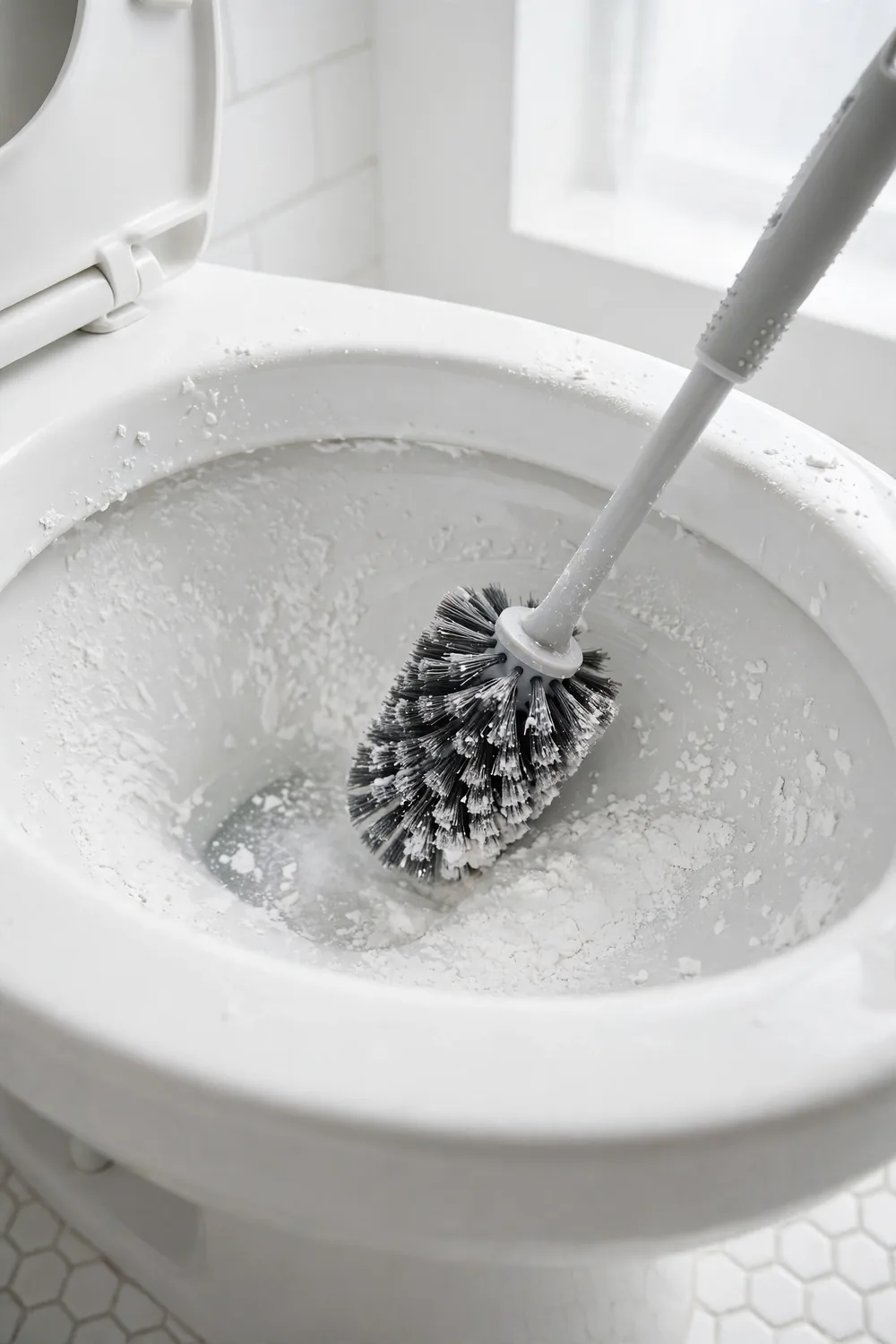
The bowl responds to the same gentle treatment as everything else in the room. A generous sprinkle of bicarb around the bowl, a thorough scrub with the toilet brush, and a flush leaves it fresher and deodorised.
This is a freshen and a light clean, framed honestly — bicarb is a mild abrasive and a good odour absorber. Heavy hard-water staining is a different problem with its own methods, and nothing here goes anywhere near the tank, which is best left alone.
- Method — sprinkle, scrub with the brush, flush
- Strengths — deodorising and gentle surface cleaning
- Leave alone — the tank and its fittings
- Cadence — weekly keeps it at freshen level, not rescue level
One safety rule that matters. Never mix bleach with vinegar or with other cleaners. CHOICE states it plainly — bleach and vinegar together create toxic chlorine gas. Pick one product, use it as directed, and ventilate the room while you work.
The habit hacks
6. Squeegee after every shower
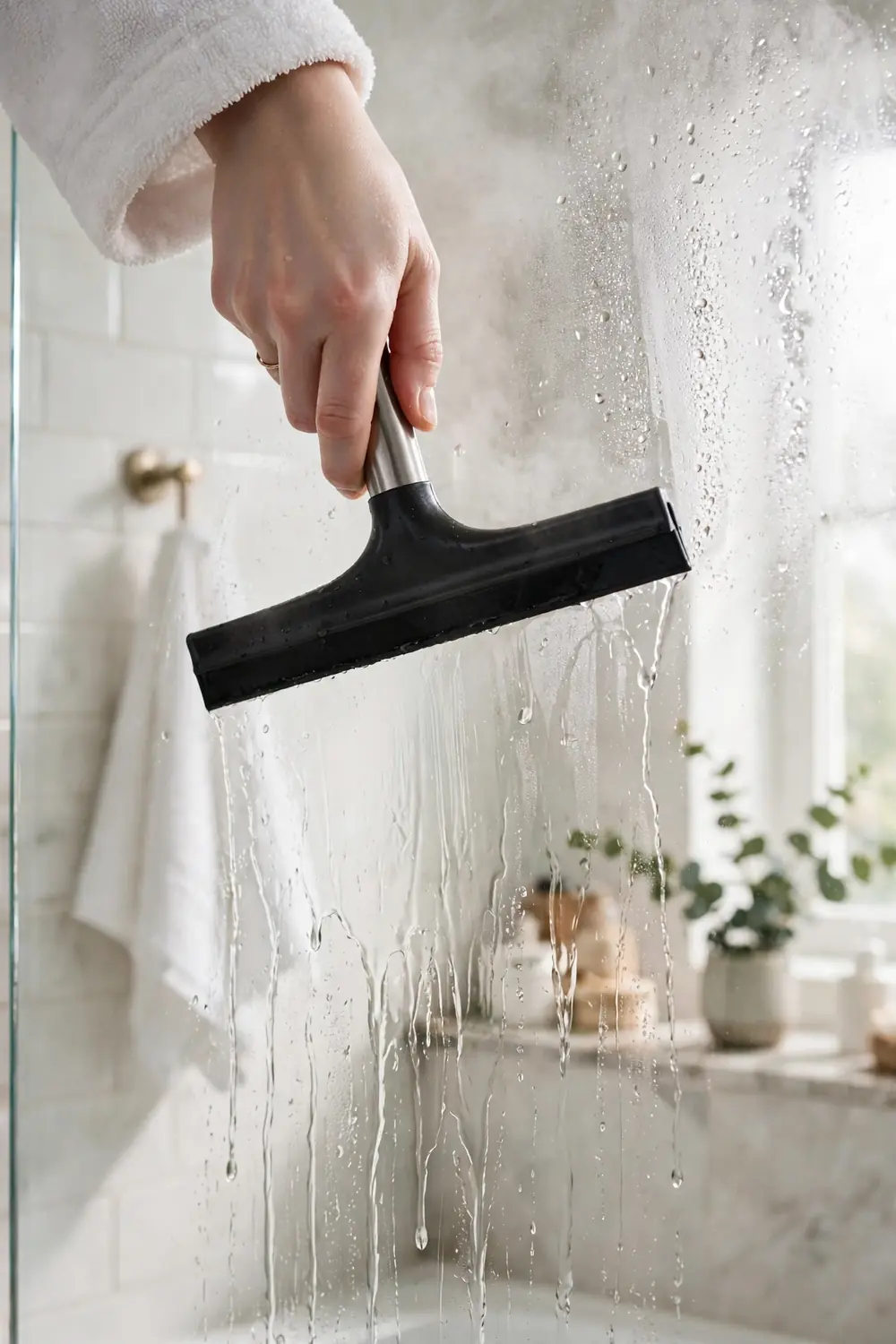
Thirty seconds with a rubber squeegee on the glass and tiles after each shower is the highest-value habit in this whole list. Water that runs down the drain cannot dry into spots, soap film or mildew food.
CHOICE gives the same advice for mould prevention — squeegee or towel-dry tiles straight after showering. Keep the squeegee hanging in the shower itself, because a tool stored in another room is a habit that never forms.
- When — after every shower, no exceptions worth making
- Where — glass doors, shower walls, wet-area tiles
- Storage — hanging inside the shower, in reach
- Payoff — fewer water spots, slower soap-film build-up
7. Dry towels, mats and surfaces

A bath mat left in a heap stays damp for days, and damp is what bathroom grime eats. Hang the mat over the side of the tub after use, put towels on hooks or a rack where air reaches them, and wipe down wet benchtops rather than leaving them to air-dry into water marks.
Cotton stays damp longer than most fabrics, which is worth knowing when a towel never quite dries between uses. A folding drying rack earns its floor space in a small bathroom.
- Mats — over the tub edge after every use
- Towels — hooks or a rack, spread out, never heaped
- Surfaces — a quick wipe beats a slow puddle
- Wash rhythm — towels and mats washed regularly, not eventually
8. Ventilate like you mean it
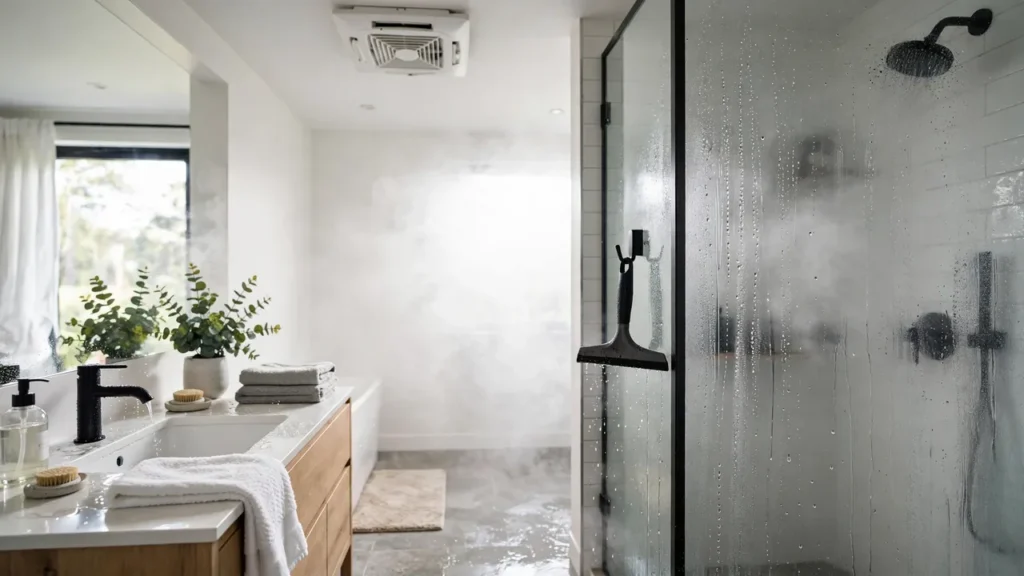
Steam that leaves the room cannot condense on your grout. Run the exhaust fan during every shower and leave it running afterwards, and open a window where the bathroom has one.
CHOICE and Homes To Love land in the same place — ventilation is the main defence against the moisture that feeds mould and mildew. A fan switched off the second you leave the shower has barely started its job.
- Fan rule — on for the shower, and left on afterwards
- Windows — open where possible, especially after steamy showers
- Why it works — dry air starves mould and mildew
- Check — a fan that rattles or barely pulls is due for attention
9. The daily two-minute wipe-down
Wet surfaces wiped daily never get the chance to set into grime. It is the least glamorous hack here and the one that makes all the others easier, because nothing in the room is ever more than a day dirty.
Homes To Love’s grout guidance makes the same point from the other side — wipe down wet surfaces daily, and the weekly clean stays small. Basin, tap, benchtop, a sweep of the mirror surround. Two minutes, done.
- Scope — basin, taps, benchtop, splash zones
- Time — two minutes, attached to an existing routine
- Tool — a microfibre cloth kept in the bathroom
- Effect — the weekly clean shrinks to a once-over
10. The weekly once-over
Everything above is maintenance, and maintenance needs a rhythm to land on. A weekly once-over of the whole bathroom — surfaces, bowl, grout lines, glass — is what stops build-up before it starts, which is the entire game in a wet room.
Pick a fixed slot and keep it short, because the daily and per-shower habits have already done the heavy lifting. The week this routine slips twice is the week the deep clean starts looming again.
- When — one fixed slot a week
- Coverage — surfaces, toilet, grout, glass, floor edges
- Duration — short, because the habits carry the load
- The point — prevention, so rescue cleaning rarely happens
The routine at a glance
| When | The move |
|---|---|
| After every shower | Squeegee glass and tiles; hang the mat |
| Daily | Two-minute wipe-down of wet surfaces |
| Weekly | Bicarb freshen for the bowl; full once-over |
| Monthly-ish | Grout paste pass; drain fizz routine |
Small room, simple system
None of this asks for a free Saturday or a trolley of products. Two pantry staples handle the cleaning, and five small habits handle the rest.
A bathroom stays clean the way grout stays bright — a little at a time, on purpose, before it ever becomes a project.