8 Vinegar Cleaning Hacks That Will Make Your Bathroom Sparkle
The white crust around your taps is not dirt. It is mineral scale, laid down a fraction of a millimetre at a time by hard water, and scrubbing barely touches it because the one thing that dissolves it is acid.
That is why the vinegar bottle keeps earning its place under the sink. This guide collects the vinegar cleaning hacks bathroom jobs actually reward — eight of them, each with its mix, its dwell time and its limits.
Vinegar is a cleaner and a descaler, not a disinfectant, and it has a firm don’t-touch list. Read the safety section before the stone benchtop or the enamel bath gets sprayed.
Which vinegar, before you start
Ordinary white vinegar is what every recipe here was published for. Bunnings puts its strength at four to seven percent acetic acid, against cleaning vinegar at six percent or more, and notes the difference is thought to make cleaning vinegar about 20 percent more powerful — though the ranges overlap, so the gap is smaller than the label suggests.
Cleaning vinegar is not food-safe. Keep it stored with the cleaning products, never in the pantry, and reach for plain white vinegar for everything below unless a stronger bottle is already in the cupboard.
The eight hacks
1. Wrap the taps to shift mineral scale
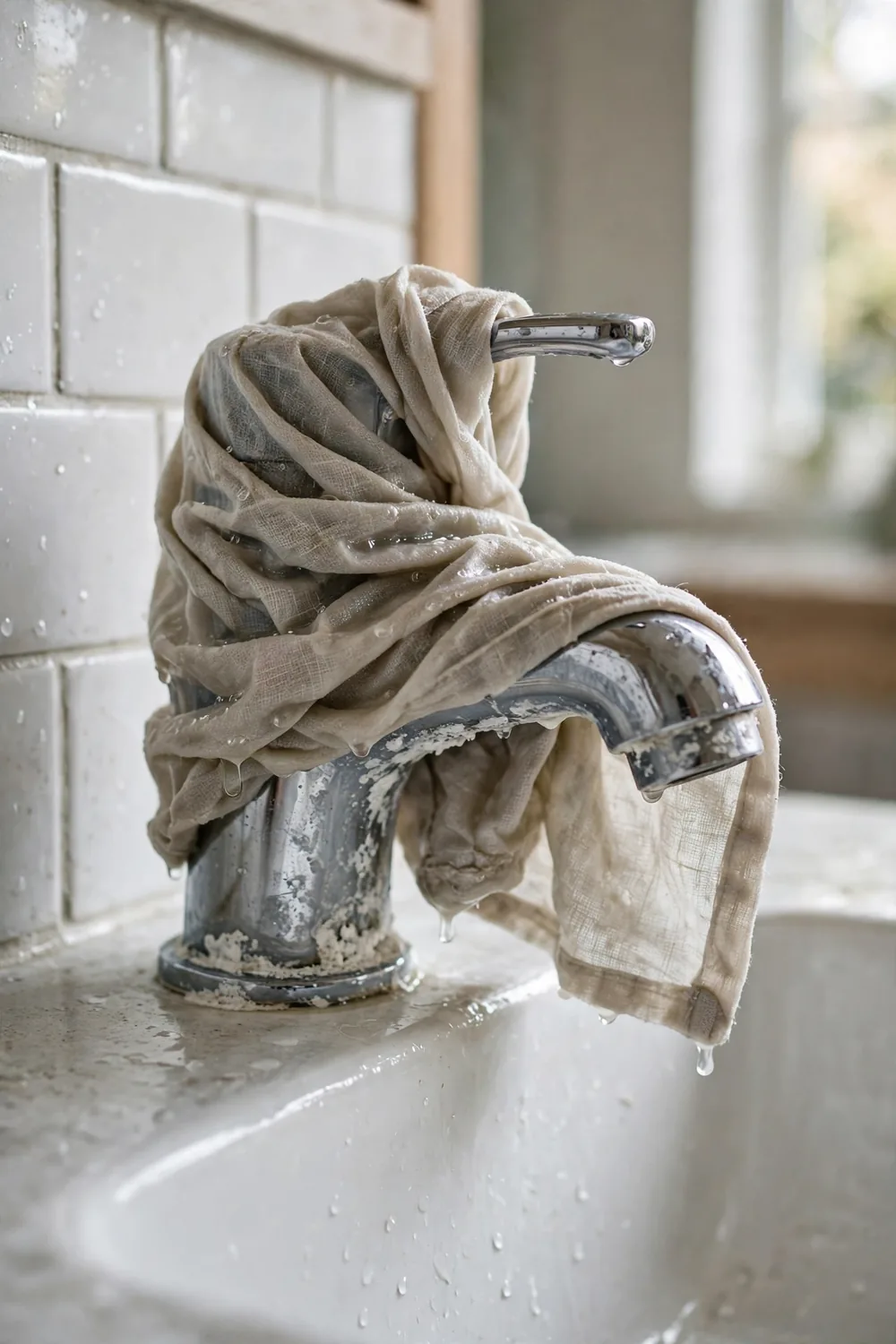
Soak a cloth or towel in undiluted white vinegar, wrap it around the tap base and spout where the white crust gathers, and leave it for one to two hours. The acid does the work while you do something else. Unwrap, wipe the softened scale away and rinse.
The same soak works around a basin plug. Put the stopper in, pour in about 125 ml of vinegar to cover the stopper and the metal around it, leave a few hours, then scrub, drain and rinse. One exception — if the basin is enamelled porcelain, skip the long soak. Bunnings lists enamel among the surfaces cleaning vinegar may damage, so keep the contact brief there or stick to the tap wrap.
- Mix: undiluted white vinegar
- Contact time: 1–2 hours for taps, a few hours for the stopper soak
- Tools: cloth or old towel
2. Bag-soak the showerhead overnight
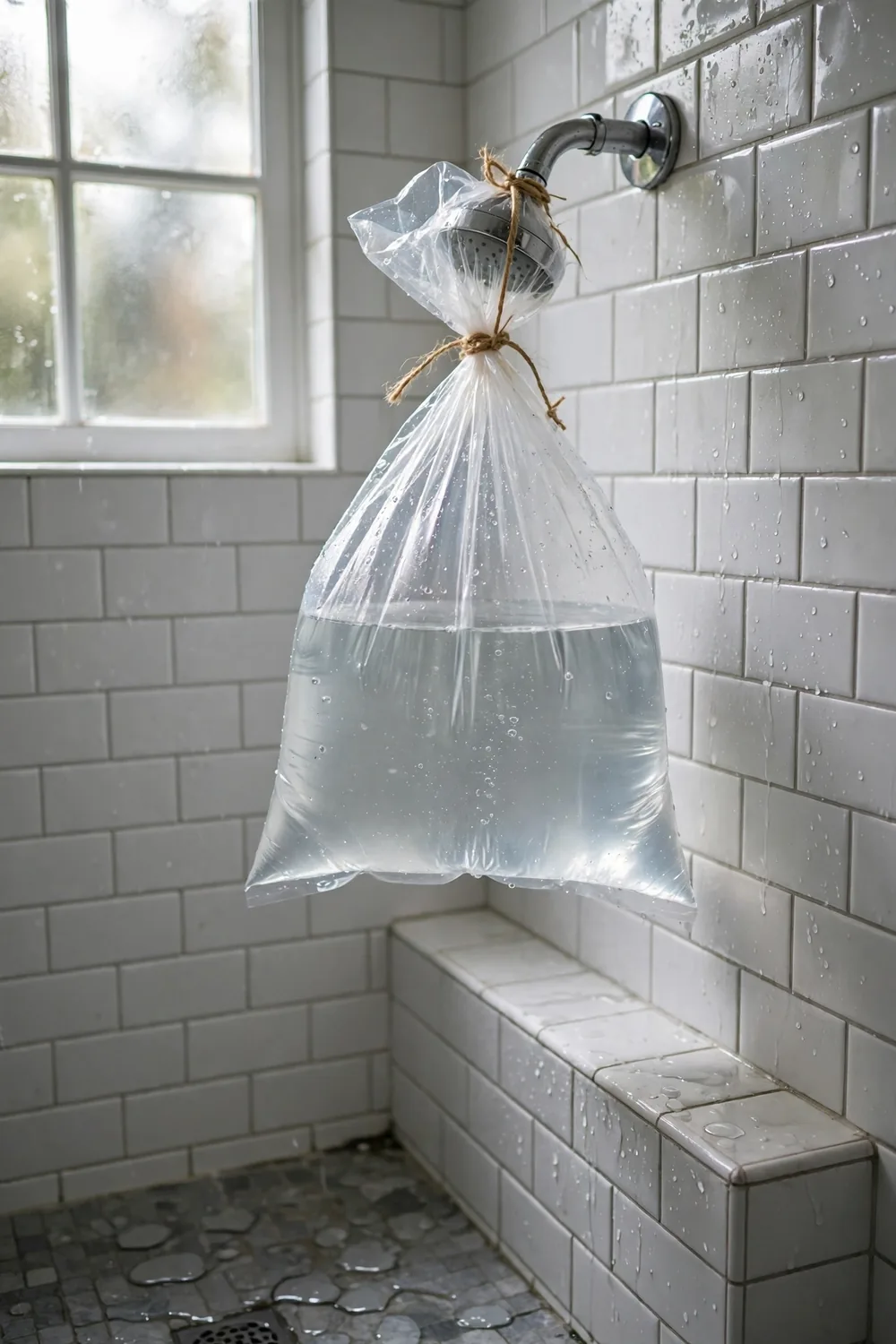
Fill a sturdy plastic bag with enough undiluted vinegar to cover the showerhead’s face, slip it over the head and secure it with a twist tie or rubber band. Leave it overnight, then remove the bag, wipe the loosened deposits away with a sponge and run the shower to rinse.
A removable head can stand in a container of vinegar instead — same overnight soak, same result on the spray holes.
- Strength: undiluted
- Soak: overnight (around 8 hours)
- Watch out for: prolonged soaking is hard on rubber seals over time — an occasional soak, not a weekly habit
3. Spray mirrors and glass at one-to-one
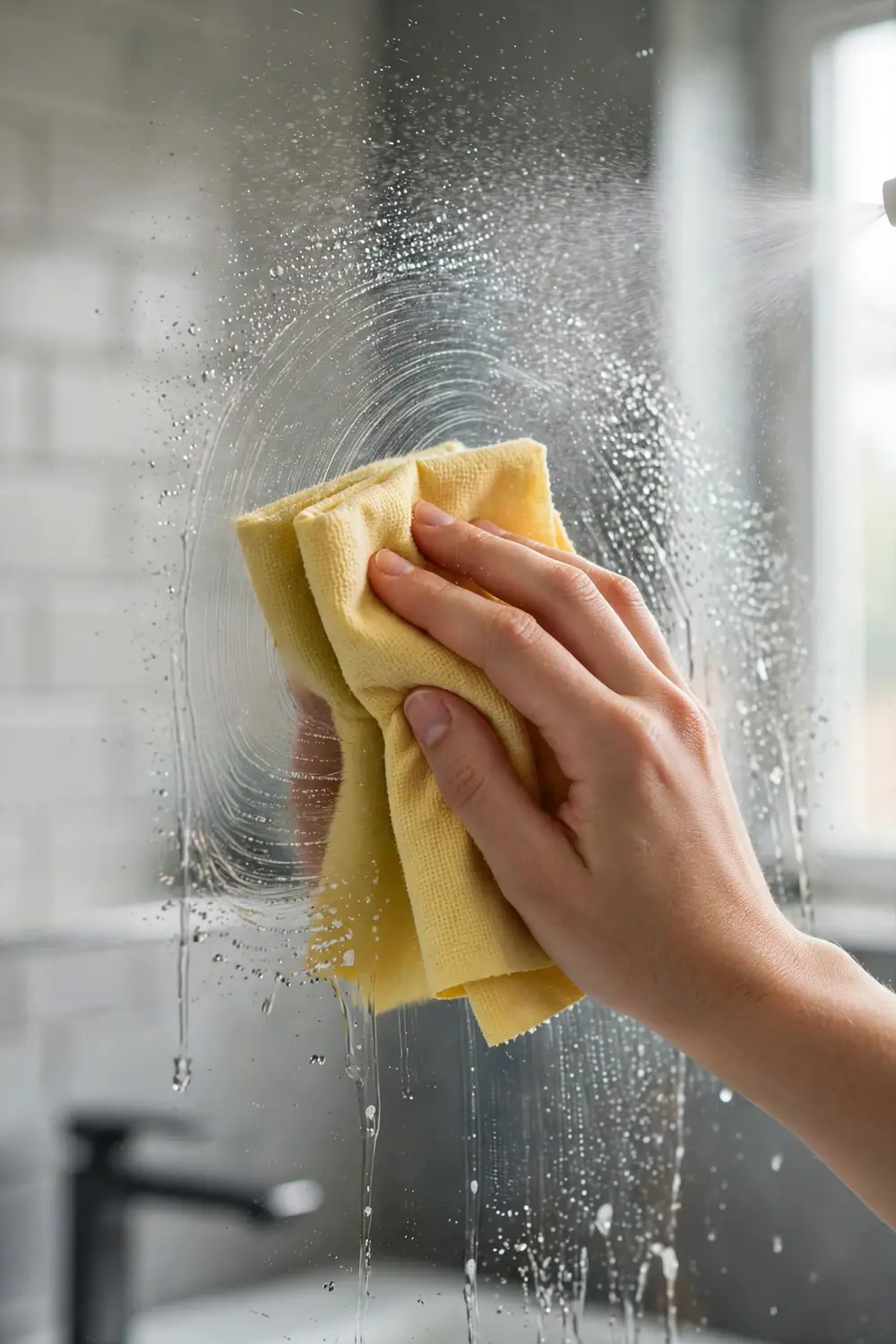
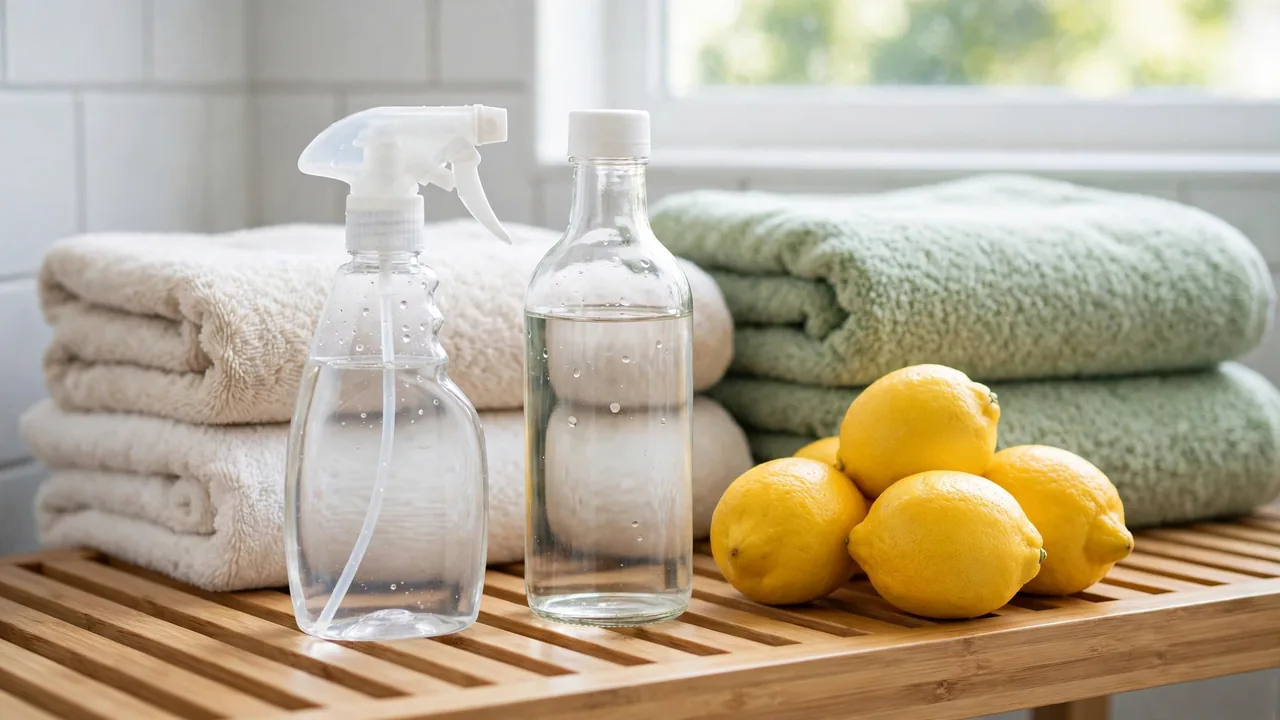
Mix equal parts white vinegar and water in a spray bottle, spray the mirror, and wipe with a microfibre cloth for a streak-free finish. CHOICE publishes the same 1:1 mix for glass and suggests newspaper, paper towel or a dry cotton cloth as the wiper.
This is the plain method — no scent, no extras — and it is the one to master first, because half the entries in this list are variations on this bottle.
- Ratio: 1 part vinegar to 1 part water
- Bottle size: 250 ml of each fills a standard spray bottle
- Cloth: microfibre, to keep lint off the glass
4. Soak the toilet bowl overnight
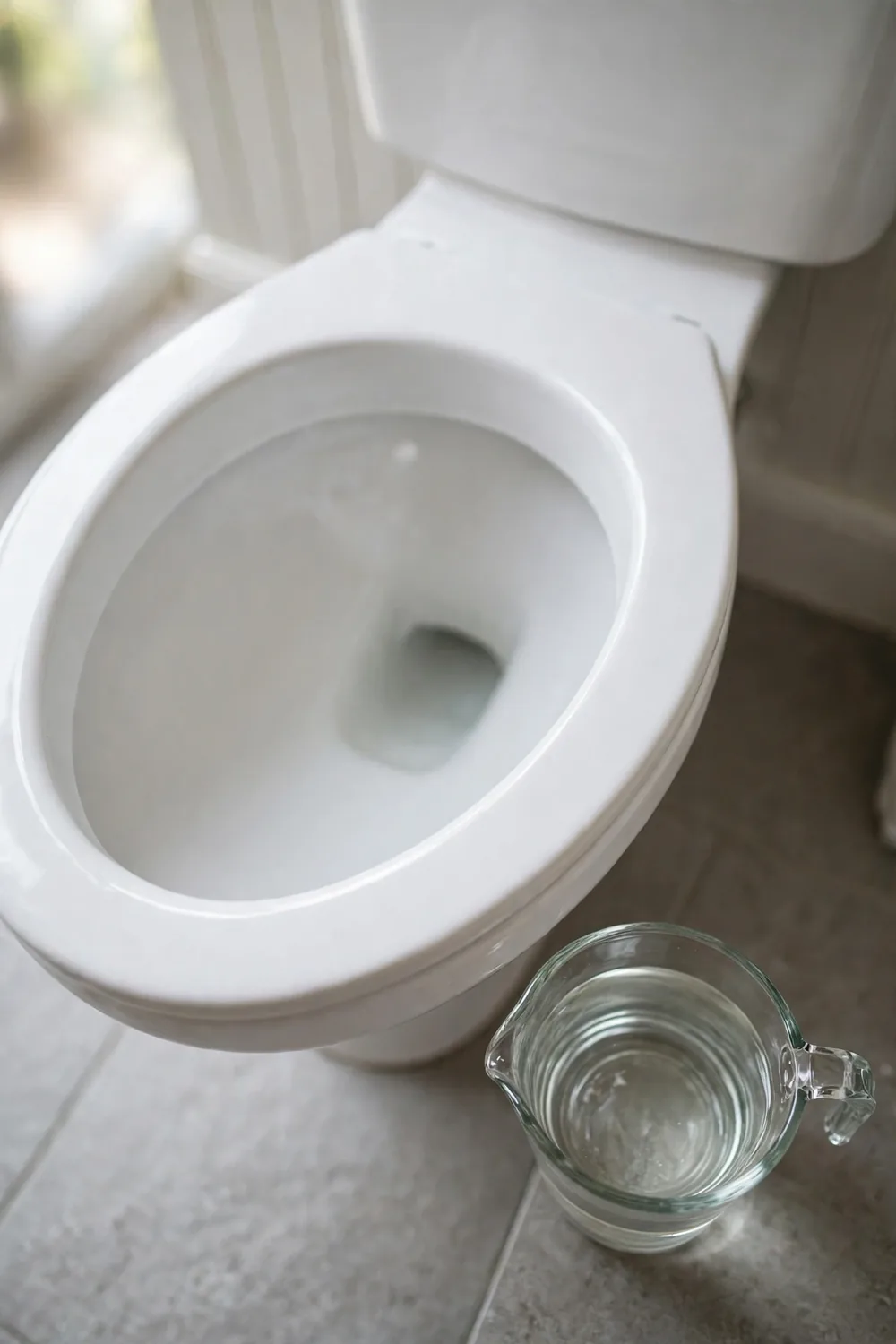
For bowl stains, pour about 250 ml of white vinegar into the bowl water and leave it overnight, then flush. The acid softens the staining and scale below the waterline while you sleep.
For stubborn staining, empty the water from the bowl, repeat the overnight soak, then — as a separate, later step — sprinkle in bicarb soda and scrub before flushing. Bicarb goes in after the vinegar soak, never mixed with it in the bowl, because the two neutralise each other.
- Amount: roughly 250 ml (1 cup)
- Dwell: overnight
- Scope: the bowl only
5. Mop the floor — with the floor’s permission
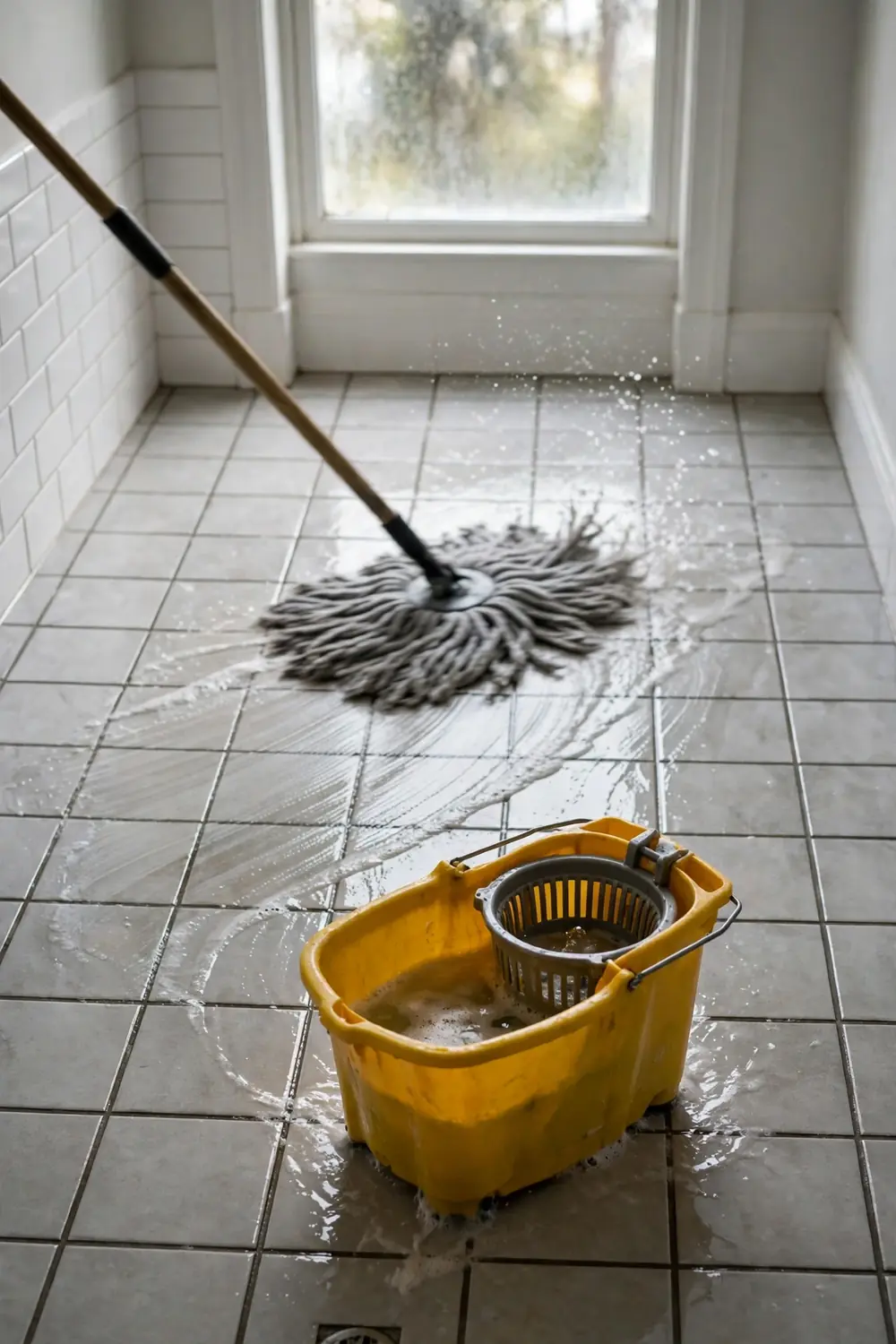
Can you safely mop your floors with vinegar? It depends on the type. For no-wax lino, the published mix is 125 ml of vinegar in about 2 litres of water. For ceramic tile, use 125 ml in a bucket of warm water, roughly 4 litres — and carry the Australian caution with it. Home Beautiful warns the acid can leave ceramic floors dull, so read your floor’s care instructions first and test a corner.
Two floors get no vinegar at all. Natural stone can etch permanently, and Bunnings lists hardwood floors among the surfaces cleaning vinegar may damage — skip both, however well sealed they look.
- Lino mix: 125 ml per 2 litres of water
- Ceramic mix: 125 ml per bucket (about 4 litres) of warm water, care instructions checked first
- Never mop with it: stone, hardwood
6. Spray tile and grout — sound grout only
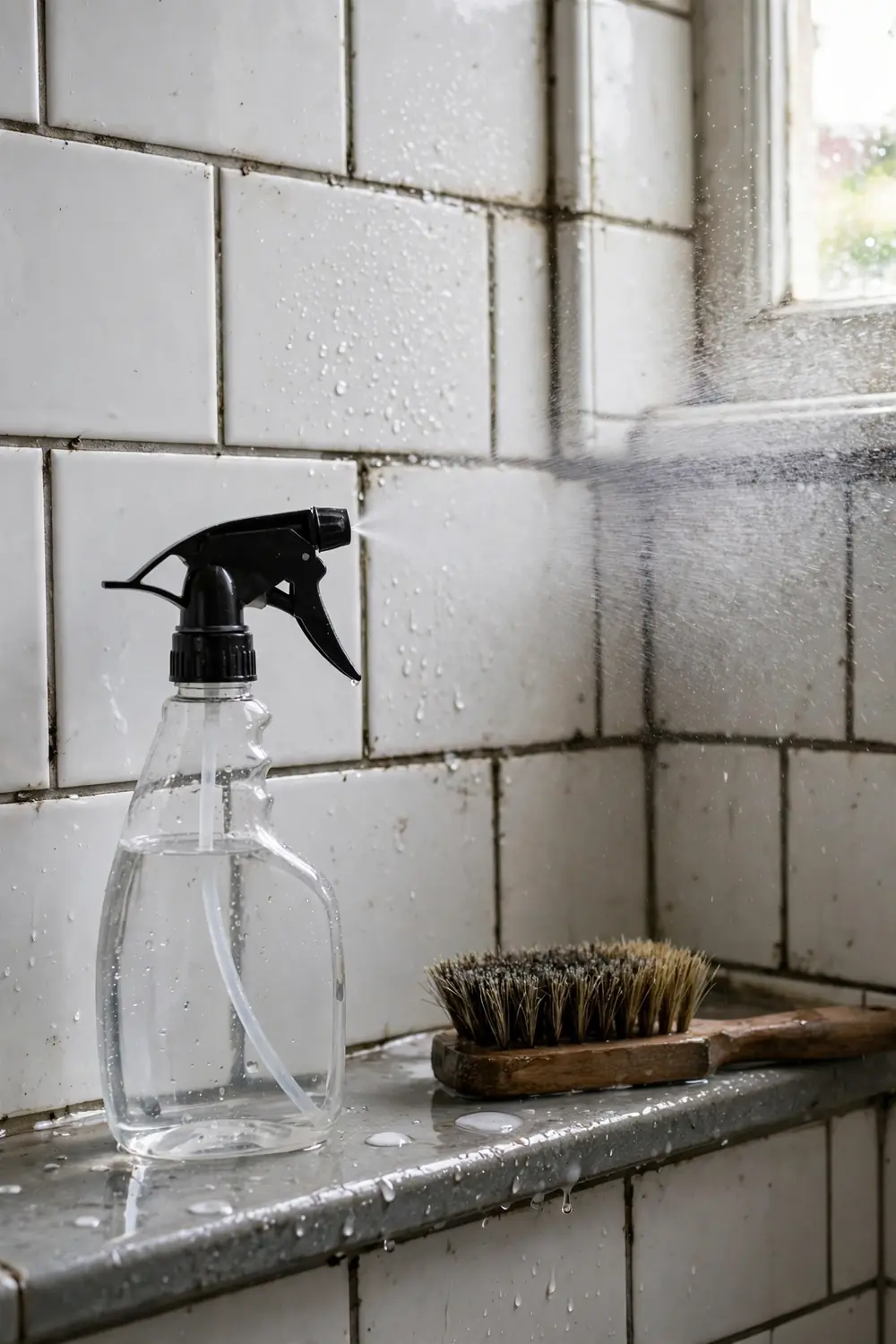
Spray the 1:1 vinegar-and-water mix over tiles and wipe away for everyday film. For scummy build-up, run the hot water for a few minutes first, then spray undiluted vinegar, scrub with a tile brush, and work grout lines with a stiff old toothbrush. Bunnings backs both strengths — the 1:1 spray for general use, undiluted for tough build-up on tiles.
One condition matters here. Home Beautiful notes vinegar is fine on sealed grout but can erode grout that is damaged or unsealed, so this entry is for sound grout only. It is also the spray counterpart to the bicarb paste in our bathroom cleaning hacks — paste for gentle abrasion, vinegar spray for scale and soap film.
And if what you are looking at is mould rather than scum, that is a different job with its own method — follow our guide to how to remove mould from your bathroom instead.
- Everyday spray: 1:1 vinegar and water
- Heavy build-up: undiluted, after a hot-water warm-up
- Grout rule: sealed and sound, or skip it
7. Keep a multi-purpose bottle mixed
One attributed recipe, mixed once and kept under the sink — this one is the multipurpose spray Bunnings publishes from cleaner Beth McGee. It is the general bottle for benches, basins and the outside of the toilet, used wherever the 1:1 glass spray feels too plain.
- Vinegar: 60 ml (¼ cup)
- Water: 625 ml (2½ cups)
- Plus: about half a teaspoon of dish soap
- Skip it on: enamelled porcelain — Bunnings lists enamel among the surfaces cleaning vinegar may damage, so enamel baths and basins get the test-patch treatment or a different cleaner
8. Steep a scented vinegar
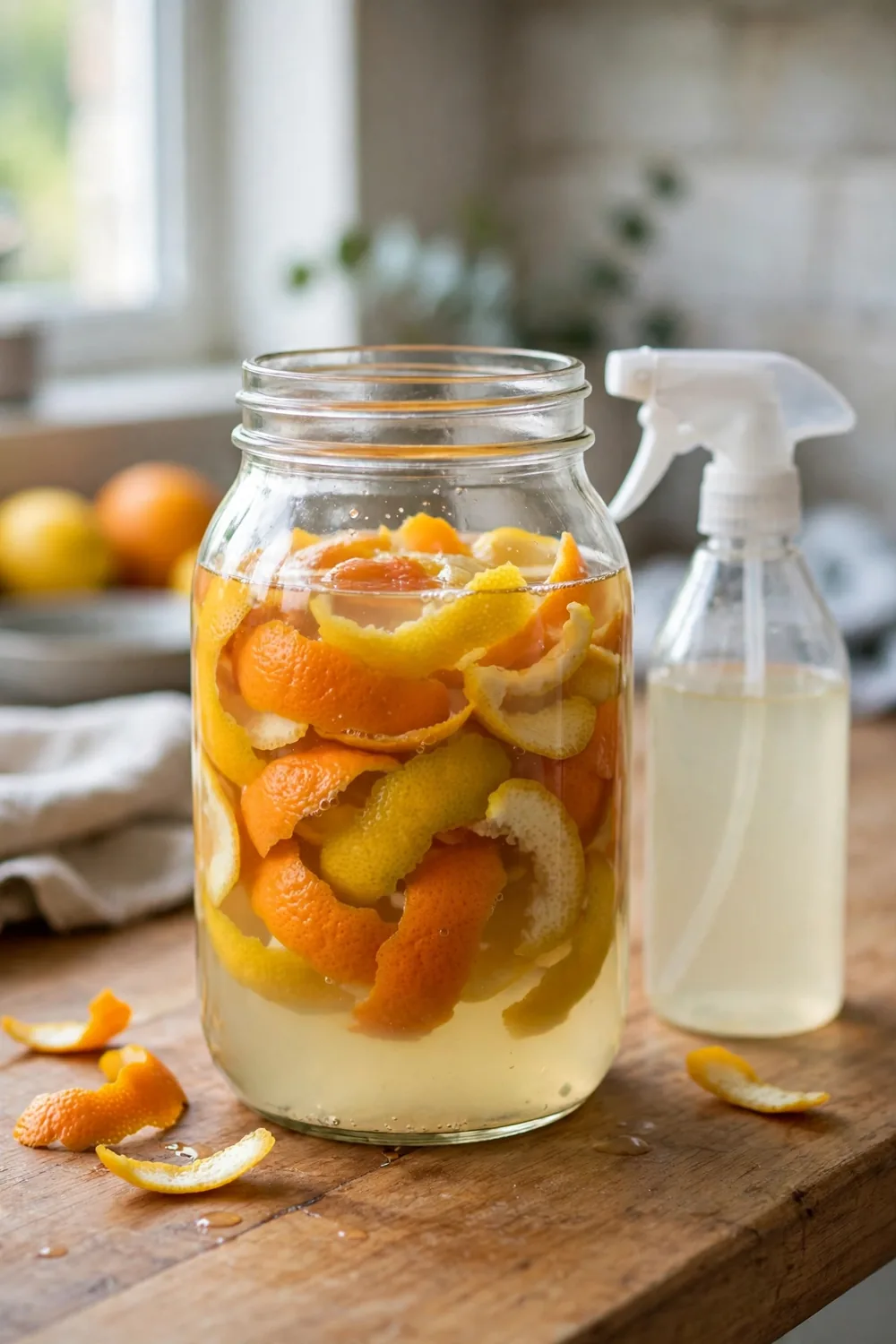
If the smell is what puts you off, steep it out. Pack a jar with citrus peels — orange rind or lemon, the same tip CHOICE gives — pour over hot (not boiling) white vinegar, seal the jar and leave it for 24 hours. Strain the liquid into a spray bottle and use it anywhere the plain 1:1 spray goes.
Where hack 3 is the method and hack 7 is the bottled recipe, this one is the upgrade you make yourself, for the sake of a bathroom that smells like oranges instead of a chip shop.
- Steep: citrus peel in hot white vinegar, sealed, 24 hours
- Then: strain, bottle, dilute 1:1 for glass
- Also works with: fresh mint or rosemary sprigs
The eight jobs at a glance
| Job | Mix | Time |
|---|---|---|
| Tap scale wrap | Undiluted | 1–2 hours |
| Showerhead soak | Undiluted | Overnight |
| Mirror and glass | 1:1 with water | Spray and wipe |
| Toilet bowl | 250 ml in the bowl | Overnight |
| Floor mopping | 125 ml per bucket | Mop as usual |
| Tile and grout | 1:1, or undiluted on scum | Scrub after spraying |
| Multi-purpose spray | 60 ml + 625 ml water + dish soap | Spray and wipe |
| Scented vinegar | Peel-steeped, then 1:1 | Steep 24 hours |
Where vinegar must never go
Vinegar’s don’t-touch list is the difference between a hack and a repair bill.
- Natural stone — marble, granite and other stone surfaces. The acid etches and dulls stone permanently. CHOICE, Bunnings and Home Beautiful all draw this line.
- Hardwood floors. Bunnings lists them among the surfaces cleaning vinegar may damage, and Home Beautiful warns the acid leaves floors dull.
- Enamelled porcelain. Bunnings flags it too — many baths and basins are enamelled, so check before spraying and test an out-of-sight patch first, as Bunnings advises for any new surface.
- Cast iron. Home Beautiful notes the acid strips its seasoning.
- Rubber seals and hoses. Home Beautiful and Bunnings both warn that repeated vinegar exposure can damage the rubber seals and hoses inside appliances over time — another reason the showerhead soak stays occasional.
- Damaged or unsealed grout. It can erode further under acid. Sound, sealed grout only.
And the mixing rules, which are not negotiable. Never mix vinegar with bleach — Bunnings states it plainly, the combination creates dangerous and toxic chlorine gas. Never mix vinegar with hydrogen peroxide either; cleaning guides warn the pair forms peracetic acid, which is corrosive and harmful to breathe. Use one product at a time, rinse between them, and wear gloves with the window open, as Bunnings recommends.
Cheap, patient and honest about its limits
Vinegar will not disinfect, it will not touch mould the way a proper mould treatment does, and it will happily etch a stone benchtop if you let it.
Inside its lane, though — scale, soap film, streaky glass and stained porcelain — it is the cheapest cleaner in the house, and the one that asks the least of you. Most of these hacks are just vinegar, time and a cloth.