A courtyard walled in on three or four sides can feel like the least useful part of a home. It catches the heat, stays damp in the corners, and ends up holding the bins and the hose.
Most Australian homes with a small courtyard face the same puzzle — a patch of paving that should be the best seat in the house but never quite gets used. The walls bounce heat back, one corner never sees sun, and every plant seems to struggle.
These small courtyard ideas change that without a rebuild. They work with the walls you already have, the light you actually get, and plants that suit Australian conditions.
Start now, with summer ahead and long evenings to enjoy the result, and each idea stands on its own — so a single weekend can transform one corner while the rest waits.
Start with a plan, not a purchase
Spend one sunny day watching the light before you buy a single plant. Courtyards are a patchwork of microclimates, and one wall can bake like Alice Springs in January while the opposite corner never sees direct sun. Note where the sun falls at 9am, midday and 3pm, and where water pools after rain, because those two observations decide almost every choice that follows.
Draw the space to scale and mark what has to stay — the access path, the bin area, the air conditioning unit and any existing trees. Then decide what the courtyard has to do. A single generous seating area reads as more spacious than several small ones, so leave clear floor space instead of filling every corner.
Think in three layers, even in a space as small as 4 metres by 4 metres. Screening sits on the boundary at the back, a feature tree or large pot holds the middle, and low planting and pots sit near the door or seating. If you can see all three layers from the kitchen window, the courtyard reads as a garden rather than a paved lightwell.
9 small courtyard ideas
1. Run the paving in one direction
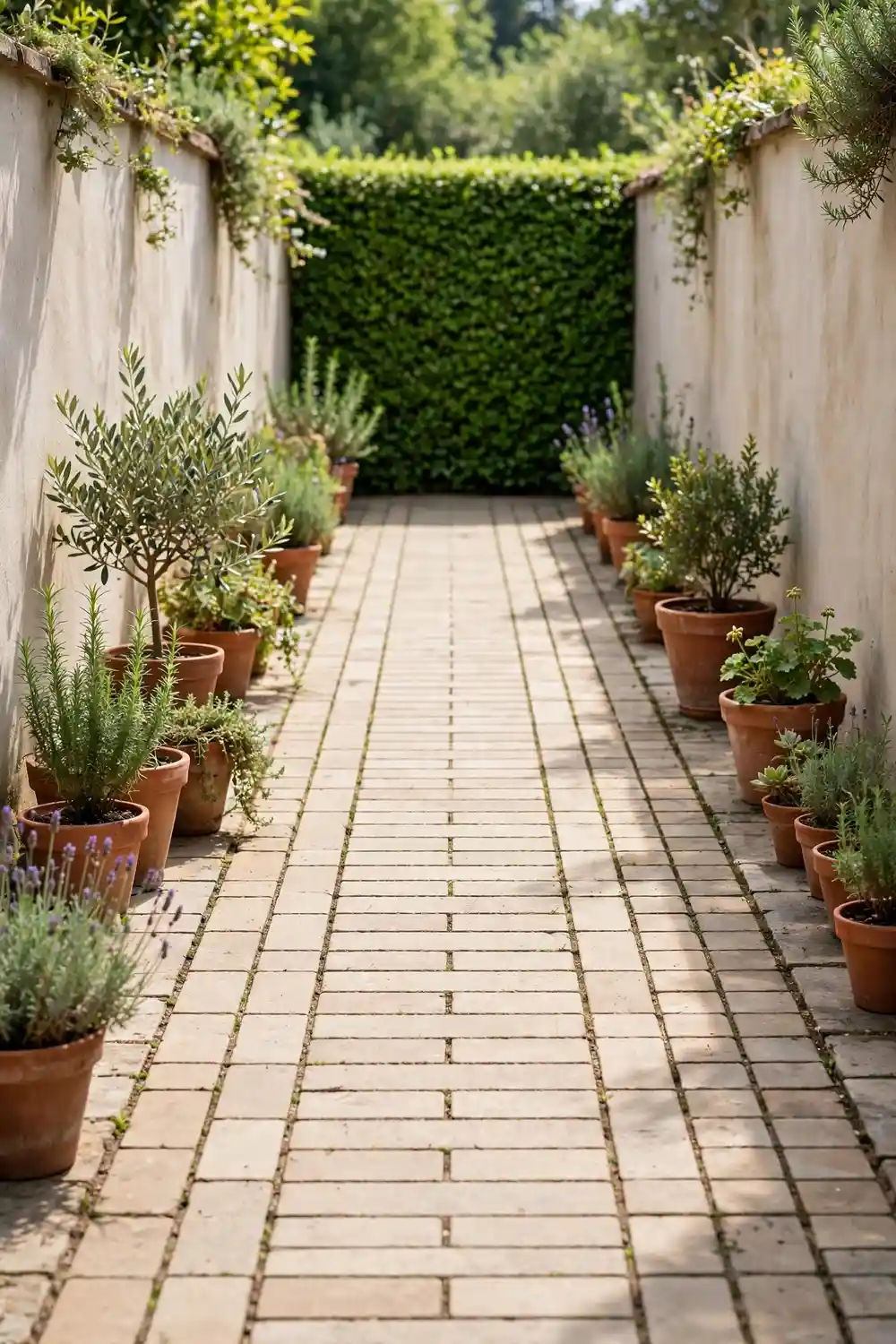
Paving sets the tone of a courtyard more than any other element, and it is also the most expensive part to change later. Lay it in one direction so the long lines pull the eye along the yard and stretch the space. One Bunnings Workshop makeover used 600 mm by 600 mm porcelain pavers on a compacted metal-dust base, with H4 treated-pine beds alongside.
- Tone — light pavers reflect light into shaded corners
- Palette — two materials at most, in similar tones
- Base — the sub-base matters more than the surface
2. Screen the boundary without losing space
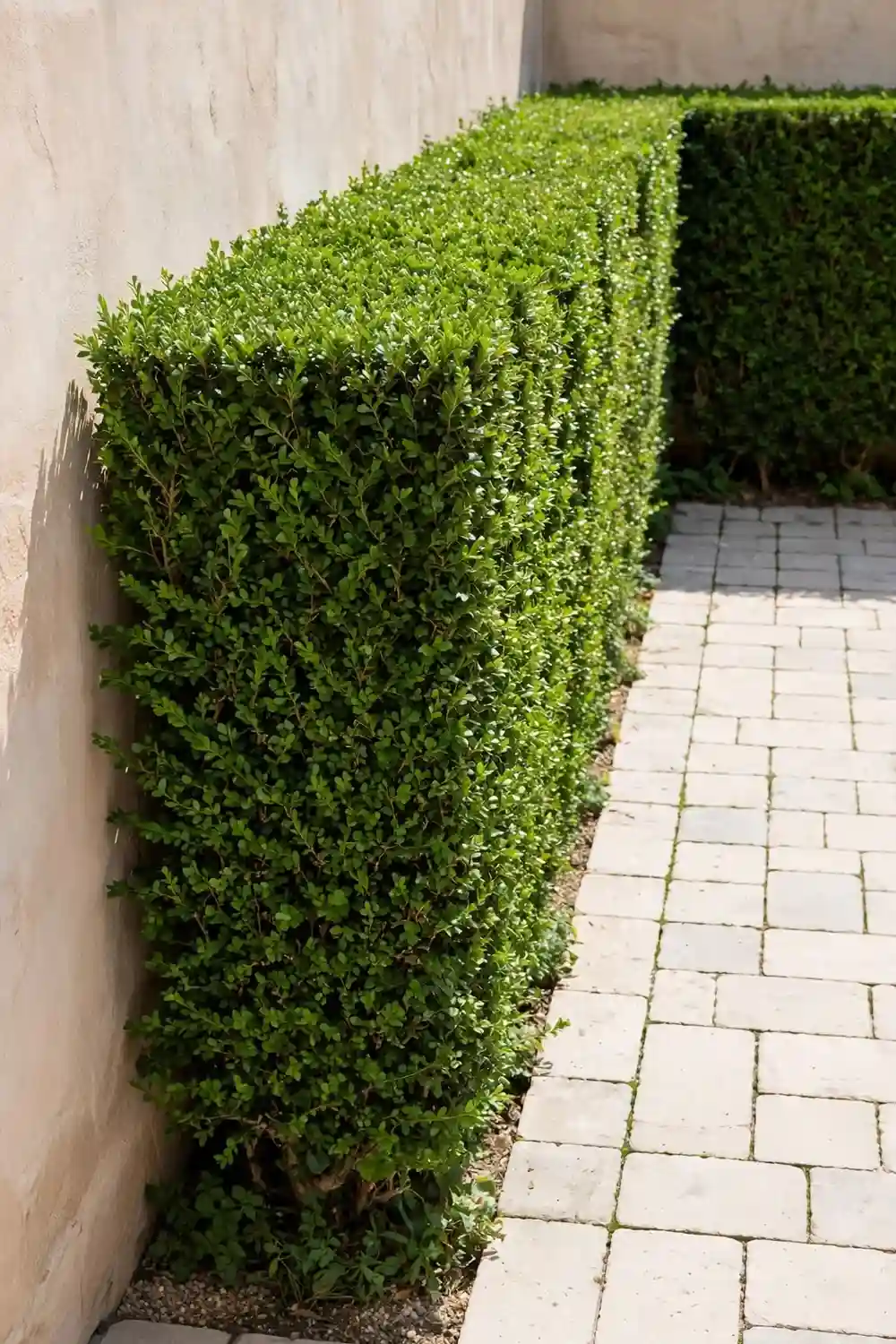
Fat hedges devour small courtyards, so choose plants bred to stay narrow. Pittosporum Screen Between holds a dense column of small shimmering leaves in a bed as narrow as 50 cm, and it costs from $31.95 a plant. Set them at 50 to 60 cm spacings, tip prune from day one, and the screen fills in without eating floor space.
- Best for — a boundary bed as narrow as 50 cm
- On concrete — matching troughs at least 40 cm deep
- Pair with — slatted screens that let light and air through
3. Borrow the walls with star jasmine
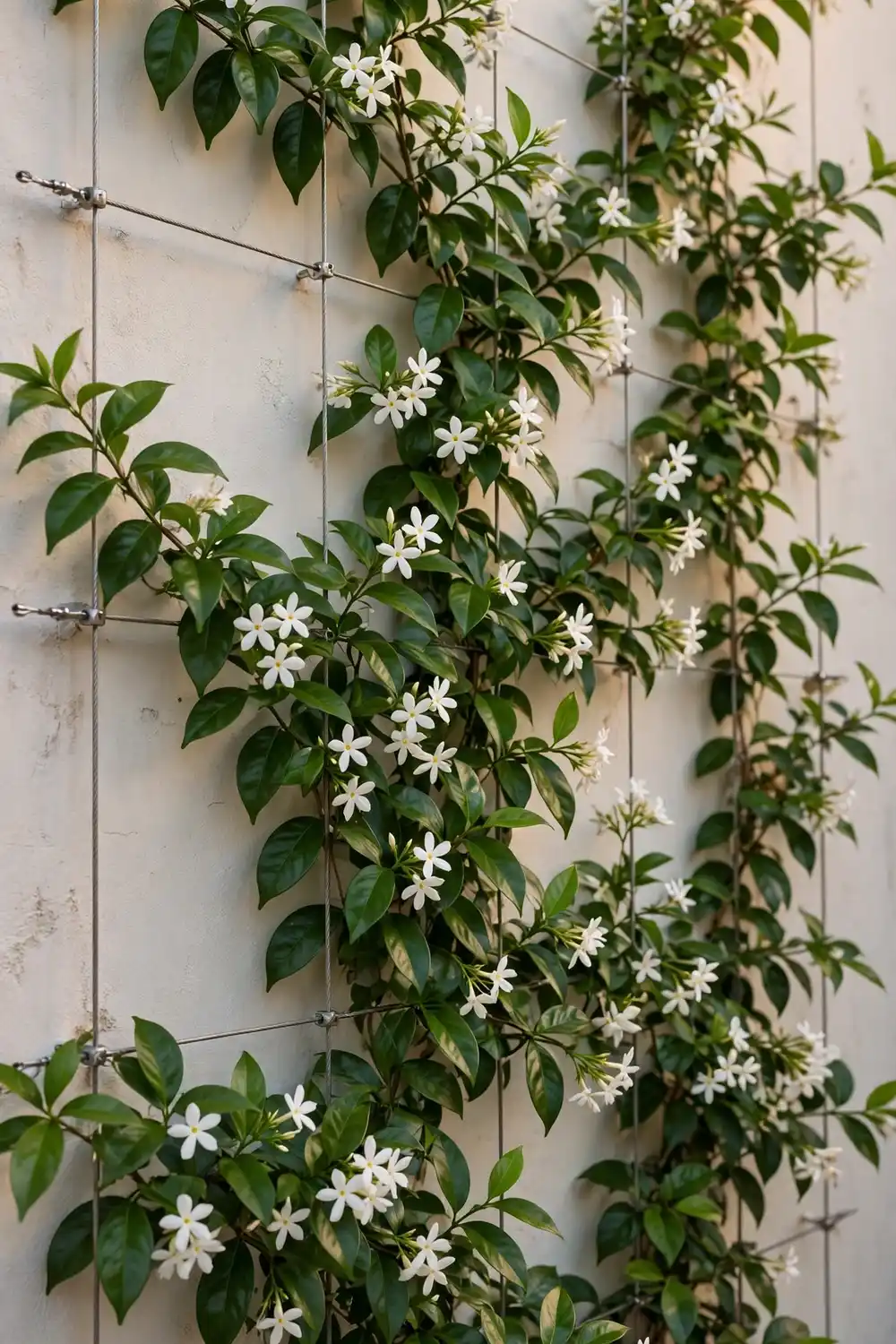
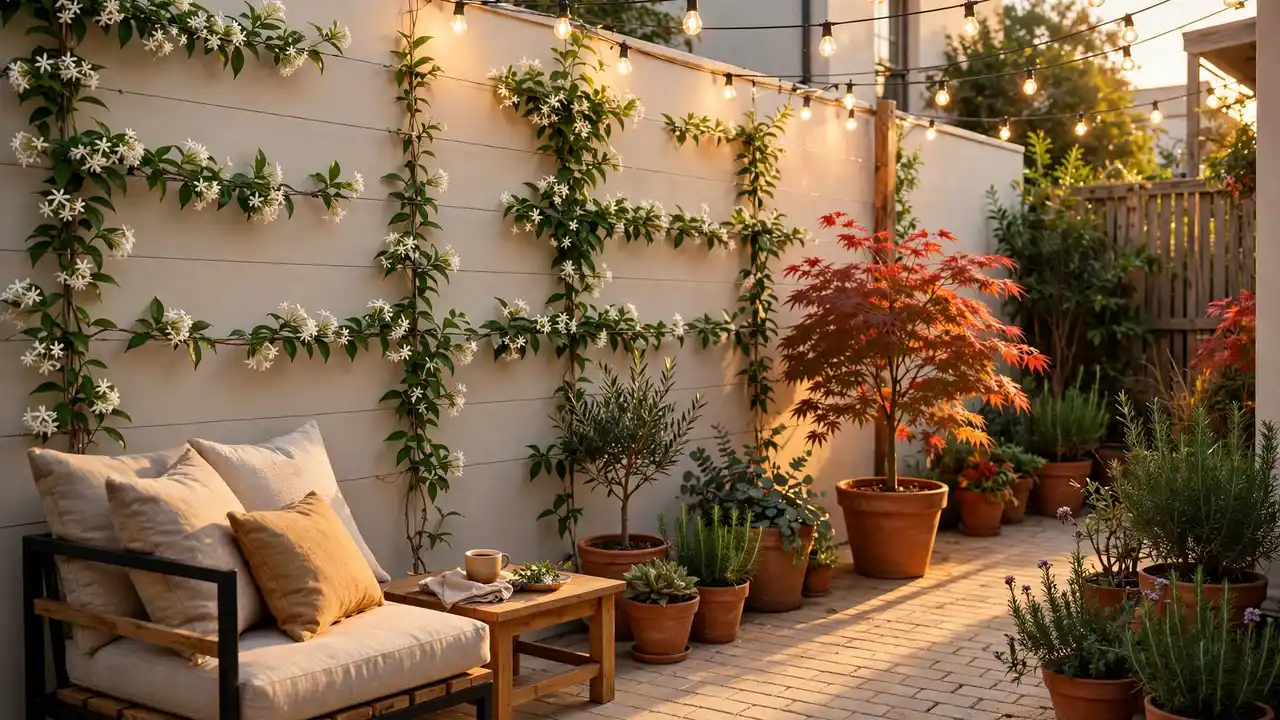
Walls and fences are free growing space, and star jasmine — Trachelospermum jasminoides — sets the standard for courtyard climbers. It is evergreen and shade tolerant, perfumed for two months in late spring.
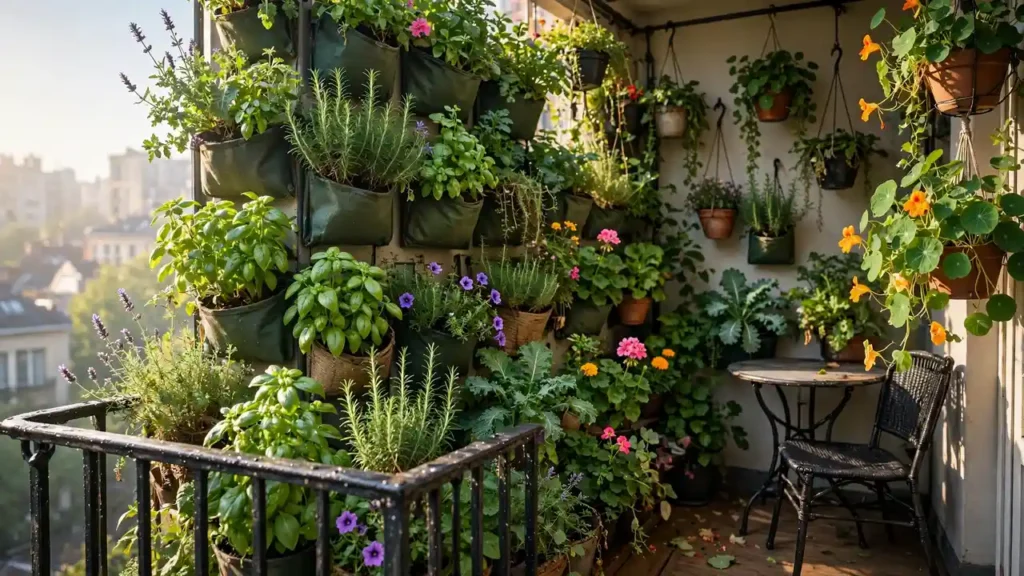
Fix stainless wires at 30 cm spacings, plant one climber per 2 m of wall, and be patient. It twines rather than sticking, so it leaves no marks. The same walls can also carry vertical garden ideas in pots and hanging baskets.
- Wires — stainless, 30 cm spacings
- Cost — from $10.95
- Year one — be patient
4. Commit to one feature tree
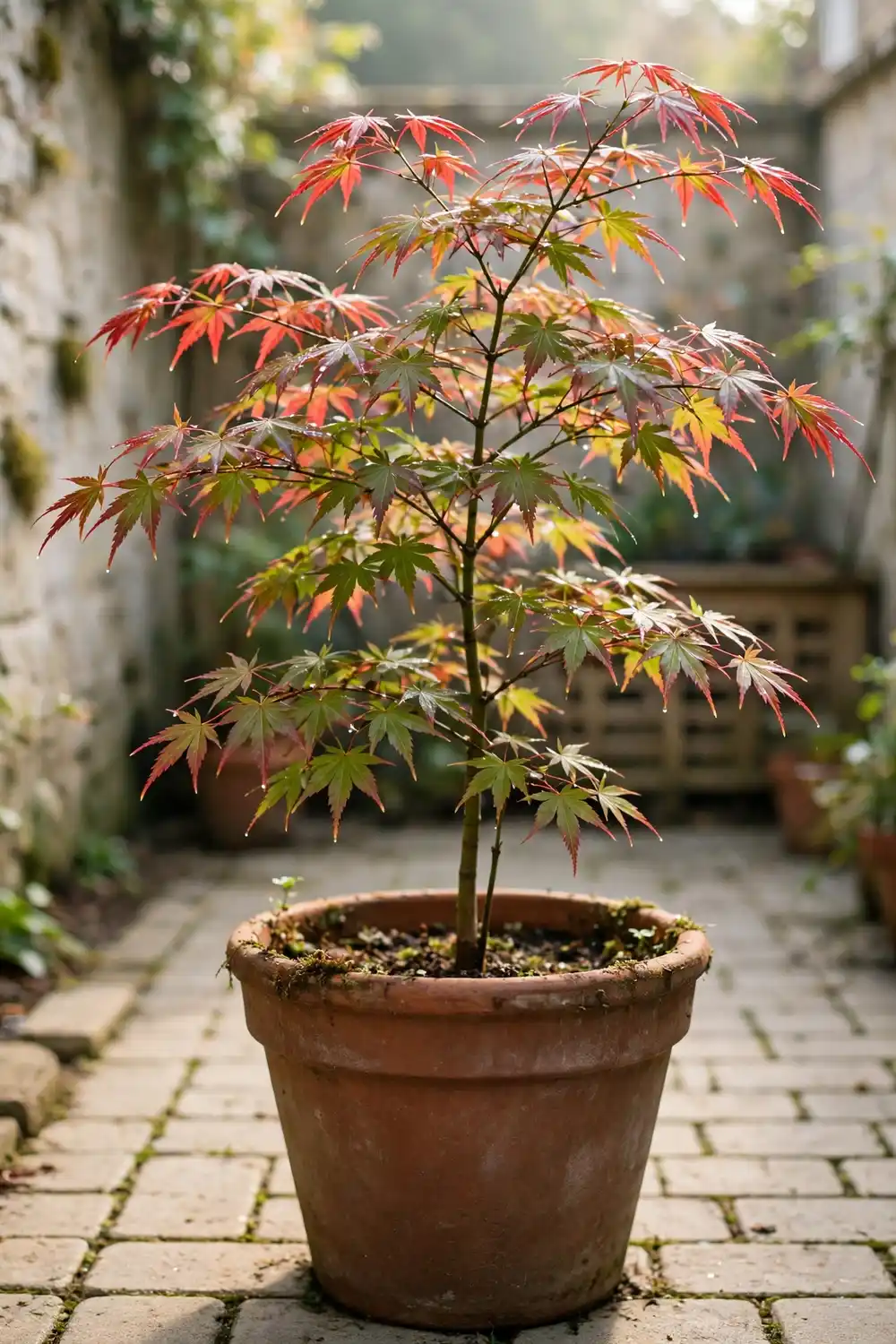
One beautiful small tree beats five shrubs fighting for attention. The Japanese maple — Acer palmatum — is the classic courtyard feature, sculptural in winter and outrageous in autumn.
A Winthrop makeover built a Japanese-inspired courtyard around one in a stone pot, on a total budget of $3,000. Mind the mature canopy — four metres is a lot in a six-metre courtyard.
- Start — a young maple from $16.95, or ‘Sango Kaku’ from $286.95
- Pot — 40 to 50 cm, repot every 2 to 3 years
- Site — morning sun, sheltered from hot westerlies
5. Let pots do the heavy lifting
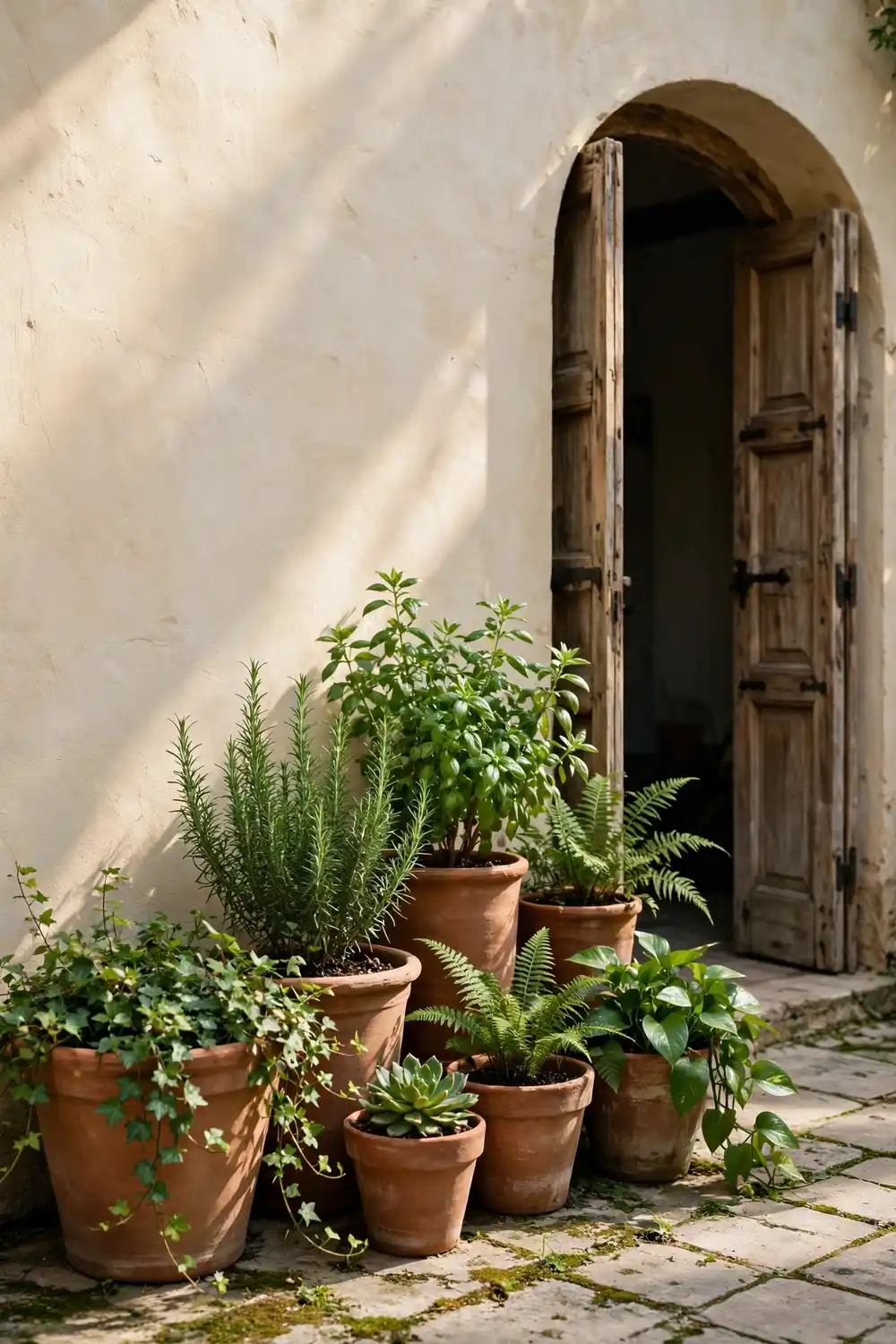
Pots are the workhorse of small courtyard ideas because they move. Rearrange them for parties, chase the sun, and replace anything that sulks without digging.
Go one size up from what looks right, and group pots so they shade each other. Walls leach lime for years, so acid-lovers like gardenias yellow near render — grow them in pots instead.
- Size — 400 to 500 mm minimum for anything significant
- Colour — pale in sun, since dark pots cook roots
- Mix — premium potting mix, never garden soil
6. Split the space into two zones
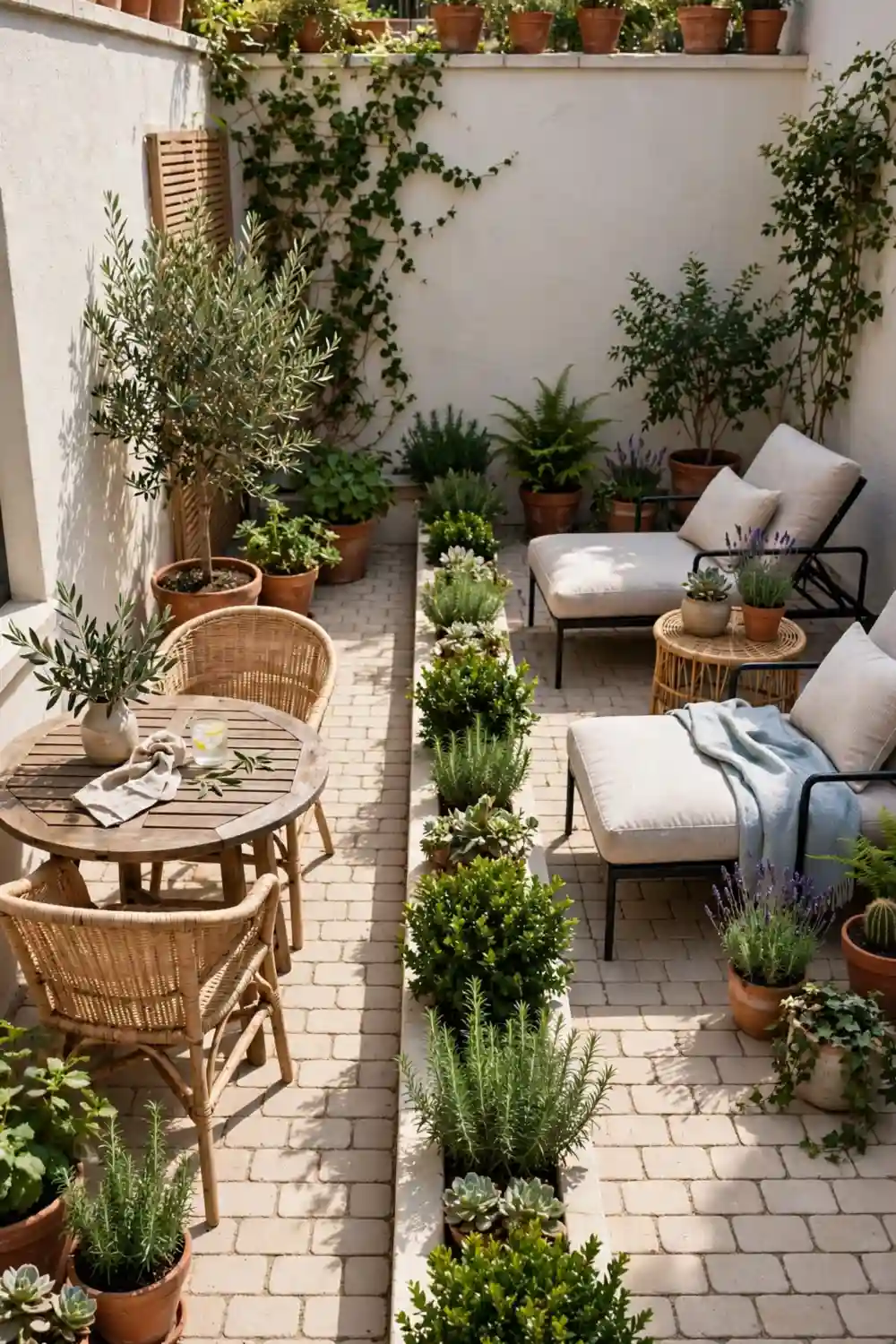
A small courtyard can still hold two zones. Start with a casual lounge zone for chatting or sitting alone, then add a compact dining table if there is room.
Measure first, then map the furniture with painters’ tape before you buy anything. One generous seating area reads as more spacious than several small ones, so resist the urge to fill every corner.
- Relax — a chair or two with soft cushions
- Dine — a compact table, taped out first
- Cook — a portable barbecue on a trolley
7. Add shade you can move
Walls store and radiate heat, and a courtyard can run noticeably warmer than the open garden. Removable shadecloth panels cover exactly where you need it, and a deciduous shade tree earns its place twice — summer shade and winter light.
For shade that stays put, a pergola is the fixed option, and our guide to how to build a pergola sets out the steps. Keep the air moving.
- Moveable — removable shadecloth panels
- Living — a deciduous tree
- Fixed — a pergola for permanent shade
8. Light it for the evening
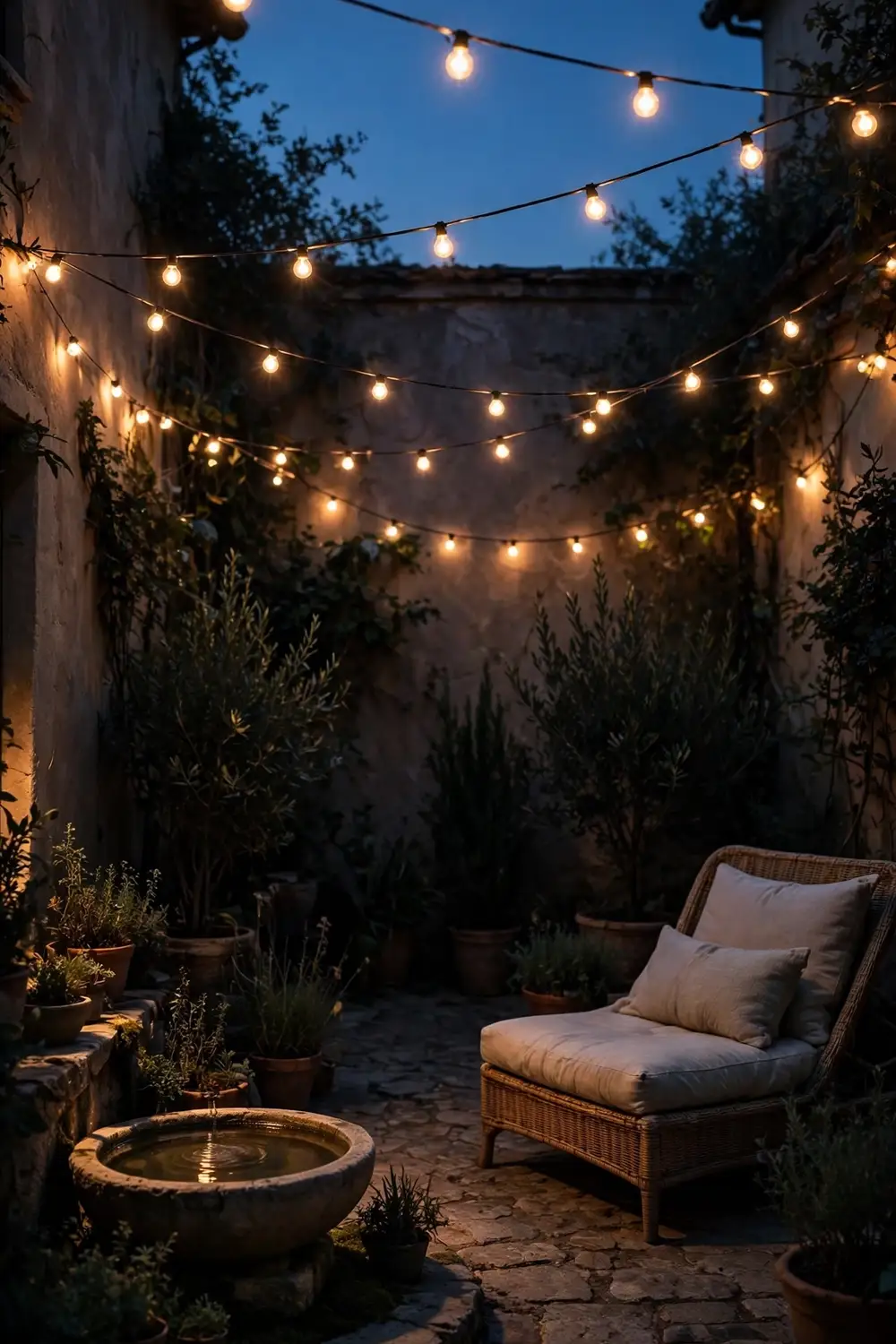
A courtyard you can only use in daylight is a courtyard you barely use. Festoon lights strung across the seating zone turn an ordinary evening into something worth sitting out for.
One uplight in the feature tree doubles the hours you enjoy the garden — in winter, the best value accessory there is. Add citronella candles for the mozzies, and white flowers near the seating read beautifully at dusk.
- Glow — festoon or string lights across the seating zone
- Drama — one uplight in the feature tree
- Comfort — citronella candles for the mozzies
9. Give it water and a focal point
Every courtyard needs one place for the eye to land. A water bowl, a birdbath or a small fountain does the job.
Place a single focal point off-centre to draw the eye from the edges. Cool colours — blues, whites, greens and purples — make small spaces seem larger, so save reds, yellows and oranges for a pot or two.
- Water — a bowl, birdbath or small fountain
- Focus — one feature, placed off-centre
- Colour — cool blues, whites and greens
What suits your aspect
Aspect decides what thrives, and Australian aspects invert the northern-hemisphere advice you will find online. Match the plant to the aspect, not the other way around.
| Aspect | Conditions | What suits |
|---|---|---|
| North-facing | Sunniest and hottest | Olive, agave, dragon tree, citrus in pots |
| East-facing | Morning sun, afternoon shade — the gentlest | Gardenia, camellia, ferns |
| West-facing | Brutal afternoon sun plus stored heat | Succulents and tough natives only |
| South-facing | Shaded, cool, often damp | Tree fern, clivia, xanadu, lady palm, mondo |
Keeping it looking good
All of these small courtyard ideas depend on one unglamorous habit — watering. Pots dry faster than any garden bed, and in summer smaller ones can need water daily.
Use a premium potting mix, never garden soil, and water until it runs from the drainage holes so the whole root ball wets through. A simple dripper system on a tap timer costs less than replacing one dead maple and removes the problem entirely.
Keep the rhythm seasonal. Spring is for feeding established plants, topping up mulch and checking irrigation. Summer means watching the watering, especially pots and new plantings.
Autumn is the main planting window, and winter is for light pruning and checking screens, fixings and paving for movement or pooling water. A few gardening hacks make the routine quicker, and the less you have to think about it, the more you will enjoy the courtyard.
Frequently asked questions
How do you make a small courtyard look bigger?
Use one paving colour and run it in a single direction so the eye travels across the space. Keep the layout simple, avoid crowding the edges with large pots, and put greenery on the walls instead of the floor.
A light-coloured fence or wall reflects more daylight, and clear sightlines from the main living area make the space feel more open. What works best depends on the aspect and size of your courtyard, so check the light before you commit to a layout.
What plants are best for a shaded courtyard?
Shade-tolerant species do best where direct sun is limited. Ferns, clivia, liriope and many native groundcovers all cope with shade, and layering taller shrubs over lower groundcovers adds interest. Watch the space for a few days first, since courtyards often receive different light levels across the day, and ask a local nursery before you plant — performance varies with soil, drainage and exposure.
Will star jasmine damage my walls?
No. Star jasmine twines rather than sticking to masonry, so it needs wires or a trellis to climb and will not leave the marks that self-clinging creepers do. Fix stainless wires at 30 cm spacings and give it a season to settle in — after that it covers the wall without damaging the render underneath.
Conclusion
Start with one of these small courtyard ideas this weekend — measure the space, note the sun, and pick the single change that fixes your biggest frustration. A courtyard does not need to be big to earn its keep. It just needs a plan, a few good plants, and a reason to sit in it.