A bare balcony wall, a narrow side passage, a courtyard barely wider than a clothesline. Small outdoor spaces can feel like dead space, yet they are often the sunniest spots in the house.
You want herbs by the kitchen door and flowers where you can see them, but every pot you bring home eats the floor you need for a chair, a barbecue or just walking through.
Here are 15 vertical garden ideas small spaces can actually use. Each one grows up instead of out, so the plants take the wall while you keep the floor.
Some need nothing more than a hook and a pot, others are a weekend build from a pallet or an old ladder, and a few suit renters who cannot drill a single hole. Pick the one that fits your wall, your light and your patience, then start with one row and grow from there.
Before you start: rules, light and water
Check your lease, strata rules and load limits before you add heavy pots, screens or structures. Keep doors, drains and paths clear, and make sure nothing can fall in strong wind.
Work out how much sun your wall gets. North-facing walls catch sun most of the day, east-facing ones get gentle morning sun, south-facing ones stay mostly shady and west-facing ones cop baking afternoon sun. Track the light for a few days, then start with plants that love direct sun.
Handle potting mix with care. Wear gloves and a well-fitting face mask when you open bags of potting mix or mulch, and wash your hands afterwards.
Vertical garden ideas small spaces can use
Growing upwards suits courtyards and balconies.
On the wall
Pocket planters on a frame
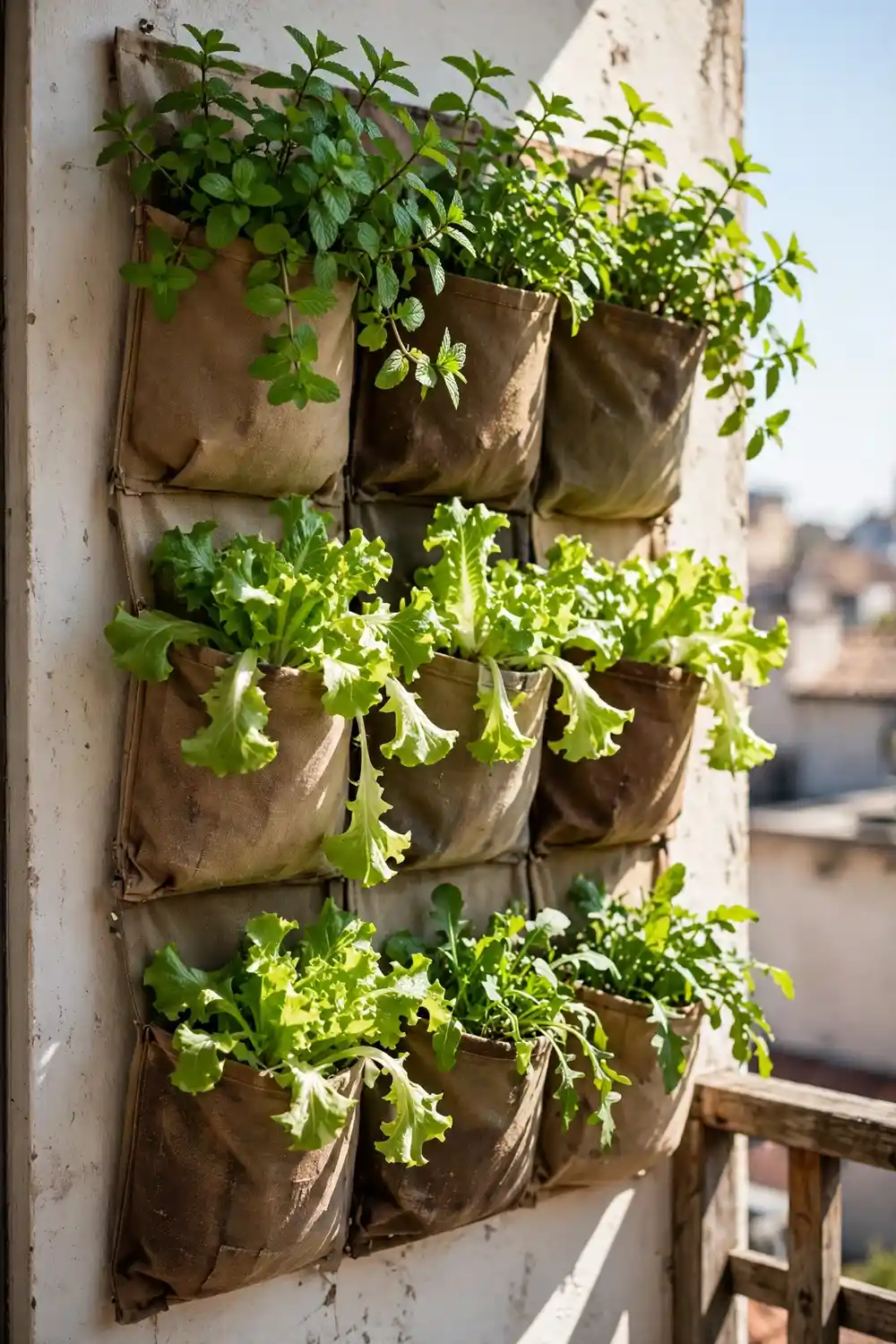
Pouches made from recycled cloth fix to a wall and hold soil for small plants and herbs. If attaching them straight to the wall is not feasible, a wooden or wire frame supports them instead.
The pockets suit leafy greens and herbs, and the panel lifts off when you move.
- Suits — a sunny kitchen wall, and renters who need something removable
- Fill with — lettuce, mint and other small leafy plants that cope in shallow soil
Upcycled pallet garden
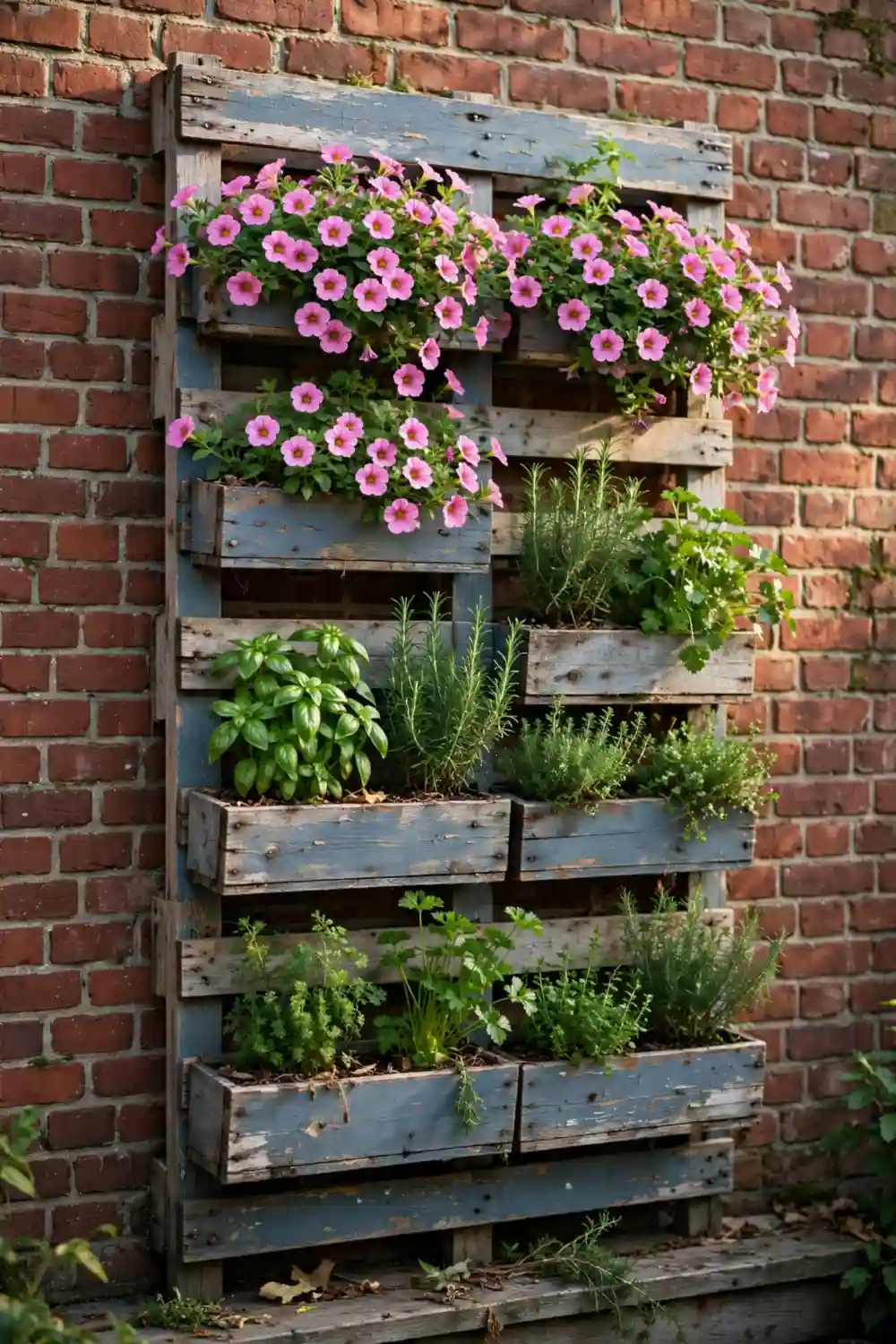
An old pallet becomes a garden with a little work. Keep the top and bottom boards for strength and pull the middle slats out.
Cut the removed slats into planter boxes, drill drainage holes, then fix them in place. Leave more room between some for larger plants, and paint the pallet or leave it rustic.
- Gap to leave — two hand-widths between pallet and wall, so water drips down
- Grow — gazanias and geraniums in sun, ferns and begonias in shade
Trellis and climber
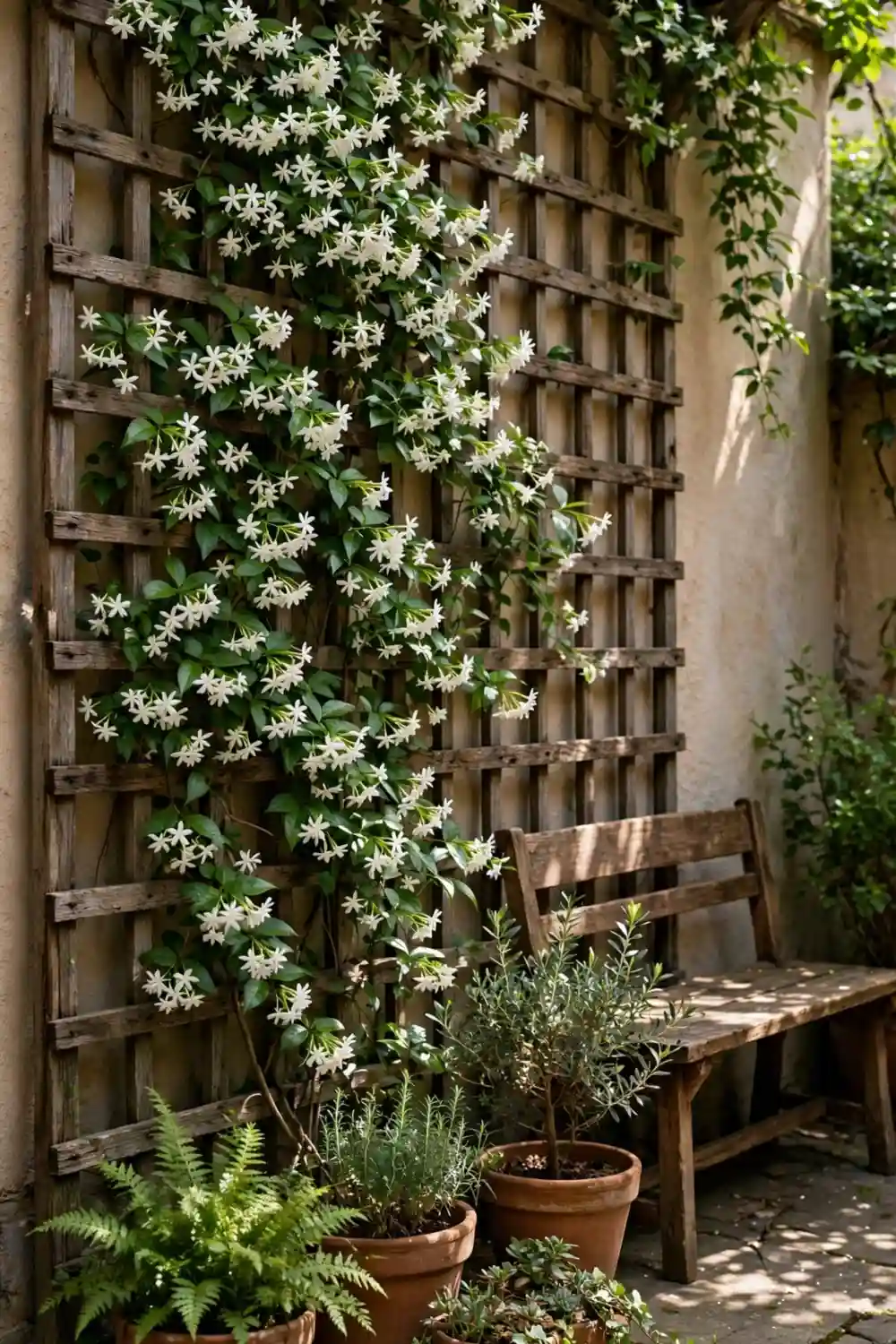
A vine in a pot with a trellis behind it is the simplest way to cover a wall with green. Plant the climber at the base and coax the stems upwards as they grow.
Star jasmine and clematis suit morning sun and part shade, while Pandorea jasminoides handles a sunny wall. The pot stays on the ground, so it moves with you.
- Best spot — a fence or wall that needs softening
- Watch for — wandering stems, and tie them in before they tangle
Gutter planters
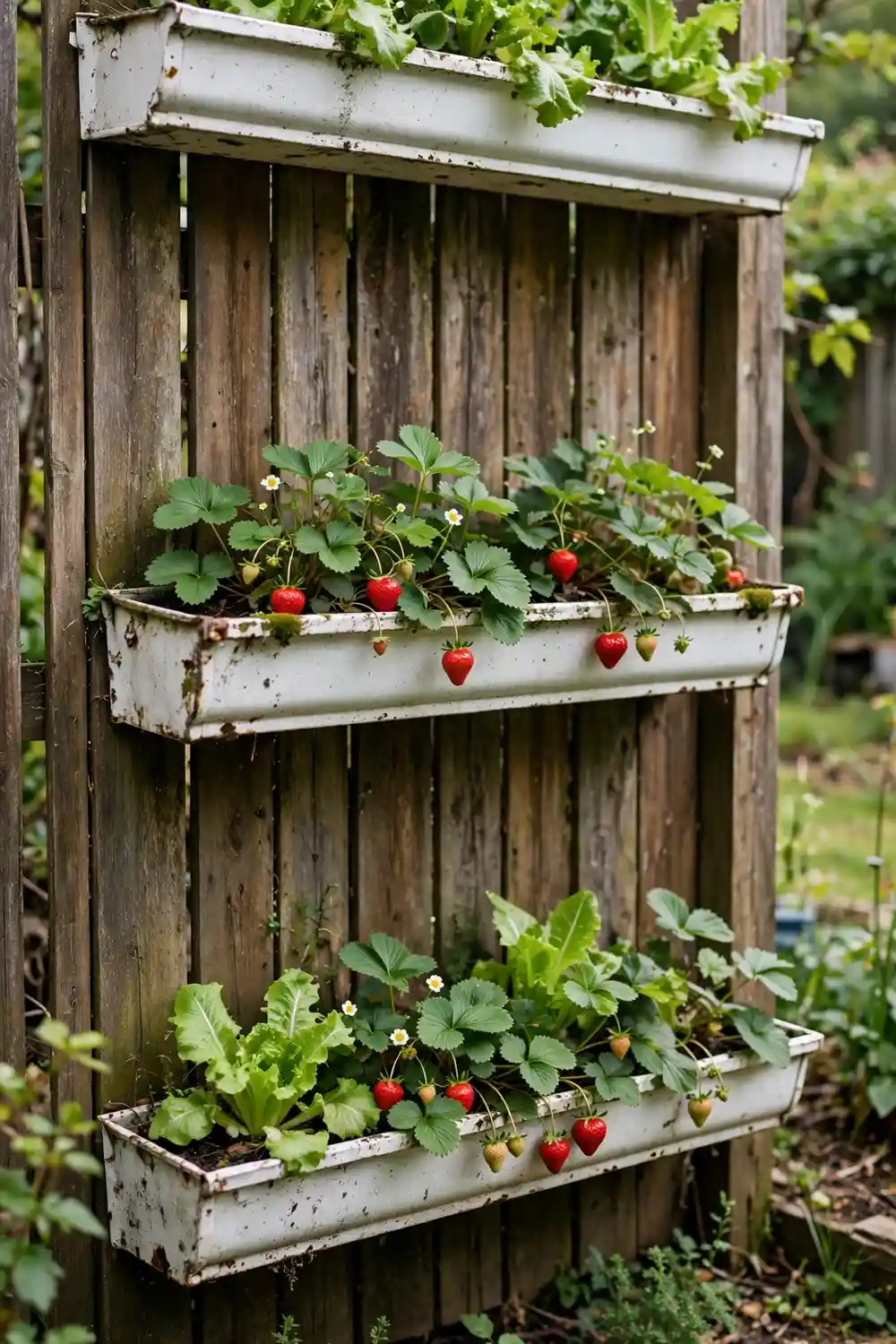
Old gutters fixed to a wall at different heights make shallow beds for small plants. Fill each length with soil, drill a few drainage holes and plant into the top.
The staggered heights look good and each row gets its own light. Lettuce and strawberries do well here. Water the top row and let it drip down.
- Fix them — level, with a slight fall so water drains
- Plant it with — lettuce, strawberries and other small, shallow-rooted plants
Pipe and bottle planters
Lengths of PVC pipe and soft drink bottles with their sides cut out make planters for almost nothing. Fill them with soil, hang them from garden wire and let trailing plants spill out.
Hessian sacks work the same way, with plants poking through. Ivy, rosary vine and wandering jew trail nicely from these.
- Hang them — from wire or hooks where drips will not mark anything below
- Watering note — water from above flows down into the planters below, so start at the top
Freestanding and renter-friendly
Stacked-pot tower
Several pots stacked on top of each other turn one footprint into a column of planting. The smallest plants go at the top, where they get the most light.
This suits herbs and salad leaves you pick often, because everything sits at arm height. It needs no wall at all. It uses less water than the same plants in a bed.
- Needs — a level spot and pots that nest neatly without wobbling
- Pick from — basil, lettuce and other quick-picking herbs
Freestanding planter and frame
A standalone planter with its own frame leans on nothing and drills into nothing, making it the easiest option for renters.
Set it against a railing or a fence, fill the tiers and plant up. When the seasons change, the whole frame shifts to a sunnier or more sheltered spot. It cools a sunny spot and saves bending.
- Renter note — no drilling and no fixings, so it moves house with you
- Best spot — a balcony corner that catches the morning sun
Lattice privacy screen
A bare railing becomes a green wall when arched lattice panels are tied to it with jute-coated wire, which will not scratch the metal. Set raised planter boxes against it and add Pandorea jasminoides for spring colour and privacy.
A mix of silvery-blue and vibrant green drought-loving plants adds layers of tone and texture.
- Privacy tip — the fuller the climber, the better the screen
- Try — Pandorea jasminoides and drought-loving plants in silvery-blue and green
Greenhouse with vertical shelves
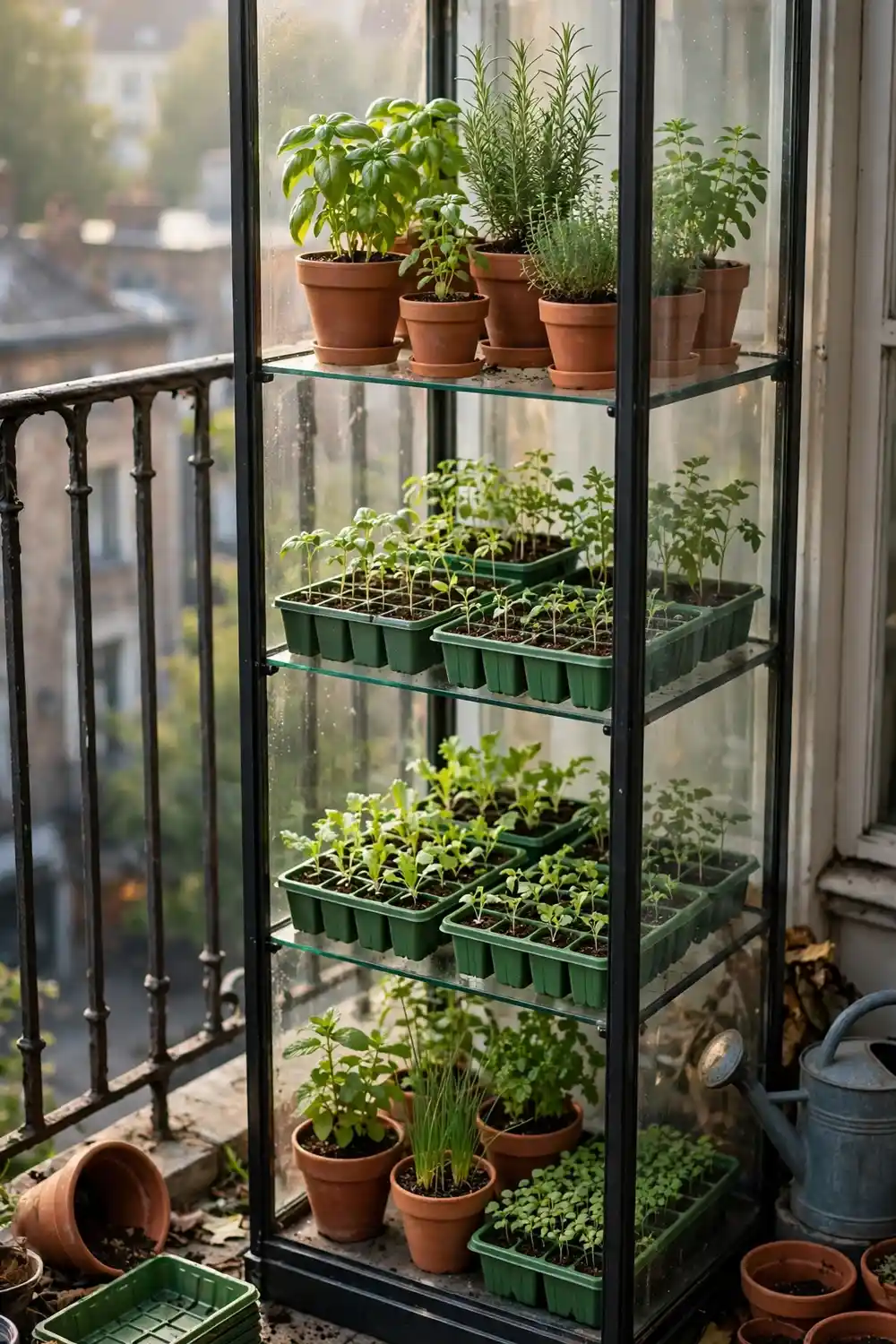
A compact greenhouse controls temperature, keeps pests and wind off young plants and stretches the growing season. Choose one with an opening roof and removable shelves.
Stack the shelves with herbs, leafy greens and blueberries. A small greenhouse heats up quickly, so open the vents and check temperature and moisture often.
- Shelve it — seedlings low, herbs at hand height, trailers where they can spill
- Watch for — heat building fast on a sunny day, and vent before it cooks the plants
Upcycled and hanging
Hanging pots from a rail
Pots hung from a rail or beam put plants at eye level and leave the floor free. Buy hanging planters, or make your own from planks and rope.
You need a solid beam or roof structure to suspend the garden from, because the frame gets very heavy once filled with soil and plants.
- Hang it from — a solid beam or roof structure only, never a light fitting or a flimsy rail
- Weight warning — soil gets far heavier once wet, so build in a margin
Ladder shelf garden
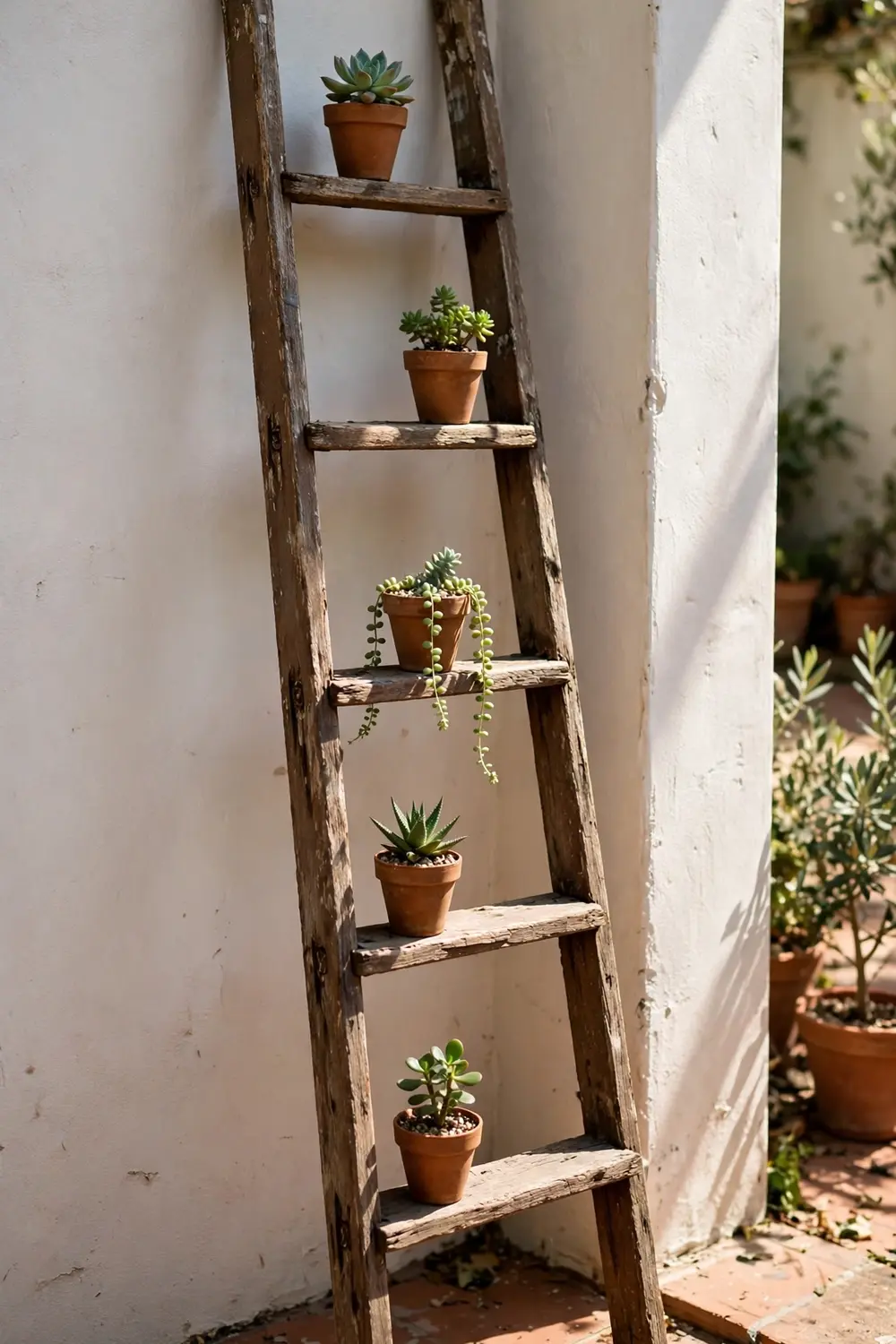
An old ladder leaning against a wall becomes a shelf garden with no building at all. Small pots sit on the steps, with the widest pots low and the smallest up high.
Hooks keep the ladder stable. It suits succulents and small herbs, and folds away when you want the space back.
- Set it — on level ground, leaning firmly, with hooks holding it steady
- Plant it with — succulents and small herbs that like a sunny step
Shoe-organiser planter
A hanging shoe organiser turns into a vertical plant holder with no tools at all. Each pocket takes a small plant, and the organiser hangs from a hook on a wall, a door or a rail.
It suits herbs and small leafy plants, and costs almost nothing to start. Water gently, as the pockets dry fast.
- Hang it — where drips will not matter, and where you can reach every pocket
- Tuck in — small herbs and leafy plants that stay compact
Stacked crate garden
Stacked crates, old pots and buckets suspended from a wall or frame make a garden out of things headed for the tip. Set each crate stable before you fill it, and leave gaps so light reaches the lower rows.
The rough timber suits a cottage look, and crates swap out easily when a plant finishes. A good home for cuttings and spare seedlings.
- Stack it — heaviest crates at the bottom, lighter ones on top
- Plant it with — cuttings and spare seedlings that soften the edges
Green screens and edibles
Kitchen herb wall
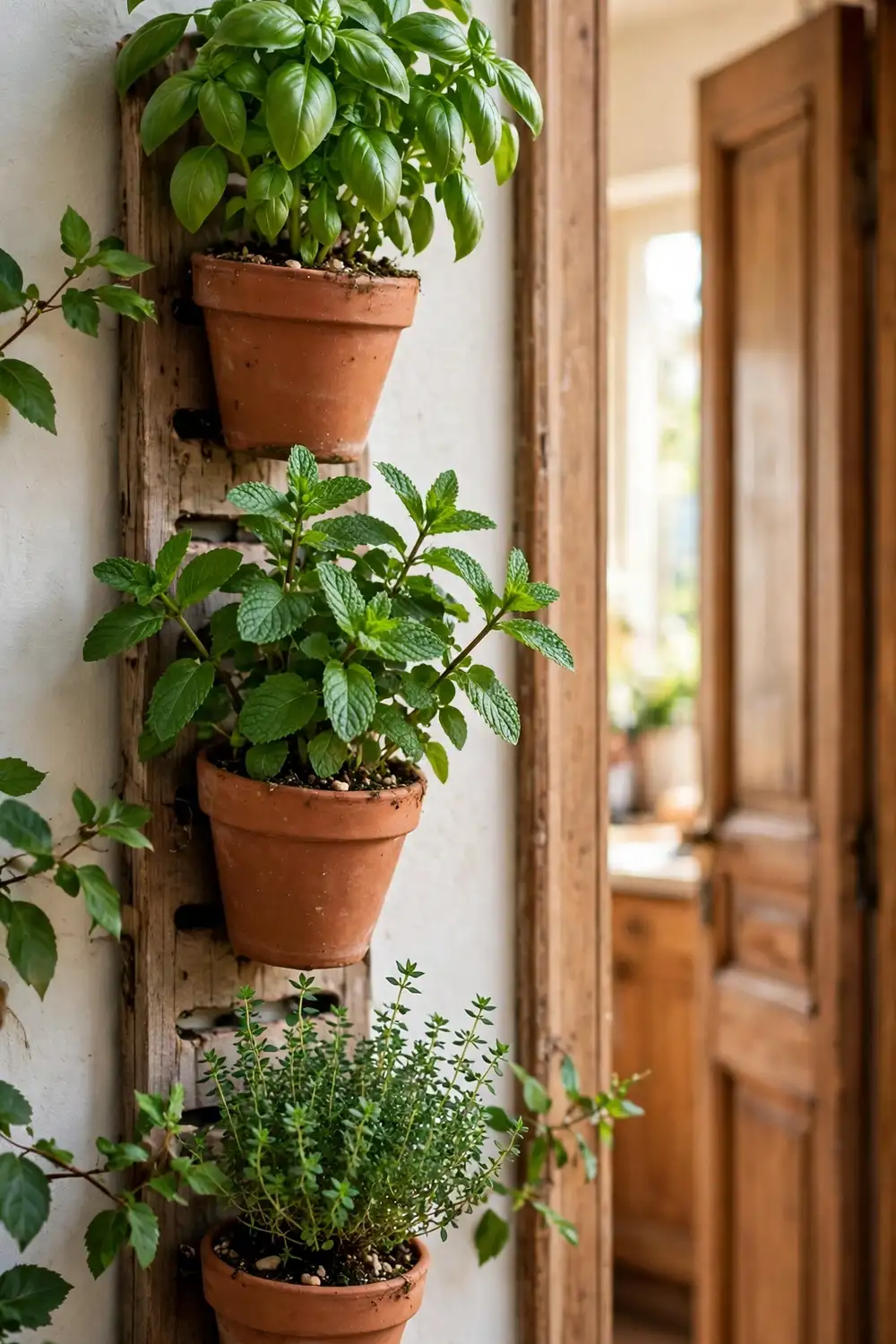
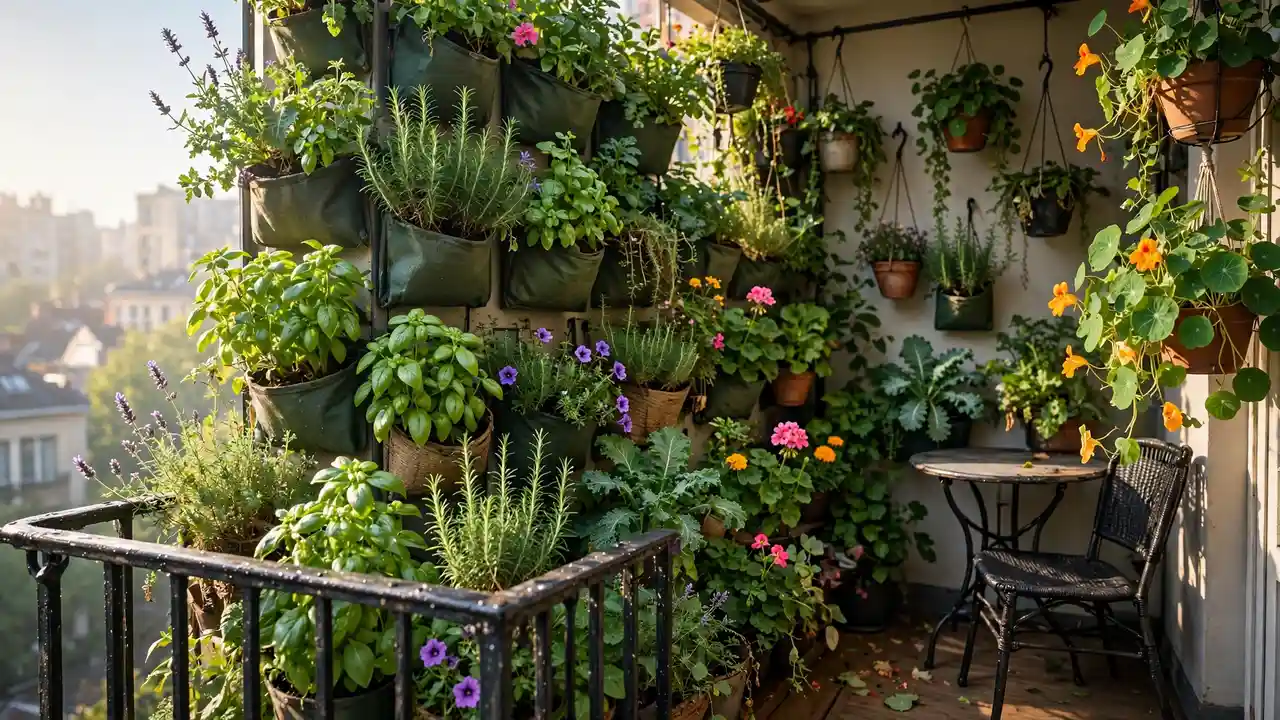
A herb wall by the kitchen door puts dinner within arm’s reach. Basil, mint, thyme, oregano and marjoram grow well in small pots, and trailing herbs spill from the top row.
What grows depends on climate and sun, so put sun-lovers high and shade-tolerant herbs low. Snip little and often, and the plants stay bushy.
- Pick from — basil, mint, thyme, oregano and marjoram
- Keep it close — the nearer the kitchen door, the more you will use it
Cascading green screen
A raised bed along a parapet, planted with sun-worshipping succulents and small trees and shrubs, makes a living screen that gives privacy and a windbreak. Add Dichondra Silver Falls and the wall reads as an established garden, not a bare edge.
Trim the trailers with a quality pruner before they swamp the plants below.
- Screen with — succulents and shrubs for structure, Dichondra Silver Falls for the cascade
- Watch for — trailers shading the plants beneath them, and trim to keep the balance
Four approaches at a glance
| Approach | Space needed | Renter-friendly | Watering | Best for |
|---|---|---|---|---|
| Pallet garden | A wall about the size of a pallet | Needs wall fixings, so check your lease first | Water from the top | Flowers and herbs on a bare wall |
| Pocket planters | A strip of wall | Hangs on a frame and lifts off when you move | Small pockets dry fast, so water little and often | Herbs and leafy greens by the kitchen |
| Trellis and climber | One pot at the base of a wall | Pot and trellis move with you | Water the pot at the base | Privacy and colour on a fence or rail |
| Stacked pots | A footprint the size of one pot | Freestanding, so it moves with you | Small pots dry quickly, so check the soil often | Salad leaves and herbs at arm height |
Keeping a vertical garden alive
Vertical gardens can dry out quickly, so watering is the habit that matters most. Small pots dry quickly, so check below the surface before you water.
Group plants with similar watering needs and mulch where it suits. Water from the top, so it flows down to the planters below.
Use sturdy pots and make sure structures cannot fall in strong wind. A few gardening hacks can stretch a small space further, like moving pots to follow the sun.
Frequently asked questions
Can renters add a vertical garden to a balcony?
Often, but check first. Review your lease and strata rules before adding a screen, trellis or over-rail planter, and use a freestanding system that needs no drilling. Make sure it cannot fall or come loose in wind.
How do I know which plants will suit my vertical garden?
Track the hours of direct sun, shade, reflected heat and wind over several days. Use the plant label as your guide, then choose varieties suited to your local climate and the conditions your wall actually receives. Aspect alone does not guarantee a plant will thrive.
How can I stop vertical garden pots from drying out so quickly?
Choose pots with drainage holes and group plants with similar watering needs. Check the mix below the surface before watering, as small pots dry quickly.
Vertical garden ideas small spaces can use need only a wall, a little light and a watering habit. Start with one row and add the next. If the project grows, our guide to landscaping costs can help you budget it.