Every house has one: a window so bright that plants go there to die. Ferns crisp, peace lilies sulk, and the sill ends up holding keys and unopened mail instead of anything green.
It feels backwards, because more light is supposed to be better. The truth is narrower. Most popular houseplants are forest-floor species that want brightness without the blast, and a truly sunny Australian window is a desert ledge, not a greenhouse.
This guide is about the other tribe, the indoor plants for direct sunlight that were built for exactly that ledge. Ten of them follow, each matched to the hours of sun it actually wants, plus the window-reading and watering rules that keep sun-lovers thriving instead of merely surviving.
Reading your Australian windows
In Australia the midday sun comes from the north, so a north-facing window is your brightest spot and the prime real estate for this list. A west-facing window is the harshest seat in the house, gentle in the morning and fierce by mid-afternoon.
East-facing glass gives the kindest version of direct sun, a few morning hours that even softer plants can handle. South-facing windows deliver brightness without a direct beam, which suits the shade-tolerant tribe instead.
Whatever you place, introduce it gradually. Even a sun-lover raised in a dim nursery corner can scorch when it is moved straight onto a hot sill, so build the exposure up over a week or two.
String of pearls is the honest near-miss here, a plant that wants the brightest indirect light rather than a seat in the direct beam.
Ten plants that want the sun
1. Jade plant (Crassula ovata)
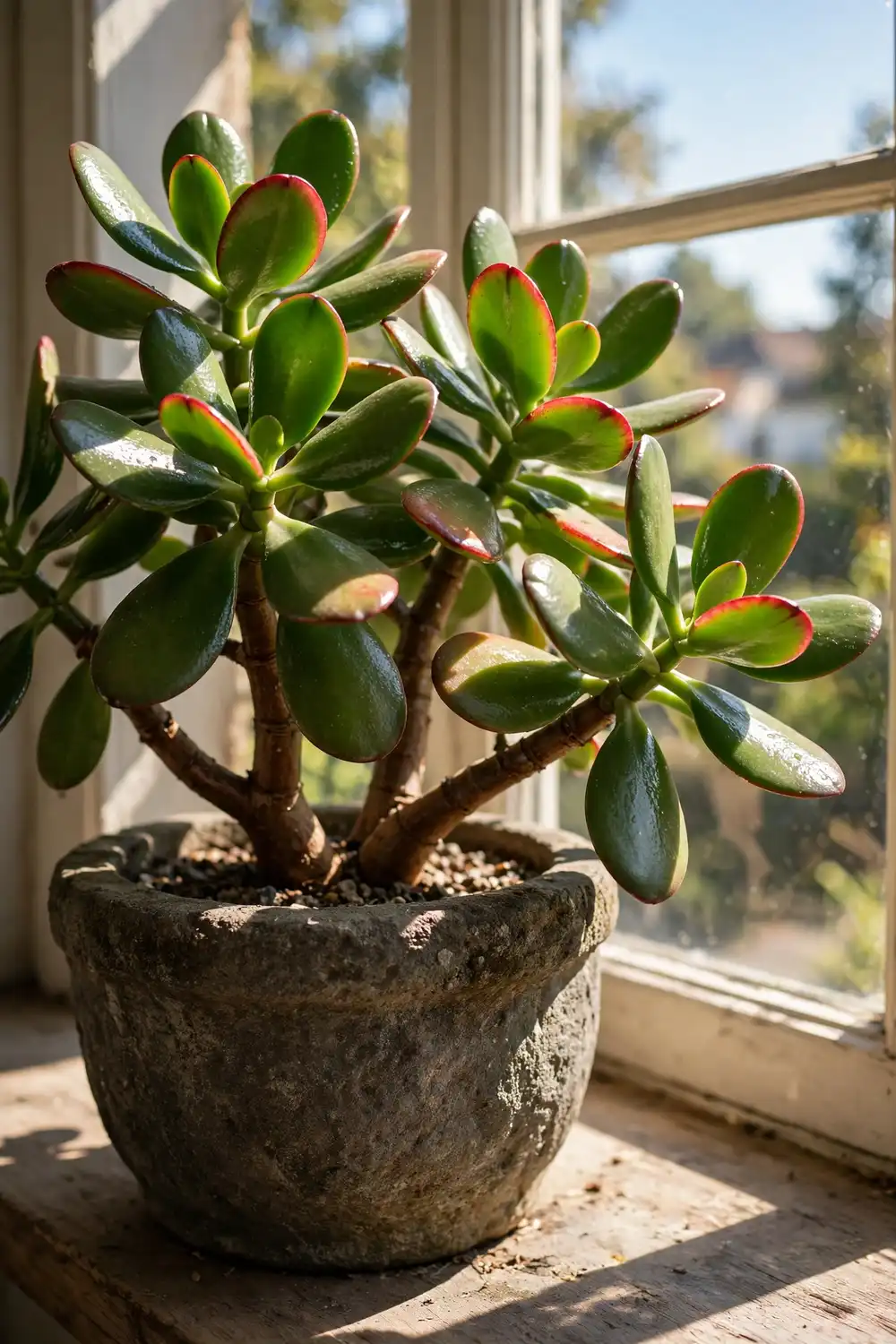
The jade is the windowsill tree, thick oval leaves on woody stems, and direct sun is what keeps it compact and sturdy. Starved of light it stretches and leans; given four hours or more of direct sun, strong plants blush red along the leaf edges.
- Sun, four hours of direct light a day as the floor, more gladly taken
- Drink, a full dry-out between waterings, then a proper soak
- Mix, gritty and free-draining, a cactus or succulent blend
- Pot, heavy, because a mature jade is top-heavy and long-lived
2. Aloe vera (Aloe barbadensis)
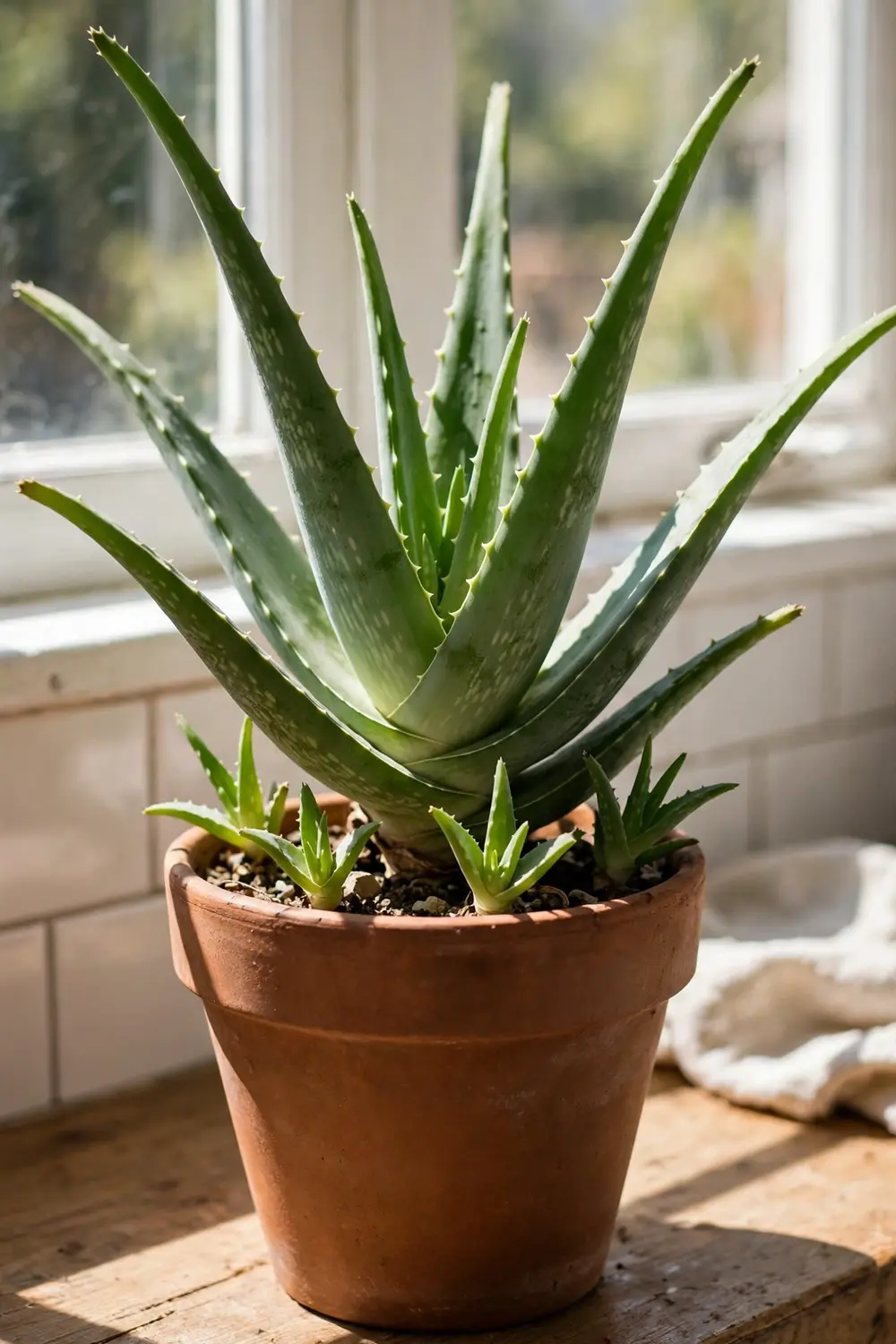
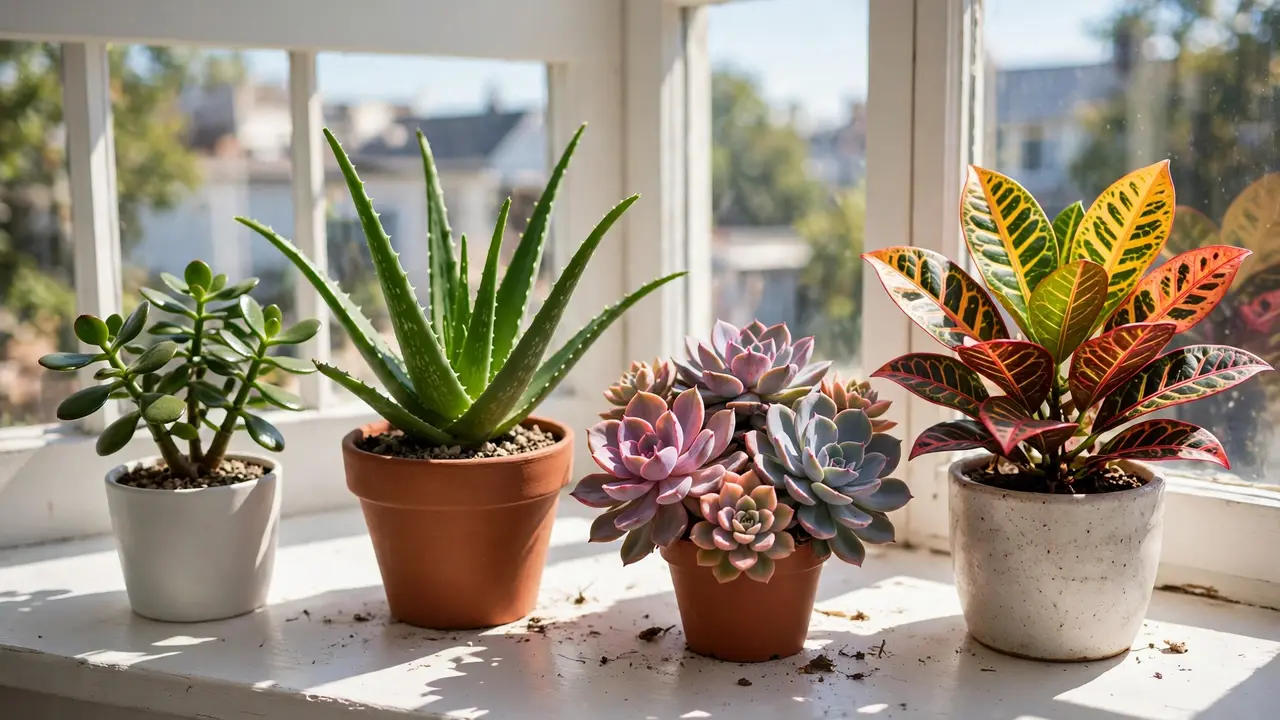
Aloe’s stiff rosette is engineered for glare, storing water in every leaf against dry spells. On a bright sill it grows tight and upright, and a settled plant starts sending up pups around its base, which is your cue that the spot is right.
- Glare, full sun, and it tolerates a lightly filtered version
- Water, let the soil dry between drinks, never keep it wet
- Container, terracotta suits it, weight for balance and air around the roots
- Habit, slow and architectural, happiest left in one place
3. Echeveria (Echeveria spp.)
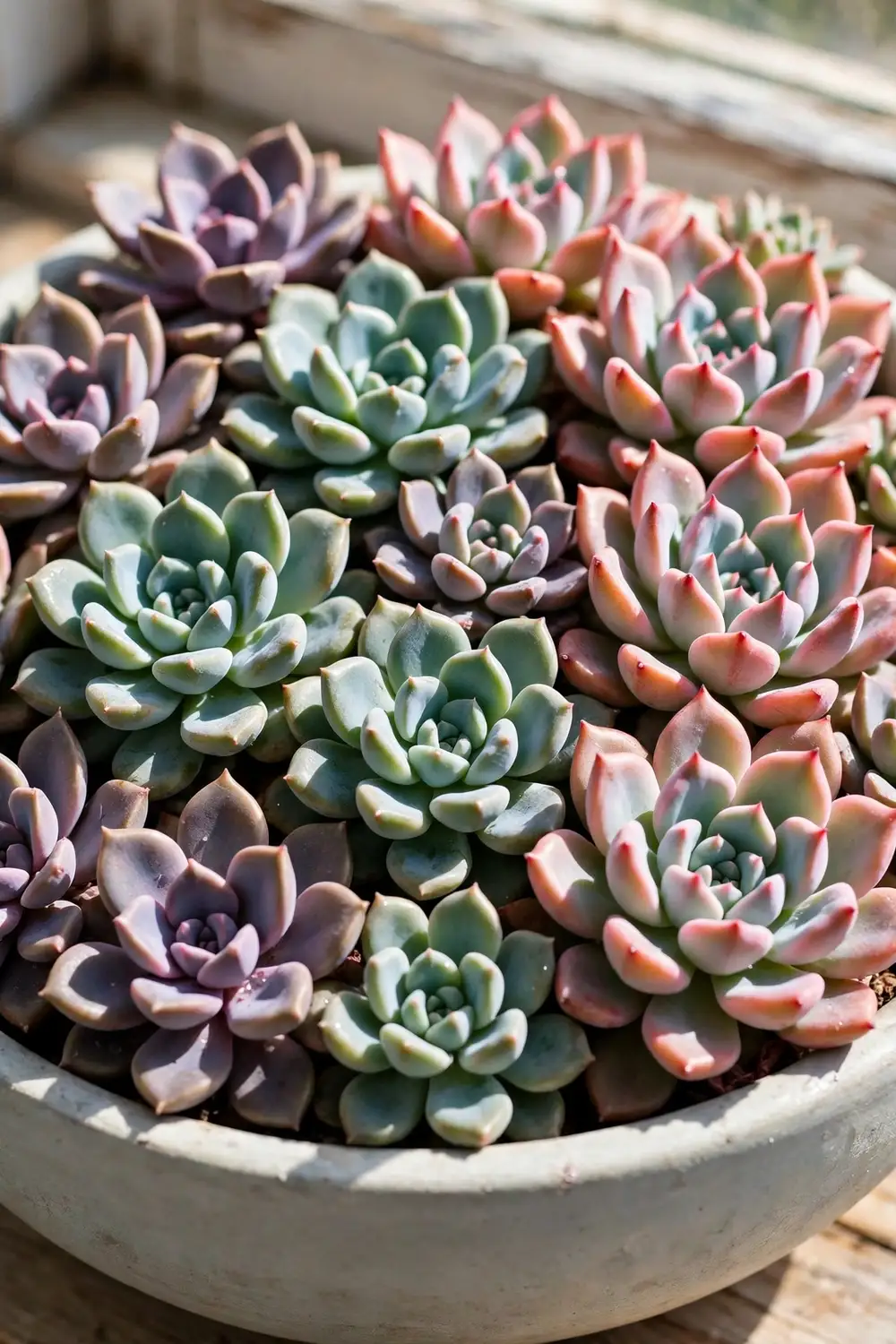
Echeveria rosettes are sun made visible, and this is the entry that wants as much direct light as your house can give it. The tight, symmetrical form only holds in strong sun, which is why a mixed bowl of different varieties belongs on the brightest sill you own.
- Exposure, maximum available, the sunniest spot wins
- Watering, weekly through spring and summer, monthly in the cooler months
- Soil, sharp drainage, a succulent mix with extra grit
- Display, several varieties together in one shallow bowl
4. Golden barrel cactus (Echinocactus grusonii)
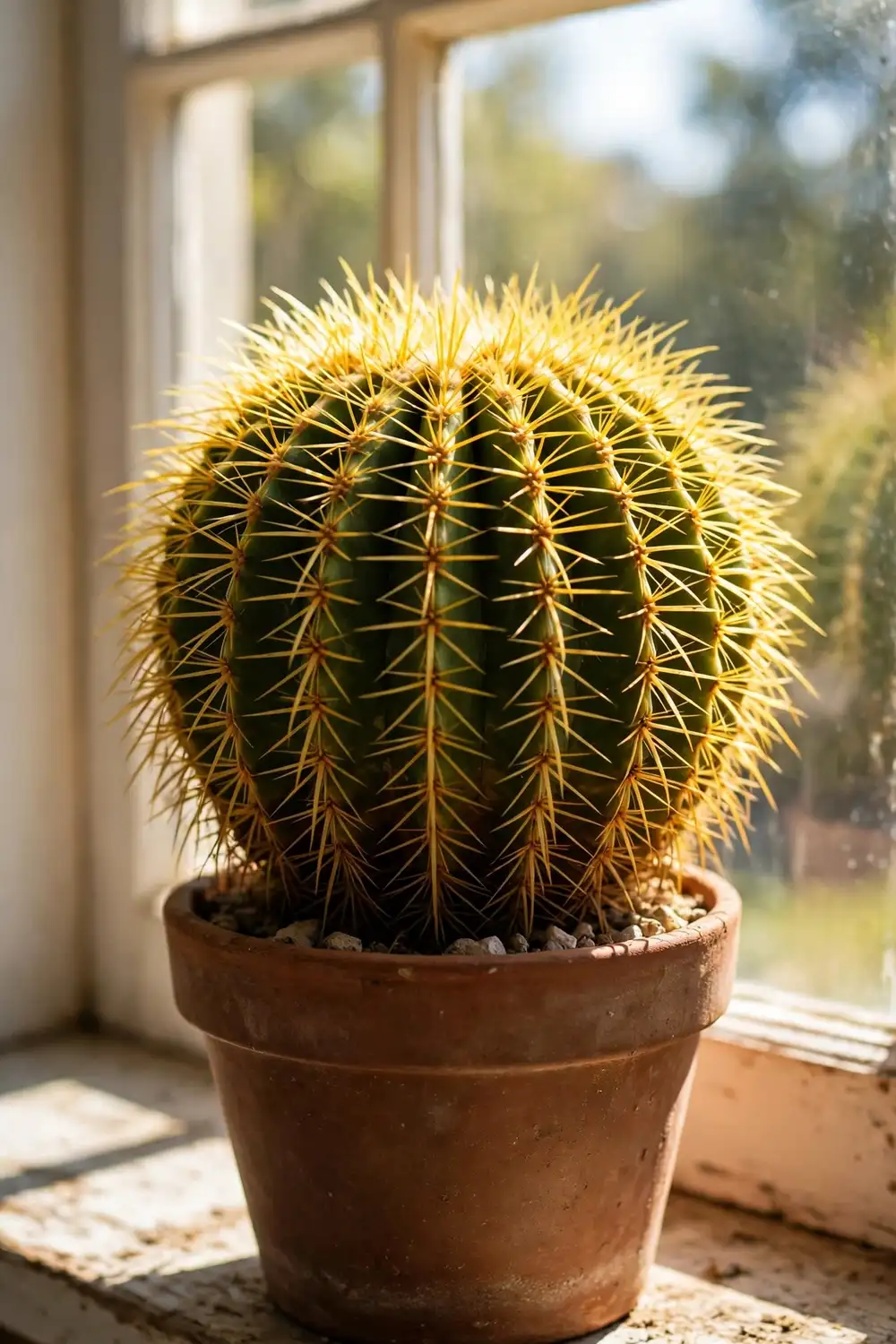
If one plant can sit in direct sun all day, it is this one, a ribbed green barrel wrapped in golden spines. It grows slowly into real presence over years, asking almost nothing in return beyond light and neglect.
- Hours, all day, every day, the strongest position on this list
- Drinks, about monthly, with a complete dry-out between
- Handling, site it away from passing elbows and curious hands
- Pace, very slow, a plant measured in years not seasons
5. Ponytail palm (Beaucarnea recurvata)
The ponytail palm is not a palm at all but a succulent with a swollen water-storing trunk and a fountain of strappy leaves. Full sun keeps the fountain dense, and the trunk’s built-in reservoir forgives a forgotten watering better than almost anything else here.
- Position, full sun to a half-day of it
- Water, allow the soil to dry between drinks, the trunk carries a reserve
- Blend, coarse and sandy, drainage above all
- Repotting, every year or two is plenty at its pace
6. Burro’s tail (Sedum morganianum)
Burro’s tail is the trailer of the group, blue-green teardrop leaves packed along stems that pour over the edge of a hanging pot. It takes bright light with some direct sun, the morning version suiting it best, and over the years the stems can trail to about 1.2 metres.
- Aspect, bright with direct morning sun, shelter at the fierce end of the day
- Thirst, roughly monthly, dry between drinks
- Placement, a high shelf or hanging pot where the trails can hang undisturbed
- Reward, a slow green waterfall for a high, bright shelf
7. Croton (Codiaeum variegatum)
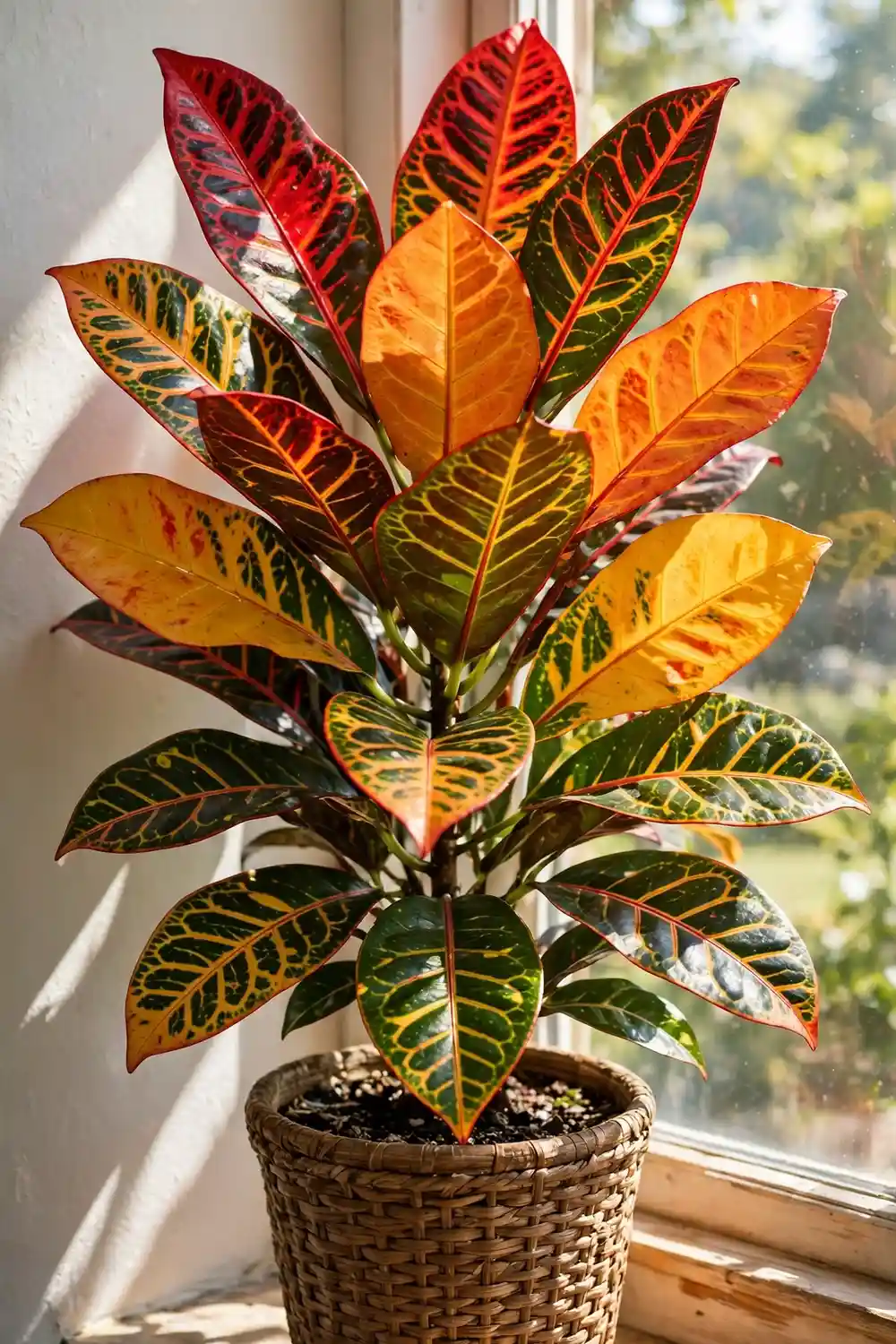
A croton’s leaves are painted in yellow, red, orange and green, and sunlight is the paint supply. In strong direct light the colours stay loud; slide the plant into a dim corner and the new growth arrives plainer and the plant sulks.
- Sunlight, full sun for full colour
- Moisture, keep the soil evenly moist rather than dried out
- Air, humidity helps, a bathroom sun trap is ideal
- Signal, fading colour means the plant is asking for its window back
8. Yucca (Yucca gigantea)
The indoor yucca is a desert silhouette, a bare trunk topped with a burst of sword leaves, and the gigantea species is the one to buy because its leaves lack the sharp spines of its cousins. It wants the strongest light you have and very little water.
- Light, full, the brightest floor spot in the room
- Water, only when the soil has dried, weekly at the very most
- Form, a slow trunk with a leaf crown, a floor plant not a sill plant
- Temperament, drought-proof and unbothered by warm rooms
9. Bird of paradise (Strelitzia reginae)
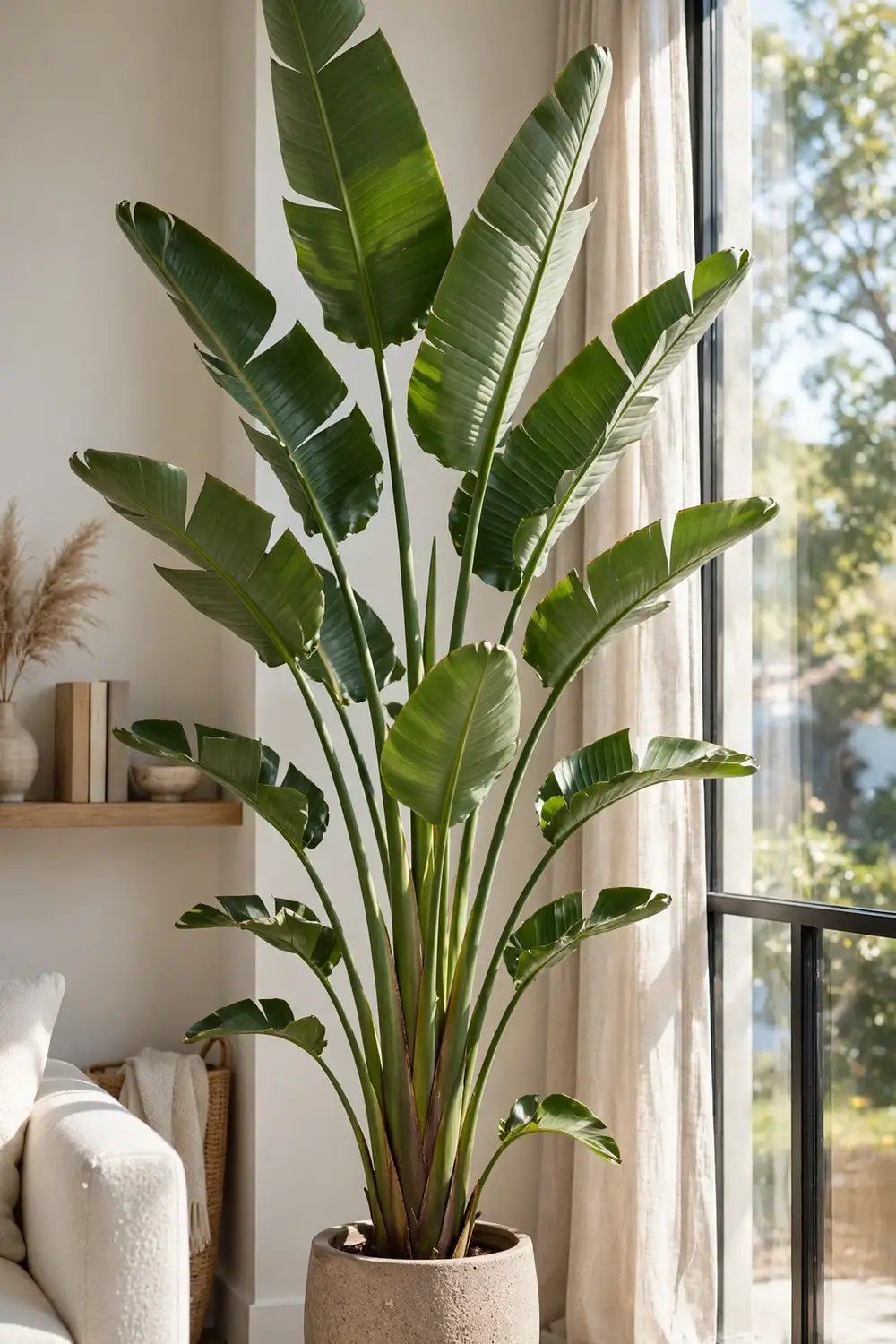
This is the statement plant, huge paddle leaves on tall stems, and it requires direct sun rather than merely enjoying it. Give it the big bright corner, keep the humidity up, and a plant past its third year can reward you with the famous crane-like flowers.
- Direct sun, required, with shelter from the very fiercest summer glass
- Water, frequently through spring and summer, drier in winter
- Moisture, high humidity suits its tropical leaves
- Patience, flowers come on mature plants, three years and older
10. Meyer lemon (Citrus × meyeri)
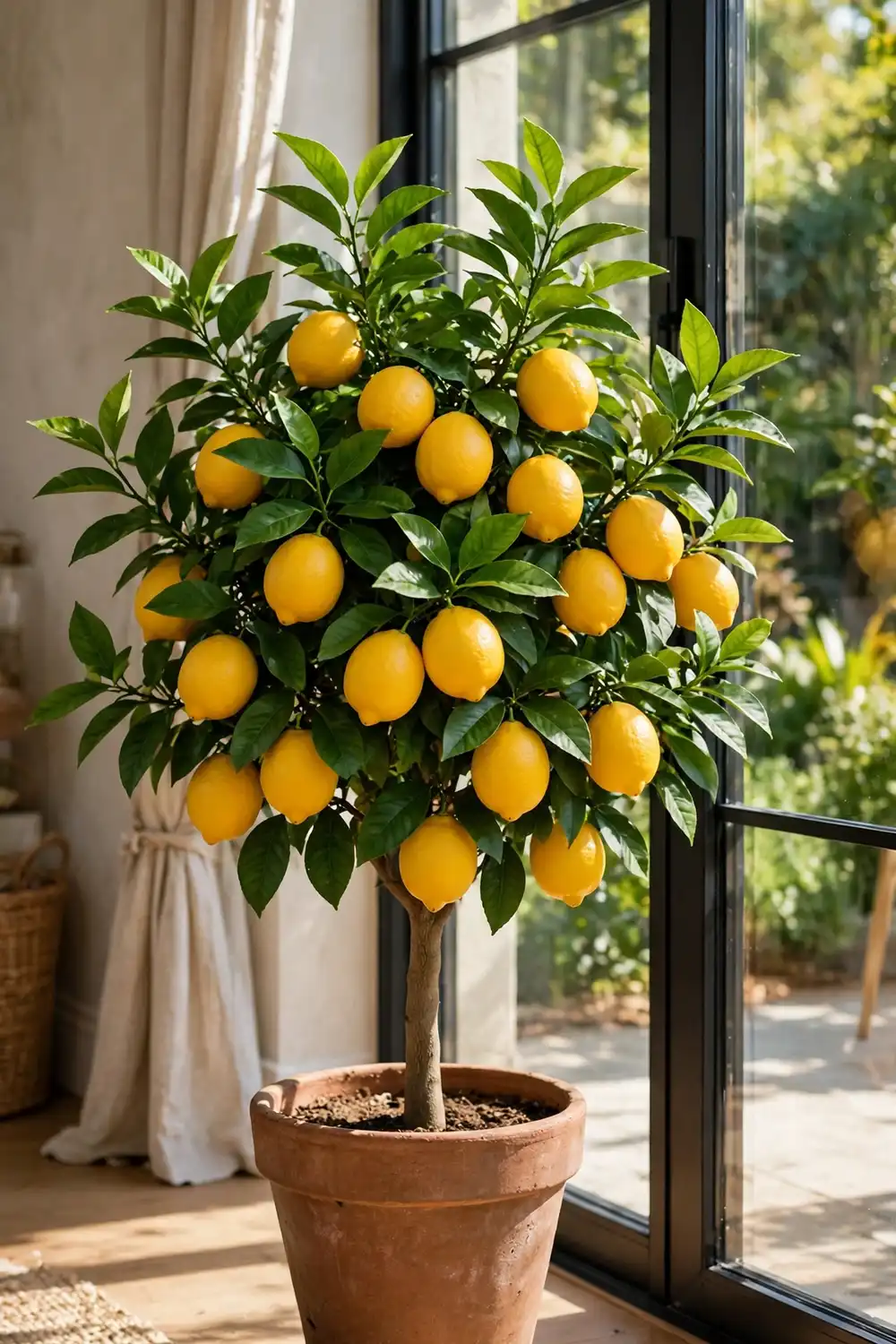
The keen gardener’s entry is a fruit tree on the patio doorstep of the house, and it is the most demanding plant here. A Meyer lemon needs eight full hours of direct sun a day to crop, so it claims the sunniest window or glass door you can offer and sulks in anything less.
- Commitment, eight hours of direct light daily, non-negotiable
- Water, thoroughly when the top couple of centimetres have dried
- Air, humidity around the plant helps it set and hold fruit
- Timeline, fruiting starts once the tree is four or five years old
The ten at a glance
| Plant | Direct sun | Watering rhythm |
|---|---|---|
| Jade plant | 4 hours or more | Full dry-out between drinks |
| Aloe vera | Full day | Dry between waterings |
| Echeveria | As much as possible | Weekly in growth, monthly in winter |
| Golden barrel cactus | All day | About monthly |
| Ponytail palm | Full to half a day | Dry between waterings |
| Burro’s tail | Bright, morning direct | About monthly |
| Croton | Full day | Keep evenly moist |
| Yucca | Full day | Dry out, weekly at most |
| Bird of paradise | Direct, shelter at summer peak | Frequent in spring and summer |
| Meyer lemon | 8 hours | When the top of the mix dries |
Keeping sun-lovers happy
The list splits into two watering camps, and keeping them straight is most of the job. The succulents and the cactus want a thorough soak followed by a genuine dry-out, while the croton, bird of paradise and lemon drink more often because plants in sunny spots lose more moisture.
Turn each pot a quarter every week or two so growth stays even instead of leaning hard toward the glass. It takes ten seconds on watering day and saves the lopsided silhouette every sun plant wants to grow into.
Scorch still happens, usually in the first hot week after a move. Pale, bleached patches on the leaves are the sign, and the fix is simple, a sheer curtain between plant and glass or a step back from the window while it adjusts.
Frequently asked questions
What houseplant can be in direct sun all day?
The golden barrel cactus is the classic answer, built for a full day of direct sun on the hottest sill in the house. Most other sun-lovers top out at around six hours of direct light with bright indirect light for the rest of the day, which is what a good north-facing window delivers.
Can pothos survive full sun?
Not happily. Full sun, meaning more than six hours of direct light a day, is too much for a pothos and will scorch the leaves. It does far better with the gentle morning sun of an east-facing window and bright indirect light after that.
The bottom line
A fierce window is not a problem to solve but a habitat to stock. Match the plant to the hours of sun the glass actually delivers, acclimatise it gradually, and the ledge that used to kill plants becomes the lushest spot in the house.
A quick pet note before you shop, because most of this list is not pet-safe if it gets chewed, the ponytail palm being the honourable exception. Check the individual plant against your household first.
And if your brightest window turns out to be not that bright after all, our guide to houseplants for beginners covers the tolerant tribe that thrives in ordinary light.