The same broken tile can cost about four dollars or well over three hundred. Both prices are real — they are just not prices for the same thing, and most of the confusion around roof tile replacement cost starts right there.
One figure buys a reclaimed tile over a yard counter. Another pays a roofer to supply, carry and fit a single tile on your roof. A third covers a counted section of storm-damaged tiles, materials and labour included.
This guide separates those products. It covers what a planned tile replacement job costs when you know which tiles and roughly how many — a section, a slope, a batch of failures — and where that job tips into a whole new roof.
The quick answer
The clearest published price for a planned, counted job comes from Roof Tile Recyclers, a Sydney tile-recycling business. For a typical job involving 20 to 100 tiles, they put the cost at $500 to $3,000 including materials and labour.
That is one Sydney business’s band, not a national survey, and it describes a specific product — a section replaced in a few hours, with no strip-off of the wider roof and, in most cases, no full scaffolding. Smaller and larger jobs are priced on different bases entirely, which is the next thing to understand.
Four ways tiles get priced
Nearly every confusing quote in this space comes from two different bases being read as one range. Keep these four apart and the numbers start to behave.
| Basis | Published figure | Source and scope |
|---|---|---|
| Per tile — reclaimed supply | Around $4 per tile + GST | Royce Roofing’s Melbourne yards; varies with profile, material, condition and quantity |
| Per tile — supplied and fitted | $180–$350 per tile | On Time Tradie, one Central Coast business — including labour and mortar |
| Per square metre — repair work | $25–$40 per m² | hipages; small jobs cost more per unit because of travel and setup time |
| Per section — 20 to 100 tiles | $500–$3,000 | Roof Tile Recyclers, Sydney — materials and labour included |
The per-tile spread deserves a moment. Four dollars buys the tile itself, second-hand, from a yard that holds hundreds of profiles. The $180–$350 figure is that tile supplied, carried up a ladder and bedded in, charged by one regional business — first-tile economics, where the callout and setup are spread over a single tile. Both are published prices; they are simply not the same product, and no honest range runs from one to the other.
For completeness, the smallest job of all — a handful of tiles swapped because water is getting in — is priced per job as a leak repair. That is a different product with its own economics, covered by our roof leak repair cost guide.
What a counted section costs
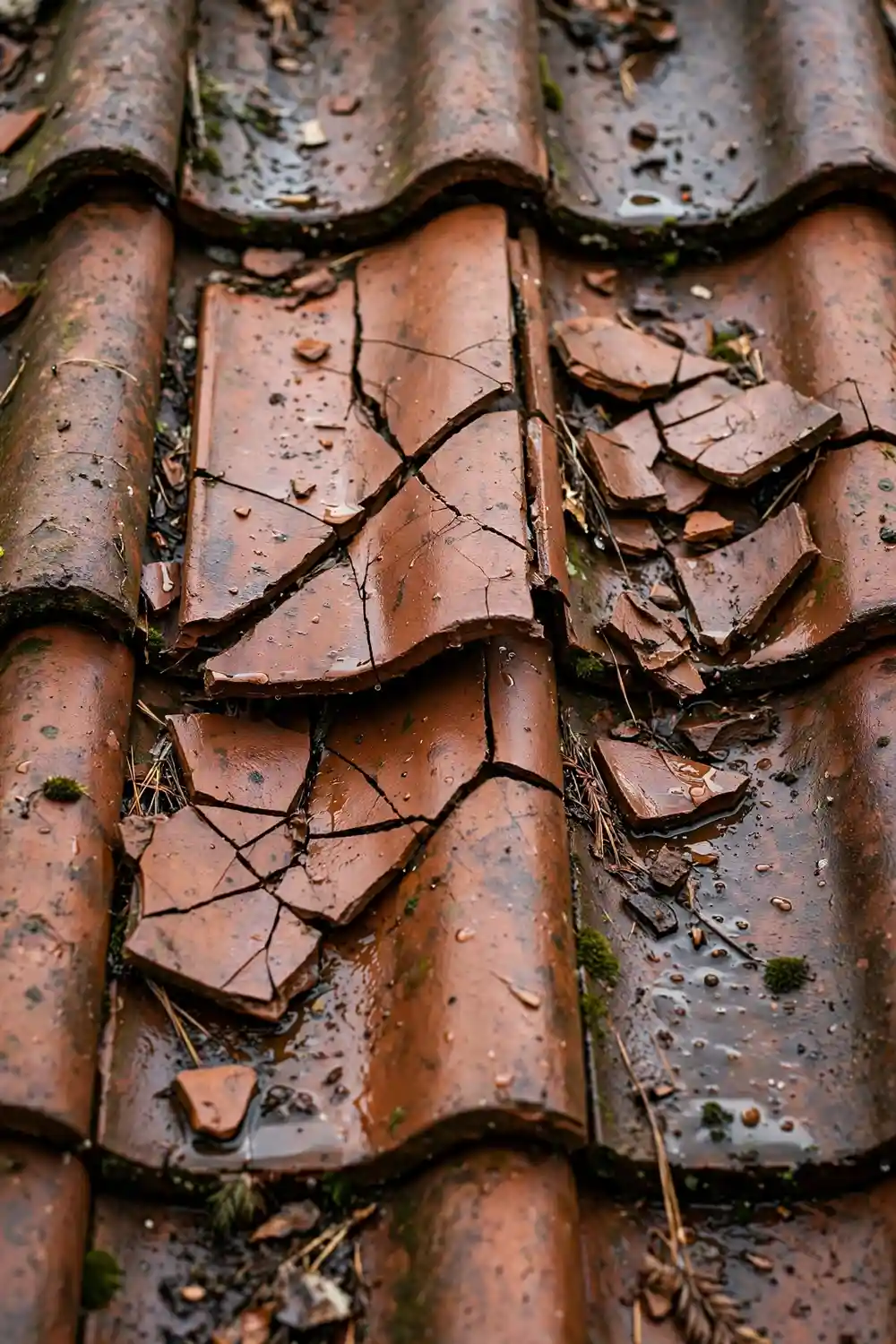
The section is this article’s home ground. A storm lifts or cracks a run of tiles, foot traffic breaks a patch, age takes out a visible area — and the job is defined by a count and a boundary rather than by a leak.
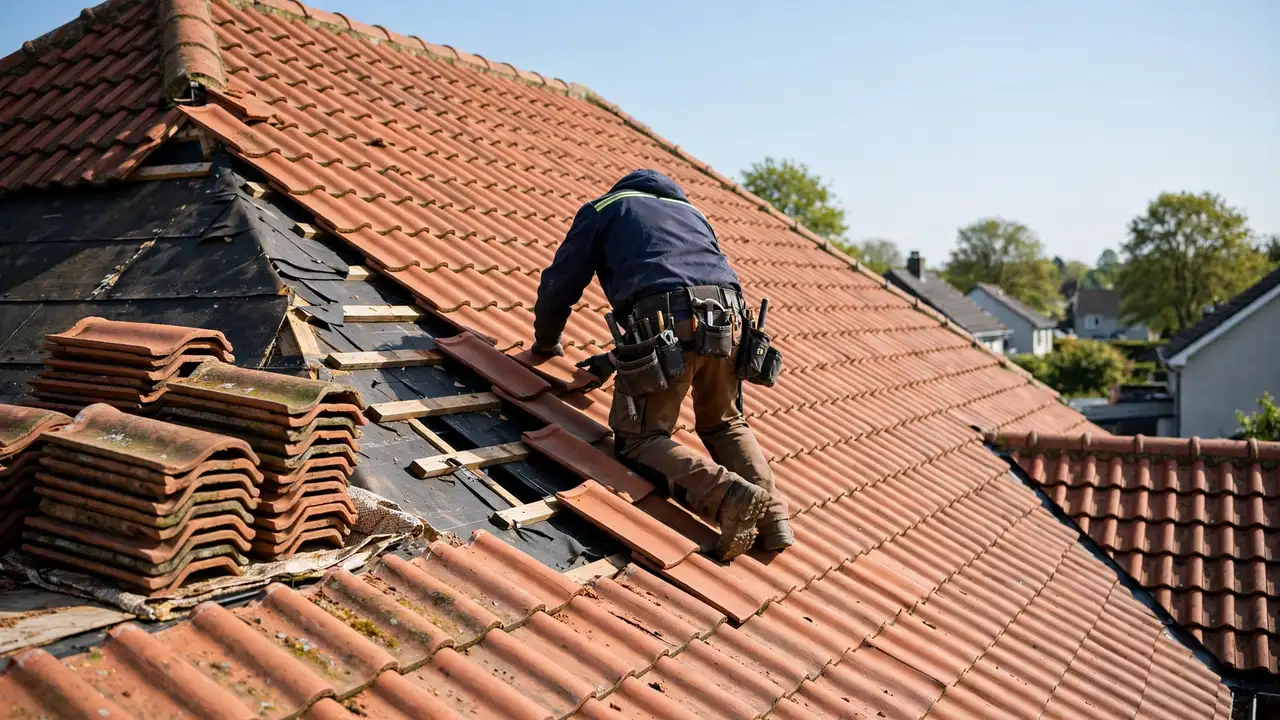
Roof Tile Recyclers describe the shape of it from their Sydney operation. Twenty to 100 tiles, $500 to $3,000 all-in. A roofer can replace a section in a few hours rather than a few days, there is no need to strip the rest of the roof, battens are not replaced wholesale, and full scaffolding is usually unnecessary.
What pushes a section toward the top of the band is the usual trio — tile type, access and complexity. Valleys, hips and ridges all add work wherever a section touches them, and the matching problem below can matter more than the tile count.
Tile prices by type — supply only
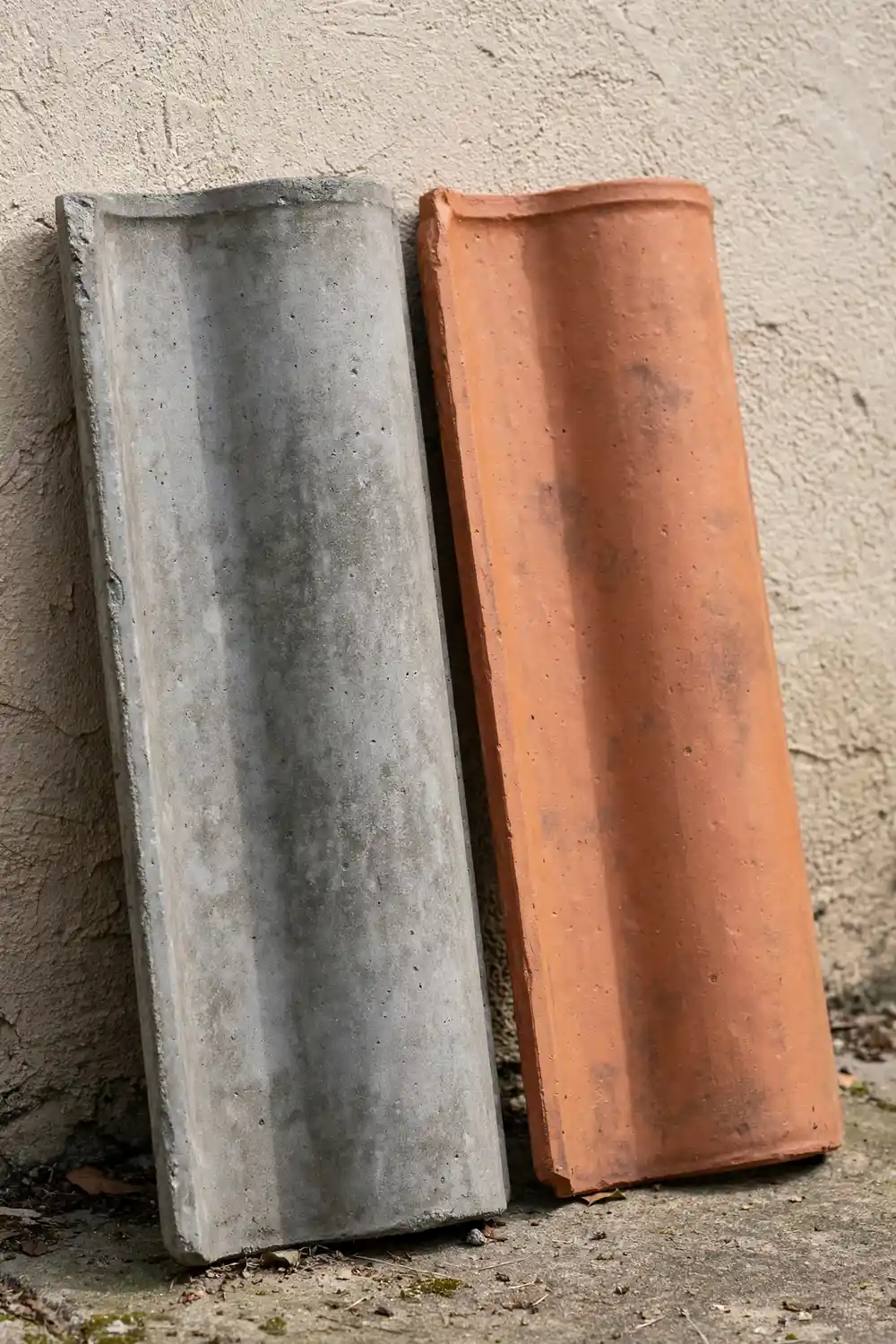
When a quote separates materials from labour, the tile line comes from supply pricing. hipages publishes supply-only figures — tiles only, installation not included — and they are worth reading with that scope in mind.
| Tile type | Supply only, per m² (hipages) | Notes from the same guide |
|---|---|---|
| Concrete | Around $110 per m² | Good-quality concrete tiles carry a 50-year warranty; cheaper tiles exist with shorter warranties |
| Terracotta | $150–$225 per m² | Mid-range around $175 per m² |
| Slate | $125–$200 per m² | Mid-range around $140 per m² |
Two honest warnings ride on this table. First, removing the old tiles is not inside any replacement figure — hipages puts removal and disposal at around $10 per square metre, charged on top. Second, the sources genuinely disagree about tile material cost. hipages’ supply-only price for concrete, around $110 per square metre, sits inside the band another national guide budgets for a finished, installed tile roof — same material, very different accounting. Neither is necessarily wrong; they are pricing different scopes, and a quote that mixes the two will confuse everyone.
Installation, where it is separated out, is where a slope gets priced. hipages puts tiled-roof installation at $80 to $120 per square metre — around $80 for a simple single-storey job, $120 or more for complex or steep work — with a pitch loading of roughly $2 to $5 more for every five degrees the pitch rises above 35 degrees, plus extra for hips, ridges and valleys. A slope quote is built from components like these rather than read off a published slope price, because no fetched guide publishes one.
The matching problem
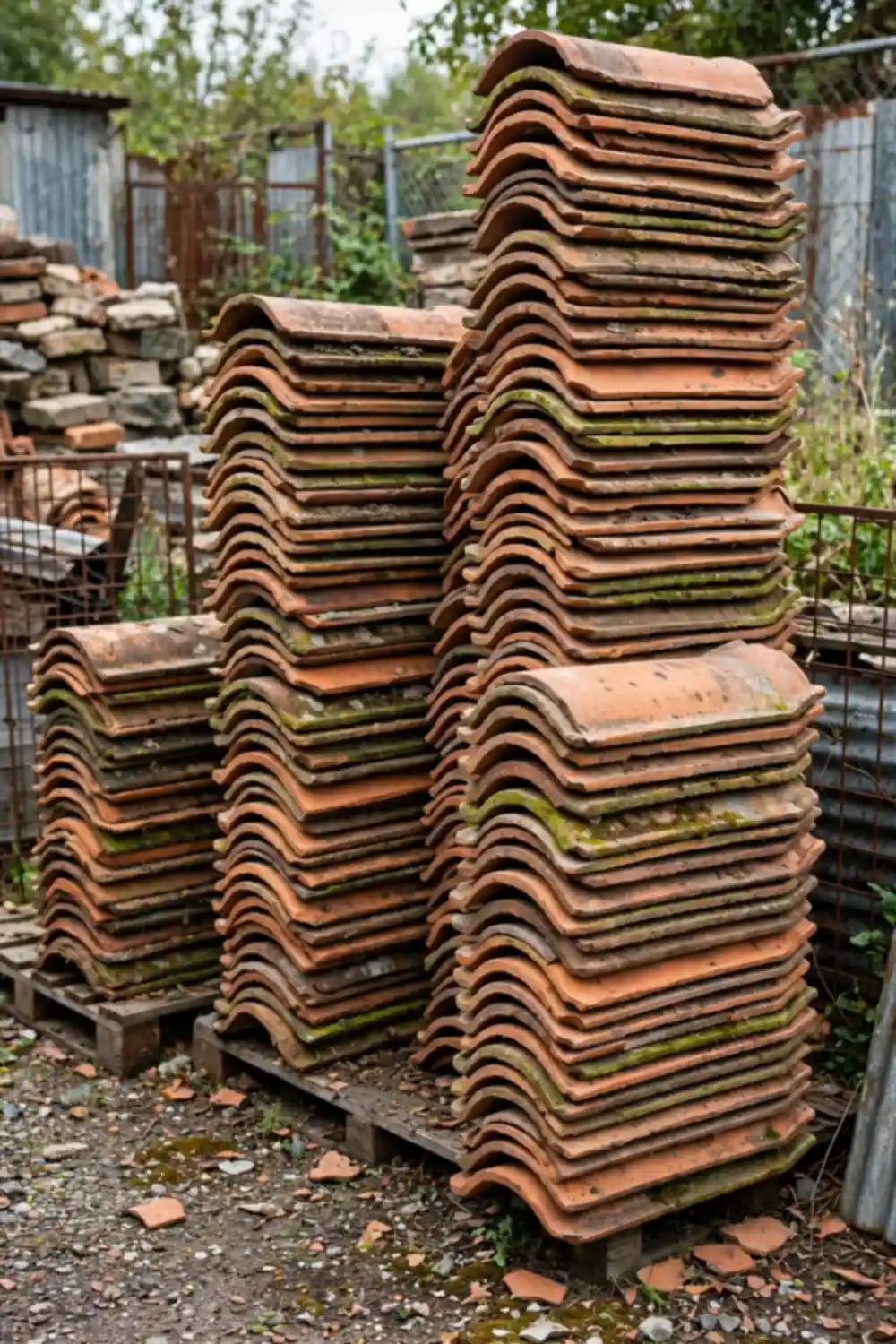
For older roofs, finding the tile is the job. Everything else is labour.
Many tile profiles from the 1970s, 1980s and 1990s have been discontinued by manufacturers, a point both recycling businesses make in detail. Roof Tile Recyclers cite warehouse stock of 150,000 to 200,000 tiles including out-of-production Monier and Bristile profiles, and Royce Roofing holds more than 200 tile types across its Melbourne yards. Their shared advice is worth hearing even with its commercial interest attached — both businesses sell reclaimed tiles, so matching-first is their position as well as their stock claim. Before agreeing to a full replacement because a tile is supposedly unavailable, check whether it is unavailable new, or unavailable altogether.
Matching is also about age, not just shape. Royce’s point is that a weathered reclaimed tile blends into an older roof far better than a fresh new one, because the roof around it has faded too.
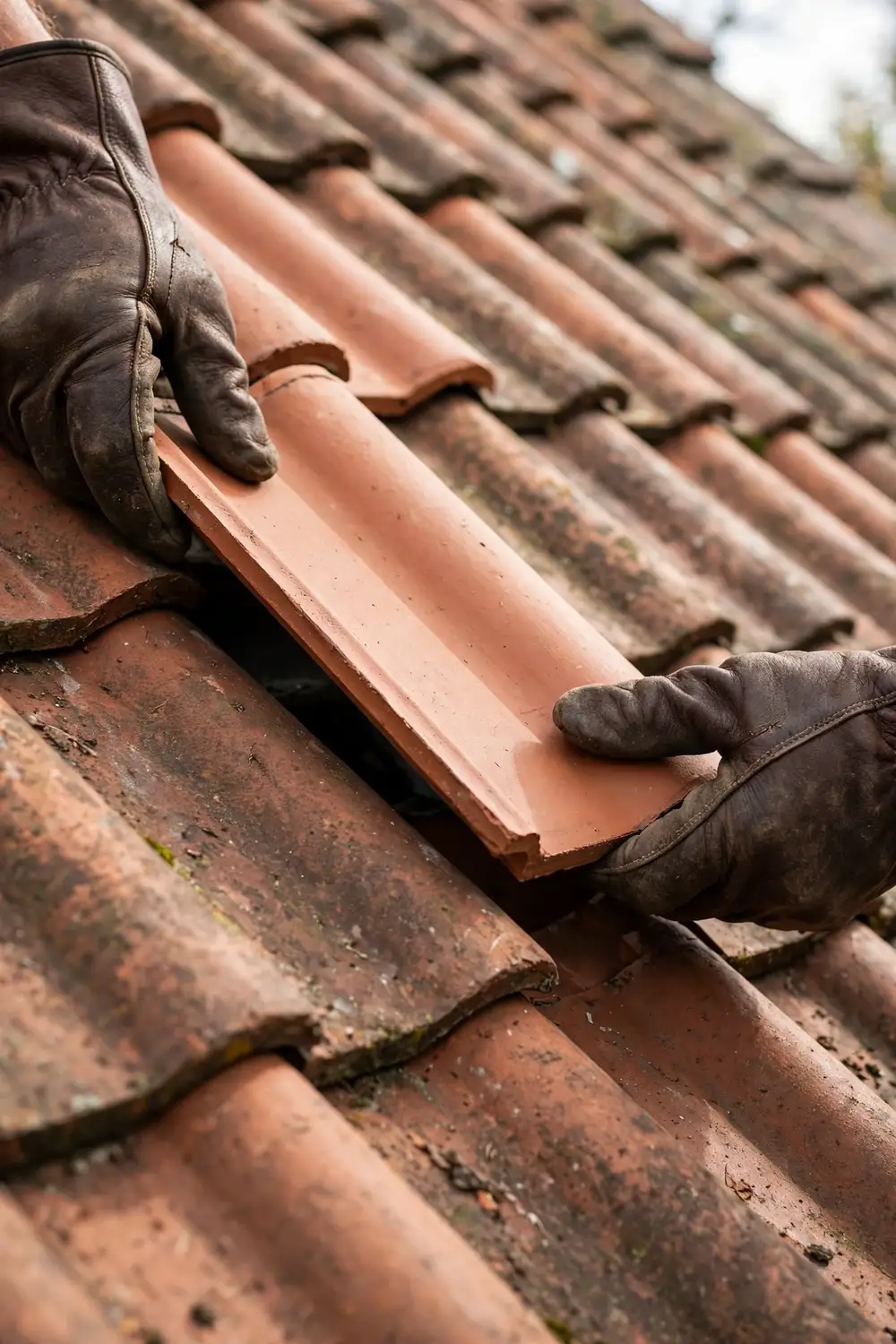
Finding the match works like this, per Royce’s method. Check the maker’s name on the back of a broken tile, note whether it is terracotta or concrete, and photograph the tile front and back in daylight plus a wider shot of the roof. Yards then compare profile, lugs and colour against stock.

No fetched source prices a matching premium as a line item, and this guide will not invent one. Rare and discontinued profiles simply take more sourcing, and reclaimed prices vary with rarity. The premium is time and effort, not a published percentage. One cheap defence, also from Royce — count the broken tiles and buy a few spares, because lifting tiles to slide a new one in can crack the neighbours, especially on older roofs.
Repair, section, or the whole roof?
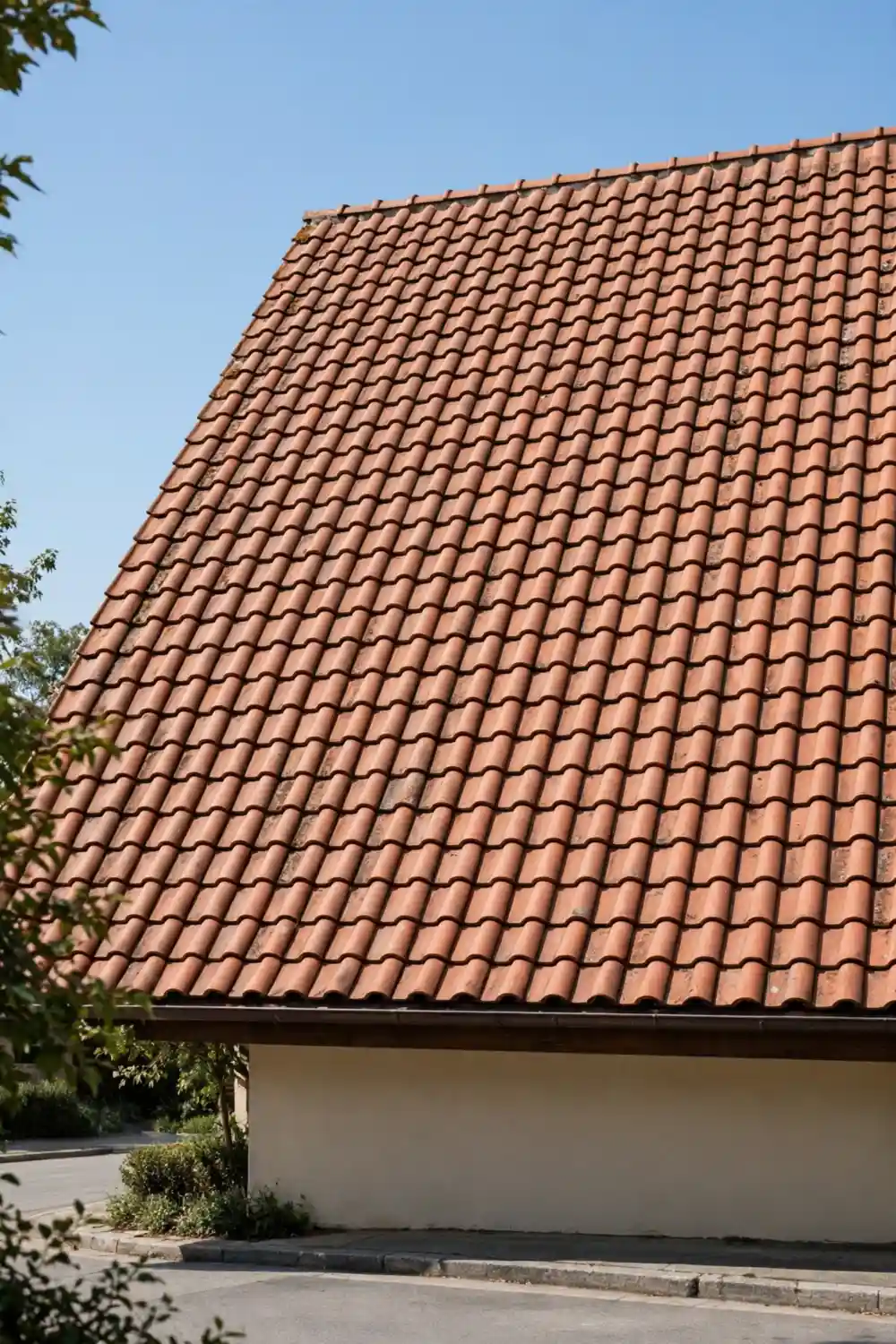
The fetched guides offer no hard tile count where repair becomes replacement, and this article will not manufacture one. What they describe is a ladder of job shapes.
A handful of tiles around one problem is a repair, priced per job. A counted section with a boundary is the middle job this guide prices. And when damage spreads across the majority of the surface, the conversation changes entirely.
What’s The Damage draws its replacement line at a roof that is over 30 years old, sagging, or carrying widespread damage, and adds that rotten rafters or battens defeat any surface-level fix. Roof Tile Recyclers frame their full-replacement signs similarly — tiles crumbling across large areas, battens sagging or rotting, leaks persisting in multiple places despite earlier repairs — though they use a 50-year mark for an ageing roof where the other guide uses 30. Both marks are recorded here; neither is adopted as a rule, because roof condition matters more than birthdays.
Restoration sits between section work and replacement on a tiled roof, and What’s The Damage raises the one question worth stealing for any restoration quote — whether swapping cracked tiles sits inside the restoration price or is charged per tile. Melbourne readers weighing that middle option will find our Melbourne guide to roof restoration, repair and replacement built for it.
When the job really is the whole roof, the numbers change scale entirely — our roof replacement cost guide prices full re-roofing by material, with whole-house examples. And if the tiles are one symptom among several, our guide to the top signs your roof is starting to fail helps you read the rest.
Frequently asked questions
Is it easy to replace a roof tile?
The swap itself is simple to describe — lift, slide out, slide in — and roofs are still no place for casual DIY. hipages notes that fall protection adds to installation cost on dangerous jobs, which tells you how professionals treat the height involved. A single accessible tile is one thing; working across a slope, in weather, with tiles cracking underfoot is another. Treat it as a roofer’s job unless the tile, the access and your own footing are all genuinely safe.
How often should roof tiles be replaced?
Individually, whenever they crack, slip or fail — there is no service interval for a tile. For the roof as a whole, hipages puts it this way. A tiled roof can last 50 years or more, concrete and terracotta tiles up to 50 years, and slate up to 100, which is why age alone rarely forces replacement — condition does.
How much are second-hand roof tiles?
Royce Roofing’s Melbourne yards price reclaimed tiles at around $4 per tile plus GST as a guide, with the real figure depending on profile, material, condition and quantity. Common profiles are plentiful; rare and discontinued ones take more sourcing.
Are second-hand roof tiles as good as new?
Royce’s position is that sound reclaimed tiles perform like new ones, and that their yards check tiles for cracks and chips before sale. They also carry the matching advantage no new tile can offer on an old roof — decades of the same weathering.
Can you match discontinued roof tiles?
Usually, yes — through the recycling yards. Many profiles from the 1970s to the 1990s are no longer manufactured, and both fetched recyclers stock out-of-production profiles specifically for matching. Bring the maker’s name from the back of a tile and daylight photos, front and back, to start the search.
How many spare roof tiles should I buy?
Count the broken tiles and add a few spares — Royce’s advice, on the grounds that lifting tiles to slide a new one in can crack those around it, especially on older roofs. At reclaimed prices, spares are cheap insurance against a second trip up the ladder.
Before you sign anything
Two of hipages’ warnings close the guide neatly. Roofers have to be licensed in many states, anyone working on the roof must be insured — and a low quote may come from an uninsured amateur, so check both before price. In Victoria, Royce notes that replacing tiles like for like generally does not need a building permit, citing the Victorian Building Authority’s practice note — other states, other rules.
Get the quote to name its basis — per tile, per metre, per section — and which tiles, new or reclaimed, it is pricing. On a tile roof, that one clarification is worth more than any single figure in this guide.