The re-roofing quote arrives in two parts, and the first part is not a roof at all. Before any new sheet goes on, the old asbestos-cement roof has to come off — and that removal is a licensed, regulated job with its own price, its own paperwork and its own timeline.
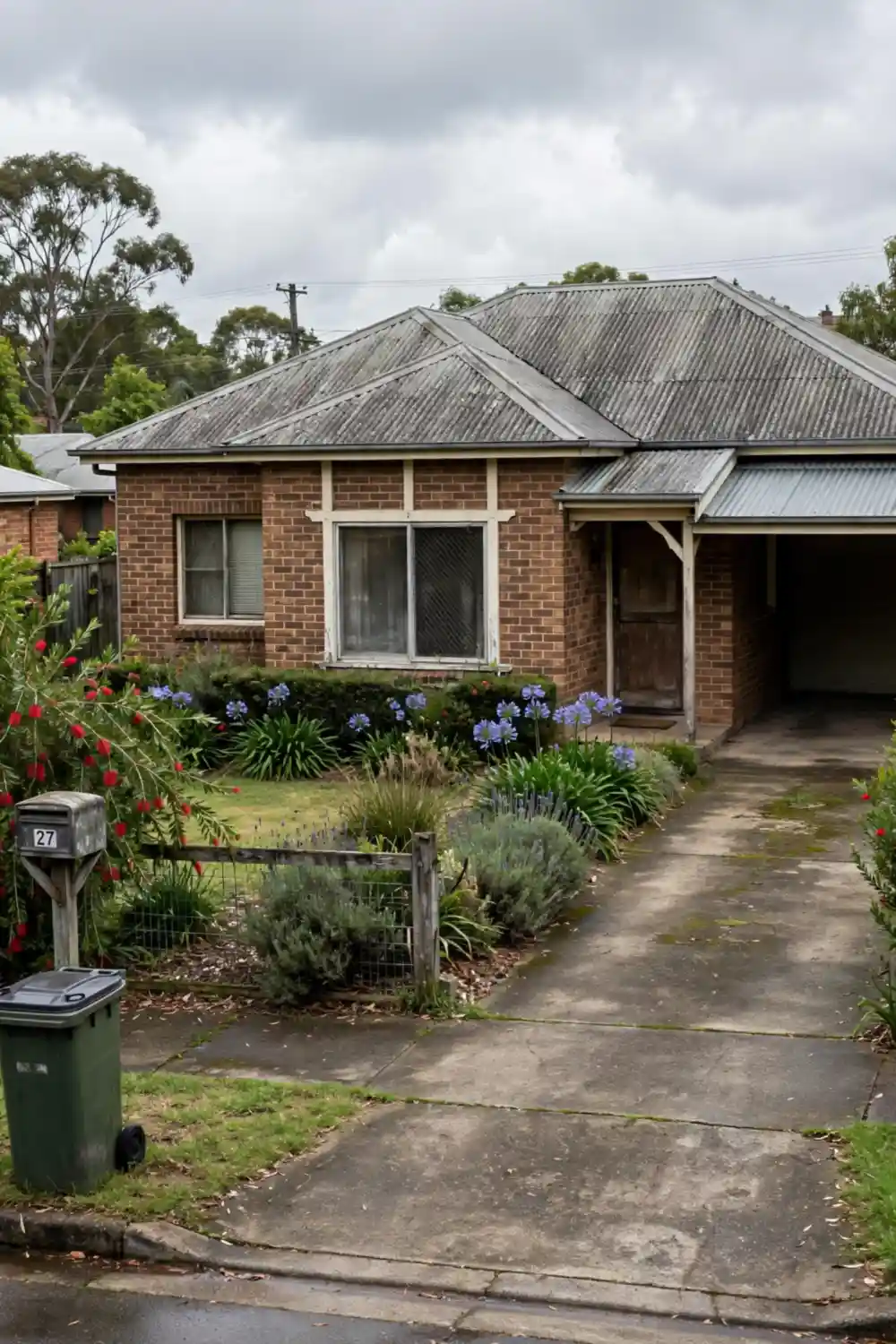
Plenty of pre-1990 homes still wear those corrugated sheets, and there is no way to confirm what they are made of by looking at them. This guide prices the removal side of the job properly — what licensed asbestos removal costs on a re-roofing project, why it is charged the way it is, and what to check before you sign — so the asbestos removal cost in a re-roofing quote stops being the vaguest line on the page.
The quick answer
Licensed asbestos removal on a re-roofing job is priced three ways in the fetched Australian evidence, and the basis matters more than the number. hipages puts asbestos removal overall at $25 to $160 per square metre depending on complexity, and prices an asbestos roof removal as a whole job at $3,500 to $5,500. What’s The Damage, in the estimate our roof replacement cost guide already carries, puts licensed removal of an asbestos-cement roof at $50 to $130 per square metre before the new roof. One Brisbane roofing business that holds its own asbestos licence prices removal at $40 to $80 per square metre.
Those figures describe different scopes, and this article never averages them. Expect also a minimum charge — hipages notes many removers set a minimum removal cost of $2,000 — plus inspection, disposal and certification costs around the removal itself.
Removal prices at a glance
Every row keeps its source and its basis. Per-metre rates, whole-job totals and one operator’s project example are different kinds of number.
| Source | Basis | What is priced | Price |
|---|---|---|---|
| hipages guide | Per square metre | Asbestos removal overall, by complexity | $25–$160 |
| hipages guide | Per job | Asbestos roof removal (total) | $3,500–$5,500 |
| What’s The Damage | Per square metre | Licensed removal, asbestos-cement roof | $50–$130 |
| Brisbane Roofing Co | Per square metre | Asbestos roof removal (its own work) | $40–$80 |
| hipages guide | Per inspection | Asbestos inspection, average | Around $400 |
| hipages guide | Per job | Tipping fees where not included | Around $450 |
| Brisbane Roofing Co | Per job | Disposal fees, weight-based, included in its quotes | $300–$600 |
One relationship is worth stating plainly. What’s The Damage’s re-roofing band of $50 to $130 per square metre sits inside hipages’ wider $25 to $160 range, which covers asbestos work of every kind. The two sources were never blended to produce either figure, and no blended figure appears in this guide.
Why removal is a separate job on the quote
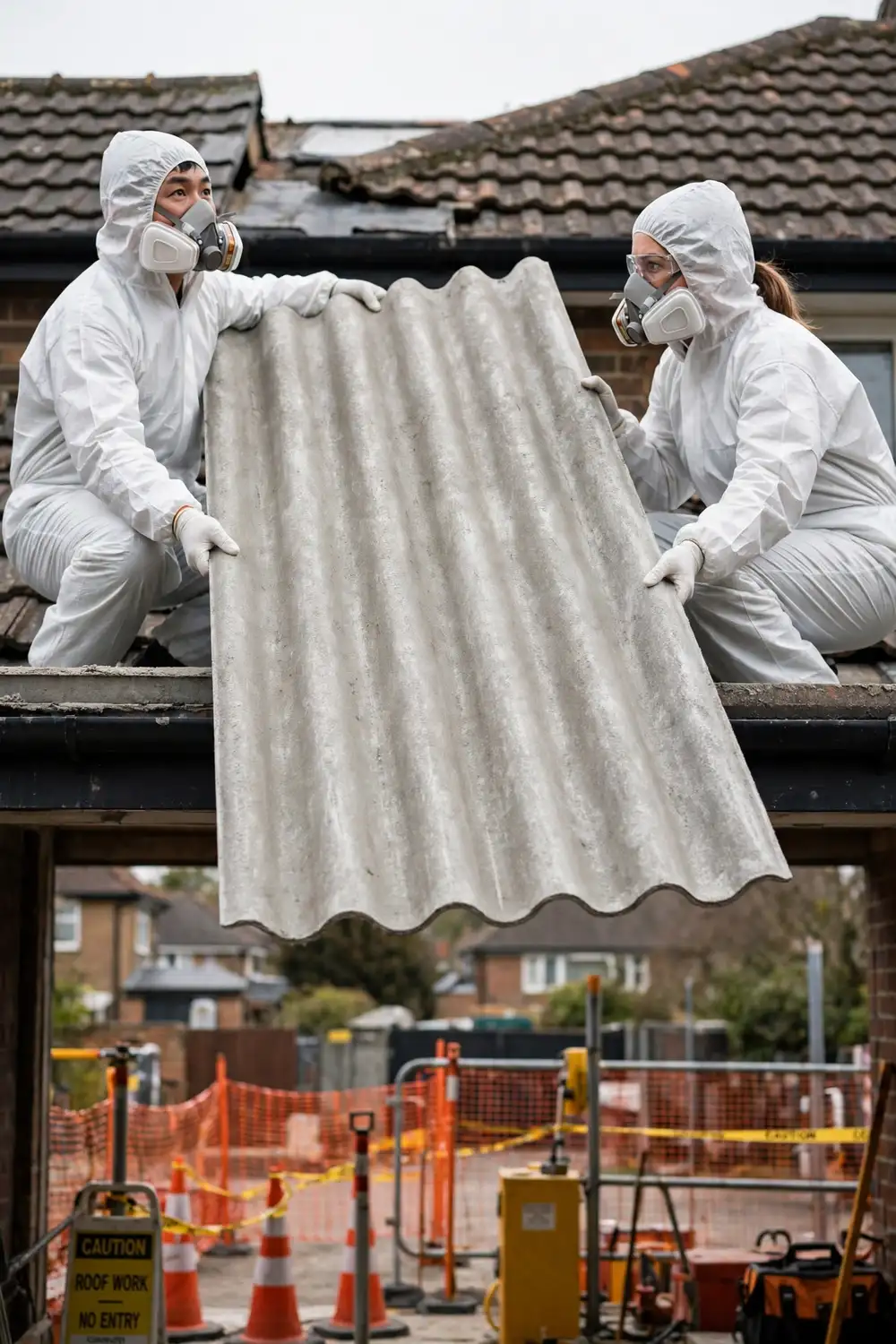
An asbestos roof is not stripped by the roofing crew as part of the tear-off. Asbestos has been banned in Australia since 2003, its removal is licensed work under work health and safety law, and the removal happens before re-roofing starts, charged separately from the new roof itself.
The licence comes in two classes. SafeWork NSW states the Class B threshold directly — a Class B asbestos removal licence is needed before anyone removes more than 10 square metres of non-friable asbestos or asbestos-containing material. Friable asbestos, the loose or crumbly kind, is a step above again. Brisbane Roofing Co, which holds a Class B licence for its own work, puts it plainly — friable material must be removed by a Class A licence holder. Most asbestos-cement roofing is non-friable, so a Class B removalist is the usual case on a re-roof, but the class on the licence has to match the material on the roof.
Notification sits behind the work as well. Removalists operating in New South Wales must notify SafeWork NSW when carrying out asbestos removal work, and in Queensland the workplace safety authority must be notified five days before licensed removal, on Brisbane Roofing Co’s account of its own jobs. hipages adds the framing that makes sense of the paperwork — once contractors work in your home, the home becomes a workplace, and every state runs slightly different rules under the same national framework.
That separation is also why the removal line on a quote deserves its own scrutiny. It is a different business, a different licence and a different risk from the roof that follows it.
What pushes the removal price up
hipages names the drivers, and roofing scores badly on most of them.
Amount being removed. Removal is priced on volume and area, so a whole roof sits at the heavy end of residential work by definition.
Access and difficulty. hipages is blunt that asbestos roofing will cost more, because the work happens at height, on a slope, with the controls the material demands. It is one reason a per-metre roofing rate should not be compared with a ground-level job.
Condition of the material. Damaged asbestos costs more to remove than sound sheets. Sheets that can come off intact are a simpler job than a roof already cracked, weathered or broken up by storm damage.
Travel and disposal distance. Where the licensed landfill sits relative to your home feeds into the quote, through both the removalist’s travel and the waste transport.
The extras around the removal
The removal figure is rarely the whole asbestos bill. These are the lines that sit around it, each kept with its source.
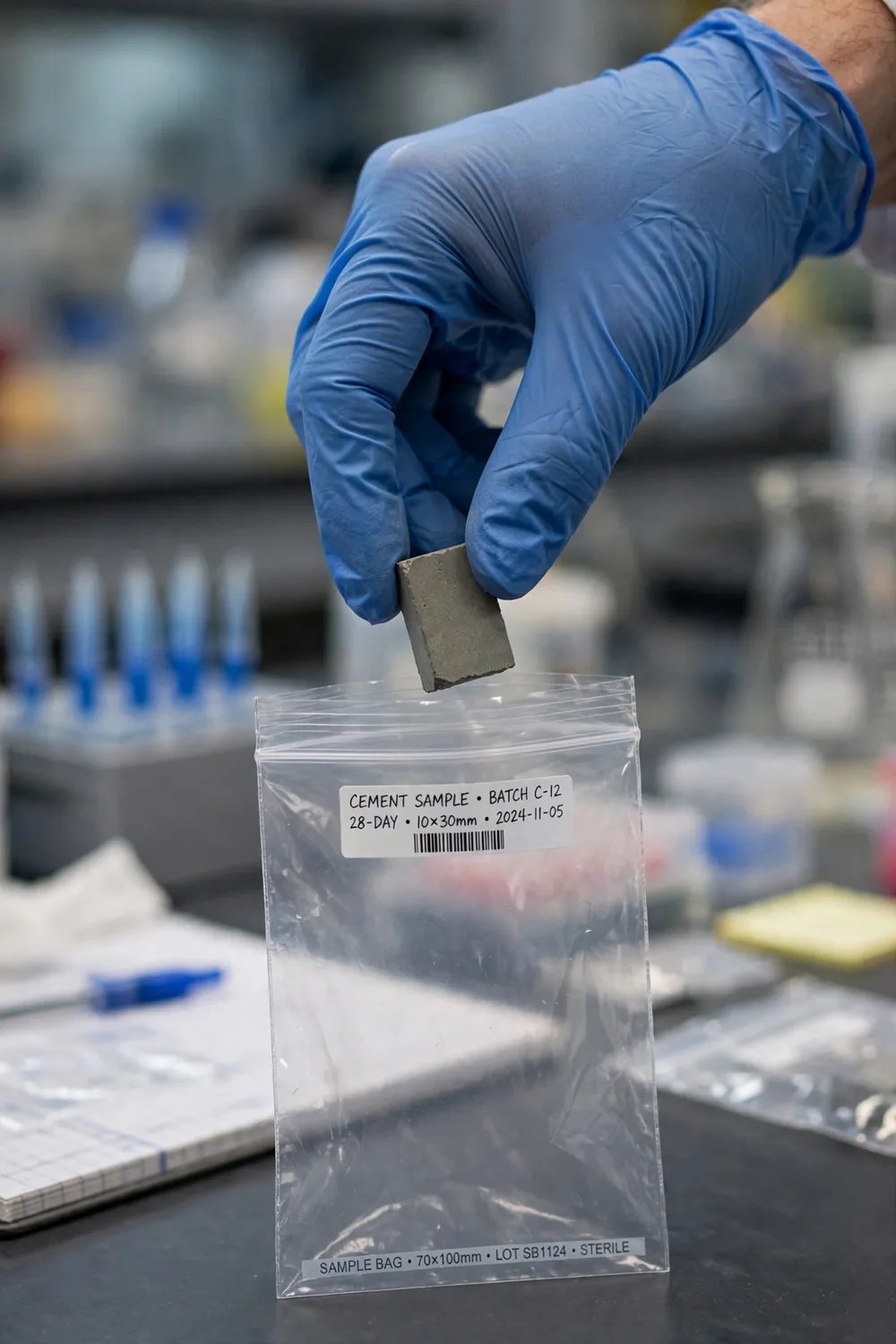
Inspection and testing come first. You cannot confirm asbestos by sight — Brisbane Roofing Co states that testing is the only way to be sure, and its process starts with a visual inspection and a sample sent for lab testing where there is doubt. hipages prices an asbestos inspection at around $400 on average, rising to $1,000 or $1,500 depending on how many samples need testing. Our roof replacement guide makes a written test result for fibro-cement sheeting a quote requirement, and this is the step that produces it.
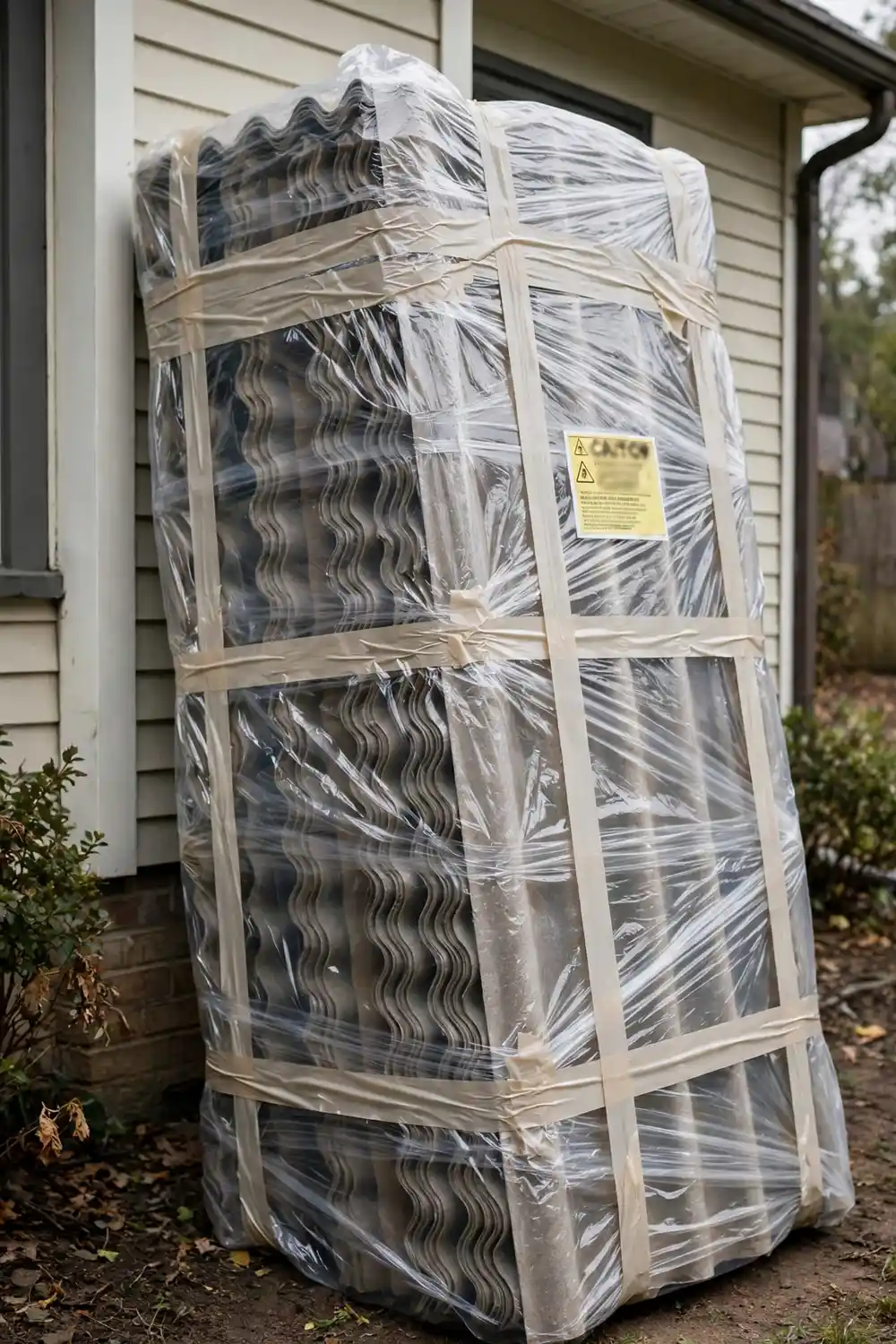
Disposal is real money. hipages warns that its prices may not include tipping charges, and puts the tip’s average charge at around $450. Brisbane Roofing Co prices disposal at $300 to $600, weight-based, and includes it in its quotes — the sheets travel to a licensed asbestos landfill with waste tracking and disposal dockets. Whether disposal sits inside or outside a removal quote is one of the first things to check.
Access equipment. Where scaffolding is required, Brisbane Roofing Co prices it at $1,500 to $2,500 on its own jobs.
Certifier and clearance paperwork. In Queensland a private certifier’s building approval is needed before the new roof goes on, priced by Brisbane Roofing Co at $500 to $1,000 for approval and paperwork. After removal, an independent licensed assessor inspects the site and issues a clearance certificate — Brisbane prices that inspection at $250 to $500, and hipages likewise recommends a post-removal inspection for peace of mind.
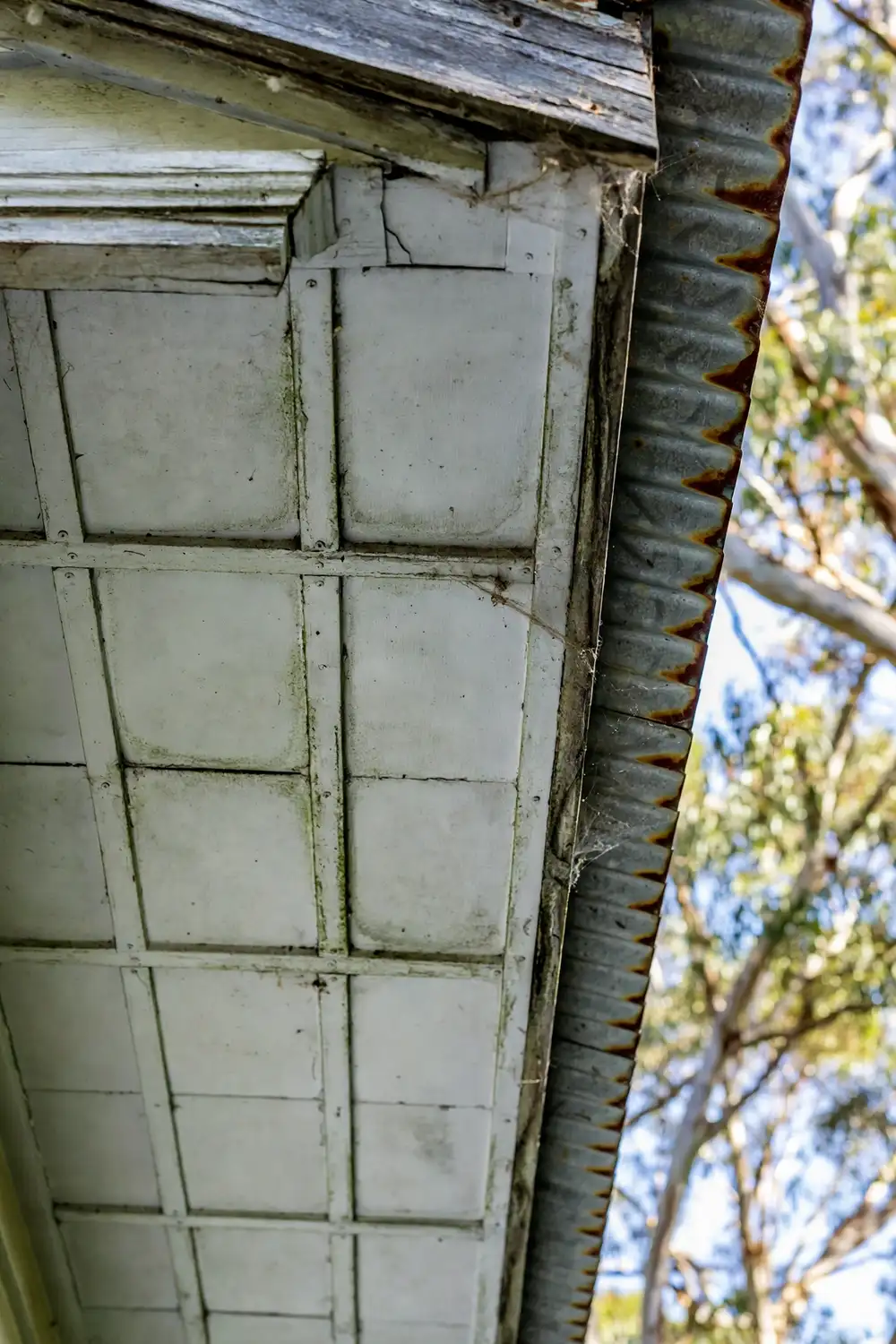
Eaves can ride along. A re-roof often exposes asbestos eaves lining even where the main sheets are the headline job. hipages prices eaves removal as a whole job at $1,500 to $2,500. Its guide prices the rest of the house too — ceilings, flooring, fencing, cladding — but those are separate projects from a re-roof and sit outside this guide.
One check belongs across every figure here. Neither hipages nor the Brisbane operator states whether its prices include GST, so ask the question on any quote rather than assuming either way.
The whole project, for scale
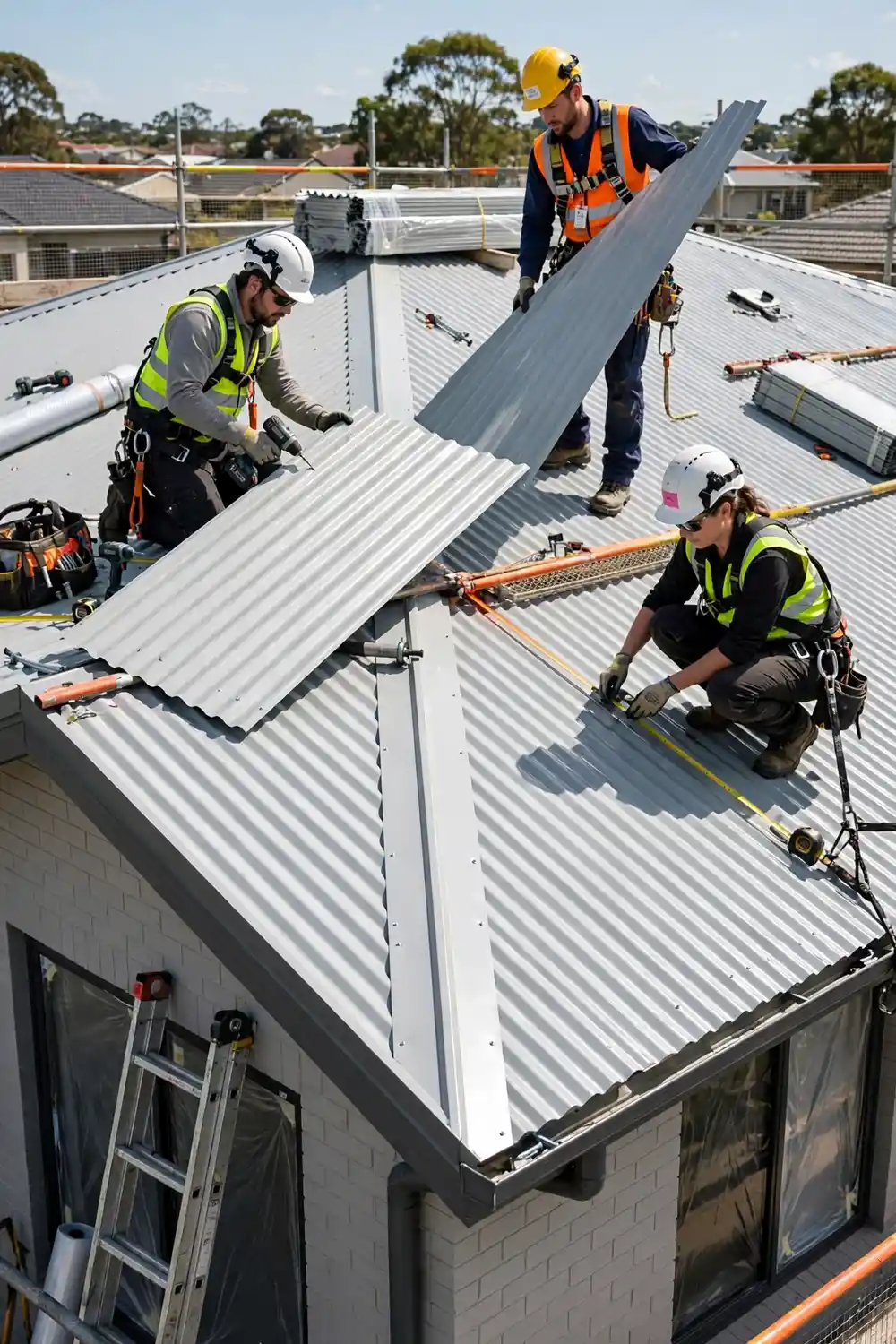
Removal-only figures can make an asbestos re-roof sound cheaper than it lands. Brisbane Roofing Co publishes a worked example that keeps the whole project in frame — a standard 150 square metre roof, with removal at its $40 to $80 per square metre, disposal, scaffolding where required, certifier approval and clearance inspection, and a new Colorbond roof installed at its own $100 to $160 per square metre, typically totals $18,000 to $28,000 depending on complexity and material choice.
That is one Brisbane operator’s whole-project example, on a whole-project basis. It is not comparable line by line with hipages’ removal-only roof total of $3,500 to $5,500, which buys no new roof at all. For the new-roof side priced on its own evidence, our roof replacement cost guide carries the full breakdown — the asbestos line there is the same What’s The Damage estimate this article opened with.
The timeline follows the same split. On Brisbane Roofing Co’s account, removal and site clearance take one to two days, and the new roof installation three to five, with weather and scaffolding the usual buffers.
Bonded or friable — and what “Super Six” means
Most asbestos roofing in Australia is corrugated asbestos-cement sheeting, widely known as Super Six, alongside asbestos-cement shingles, ridge capping, flashings and eave linings. The asbestos fibres sit locked inside cement, which is what bonded, or non-friable, means in practice.
hipages draws the distinction that governs the whole subject. Bonded asbestos is not a hazard if left alone, and becomes hazardous when it is cut or disturbed. Friable asbestos, loose enough to crumble, can become airborne easily and is the major health concern — in a roof context it turns up less in the sheets themselves than in some roof-cavity materials.
Two honest conclusions follow. A sound bonded roof that nobody is disturbing can legitimately be left in place, and removal is forced by the re-roofing decision, by damage, or by deterioration — not by the calendar. hipages, attributing the figure to the Department of Health, puts the stakes plainly — around 4,000 Australians die each year because of asbestos-related illnesses, with asbestosis, lung cancer and mesothelioma the named risks — which is why the disturbance, when it happens, belongs to licensed hands.
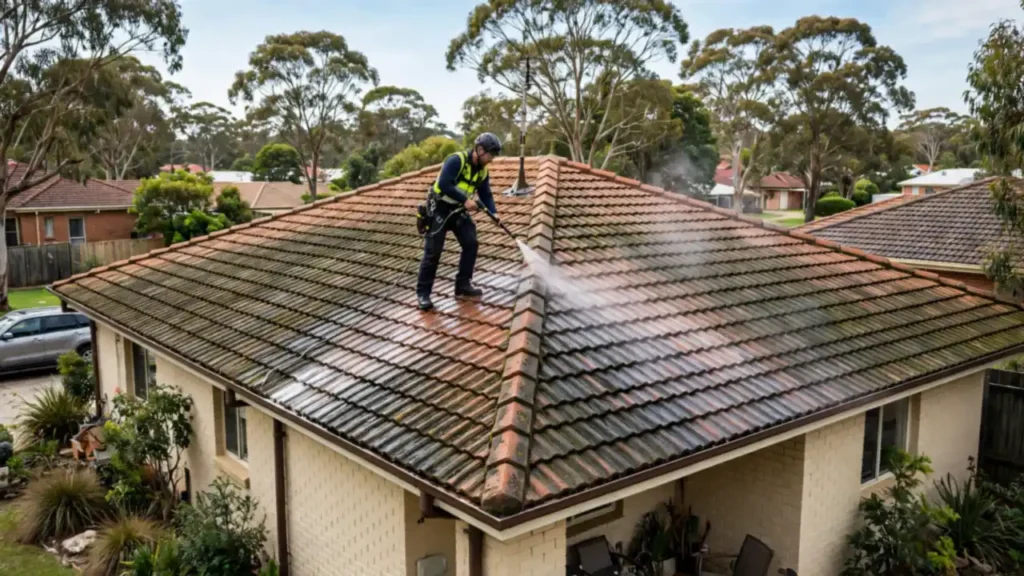
It is also why the maintenance routes close off. Brisbane Roofing Co notes you legally cannot pressure wash or grind an asbestos roof, so the cleaning methods in our roof cleaning cost guide do not apply to one — there is no wash-and-keep option that keeps an asbestos roof in service indefinitely.
Can you remove any of it yourself?
SafeWork NSW answers this directly, and its answer leads with a recommendation — although unlicensed removal of asbestos is permitted in certain circumstances, it always recommends engaging a licensed asbestos removalist to remove any amount of asbestos.
The circumstance is narrow. Under the New South Wales work health and safety regulations, an employer or self-employed person can remove non-friable asbestos-containing material without a licence only where the total area does not exceed 10 square metres, and only under strict obligations — following the national code of practice for safe removal, asbestos awareness training, and health monitoring where the work is ongoing. Anyone unwilling or unable to commit to those obligations should engage a licensed professional instead.
Set that threshold against this article’s subject and the question answers itself. A whole roof runs to a hundred square metres and well beyond, so a re-roofing removal can never fit inside a 10 square metre exception. Whoever takes your roof off needs the licence for the material and the area involved — Class B for non-friable sheeting, Class A if friable material is in play — and the checks in the next section are how you confirm it.
Choosing a removalist
- Check the licence class against the material. Class B covers non-friable asbestos; friable material needs Class A. Ask for the licence and confirm it is current — licences run for five years in New South Wales.
- Expect the test result in writing. Our roof replacement guide’s position holds here too — a written test result for fibro-cement sheeting belongs on the quote, so the material being priced is the material on the roof.
- Ask the hipages questions. References from previous work, years in business and safety record, and proper insurance. hipages advises against choosing on the lowest quote alone, and the extras section above shows how much room quotes have to differ in what they include.
- Confirm the disposal route. Licensed landfill, waste tracking, and whether tipping sits inside the quoted figure or on top of it.
- Get the clearance in writing. An independent assessor’s clearance certificate after removal is the document that closes the job — for your own records and for any future buyer.
Frequently asked questions
Does my property contain asbestos?
That is hipages’ question, and its answer runs on the building’s age. Asbestos was used in more than 3,000 building products, and a house built or renovated before 1990 probably contains asbestos in some form. For a roof specifically, corrugated asbestos-cement sheeting was a standard material for decades — but probability is not proof, and only sampling and lab testing confirm what your sheets are made of.
Why is it important to remove asbestos from my house?
hipages’ answer turns on disturbance. Damaged or disturbed asbestos poses the health risks — asbestosis, lung cancer and mesothelioma — so removal by a professional is the recommended course where you are renovating, where loose-fill material is found, or where material is damaged. In a re-roofing project the disturbance is the project itself, which is why removal is licensed, sequenced first and priced separately. An undisturbed, sound bonded roof is a different case, as the bonded and friable section sets out.
How do I calculate asbestos removal cost in Australia?
hipages’ answer is that a local licensed contractor gives a tailored quote once the volume and type of asbestos are known — there is no honest self-serve calculator for a regulated job. The figures in this guide set the territory: a per-metre removal rate or a whole-job removal price from your quotes, plus inspection and testing, disposal where it is not included, and the certifier and clearance lines a re-roofing project carries. Compare quotes on what each one includes, not on the headline figure alone.
Can I stay in my home during the roof replacement?
Yes, on Brisbane Roofing Co’s answer to its own customers — you do not need to vacate the property while the roof is replaced. Its crews keep access pathways clear and clean up the worksite daily. Individual removalists run their own site controls, so confirm the arrangements on your job, particularly for the removal days themselves.