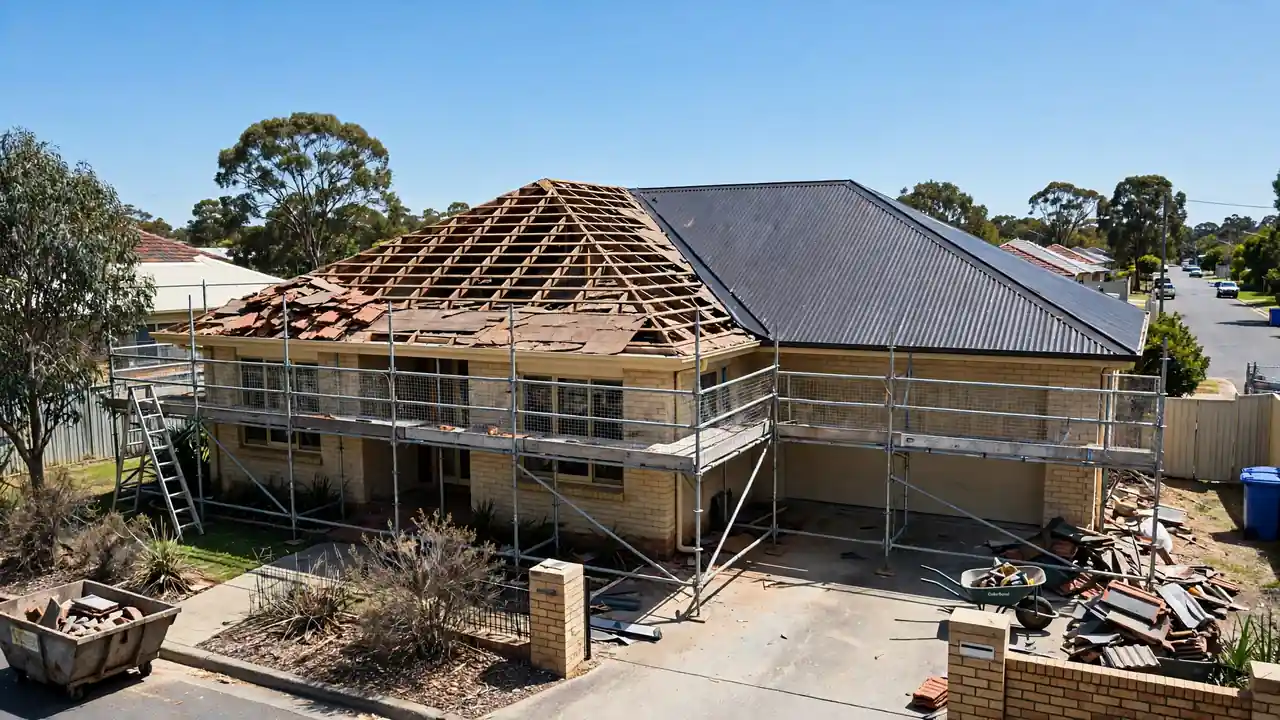
Two roofers can quote the same house and land tens of thousands of dollars apart, and both can be telling the truth. A roof is the biggest single maintenance bill most homes ever produce, and it usually arrives uninvited, right after a leak.
Search roof replacement cost Australia and the numbers scatter from $40 to over $200 a square metre, which helps nobody. This guide sorts the published Australian rates by material, shows what a whole house actually comes to, and names the extras that blow budgets — so the quotes you collect start making sense.
Find your material in the first table, run the whole-house maths for your roof size, then read the extras section before you ring anyone.
The short answer — cost per square metre, by material
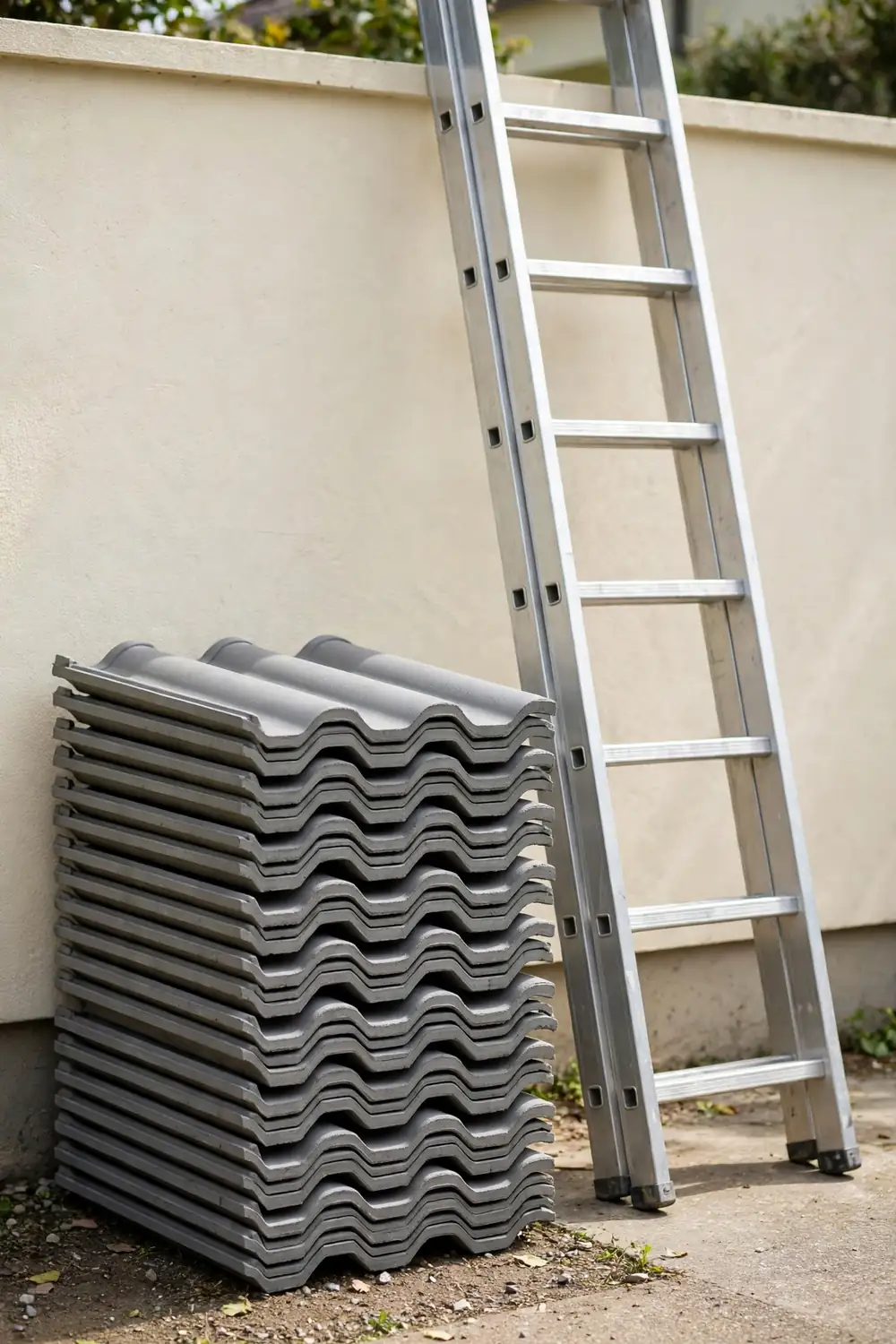
Every figure below comes from published Australian cost guides, and they do not agree neatly. That disagreement is information, not a typo. The low ends are mostly rate-card figures for supplying and installing the new material; the high ends are all-in installed replacement estimates that include stripping off the old roof.
| Material | Published range per m² | Where the range comes from |
|---|---|---|
| Concrete tiles | $40–$220 | hipages rate cards at the low end; installed estimates including strip-off at the top |
| Steel and Colorbond | $50–$180 | hipages steel rates from $50; Colorbond installed estimates up to $180 |
| Terracotta tiles | $80–$260 | hipages from $80; premium installed estimates at the top |
| Slate | $200–$550 | guide rates start at $200; strip-off included estimates run higher |
How to read this table — budget from the middle-to-top of your material’s range if your quote includes removing the old roof, and from the lower half if it does not. One more trap: only some sources state whether their figures include GST, so confirm the GST position on every written quote.
What the guides do agree on is the order. Concrete tile is the cheapest of the main options, steel and Colorbond sit in the middle, terracotta costs more again, and slate lives in a different league entirely.
What a whole house actually comes to
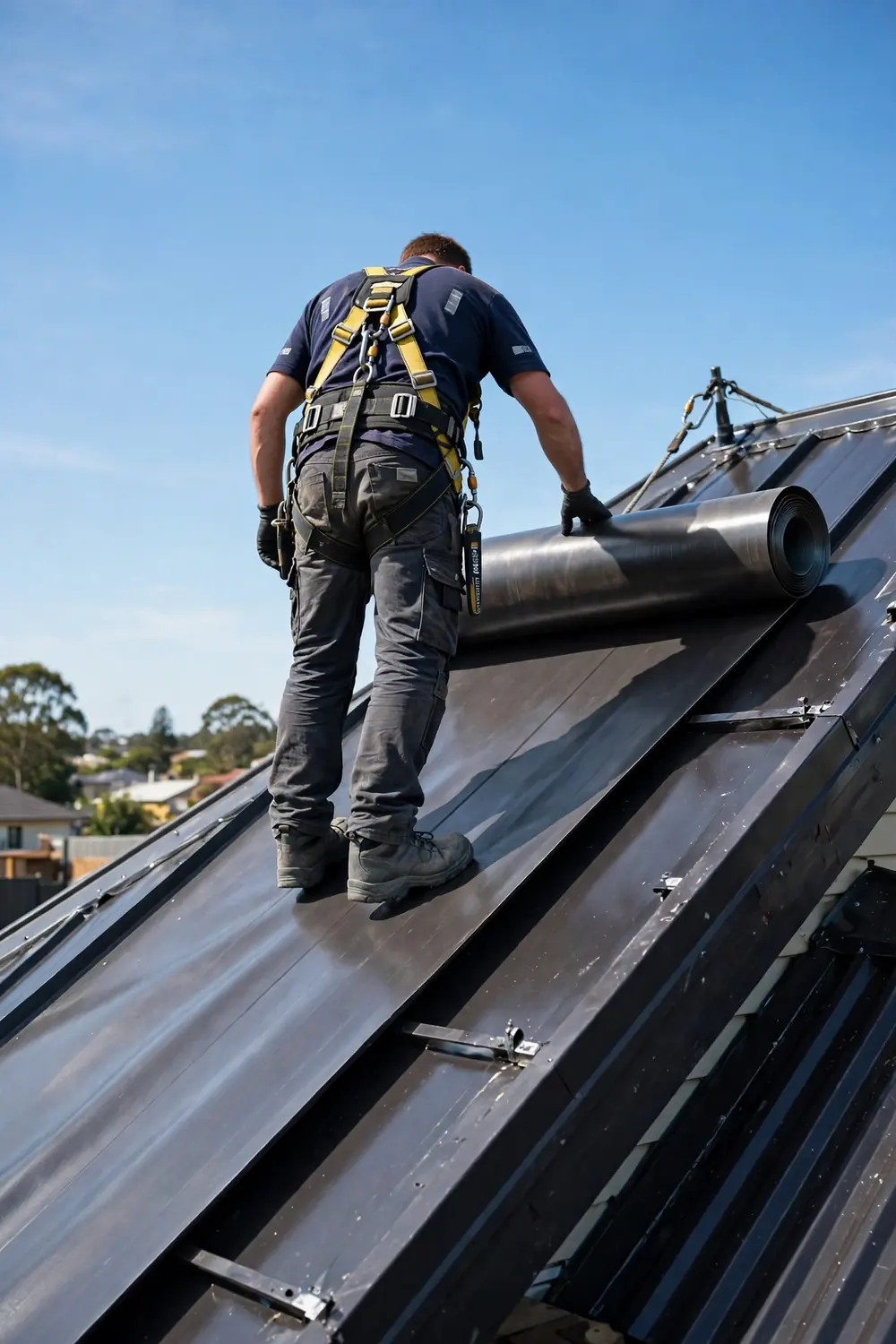
Per-square-metre rates are abstract until you multiply them by a real roof. A typical Australian house roof is around 200 square metres once pitch is counted, and hipages publishes worked totals for exactly that size.
- Concrete tiles, 200 m² — $13,000 to $17,000 on hipages’ worked example
- Metal including Colorbond, 200 m² — $15,000 to $20,000
- Terracotta tiles, 200 m² — $18,000 to $24,000
- Slate, 200 m² — $40,000 to $100,000
Independent estimators land higher for a finished job. Bark puts an average home’s full replacement at $25,000 to $45,000, and What’s The Damage puts a typical single-storey re-roof at about $22,000 and a two-storey at about $25,000. The gap between the two sets of numbers is mostly scope — strip-off, disposal, sarking and access are inside the higher figures and not always inside the lower ones.
Example worth knowing — switching an average three-bedroom tiled roof to Colorbond comes out at about $20,000 in hipages’ worked examples. Material swaps are where quotes move most, so price your current material and your preferred one side by side.
What actually drives the price
Size and shape
Roof area is the multiplier everything else hangs off, and shape matters almost as much. hipages puts simple rectangular roofs at 15 to 20 per cent cheaper than average, while complex roofs full of valleys, angles and dormers add 15 to 25 per cent in labour.
At a glance — measure the roof you have, not the floor plan; the pitch turns floor area into a bigger roof area.
Pitch and storeys
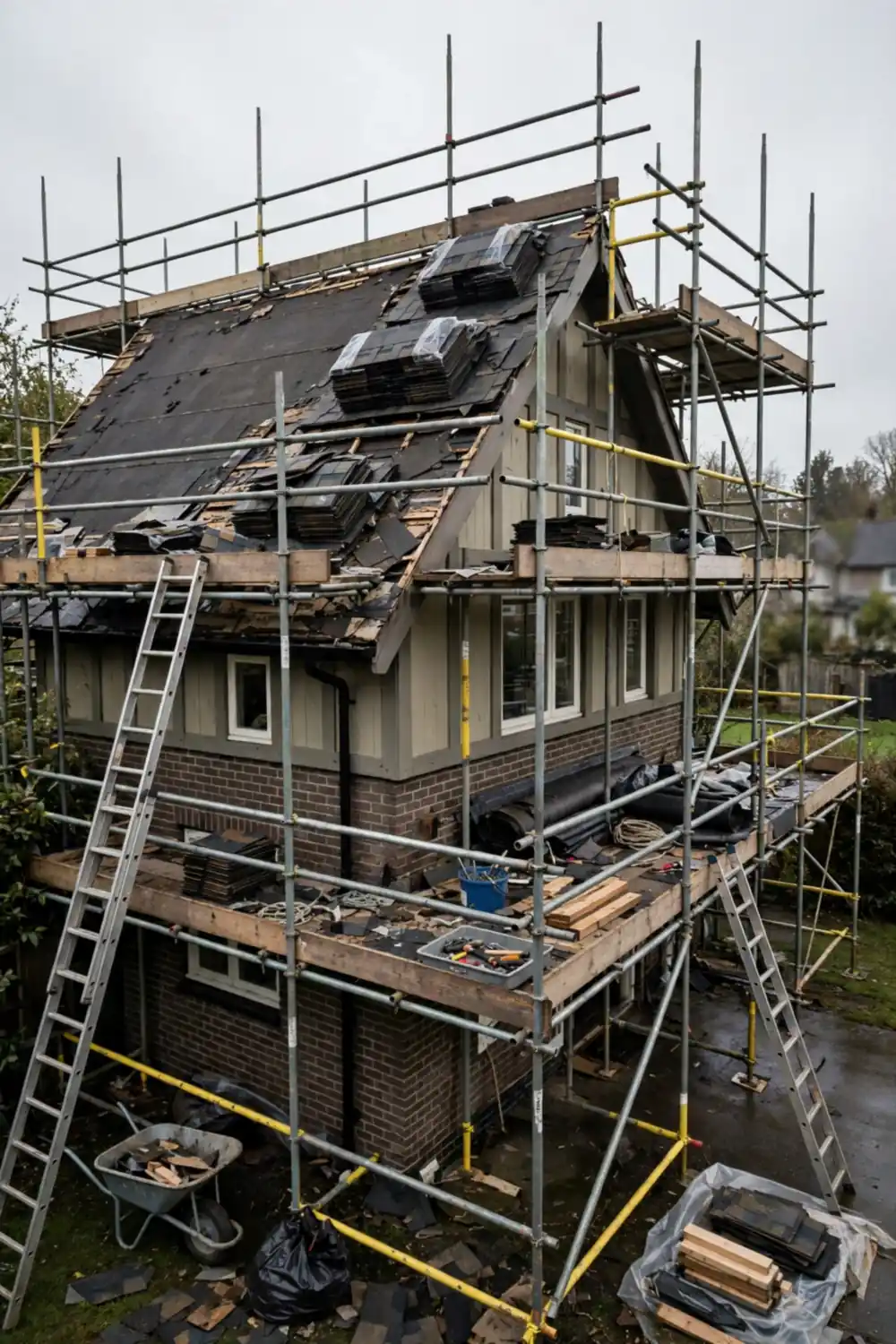
Steep roofs slow crews down and demand more safety gear. Published guides put the steep-pitch loading at 10 to 20 per cent, and a second storey at 15 to 30 per cent more for access and scaffolding.
Access
A tight block, a steep driveway or no room for a skip pushes labour and logistics up. Guides price awkward access at anywhere from $500 to $2,000 on top.
Strip-off and disposal
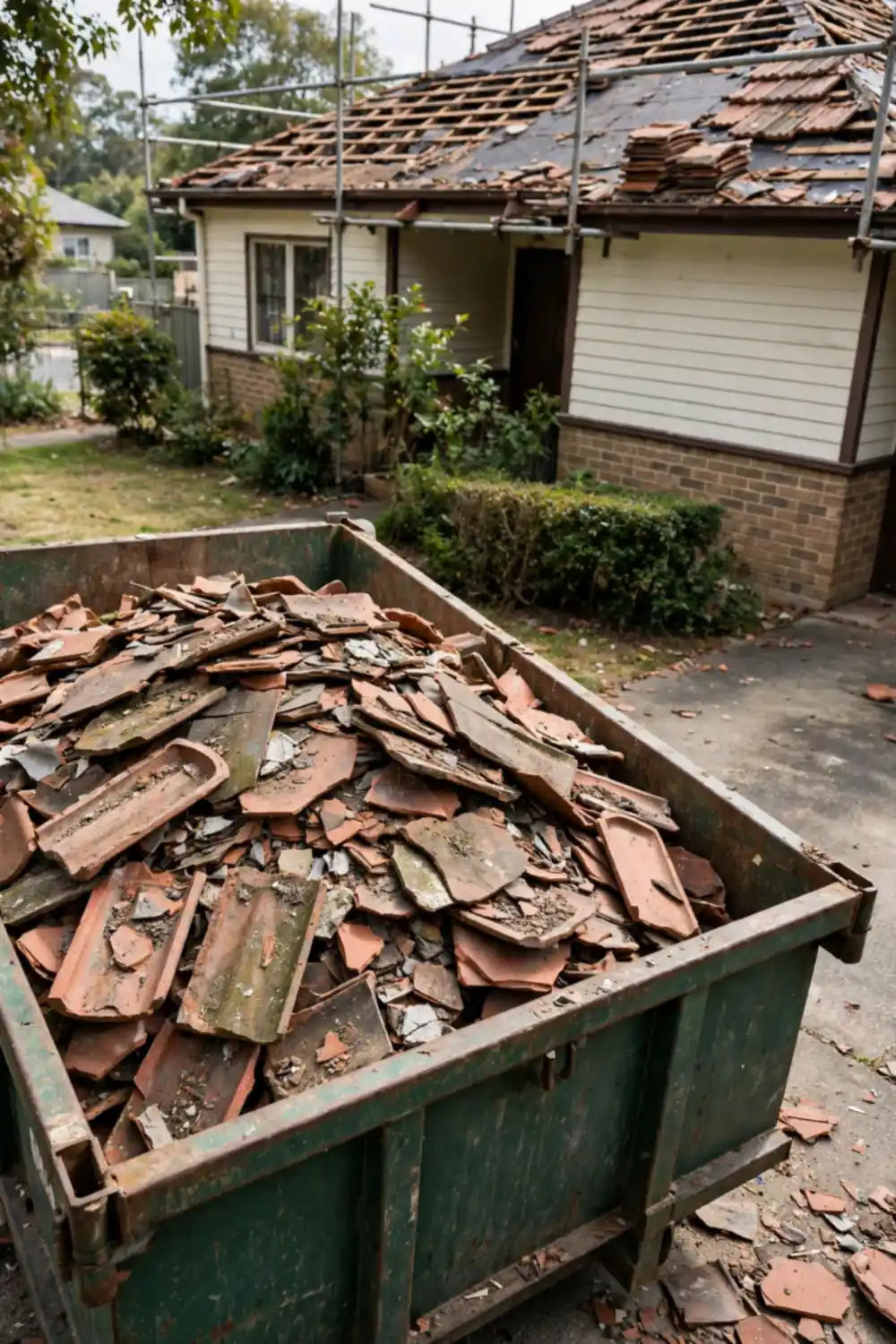
The old roof has to come off and go somewhere. Bark puts removal and disposal at $2,000 to $8,000 depending on size and material, while a skip bin alone runs $300 to $2,000 in hipages’ extras list. If a quote is silent on disposal, that cost is hiding, not missing.
What is under the surface
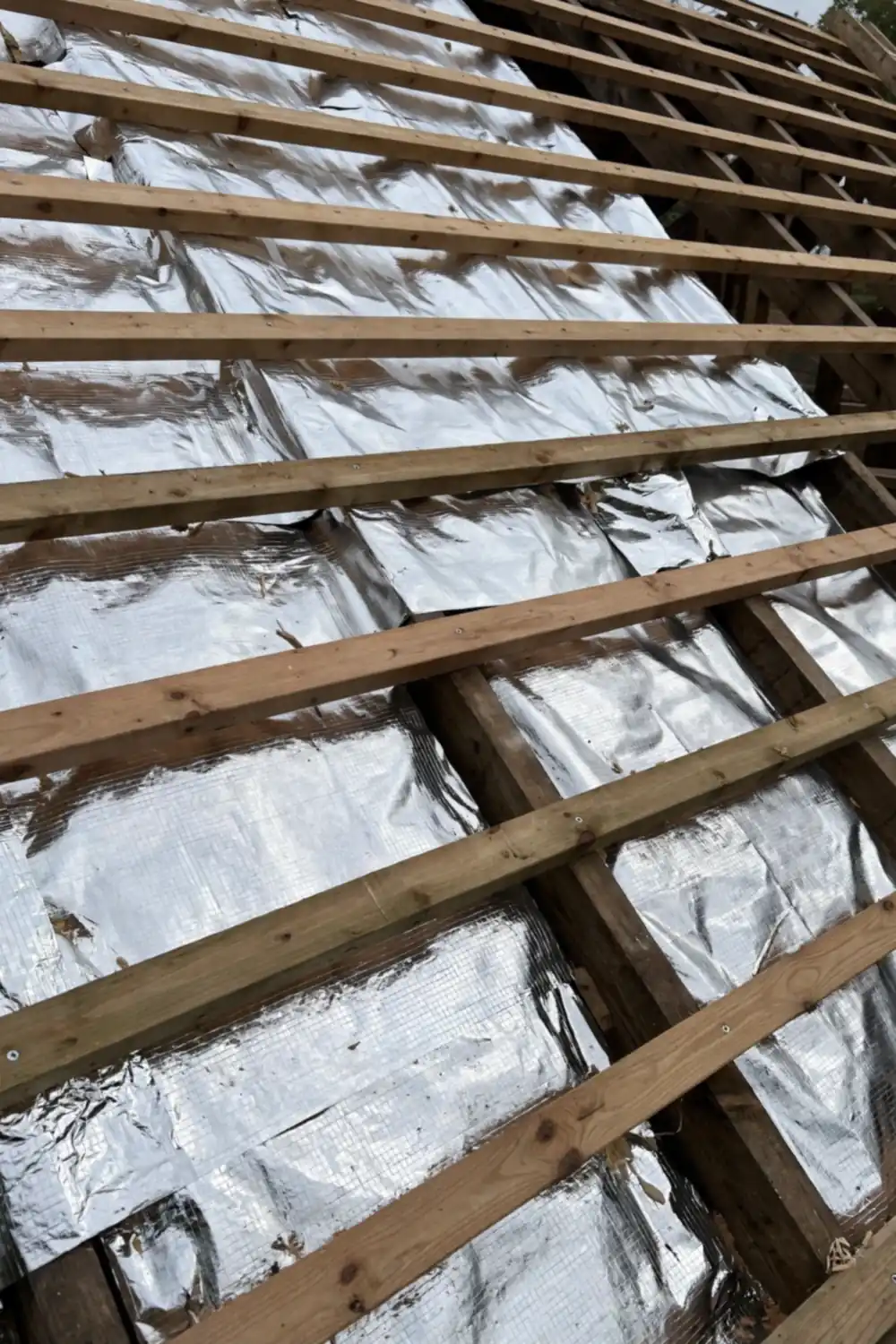
Rotten battens, failed sarking and damaged timbers only show themselves once the old roof lifts. Sound quotes name a per-item rate for these repairs instead of a blank contingency, and the sarking itself runs about $8 to $10 a square metre as a material line in hipages’ rate card.
The extras that catch people out
- Council permits — hipages prices council requirements and permits at typically $200 to $600, and its advice is to allow four to six weeks for approval on a full replacement
- Asbestos — an asbestos-cement roof changes the whole job; one estimator, What’s The Damage, puts licensed asbestos removal at $50 to $130 per square metre before the new roof. Whatever the figure, asbestos roofing is a licensed removalist’s job, never a DIY strip-off
- Gutters and downpipes while the roof is off — new guttering runs $2,500 to $4,000 in hipages’ extras list, and doing it during a re-roof is far cheaper than scaffolding twice. Our guide to gutter cleaning before the rain covers the maintenance side of keeping the old ones alive longer
- Insulation and ventilation — topping up roof insulation during the job runs $1,000 to $3,000; ventilation systems $500 to $1,500
- Solar panels — removal and reinstall of a rooftop solar array adds $800 to $2,000 or more, through your solar installer, not the roofer
Replacement, repair or restoration?
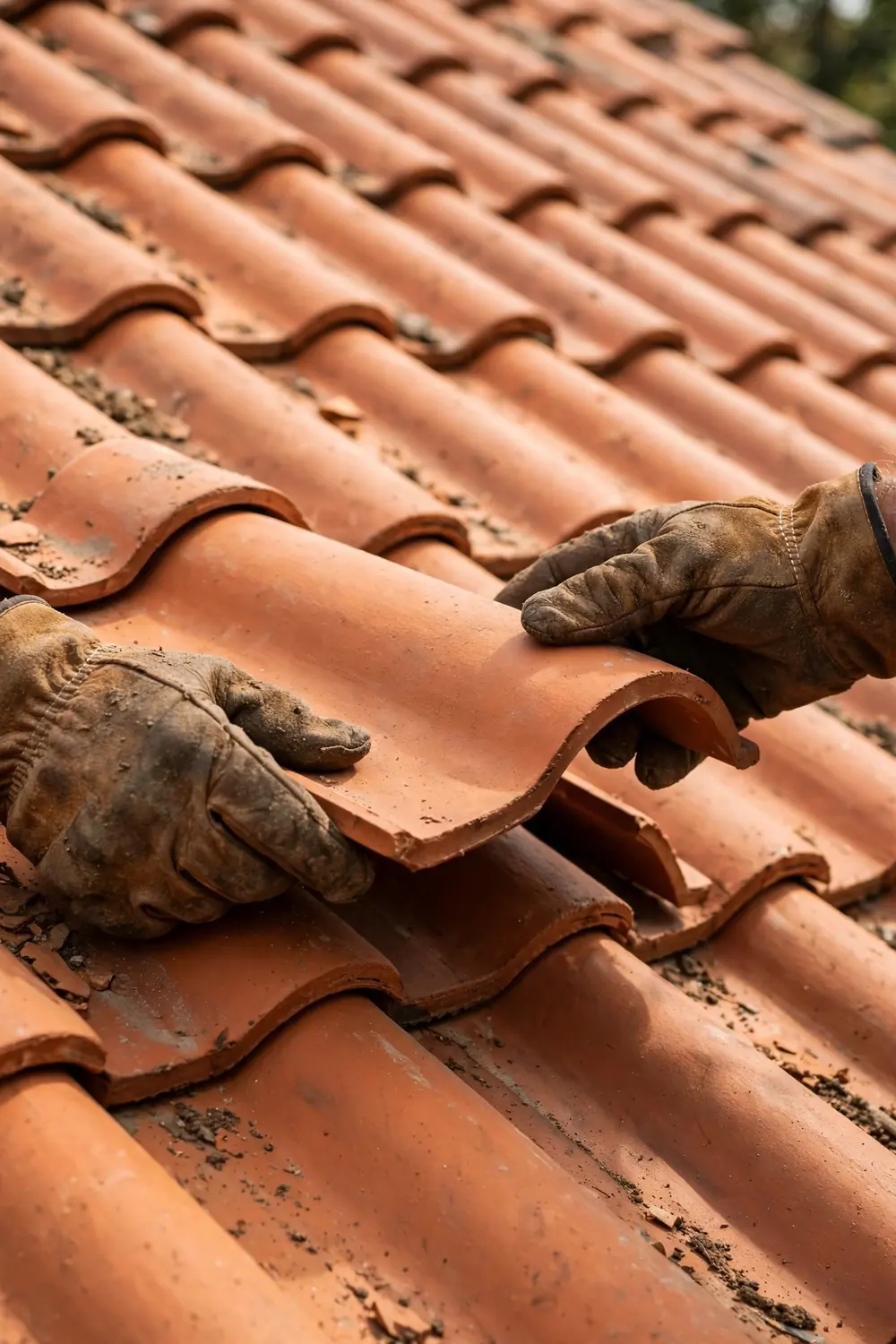
Not every tired roof needs replacing, and the three jobs solve different problems.
| Job | What it involves | When it makes sense |
|---|---|---|
| Repair | Fixing the failed section — a leak, cracked tiles, flashing | The rest of the roof is sound and the problem is local |
| Restoration | Clean, re-bed, repoint and recoat the existing roof | The structure is sound but the surface has aged |
| Replacement | Full strip-off and a new roof | The material itself has reached the end of its working life |
Replacement is the expensive answer, so it should be the evidenced one. Our guide to the top signs your roof is starting to fail walks through the symptoms that separate a repair from a replacement. And if you are in Melbourne, our Melbourne guide to roof restoration, repair and replacement works through that decision with local framing.
Getting quotes you can actually compare
Quotes only compete when they describe the same job. Before you compare totals, check that each one covers the same ground.
- Strip-off and disposal — included, or priced separately?
- Sarking and battens — new sarking included? A stated rate for rotten battens?
- Permits — council fees inside the quote or on top?
- GST — stated as included or excluded, in writing
- Licence — most states and territories require roofers to be licensed; ask for the licence number and check it on your state’s register
- Itemised, in writing — a single lump sum cannot be compared with anything
Get at least three, and be suspicious of the one that is dramatically cheaper. In roofing, a very low quote usually means scope is missing, and missing scope has a habit of reappearing as variations mid-job.
Questions people actually ask
How much does a new Colourbond roof cost?
Published Colorbond installed estimates run from about $80 to $180 per square metre, with hipages’ steel rate card starting lower at $50 to $70. On hipages’ 200 square metre worked example, metal including Colorbond comes to $15,000 to $20,000. Your roof’s pitch, storeys and strip-off scope decide where inside that spread you land.
Do I need council approval for a new roof?
Usually, yes for a full replacement. hipages’ guidance is that minor repairs typically do not need approval, while complete roof replacements or structural changes usually need council permission. Check your own council’s requirements and allow four to six weeks for the approval process.
How long does a new roof installation take?
A typical installation takes one to two weeks, according to hipages’ guide. Larger or more complex roofs can run to three or four weeks, and weather stretches any of those numbers.
What does it cost to take off an asbestos-cement roof before re-roofing in Australia?
One estimator, What’s The Damage, puts licensed asbestos-cement removal at $50 to $130 per square metre, charged separately from the new roof itself. The work must be done by a licensed asbestos removalist before re-roofing starts, and a written test result for fibro-cement sheeting should appear on your quote.
What does replacing the whole roof on a two-storey home cost in Australia?
What’s The Damage puts a typical two-storey re-roof at about $25,000, inside a published band of $15,000 to $40,000. The second storey itself adds cost — published guides put multi-storey access at 15 to 30 per cent more — before material choice moves the number further.
What is the most expensive part of replacing a roof?
Labour, most of the time. Bark’s estimator names labour as often the most expensive part of a replacement, which is why pitch, access and complexity move quotes so much more than small differences in material price.
The budgeting rule
- Start with the rate — your material’s published range per square metre, times your actual roof area
- Budget mid-to-top — if the quote includes strip-off and disposal, the lower half of the range will not hold
- Add the extras — permits, disposal, guttering and any asbestos handling, priced as their own lines
- Hold a contingency — what is hiding under the old roof only reveals itself on strip-off day
- Compare like with like — three itemised quotes on the same scope beat one cheap lump sum every time
Get the scope right and the scary spread of quotes narrows fast. The number was never really a mystery — it was five or six smaller numbers wearing a trench coat.


