
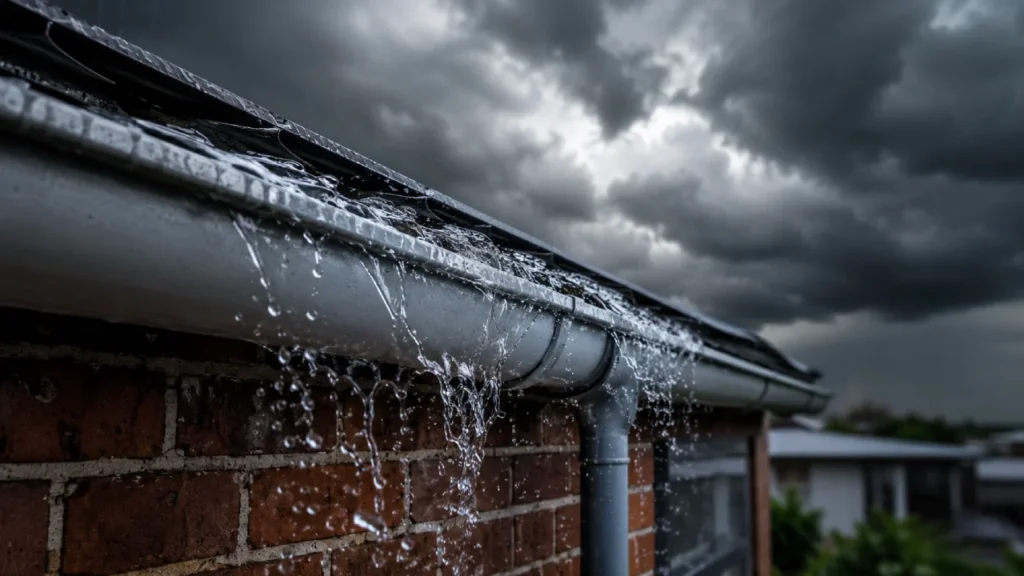
The sky is turning gray, the forecast says storms by tonight, and your gutters are still stuffed with last autumn’s leaves. This is the moment most homeowners realize a gutter clean before rain isn’t a nice-to-have chore. It’s damage control. When rain hits a clogged system, water has nowhere to go but over the edge, down your siding, and straight toward your foundation.
You don’t need a whole weekend or a truckload of gear to fix this. A focused hour, the right tools, and a clear plan can get your gutters ready before the first drop falls. This guide walks you through exactly what to check, what to clean, and what to skip when a storm is closing in fast.
What this article covers: how to tell if your gutters need cleaning before a storm, the fastest safe method to clear them, what to do when you’re short on time, and when to call a professional instead of climbing the ladder yourself. You’ll also get a quick-reference checklist and answers to the questions homeowners search most.
Quick Answer: Clean your gutters before rain by clearing large debris first, flushing downspouts with a hose, checking for sagging or loose brackets, and confirming water flows away from your foundation. Do this at least once before every rainy season, and sooner if trees overhang your roof.
Why Clean Gutters Before It Rains
Gutters exist to move water away from your roofline and foundation. Once leaves, twigs, and grit pack into the trough, that water has nowhere to go. It backs up under roof shingles, pools near your foundation, and can seep into your basement or crawl space.
Bill Sussman, a licensed home inspector with over 20 years in residential construction, puts it simply: “A gutter that’s 70% blocked behaves like it’s 100% blocked the moment heavy rain hits. Water doesn’t trickle through debris fast enough to matter.”
The financial stakes are real. Water damage claims are among the most common and costly homeowners insurance losses, and clogged gutters are a frequent contributing cause. A few dollars in gloves and a scoop is a small price against a soaked crawl space or cracked foundation.
Signs Your Gutters Need Attention Now
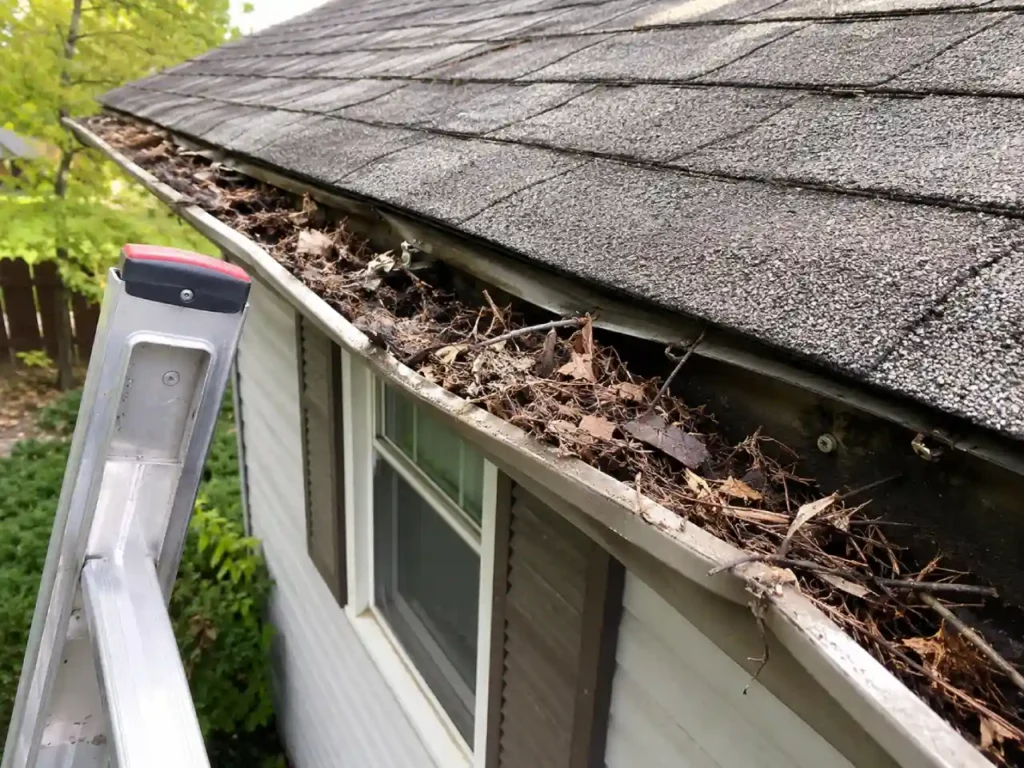
Look for these warning signs before the next storm rolls in:
- Visible plant growth or moss sprouting from the gutter line
- Water marks or streaking on the siding below the gutters
- Sagging sections that pull away from the fascia board
- Overflow during light rain, not just heavy downpours
- Birds or pests nesting near the downspout openings
If you spot even two of these, treat it as urgent. Rain is not the time to discover your gutters can’t keep up.
How to Clean Gutters Before a Storm Hits
Speed matters when a storm is on the way, but skipping safety steps causes more harm than the clog ever would. Ladder falls send hundreds of thousands of people to emergency rooms every year in the United States, and a meaningful share of those incidents happen during routine home maintenance like gutter cleaning. Rushing is exactly how that happens.
Gather the Right Tools First
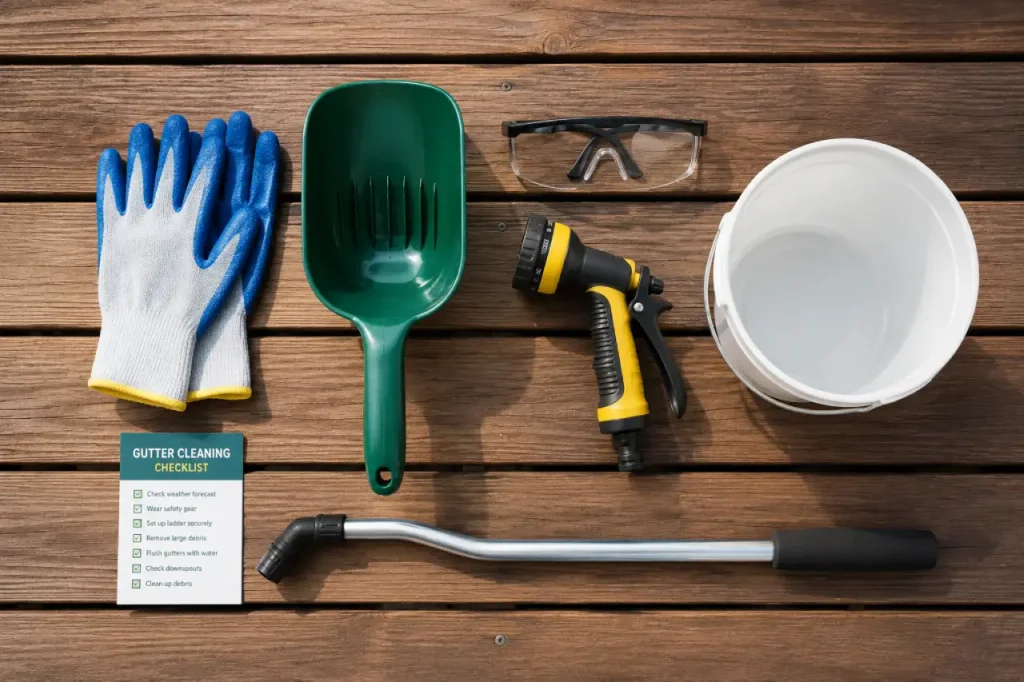
You want everything in reach before you climb, not halfway up a ladder patting your pockets. Keep this short list handy:
| Tool | Purpose |
|---|---|
| Sturdy extension ladder | Reach the gutter line safely |
| Work gloves | Protect hands from sharp edges and grime |
| Plastic gutter scoop or trowel | Remove compacted debris |
| Garden hose with spray nozzle | Flush fine debris and test flow |
| Bucket or tarp | Collect debris instead of dumping it on the lawn |
| Safety glasses | Shield eyes from flying grit and insects |
Clear the Big Debris First
Start near the downspout and work toward the far end of the gutter run. Scoop out leaves, twigs, and compacted muck by hand or with your trowel, dropping it straight into a bucket. Working toward the downspout instead of away from it pushes loose material into the very outlet you need clear, so always move away from the downspout as you clean.
Flush and Test the Flow
Once the bulk debris is gone, run water from a hose through the gutter section by section. Watch where it collects. Slow drainage at any point usually signals a low spot, a bent section, or a partial downspout clog that needs a plumber’s snake or a firm blast of water pressure.
Check Downspouts and Extensions
A clean gutter with a blocked downspout is still a flood risk. Remove the downspout strainer if one is fitted, clear any buildup, and confirm the extension carries water at least four to six feet from your foundation. Short or missing extensions are one of the most overlooked causes of basement moisture.
When You’re Short on Time
If a storm is hours away, prioritize triage over perfection.
- Clear sections above entry doors, patios, and low rooflines first
- Confirm at least one downspout per gutter run is fully open
- Redirect any clogged downspout extensions away from the foundation
A partial clean that keeps water moving beats a thorough clean you never finish in time.
DIY vs. Hiring a Professional

Not every situation calls for climbing up yourself. Consider the comparison below before deciding.
| Factor | DIY Cleaning | Professional Service |
|---|---|---|
| Cost | Low, mostly your time | Typically $120–$300 per visit depending on home size |
| Speed | Depends on your schedule | Often same-day or next-day booking available |
| Safety | Ladder risk, especially on multi-story homes | Trained crews with proper equipment |
| Thoroughness | Good for single-story, accessible homes | Better for steep roofs, tall homes, or heavy buildup |
| Inspection value | Visual only | Often includes gutter and roof condition checks |
If your home is single-story with easy roof access, DIY is usually fine. Two-story homes, steep pitches, or gutters you haven’t cleaned in over a year are strong reasons to call a professional instead of risking a fall.
Gutter Clean Before Rain in Australia
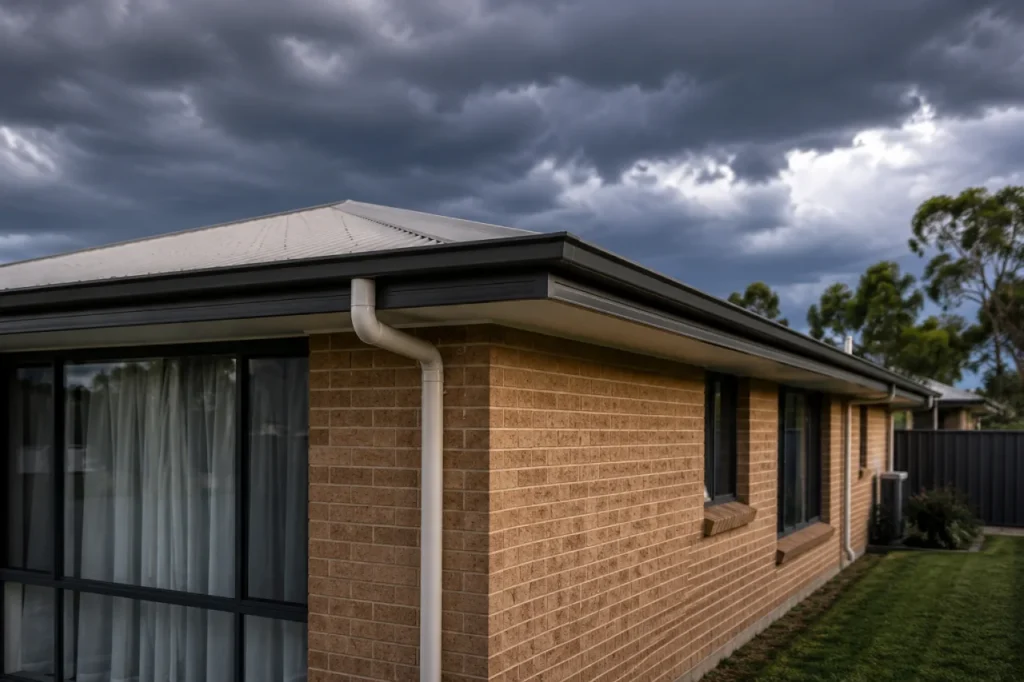
Storm season timing varies a lot across Australia, so the “right time” to clean depends on where you live. Homes in Queensland and the Northern Territory face their wet season roughly between November and April, while southern states like Victoria and New South Wales see the heaviest storm risk in spring and summer. Whatever the calendar says, the rule stays the same: clean your gutters and downpipes before the region’s storm season builds, not after the first downpour has already tested them.
Finding Local Gutter Cleaners Near You
If a DIY clean isn’t practical, searching “gutter cleaning near me” is usually the fastest way to line up help before a storm. Most local gutter cleaning services can provide a quote within minutes and many offer same day gutter cleaning or emergency gutter cleaning when a storm warning is already in effect. A professional gutter cleaning company will typically clear both the gutters and the downpipe, check for blocked downpipes, and flag any drainage system issues before they turn into a bigger repair.
For residential gutter cleaning, ask upfront whether the quote includes downpipe clearing and a basic roof runoff check, since blocked downpipes are one of the most common causes of overflow during Australian storms. Booking a local gutter cleaner ahead of the rainy season, rather than during it, also tends to be cheaper and easier to schedule.
Preventing Future Clogs
Cleaning before every storm gets old fast. A few upgrades cut down how often you need to do it:
- Gutter guards reduce leaf buildup, though fine grit can still slip through cheaper mesh
- Seasonal trimming of overhanging branches limits debris reaching your roof
- Downspout extensions keep water clear of your foundation even during light clogs
- Twice-yearly cleaning keeps most homes ahead of major storms
None of these remove the need to check your gutters occasionally, but they stretch the time between full cleanings.
Frequently Asked Questions
How often should I clean gutters before rainy season?
Clean at least twice a year, once before spring storms and once before fall rain. Homes with overhanging trees may need a mid-season check as well.
Can I clean gutters in light rain?
Yes, if the rain is light and gutters are free of major obstructions. Avoid it during heavy rain, lightning, or on a wet or icy roof surface.
What happens if I don’t clean gutters before rain?
Water overflows the sides, soaks fascia boards, and can seep into your foundation or basement. Repeated overflow also accelerates rot and rust over time.
Is it safe to clean gutters alone?
It’s safer with a second person holding the ladder base and aware of your location. Solo cleaning increases fall risk, especially on extension ladders above one story.
Do gutter guards mean I never have to clean gutters?
No. Guards reduce debris but don’t eliminate it entirely. Fine sediment, seeds, and pine needles still require occasional flushing.
How much does gutter cleaning cost?
Professional gutter cleaning typically runs $120–$300 in the US or a comparable local rate in Australia, depending on home size, roof height, and how blocked the gutters are.
How long does gutter cleaning take?
A single-story home usually takes 30–60 minutes. Two-story homes, heavy debris, or blocked downpipes can push the job to two hours or more.
Is gutter cleaning worth it before rain?
Yes. A short cleaning session costs far less than repairing water damage, rotted fascia, or a flooded basement caused by an overflowing gutter system.
Can clogged gutters damage the roof?
Yes. Overflow can back up under roofing edges, soak the fascia, and cause rot or leaks that spread into the roof structure over time.
Final Thoughts
A gutter clean before rain takes far less time than repairing water damage after the fact. Clear the big debris, flush the fine particles, check every downspout, and confirm water lands well away from your foundation. Skip the ladder if your roof is steep or hasn’t been checked in years, and book a professional instead.
Storms don’t wait for a convenient weekend, so keep this checklist handy. A clear gutter system protects your roof, siding, and foundation long after the rain has stopped. Take the twenty minutes now, before the forecast turns from cloudy to urgent.
