You pull up a vinyl tile in a 1960s bathroom and find a grey fibrous backing underneath. Your stomach drops, and the renovation stops dead.
That pause is the right instinct. In a house built before 1990, asbestos hides in more places than most owners expect, and the wrong move turns a small job into a health risk.
This guide explains asbestos in the home Australia renovation work is most likely to disturb, and how to deal with it safely.
You will learn where it hides, how a licensed assessor confirms it, when it can stay put, and the safe path from first suspicion to licensed removal and disposal.
No DIY removal steps, no guesswork, and no shortcuts that put your family at risk.
The one rule before you start
Asbestos was banned in Australia in December 2003, after being phased out through the 1980s. Between 1940 and 1990 it was a popular construction material, used in more than 3,000 building products, so a pre-1990 house deserves a check before any renovation work begins.
The one rule is simple. Asbestos is a licensed removalist’s job, never a do-it-yourself strip-off.
The national renovator guide from the Asbestos and Silica Safety and Eradication Agency puts it plainly, saying it is not recommended that you handle or remove asbestos yourself. SafeWork NSW goes further and always recommends engaging a licensed asbestos removalist to remove any amount of asbestos.
There is a second reason to slow down. The moment you engage someone to work on your home, it becomes a workplace, and work health and safety laws apply.
Your builder, electrician or plumber generally is not licensed to remove asbestos, and the law heavily restricts what they can do with it. Before work starts, check your home and contents policy too, because many policies exclude asbestos.
Where asbestos hides in a pre-1990 home
A house built before the mid-1980s has a good chance of containing asbestos somewhere, while a house built after 1990 may not. A home renovated between 1990 and 2004 may still contain it. The locations below come from the state regulators and the national guide, and every one needs a laboratory test to confirm.
Bathrooms and wet areas

Wet areas are the most common hiding place, since fibre cement sheeting was the standard lining for rooms that got wet. Wall panels, tile backing, splashbacks and vinyl floor tiles all appear in bathrooms from this era.
A 1950s cottage renovation on this site found asbestos fibre in vinyl floor tiles, wall sheeting and insulation, and its lesson was to check for asbestos or lead risks before any wet-area work. Our guide to that bathroom renovation of a 1950s cottage shows how one old bathroom was handled.
- Wall sheeting, fibre cement panels in wet-area walls and ceilings
- Tile backing, the board behind wall tiles and splashbacks
- Flooring, vinyl tiles and their adhesives, plus felt backing under vinyl and linoleum
Kitchens
Kitchens share the wet-area materials, with a few of their own. Wall sheeting sits behind splashbacks and benches, vinyl tiles cover the floor, and insulation wraps hot water pipes and stoves.
The material looks ordinary until it is cut, drilled or pulled up, and that is when fibres can be released. Leave the splashback and the flooring alone until an assessor has looked at them.
- Splashback backing, fibre cement board behind tiles
- Floor tiles, vinyl tiles with asbestos in the tile and the adhesive
- Pipe insulation, white or grey fibrous wraps around hot water pipes
Living areas and bedrooms
Dry rooms are not free of asbestos. Wall and ceiling panels, textured ceiling coatings, carpet underlay and plaster patching compounds all turn up in living areas and bedrooms.
These materials are easy to overlook because they look like ordinary plasterboard or paint. A textured ceiling in a 1970s lounge room can contain asbestos in the coating itself, as can the backing under bedroom carpet.
- Ceiling coatings, textured or popcorn finishes from the era
- Wall panels, flat cement sheeting in grey or off-white
- Underfoot, carpet underlay and flooring underlay
Eaves, ceilings and roof spaces

Eaves, ceilings and roof spaces hold some of the most recognisable asbestos in an Australian home. The lining under the eaves, the roof sheeting and ridge capping, and insulation in the roof cavity all appear on the regulators’ lists.
Roofing asbestos is a separate story with its own costs and rules, so this guide does not price it. Our asbestos removal cost guide for re-roofing covers the roofing figures in full, and loose-fill ceiling insulation may still exist in some homes.
- Eaves lining, the sheeting under the eaves and soffits
- Roof sheeting, corrugated fibro and ridge capping
- Cavity insulation, insulation in roof spaces and around hot water pipes
External walls and fences

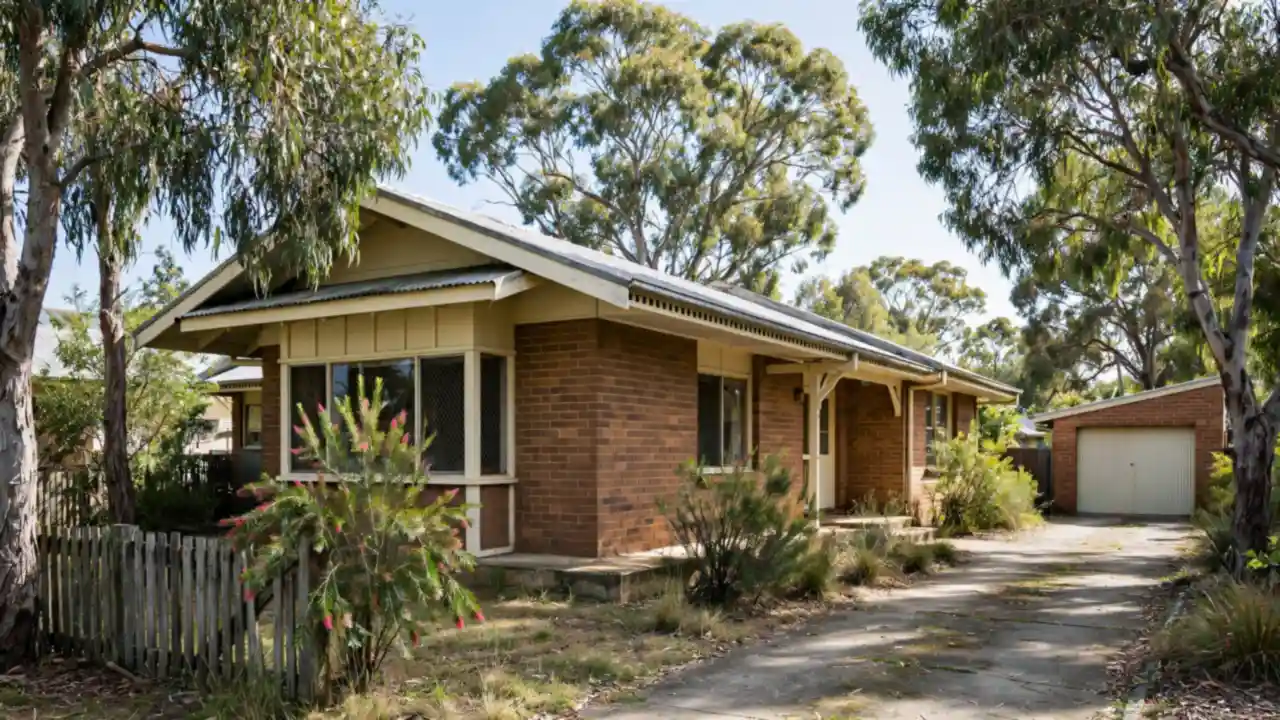
Outside the house, asbestos shows up in cladding, fencing and small structures. Exterior wall cladding, including imitation brick cladding, was common, and asbestos cement fencing still stands in Australian backyards.
Fences deserve extra care because they weather, and the WA health guidance notes most asbestos products there are now over 50 years old and nearing the end of their life. Carports, garages and outhouses from the era are built from the same materials.
- Cladding, fibre cement sheets and imitation brick cladding
- Fencing, asbestos cement fence panels and capping
- Outbuildings, carports, garages and garden sheds
Sheds, garages and soil
The backyard can hold asbestos even where no building stands. Garden sheds, outdoor toilets and dog kennels were often built from offcuts of fibre cement, and buried construction waste can leave remnants in the soil.
Soil is the easiest place to be caught out, since a garden bed or a post hole can turn up fragments buried decades ago. The only safe response is to stop digging and call an assessor.
- Sheds and kennels, fibre cement offcuts in small structures
- Buried waste, fragments where old buildings were demolished
- Soil, remnants in garden beds and around old footings
How asbestos is identified
You cannot tell if something has asbestos just by looking at it. Safe Work Australia says only a competent person can identify it, and the national renovator guide says only scientific testing can confirm it.
What a licensed assessor does

A licensed asbestos assessor inspects the property, takes samples and provides a report showing the location and condition of any asbestos found. In New South Wales the assessment should include underfloor and roof spaces.
South Australia offers a find-and-identify tool and a residential asbestos checklist. If you are buying a pre-1990 house, ask for a licensed assessor inspection first, since a standard building report does not always include asbestos information.
- The inspection, a licensed assessor walks the house, including underfloor and roof spaces
- The tools, the NSW Asbestos Checker and the SA find-and-identify tool
- The rule, if in doubt, treat the material as asbestos
The laboratory test
The only way to be sure is a sample tested by a NATA-accredited laboratory. The assessor takes the sample and sends it to the laboratory, and the result confirms whether asbestos is present. Laboratories can be found through the National Association of Testing Authorities.
Do not take a sample yourself. The sampling step belongs to the assessor, and what matters for you is the result, because it decides whether the material stays, gets managed, or gets removed by a licensed removalist.
- Who tests, a NATA-accredited laboratory, found through NATA
- Who samples, the licensed assessor, not the homeowner
- What it settles, presence or absence, and nothing else
Leave it alone or remove it
Undamaged asbestos in good condition is low risk, since materials with no holes or broken, peeling or flaking areas will not release fibres while they sit undisturbed. Sometimes the safest option is to leave them alone.
When it can stay put
Material in good condition, out of the renovation’s path, can stay in place and be managed. Sealing it with quality paint, a sealant, an enclosure or a cap may help prevent fibres being released, and covering it with a non-asbestos product is another option.
The WA caveat matters here, since many asbestos roofs and fences are now too worn for paint or sealant to work, and the WA health guidance says removal and replacement is usually best. Damaged, derelict or unused structures should be removed, not sealed.
- Good condition, no holes, cracks, peeling or flaking
- Out of the way, the renovation can avoid disturbing it
- Sealed, quality paint or another sealant on sound material
When removal is the right call
Removal is the right call where the material is damaged, where loose-fill insulation is found, or where the renovation cannot avoid disturbing it. Hipages puts it the same way in its cost guide.
Friable asbestos always needs a licensed removalist, since it crumbles easily and releases fibres into the air. Bonded asbestos becomes a problem when cut, drilled, sanded or broken, since damage can make it friable. If you think something might be asbestos, treat it like it is, and do not sand, scrub, water-blast, cut or drill it.
- Damaged, cracked, broken or flaking material
- In the way, the renovation must disturb it
- Friable, crumbly material that releases fibres easily
The safe renovation workflow
Queensland’s renovator guidance frames the whole job in three words, look, check and prepare. The steps below follow that frame, with licensed professionals doing the work that needs a licence.
Step 1. Look before you touch anything

Assume asbestos may be present if the house was built or renovated before 1990. Walk the location list in this guide and note every suspect material before any work begins.
Planning to avoid disturbing suspect materials is part of the job, not an afterthought. Drilling, sanding and demolition can all release fibres, so the plan comes first.
- The era, built or renovated before 1990 means assume it may be present
- The walk-through, inside, outside and backyard, against the location list
- The plan, work sequenced to avoid suspect materials where possible
Step 2. Check with a licensed assessor
A licensed asbestos assessor inspects the property and takes samples for laboratory testing. The report shows where asbestos is and what condition it is in, and drives every decision after it.
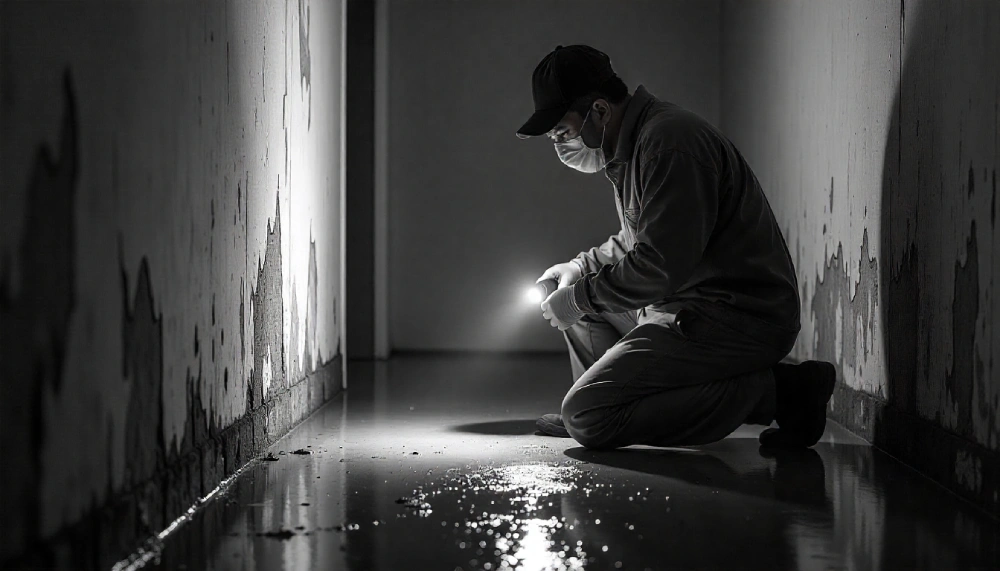
Tell the assessor what you plan to renovate, so the inspection covers the rooms your job will touch. If suspicion comes mid-renovation, stop work, clear the area, dampen it, cover it with a sealed tarp or plastic, and prevent access until an assessor can advise.
- Who, a licensed asbestos assessor, not a general builder
- What, inspection, sampling and a written report on location and condition
- First response, stop, clear the area, cover and seal it, call the assessor
Step 3. Decide whether it stays or goes
With the report in hand, the decision is straightforward. Sound material out of the renovation’s path can stay and be managed, while damaged material, loose-fill insulation or anything the renovation must disturb goes to a licensed removalist.
Consider the alternatives before removal, since painting, sealing or covering with a non-asbestos product can suit sound material. The decision is about the material and the job together.
- Stays, sound material the renovation can avoid
- Managed, painted, sealed or covered, and noted for the future
- Goes, damaged material, loose-fill, or anything in the job’s path
Step 4. Engage a licensed removalist
Engage a licensed asbestos removalist for the removal work. Check that the licence class matches the material, since Class A removalists can remove all types while Class B removalists can remove only non-friable asbestos. Get itemised quotes and do not choose on the lowest price alone.
Any tradesperson hired for repairs or maintenance must comply with work health and safety laws, and may not remove asbestos unless licensed, or the amount is under 10 square metres of non-friable material with the right training and methods. Tell your neighbours about the work, and keep household members, visitors and pets away until it is complete.
- Licence check, Class A for friable, Class B for non-friable only
- Quotes, itemised, from more than one licensed removalist
- Insurance and references, confirmed before the work starts
Step 5. Clearance, disposal and the paper trail

After removal, a post-removal inspection is recommended, and an independent licensed assessor issues a clearance certificate. The removalist notifies the regulator where the law requires it, and the disposal paperwork follows the waste to a licensed landfill.
It is illegal to dump asbestos in Australia or put it in your kerbside bin, and all asbestos waste must go to a landfill licensed to accept it. A licensed removalist or your local council can advise on the right facility. As one location example, the Kimbriki tip on Sydney’s Northern Beaches charges $760 per tonne and requires advance notice with proper documentation, and our Kimbriki tip guide sets out its rules.
- Clearance, an independent licensed assessor inspects and certifies
- Notification, the removalist notifies the regulator where required
- Disposal, licensed landfill only, never a kerbside bin, skip or hard-rubbish collection
What licensed removal costs
Every figure below comes from hipages’ 2025 cost guide and carries hipages’ name. The figures are indicative, vary locally and are subject to market forces, and hipages does not state whether GST is included.
| Area | Hipages figure |
|---|---|
| Overall removal | $25–$160 per m² |
| Minimum removal cost | $2,000 |
| Inspection | Around $400, up to $1,000–$1,500 |
| Ceiling | $40–$100 per m² |
| Flooring | $100–$900 per m² |
| Fencing | $25–$50 per sheet |
| Soil | $187 per tonne |
| Eaves | $1,500–$2,500 total |
| External cladding | $4,000–$5,000 total |
| Internal cladding, single room | $1,000–$1,500 total |
| Tip charges | Around $450, may not be included in quotes |
The price moves with the amount of material, access, condition and travel time. Damaged material costs more than sound material.
Roofing figures are a separate story, covered in full by our asbestos removal cost guide for re-roofing, and if the job includes a new roof, our roof replacement cost guide covers the re-roofing side. No source gives a whole-house renovation asbestos budget, a per-state price table or a per-sample testing cost, so none is given here.
The rules, state by state
Australia has no single national rule for homeowners and asbestos, and the threshold that decides whether a licence is needed changes across borders. The states below are the ones with homeowner guidance fetched in full.
New South Wales
SafeWork NSW says an employer or self-employed person may remove non-friable asbestos without a licence only if the total area does not exceed 10 square metres, under strict obligations. The same regulator always recommends a licensed removalist for any amount.
- Threshold, 10 m² non-friable for employer or self-employed, under strict obligations
- Notification, removalists notify SafeWork NSW
- Helpline, 1800 Asbestos on 1800 272 378
Queensland
A homeowner or owner-builder in Queensland can remove 10 square metres or less of non-friable, also known as bonded, asbestos without a certificate, and must still take safety precautions. More than 10 square metres needs a Queensland Health certificate, or a contractor holding a current certificate.
Friable asbestos must only be removed by holders of an A class licence, and tradespeople can only work under a Class B or Class A licence. Under the Public Health Regulation 2005, a homeowner must protect family and neighbours by not releasing asbestos fibres into the air.
- Threshold, 10 m² or less non-friable without a certificate
- Above it, a Queensland Health certificate or a certified contractor
- Friable, A class licence holders only
South Australia
South Australia puts no legal requirement on an individual homeowner to hold a licence to remove asbestos from their own property. Builders and tradies may not remove more than 10 square metres of non-friable material without a licence, and friable asbestos must be removed by a licensed removalist.
Once a contractor is engaged, the home becomes a workplace under the Work Health and Safety Act 2012 (SA), with the legal duties sitting on the contractor and the licensed removalist. Disposal goes through an EPA-approved facility.
- Homeowner, no licence requirement for their own property
- Tradies, a licence above 10 m² of non-friable material
- Friable, licensed removalist only
Victoria
Victoria’s homeowner guidance, from the Victorian Asbestos Hub, starts with a check before any work and a warning not to disturb suspect material. It points homeowners to a licensed removalist, and requires disposal to an authorised place only.
The Hub also warns to check your home and contents policy, since many policies exclude asbestos. Victoria has no legal requirement to disclose asbestos when selling a home, while rental providers must disclose asbestos identified by a qualified person under the Residential Tenancies Regulations 2021. For the removal threshold, check the Victorian Asbestos Hub.
- First step, check before any work, and do not disturb suspect material
- Removal, a licensed removalist
- Disposal, authorised place only
Western Australia
Western Australia allows a homeowner to remove up to 10 square metres of non-friable asbestos, following strict safety steps. Even so, the state strongly recommends a licensed removalist for any removal, and more than 10 square metres of non-friable asbestos, or any friable asbestos, must be removed by a licensed removalist.
There is no safe level of exposure to asbestos, and waste must go to a licensed disposal facility. If you are buying or renting a pre-1990 house, ask the building inspector to check for asbestos.
- Threshold, up to 10 m² non-friable, under strict safety steps
- Recommendation, a licensed removalist for any removal
- Above it, licensed removalist for more than 10 m² or any friable material
- Notification, WorkSafe at least five days before licensed removal work
Australian Capital Territory
The Australian Capital Territory takes the strictest line. Homeowners and tradespersons are not allowed to remove any amount of asbestos themselves.
There is no threshold to work around in the Territory. If your pre-1990 Canberra home needs asbestos work, the job starts and ends with a licensed removalist.
- Rule, no self-removal of any amount
- Who removes it, a licensed asbestos removalist only
- No threshold, no small-amount exception
Tasmania and the Northern Territory
No homeowner-specific asbestos guidance for Tasmania or the Northern Territory was fetched for this guide, so their rules are not stated here. If your home is in either jurisdiction, check with the local work health and safety regulator first.
Frequently asked questions
Does my property contain asbestos?
If your house was built or renovated before 1990, there is a good chance it contains asbestos. The chance is higher if it was built before the mid-1980s, and a home renovated between 1990 and 2004 may still contain it.
You cannot confirm asbestos by sight alone, since only laboratory testing can verify its presence. A licensed assessor inspects the property, takes samples and provides a report, and the samples go to a NATA-accredited laboratory. If in doubt, treat the material as asbestos until the result comes back.
Why is it important to remove asbestos from my house?
Breathing in asbestos fibres can cause asbestosis, lung cancer and mesothelioma, and people rarely get symptoms until 20 to 30 years after exposure. Around 4,000 Australians die each year because of asbestos-related illnesses, according to the Department of Health.
Removal matters where the material is damaged, where loose-fill insulation is found, or where the renovation cannot avoid disturbing it. Sound material left alone is low risk, which is why the decision is about the material and the job together.
How do I calculate asbestos removal cost in Australia?
Hipages puts general removal at $25 to $160 per square metre, with a minimum of $2,000, and an inspection at around $400 on average, rising to $1,000 or $1,500 where many samples need testing. Area, access, condition and travel time all move the price.
The practical way is to get itemised quotes from licensed removalists after an assessor’s report, and to ask whether tip charges are included, since hipages notes the tip will charge around $450 on average. No source gives a whole-house renovation asbestos budget.
Can I throw asbestos out?
No. It is illegal to dump asbestos in Australia or put it in your kerbside bin, and all waste must go to a landfill licensed to accept it. Do not bury it, dump it, or put it in skips or household bins.
A licensed removalist or your local council can advise on the right facility, and disposal dockets should be kept on file. As one location example, the Kimbriki tip on Sydney’s Northern Beaches charges $760 per tonne and requires advance notice with proper documentation.
Can I paint over asbestos?
Sealing material in good condition with quality paint may help prevent the release of fibres, and the national guide lists paint, sealants, enclosures and capping as ways to maintain it. Painting or sealing is a management option for sound material, not a repair for damaged material.
Western Australia adds a caveat, since many asbestos roofs and fences there are now too worn for paint or sealant to work, and removal and replacement is usually better. Never water-blast asbestos cement products, and never paint over damaged material without an assessor’s advice.
The bottom line

A pre-1990 home is not a reason to panic or to stop renovating. It is a reason to look before you touch anything, to check with a licensed assessor, and to let a licensed removalist do the removal work.
Leave sound material alone, manage it with paint or a sealant where the regulators say that works, and remove what is damaged or in the way through the licensed path. Keep the clearance certificate and disposal dockets, and check your insurance before the work starts.
Renovating an older Australian home is worth doing well, and doing it well starts with treating asbestos as a licensed job from the first suspicion to the last docket.