Nothing beats walking barefoot across a thick, green lawn on a warm evening. Yet most Australian lawns look patchy, thin or tired by February, not because the grass is wrong, but because the care does not match the season.
This Australian lawn care guide takes the guesswork out of it. You will learn which of the five common Australian grasses you have, what each season asks of it, and how to water, feed and mow so the lawn stays dense and green.
The routine is simple once you know it. A few jobs each season, the right mowing height, and feeding at the right time will do more than any single product. Here is the whole year, season by season.
Know your grass first
Five grasses cover most Australian lawns. Each one wants different sun, water and mowing, so the first step is working out which grass you have.
Look at the width, colour and texture of the blades, and check how it spreads. Some grasses send out runners, which are horizontal stems that produce new shoots, while others grow in clumps. If you are unsure, a lawn care professional can identify it for you.
Buffalo
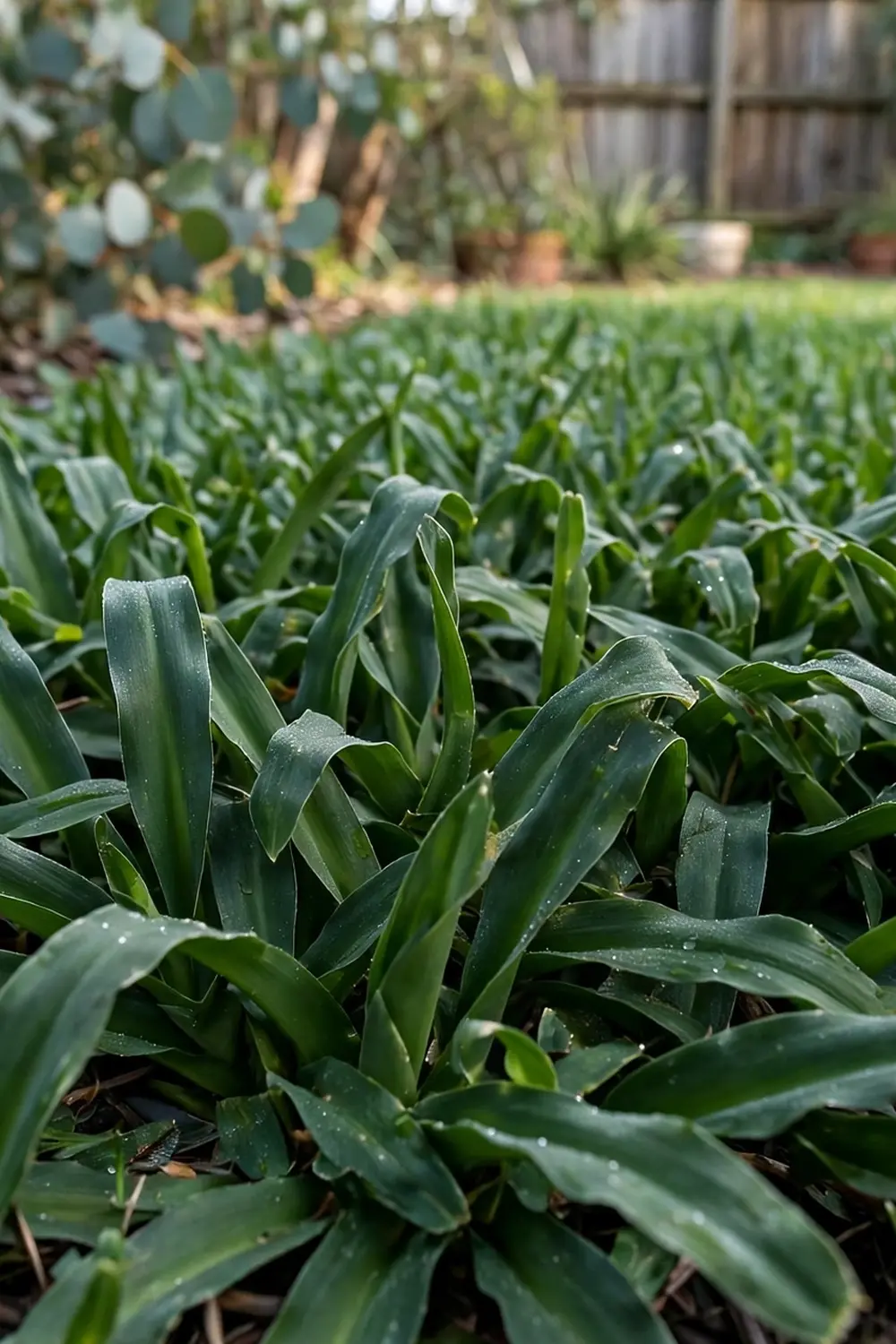
Buffalo is the forgiving family lawn. Its broad leaves feel soft underfoot, and its deep roots help it through dry spells and shady corners alike.
- Sun: handles shade better than the other warm-season grasses.
- Water: deep roots make it drought-tolerant once established.
- Growth: steady rather than aggressive, so it fills in without taking over.
- Best for: family yards and partly shaded blocks.
Buffalo suits homes where kids and pets use the lawn hard. Keep it a little longer in summer and it will shade its own roots.
Couch
Couch is the classic fine lawn for sunny Australian yards. Its creeping runners spread fast and crowd out weeds, which is why it is a favourite for neat, dense lawns.
- Loves full sun and handles heat well.
- Drought tolerance: excellent, thanks to its deep root system.
- Spreads fast through aggressive runners, so it repairs bare spots on its own.
- Mowing: needs regular mowing in the growing season to stay tidy.
Couch struggles in shade, so it is the wrong pick for a yard under big trees. In full sun it is hard to beat for a soft, even surface.
Kikuyu
Kikuyu is the bright green workhorse of Australian lawns. It grows quickly, repairs itself fast, and bounces back from wear that would finish a slower grass.
- Growth: rapid, with a deep root base that repairs damage quickly.
- Sun: thrives in full sun.
- Water: drought resistant once established.
- Cold: tolerates cold snaps better than the other warm-season grasses.
Kikuyu needs firm edges, because it will happily creep into garden beds. Mow it regularly in summer or it can get coarse and thatchy.
Zoysia
Zoysia is the low-fuss option for warm climates. It grows slowly, which means less mowing, and it asks for less water than most other turf types.
- Suits: warm-climate homes and low-maintenance yards.
- Texture: fine and soft underfoot.
- Water: needs less than many other turf grasses.
- Mowing: slower growth means fewer mowing sessions.
Zoysia takes longer to establish than couch or kikuyu, so be patient in the first season. Once it is in, it holds its colour well with modest care.
Bentgrass
Bentgrass is the odd one out. It is a cool-season grass that makes the lush, carpet-like lawns you see on putting greens, but it is notoriously high maintenance in Australian heat.
- Best for: keen lawn lovers who enjoy detailed care.
- Needs: lighter, more frequent feeding in spring and autumn.
- Heat: does not tolerate heat as well as the warm-season grasses.
- Mowing: needs regular, careful mowing to keep its fine texture.
Most Australian homes are better off with a warm-season grass. Bentgrass rewards effort, but it punishes neglect in a hot summer.
| Grass | Sun | Water needs | Mowing | Maintenance |
|---|---|---|---|---|
| Buffalo | Full sun to part shade | Low once established | Moderate | Low to moderate |
| Couch | Full sun | Low once established | Frequent in summer | Moderate |
| Kikuyu | Full sun | Low once established | Frequent in summer | Moderate |
| Zoysia | Full sun, warm climates | Lower than most turf | Less often | Low |
| Bentgrass | Cool-season, some shade | Higher | Frequent and careful | High |
Match the grass to your yard before you change anything else. A shaded block will never keep couch happy, and a sunny yard wastes the shade tolerance of buffalo.
Australian lawn care guide: the year-round routine
A healthy lawn runs on a seasonal rhythm. A few simple jobs each season keep it dense and green all year, and the order matters more than the effort. Feed after weeding, water in the morning, and mow high when the heat arrives.
Spring
Spring is the big reset. Soil temperatures above 15°C wake warm-season turf from winter dormancy, according to The Labyrinth Garden’s guide, and this is the single best window for repair work.
- Dethatch with a metal rake to clear the spongy layer of dead grass that blocks water and nutrients.
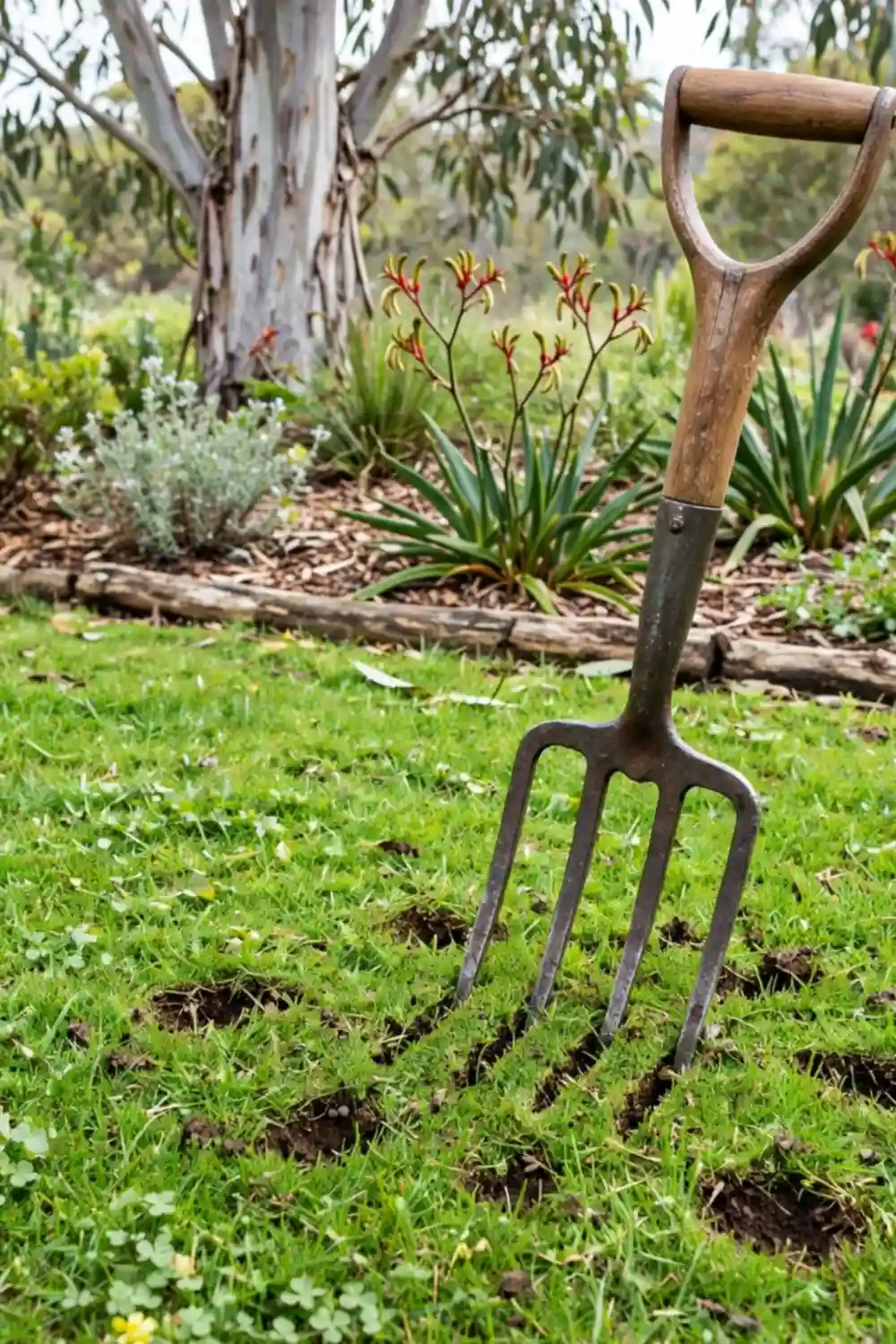
- Aerate with a garden fork so air, water and food reach the roots. For heavily compacted soil, a core aerator pulls plugs about 50–75 mm deep, according to The Labyrinth Garden’s guide.
- Weed first, feed second. Treat weeds with a selective broadleaf herbicide suited to your lawn type before feeding, or the fertiliser feeds the weeds too.
- Feed with an organic lawn fertiliser, then again in mid to late spring with an inorganic fertiliser for fast, lush growth.
- Watch for curl grubs. Brown patches in spring can mean grubs are active, so treat them with a suitable insecticide.
September’s mild conditions are ideal for starting a brand-new lawn from seed or turf, using a fertiliser made for new lawns. Spring is also a good time for the wider garden, and these beginner gardening hacks cover jobs beyond the lawn.
Summer
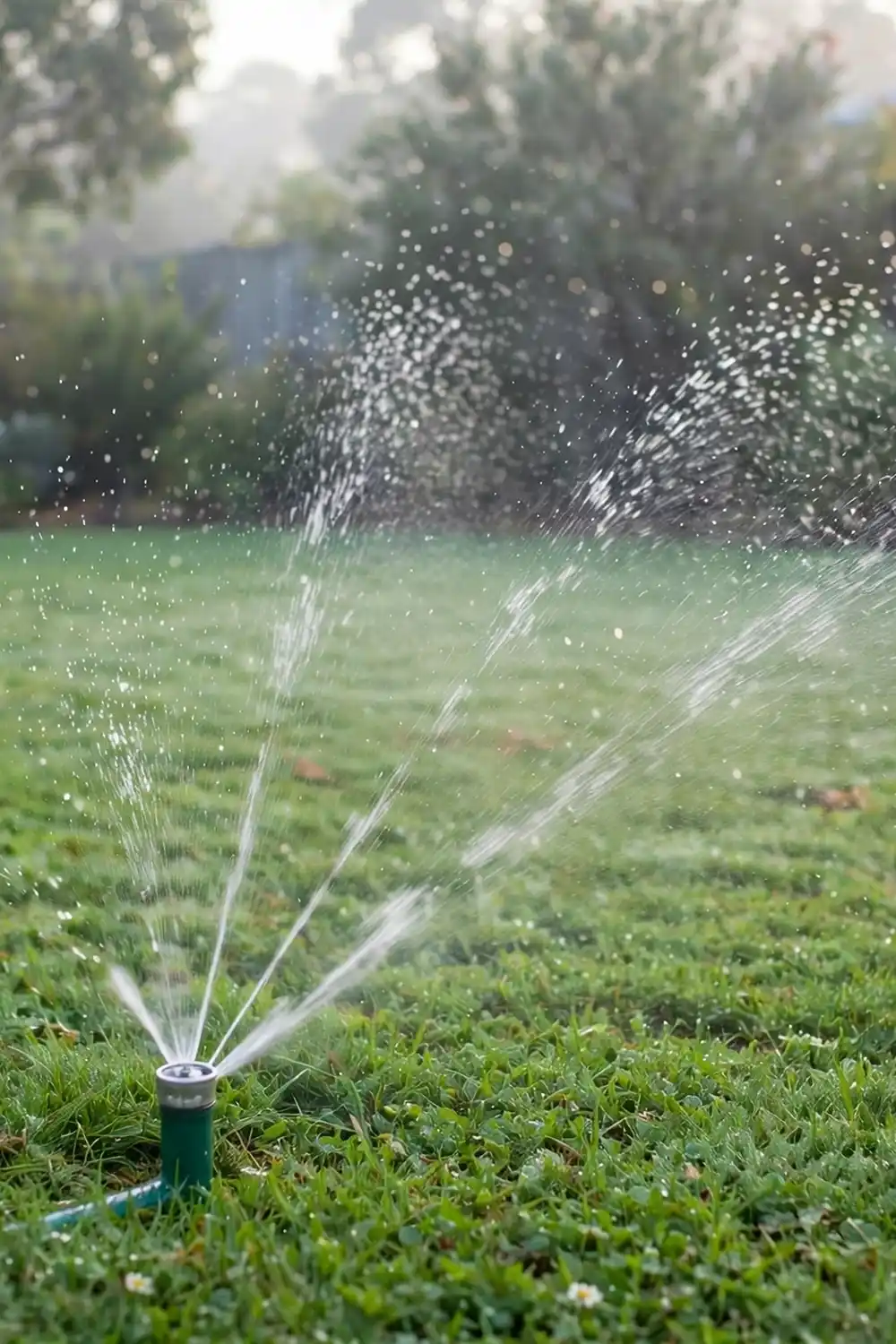
Summer is about protection. Warm-season grasses are in peak growth, but heat and dry spells can stress even tough turf, so the aim is to keep moisture in the soil and the blades long.
- Water deeply and early in the morning, two to three times a week in extreme heat.
- Apply a soil wetter early in the season so water reaches the roots instead of beading on the surface.
- Feed lightly with a fast-acting liquid fertiliser to green the lawn up for entertaining.
- Mow high and mow less often, never cutting more than one-third of the leaf blade.
- Watch for lawn armyworm and treat at first sight with a suitable insecticide.
Watering with diluted seaweed once a fortnight strengthens the root system and helps the lawn recover from heat stress. If grubs appear, treat them early before the damage spreads.
Autumn
Autumn is the repair season. The air cools while the soil stays warm, which is the perfect combination for fixing summer damage and setting the lawn up for winter.
- Repair bare patches by sowing lawn seed, or by feeding couch, kikuyu and buffalo so new growth fills the gaps.
- Aerate heavily used areas with a garden fork, driving 10–15 cm holes spaced 10–15 cm apart.
- Feed early in the season and again in May with a complete lawn fertiliser to build strong roots before winter.
- Control winter grass before it takes over, using a pre-emergent spray such as Munns Winter Grass Killer, which Bunnings names as an example.
- Rake out dead patches left by spring and summer pests, then feed to encourage new growth.
Browning is inevitable in winter in colder areas, but a good late-autumn feed helps the lawn recover faster when spring arrives. Autumn is also a good time to aerate if the soil compacted over summer.
Winter
Winter is the quiet season for most Australian lawns. Growth slows and many warm-season grasses go dormant, so the work shifts to protection rather than growth.
- Mow less often and leave the grass a little longer while growth is slow.
- Control broadleaf weeds like bindii, clover, plantain and thistles with a selective broadleaf herbicide suited to your lawn type.
- Stay off frosted grass. Do not walk on a lawn covered in frost, and give it a light watering before the sun rises so the frost melts faster.
- Water only in the morning. Cool, dewy conditions can encourage lawn disease, which shows as yellow or brown patches, so apply a fungicide at the first sign.
- Fertilise in late winter to give the lawn the nutrients it needs for strong spring growth.
If the soil is compacted, winter is a fair time to aerate, since the lawn is not under growth stress. Keep the routine light and let the lawn rest.
Watering and mowing
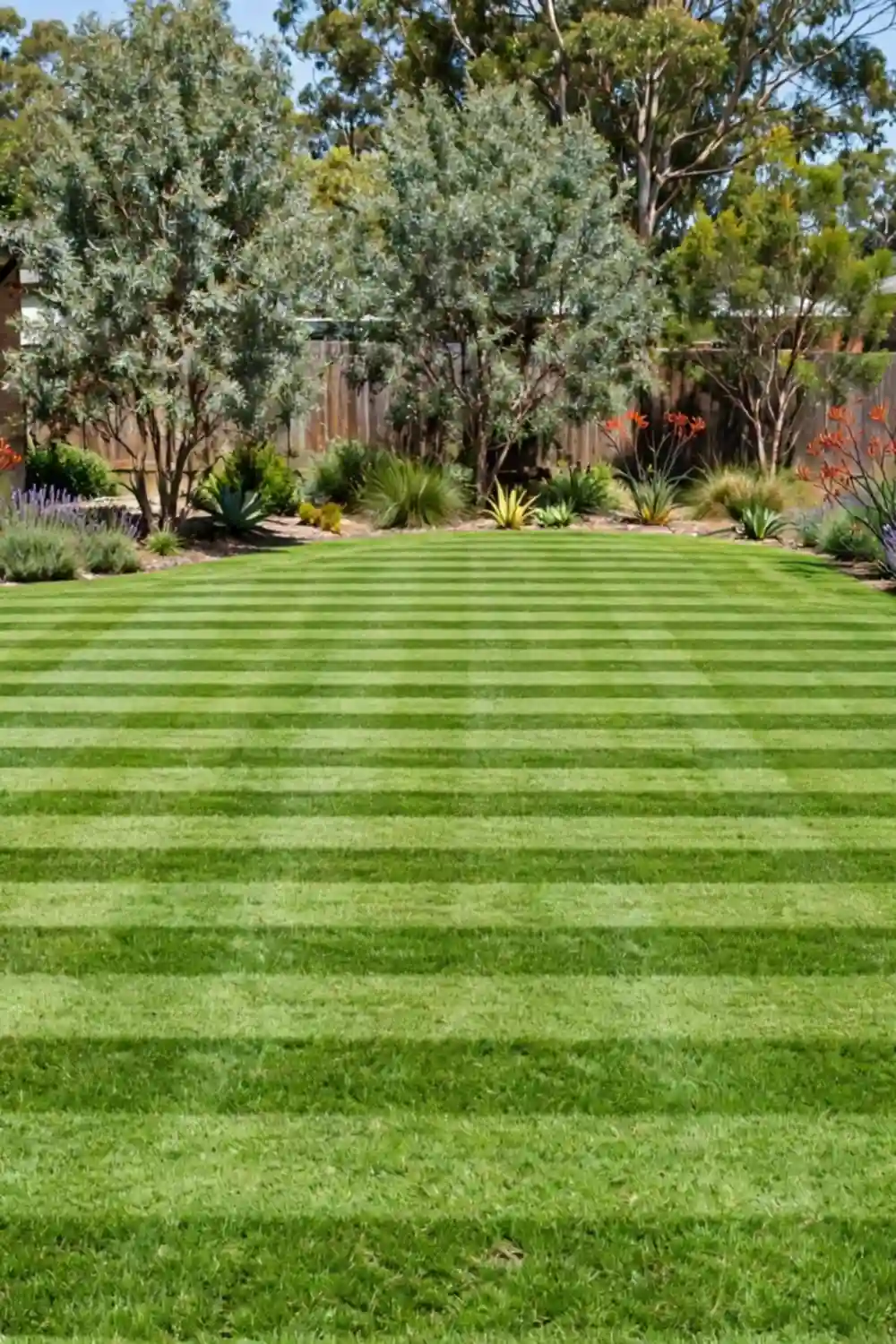
Watering and mowing are the two jobs you do most often, and small changes here make the biggest difference. Early morning is the best time to water, because cooler temperatures let the water soak down to the roots instead of evaporating in the heat.
Water deeply and less often rather than little and often, so the roots grow down instead of staying near the surface. Wirri’s lawn care calendar suggests around 2–3 cm of water per week, adjusted for local rainfall. Check your local water restrictions before setting up a regular routine, since the rules vary by council and change through the year.
Mow high in summer and never cut more than one-third of the leaf blade in a single session. The Labyrinth Garden’s guide suggests raising the mower deck by 10–15 mm in peak heat. Sharp blades matter too, so sharpen them every season for a clean cut that heals fast.
For a large block, a ride-on mower can cut the job down sharply. For most suburban lawns, a standard mower and a regular routine are enough.
Feeding your lawn
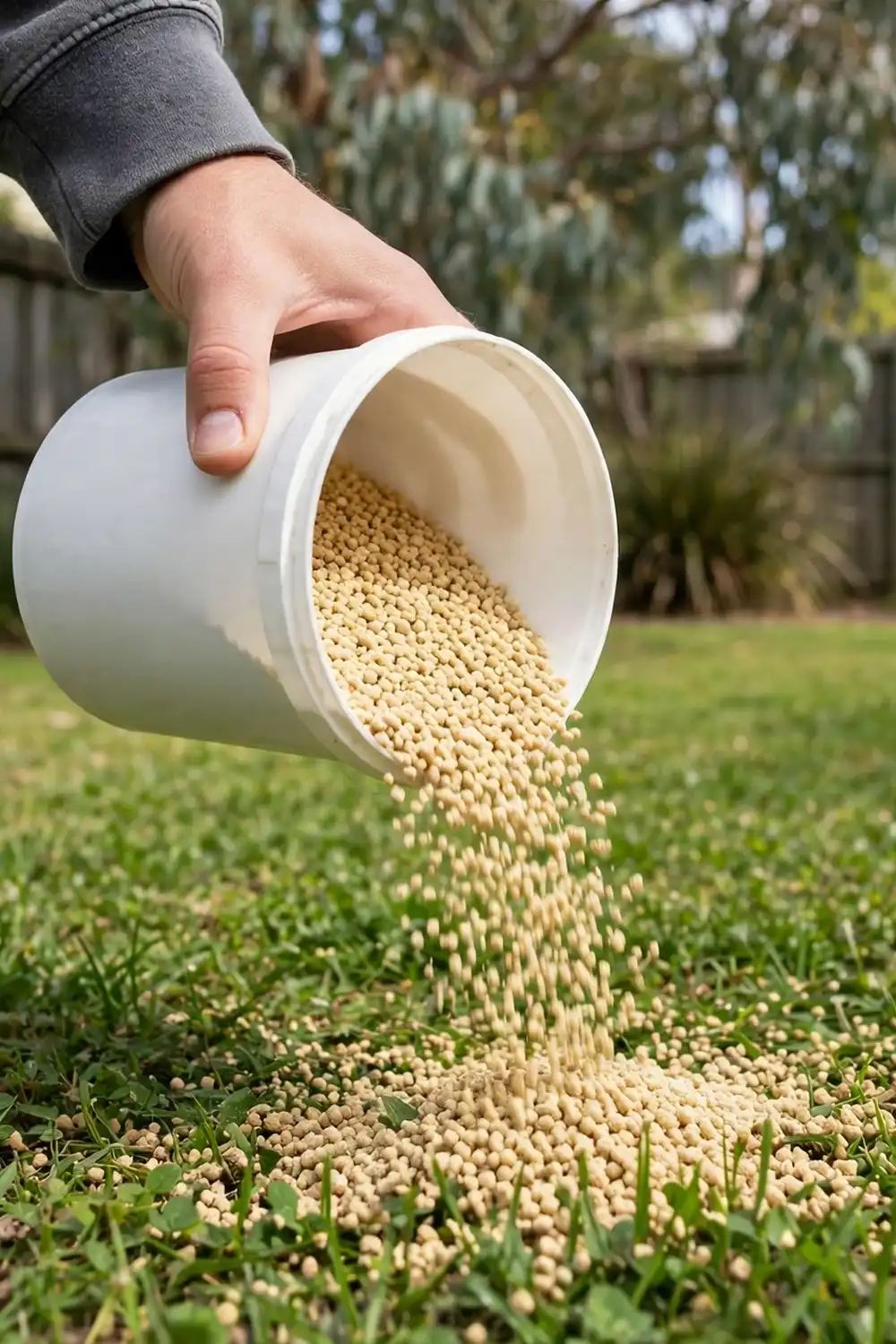
Fertiliser is the quiet hero of a lush lawn, but timing matters more than quantity. Warm-season grasses such as buffalo, couch, kikuyu and zoysia respond best to fertiliser while they are actively growing in spring and summer.
Bentgrass is different. It prefers lighter, more frequent applications during spring and autumn, which builds its resilience before summer and winter.
Slow-release fertilisers feed the lawn over time and need fewer applications, while fast-release fertilisers green the lawn up quickly but need more careful handling. The right choice depends on the state of your lawn and how much maintenance you want to do.
Always follow the instructions on the label, including how much to use and when to water afterwards. Too much fertiliser can burn the lawn, while too little starves it. If you are unsure what to use, ask a lawn care professional in your area.
Fixing common problems
Most lawn problems are easy to fix once you know what is causing them. Start with the cause, not the product, and the fix usually follows.
Bare patches
Heavy foot traffic, poor soil and too much shade are the usual causes of bare or patchy grass. The fix starts with the soil, not the seed.
- Feed and water the area to encourage the surrounding grass to spread in.
- Trim back nearby trees or shrubs that are blocking sunlight.
- Reseed or returf if the damage is extensive and the grass cannot recover on its own.
Bare patches also let weeds establish, so fixing them promptly keeps the rest of the lawn thicker too.
Lawn grubs
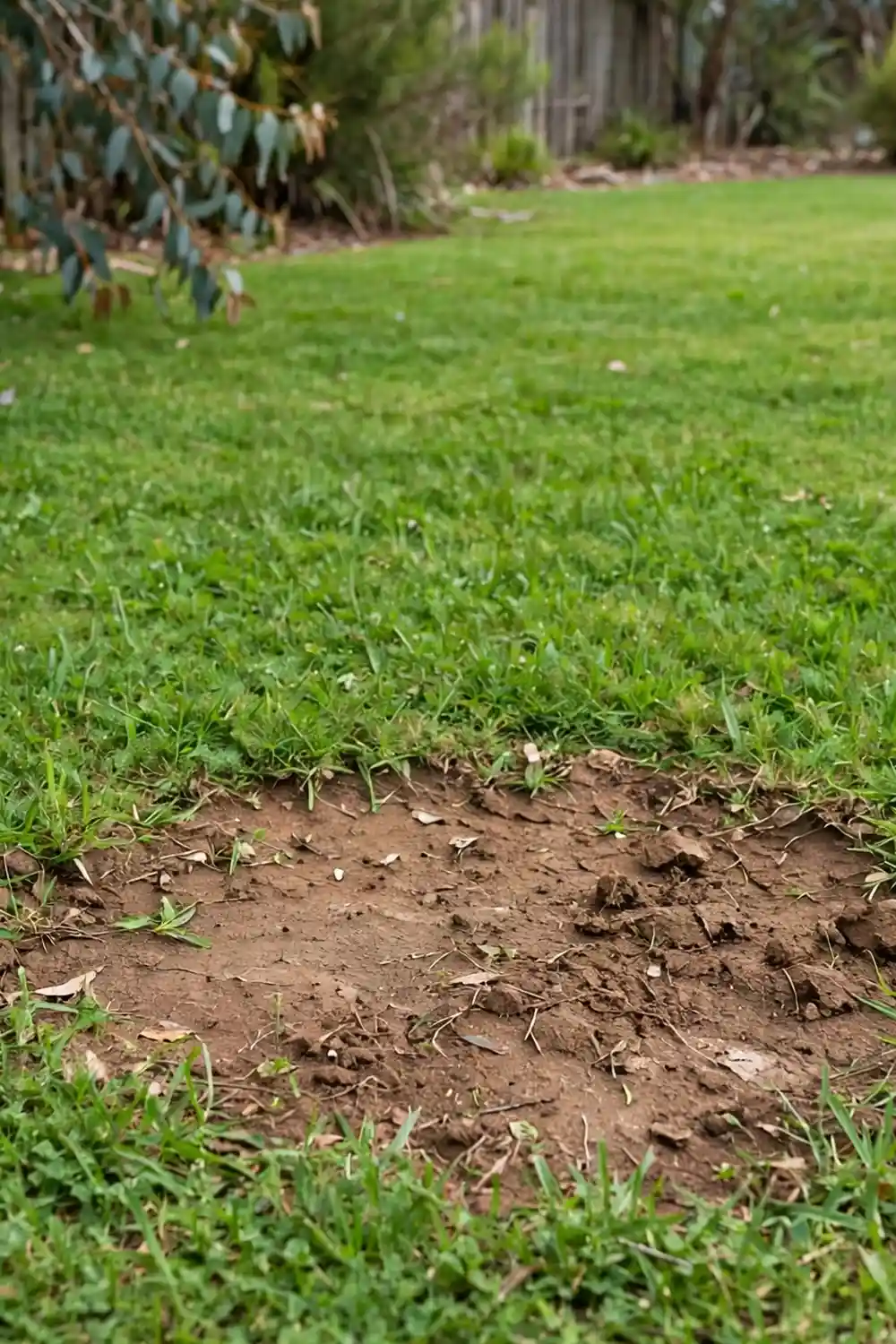
Grubs are one of the most common causes of sudden brown patches. If the grass is turning brown, lifts away from the soil easily, or birds are pecking at the lawn, grubs could be to blame.
- Check the signs: brown grass, turf that lifts like a mat, and birds working the lawn.
- Act early. Treating grubs soon after you spot them helps prevent more widespread damage.
- Use a suitable insecticide and follow the label instructions for the product you choose.
Curl grubs become active in spring, so watch for brown patches as the weather warms. A lawn that is fed and watered well recovers from grub damage faster.
Yellow or brown grass
Discoloured grass usually points to water or food. Overwatering, underwatering and a lack of nutrients can all turn a lawn yellow or brown.
- Check soil moisture before watering again, and make sure the sprinkler system is working properly.
- Feed according to the label if the lawn looks hungry, using a fertiliser suited to your grass type.
- Look deeper if the problem persists, since pests and fungal diseases can also be responsible.
Water only in the morning if disease is suspected, and keep off the lawn while it is wet and cold. A fungicide at the first sign of disease can stop it spreading.
Weeds taking over
A thick, healthy lawn is the best defence against weeds. Regular mowing, watering and fertilising keep the grass strong enough to crowd out unwanted plants.
- Feed the lawn, not the weeds. Control weeds before feeding, or the fertiliser helps the weeds too.
- Use a selective broadleaf herbicide suited to your lawn type for bindii, dandelion, clover and similar weeds.
- Apply a pre-emergent herbicide in early spring to stop weed seeds such as summer grass, crowsfoot and bindii from germinating.
If weeds like dandelion or bindii have already spread, a suitable lawn weed killer is the answer. Thick grass is the long-term fix, so keep the lawn fed and mowed.
When to call a professional

Some lawn jobs are too big for DIY, and a professional has the equipment and the eye to sort them out. Regular mowing is the most common reason people call one in, and hipages’ FAQ puts most lawn care professionals at $66 per hour, or $50–150 per job, depending on the size of the lawn, its condition, the location and how often the work happens.
A professional can also help with lawn renovation or returfing when the lawn has large dead patches, poor drainage or ongoing problems. They can assess whether the lawn can be saved or whether starting again is the better option.
Large-scale aeration and scarifying are best left to the pros too. Aeration relieves compacted soil, while scarifying removes built-up thatch, and both encourage healthier root growth. Professionals have specialised equipment that gets the job done quickly.
Call one in as well if grubs are spreading and you are struggling to control them, or if the lawn is part grass and part weed and you are not sure where to start. A professional will identify the problem and recommend the right treatment.
Frequently asked questions
How much does lawn mowing cost?
The cost of lawn mowing depends on the size of your lawn, the condition (e.g. a simple mow versus a garden clean-up), the location and the frequency (one-off, weekly, monthly etc). Most lawn care professionals charge $66 per hour, or $50-150 per job
What is the 1/3 rule for mowing grass?
The ‘one third’ rule means you should never cut more than one third of the height of a blade of grass in a single mowing session. Oh, and make sure you sharpen mower blades every season.
What is the best time of day to water a lawn?
Early morning is the best time to water your lawn. Cooler temperatures give the water time to soak down to the roots instead of evaporating in the heat. As the day warms up, any moisture left on the grass dries quickly, reducing the risk of fungal diseases.
The bottom line
This Australian lawn care guide comes down to three habits. Know your grass, follow the seasons, and water and feed at the right times.
Do those three things and the lawn will look after itself for most of the year. If you are planning bigger changes to the yard, check how much landscaping costs before you commit, and start with the lawn — it sets the tone for the rest of the garden.