Vinegar for pest control has one big thing going for it. The bottle is already in the pantry, it costs almost nothing, and spraying it around feels like doing something chemical-free and sensible about the ants on the bench.
What vinegar pest control actually does is narrower than the internet suggests, and this guide will not pretend otherwise. Vinegar deters a few pests, disrupts a few more, and does nothing at all to some of the ones it is most often recommended for.
Used with clear eyes, it still earns a place in the routine. Here are the eleven ways it genuinely helps around an Australian home, each with its limit stated plainly, plus the point where you put the bottle down and call a professional.
What vinegar can and cannot do
The active ingredient is acetic acid, the compound that gives vinegar its bite. On treated surfaces it makes life less pleasant for some crawling pests, and its strong smell scrambles the scent communication many insects navigate by.

That is the whole mechanism, and it sets honest boundaries. Vinegar is a deterrent, not an insecticide.
It does not kill spiders on contact, it does not reach into nests or colonies, and it cannot penetrate the casings that protect insect eggs, so it never stops the next generation hatching. Whatever it does also fades fast, because the smell evaporates within days and sooner after rain or cleaning.
| Method | What it actually does | Where it stops |
|---|---|---|
| Vinegar spray (50/50) | Makes treated surfaces less inviting; wipes out ant scent trails on that surface | Fades within days; no effect on nests, colonies or eggs |
| Apple cider vinegar trap | Lures adult fruit flies and gnats in to drown | Catches adults only; the breeding source is untouched |
| Diatomaceous earth | A dry dust that wears down and dries out crawling pests that cross it | Works only while dry; a slow maintenance tool |
| Registered baits and sprays | Labelled products designed to kill, including baits carried back to a nest | The chemical route; the label is the law |
Two handling rules apply to every use in this article. Mix the spray half vinegar, half water, and patch test an inconspicuous spot first, because vinegar can discolour surfaces.
Keep it off natural stone and marble entirely, keep it off hardwood floors, be careful around enamelled porcelain, and never mix it with bleach. Nothing here disinfects anything, and no claim of that kind is made for it anywhere in this guide.
11 ways to use vinegar against household pests
1. Wipe the ant trail out
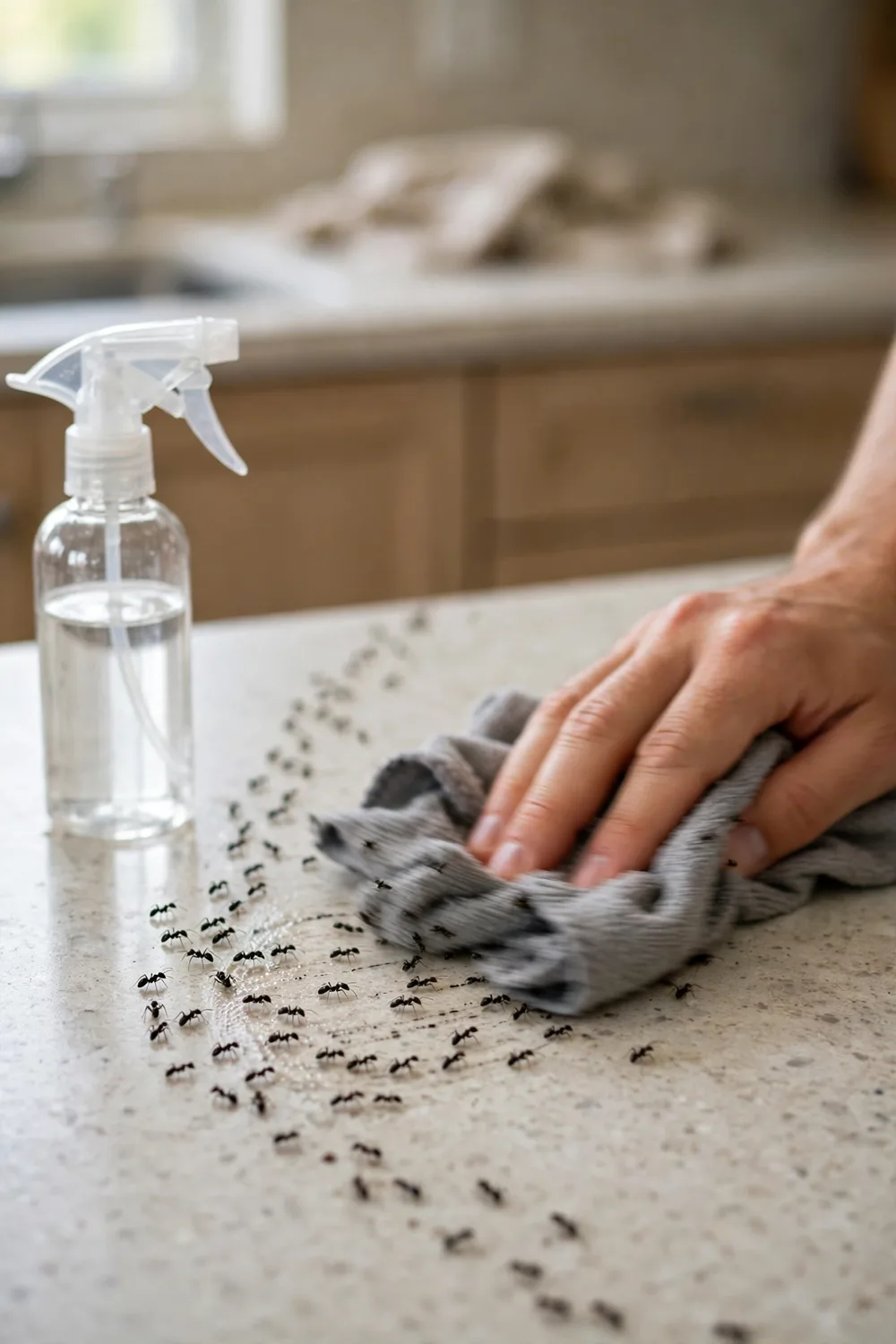
Ants commute along pheromone trails, and a bench wiped with the 50/50 mix destroys the trail on that surface. The line behind them loses its map, and the traffic on that bench stops until the trail is laid again.
Hold both halves of that sentence, though. The colony is untouched, the nest is wherever it was, and the ants will reroute or relay the trail, sometimes within the day. This is trail management, not ant control.
- Mixture, half white vinegar, half water on a cloth
- Where, the bench, floor run or sill the trail crosses
- Honest verdict, real but brief; the colony will be back
2. Spray the entry points
The same mix in a spray bottle goes along skirting boards, door frames and window sills where ants and spiders come in. Treated surfaces become less inviting, and casual traffic through those gaps drops.
It is a rhythm, not a barrier. Reapply every few days and after any cleaning, because once the smell has gone the welcome mat is back out.
- Target, gaps, frames, skirting and thresholds
- Rhythm, every few days, sooner after mopping
- Best against, wandering spiders and exploratory ants
3. Steep orange peel for a threshold spray
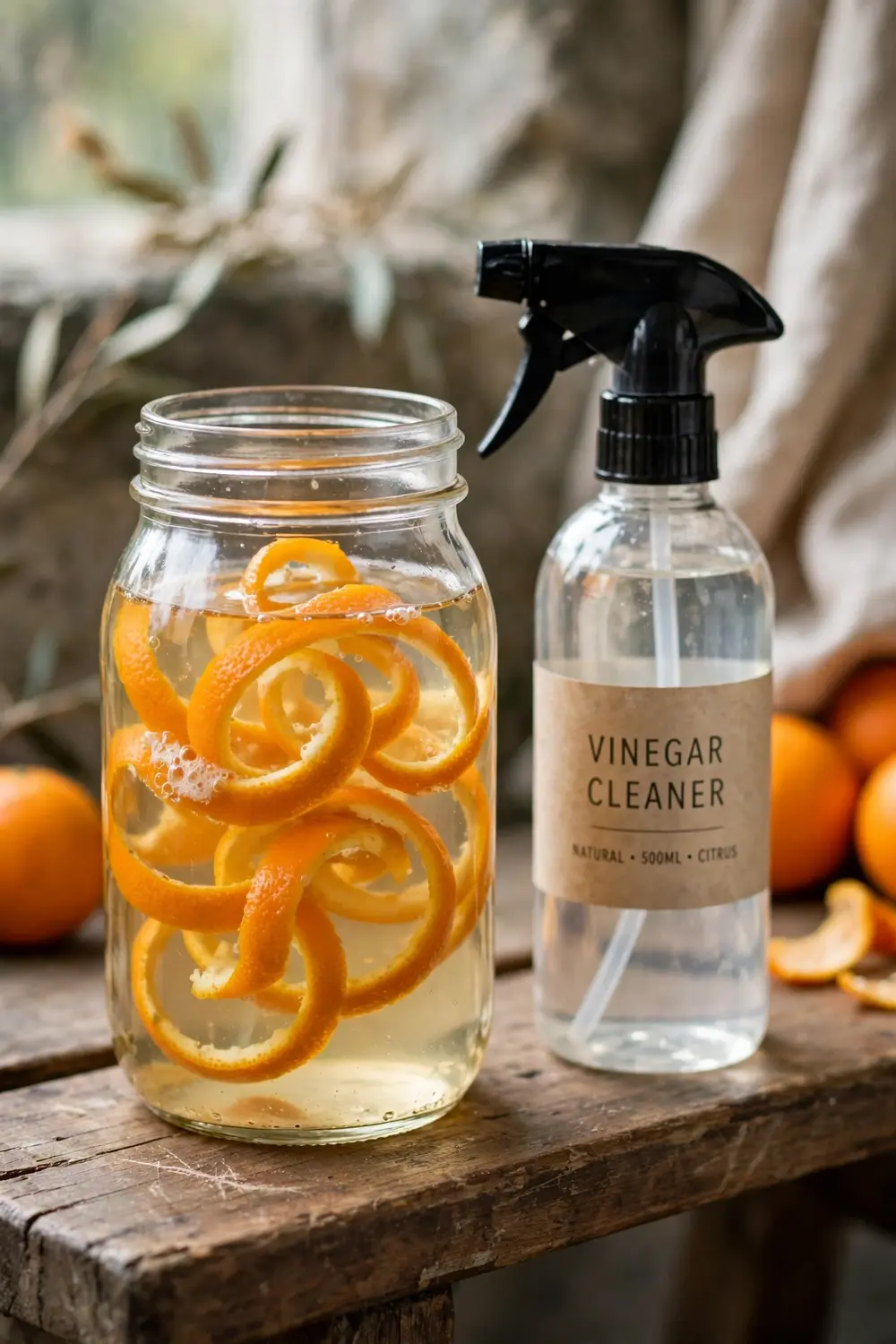
Citrus peel steeped in a jar of white vinegar, then strained into a spray bottle, gives you a stronger-smelling version of the same tool. Use it at the front and back thresholds, where you want the scent strongest and the traffic is heaviest.
It follows the same rules as the plain mix. The citrus changes the smell, not the science, so expect deterrence measured in days, and patch test painted or varnished thresholds first.
- Steep, citrus peel in white vinegar until it smells strongly of citrus
- Use it at, the front and back thresholds
- Expect, deterrence measured in days, never weeks
4. Trap fruit flies with apple cider vinegar

This is the one entry where vinegar attracts instead of deterring, and it is the best trick in the article. Pour apple cider vinegar into a small jar, add a single drop of dish soap, and set it near the fruit bowl.
The fermentation smell reads as ripe fruit to a fruit fly. The soap breaks the liquid’s surface tension, so a fly that lands sinks instead of standing on the surface and leaving.
Refresh the jar every two or three days, and remember the trap is the supporting act. The primary control is removing what they are breeding in, the overripe fruit and the residues in the bin.
- Bait, apple cider vinegar, one drop of dish soap only
- Refresh, every two or three days
- Real fix, the fruit source and bin hygiene
5. Set the same trap by your houseplants
Fungus gnats get the same trap beside the pots, and a more grudging verdict. The trap will catch adults on the wing, which tells you the problem is there and trims the numbers you see.
The breeding happens in the potting mix itself, where the trap cannot reach. Letting the top of the mix dry out between waterings is what actually breaks their cycle, and our houseplants for beginners guide covers the watering habits that keep pots gnat-unfriendly.
- Catches, adults on the wing, nothing below the surface
- Misses, the larvae living in the potting mix
- Actual fix, a mix surface that dries between waterings
6. Spray spider corners, then clear the webs
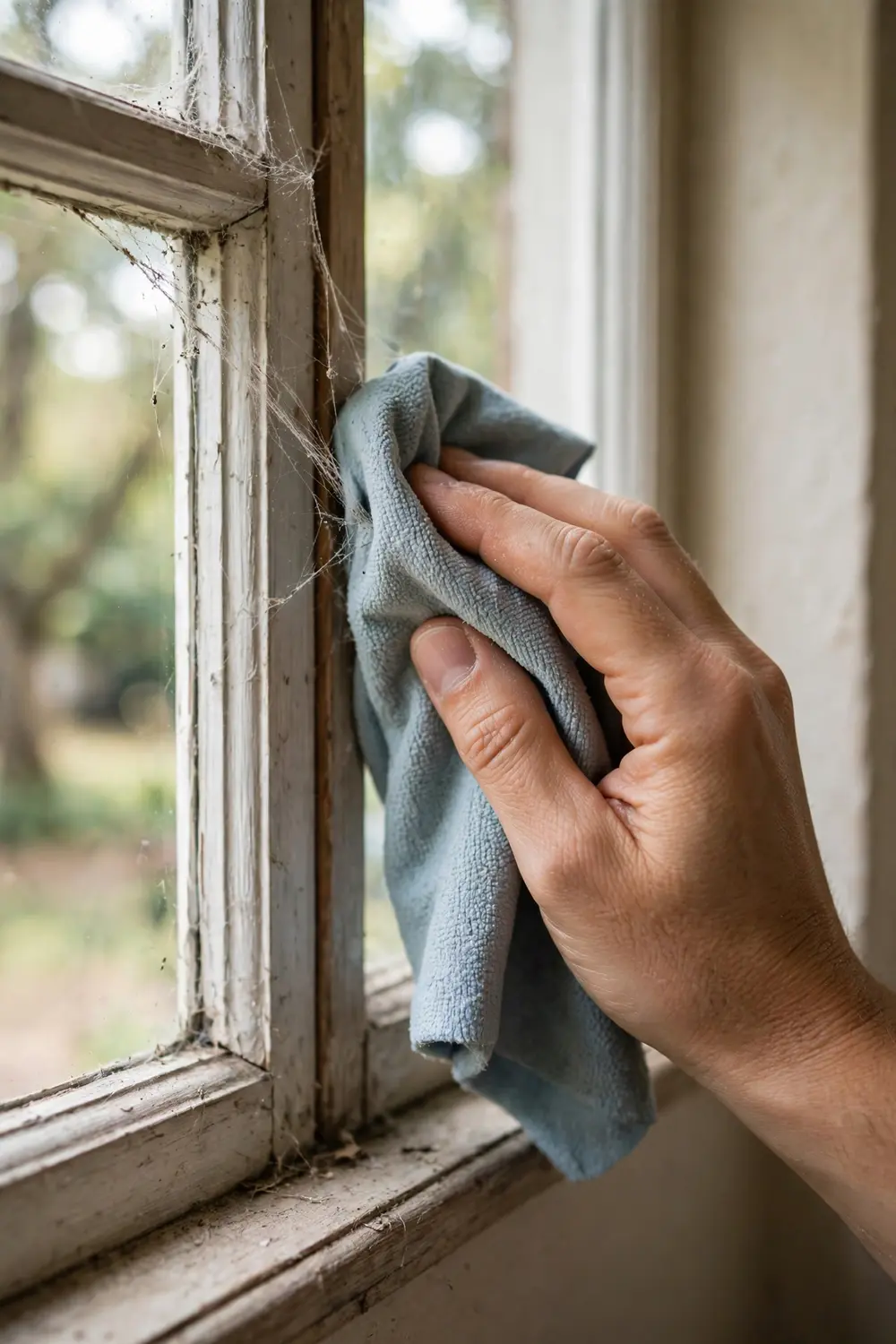
Spray the corners, skirting and window frames where webs keep appearing, using the plain 50/50 mix. The acetic acid makes those surfaces less inviting, and spiders tend to set up elsewhere.
Then do the physical half of the job. Wipe the webs away with a broom or cloth, because an empty web is an invitation to rebuild. What this will not do is kill a spider you spray directly, and it will not clear a room that already has plenty of them.
- Spray, corners, skirting and frames with the 50/50 mix
- Follow with, wiping every web away
- Not promised, a kill on contact or a cleared infestation
7. Wipe window and door frames
A cloth with the mix run around window and door frames leaves a short-lived residue that spiders and crawling insects dislike crossing. It suits the frames on the shady side of the house, where webs and egg sacs gather undisturbed.
Frames are also where the patch test matters most. Paint and varnish can react to acid, so test a hidden corner, wait, and check before you do the whole run.
- Run, shady-side frames first
- Test, a hidden corner of paint or varnish
- Lasts, days, not weeks
8. Clean away what cockroaches come for
This entry has to start with the verdict. Vinegar does not repel cockroaches, and spraying it around the kitchen will not move a single one out.
What it can do is remove why they come. A 50/50 wipe across the greasy zones around the stove, the bench edges and the bin cupboard strips away the food film that cockroaches commute to at night.
You are not deterring the cockroach. You are closing its restaurant.
- Verdict first, vinegar does not repel cockroaches
- Wipe, the greasy zones by the stove, benches and bin cupboard
- The point, stripping the food film they commute to
9. Drench an outdoor ant nest entrance
Tipped or sprayed at a nest entrance in the garden, vinegar disrupts the surface traffic and can quiet a patio nest for a while. Ants pour out, the entrance gets busy, then things settle.
Underground, the queen and the colony carry on. A nest that keeps feeding trails into the house needs baiting, which reaches the colony in a way no surface liquid can, and a nest that still persists after baiting is a professional’s job.
- Apply it, at the nest entrance, outdoors
- Effect, surface traffic disrupted for a while
- Hard limit, the queen and colony carry on below
10. Wipe outdoor tables and bin lids

Before a barbecue, wipe the outdoor table, the serving bench and the bin lids with the mix. For the length of an afternoon, ants and flies find the area less interesting, which is all this entry claims.
It is a short window and it closes. Food left out will out-argue the vinegar within the hour, so covered food and a bin lid that shuts do more than any second spray.
- Timing, wipe down right before eating outside
- Window, about the length of one afternoon
- Stronger backup, covered food and a bin lid that shuts
11. Clear under outdoor furniture, carefully
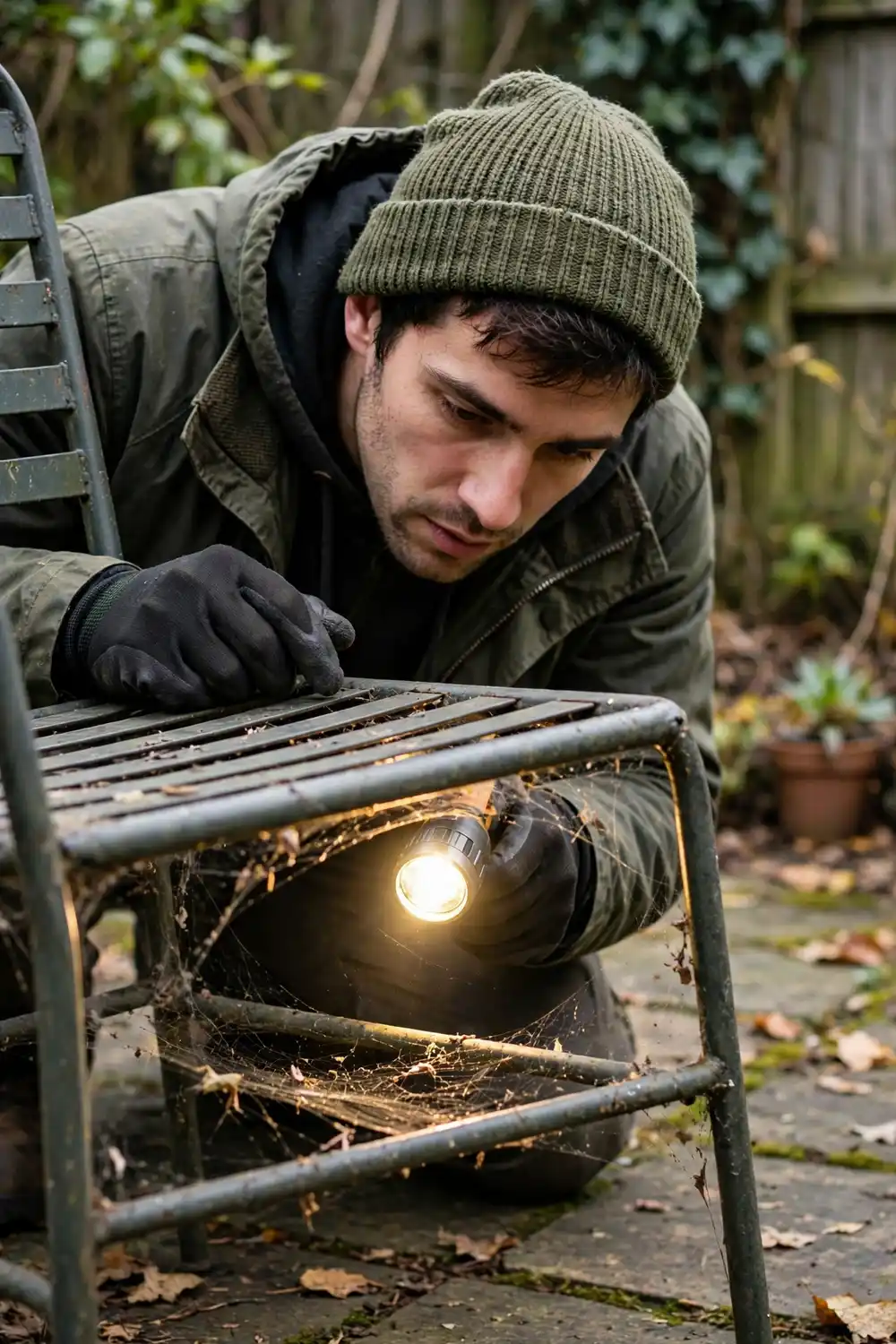
Redbacks live under the rims of outdoor chairs, tables and benches, in dry sheltered spots exactly like a shed corner or a meter box. This entry is mostly about your hands, and the vinegar is the junior partner.
Wear gloves, use a torch, and never put a bare hand under a rim you cannot see. Broom the webs and egg sacs away first, then wipe the cleared underside with the mix.
The clearing is what removes the spider. The wipe just makes the spot less welcoming for the next one.
- Gear, gloves and a torch, every time
- Order, broom the webs away before any wiping
- Rule, no bare hands under rims or into dark gaps
When vinegar is not enough
Australia has two spiders whose bites need proper first aid, and no spray bottle changes that. A funnel-web, or any big black spider, is treated as an emergency. Keep the person still, apply a firm pressure immobilisation bandage over the bite and along the whole limb, splint it, and call 000.
A redback bite is handled the opposite way. Wash it with soap and water, put a cold pack on for about fifteen minutes, and do not apply a pressure bandage, because compression makes redback pain worse without helping. For advice on any bite, the Poisons Information Centre is on 13 11 26.
The same honesty applies to infestations. Persistent ant nests, a cockroach colony, spiders in wall cavities or anything you cannot identify belongs with a licensed pest technician. For crawling pests in dry places, a physical barrier dust does the long slow work vinegar cannot, which is the subject of our guide to diatomaceous earth for pest control.
Frequently asked questions
Does Vinegar Really Keep Spiders Away?
It helps. Sprayed on the surfaces spiders travel, it makes those spots less inviting, and regular use keeps casual numbers down. It will not clear a room that already has an established spider population.
What Pest Does Vinegar Repel?
Mainly spiders, on treated surfaces. Ants get a brief disruption to their trails and nothing more, and rats, cockroaches and larger pests are barely affected at all. It is one tool in a prevention routine, never the whole routine.
Does Vinegar Repel Rats?
No. Rats walk past vinegar without much interest and will eat food that contains it. Excluding them means sealing entry points and removing food, with traps or a professional for an active problem.
What Smell Do Spiders Absolutely Hate?
Strong scents generally, with peppermint, citrus and eucalyptus the ones most often noted. That is a different method from this article’s, mentioned only because the question always comes with the vinegar one.