Diatomaceous earth pest control starts with a bag of powder that looks like nothing much. There is no spray cloud and no poison smell, just a fine grey dust made from fossilised algae, and for households trying to cut back on chemicals that simplicity is the whole appeal.
The catch is that the powder only earns its keep when it is used precisely. Put it in the wrong grade, the wrong place or a damp corner and it does nothing at all, which is why plenty of people try it once and write it off.
Used properly, food-grade diatomaceous earth is a patient, physical way to wear down crawling pests. This guide covers the grade to buy, the application rules that decide whether it works, and nine places around an Australian home and garden where it genuinely belongs.
First, the only grade that belongs in a home
Everything in this article is about food-grade diatomaceous earth, the amorphous silica powder sold for garden and pest use. The other common grade, pool-filter DE, is a different material and it never belongs in this conversation.
Pool-grade DE is heat-treated, or calcined, during manufacture, and that process leaves it with far more crystalline silica. It is made for pool filtration and nothing else. Around plants, pets and people it is the wrong powder entirely.
| Food-grade DE | Pool-grade DE | |
|---|---|---|
| Silica form | Amorphous | Partly crystalline after heat treatment |
| Made for | Garden, home and pest-control use | Pool filtration only |
| Label check | Says food grade, amorphous silica or fossil shell flour | Sold as filter media |
| Around pets and plants | Yes, with the dust precautions in this guide | Never |
Food-grade DE is not a poison, and that is the point of it. The particles are abrasive and absorbent, and when a crawling insect walks through the dry powder they damage the waxy layer that coats its body and soak up its surface oils. The insect then loses moisture and dries out, usually within about 48 hours of contact.
Because the action is physical, insects cannot develop resistance to it the way they can to chemical sprays. The same physics sets its limit, though. The powder only works dry and only on pests that actually walk through it, so placement matters more than quantity everywhere it is used.
How to apply it so it actually works
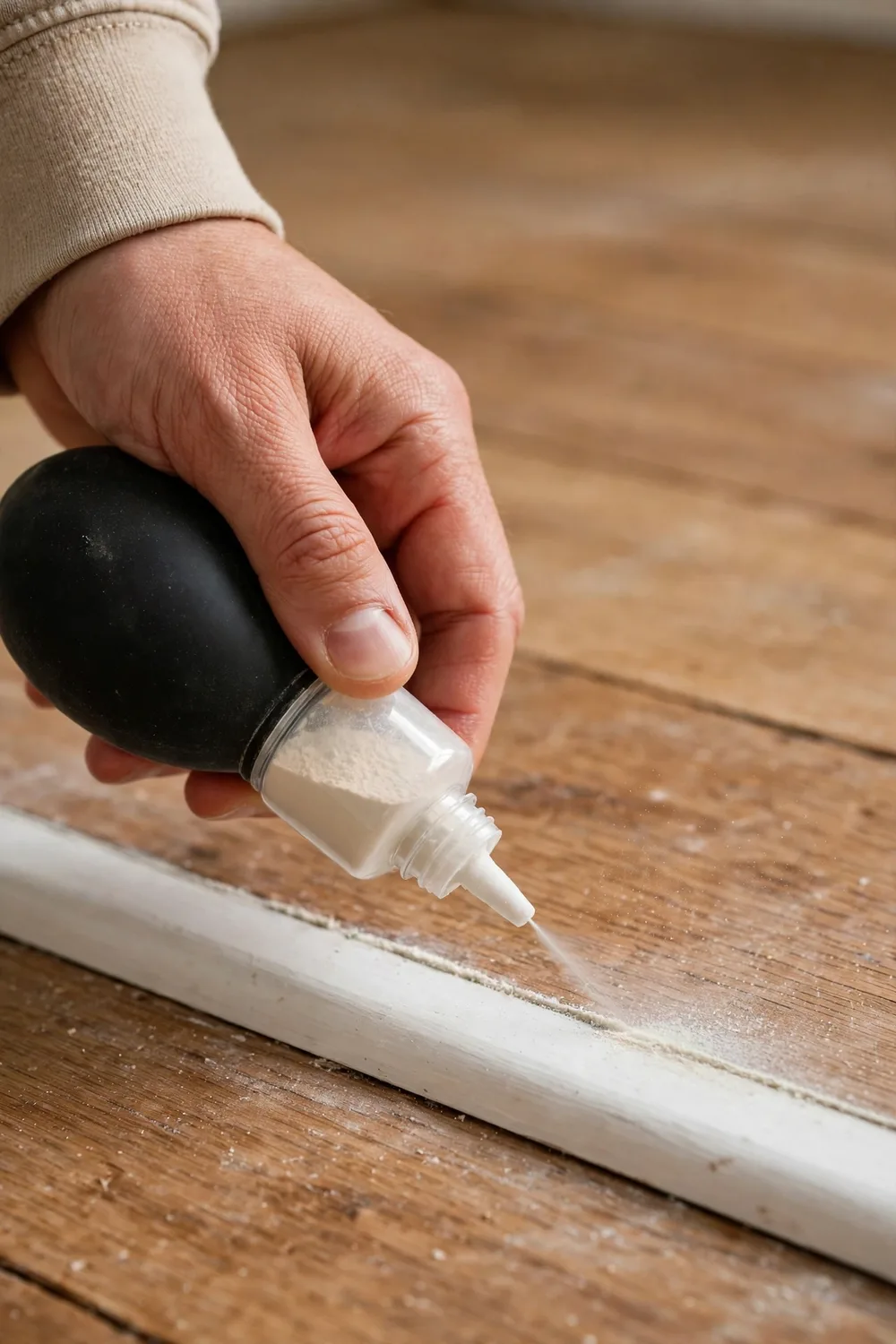
The application rules are few, and every one of them comes from how the powder behaves. A thin, barely visible film across a pest’s path does the job. A thick pile does not, because insects simply walk around piles, and loose drifts are what end up in the air and in pets’ noses.
Find the route before you open the bag. Ants, cockroaches and earwigs all travel set paths along edges, legs, gaps and skirting, and the powder belongs across those paths, not scattered over open floor. Keep it dry for as long as the spot allows, and refresh it after rain, dew, watering, cleaning or vacuuming, because moisture switches it off.
- Apply with a puffer or shaker, in lines and light dustings, never mounds
- Wear a P2 or N95 mask and eye protection while you dust
- Turn fans off and keep the room still so the powder settles where you put it
- Once pest pressure drops, wet-wipe hard surfaces or vacuum with a filtered machine rather than sweeping dust into the air
9 ways to use diatomaceous earth
1. Across ant trails and entry points
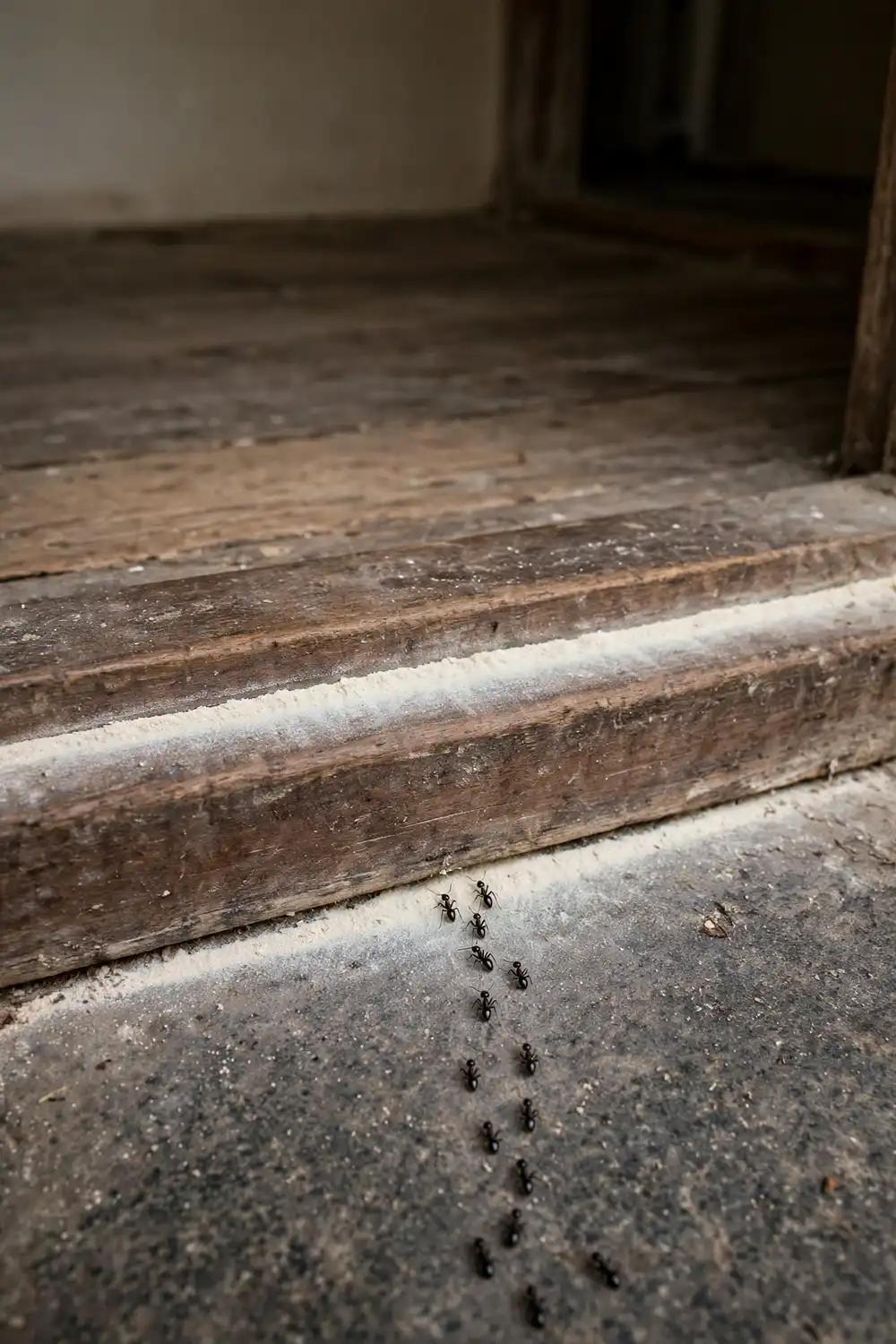
Ants run the most predictable routes in the house, which makes them the easiest target. Watch where the trail actually runs, then lay a thin line of powder across it at the entry point, along a door threshold, a window frame or the gap where they are getting in.
The line breaks the trail’s traffic and slows the movement through it. It holds only while it stays dry, so refresh the line after mopping or rain, and pair it with removing whatever the ants are commuting to. A trail to a sugar spill will outlast any powder.
- Best spots, thresholds, window frames, cracks at the wall base
- Film, thin and unbroken across the whole path
- Refresh, after cleaning, rain or heavy dew
2. Behind the fridge, where cockroaches travel
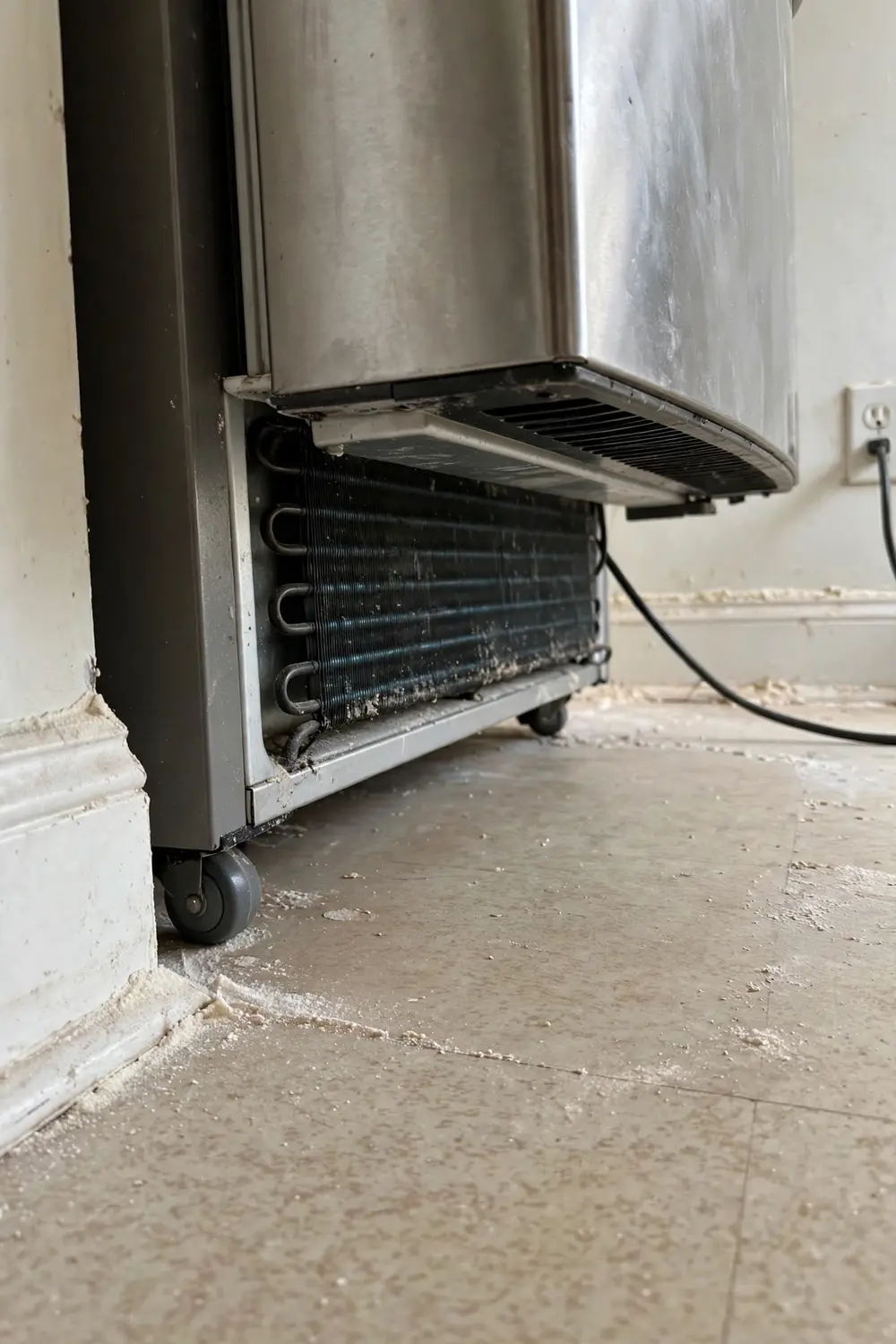
Cockroaches spend the day in warm, dark harbourages and travel the edges at night. Dust behind and under the fridge and stove, under the sink unit, along skirting and into the cupboard corners where you have seen droppings or skins.
Honesty matters here. A light scattering of travellers is exactly what this powder handles well, while a breeding German cockroach colony tucked inside appliance housings needs baiting and usually professional treatment. Use DE to hold the edges and pick off the traffic, and fix any leak under the sink, because a permanently damp harbourage defeats the powder and feeds the problem.
- Dust zones, behind the fridge and stove, under the sink, skirting joins
- Works on, the night traffic between harbourages
- Not a fix for, a breeding colony inside appliance housings
- Damp check, a leaking sink pipe defeats the powder
3. In pantry cupboard cracks and shelf edges
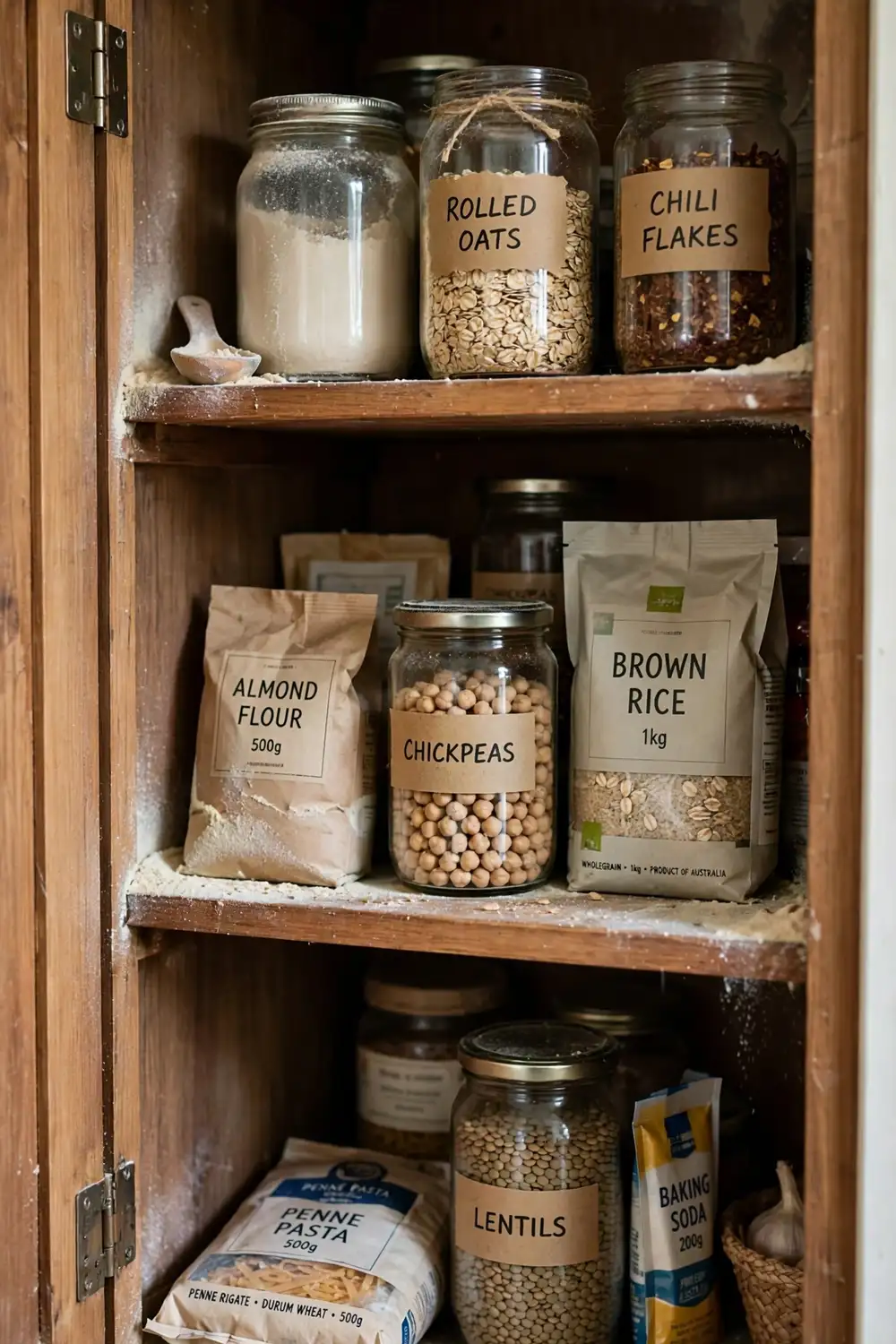
Pantry pests travel the joins of the cupboard rather than open shelves. A light dusting worked into the cracks, corners and shelf edges of an emptied pantry cupboard sits directly in their path.
Two limits keep this one safe and sensible. The powder goes on the cupboard structure only, never on food and never across surfaces that touch food, and anything already infested goes in the bin first. No dust fixes a weevil colony breeding inside a forgotten bag of flour.
- Placement, the cupboard’s cracks, corners and shelf edges
- Hard rule, never on food or food-contact surfaces
- First move, bin anything already infested
4. Through carpets where fleas are cycling
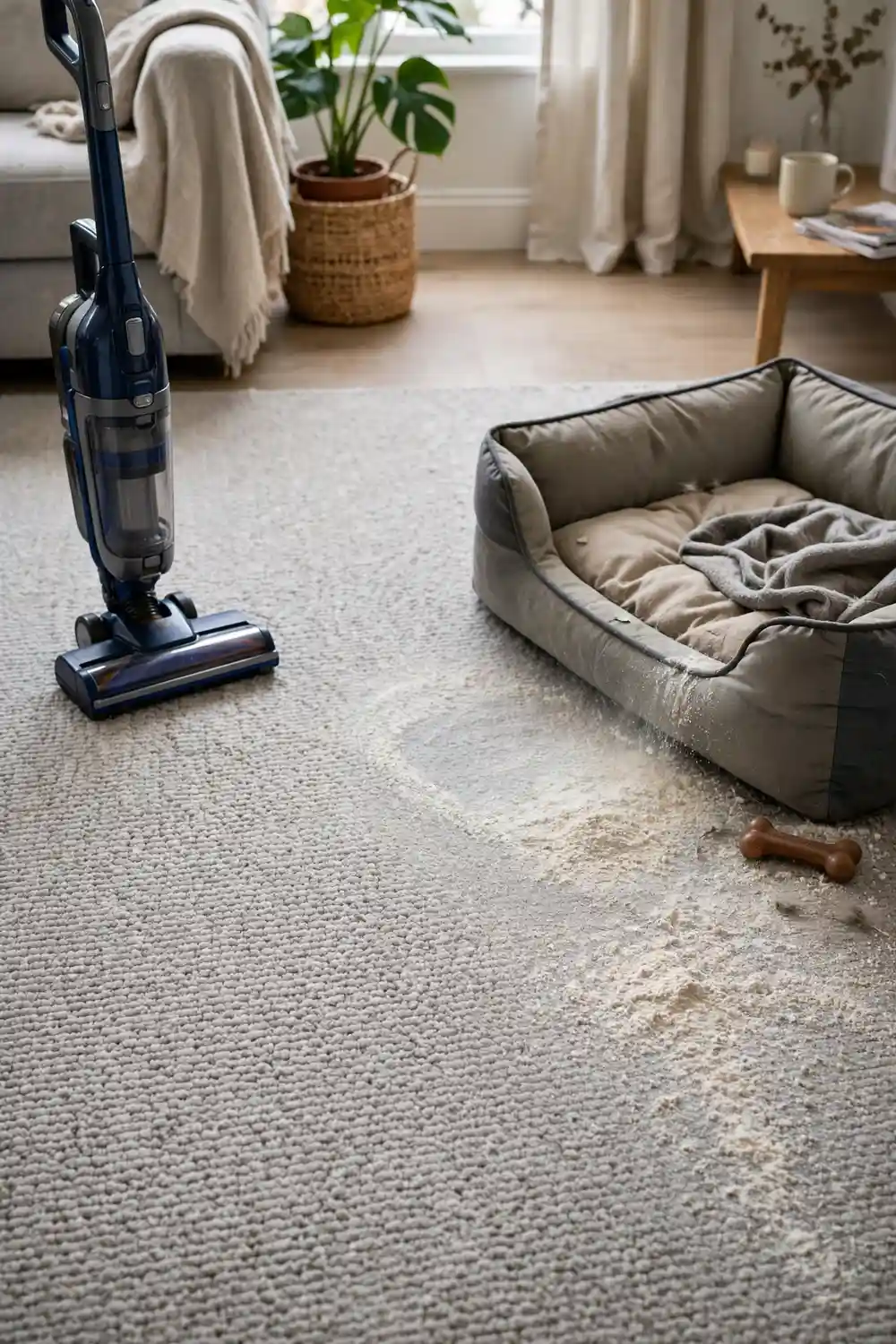
Fleas are a carpet problem with a pet attached, and the powder treats the carpet side of it. Vacuum thoroughly first, then dust the carpet, the skirting edges and the floor around the pet’s sleeping area, working the powder down into the pile. Leave it in place for a day or two, then vacuum again.
Then repeat the whole cycle weekly for about four weeks. The repeats are not optional extras, because contact dusts do not kill flea eggs.
The eggs hatch into the treated carpet week by week, and the cycle is what breaks the breeding loop. What goes on the pet itself is a separate question for your vet’s products, not for this powder.
- Before, a thorough vacuum of carpet and skirting
- Down time, a day or two worked into the pile
- Rhythm, weekly repeats for about four weeks
- The pet, treated with vet products, not this powder
5. Along carpet edges for carpet beetles
Carpet beetle larvae feed on natural fibres in the quietest spots in the house. They work under carpet edges, beneath heavy furniture and across wardrobe floors, chewing through wool and blends while the room looks undisturbed.
Dust along the skirting and carpet edges, under furniture and inside wardrobe floors after a thorough vacuum. It is worth knowing these are a different pest from the carpet moth, despite the similar damage. If you are finding moths and silken cases instead, that is a separate problem with its own fix, covered in our guide to getting rid of carpet moths.
- Vacuum first, edges, under furniture, wardrobe floors
- Dust line, skirting joins and the carpet’s outer 10 cm
- Watch wool rugs and stored blankets for grazing patches
6. Around bathroom and laundry plumbing for silverfish
Silverfish live where paper, glue and damp meet. Dust around the plumbing under bathroom and laundry sinks, along skirting and behind the cupboard kickboards where they run at night.
The powder handles the travellers, and the room itself decides whether they keep coming. Silverfish thin out when the damp does, so ventilation and fixing the slow leak under the vanity do as much long-term work as any dusting.
- Runs to dust, under-sink plumbing, skirting, kickboards
- Partner fix, ventilation and the slow leak
7. Into bed-frame cracks, as back-up only
This is the entry where expectations need to be set straight. Dust worked into bed-frame joints, cracks and skirting seams can kill bed bugs that cross it, and as one layer in a bigger fight it has a place.
It is not a clearance treatment on its own. Bed bugs hide deeper than a dust line reaches, in numbers a surface powder cannot keep up with, and an established infestation needs a professional programme. Anyone who tells you a bag of powder alone ends a bed bug problem is selling you the bag.
- Reach, frame joints, cracks, skirting seams
- Role, one layer in a bigger fight
- Established infestation, a professional programme
8. As a dry ring in the garden
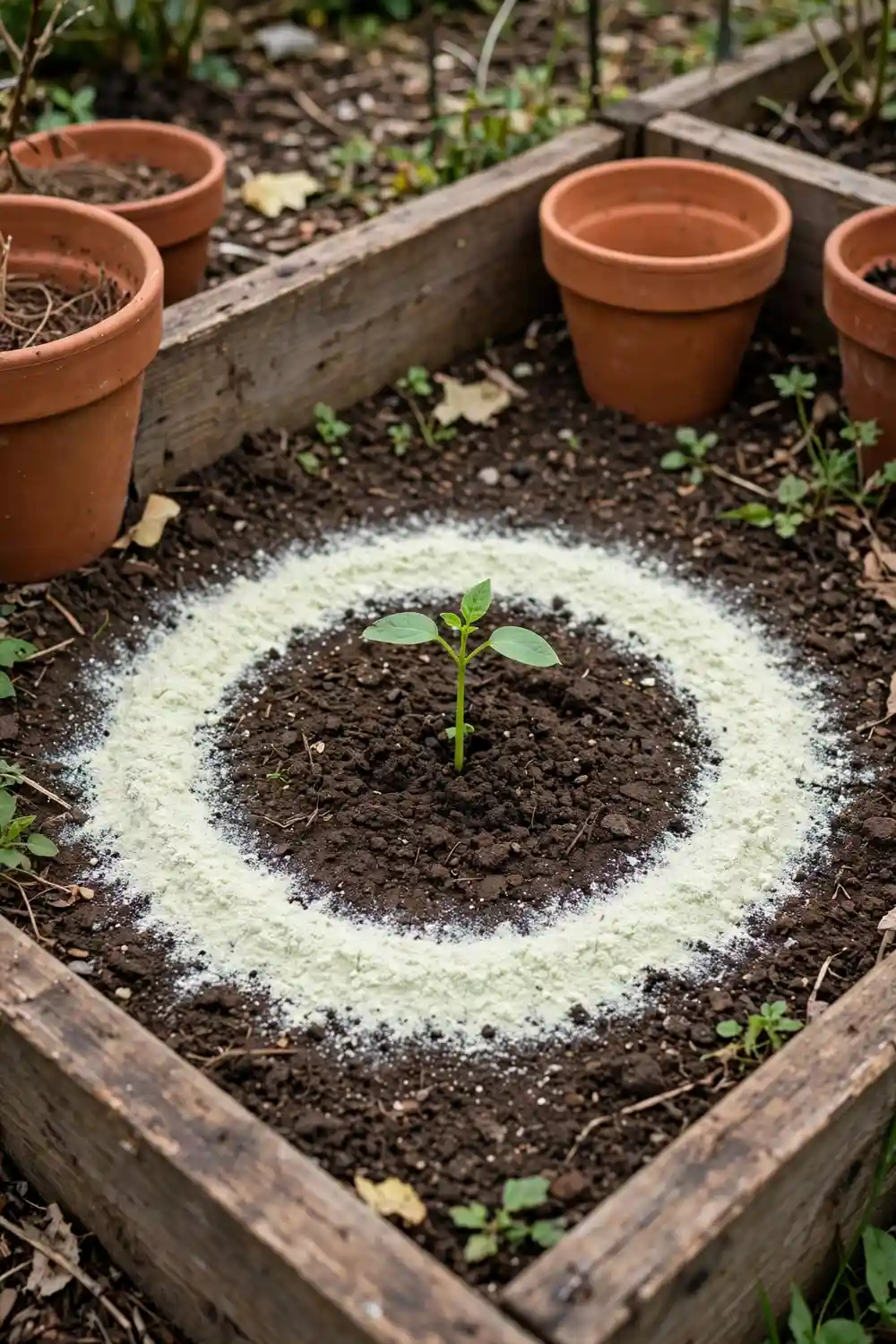
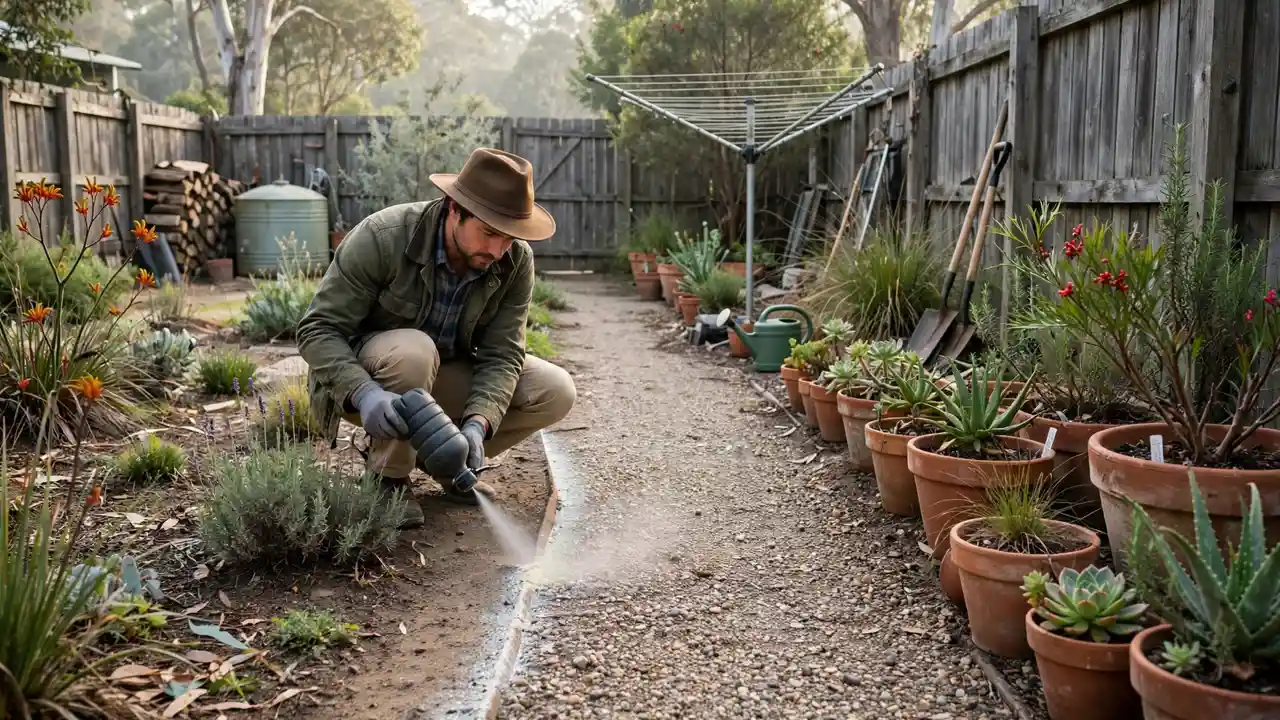
Outdoors, a ring of powder around seedlings, pot bases and the stems of vulnerable plants works on the crawlers that cross it. Snails, slugs and slaters all have to travel overland to reach the plant, and a dry ring sits exactly on that road.
Rain, dew and the hose all end the treatment, so the ring goes back down once the soil surface dries. Keep it at the base of the plant and well away from the flowers, for reasons the safety section below covers.
- Ring placement, around seedlings, pot bases and stems
- Ends with, rain, dew and the hose
- Keep clear of, every flower
9. Along shed and greenhouse traffic routes

Earwigs and other crawlers move through a shed the same way they move through a kitchen, along edges and legs. Dust the pot feet, bench legs, greenhouse corners and shed edges where you see the traffic, in the same thin line you would lay indoors.
The shed’s dryness is what makes this one reliable. A sheltered floor keeps the film working for weeks between refreshes, and a quick re-dust after you have hosed or swept the place out keeps it that way.
- Traffic points, pot feet, bench legs, shed edges, greenhouse corners
- Why it lasts here, a sheltered, dry floor
- Refresh, after sweeping or hosing out
Keeping bees, pets and kids out of the dust
Diatomaceous earth is low in toxicity, and it still demands respect as a fine dust. The precautions are short and they apply every time the bag comes out.
Bees come first, because the powder is not selective. A bee that crawls through it is harmed exactly the way a pest is, so garden dust stays at the base of plants, off every flower, and targeted at pest paths only. Nothing in this guide needs to go anywhere near a bloom.
Pets sniff at floor level, precisely where the dust settles. Keep animals and children out of the room while you apply it and until it has settled, lay thin lines rather than piles a nose can snuffle into, and clean up the excess in heavy-traffic spots once the job is done. Store the bag sealed, dry and out of reach, and use only a product sold and labelled for pest control, following its label.
Frequently asked questions
Will DE hurt bees?
Yes, it can. The powder works on any crawling insect that contacts it, bees included, which is why it stays off flowers and is used only along pest pathways and at the base of plants.
Is it safe around kids and pets?
Food-grade DE is the right starting point, and the dust still needs managing. Apply targeted amounts, wear a mask, and keep children and pets away during application and while the dust settles.
How quickly does it work?
Expect results within about 48 hours when the powder is dry and in direct contact with the pest. Humidity, coverage and how many pests are moving through the area all shift that timing.
Can I spray DE? Doesn’t it need to be dry?
It can be sprayed as a slurry for awkward spots, and the water is only a carrier. The powder does nothing while it is wet and starts working once the film has dried on the surface.
When diatomaceous earth is not enough
This powder is a maintenance tool, not a blitz. Low to moderate pest pressure in dry places is its home ground, and it does that work without chemicals and without resistance building.
Step past it when the problem is big, breeding or dangerous. A German cockroach colony, an established bed bug infestation, or pests in wall voids and roof spaces all belong with a licensed pest technician, and DE can hold the edges while that happens. Knowing where the bag stops is part of using it well.