A garage or shed is the one space in a house nobody audits. Boxes go in, the door comes down, and whatever has moved in gets left in peace for months at a time.
The common garage pests Australia is known for love exactly that arrangement. Undisturbed corners, stacked cardboard and a bag of pet food are a full board-and-lodging offer, and most infestations are well established before anyone notices.
The fix starts with a walk-through rather than a spray can. Here are the five zones to check, the ten pests you are most likely to find in them, and the point where the job stops being yours.
Start with the audit
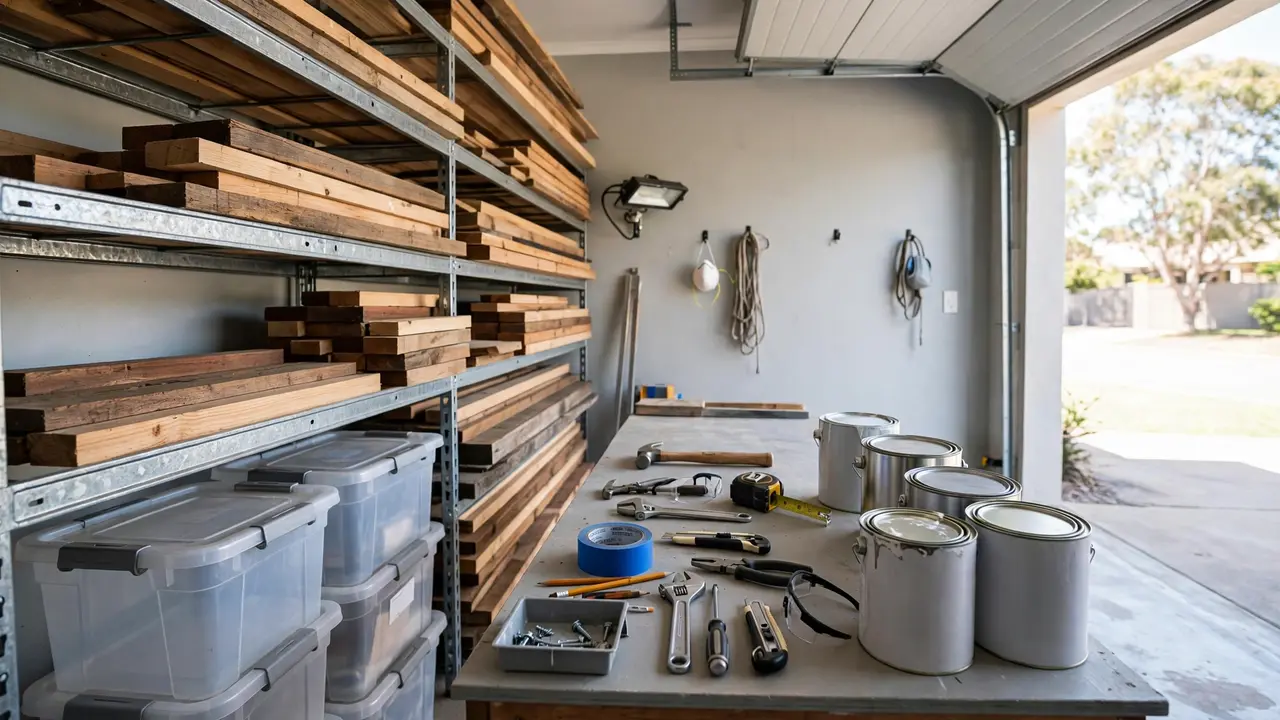
Walk the space slowly, torch in hand, and check five zones. Look under the rims and undersides of everything stored, and check the corners and the ceiling line.
Run along the cardboard row, then the food shelf, then the timber stack, and finish with the door seals and the gaps where pipes and cables come through.
You are not treating anything yet. You are finding out which of the following ten has moved in, because each one needs a different answer.
The 10 pests, where they hide and how to shift them
1. Redback spiders
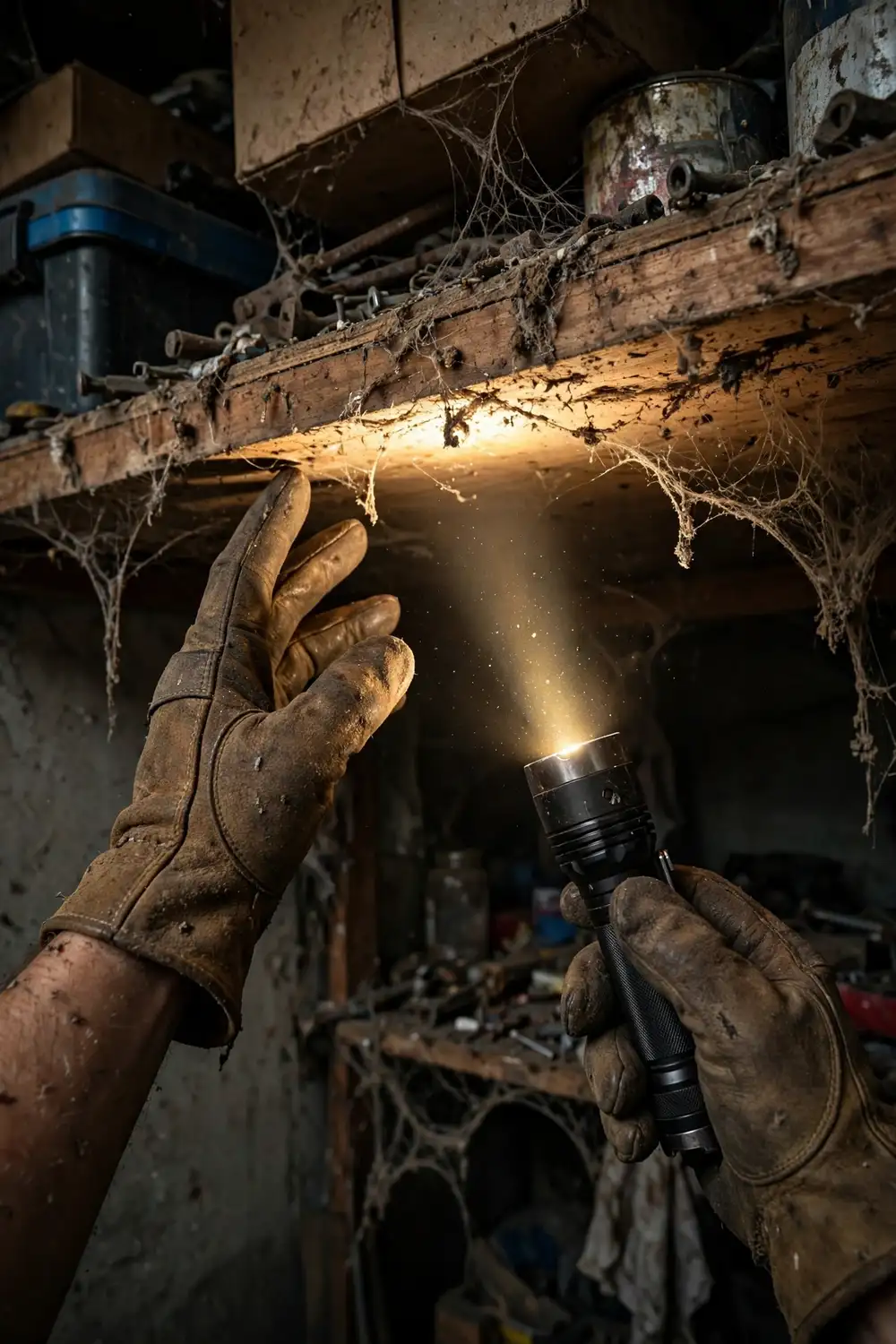
Redbacks choose dry, sheltered, undisturbed spots, and a shed is full of them. Look under the rims of stored furniture and bins, in shed corners, inside letterboxes and meter boxes, and along the undersides of shelves that have not moved in a year.
Work with gloves on and a torch in hand, and check inside stored shoes and gardening gloves before you put them on. Broom webs and egg sacs away as you find them. If one ever does bite, the first aid is specific to the spider and it matters, and our vinegar for pest control guide sets it out.
- Hides, under rims, in corners, in meter boxes and letterboxes
- Guard, gloves and a torch, every single audit
- Clear, webs and egg sacs broomed away on sight
2. Huntsman spiders
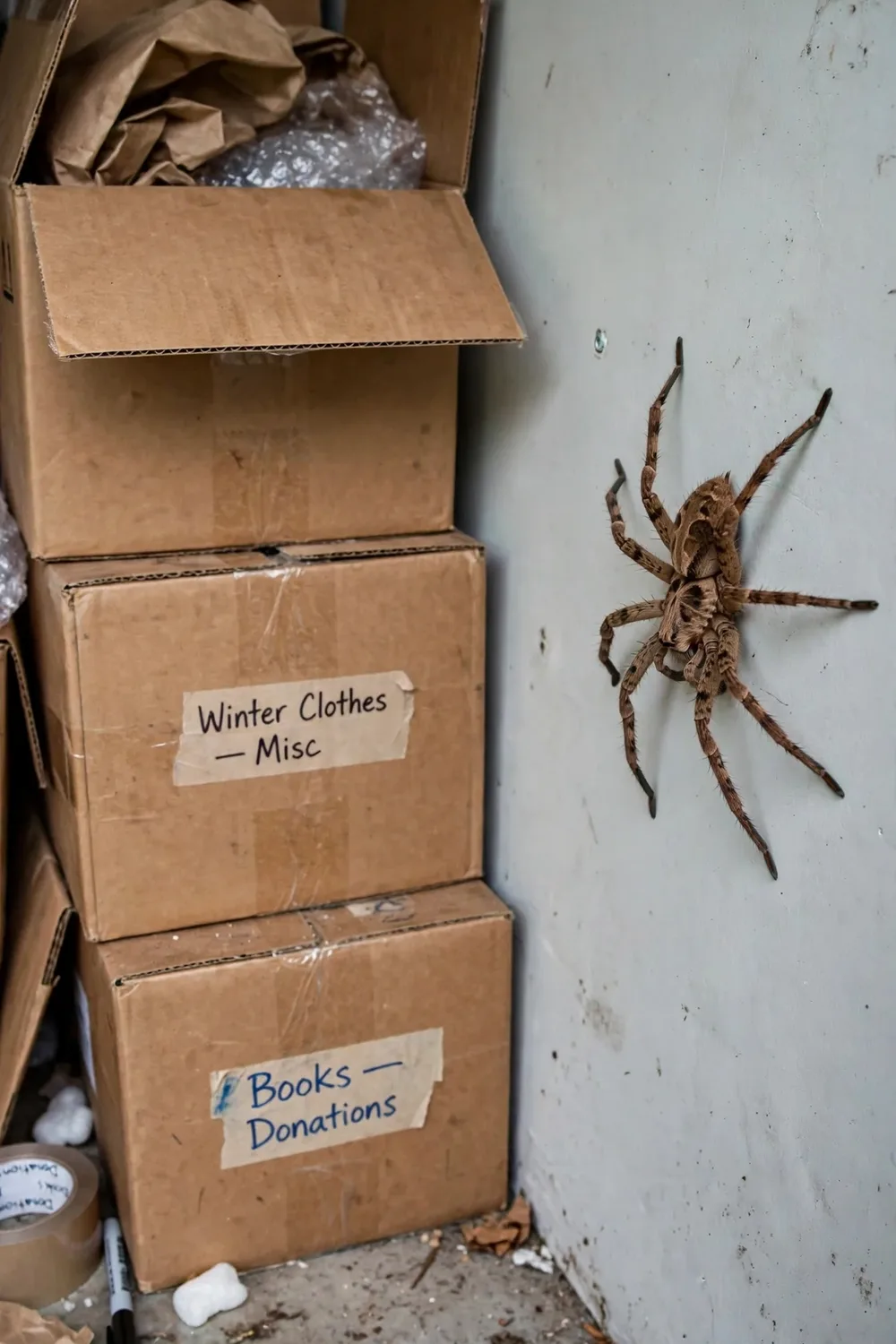
The huntsman is the big flat spider pressed against the garage wall behind the stored boxes. It hides by day and wanders at night, and it frightens more people than it has ever harmed.
Its bite is painful but it is not considered dangerously venomous. Most households simply leave it where it is. If you want it out, a large container and a stiff card will move it to the garden without anyone getting bitten.
- Spot it, flat on a wall or behind stored boxes
- Risk, a painful bite if you grab at it, nothing more serious
- Best move, leave it, or container-and-card it outside
3. Rats and mice
Australia has three pest rodents, the Norway rat, the roof rat and the house mouse, and garages offer all three food, shelter and gnawing material. The damage is real. They chew electrical wiring and insulation, which is a fire risk, and they contaminate anything stored openly with droppings and urine.
Seal the gaps around doors, pipes and vents, because a mouse needs very little room. Keep every food source in sealed containers, set traps where you find droppings, and treat continuing activity after that as a professional’s job.
- Trio, Norway rat, roof rat and house mouse
- Damage, gnawed wiring and contaminated stores
- First moves, seal gaps, box the food, trap the runs
4. Possums
A possum in the roof space over the garage, or denning in a quiet shed corner, is the entry where the rules change completely. Brushtail and ringtail possums are protected native wildlife in every Australian state.
You cannot harm one, trap one or relocate one without a licence, and relocation is a poor outcome anyway for a territorial animal. The lawful options are proofing the building so it cannot get back in, fitting a one-way exit, offering a possum box as alternative shelter, or calling a licensed handler. Any permitted release happens on the same property, a short distance away, at dusk, and the details vary by state.
- Status, protected native wildlife across Australia
- Never, trap, move or harm one without a licence
- Legal routes, proofing, one-way exits, a nest box, a licensed handler
5. Termites
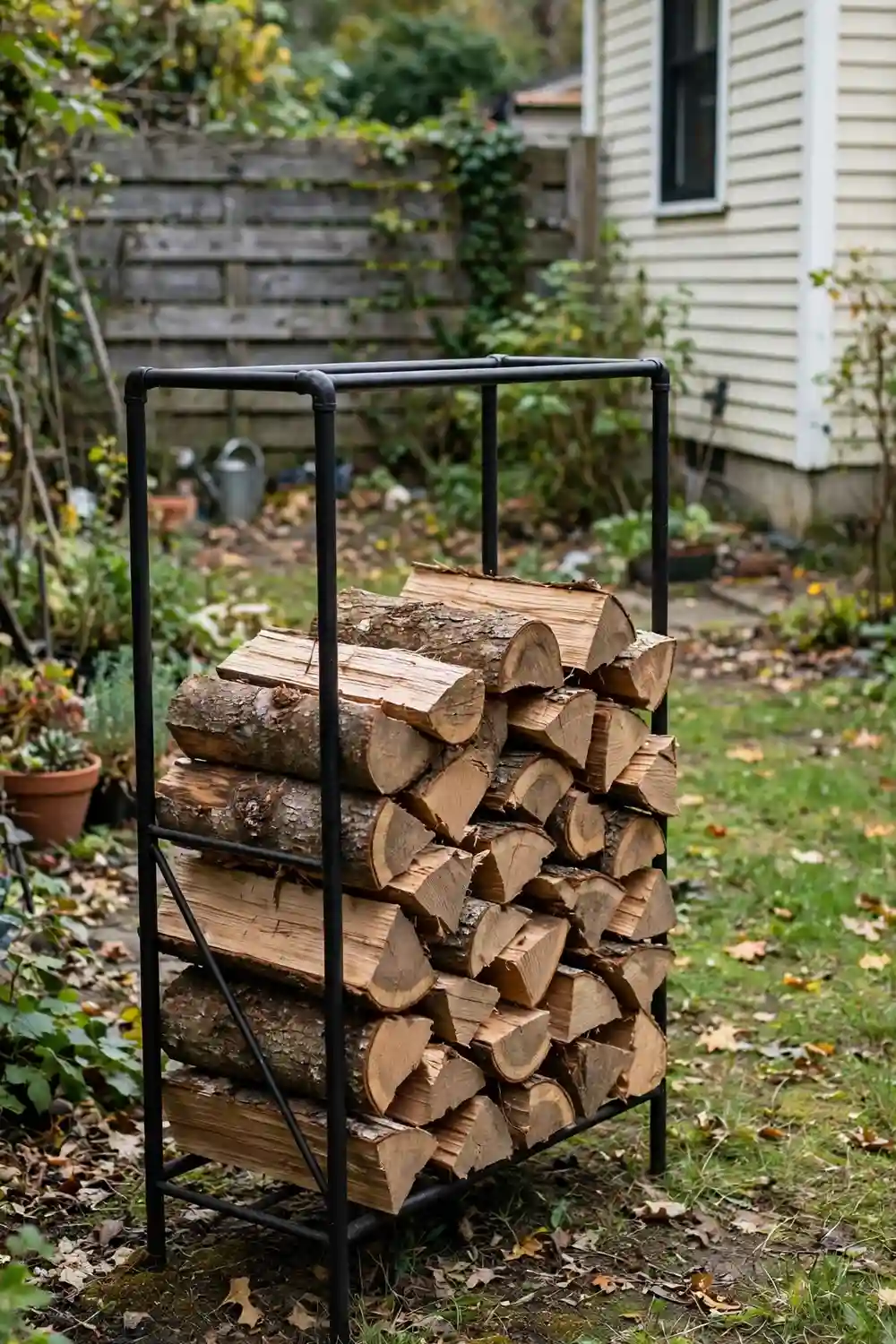
Termites reach the garage through the timber stack. Loose timber on the ground reads as a welcome mat to a foraging colony, and firewood stacked against a wall hands that colony a bridge to the house frame.
Store firewood and offcuts off the ground on a rack or slab, at least a metre or two from external walls. Watch for mud trails running up posts and walls. And if you find live termites in a stack, leave the stack exactly as it is and call a technician, because disturbing it breaks their galleries and scatters them to forage somewhere new.
- Drawn to, ground timber and firewood against walls
- Sign, mud trails up posts, piers and walls
- Golden rule, a live find is never disturbed or home-sprayed
6. Paper wasps
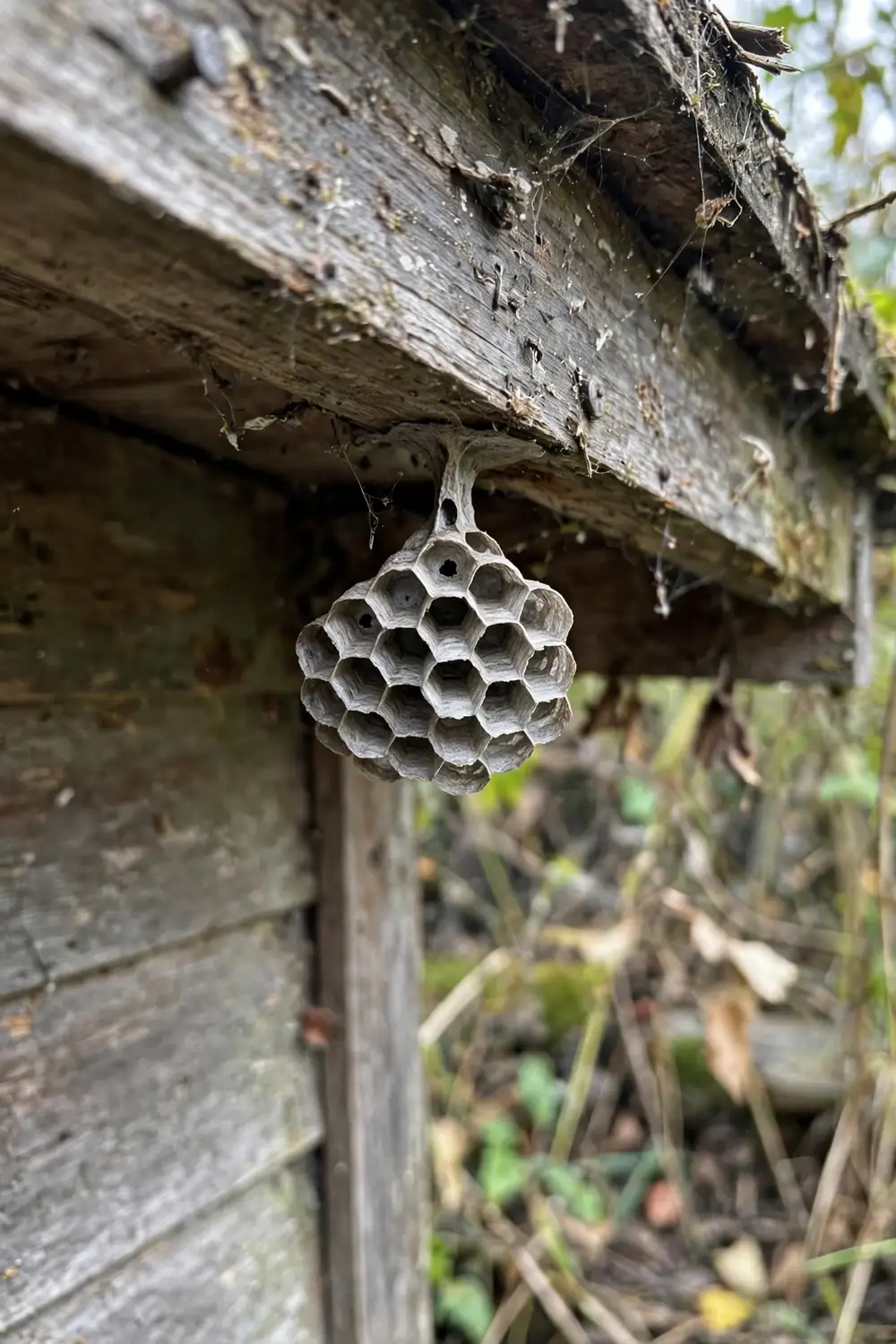
Paper wasps build a small open nest, an umbrella of grey papery cells, under eaves, along fence lines and on shed beams. They are peaceable enough at a distance and will sting repeatedly if the nest itself is touched.
Never poke a nest, hose it, or block its entrance, because a blocked colony looks for another way out, sometimes through the building. A nest near a doorway or anywhere busy belongs to a professional, and a European wasp nest, usually in the ground or a void in the south-east, belongs to a professional every time.
- Nest, a small grey paper umbrella under an eave or beam
- Temperament, quiet until the nest is disturbed
- Call it in, nests near busy spots, and every European wasp nest
7. Cockroaches
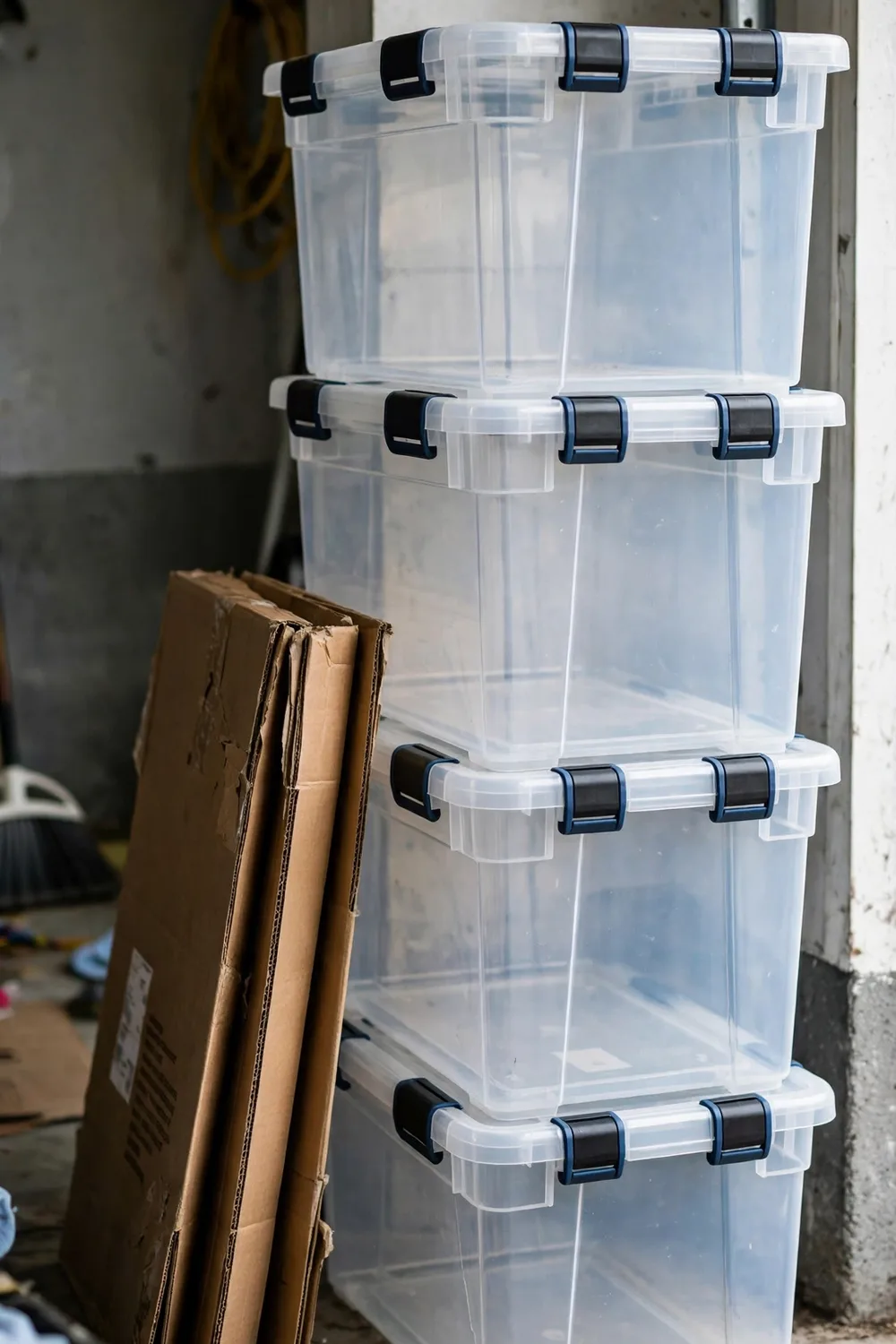
The stacked cardboard box is the cockroach headquarters of the Australian garage. They eat the glue in the corrugations and tuck their egg cases into the layers, so a box stored for a season can hold a colony that then walks into the house.
Break delivery boxes down and get them out, and move long-term storage into sealed plastic tubs. Keep the floor swept of food scraps and fix any dripping tap, because food, water and undisturbed shelter are the whole of their requirements.
- Headquarters, the corrugations of stacked cardboard
- Why it works, glue to eat and layers to hide egg cases in
- The swap, sealed plastic tubs, and cardboard out the door
8. Silverfish

Silverfish are the small, fast, wingless insects that scatter when you open a stored box of books or paperwork. They feed on paper, glue and starch, so files, photos, books and wallpaper are all on their menu.
They need damp to thrive. Dry the space out, deal with the leak or the condensation, store paper goods in sealed tubs rather than cardboard, and vacuum the cracks and skirting lines where they shelter.
- After, the paper, glue and starch in stored files and books
- Conditions, damp, dark and left alone
- Fix, dry the space and seal the paper goods
9. Pantry moths
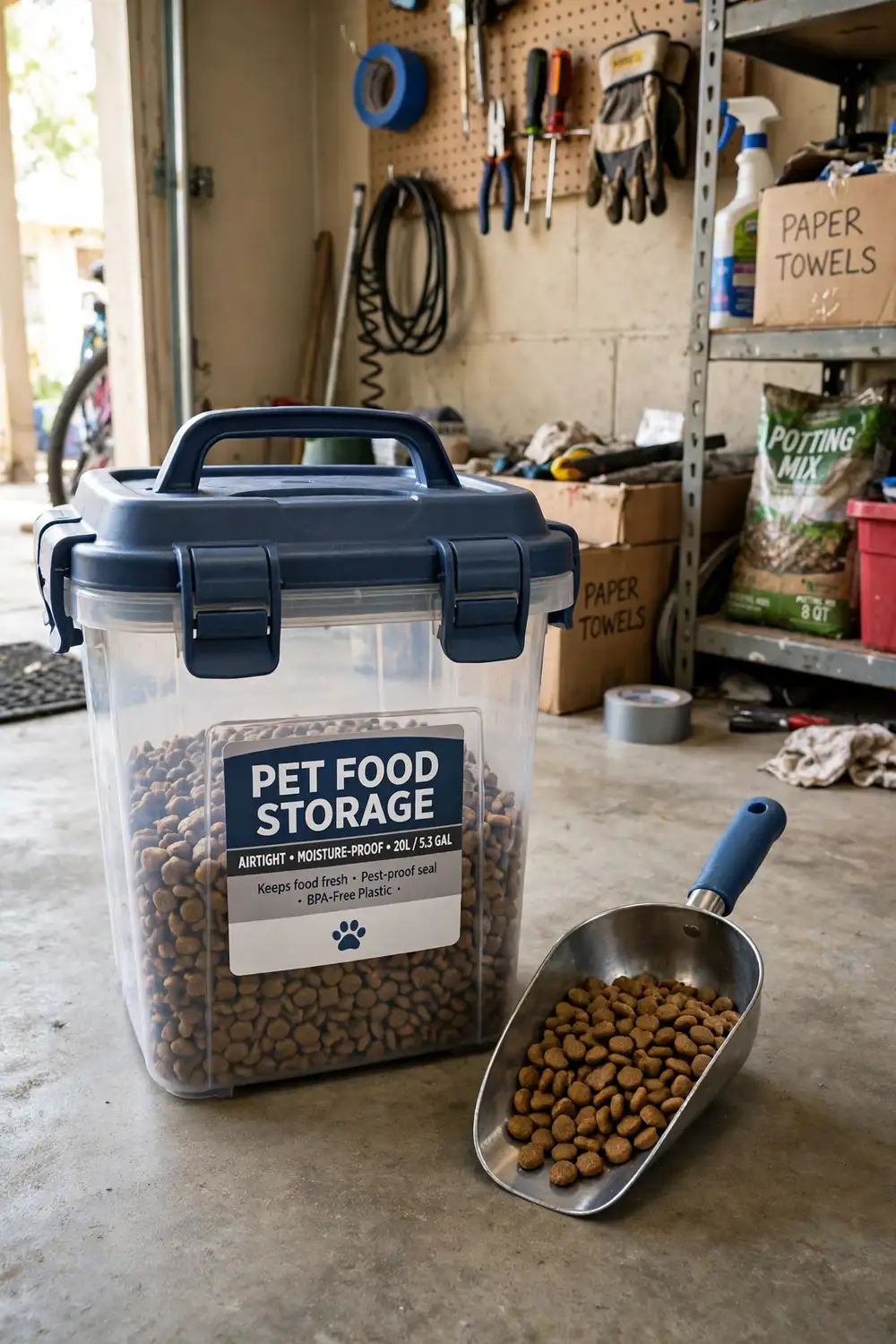
The pantry moth, Plodia interpunctella, starts in the garage more often than the pantry, because that is where the big bag of pet food or birdseed sits open. The adult moths do not feed at all. Their larvae do, tunnelling through the food and spinning silk as they go.
The telltales are webbing clumping the food together, small cream larvae, and larvae wandering up walls to pupate in ceiling corners. Bin any infested bag, check every other stored product, and keep pet food and birdseed in sealed airtight containers from then on.
- Target, the open bag of pet food or birdseed
- Telltale, webbing in the food and larvae on the walls
- Response, bin the infested bag and seal what survives
10. Clothes moths and carpet beetles in stored textiles
Stored rugs, blankets and winter clothes are a quiet food source for clothes moths and carpet beetles, and a garage box of either can feed a population for a long time. The prevention is in the storing. Textiles go away washed and clean, in sealed tubs rather than cardboard, and they get checked when the seasons change.
The full identify, prevent and remove system for moths is a subject of its own, and it is covered in our guide to how to get rid of carpet moths.
- Menu, stored rugs, blankets and winter woollens
- Prevention, clean before storing, sealed tubs over cardboard
- Check, when the seasons change, not once a year
Storage habits that remove harbourage
Most garage pests are living in the storage system rather than the building. Sealed tubs instead of cardboard remove the cockroach headquarters and the silverfish pantry in one move. Food of every kind, including pet food and birdseed, in containers with lids removes the rodents’ reason and the pantry moths’ nursery, and it is also what draws ants in force when it is left open or spilled.
Timber lives off the ground and away from the walls. The floor line stays clear enough to sweep and inspect.
None of this is pest control in a can. It is simply a garage with nowhere good left to live.
When it is a professional’s job
Some finds are not DIY in any form. Termites are a technician’s inspection and treatment, never a home spray. Wasp nests near busy areas, and European wasp nests anywhere, are professional removals.
A possum is a licensed handler’s work by law. Rodent activity that survives sealing and trapping, and wiring damage at any scale, needs a professional assessment.
For the crawling pests that cross dry shed floors day after day, a physical barrier dust does the slow work, and our guide to diatomaceous earth for pest control covers how it is used.
Frequently asked questions
Should I move firewood or loose timber if I find termites in it?
No. Moving infested timber breaks the mud galleries the colony is travelling through, and the termites retreat underground or disperse to forage elsewhere around the yard. Leave the stack exactly where it is and call a termite technician to treat it in place.
Can carrying infested firewood inside bring termites into my home?
The workers carried in on a log die quickly without soil moisture, so the log itself is not the danger. The danger is the stack stored against the house wall, which gives the underground colony a direct bridge into the frame.
How should firewood and timber be stored to prevent termites?
Off the ground, on a concrete slab, a metal rack or skids, and at least a metre or two away from external house walls. Timber in contact with the ground, or stacked against the building, is the arrangement that invites them.
Why is it illegal to relocate a possum?
Possums are protected native wildlife, and capturing or moving one without a licence is an offence under state law. It is also a poor outcome for the animal, because possums are territorial and an animal dumped in foreign territory usually does not survive. Licensed handlers release them a short distance from capture, on the same property, at dusk.