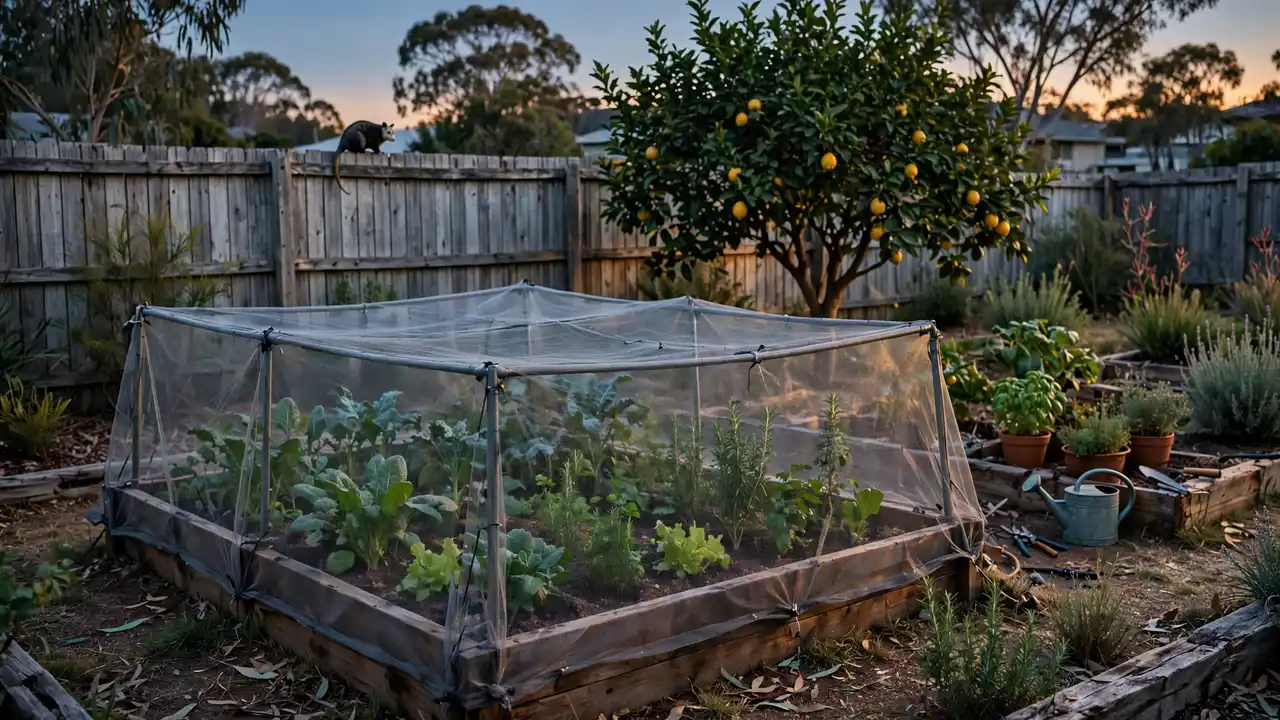
A possum can strip a rose bush overnight, chew the tops off your seedlings and treat the vegie patch like a buffet. It is tempting to reach for a quick fix, but possums are protected native animals in every Australian state and territory, and it is illegal to trap them unless you are licensed to do so. This guide to how to deter possums from garden beds, fruit trees and vegie patches sticks to humane methods that actually work, physical barriers first, honest sprays second, and a garden that stops inviting them in.
Possums are highly territorial, so removing one does not solve the problem, another usually moves in. Prevention is the only way forward. The legal detail, including permits and release rules, lives in our garage and shed pest guide, which covers the possum rules in full, so this article keeps the law short and spends its time on the methods.
The seven methods
1. Wildlife-safe netting over plants and fruit trees
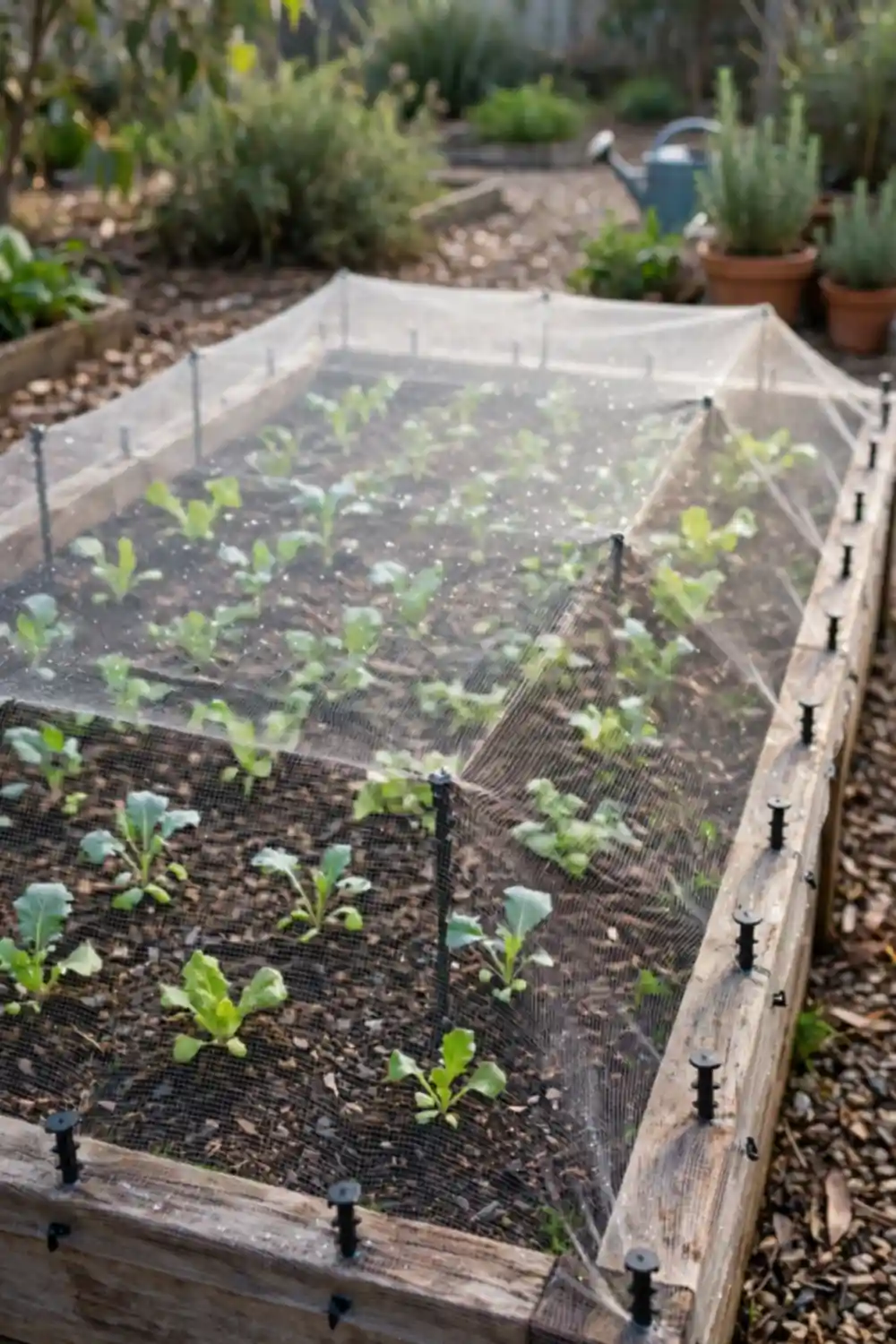
Netting is the single most effective method, and the ecologists agree, creating a physical barrier beats every spray and gadget. Use heavy-duty mesh, 12 to 19 mm, because lightweight bird netting is too weak and possums push through it or chew holes. Drape it taut over plants at night or for the fruiting season, peg it to the ground with no gaps, and never let it touch the leaves, since possums feed straight through contact points.
- Mesh, heavy-duty 12 to 19 mm, never lightweight bird netting
- Fit, taut and pegged to the ground, no gaps
- Rule, netting must never touch the leaves
- Safety, loose netting tangles wildlife, keep it tight
2. Tree collars and trunk guards
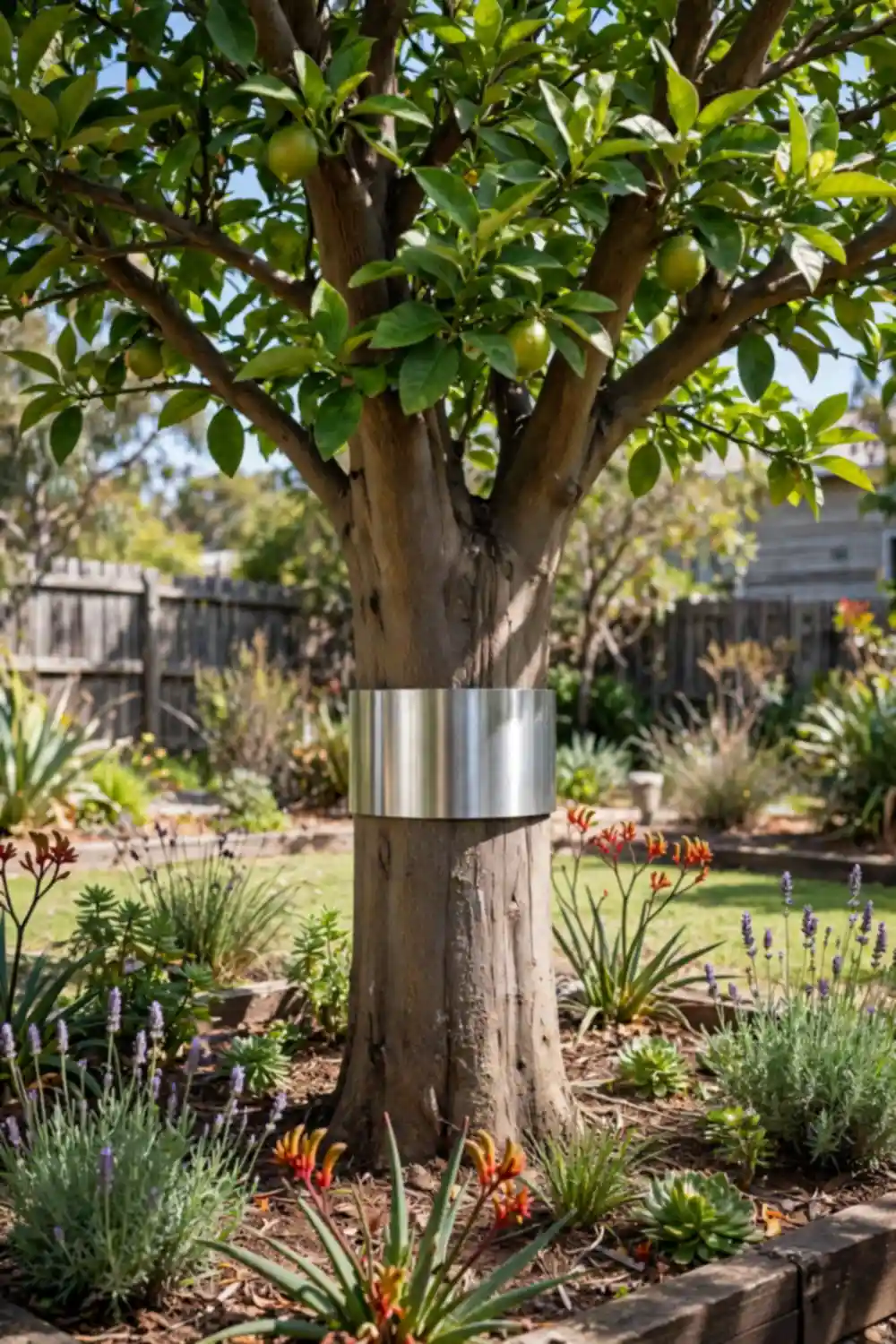
A possum climbs by gripping bark, and a smooth collar takes that grip away. Fit a 60 cm wide collar of Perspex, metal or sheet iron around the trunks of feature trees, or use a rigid trunk guard at least a metre tall, snug against the trunk with no gaps. Check that the tree stands away from other trees, fences and walls a possum could leap from, or the collar is only a decoration.
- Collar, 60 cm wide, Perspex, metal or sheet iron
- Guards, rigid, at least a metre tall, snug, no gaps
- Check, no leap-over route from nearby trees or fences
3. Floppy-wire fencing and wire cages around vegie beds

A fence that bends backwards when a possum climbs it is worth more than a tall rigid one. Build a floppy-wire fence from 90 cm chicken wire, buried about 20 cm to stop digging underneath and held upright on flexible canes or heavy wire so it flops back when climbed and springs upright again. For small crops, a wire-mesh cage, or even an upturned laundry basket with a brick on top, keeps possums off overnight.
- Wire, 90 cm chicken wire, buried about 20 cm
- Support, flexible canes so the fence flops back
- Small crops, wire-mesh cage or upturned basket with a brick
4. Motion-activated lights, not sound alone
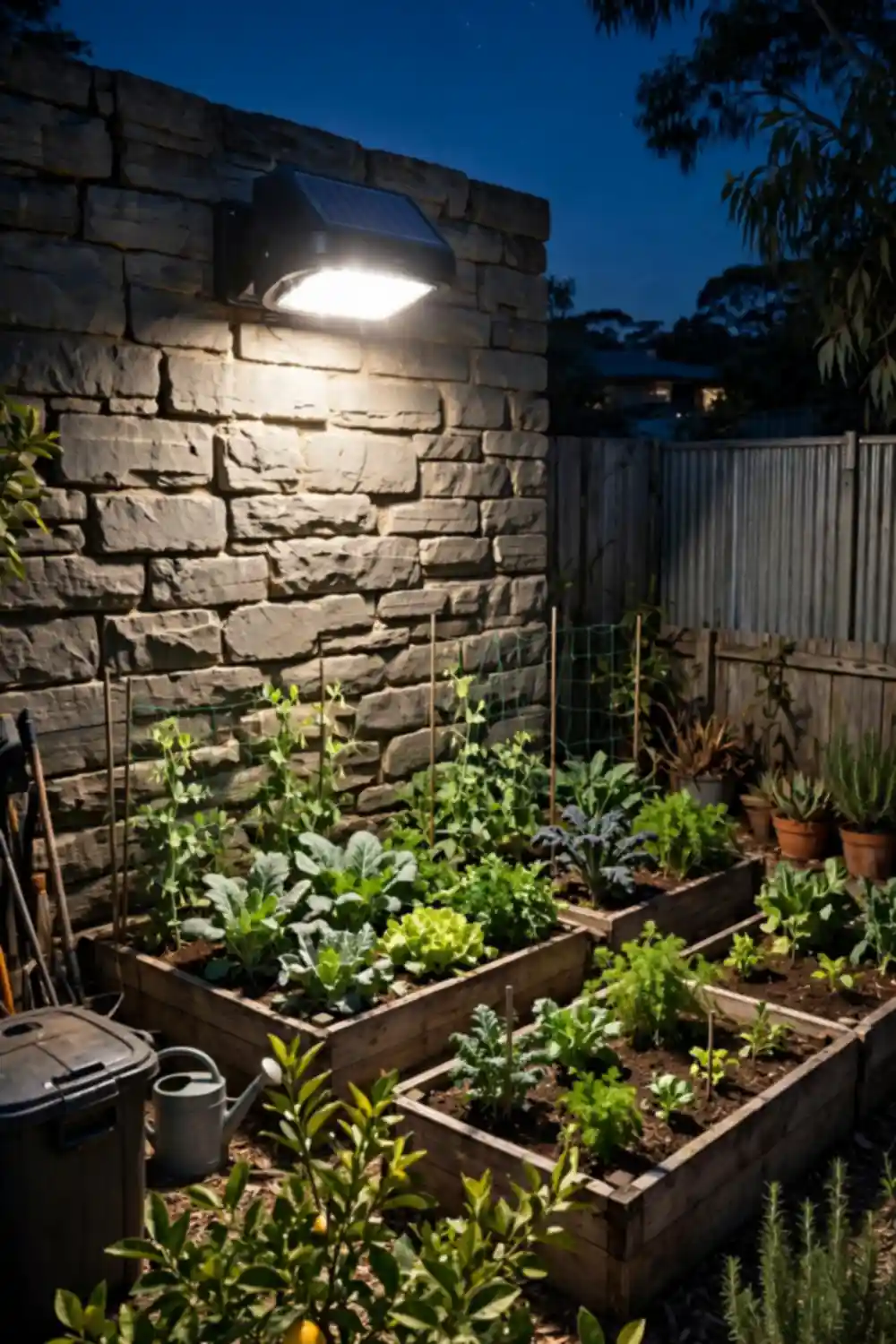
Possums move about in the dark, so a sudden light where they frequent startles them and sends them elsewhere. Fit motion-sensor lights, solar-powered ones work well, with a detection range of at least 6 metres, and place several around the perimeter and near high-value plants. Sound devices are the weaker partner here, ultrasonic buzzers wear off quickly because possums learn there is no danger attached and then ignore the sound completely.
- Lights, motion-activated, solar-powered, range at least 6 metres
- Placement, perimeter and high-value plants
- Sound, ultrasonic devices habituate fast, never a standalone fix
5. Scent and taste sprays, with an honest caveat
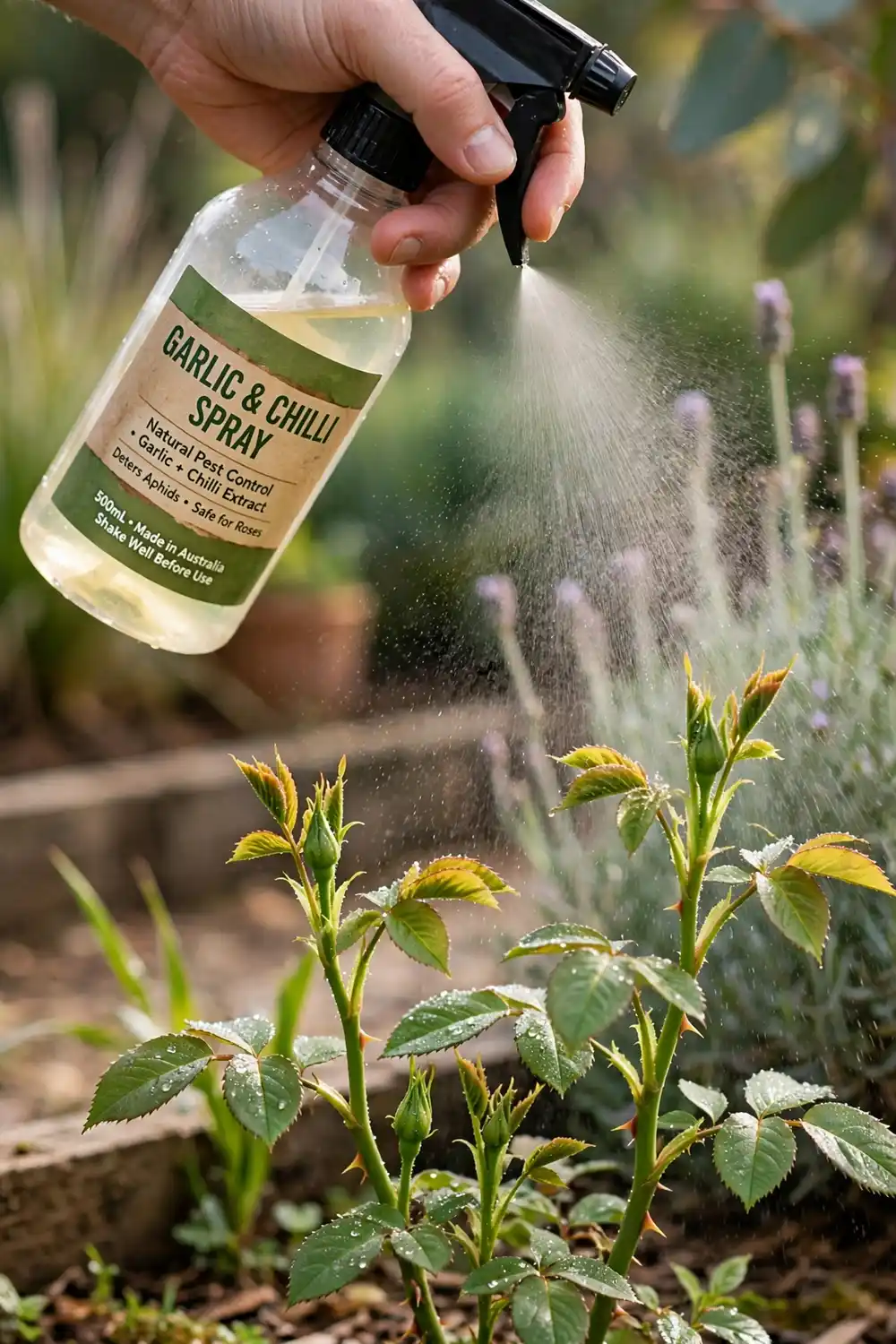
Sprays can help, but be honest with yourself about what they do. There is little published evidence of how effective smell and taste deterrents are, and a starving possum will eat just about anything. That said, garlic-and-chilli spray, two tablespoons of crushed garlic and chilli in a litre of hot water left overnight, quassia-chip spray, Lapsang Souchong tea spray, blood and bone around plant bases, and fish-oil spray, about half a cup of oil to a litre of water, are all tried in Australian gardens, alongside commercial products such as Poss-Off, Scat and Yates Possum Repellent Spray used per the label. Reapply every two to three weeks and always after rain, and wash produce before eating.
- Garlic-chilli, two tablespoons in a litre of hot water, stand overnight
- Quassia, 100 g chips to two litres of water, dilute one to four
- Tea, Lapsang Souchong, fresh brew each time
- Commercial, Poss-Off, Scat or Yates spray per label
- Honest limit, little evidence, reapply every two to three weeks and after rain
6. Take away the welcome mat, remove food and shelter attractants

A garden full of ripe fruit, open compost and pet food left out at night is an invitation, so take the invitation away. Pick fruit as soon as it is ripe and pick up fallen fruit, secure rubbish and compost bin lids with straps, latches or a brick, and bring pet food bowls inside at night, since brushtails will eat meat. Do not feed possums, they fight when feeding together, which causes serious wounds, and feeding spreads disease and draws possums to defecate near the feeding spot.
- Fruit, pick ripe, collect fallen fruit promptly
- Bins, lids secured with straps, latches or a brick
- Pet food, bowls brought inside at night
- Feeding, discouraged, it causes fighting and disease
7. Prune the highways and offer a better address
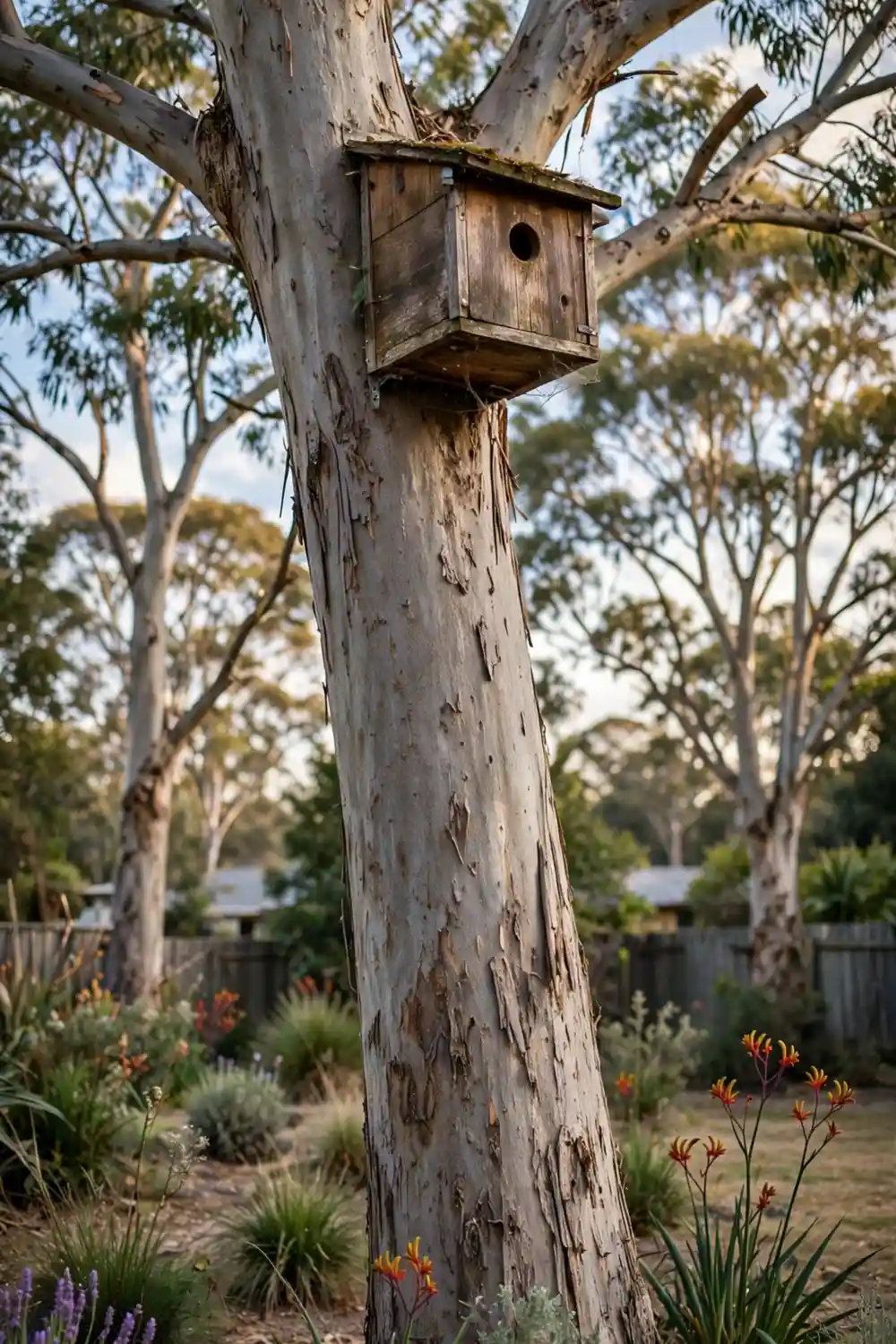
Possums travel along branches, fence tops and rooflines, so lop the branches overhanging the house and keep tree canopies spaced apart so possums cannot move from canopy to canopy. Then give the resident possum somewhere better to live, a possum box fixed high in a garden tree. A territorial possum in its own box will keep other possums away, which is a better outcome than an empty roof cavity waiting for the next arrival.
- Prune, overhanging branches lopped, canopies spaced apart
- Box, possum box fixed high in a garden tree
- Payoff, a territorial resident keeps other possums away
Deterrent plants deserve a supporting note, not a method of their own. Less-palatable plantings such as lavender, agapanthus, box and acanthus may reduce pressure, and sacrificial natives such as small eucalypts, bottlebrush, grevillea, hakea and wattle give possums something to browse instead of your roses. But no plant is completely possum-proof, and any plant may be eaten when a new possum arrives or animals are extra hungry, so plant more of what they ignore and never promise a guarantee.
| Method | Best for | Honest limit |
|---|---|---|
| Wildlife-safe netting | Seedlings, fruit trees, vegies | Must stay taut and checked |
| Tree collars and guards | Feature trees | Needs no leap-over route |
| Floppy-wire fencing | Vegie beds | Needs burying and flex |
| Motion lights | Night visitors | Sound alone habituates fast |
| Scent and taste sprays | New shoots and buds | Little evidence, reapply often |
| Removing attractants | Whole garden | Needs persistence |
| Pruning and possum box | Roof and canopy routes | Only helps once a possum adopts the box |
Frequently asked questions
How do I deter possums from my home and garden?
Start with a physical barrier: taut, heavy-duty netting over the plants is the most reliable protection, and motion-activated lights add a second layer because possums are nocturnal. Take away the welcome mat too — pick ripe fruit, secure bin and compost lids, and bring pet food inside at night. Possums are protected, so never trap, harm or relocate them without a licence, and read the legal detail in our garage and shed pest guide.
The bottom line
Possums are not a problem to solve once, they are neighbours to manage. Net the plants that matter, collar the trees, take the food away and give the resident possum a box of its own. Combine the methods, keep them maintained, and the garden stays yours.