
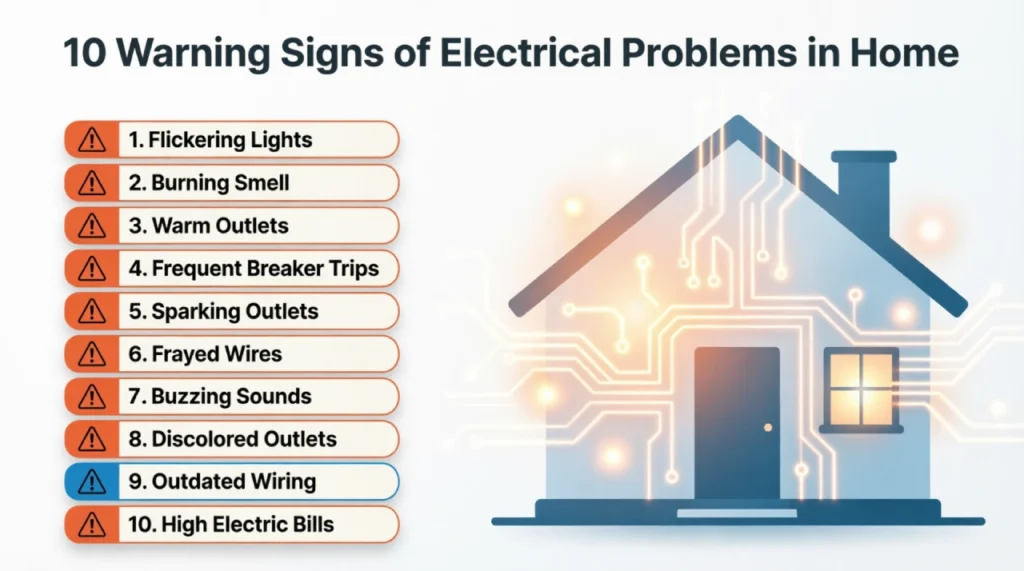
Every aspect of modern life runs on electricity, from kitchen fittings to lighting, internet routers to home security systems. While many households use electricity daily, most homeowners do not pay attention to electrical issues until they become hazardous or costly. Outdated and improper electrical systems account for many home fires, electrical shocks, and appliance damage.
By understanding the signs of electrical problems, you can save your family, save yourself from the big repair bill, and save yourself some money. If you see any of the following issues in your home, then it is time to contact a licensed electrician in brisbane.
1. Frequent Circuit Breaker Trips
Circuit breakers are designed to protect your home and prevent overloading the power. It can trip occasionally, and that is okay, but if it trips often, there is a problem.
This may relate to:
- The power usage in your circuit exceeds the maximum load.
- Wiring is faulty
- Too much power is being drawn by an appliance.
- Make sure that your electrical panel is not outdated.
2. Flickering or Dimming Lights
Unusual or intermittent flickering or dimming lights are more than a nuisance. They are generally a sign of poor electricity flow in your house.
Common causes include:
- Loose wiring connections
- Overloaded circuits
- Faulty light fixtures
- Problems with the main electrical service
When flickering starts when big electrical appliances, such as air conditioners, microwaves, or toasters, are turned on, there may be a problem with your electrical system that is not providing adequate service to the electrical loads in your home.
3. Smells of Burning or Scorch Marks
Any smells from outlets, switches, or your electrical panel that are burning should not go overlooked. Excessive smoke is one of the most serious indications of electrical failure.
It is possible that you will observe:
- Burned or blacked out electrical receptacles
- Melted plastic
- Warm wall plates
- Smoke or sparks
Electrical fires frequently start from wires or sparks that are burning, and these warning signs are often signs of a burning wire or electric sparks. Turn off the power to the space and have an electrician visit the home as early as possible.
4. Buzzing Sounds from Outlets or Switches
Electricity should not be noisy. If outlets, switches, and/or breaker panels are making a buzzing sound or crackling noise, the loose connection or wiring issues may be hidden behind the wall.
Possible causes include:
- Damaged electrical wiring
- Loose outlet connections
- Overloaded circuits
- Defective switches
Failure to listen to these sounds can lead to overheating and fire.
5. Warm or Sparking Outlets
Outlets and switches should NOT be hot to the touch. Warm outlets can indicate a wiring issue within the house or indicate that a circuit is overloaded.
Also, if sparks appear when appliances are connected to the power, then it could be a sign of:
- Short circuits
- Worn-out outlets
- Loose connections
- Water damage
If small blue sparks show up occasionally for a short time only, this is not necessarily a serious fault, but repeated sparks or large sparks should always be addressed by a professional electrician.
Also Read: How Close Can A Switch Be To A Shower?
6. Outdated Wiring
A great deal of older homes are equipped with aging electrical wiring that is not up to present-day safety codes. If your home is an older home (25-30 years or older) and has not been wired, you could be in danger.
The old wiring types are:
- Aluminum wiring
- Knob-and-tube wiring
- Ungrounded outlets
- Old fuse boxes
Contemporary residences consume much more electricity than the systems were built to handle. You can benefit from upgrading your wiring as it makes your home safer, more efficient, and can enhance its value.
7. Dead Outlets / Switches
When an outlet or light switch suddenly ceases to function, it could signal a more serious electrical problem.
Potential problems include:
- Tripped circuits
- Loose wiring
- Burned-out outlets
- Internal electrical damage
If more than one outlet has stopped working, or if you forget to check a dead outlet, it should not be overlooked. If the problem is localized or if it’s a part of a bigger problem with the wiring, it can be found through a professional inspection.
8. Electric Shocks on Plugging in Devices
Any electrical shock, even minor shocks from touching appliances, switches, or outlets, is a serious warning sign.
Electric shock can occur as a result of:
- Faulty grounding
- Damaged wiring
- Improper installation
- Faulty appliances
Some shocks can be considered minor, but that means the electricity is not moving safely through the system. Uncorrected, the problem may lead to serious injury or damage.
9. High Electricity Bills Without Explanation
If your energy bill suddenly goes up, it doesn’t necessarily mean that you’ve used more energy. Worn-out electrical systems can also allow your appliances to operate at a higher cost and efficiency than they should.
There can be electrical inefficiencies caused by:
- Damaged wiring
- Failing circuits
- Old electrical panels
- Poorly designed or installed outlets or fixtures
If your electricity costs are going up, but there is no apparent cause, an electrician can check your system for any problems that could potentially be impacting energy efficiency.
10. Overuse of Extension Cords and Power Strips
Extension cords and power strips are great as a short-term solution, but using them as a long-term solution may indicate that your home is lacking in outlets or circuits.
There are signs of a system overload:
- The power strip in the room is a multi-plug strip. In one room, there is a multi-plug power strip.
- Extension cords all throughout the house.
- Extension cords competing for outlets.
Final Thoughts
Your home’s electrical system is really important for comfort, safety, and convenience. Taking note of early signs will help you save money on costly repairs and dangerous situations later.
These signs of energy inefficiency should never be overlooked, ranging from flickering lights, buzzing outlets to old wiring and mysterious energy bills.
