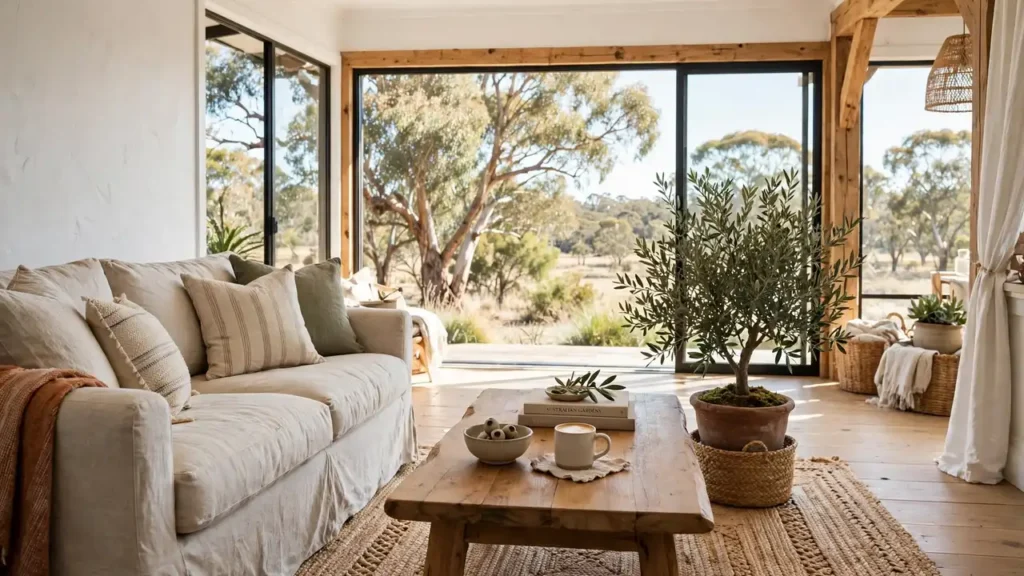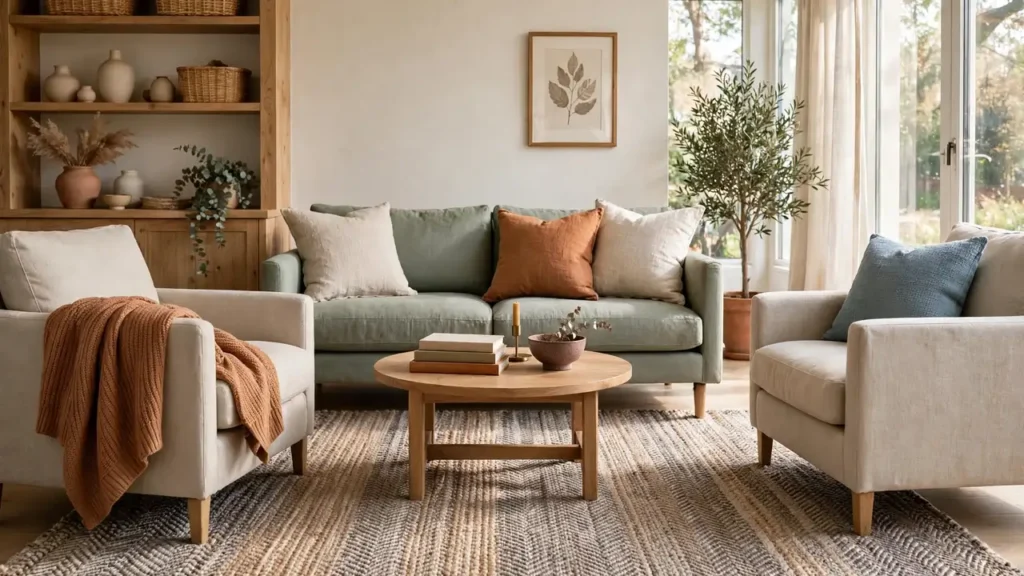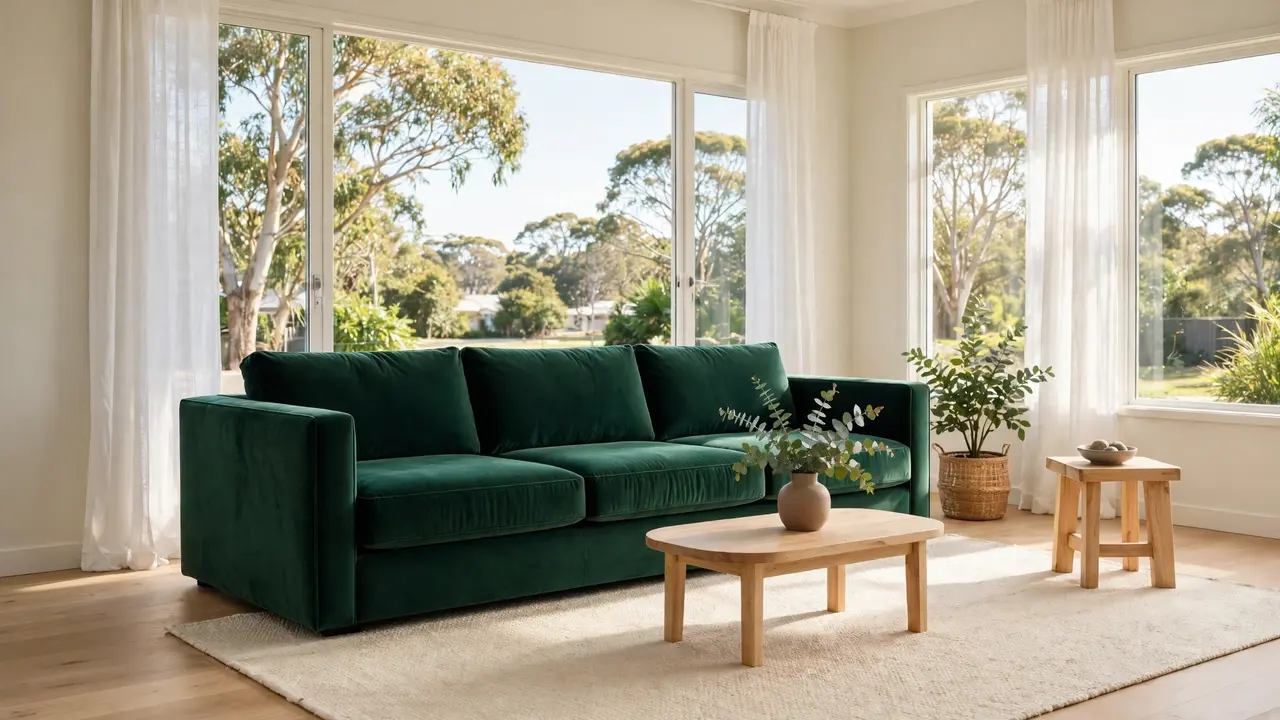
Most living rooms are decorated the wrong way round. The sofa goes in first, then the rug, then the paint — and by the time anyone thinks about a feature piece, the budget and the wall space are gone.
If your room looks fine on paper yet never quite gels, the problem is rarely the individual pieces. It is the missing order — nothing in the room was chosen to lead, so everything competes at the same volume.
There is a simpler way to get it right. Living room design around one statement piece starts with a single hero — one sofa, one artwork or one rug — and lets every other choice follow from it.
This is the stylist’s method in five steps: choose the hero first, pull the palette from it, set the layout around it, layer texture and light, and buy the finishing pieces last.
What a hero piece actually is
A focal point is where a room visually centres itself — the fireplace, the window wall, the media wall, a large piece of art. A statement piece is the object that brings personality to that area. The two are closely related but they are not the same thing.
A bold sofa can be both at once. A sculptural lamp beside a neutral sofa, on the other hand, may be a statement piece without becoming the room’s main focal point.
A hero piece can be almost anything with enough presence to lead the room. A sofa in a strong colour, an oversized artwork, a rug with a bold pattern, a sculptural chair, a vintage cabinet or a dramatic chandelier can all do the job. What matters is not the category but the effect — one clear “look here” moment, then quieter supporting pieces that let the eye rest.
Living room design around one statement piece: the stylist’s method
Step 1. Choose the hero first
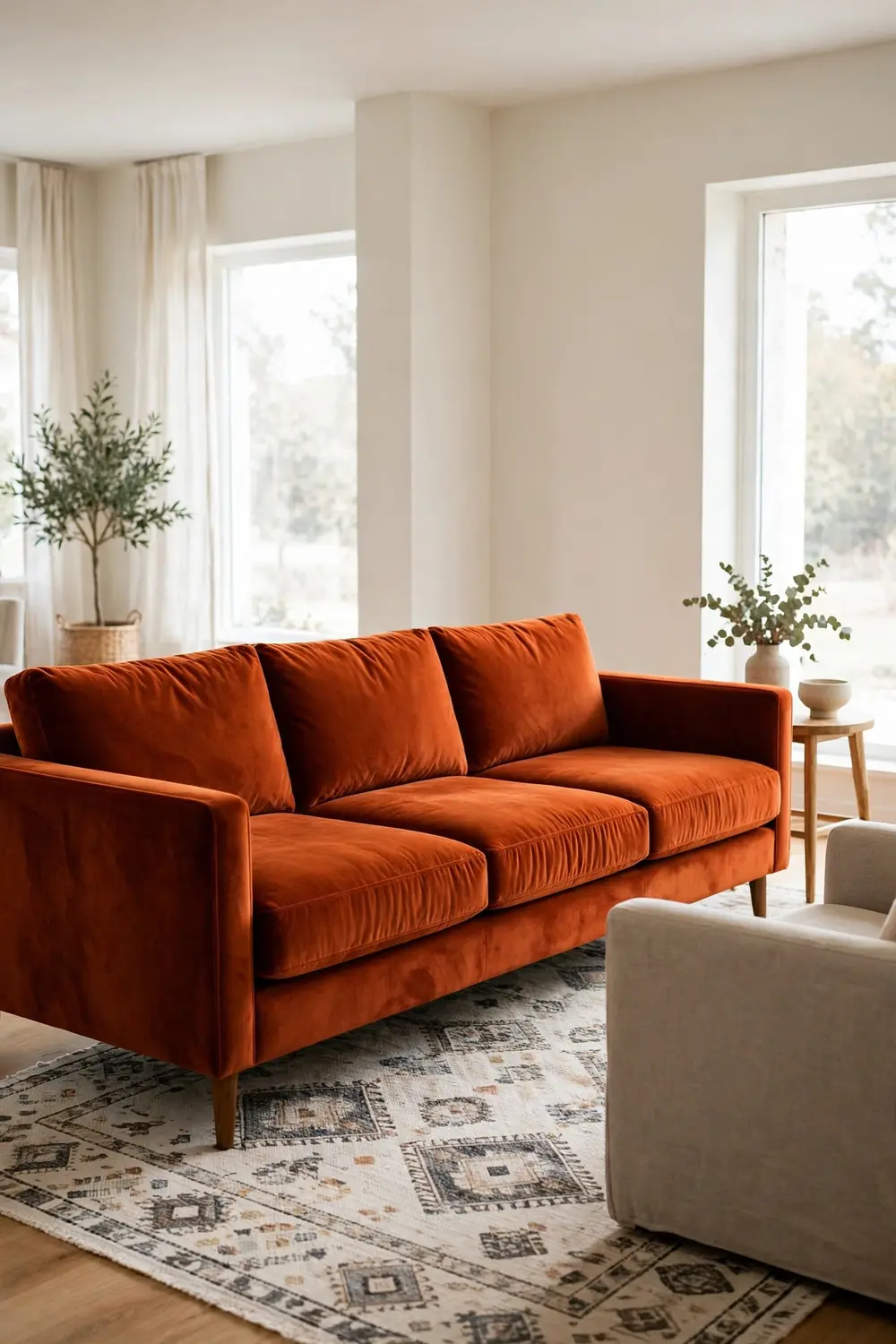
Stand in the doorway and look at the room the way a guest sees it. What does your eye land on first? That is either your hero already, or the spot where the hero should go.
Use what the room already gives you before buying anything new — windows, a fireplace, built-ins, an alcove, a long wall or a view can all anchor a room. If a piece you already own has the presence to lead, let it.
One hero is the right number for most rooms. Two matching heroes can work in a large symmetrical space, but in an ordinary living room a single bold piece against quieter furniture makes far more impact than several pieces competing for attention. And if the hero is a sofa, keep comfort in mind — a sofa whose only purpose is to look good is useless as furniture.
- The doorway test — stand at the entrance and note the first thing your eye lands on
- The count — one hero, not two
- The source — use what the room already gives you before buying anything
- The comfort rule — a hero sofa still has to be comfortable to sit on
Step 2. Pull the palette from the hero
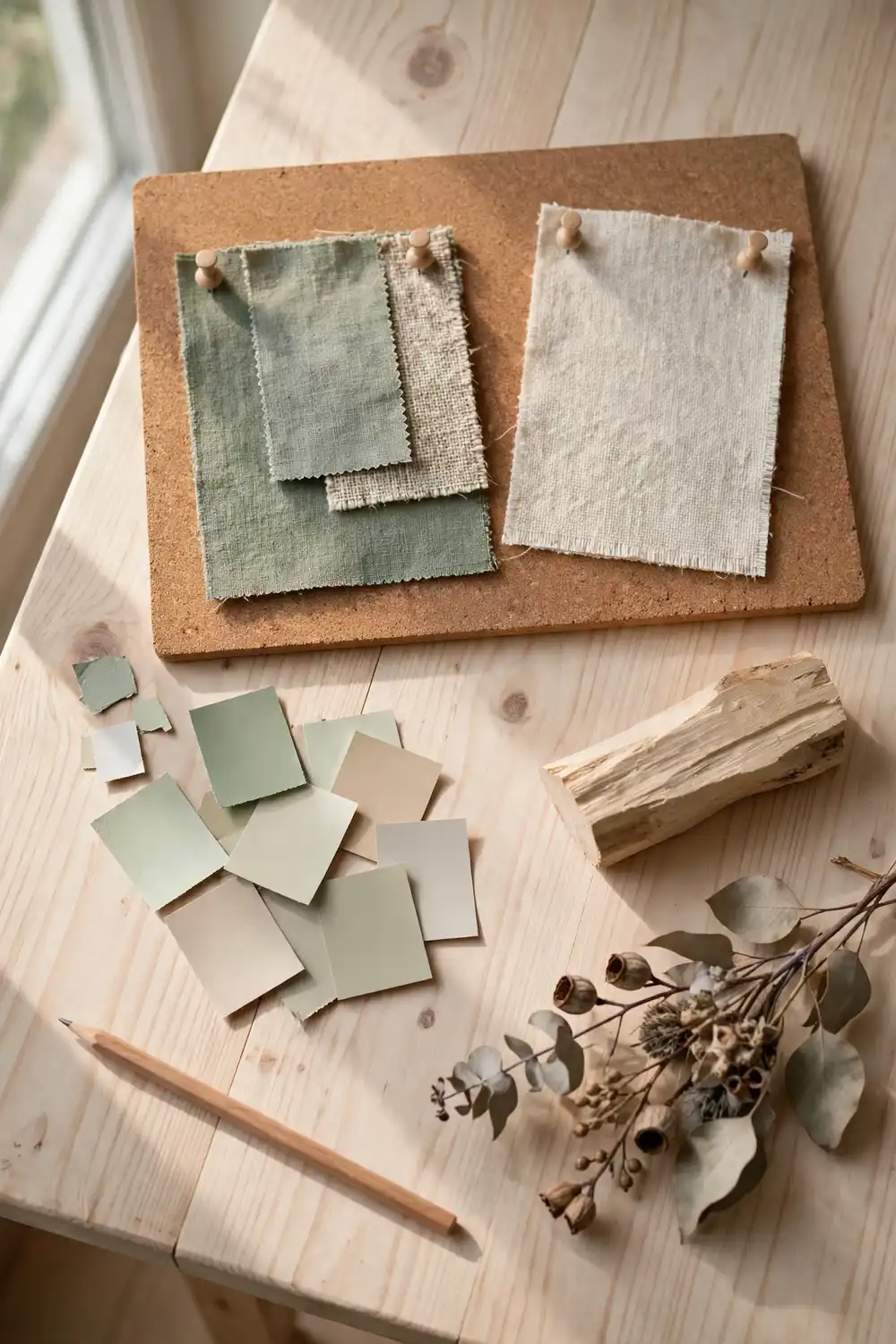
The hero sets the colours for the whole room. Pull one dominant colour, one support colour and one neutral from it, and lock that palette in before shopping for anything else.
Choosing furniture first and the palette second usually means compromising on one or the other. A solid-coloured sofa is the easiest hero to design around, because almost any palette will sit happily beside it.
Colour is not the only cue the hero gives you. Fabric, texture and pattern all steer the room too — a boucle throw, a timber grain, a woven rug or a bold print each pull the palette in a different direction.
One strong note, then quiet. Let the hero be the loudest thing in the room and pull everything else back half a step.
- Dominant — the hero’s strongest colour, used on the hero itself and echoed once or twice
- Support — a second colour from the hero, for cushions, throws or a side chair
- Neutral — a quiet tone from the hero for the walls and the largest surfaces
- Restraint rule — repeat a colour once in a pillow and once in a textile, then let the walls stay quiet
Step 3. Set the layout around it
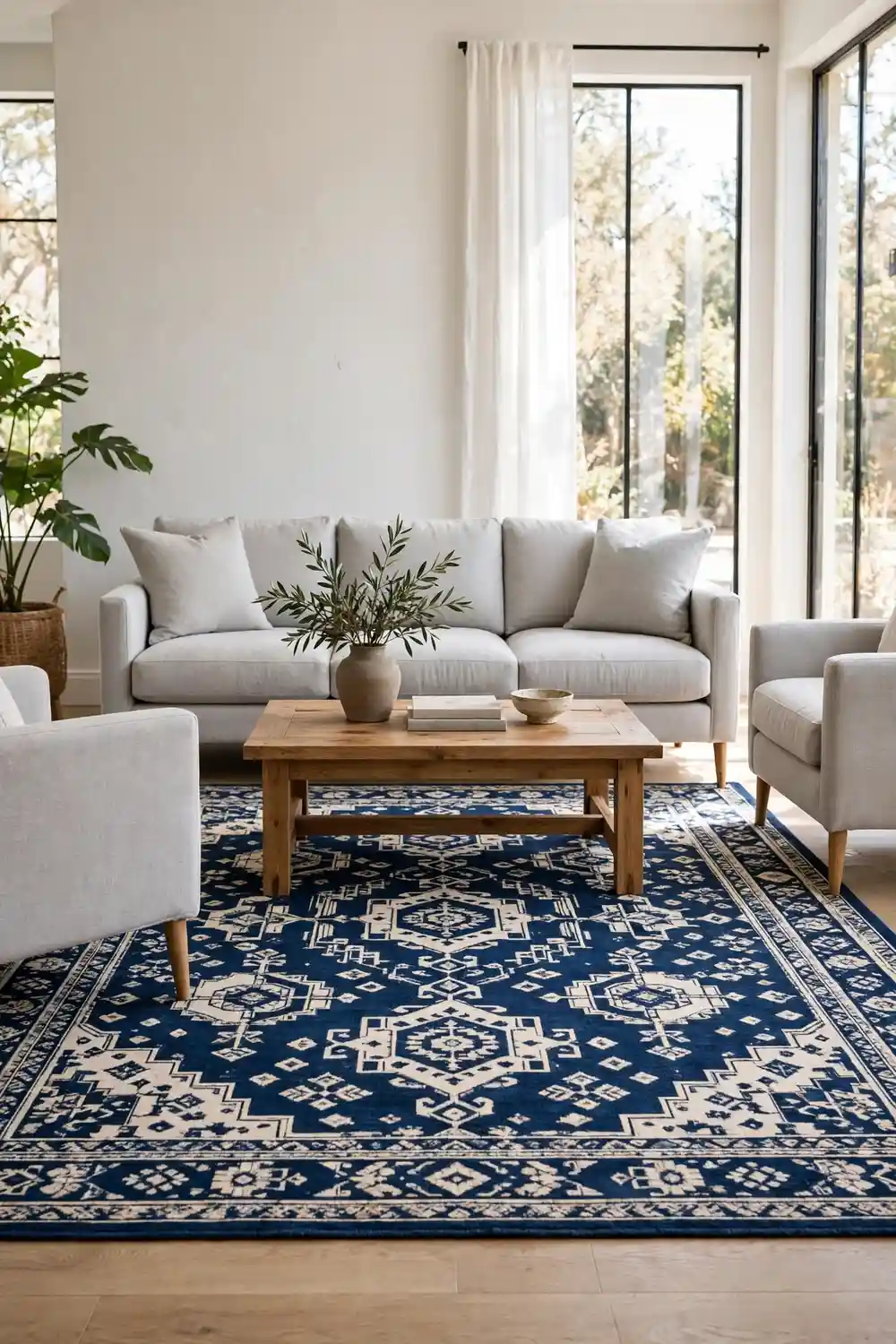
With the hero chosen and the palette set, arrange the seating so it faces the hero. Chairs can angle toward both the hero and the conversation area, so the room works for talking as well as looking.
The rug anchors the whole arrangement — the front legs of the sofa and chairs should sit on it, so the seating reads as one group rather than separate pieces. For sizing detail, see the styling guide in Top 10 Interior Styling Essentials.
Before buying anything, measure the room and mark furniture placement with painter’s tape on the floor. This prevents the most common and expensive mistake — furniture that is too big or too small for the space. Pull the seating into the room to form a conversation zone instead of pushing everything against the walls.
- Walkways — leave 75–90 cm clear for main walking paths
- Sofa to coffee table — re-design.app puts the gap at 40–45 cm, while Nordic Design Blog allows 40–60 cm, so aim for roughly 40–60 cm and test it with tape
- Behind dining chairs — at least 60 cm of clear space
- Proportion check — a 240 cm sofa often suits a 90–105 cm coffee table
- Tape test — mark every piece on the floor before spending anything
Step 4. Layer texture and light
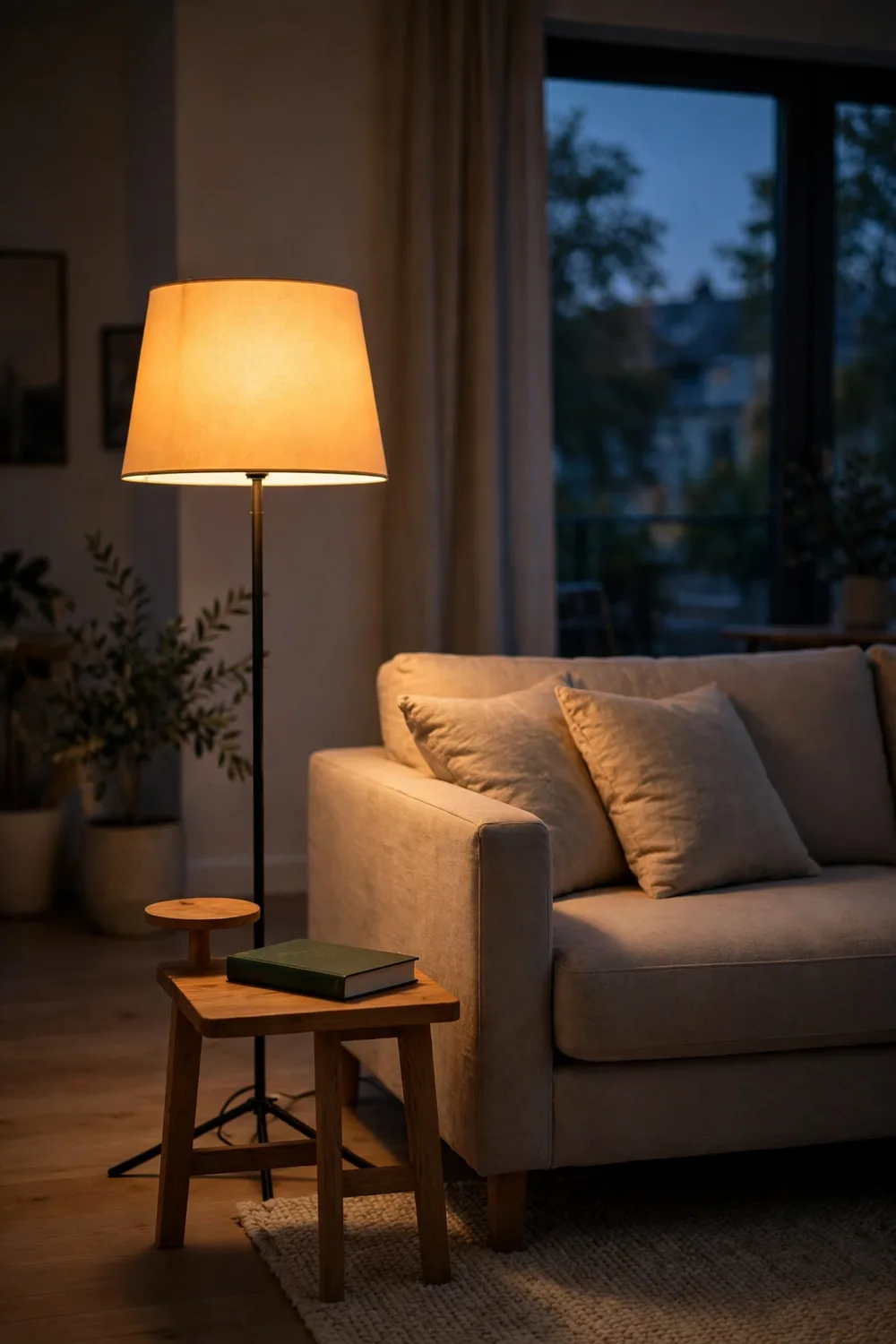
Texture is what keeps a room built around one hero from feeling flat. Layer it rather than adding more objects — a wool throw over one arm, a boucle cushion, a timber side table, a woven rug. Each new texture should earn its place by softening or framing the hero, not by competing with it.
Contrast helps too. A dark wood cabinet may need a pale wall behind it, while a pale sofa may need a darker side table or a patterned rug to give it shape.
Light should flatter the hero, not spotlight it. Warm bulbs around 2700K–3000K and a shaded lamp or sconce give the piece shape after dark, while a single harsh downlight flattens everything it touches. A floor lamp beside the sofa and a table lamp on a sideboard will do more for the room than any number of extra ornaments.
- Best for warmth — a wool or boucle throw, a timber side table, a shaded lamp in warm light
- Best for shape — contrast behind the hero, such as a pale wall behind dark wood or a patterned rug under a pale sofa
- Watch out — one harsh downlight flattens the hero and the room around it
- Watch out — texture piled on without a plan turns into clutter, not comfort
Step 5. Buy the finishing layer last
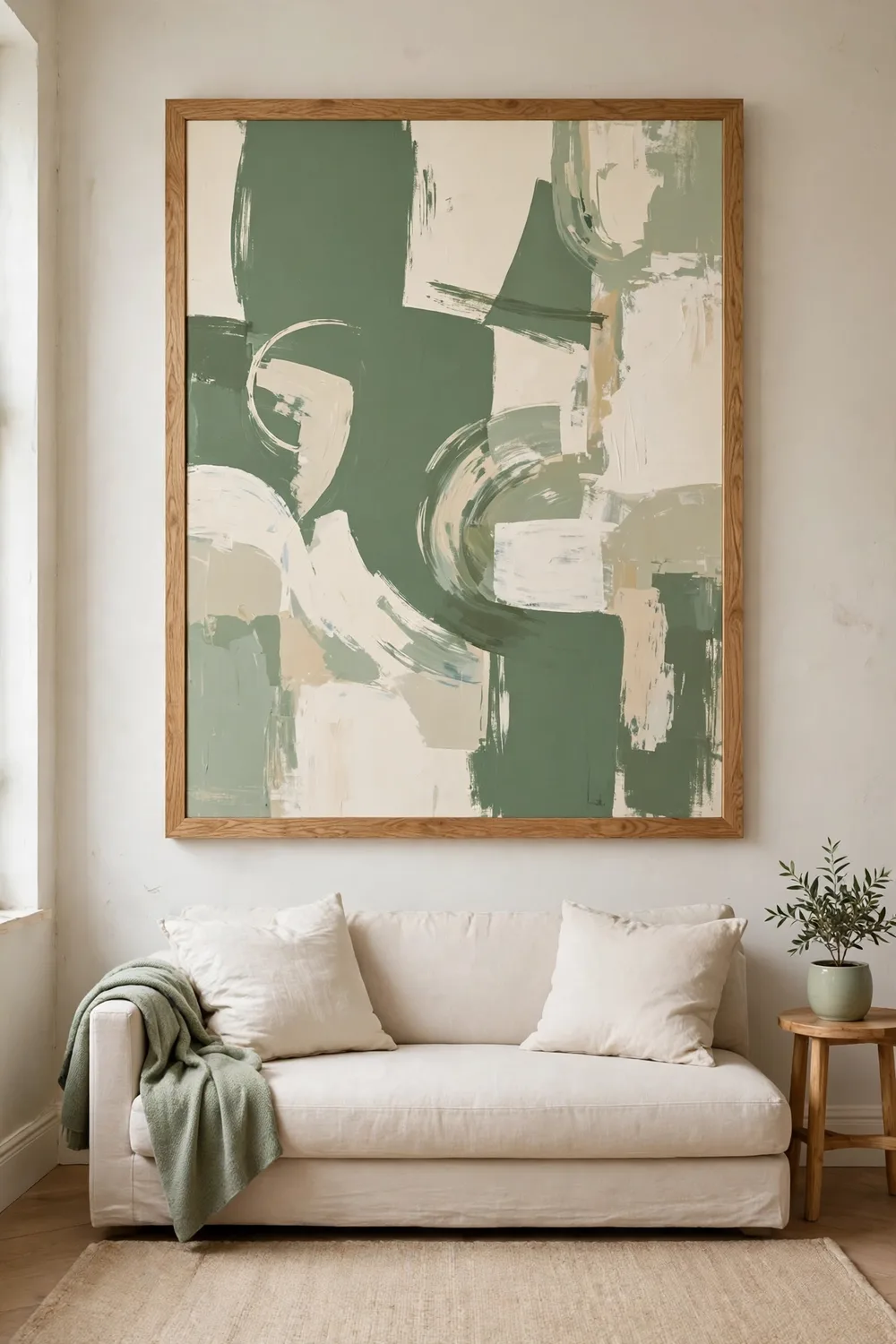
Art, cushions and decor come last, once every structural and furniture decision is in place. This is the order that avoids rework — the finishing layer is cheap to change, while a sofa or a rug is not.
Choose art that talks to the hero. A large painting, a textile wall hanging or a framed photograph can pick up the hero’s colours and carry them to the walls, and one large piece above the sofa usually works better than several small pieces scattered around the room.
Stop repeating before the room feels themed. If the hero is a floral chair, repeat its curve or its colour, not floral curtains and floral art as well.
One echo is a connection. Three echoes is a theme, and a themed room stops feeling like a home.
- Buy last — art, cushions and decor, only after the hero, palette and layout are settled
- Match by — one colour or one curve from the hero, not the whole pattern
- Hang it — one large piece above the sofa rather than several small pieces scattered around
- Stop when — the room starts to feel themed instead of collected
Three rooms, three heroes
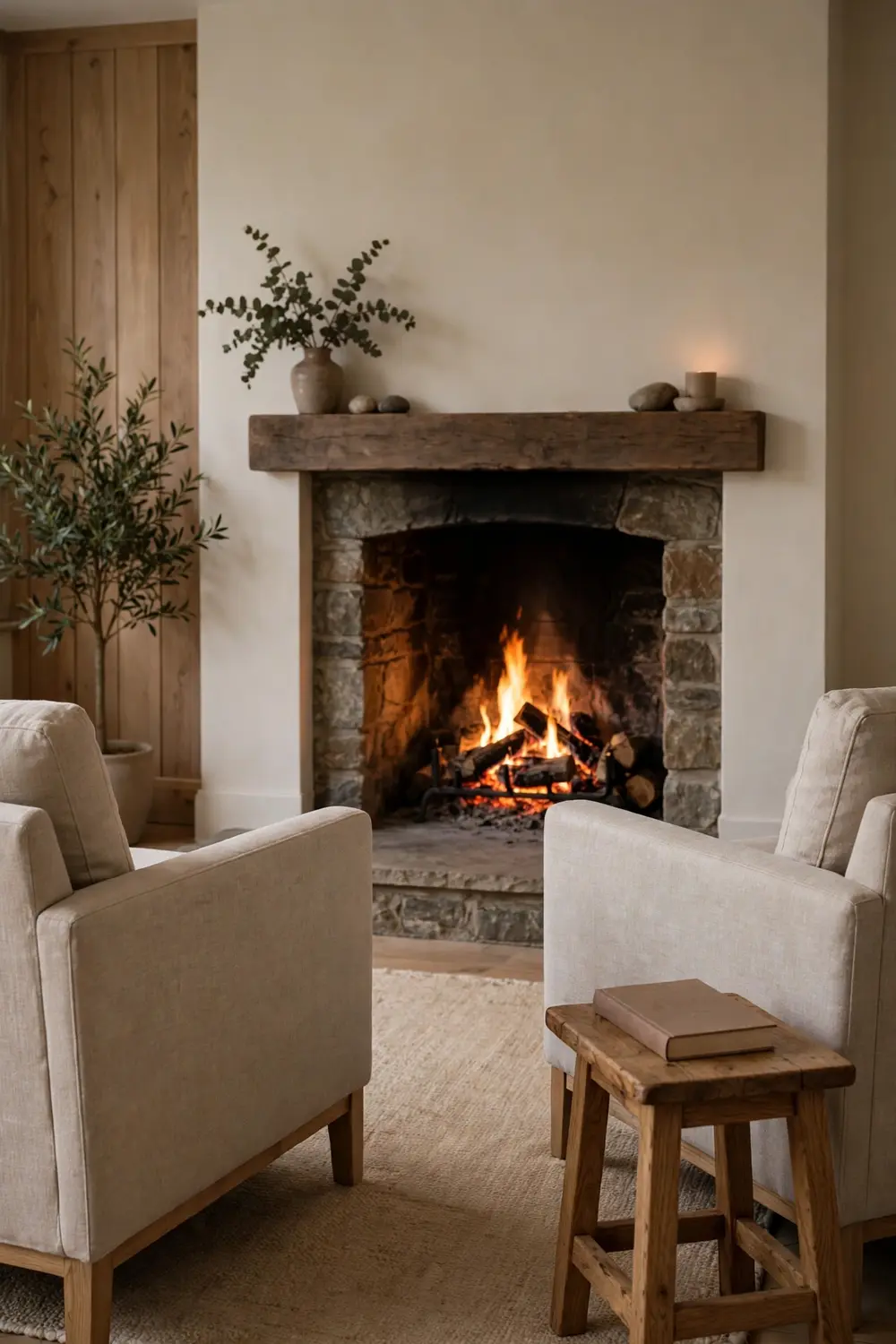
The method works the same way whatever the hero is — only the details change. A sofa hero leads with colour. An artwork hero leads with the palette in the painting.
A rug hero leads from the floor up, grounding neutral furniture in a strong pattern. In each case the hero is chosen first, the palette is pulled from it, and the finishing pieces are bought last.
A farmhouse living room is a good example of the same method in a particular style — the hero might be a timber sideboard or a deep-seated sofa, and the palette follows from it. For that version of the room, see 11 Farmhouse Living Room Ideas.
| Hero type | Palette cue | What to buy last |
|---|---|---|
| Sofa in a strong colour, such as sage, rust or cobalt | Pull one dominant and one support colour from the sofa and keep the walls neutral | Art and cushions that echo the sofa’s colour once, not everywhere |
| Oversized artwork above the sofa | Take the painting’s strongest colour as the dominant and a second colour as support | Cushions and throws in the support colour, and a plain rug |
| Patterned rug under the seating | Ground the room in the rug’s background tone and lift one accent from the pattern | A plain sofa and simple side tables that let the rug lead |
What to avoid
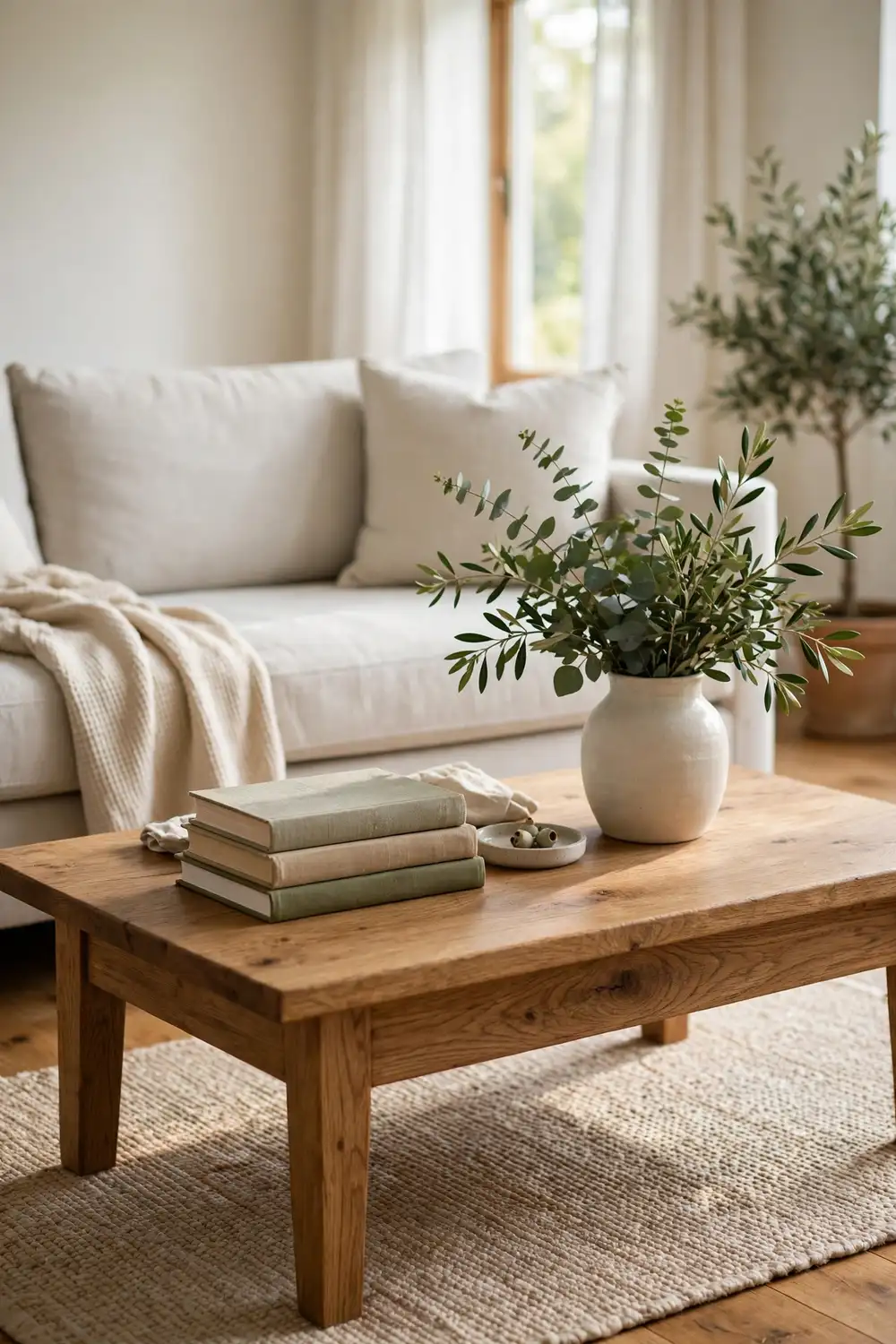
Four mistakes undo the method faster than any other. Two competing heroes split the room’s attention, so the eye never settles anywhere. Buying small pieces first spends the budget before the hero is chosen, and the small pieces then dictate the room instead of supporting it.
Pushing all the furniture against the walls leaves the middle of the room empty and the conversation zone never forms. And themed repetition — the same floral or the same colour on every surface — turns a collected room into a showroom.
- Two competing heroes — one hero leads; a second one argues with it
- Small pieces first — cushions and decor bought early end up choosing the room
- Furniture against the walls — the middle stays empty and no conversation zone forms
- Themed repetition — one echo connects, three echoes turn the room into a set
Frequently asked questions
What should the hero piece control in the room?
The hero piece has three jobs. First, it sets the palette direction — pull one dominant colour, one support colour and one neutral from it.
Second, it sets the material temperature — a glossy lacquer table wants different companions than a worn oak farm table. Third, it sets the scale mood — low and loungey, tall and architectural, delicate and leggy, or chunky and grounded.
How do you build the room outward without making a shrine?
Build outward in rings — closest companions first, background surfaces next, accents last. Repeat colour with restraint, once in a pillow and once in a textile, and let the walls stay quiet.
Stop repeating before the room feels themed. If the hero is a floral chair, repeat its curve or its colour, not floral curtains and floral art as well.
Should every living room have a focal point?
Yes. A clear focal point helps organise the room visually — without one, the eye does not know where to settle and the room can feel unfinished even when the furniture and decor are attractive.
The focal point does not have to be bought. A window, a fireplace or a large artwork can do the job.
The bottom line
Living room design around one statement piece is not about buying more furniture. It is about choosing one thing to lead and letting every other choice follow from it — the palette, the layout, the light and the finishing touches, in that order. Start with the hero, test the layout with tape before spending anything, and buy the small pieces last.
If the hero points toward a farmhouse look, 11 Farmhouse Living Room Ideas shows the same method worked through in that style, one room at a time.