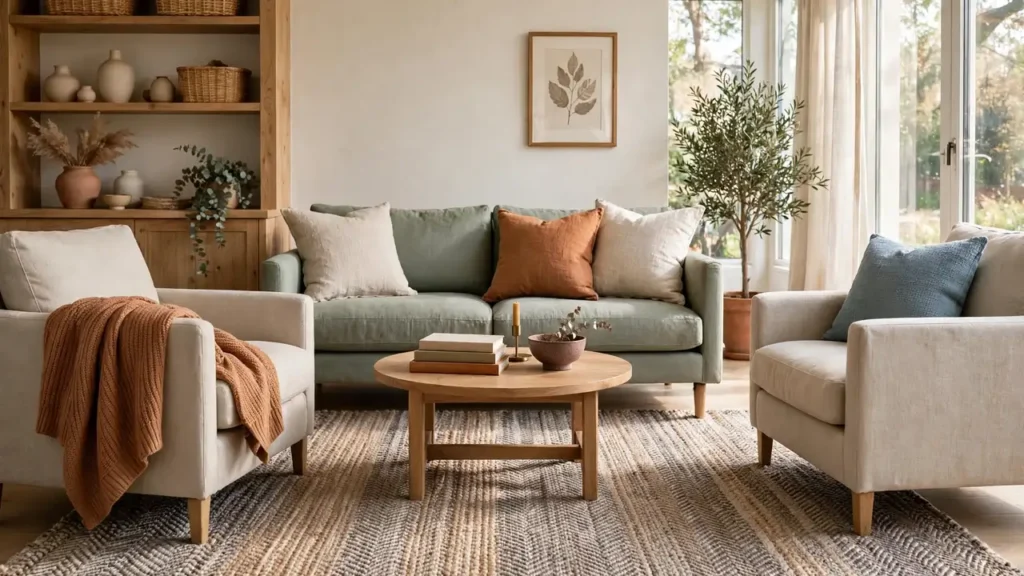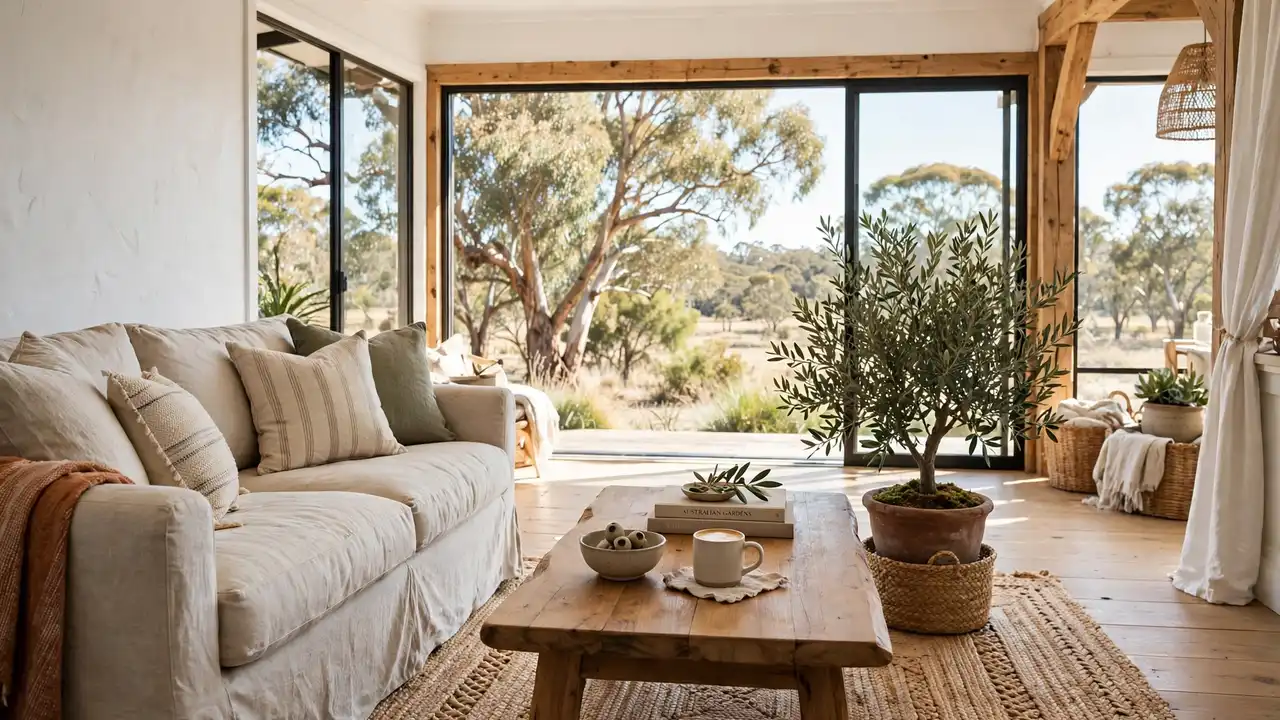
Farmhouse living room ideas travel well, because the look was never really about one country. It is about soft edges, honest timber, worn-in comfort and rooms that feel gathered rather than decorated.
Plenty of Australian living rooms already lean that way without the label. In Australia the farmhouse look overlaps the Hamptons, coastal and country styles, so half the work is usually recognising what your room is already doing right.
These eleven ideas adapt the farmhouse approach popularised by US designer Joanna Gaines to Australian homes, with no shopping list attached and no renovation needed for most of them. Work through the ones that fit your room and skip the rest with a clear conscience.
Soften the hard lines
Skirted sofas, slipcovers and table skirts
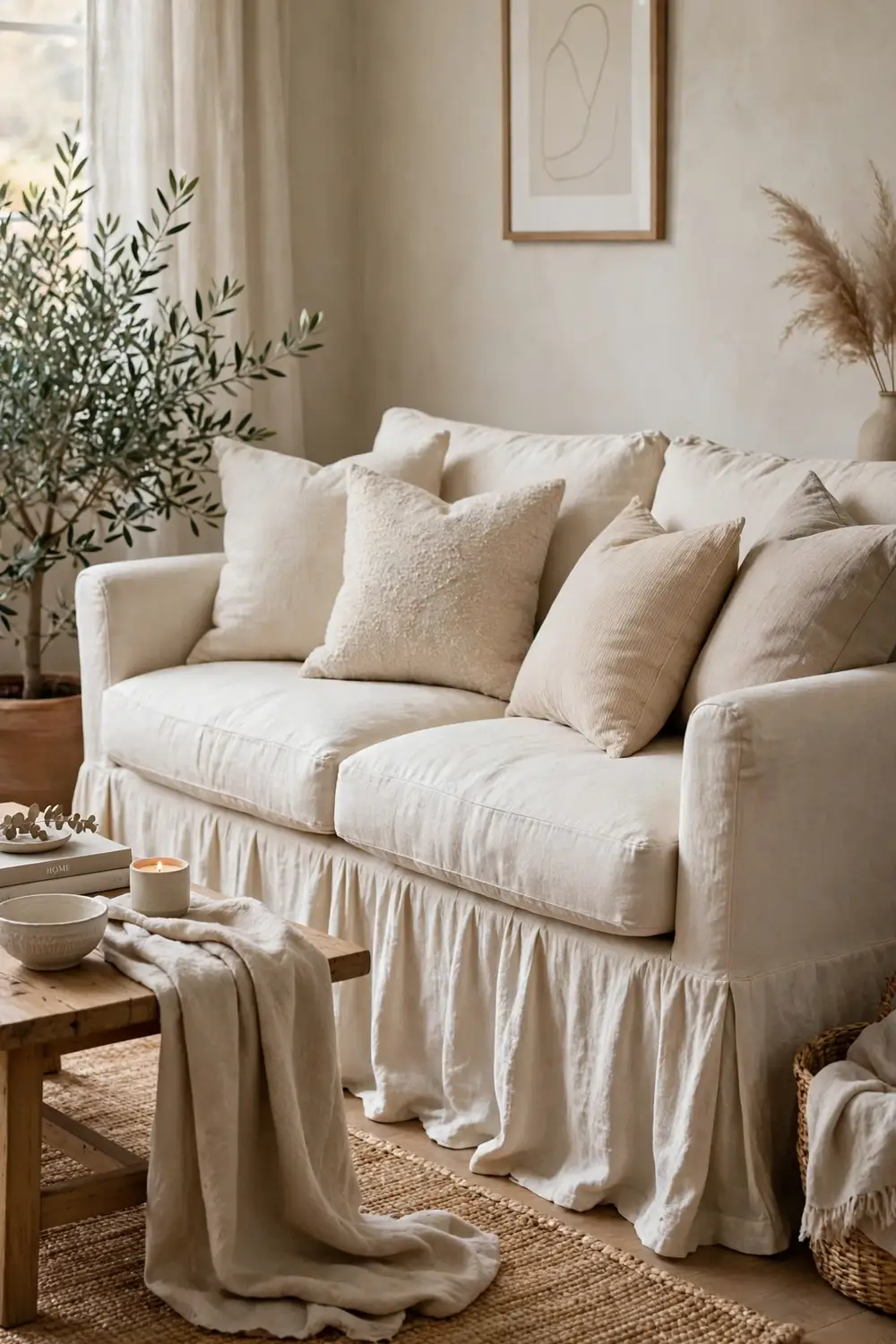
A skirted sofa changes the temperature of a room faster than almost any other single piece. The fabric drops straight to the floor, the sharp legs disappear, and the whole seat reads as softness you can sink into.
Slipcovers do the same job with an exit plan. They soften a boxy modern sofa you already own, they wash, and in a pale linen or cotton they give a hard-edged room that gathered farmhouse ease. The trick works smaller, too — a pleated or softly ruffled skirt on a side table or coffee table hides the clutter shelf underneath and turns a plain piece into something made for the room.
- Best on boxy sofas and armchairs with strong straight legs
- Fabric direction, natural linen and cotton in pale, washable weaves
- One skirted table is enough, keep the room’s other tables bare so the contrast works
- Bonus in Australian homes, covers come off after a beach-and-kids summer
Anchor the room
A round coffee table
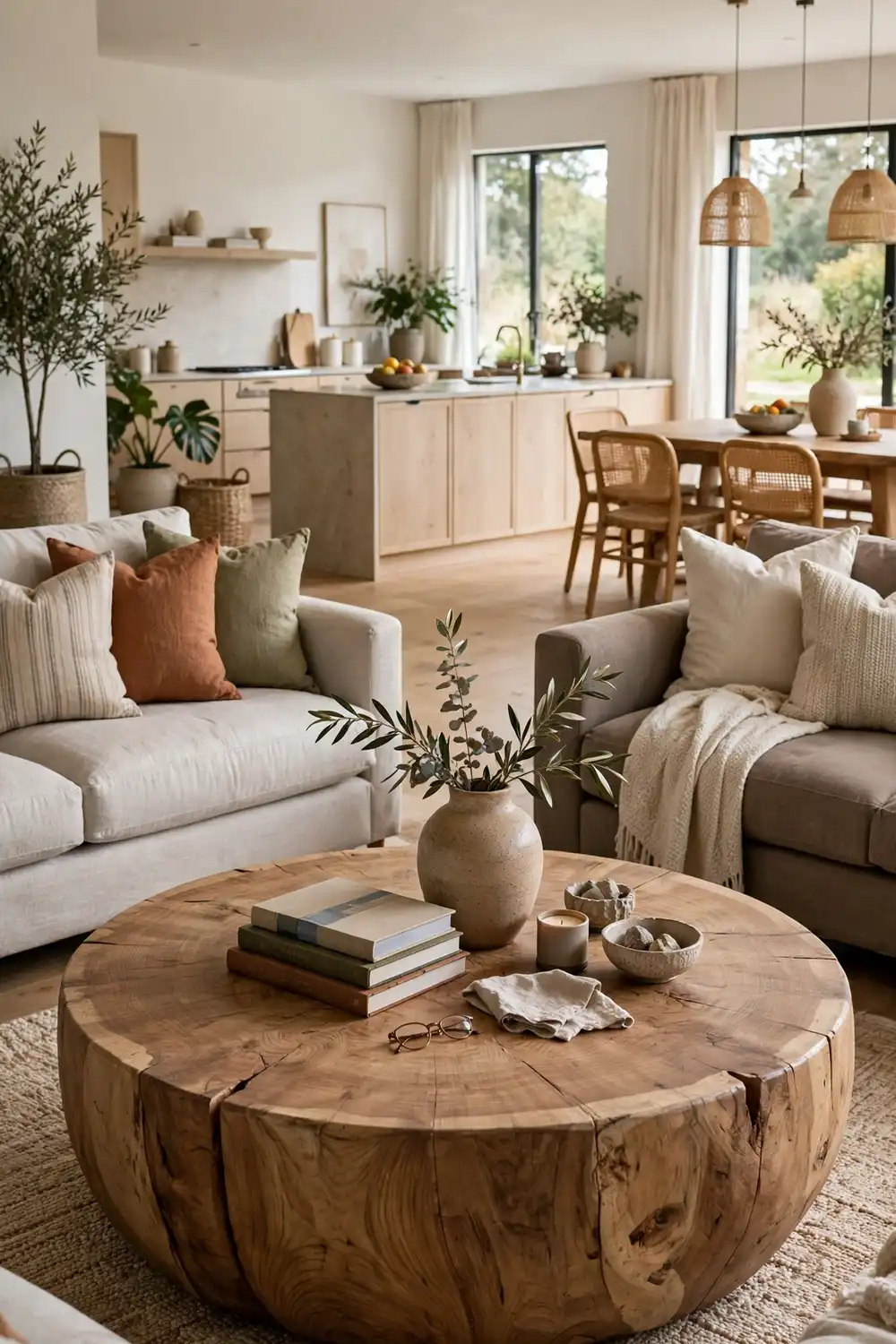
A big living room can drift without a centre, and a round timber coffee table gives it one. The circle pulls the seating in around itself, and people move around the rounded edges without the shin-catching corners of a rectangle.
It is a particularly farmhouse move because the table is doing welcome as much as function. Set it in a large or open-plan space where the seating group needs gathering, and let the general principles in our interior styling essentials guide how you dress the top of it.
- Suits large rooms and open-plan seating groups that feel scattered
- Timber first, the grain is part of the look
- Rounded edges earn their keep in homes with small children
A bold piece that carries the room
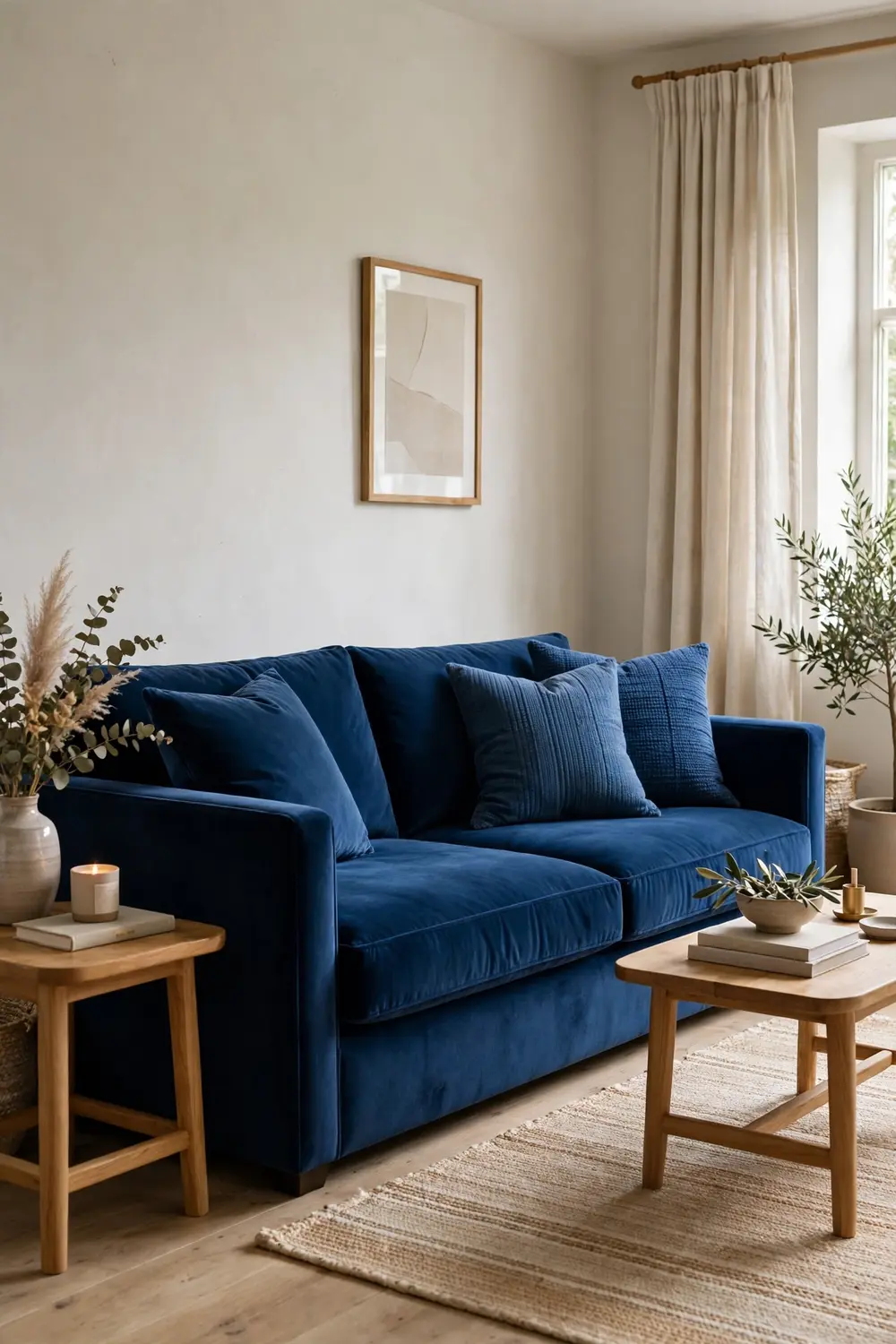
Every farmhouse room benefits from one piece with some confidence in it. In the Gaines example it is a big bold blue couch sitting in an otherwise calm room, and the room organises itself around the colour.
Your version can be smaller. A patterned armchair, a painted cabinet, a sofa in a saturated colour — the move is choosing one piece that leads and letting everything else quieten down around it.
- Pick one leader only, a second bold piece starts an argument
- Echo the leader in small touches, a cushion, a throw, a book spine
- Everything else in the room drops a shade calmer
Add height
A potted tree by the sofa
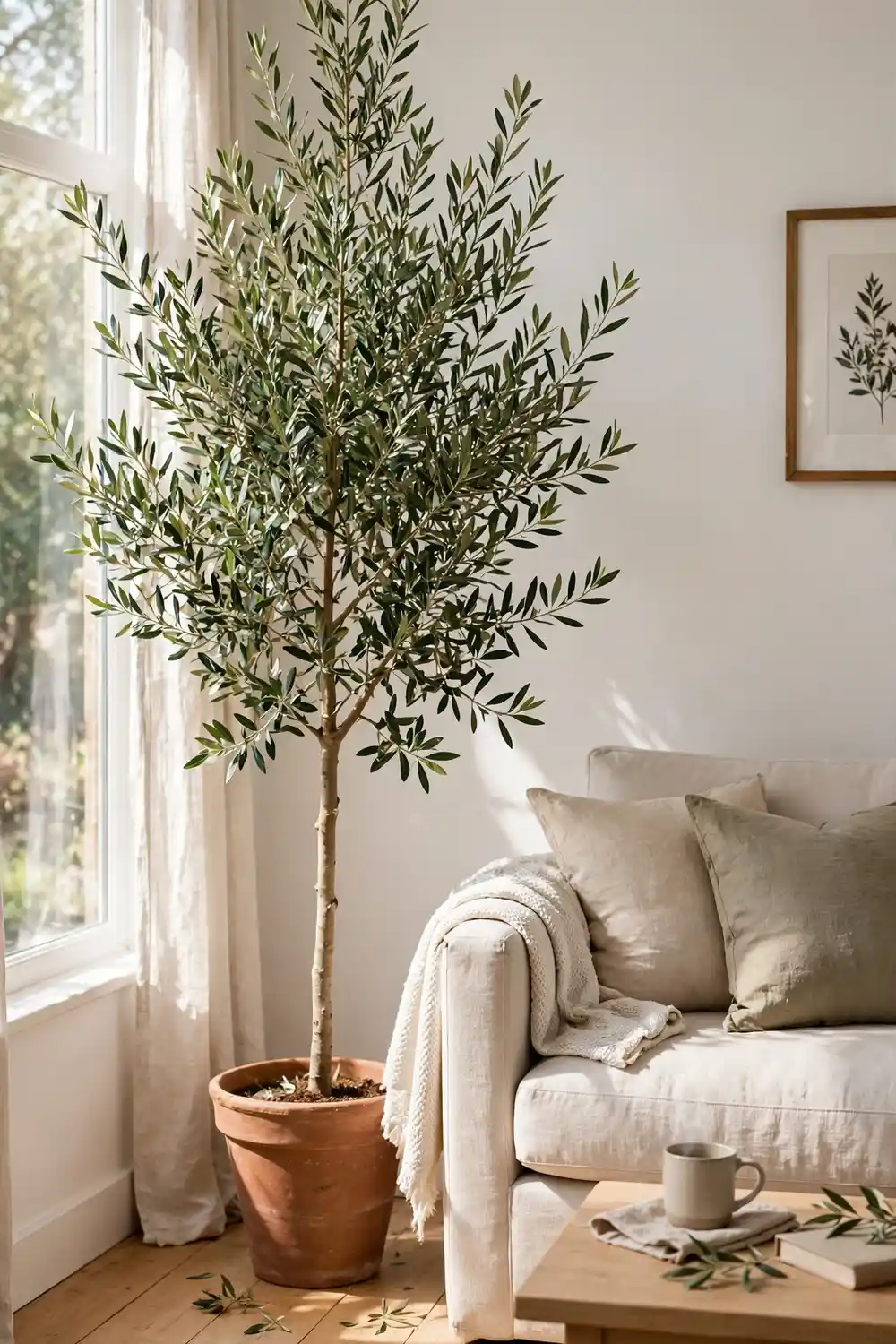
Farmhouse rooms run low and horizontal, all sofas and sideboards, and a potted tree breaks the line. Set a large plant beside the sofa and the room gains height, shadow and a living thing in its corner.
Olive trees carry the Mediterranean end of the look, and a monstera brings the lush end. Our houseplants for beginners guide covers choosing and keeping them, and a good faux tree is a respectable answer in a dark corner that defeats every real plant.
- Place it where the ceiling height is going spare, beside the sofa or in a dead corner
- Pot matters, terracotta and woven baskets sit naturally in this style
- Faux is fine where the light is not
Wood beams overhead
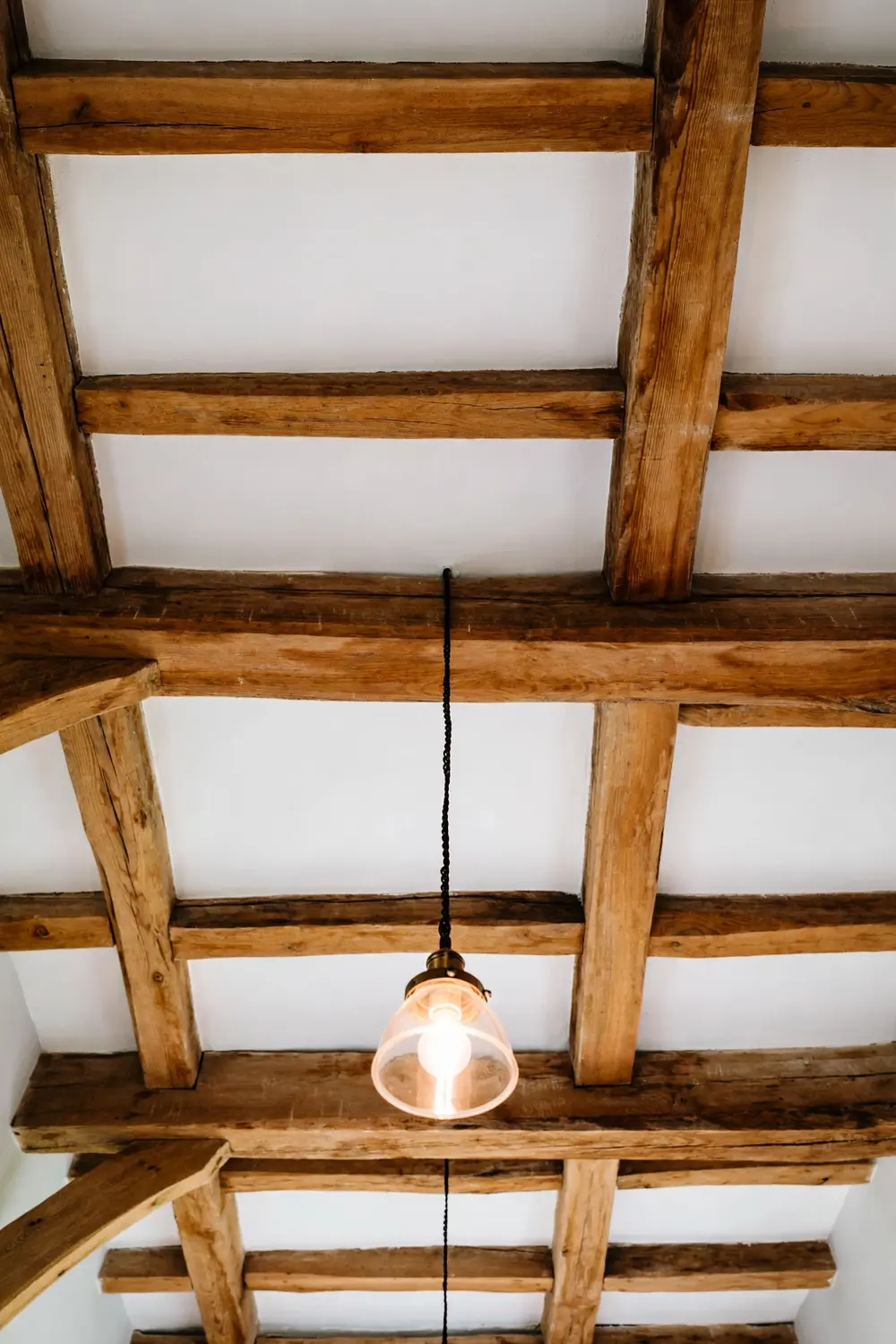
Beams add the warmth and age that new rooms lack. Solid timber beams are the authentic version, heavy and structural in origin, while hollow decorative beams are lightweight shells fitted to an existing ceiling for the look alone.
Treat this one as a consider-it, get-a-professional idea. Decorative beams are not structure and should never be presented as such, and anything overhead belongs in qualified hands.
- Two routes, solid timber for authenticity, hollow beams for a lighter fit
- Ceiling height decides, low ceilings usually argue against
- Installation is a professional job, not a weekend project
A grandfather clock
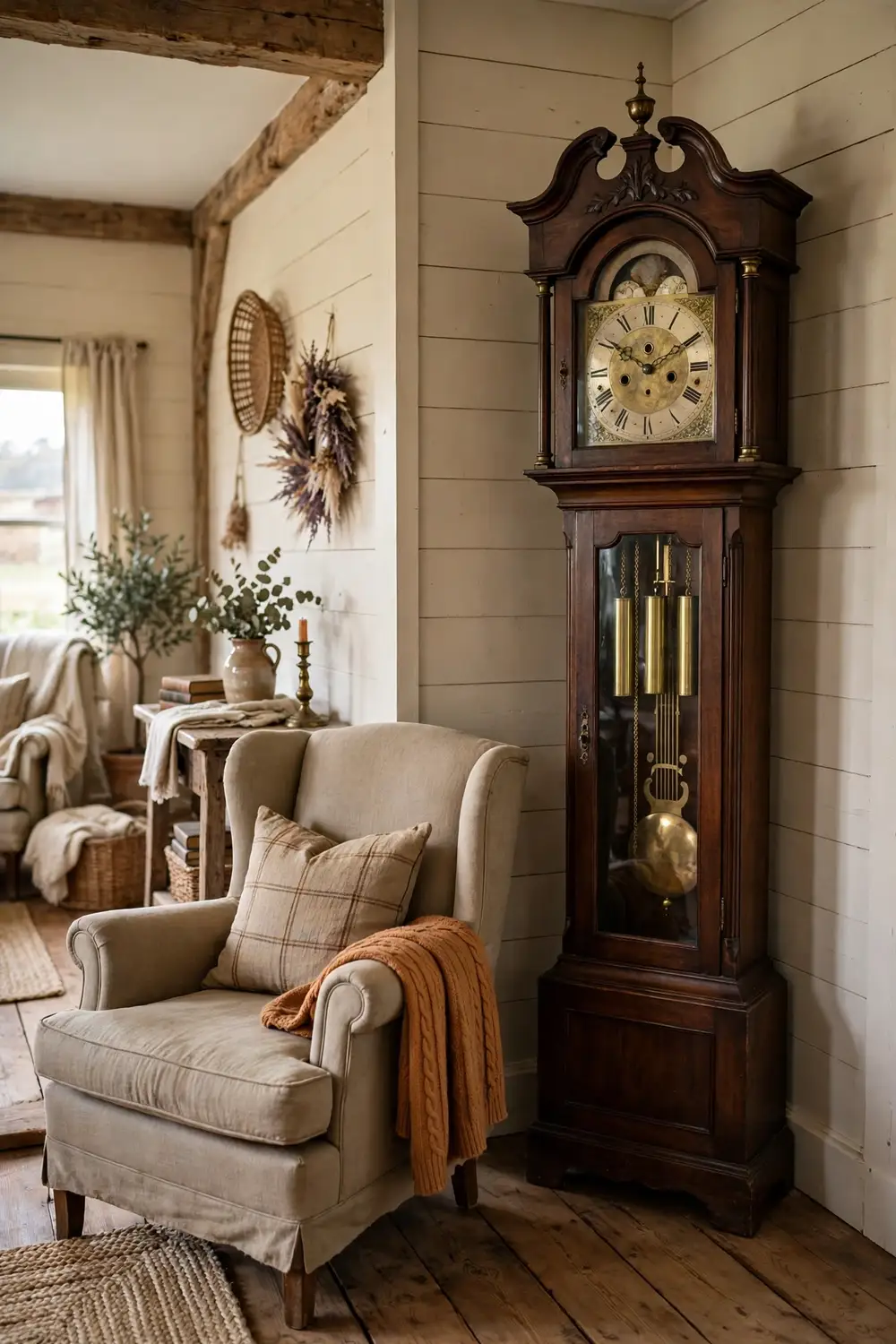
A tall-case clock is the old-world anchor of the list. It brings height, a gentle tick, and the sense that the room has been lived in for longer than it has.
Antique clocks turn up at estate sales and second-hand dealers, and modern antique-look versions give the silhouette without the upkeep. A clock suits a corner, a hallway end or the wall a room keeps ignoring.
- Works in corners and at the end of a wall run
- Antique for character, antique-look for low maintenance
- Its height balances a room full of low furniture
Dress the walls
Keepsakes as wall decor
The most farmhouse wall in any home is the one hung with the family’s own things. Heirlooms, plates, ceramics, an instrument, a sign with a story — objects that mean something carry a room in a way bought art rarely does.
Group pieces that share a story rather than a style. Anything heavy needs proper plasterboard fixings rather than a hopeful nail, and that is worth the extra ten minutes.
- Hang what has a story, heirlooms and collected pieces first
- Group by connection, pieces that share a story
- Heavy pieces get proper fixings, always
Extra-high wainscoting for tall ceilings
Standard wall panelling can look lost under a tall ceiling, and the farmhouse answer is to run it higher. Panelling carried to about a third of the wall’s height, and higher still where the ceiling soars, gives the wall proportions that match the room.
Paint it neutral for calm or take it bold for drama, and trial it on one feature wall before committing the room. It is a carpentry job, so file it under consider-it ideas to hand to a professional rather than a first DIY.
- Height guide, around a third of the wall, more under very tall ceilings
- One feature wall first if you are testing the look
- Neutral paint keeps it classic, a deep colour makes it the feature
Bookcases that look built in
The library look arrives without any demolition. Stand a pair of bookcases flanking a fireplace or a doorway and the wall reads built in, while the shelves stay furniture you can take with you when you move.
Recessed bookcases, shelves set into the wall itself, are the full version of the same idea. They are renovation work, with all that implies, and they belong with builders rather than in a weekend plan.
- No-demo route, standing bookcases flanking a fireplace or doorway
- Recessed version, renovation-grade, professional hands only
- Fill them loosely, books plus breathing room
One wall of steel-frame shelving
A steel-framed shelf unit run across one wall is the farmhouse display wall. The dark frame gives the room its industrial edge, and the shelves carry books, photographs and memorabilia in the open.
Curation is the whole skill. Choose what goes up by intention, by value and by function, the source’s own test, and leave gaps so the wall breathes instead of shouting.
- Frame, blackened steel reads best against pale walls
- Edit by intention, value and function, not by what fits
- Leave empty space on some shelves on purpose
A long row of art across the mantel
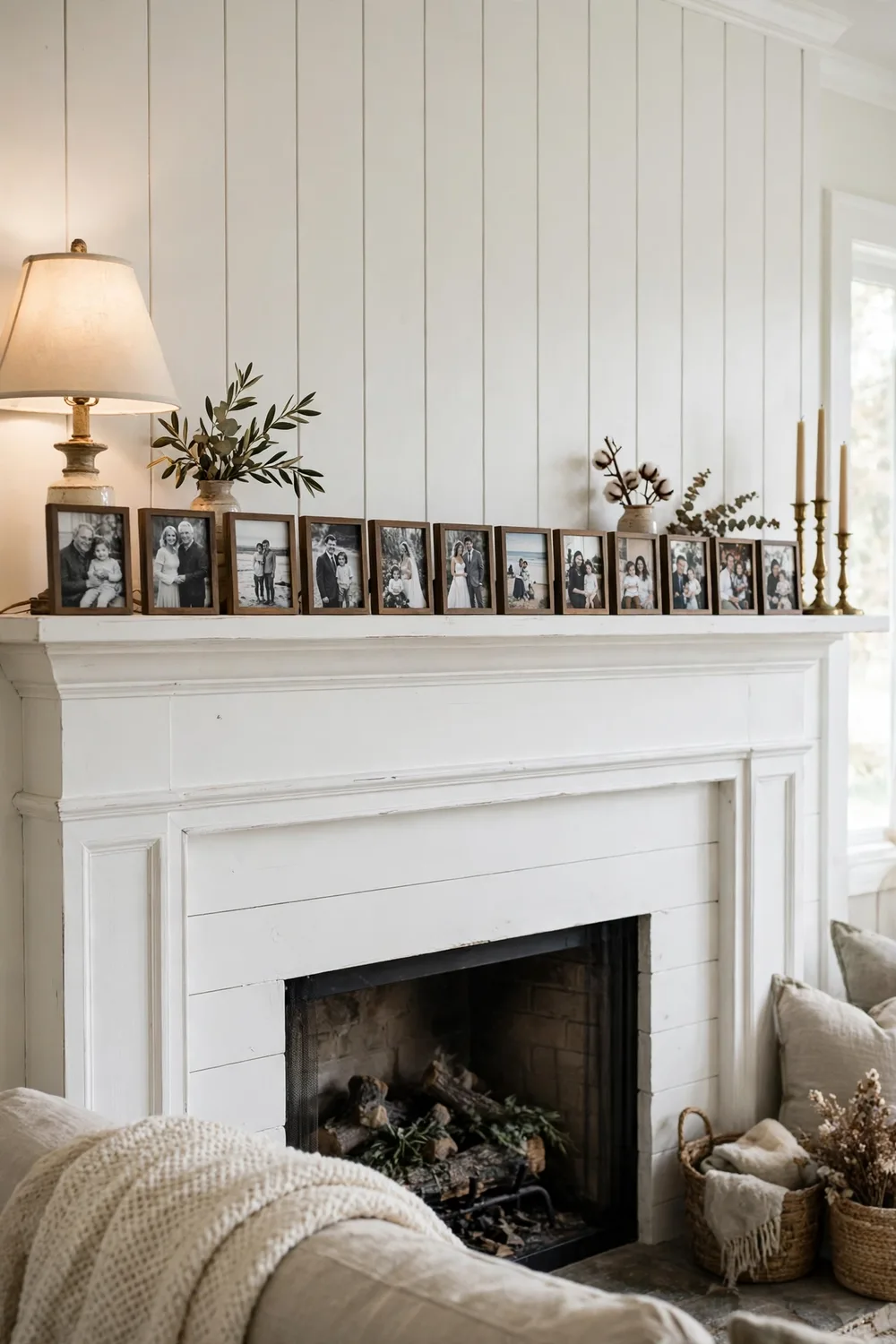
A fireplace mantel takes a whole exhibition in this style. Line up a long row of square-framed photographs or prints across it, evenly spaced, and work the balance from the edges in, with a lamp or candlesticks anchoring each end.
The row suits farmhouse rooms because it is personal and slightly imperfect by nature. Family photographs carry it best, and the even spacing is what makes the row read as one piece.
- Square frames in a row, spacing even, edges anchored
- Photographs first, this is a family wall in miniature
- Lamps or candlesticks close the ends of the row
Pulling it together
Nothing on this list demands the whole eleven. Farmhouse rooms are gathered over time, and two or three of these moves — a skirted sofa, a round table, a tree in the corner — already change how a living room feels.
Start with the softening and the anchoring, and let the walls wait until the room tells you what it needs. That patience is not a compromise of the style. It is the style.