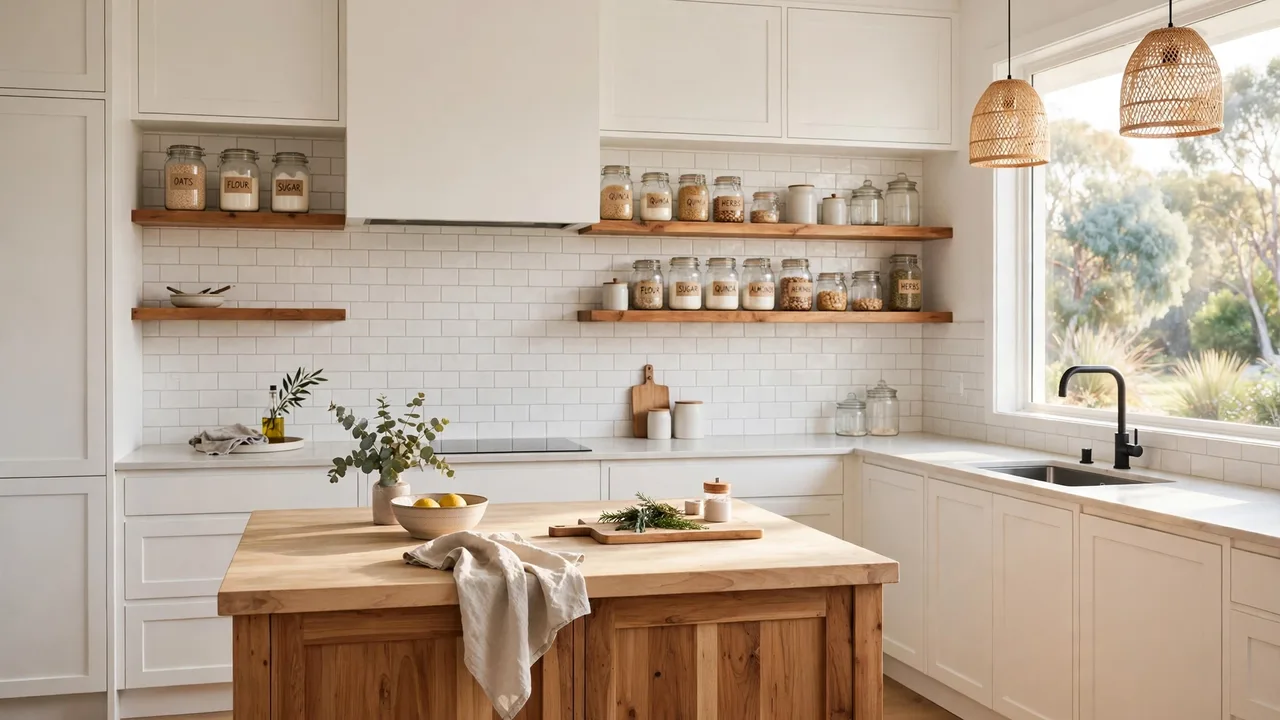
How to organise a kitchen like a pro turns out to have very little to do with buying storage products. The professionals work a method first — what stays, what goes, and where each thing earns its place — and the containers come last, if they come at all.
That is good news in an Australian kitchen, because most kitchens are not short of cupboards. They are short of a system, which is why the same drawer jams and the same pantry shelf avalanches in homes that were organised, once, with great intentions.
This guide follows the method used by home organisation expert Steph Pase, whose systems Better Homes & Gardens Australia documented, built on one planning principle — everything stored where it is used. Zone by zone, here is how it runs.
Start with the stocktake
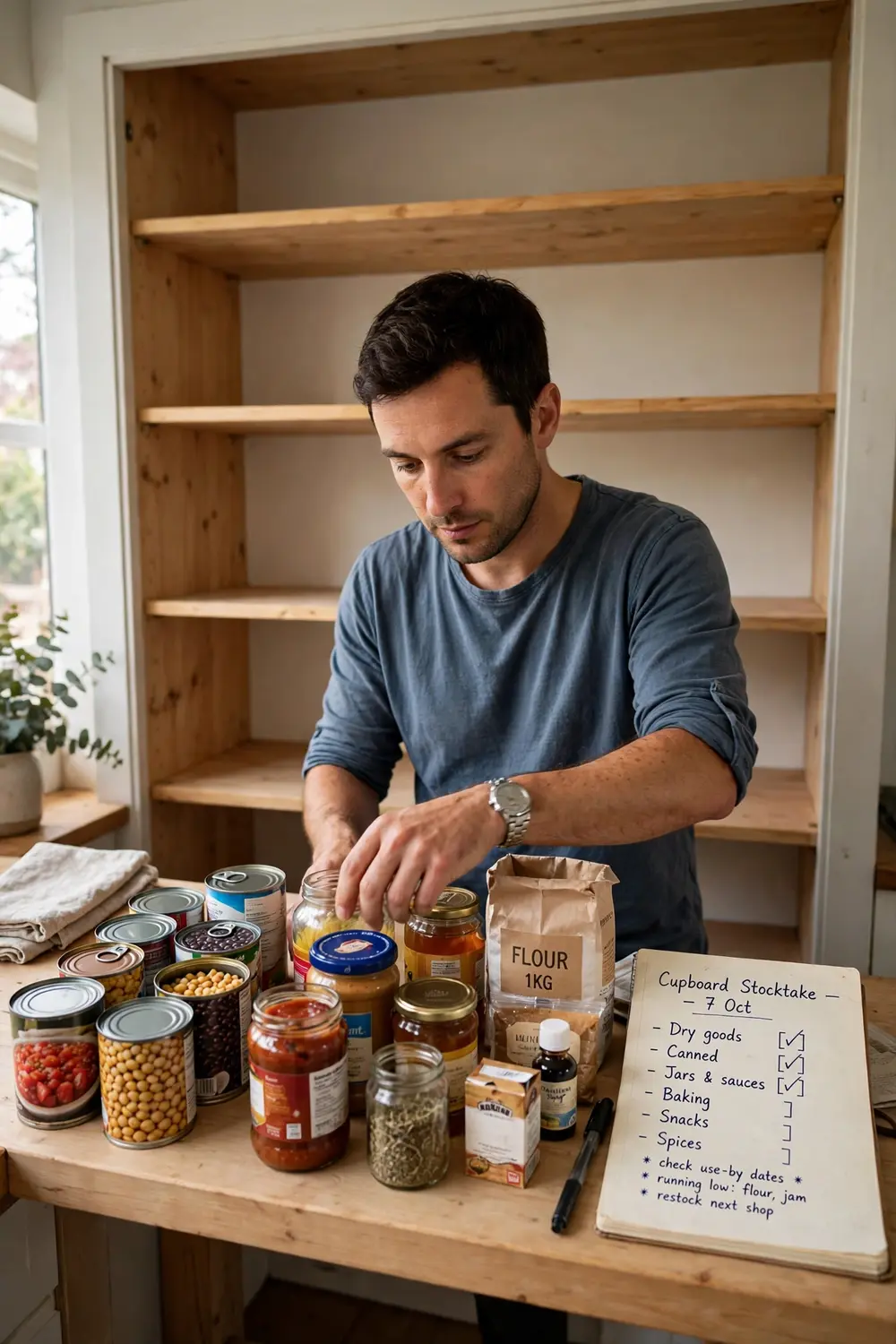
No zone gets organised until it has been emptied and culled. Work one zone at a time, take everything out, and sort what you own by how often it earns its keep — daily, weekly, or only occasionally.
The sort decides the map. Daily things belong within a step of where they are used, weekly things a stretch further, and the occasional pieces land in the least reachable spots, because a kitchen arranged by frequency stops fighting you. Chopping boards and knives live by the preparation bench, pots and utensils by the cooktop, cleaning things by the sink.
This article is about that method and the systems inside each zone. Making the space itself work harder is a different job, and our guide to freeing up kitchen storage covers it in full.
- Work one zone at a time, never the whole kitchen at once
- Sort by use, daily, weekly, occasional
- Cull as you empty, duplicates and never-used tools go first
- Placement rule, everything stored where it is used
The zones
The pantry, through its containers
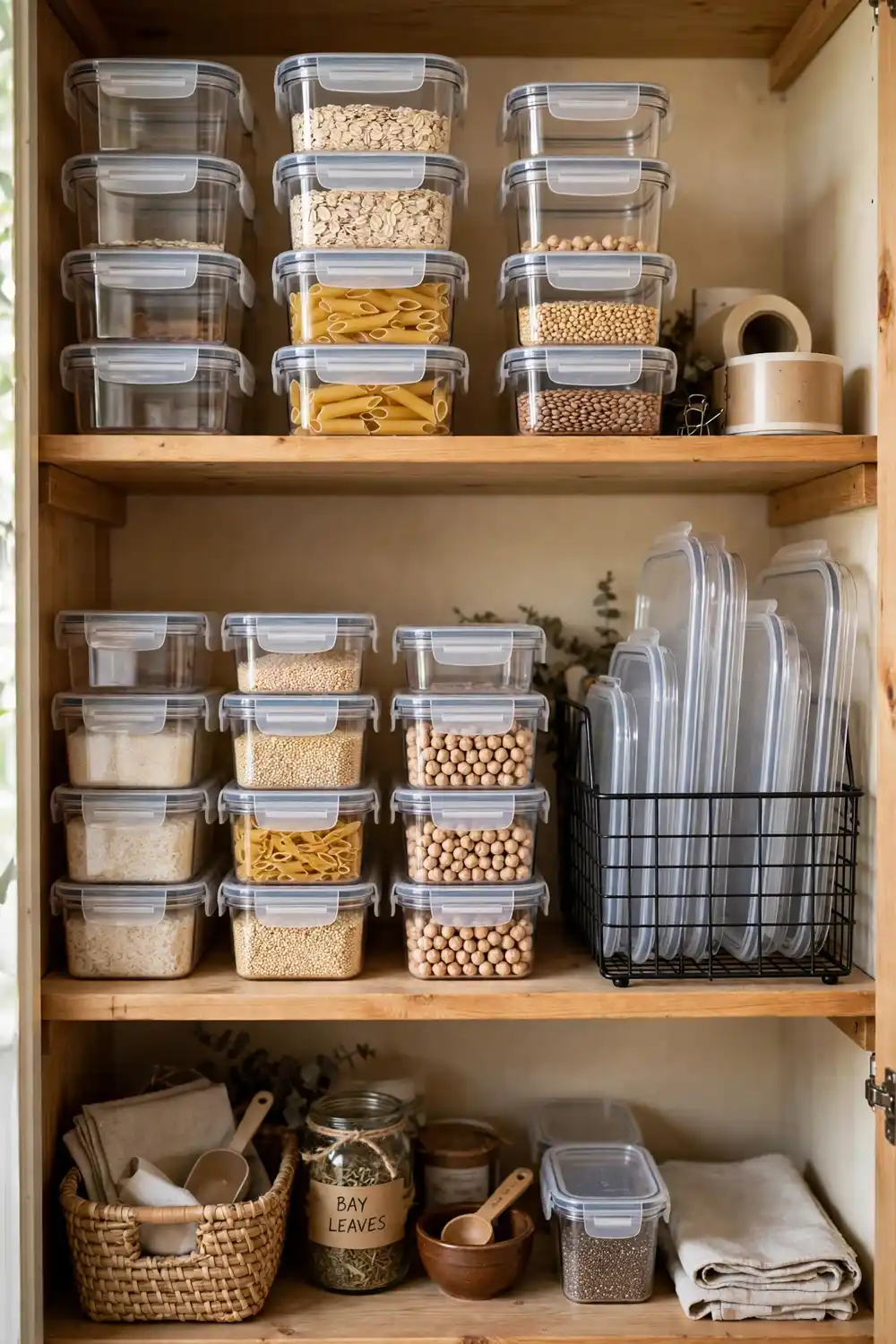
Steph Pase’s pantry starts with the container collection itself, because that is where pantry chaos breeds. Her system is plain. Stack the container bottoms together by size and type, and store the lids separately, standing vertically in a budget file holder, so no lid ever goes hunting for its base again.
She runs the system on clear airtight containers (the Tupperware range is her named choice), and the discipline matters more than the brand. One family of containers that stacks, seals and matches beats a drawer of survivors from a decade of takeaway nights.
- Bottoms stacked by size and type, never nested with lids on
- Lids upright in a file holder, filed like paperwork
- One container family, clear and airtight, so stock is visible at a glance
- The category-by-category pantry system sits in our storage guide, linked above
The fridge, with a ‘use me first’ shelf
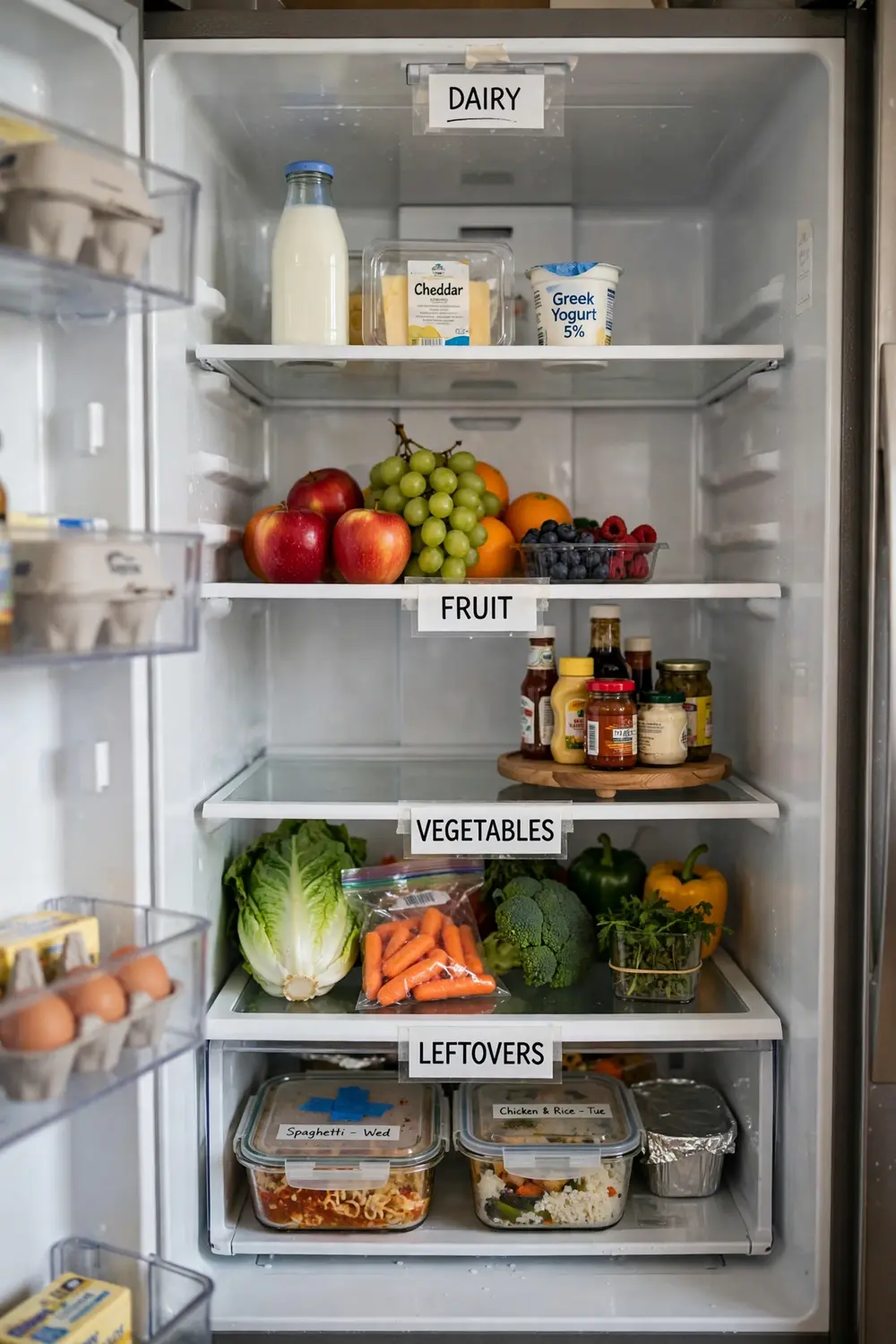
The fridge gets sections, not shelves of chance. Steph labels designated areas for dairy, fruit, vegetables and leftovers — she uses a label maker for hers — so everything going in has a named destination and everything coming out can be found.
The sharpest move is the ‘use me first’ shelf, a designated spot for opened items nearing their use-by date, which puts the food most likely to be wasted directly in the eyeline. Chopped fruit and vegetables go into produce-saver containers to hold their freshness, and a Lazy Susan under the condiments ends the archaeology at the back of the shelf.
- Label the sections, dairy, fruit, veg, leftovers
- One ‘use me first’ shelf for opened items, checked first at cooking time
- Produce savers for chopped fruit and veg
- Condiments corralled on a turntable, nothing lost at the back
Cooking tools, culled before they are stored
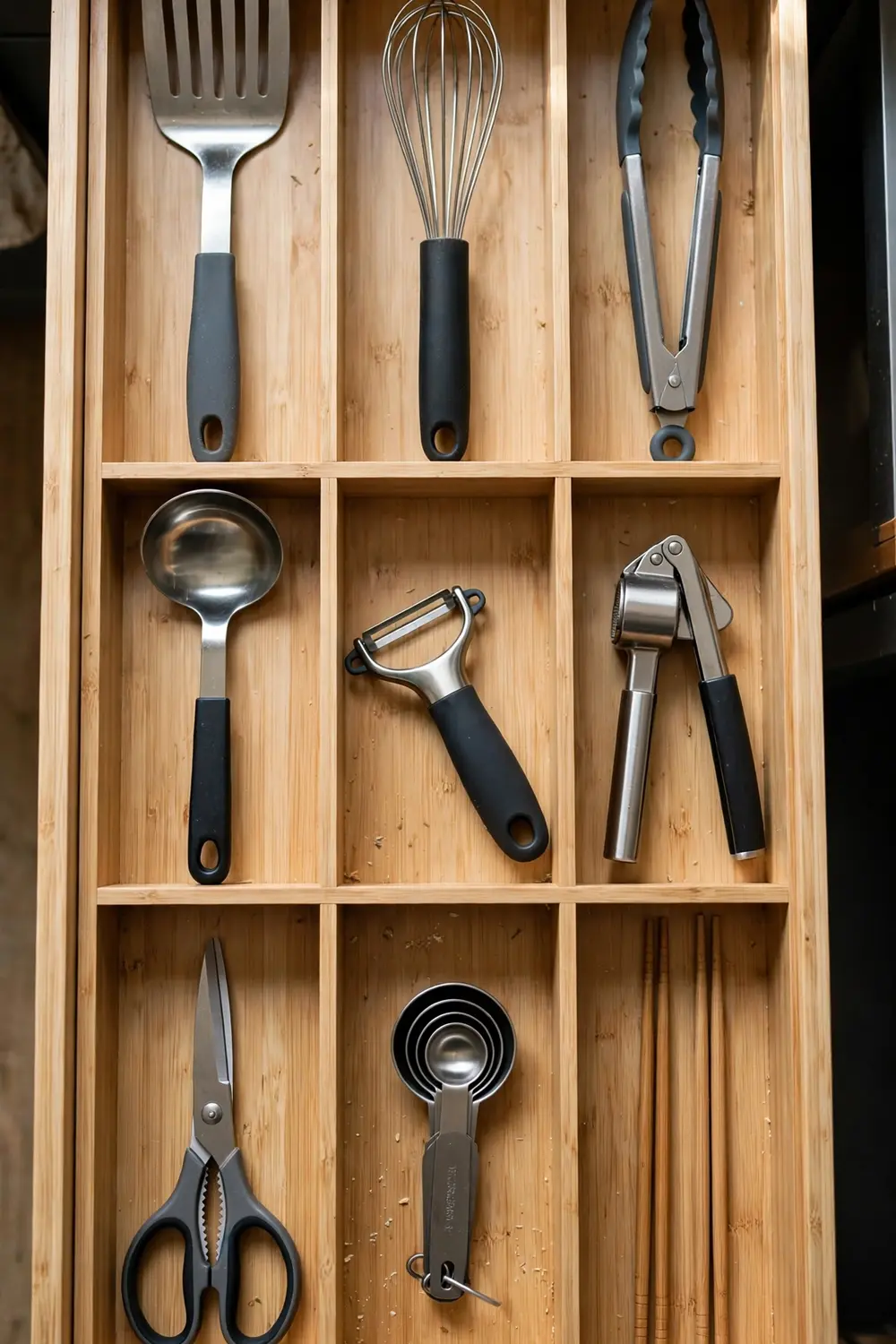
Utensils multiply quietly, and Steph’s first move is the cull — anything not used leaves before anything gets organised. What survives goes into a drawer organiser or dividers, so each tool has a slot rather than a pile.
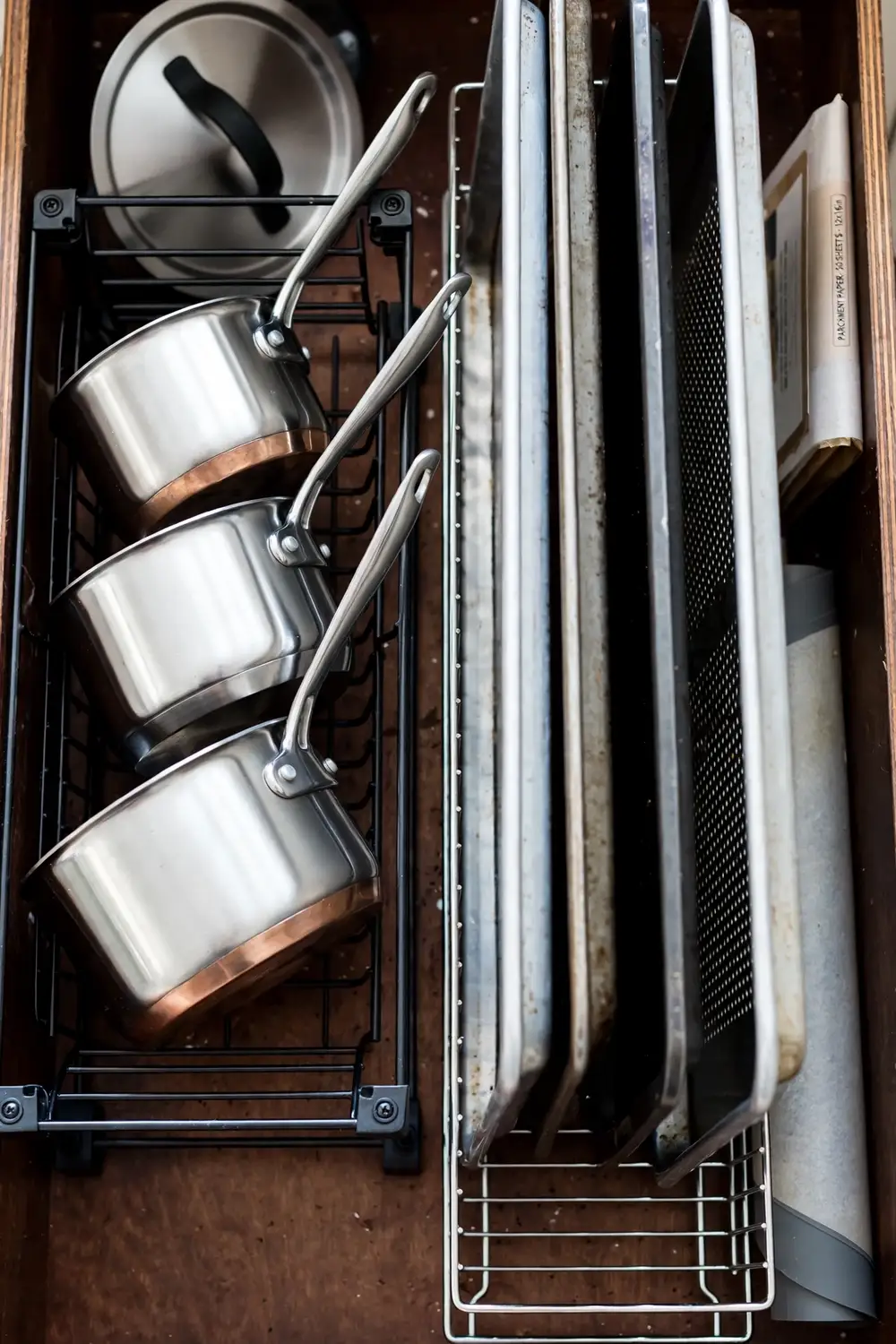
Pans get the same treatment. Pan racks and tiered pan holders stack them accessibly, and a cheap file holder, the pantry trick repeated, stores cooking trays upright. Placement follows the kitchen’s own logic — deep drawers suit saucepans and baking dishes, shallow ones cutlery and utensils, all of it near the cooktop where the work happens.
- Cull first, unused utensils out before dividers in
- One slot per tool in an organiser or divided drawer
- Trays upright in a file holder, pans on a rack or tiered holder
- Deep drawers for pots, shallow for tools, both near the cooking zone
Under the sink, storage only
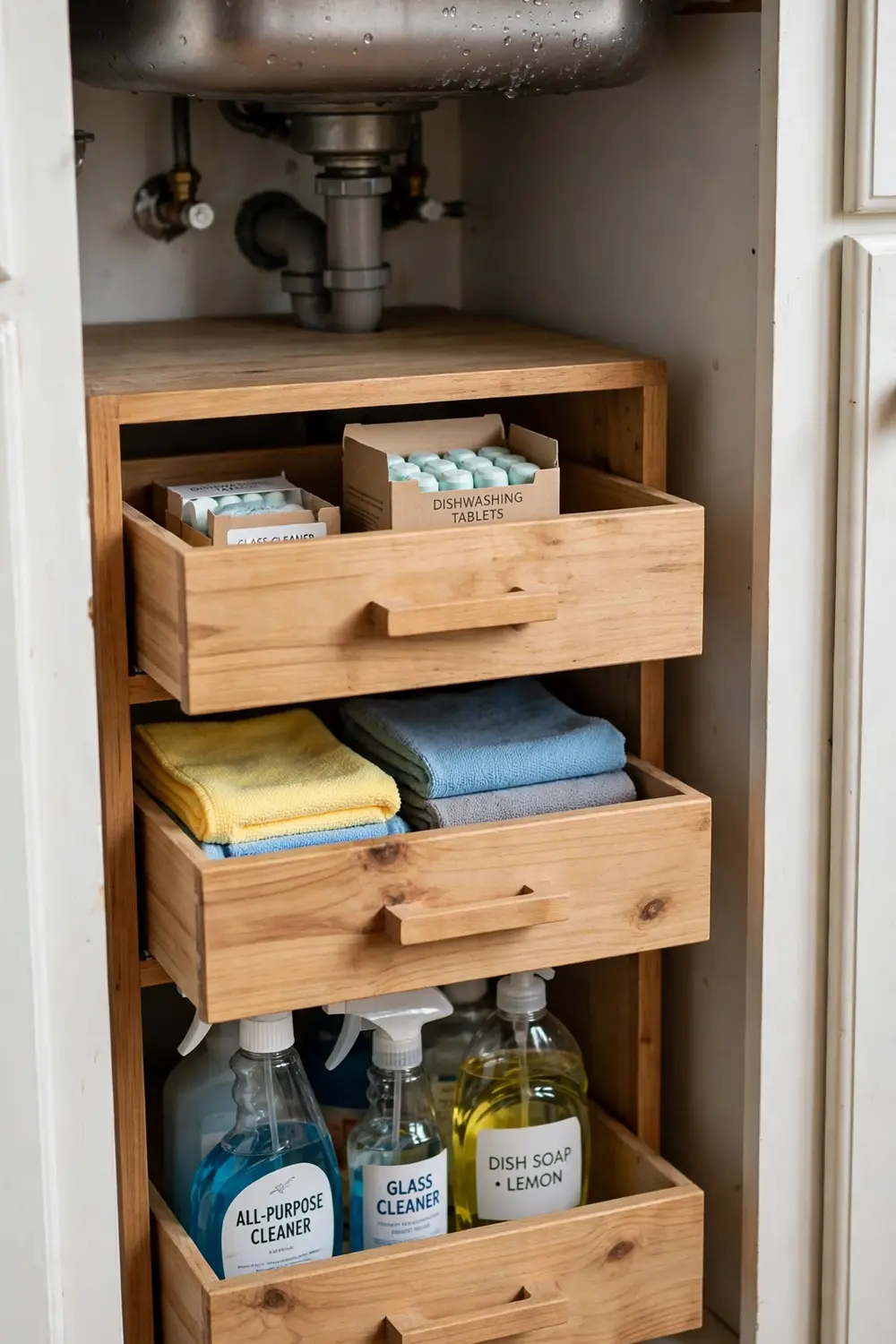
The space under the sink earns a system of its own. Steph fits wooden drawers — hers are from Kmart — sized to fit under most sinks, and they hold the working set in reach: dishwashing tablets, cloths, sponges and cleaning products, each in its own drawer space instead of a communal slump around the pipes.
That is arrangement, and it is where this article stops. How those products get used is a cleaning question, and our kitchen sink cleaning hacks covers the routines that belong to this cupboard.
- Wooden drawers fitted to the under-sink space
- Tablets, cloths, sponges and cleaning products, each with a place
- Everything reachable without excavating around the plumbing
The junk drawer, reset properly
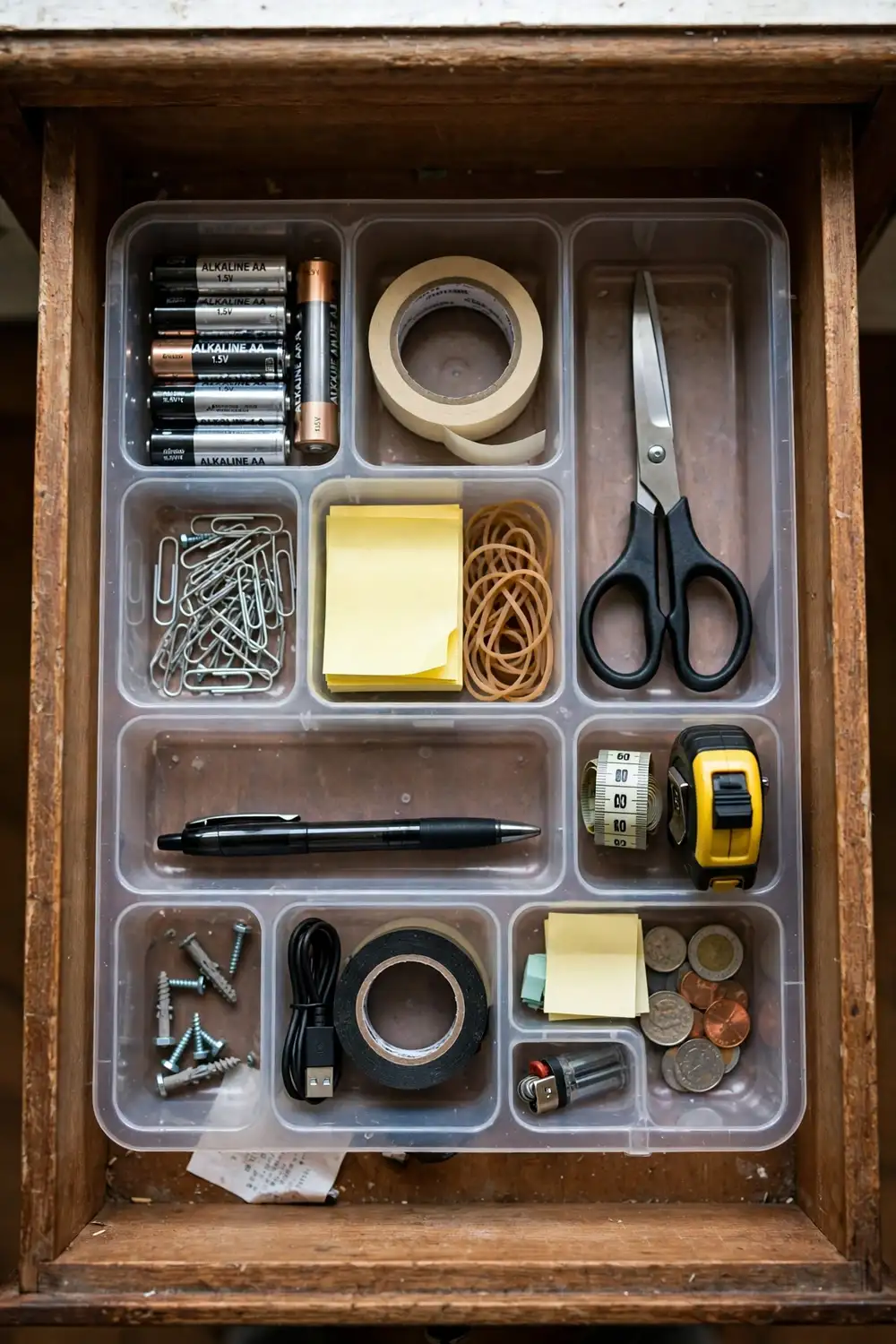
Every kitchen has the drawer, and Steph’s reset for it is a sequence with no shortcuts. Empty it completely. Sort the contents into keep, throw and donate.
Group what survives into honest categories. Then measure the drawer — and only then buy a drawer organiser to fit it.
The order is the whole lesson. The organiser is the last purchase, sized to a measured drawer and a culled inventory, which is why hers stays organised while most junk drawers relapse within a month.
- Empty it fully, no sorting in place
- Three piles, keep, throw, donate
- Categorise what survives, then measure the drawer
- Buy the organiser last, to fit the drawer and the categories
Keeping the zones honest
A zoned kitchen stays organised the same way it got organised — by placement, not by effort. Things return to where they are used, the stocktake sort is repeated whenever a zone starts to groan, and new purchases earn their place before they take one.
Start with the drawer that annoys you most. One zone done properly teaches the method better than a whole kitchen done in a rush, and the rest can follow a zone at a time.


