Hot water is the one thing every Australian home uses every day. About a quarter of a typical household’s energy is used to heat water, according to YourHome. Pick the wrong system and you pay for it twice — once at the till and again every quarter on the bill.
The best hot water system Australia homeowners can choose depends on the size of the household, the climate, the roof and whether gas is even available at the street. This comparison sets the four options side by side — heat pump, solar, gas and electric — with running costs and upfront prices from Australian sources, so the choice fits your home rather than a sales pitch.
How each system works
Heat pump
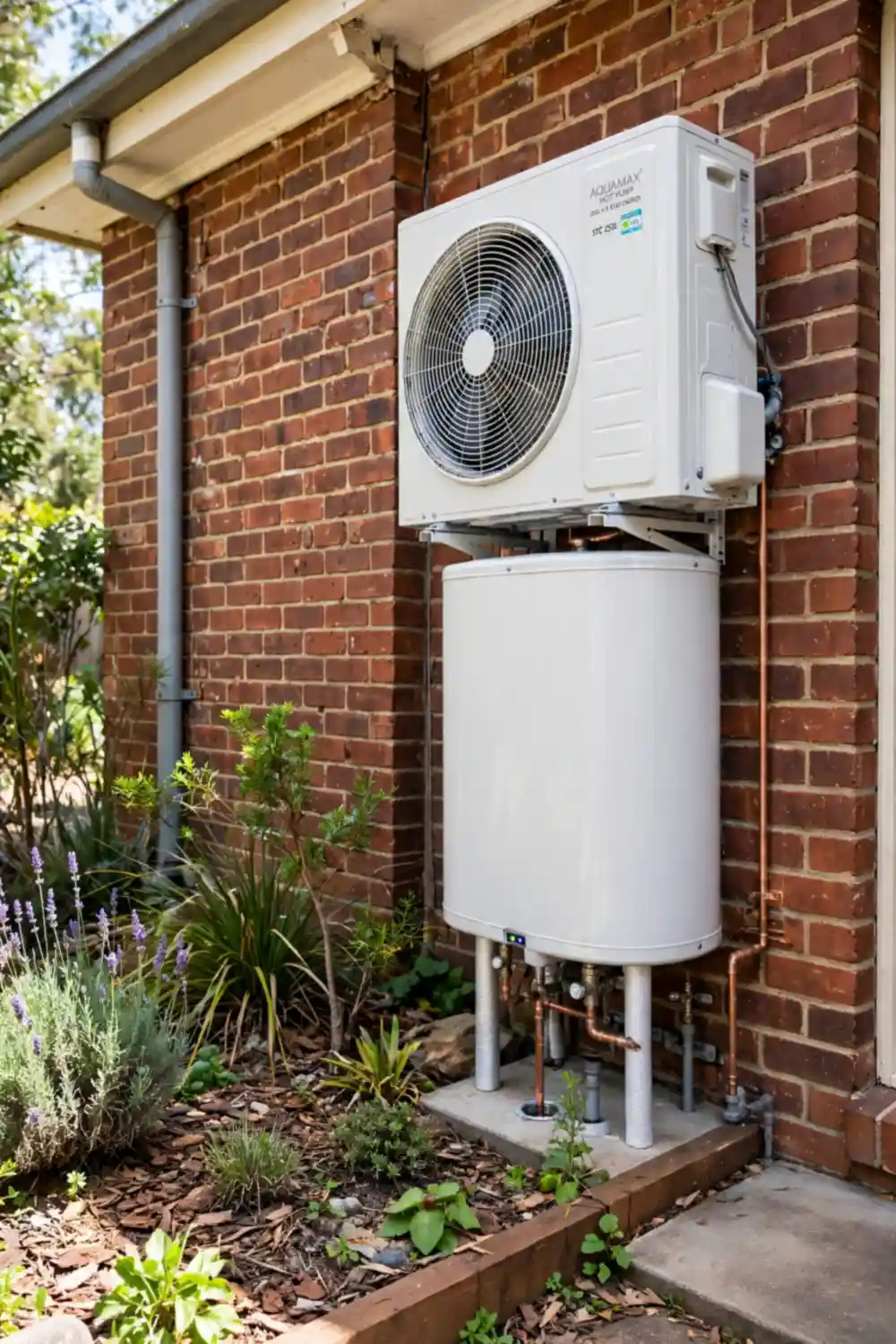
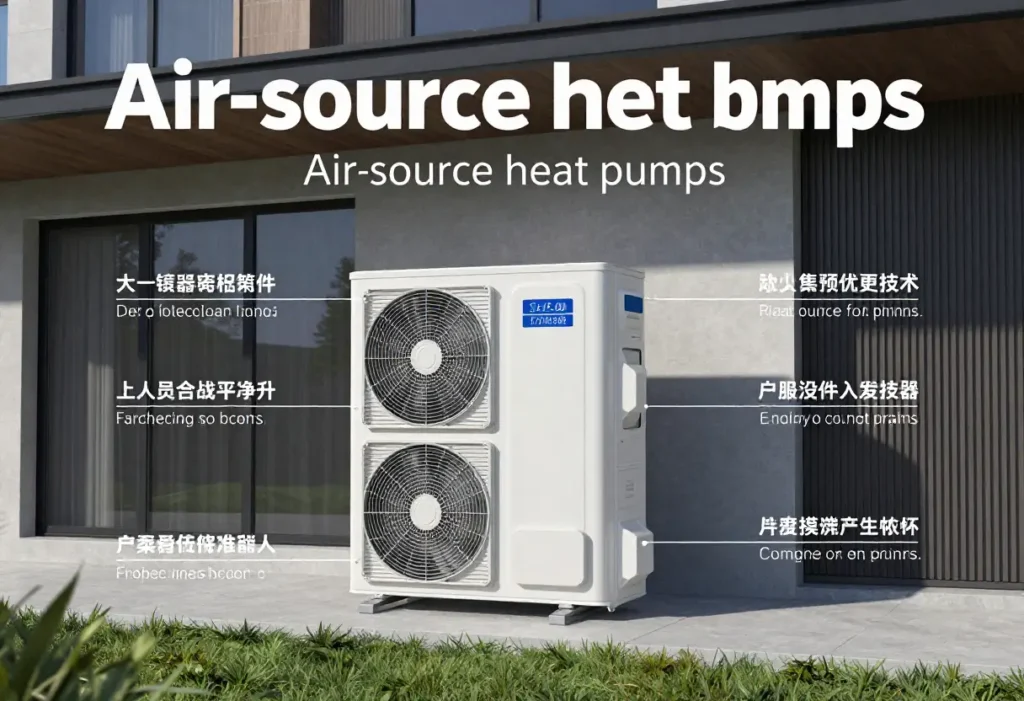
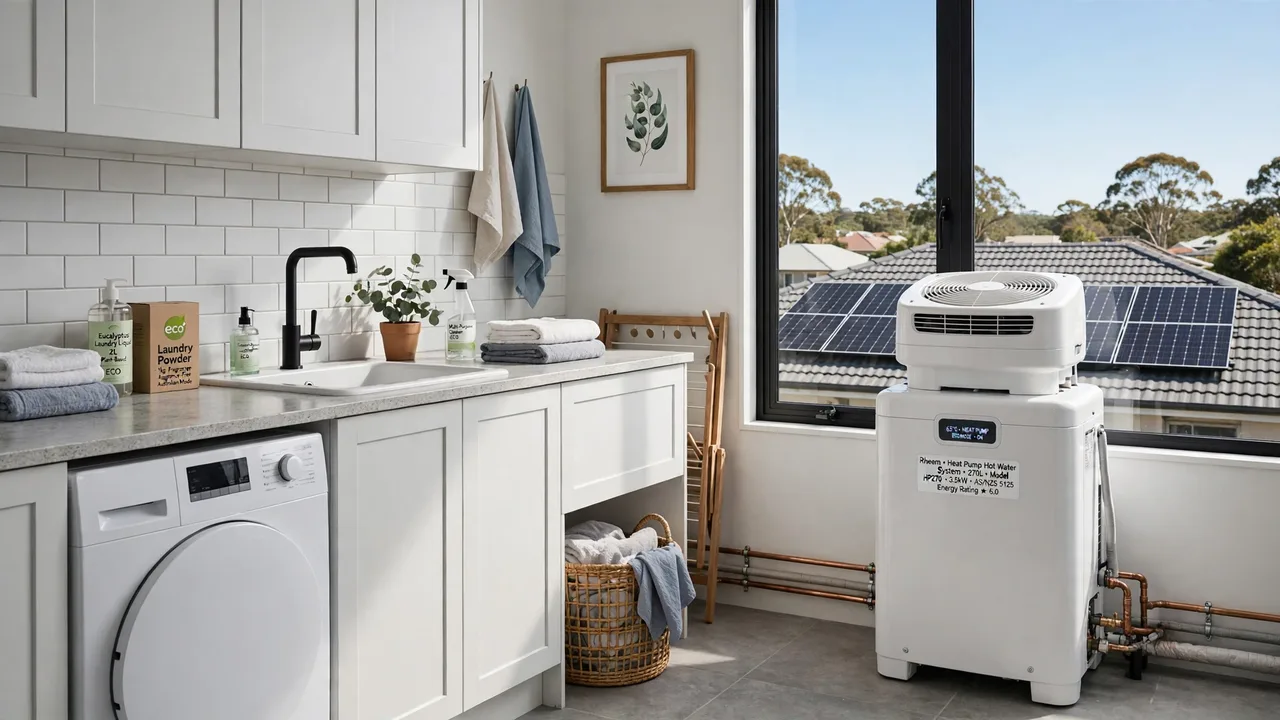
A heat pump moves heat from the ambient air into stored water using a refrigeration cycle, like a reverse refrigerator. It does not generate heat directly, so it uses far less electricity than a resistance element — YourHome, the Australian Government’s guide, puts its coefficient of performance at about 3 to 5, against about 0.95 for new electric storage and 0.75 to 0.96 for gas.
It uses roughly 30% of the energy of a conventional electric storage system. Our guide to air-source heat pumps for hot water looks at the technology in more detail.
- Efficiency, COP about 3 to 5, per YourHome
- Layouts, integrated with the compressor on the tank, or split with the compressor up to 10 to 15 m away
- Noise, 40 to 55 dB, and integrated units can carry noise over fences
- Reheat, 2 to 4 hours, with a boost element in very cold weather or high use
Solar hot water
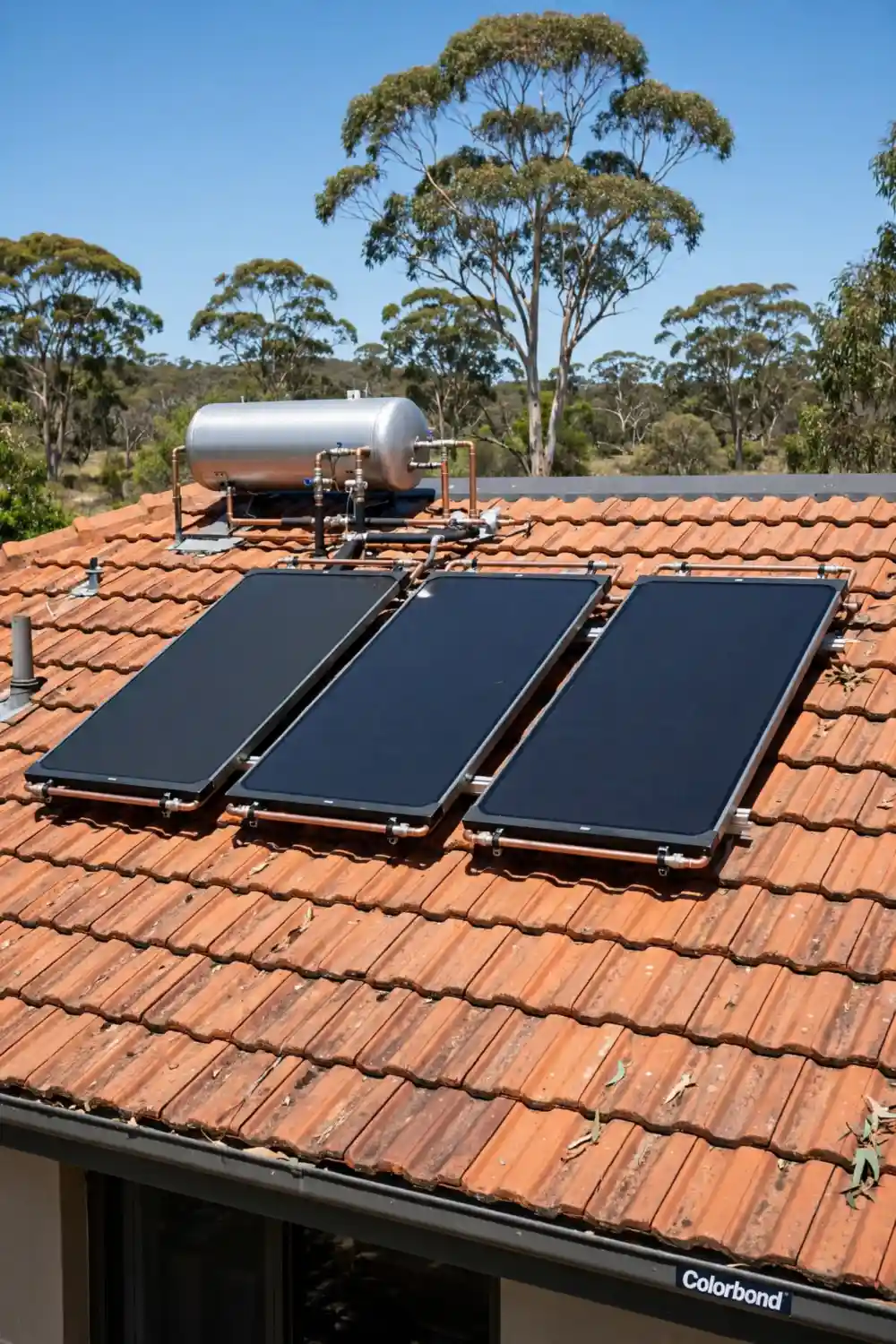
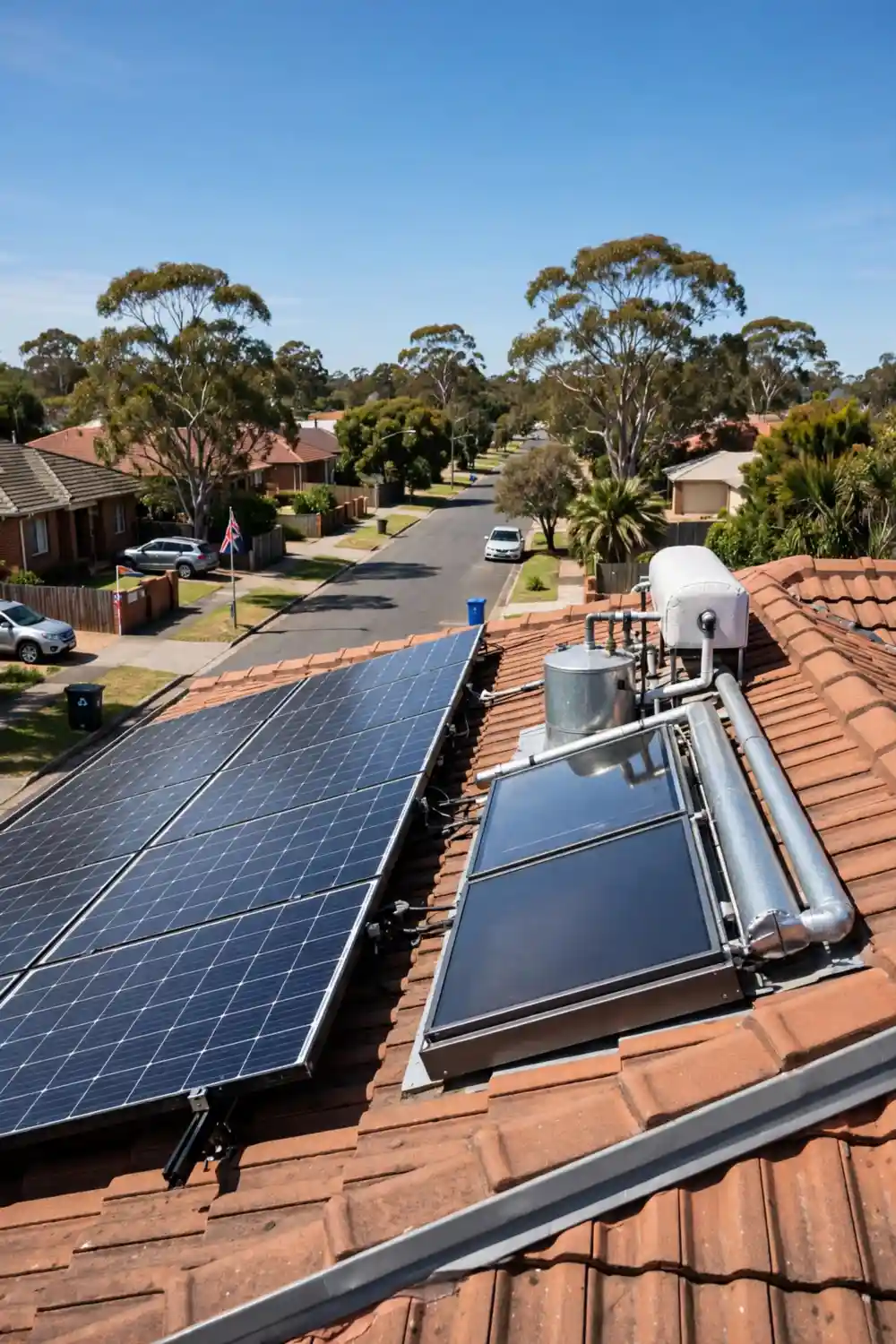
Roof-mounted collectors absorb the sun’s energy, and water heated as it passes through them flows into an insulated storage tank. Depending on climate, a solar system can provide up to 90% of a household’s hot water, according to YourHome, with Sydney figures from other sources at 60 to 80%. Most systems come with a gas or electric booster for cloudy days or when demand exceeds supply.
- Contribution, up to 90% of hot water depending on climate
- Layouts, close-coupled with the tank on the roof, or split with a ground tank and a pump
- Collectors, flat plate needing about 2 to 4 square metres of roof, or evacuated tube, better in cooler and overcast conditions
- Position, facing true north, able to deviate up to 45 degrees without a big performance drop
Gas storage
A gas storage system burns gas to heat water and stores it in a tank. It reheats faster than electric storage, so the tanks are smaller than equivalent electric tanks and do not need off-peak scheduling.
The trade-off is heat loss. There is no insulation at the bottom of the tank where the burner flame sits, and outer insulation can be minimal, so losses are higher than electric storage.
- Reheat, faster than electric storage, smaller tanks
- Scheduling, no off-peak needed
- Heat loss, higher than electric storage, per YourHome
- Fuel, piped natural gas or bottled LPG, with LPG around two to three times more expensive to run
Gas instantaneous
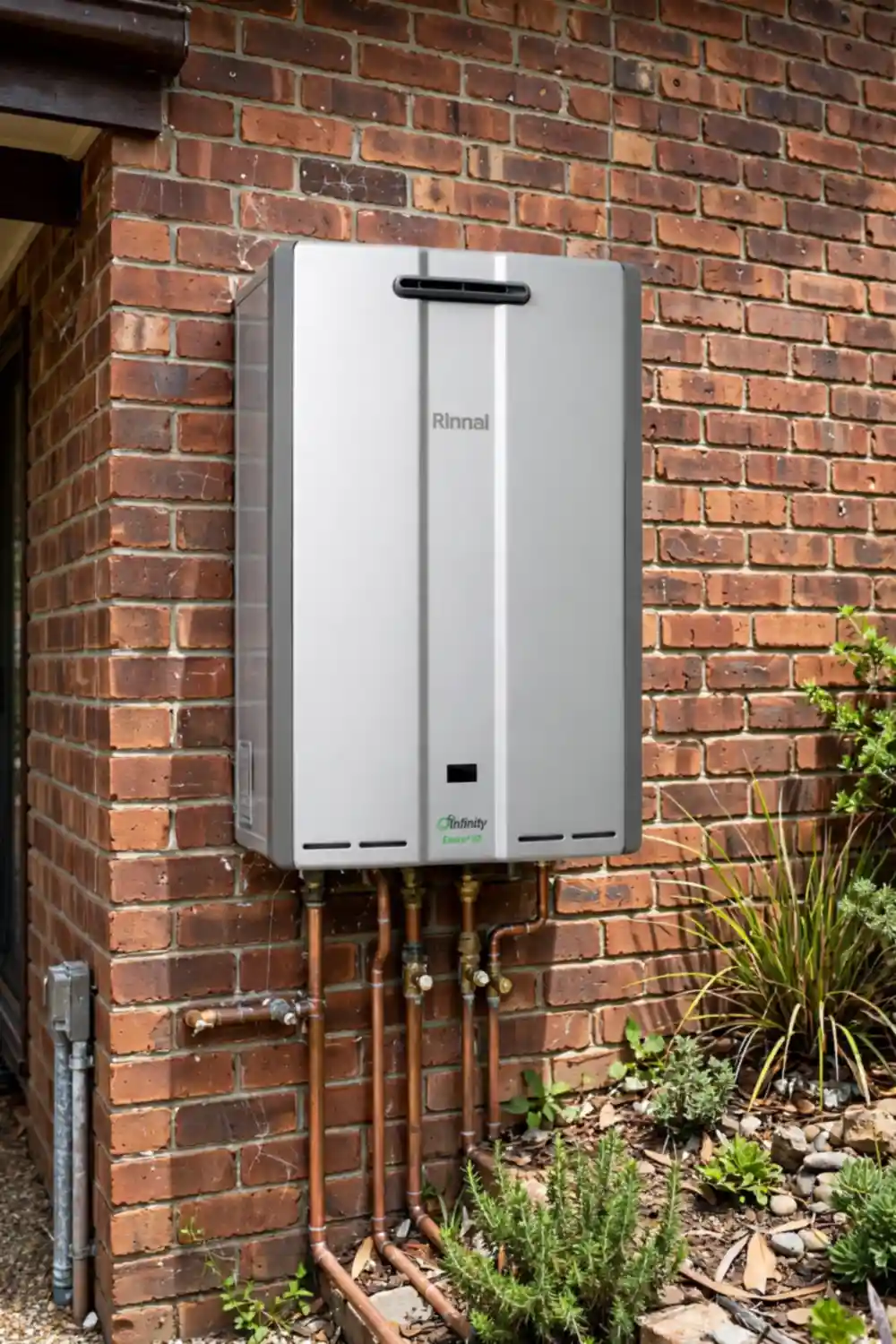
A gas instantaneous system, also called continuous flow, heats water only as it is used. There is no storage tank and no standby loss, so it is more energy efficient than gas storage. It needs high gas flow rates when delivering large amounts of hot water, which may require larger gas pipes or meters, and standard units can supply only one or two locations at once.
- Standby loss, none, heats only as water is used
- Supply, standard units one to two locations, high-performance units three or more
- Flow, a 20 to 24 litre-per-minute unit covers most families of four to five
- Quirk, some units run erratically at low flow rates and may not suit water-efficient showerheads or solar preheating
Electric storage
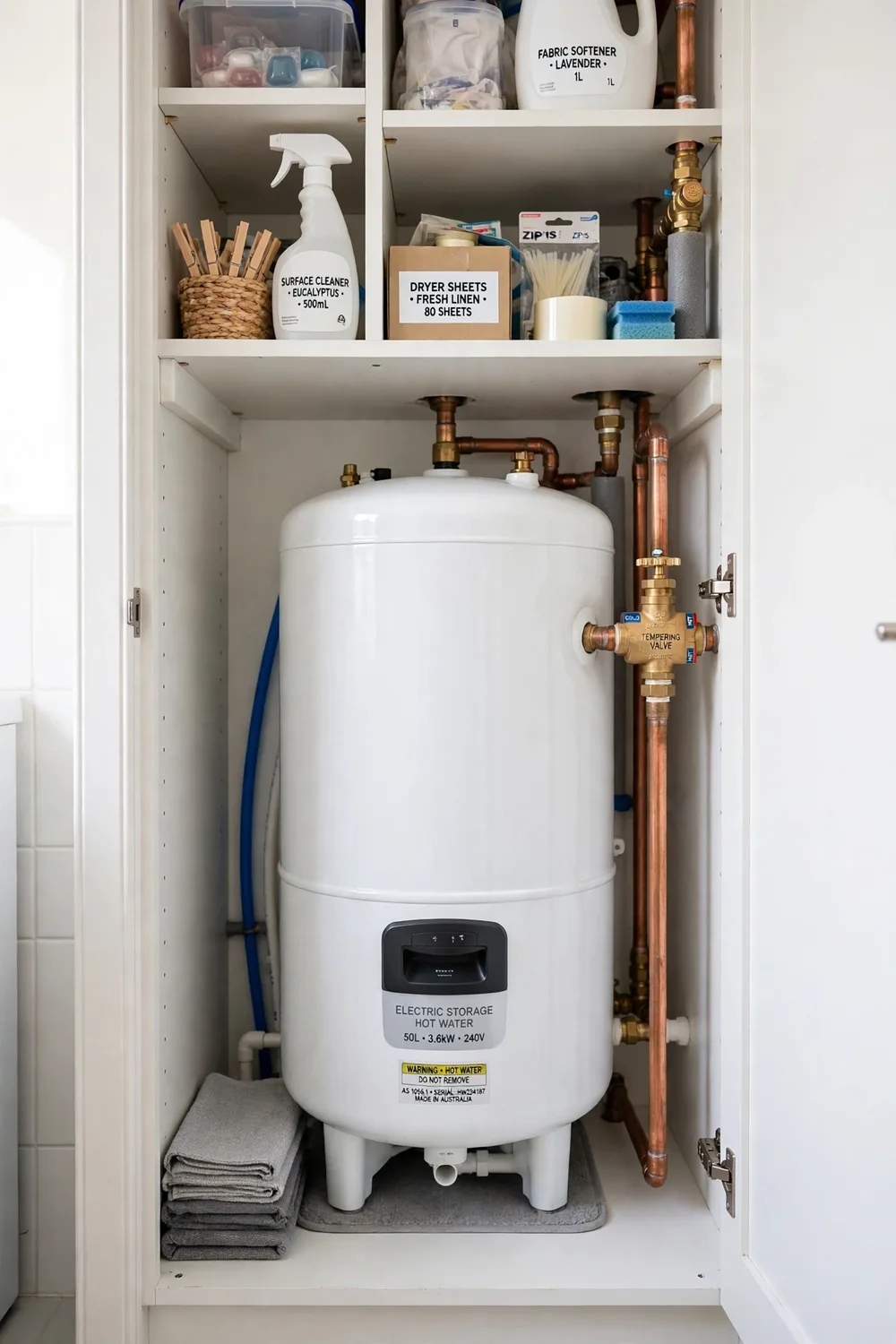
Electric storage is the most common type in Australian homes, particularly where natural gas is not available. A heating element inside the tank heats stored water.
Systems larger than 250 litres can be set to heat during cheaper off-peak periods, while smaller systems are unsuitable for off-peak operation. Heat loss from the tank and pipework can be up to one third of total system energy, according to YourHome.
- Common, the most common type in Australian homes
- Off-peak, systems over 250 litres, controlled load only
- Heat loss, up to one third of total system energy, per YourHome
- Pairing, cost falls greatly with locally generated solar electricity
Electric instantaneous
An electric instantaneous system heats water directly when needed, with no storage tank and no storage heat losses. It is about 20 to 30% more efficient than electric storage, but often more expensive to run because there is no opportunity to schedule operation for off-peak tariffs or solar electricity. It draws up to 28 kW when operating, which usually requires a three-phase connection that is not available to all homes.
- Efficiency, about 20 to 30% more efficient than electric storage
- Draw, up to 28 kW, three-phase usually required
- Single-phase, very limited flow rates, suitable only for basins, not showers
- Use, more common in apartments than in free-standing homes
What they cost to run
Running costs are for a four-person household, per source, and the sources disagree — the disagreement is the fact, so no figure here is an average. Sustainability Victoria’s figures for a four-person Melbourne household, current August 2026, put a heat pump at $275 a year, a 7-star gas instantaneous unit at $555, a 5-star gas storage unit at $740, electric resistive storage at $1,015, and solar with a gas boost at $230. The 2026 buyer’s guide from 24hrplumber, published 13 November 2026, gives the same $275 for a heat pump, the same $555 for gas and the same $1,015 for electric storage on a peak tariff, with electric storage at about $770 on off-peak and solar gas-boosted at about $230.
Other sources give wider ranges. Same Day Hot Water Service puts electric storage at $1,000 to $1,300 a year, gas at $600 to $800, solar at $150 to $350 and a heat pump at $250 to $450.
Infinity Hot Water, for a four-person household in New South Wales, puts electric storage at $1,200 to $1,500, electric instantaneous at $800 to $1,100, gas instantaneous at $450 to $650, gas storage at $400 to $600, LPG at $800 to $1,200, a heat pump at $300 to $400 and solar at $50 to $200. Why Solar, for a 300-litre system, puts electric storage at $800 to $1,200, solar at $100 to $300 and a heat pump at $200 to $400.
| System | Sustainability Victoria (Melbourne, 4 people) | 24hrplumber (2026 guide) | Infinity (NSW, 4 people) |
|---|---|---|---|
| Heat pump | $275/yr | ~$275/yr | $300–$400/yr |
| Solar | $230/yr (gas-boosted) | ~$230/yr (gas-boosted) | $50–$200/yr |
| Gas instantaneous | $555/yr (7-star) | ~$555/yr | $450–$650/yr |
| Gas storage | $740/yr (5-star) | — | $400–$600/yr |
| Electric storage | $1,015/yr | ~$770 off-peak / ~$1,015 peak | $1,200–$1,500/yr |
Sustainability Victoria’s and 24hrplumber’s solar figures are for solar with a gas boost; Infinity’s $50 to $200 a year is plain solar.
Every source agrees on the ranking at the ends. Heat pump and solar are the cheapest to run, and electric resistive storage is the most expensive.
The gas ranking is not settled. Infinity puts gas storage at $400 to $600 below gas instantaneous at $450 to $650, while Sustainability Victoria puts a 7-star instantaneous unit at $555 below a 5-star storage unit at $740. Do not treat either gas ranking as the settled answer.
What they cost to buy
Upfront costs are installed prices before rebates, per source, never blended. The 24hrplumber 2026 guide puts a heat pump at about $2,300 to $5,000 or more, continuous gas at about $1,600 to $2,100, electric storage at about $1,500 to $2,300 and solar thermal at about $3,500 to $7,500.
Same Day Hot Water Service puts electric storage at $800 to $1,500, gas at $1,500 to $2,500, solar at $4,000 to $7,000 or more and a heat pump at $3,500 to $5,500. Why Solar, for a 300-litre system installed, puts electric storage at $1,500 to $2,500, solar at $4,200 to $6,200 and a heat pump at $3,800 to $5,200.
Infinity’s ten-year total cost of ownership example, before incentives, puts purchase and installation at $1,800 for electric storage, $2,200 for gas storage, $4,500 for a heat pump and $6,000 for solar, with ten-year totals of $15,300 for electric, $9,200 for gas, $11,700 for a heat pump and $10,000 for solar. In that example gas storage has the lowest ten-year total before incentives, and energy savings scheme discounts and small-scale technology certificates reduce the heat-pump and solar figures by an amount that varies by model, location and the system being replaced. Lifespans from 24hrplumber are 10 to 15 years for a heat pump, 12 to 20 for gas, 10 to 15 for electric storage and 15 to 20 for solar.
| System | 24hrplumber (2026 guide) | Same Day Hot Water Service | Why Solar (300 L, installed) | Infinity (purchase & install) |
|---|---|---|---|---|
| Heat pump | ~$2,300–$5,000+ | $3,500–$5,500 | $3,800–$5,200 | $4,500 |
| Solar thermal | ~$3,500–$7,500 | $4,000–$7,000+ | $4,200–$6,200 | $6,000 |
| Gas instantaneous | ~$1,600–$2,100 (continuous gas) | $1,500–$2,500 (gas) | — | — |
| Gas storage | — | $1,500–$2,500 (gas) | — | $2,200 |
| Electric storage | ~$1,500–$2,300 | $800–$1,500 | $1,500–$2,500 | $1,800 |
What size do you need
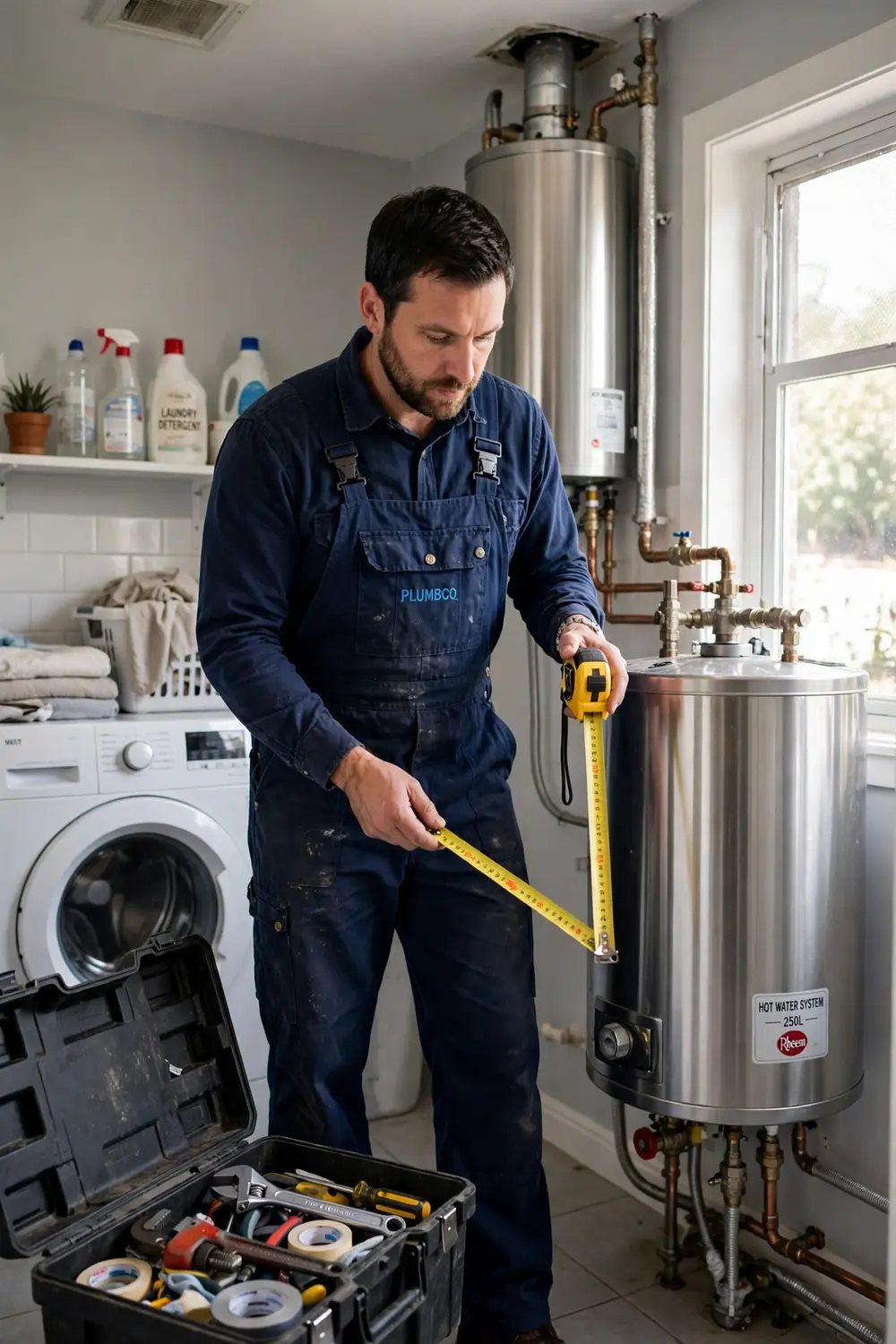
A rule of thumb agreed across sources is about 50 litres of hot water per person per day, so a family of four uses roughly 180 to 220 litres a day. The sizing tables disagree with each other, so the figures below are per-source starting points, and an in-home assessment is the final word.
Tempco’s guide for a family of four puts a heat pump at 270 to 315 litres, electric storage on a continuous tariff at 250 to 315 litres, electric storage on off-peak at 315 to 400 litres, gas storage at 135 to 170 litres, gas continuous flow at 24 to 26 litres a minute, and solar at a 300 to 360 litre tank with a booster. Northeast Plumbing disagrees directly on continuous-tariff electric storage, putting a family of three to four at 125 to 160 litres against Tempco’s 250 to 315 litres, while putting a heat pump at 250 to 315 litres and gas storage at 135 to 160 litres.
Mandurah Hot Water, from a licensed plumber, puts electric storage at 250 to 315 litres, gas storage at 135 to 170 litres, gas continuous at 20 to 26 litres a minute, a heat pump at about 250 to 270 litres and solar at about 300 to 315 litres for a family of three to four. Infinity’s guide puts electric storage for three to four people at 160 to 250 litres on a continuous tariff and 315 to 400 litres on off-peak, with gas instantaneous at 24 to 27 litres a minute.
Southern households may need systems 10 to 15% larger than identical northern households, because incoming water runs 12 to 15 degrees in the south against 24 to 28 degrees in the north. A smaller system may still work if combined with water-efficient showerheads and taps, and a larger tank serves more people but uses more energy keeping water hot.
Cold climates and solar
Heat pumps work more efficiently in warmer and more humid climates, though there are options that work well in colder climates too, and YourHome recommends choosing a cold-climate model where needed. A boost element heats water directly in very cold weather or high use, and timing water heating to coincide with higher afternoon temperatures reduces energy use.
Cold-climate performance figures come from search-snippet sources, not full fetches, so treat them as indicative. Neopower puts the coefficient of performance at 3.5 to 4.5 in warm climates, 2.8 to 3.5 in temperate climates and 2.0 to 3.0 in cool climates, and suggests sizing up 20 to 30% in cool climates.
Carbon dioxide systems are rated to about minus 25 to minus 26 degrees, while R290 systems are rated to about minus 6 degrees before the boost element takes over. Do not state a single minimum operating temperature as settled — the sources give minus 6 to minus 26 degrees depending on model and refrigerant.
Solar boosters need the same honesty. Most solar systems come with a gas or electric booster, and a household that uses hot water mostly in the morning will find the water has cooled overnight, so the system frequently relies on the booster before solar heating has a chance — leading to higher bills.
A timer, off-peak electricity or app-based controls help. A close-coupled 300-litre tank weighs about 350 kilograms on the roof, so the roof structure must be checked, and the anode needs checking every five years. YourHome notes that a heat pump powered by solar PV provides many of the same advantages as solar thermal and can sometimes be cheaper to install and operate, and PV electricity can also power other appliances, which may make solar PV the better use of roof space.
Gas, rules and rebates
Gas is being phased out of new homes in parts of Australia, and that changes the choice. The ACT prevents gas connections to new homes. Victoria requires all new homes to be built fully electric from 2027, and from 1 March 2027 a failed gas unit in an existing Victorian home must be replaced with electric.
New South Wales sets performance targets for energy use and greenhouse gas emissions through BASIX, and South Australia restricts electric storage in some circumstances, for example to systems of 250 litres or less. The National Construction Code sets minimum energy efficiency and greenhouse gas performance requirements that favour low-emission or renewable sources.
Melbourne homes are already moving. Our article on Melbourne homes switching from gas heating to reverse cycle systems covers the electrification shift.
Rebates change, so every figure here carries its source and a check-current-eligibility caveat. Federal small-scale technology certificates are available for solar hot water and eligible heat pumps, claimed as a point-of-sale discount by the installer, and the scheme ends on 31 December 2030.
The value for a 2026 install is about $500 to $800 according to PumpSwap and Energy Matters, against $600 to $1,500 according to Same Day — a conflict, not a settled figure. Victoria’s Solar Victoria hot water rebate is 50% up to $1,000, or up to $1,400 for an eligible locally made product, replacing a system three or more years old, with a household income cap of $150,000 from 1 July 2026. New South Wales energy savings scheme discounts run up to $640 when replacing an electric water heater with a heat pump, and up to $330 when replacing a gas water heater, according to Infinity, checked November 2026.
Safety facts matter wherever the article touches them. Storage water must be heated to at least 60 degrees at least once every seven days for Legionella control, and delivered at no more than 50 degrees through a tempering valve.
Installation must meet AS/NZS 3500.4:2021, with compliance certificates for the installation and any gas or electrical work. A solar diverter is not compatible with heat pumps.
Frequently asked questions
Which type is cheapest to run?
Heat pump and solar are the cheapest to run, and electric resistive storage is the most expensive — every source in this comparison agrees on that ranking. For a four-person household, Sustainability Victoria puts a heat pump at $275 a year and solar with a gas boost at $230, against $1,015 for electric storage. The gas ranking is unsettled, so compare gas storage and gas instantaneous on your own household’s figures.
Do heat pumps work in winter?
Yes, with the right model. YourHome recommends a cold-climate model where needed, and a boost element heats water directly in very cold weather or high use. Cold-climate performance figures are indicative — carbon dioxide systems are rated to about minus 25 to minus 26 degrees, R290 systems to about minus 6 degrees before the boost takes over — so check the model’s published coefficient of performance at 2 to 7 degrees rather than assuming any heat pump will do.
How loud are heat pump hot water systems?
Same Day Hot Water Service puts heat pump noise at 40 to 55 decibels. YourHome notes that integrated units can carry noise over fences, so ask where the unit will sit relative to bedrooms and neighbours before you commit.
Can I pair a heat pump with my rooftop solar?
Yes. YourHome notes that a heat pump powered by solar PV provides many of the same advantages as solar thermal and can sometimes be cheaper to install and operate, and PV electricity can also power other appliances. Ask whether the model is compatible with your controlled-load tariff, and whether a timer or smart control will work instead.
What is the cheapest hot water system to run in Australia?
On Infinity’s New South Wales figures for a four-person household, a heat pump runs $300 to $400 a year and solar $50 to $200 a year if conditions are ideal, against $1,200 to $1,500 for electric storage. Sustainability Victoria’s Melbourne figures put a heat pump at $275 and solar with a gas boost at $230, against $1,015 for electric storage. Either way, heat pump and solar are the cheapest to run.
What size hot water system do I need for a family of 4 in Australia?
Treat every figure as a per-source starting point, not a settled answer, and get an in-home assessment before buying. Tempco puts a heat pump at 270 to 315 litres, electric storage on a continuous tariff at 250 to 315 litres and gas storage at 135 to 170 litres for a family of four, while Northeast Plumbing puts continuous-tariff electric storage at 125 to 160 litres for three to four people — a direct conflict.
Mandurah Hot Water puts a heat pump at about 250 to 270 litres and solar at about 300 to 315 litres. The sizing figures in this answer come from search-snippet sources, not fetched pages.
The bottom line
There is no single best hot water system for every Australian home, and any article that names one is selling something. A heat pump is the best choice for most households, according to YourHome, with a cold-climate model where needed — and that is the strongest recommendation any source in this comparison supports.
Solar is the cheapest to run where the roof and climate suit it. Gas is cheap to buy but expensive to run, and it is being phased out of new homes in the ACT and Victoria.
Electric storage is the most expensive to run and only makes sense for low-use households or where nothing else fits. Size from the per-source starting points above, check the rebates that apply to your exact model, and get an in-home assessment before you buy.