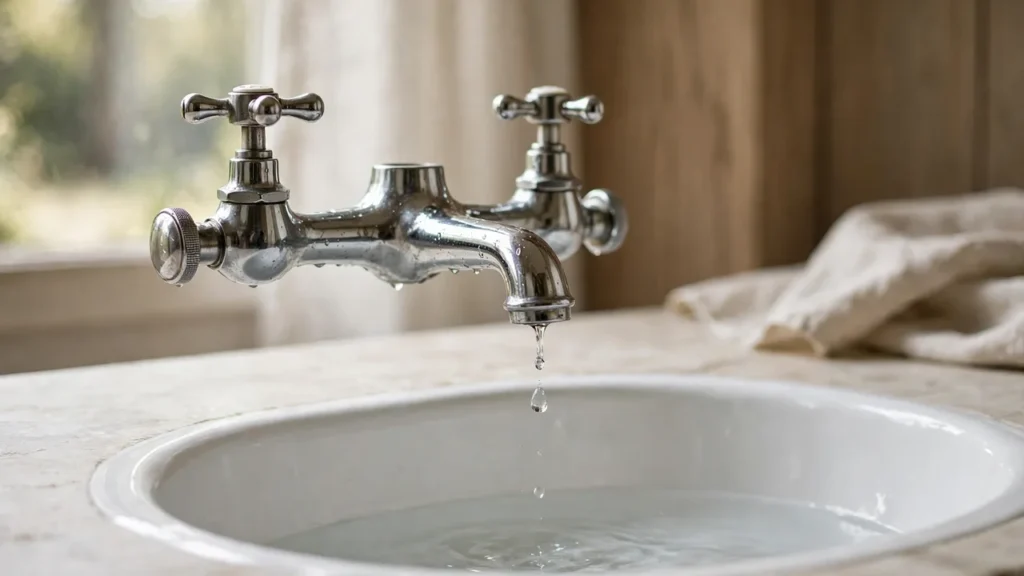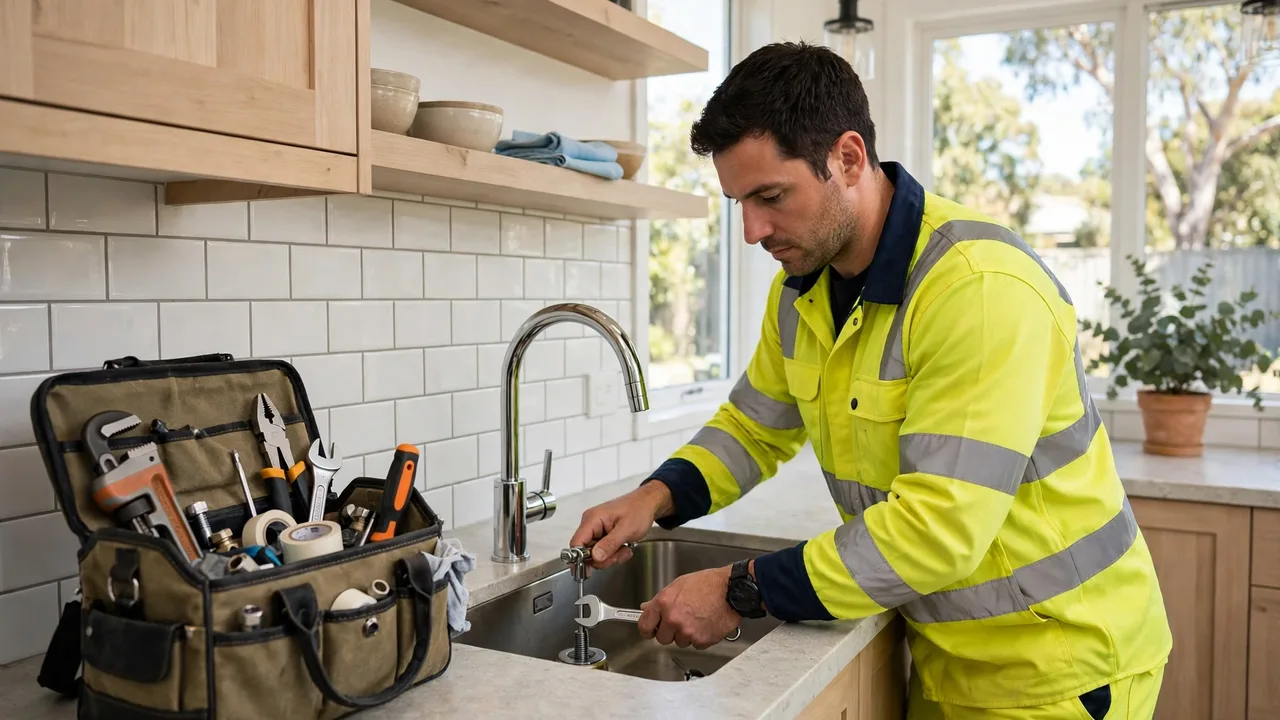
A dripping tap at 11 pm. A blocked drain on the morning guests arrive. The first question is always the same: how much will the plumber charge, and is the quote fair?
Most Australians have no idea what a fair plumbing price looks like until the invoice lands. This guide gives you the 2026 numbers first, so you can read a quote with confidence.
Plumber cost per hour Australia sits at $80–$200 an hour for a licensed plumber in business hours, plus a call-out fee of $60–$250. You will know what a one-hour job should add up to, when a fixed price beats an hourly rate, and which charges to question before anyone picks up a wrench.
Plumber cost per hour Australia: the 2026 figures
The headline figure comes from hipages, whose 2026 guide puts a licensed plumber at $80–$200 an hour in business hours, plus a call-out fee of $60–$250. Most standard residential jobs land around $120 an hour, according to ServiceSeeking’s 2026 average from real quotes of $120.64 an hour, and the average total plumbing job sits at $627 on the same measure.
A one-hour job with small parts shows how the pieces add up. RenoPlace’s 2026 worked example puts the call-out at about $90, one hour of labour at about $120 and parts at about $60, for a likely total of $270, with a likely range of $240–$320 including GST. In Sydney, the same one-hour job is likely to cost about $300, with a range of $260–$360.
Those are national figures, and where you live moves them. hipages notes that rates in metro areas such as Sydney and Melbourne run higher than in regional towns, while TaskerAsker puts regional New South Wales and Tasmania at $100–$150 an hour with travel added.
How plumbers charge
Plumbers charge in three ways, and the same job can look very different depending on which one applies. Knowing which model your quote uses is the first step to reading it properly.
Hourly rate
Hourly billing suits open-ended or diagnostic work, where nobody can say in advance how long the job will take. A leaking pipe behind a wall or an intermittent hot water fault needs finding before it can be fixed, and that diagnostic time is billable.
- Hipages hourly range — $80–$200 an hour in business hours, depending on location and the plumber’s experience. A Master Plumber may charge more.
- What most people pay — around $120 an hour for standard residential work, per ServiceSeeking’s 2026 average from real quotes.
- Minimum charge — most plumbers charge a minimum one-hour fee even for a 20-minute job, according to Mr Handy, and some bill in 30-minute blocks after the first hour. Always confirm the minimum charge before work begins.
Fixed price
A fixed price is your friend for a defined job. Tap replacement, toilet installation and a hot water swap are all jobs a plumber can scope in advance, and a fixed quote means you know the number before work starts.
- Best for — unblocking a drain, solar hot water installation and hot water system replacement, the three examples hipages names.
- Watch out for — a fixed price that does not say what happens if the plumber finds something unexpected once work starts. Ask what is covered and what would cost extra.
Call-out fee
The call-out fee covers travel and the initial assessment, and it sits on top of the hourly or fixed rate. Some plumbers include work within the call-out if it falls inside the first hour, so always ask what the fee covers.
- Hipages call-out range — $60–$250, on top of the hourly or fixed rate.
- When it is lower — during office hours. Evenings and weekends cost more, and 24-hour emergency call-outs cost the most.
- Mr Handy call-out range — $60–$150 during business hours, rising to $100–$200 after hours and $150–$300 for emergency or same-day visits, with prices including GST.
- The question to ask — is the call-out fee included in the hourly rate, or charged on top? Mr Handy notes this single question can save you $80–$150.
What each job costs
hipages’ 2026 job list is the spine of this section. Its figures are approximate and may not include the call-out fee, so add that on top unless the quote says otherwise.
Small repairs
Small repairs are the most common reason to call a plumber. A simple fix can take 20 minutes, while a blocked drain can need a camera and a jetter before it clears.
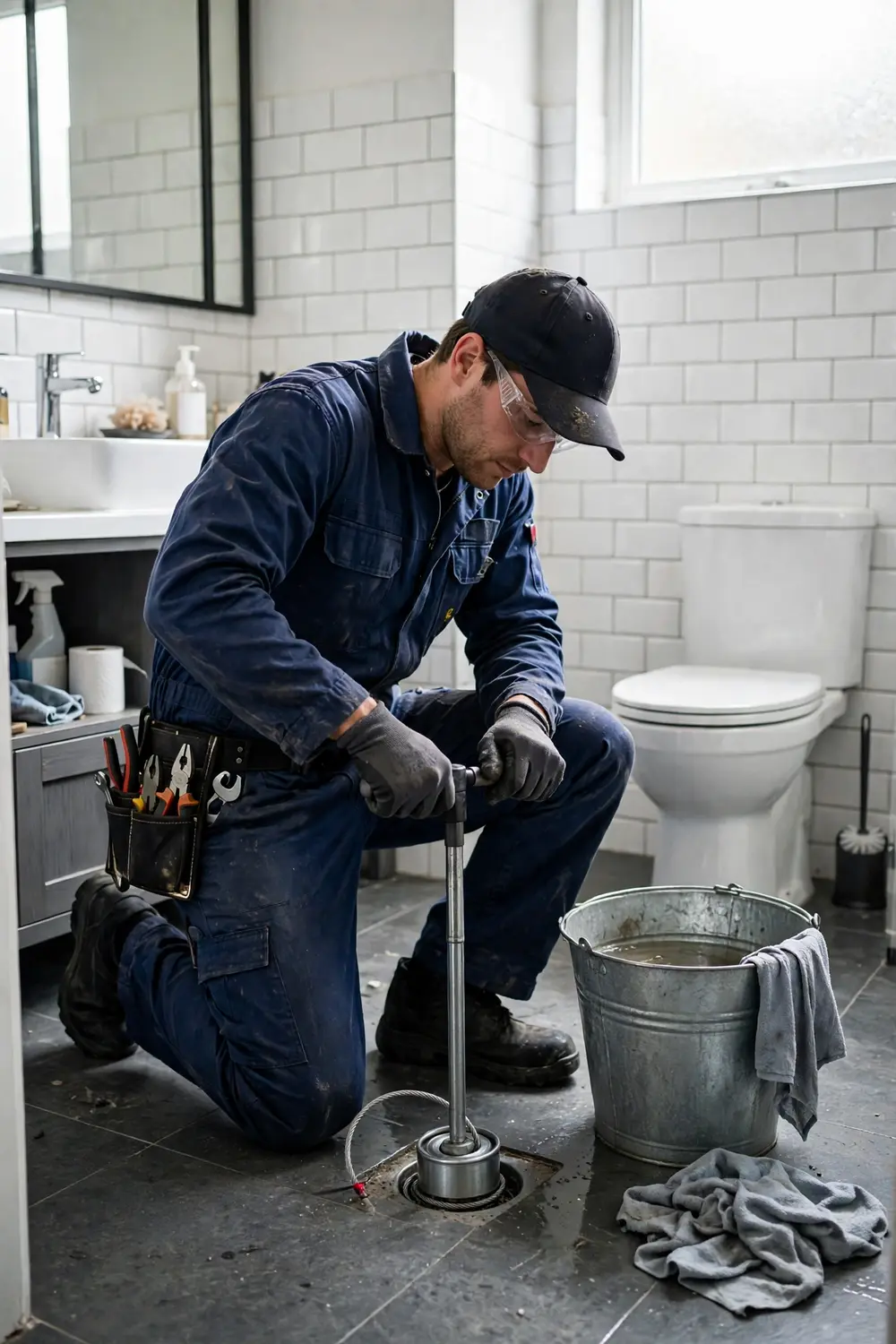
- Small leak repair (hipages) — $80–$150 for a toilet, a tap or a simple burst pipe.
- Clear a simple blocked drain (TaskerAsker) — $180–$450 for a plunger or auger job, plus $150–$350 if jetting or a CCTV inspection is needed.
Taps and shower heads
A dripping tap is one of the cheapest plumbing jobs to fix. Most tap and shower head work is a straightforward swap of a washer, a cartridge or the fitting itself.
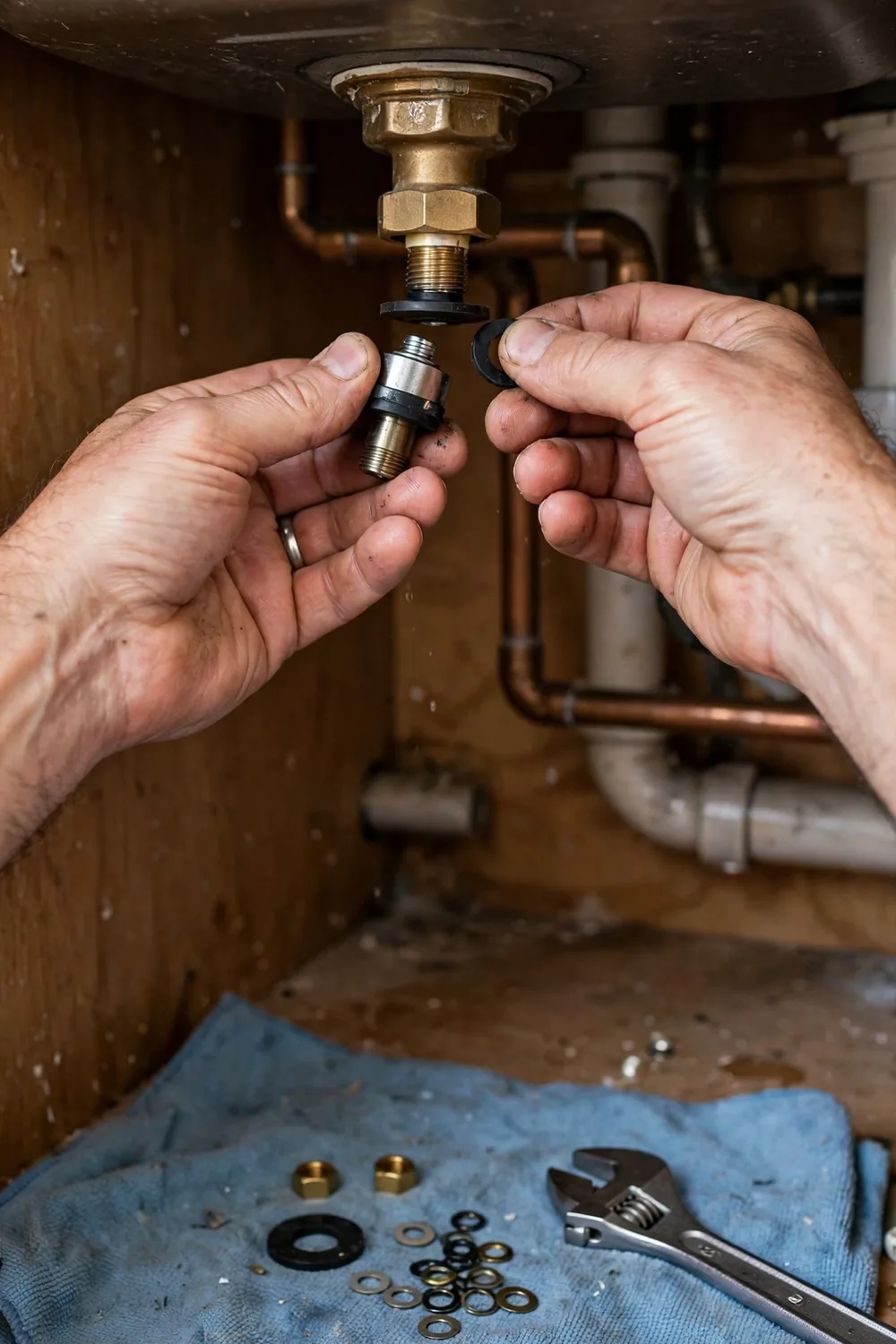
- Hipages range — $80–$350 to install a shower head or to replace and fit bath or basin taps.
- Airtasker guide — about $100 for a new tap installation.
- Do it yourself? — changing a tap washer is a job many homeowners tackle themselves, and our guide to fix a leaking tap walks through it step by step. Anything involving the water supply lines is plumber work.
Toilet, basin and bath installs
Installing a new toilet, basin or bath means removing the old suite, checking the waste and water connections, and sealing everything properly. The fixture itself is usually a separate cost on top of labour.
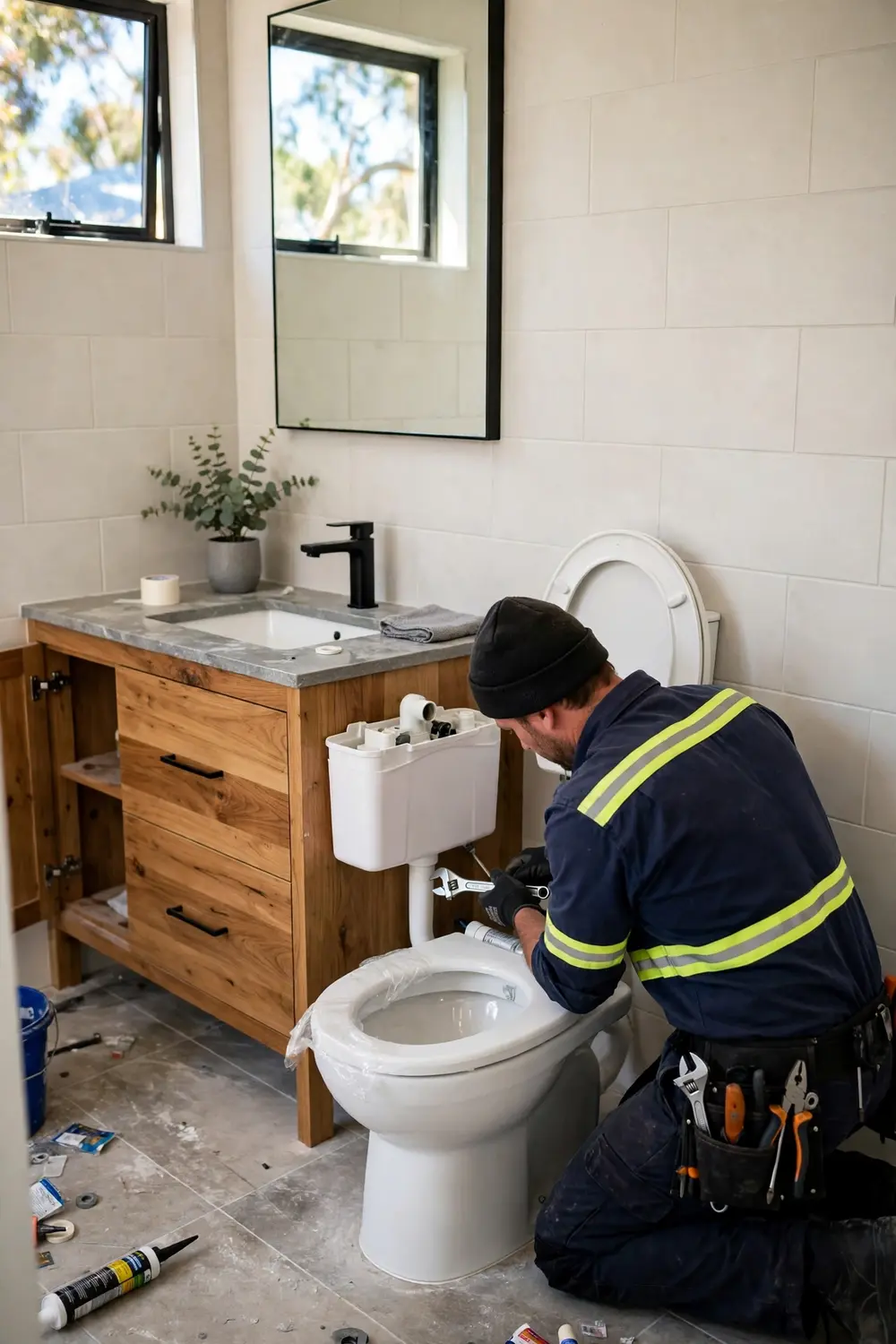
- Hipages range — $250–$600 for toilet, basin, sink or bath installation.
- Labour only (TaskerAsker) — $350–$750 to replace a toilet suite, excluding the toilet itself, which runs $200–$1,200.
Hot water systems
A hot water system is the most expensive single item in most plumbing quotes. A like-for-like swap of an electric storage unit is the cheapest job, while a heat pump or continuous flow system costs more.
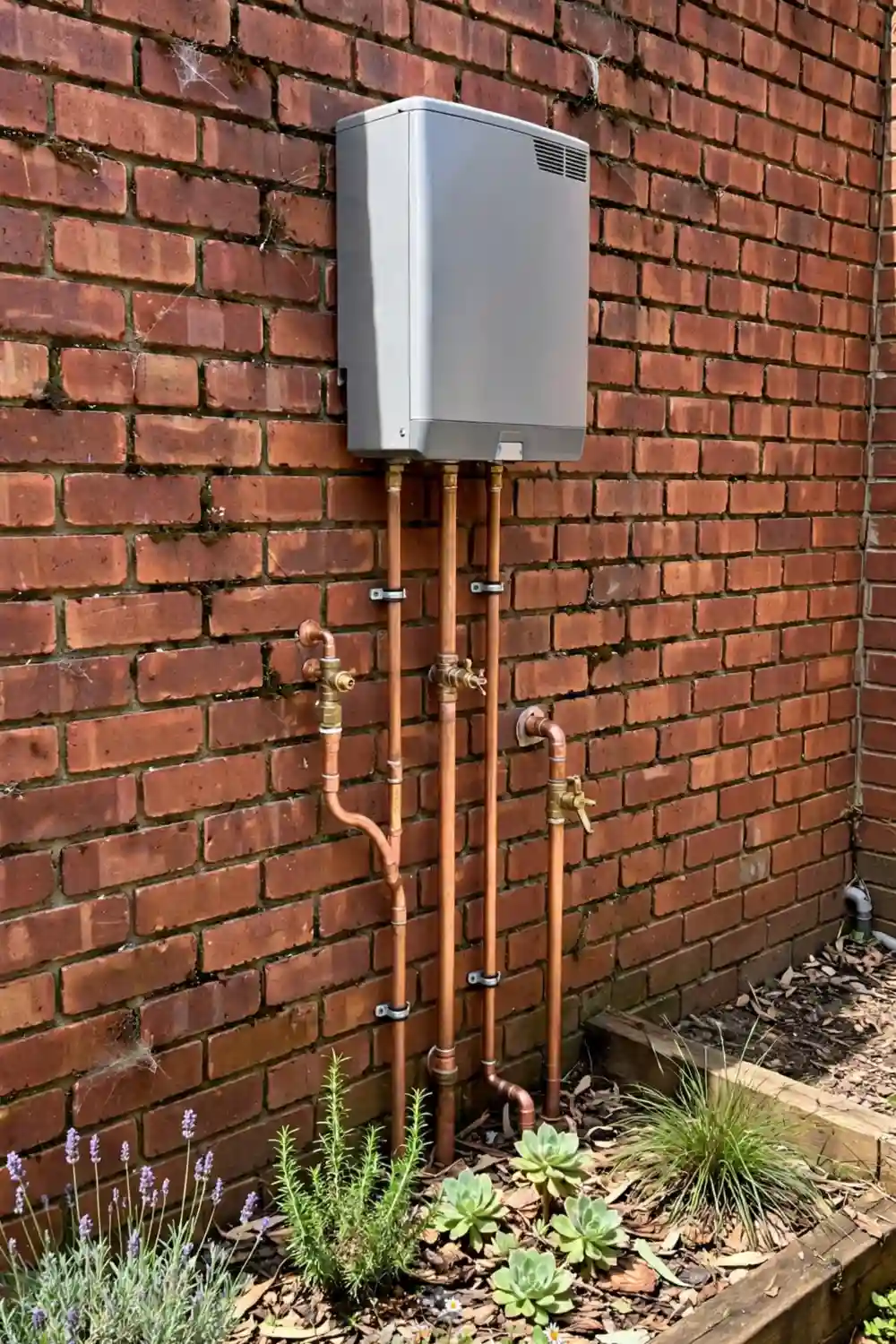
- Water heater replacement (hipages) — $1,200–$2,500 or more, with higher prices depending on the complexity of the job.
- Solar hot water (hipages) — $3,000–$7,000 or more to install, depending on size and complexity.
- TaskerAsker ranges — $1,200–$3,000 for electric or gas storage, and $1,600–$5,500 for continuous flow or heat pump systems. Prices include GST.
- Choosing the system — the right choice depends on your household size, your energy source and your roof. Our comparison of which hot water system suits your home covers heat pump, solar, gas and electric side by side.
Drains and whole-house re-plumbing
Drainage and whole-house work sits at the top end of plumbing prices. These are multi-day jobs with excavation, permits and inspections, so they are normally quoted as a fixed price after an on-site assessment.
- Entire drainage system replacement (hipages) — $5,000–$20,000.
- Pipe inspection and re-plumbing a whole house (hipages) — $6,000–$12,000, depending on the complexity of the piping and the features required.
- Before you commit — get the scope in writing, including what is excavated, what is reinstated, and whether the quote covers permits and inspections.
- A warning sign — a quote for work this size that arrives without a site visit is not a quote you can rely on. Walk away and get a plumber who has seen the property.
| Source | Hourly rate | Call-out fee | Notes |
|---|---|---|---|
| hipages (2026) | $80–$200/hr | $60–$250 | Indicative figures; GST not stated |
| ServiceSeeking (2026) | $120.64/hr average (real quotes) | — | Average, not a range; average total job $627 |
| Service.com.au (2026) | $100–$150/hr | $80–$300, on top of hourly | Hourly and call-out charged separately |
| Airtasker | $80–$100/hr | — | Guide rate |
| What’s The Damage (Nov 2026) | $80–$200/hr, typical $120 | $60–$150 | Prices include GST |
| TaskerAsker (2026) | $110–$170/hr | $80–$160 | Prices include GST; regional NSW/TAS $100–$150/hr |
Emergency and after-hours costs
A burst pipe at midnight costs more than the same job at 9 am on a Tuesday. Emergency plumbing costs vary from state to state, though the general pattern holds everywhere: after-hours, weekend and public holiday call-outs cost more than a standard daytime job.
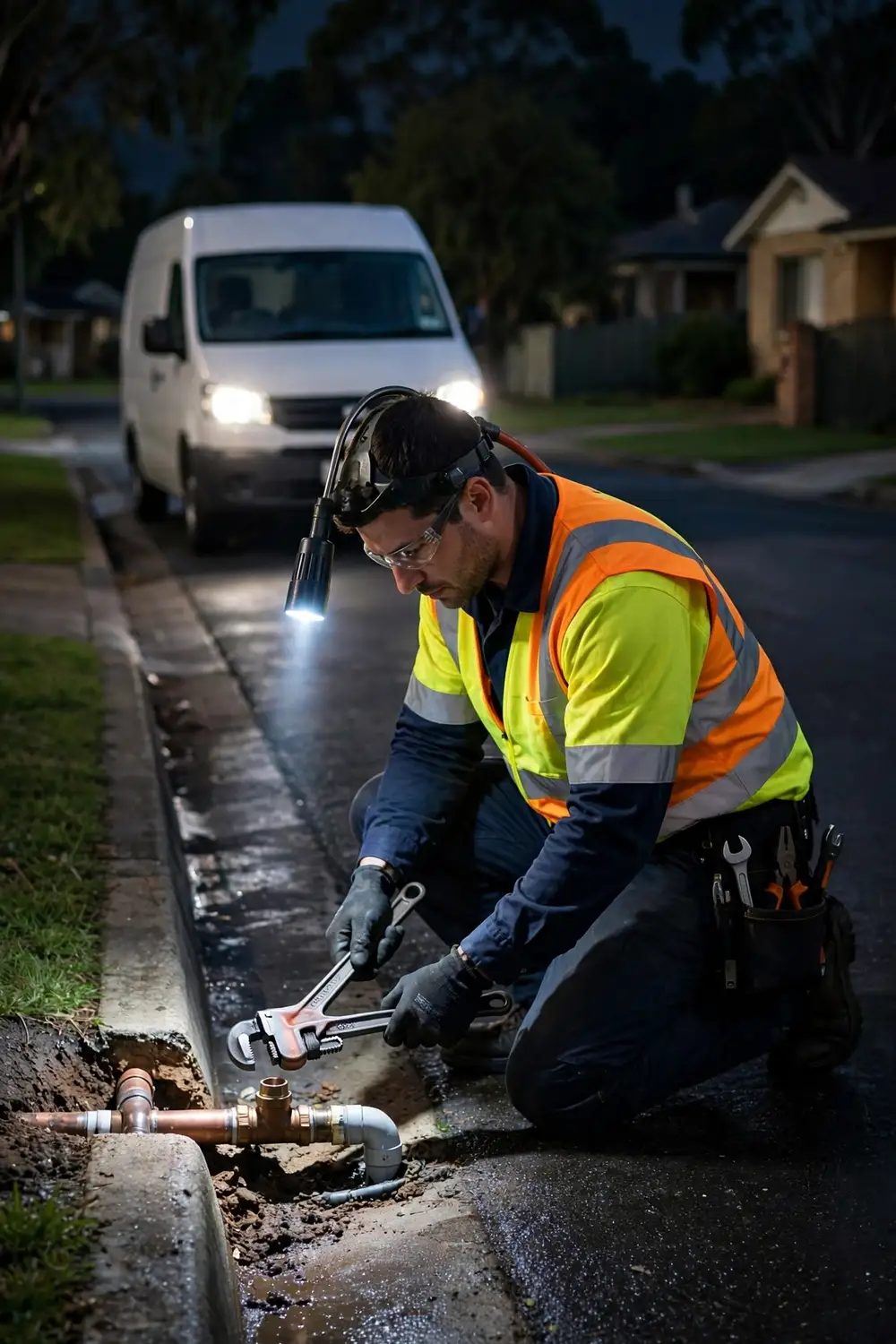
- New South Wales (hipages) — a call-out of $100–$200 during business hours, rising to $150–$300 after hours, with emergency hourly rates of $180–$350.
- Victoria (hipages) — call-out fees generally sit between $150 and $300, with a full emergency visit costing anywhere from $300 to $700 depending on the job and the time of day. That $300–$700 is a full-visit total, not an hourly rate.
- Queensland, Western Australia and South Australia (hipages) — emergency call-outs generally fall in the $150–$350 range, plus $180–$320 per hour for after-hours, weekend or public holiday work.
- Cross-check (What’s The Damage) — after-hours hourly rates of $150–$300, per its National Pricing Overview table. Prices include GST.
- Cross-check (TaskerAsker) — an after-hours or public holiday first hour typically costs $220–$420, at 1.5 to 2 times the normal rate. Prices include GST.
- Cross-check (Mr Handy) — after-hours $120–$280 an hour, weekends $130–$300, public holidays $160–$400, and an emergency visit $250–$700 or more, all-in. Prices include GST.
Before help arrives, there are a few quick actions that limit the damage and the bill. Turn off the water at the mains if you have a leak or burst pipe, switch off power to any electrical items near the water, contain the water with towels, buckets or a mop, and take photos of the damage for your insurer before you start cleaning up.
If the problem is not an immediate safety risk and is unlikely to cause serious water damage, it is worth waiting until business hours. Mr Handy notes you could save $150–$300 on the call-out alone by waiting. For a burst pipe or a sewage overflow, do not wait: the water damage bill will dwarf the emergency plumber fee.
Licensing and compliance
Plumbers in Australia must be licensed to advertise their services and carry out work in your home. There are several licence classes that apply Australia-wide, and the class your plumber holds determines what they are allowed to do.
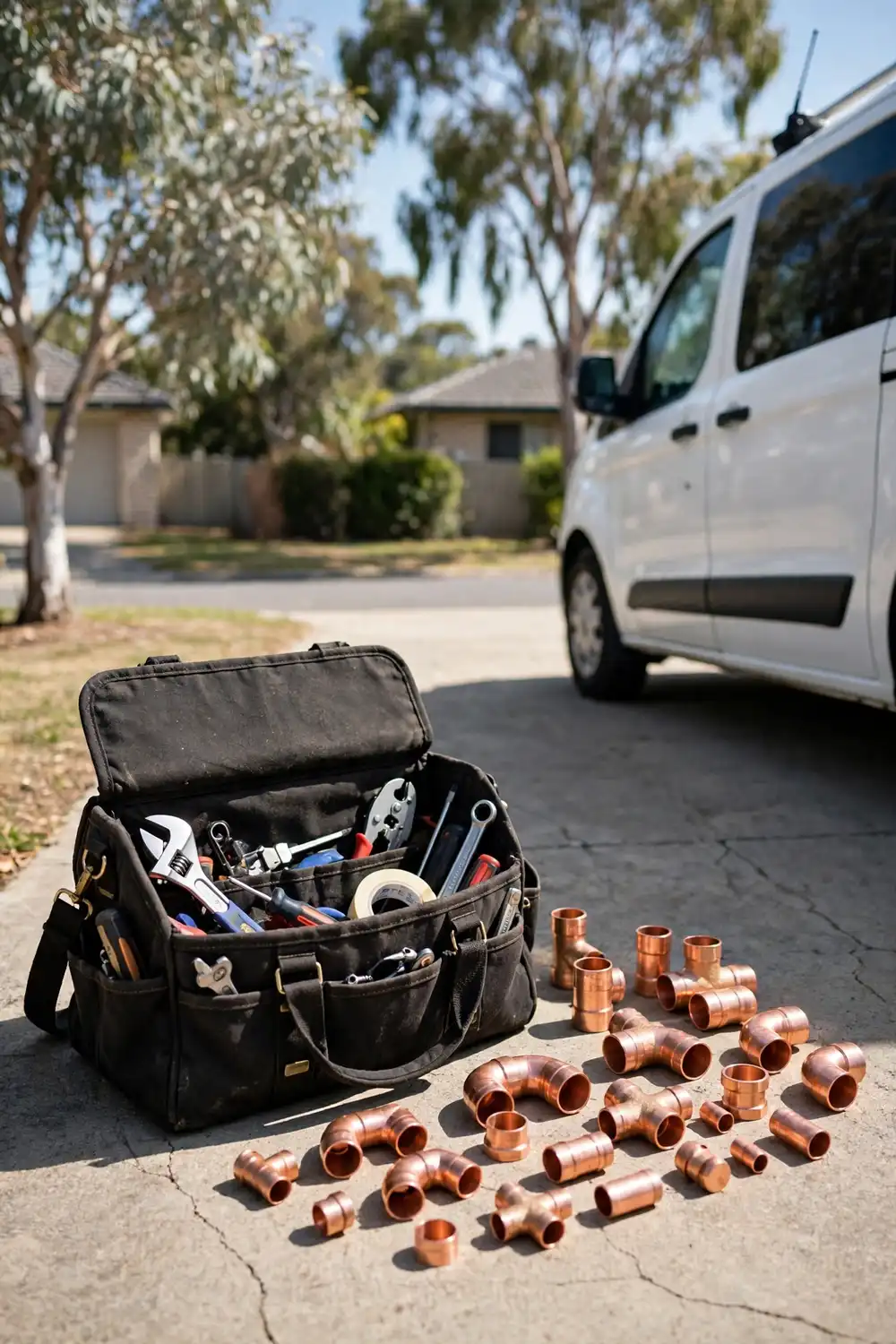
For most domestic plumbing jobs, a standard plumbing licence is all that is required. If your job involves gas fittings, make sure your plumber also holds a valid gasfitting licence, because the two licences are not interchangeable. A general plumbing licence covers water supply, sanitary plumbing and roofing work, but gas appliances and gas lines need the separate gasfitting licence on top.
Drainers specialise in the underground pipework that connects your home to the sewer or stormwater system, and that is its own trade class in some states. Plenty of plumbers hold multiple licences, so ask exactly what they are qualified for before you hire them.
A licensed plumbing contractor is qualified to manage and supervise larger plumbing projects, including plumbers who hold a tradesperson certificate, and their work must be inspected by a plumbing contractor. More specialised jobs may require additional training and possibly an additional condition on the licence, such as for fire protection, urban irrigation or sanitary drainage.
Depending on the state you are located in and the value and complexity of the job, plumbers are required to give you a compliance certificate, which proves the job meets all the right standards and often includes a workmanship guarantee. Check with your plumber whether they will provide one.
You may also see plumbers advertising as Master Plumbers. They hold the same licence as other plumbers, but they are members of a state-based Master Plumbers Association. A Master Plumber may charge a bit more, and is worth considering for major renovations, new-house plumbing or complex gas fitting.
How to get a fair quote
A proper plumbing quote should leave you with no surprises once the invoice lands. Before you agree to anything, check it includes an itemised breakdown of labour and materials, not just a single lump sum, and the call-out fee, if one applies, with whether it is included in the total or charged separately.
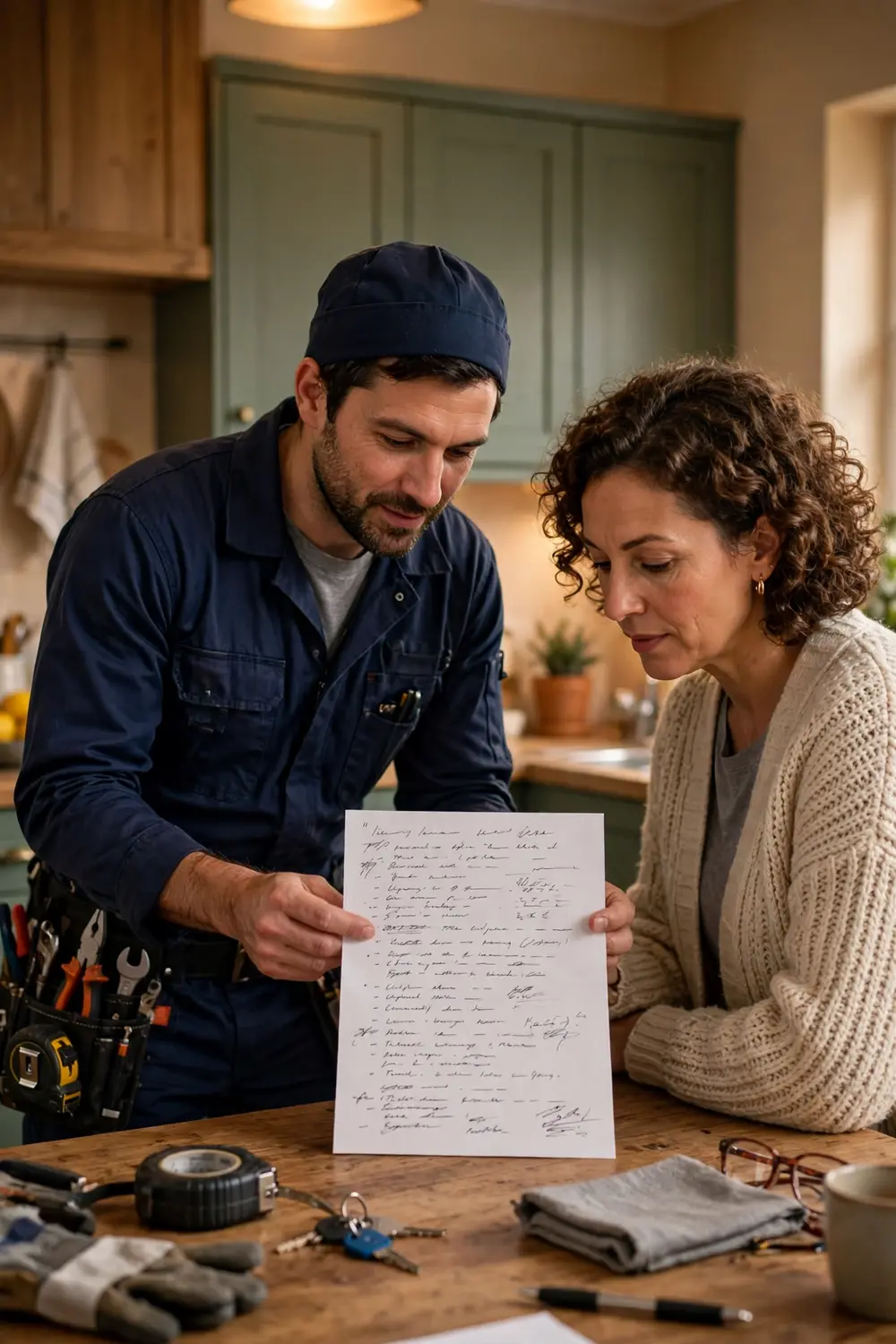
Get three quotes as a minimum, and only compare them if they cover the same scope of work. A cheaper price might be leaving something out, and a higher quote using better-quality fittings can be worth it in the long run. Compare the materials being used, not just the total cost.
Check that GST is included in the figure you are looking at, so the number on the quote is the actual amount you will pay. Ask for a clear description of the work and the timeframe to complete it, details of any warranty or workmanship guarantee, and the payment terms, including any deposit required and how the final invoice is settled. Always ask for the plumber’s licence number, so you can verify it before work starts.
Check reviews and ratings before you hire, including photos of previous work where they are available. A plumber with a long record of completed jobs and solid reviews is usually worth more than a bargain quote from someone with no history.
Do not automatically go with the cheapest option. A price that is noticeably lower than the others can mean corners are being cut somewhere, whether that is materials, insurance or experience.
If a quote is missing any of this, ask for it in writing before you sign off. A plumber who is upfront about costs at the quoting stage is generally a good sign of how they will handle the rest of the job.
Finally, clarify extra charges for unexpected issues upfront, and budget for any follow-up work, like tiling, rendering or painting, to complete the project.
Frequently asked questions
What is the average plumber call out fee Melbourne?
In Melbourne, the average plumber fee is around $60 to $100 upwards, depending on whether it is an emergency call out or not.
What is the average plumber hourly rate Melbourne?
In Melbourne, the average plumber charge per hour is around $80-$160 per hour but will vary based on location and what plumbing work is needed.
What is the average plumber hourly rate Sydney?
In Sydney, the average hourly rate for a plumber is $80 to $200 per hour. Plumbers rates usually have a call out fee of $150 to $250.
What is the average plumber hourly rate NSW?
In NSW, average plumber cost per hour varies depending on your location, metro, regional, or rural. However, you can expect an hourly rate of $80 to $200, with a call-out fee ranging from $150 to $250.
Bottom line
Plumber cost per hour Australia comes down to three numbers: the hourly rate, the call-out fee and the job itself. A licensed plumber charges $80–$200 an hour in business hours, plus a $60–$250 call-out, and most one-hour jobs with small parts land around $240–$320 once parts are included. After-hours work costs substantially more, so a job that can wait until morning is usually worth waiting for.
Get three itemised quotes, check the licence, confirm the call-out and the GST, and do not let the cheapest price do the deciding. If the job is small enough that a handyman could do it instead, compare it with what a handyman charges per hour before you book anyone. A plumber is the right call for anything involving water supply, drainage or gas.