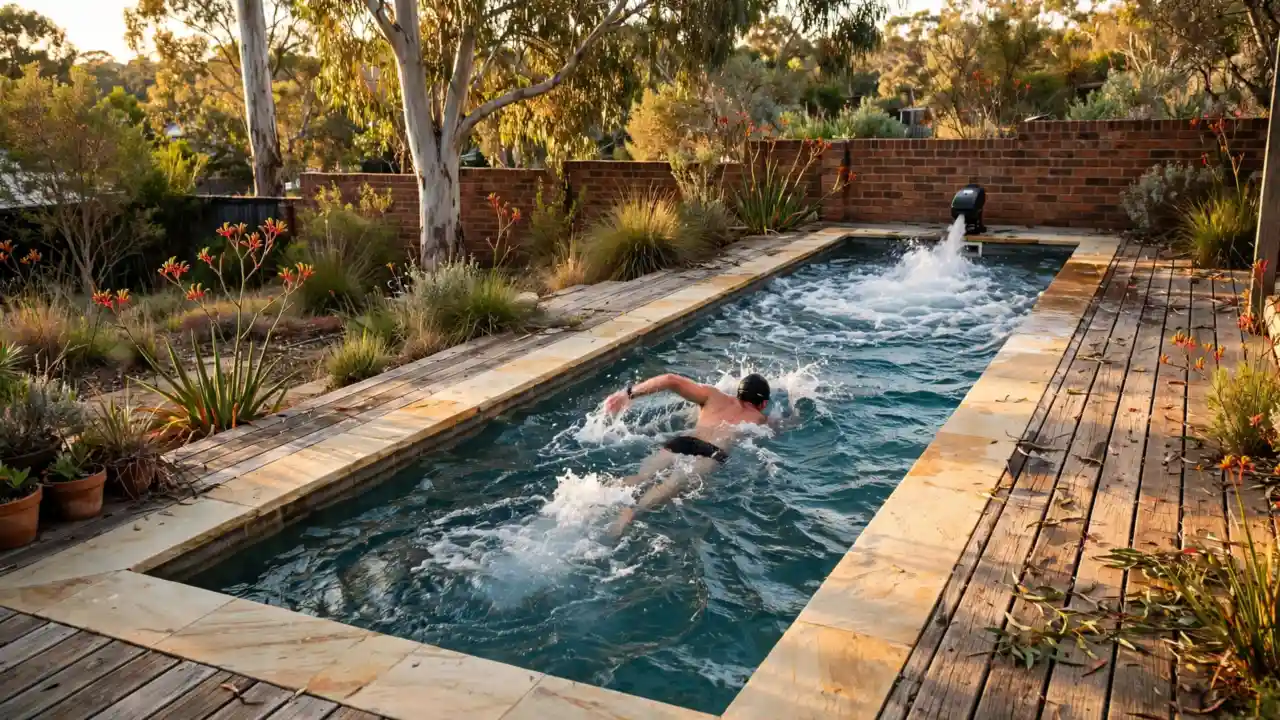
A backyard swimming pool offers far more than a place to cool off during the peak of summer. With the right approach, even a compact pool can become a dedicated space for daily cardio, stroke practice, and active family entertainment. However, for most homeowners, pool size remains the biggest hurdle.
When a pool measures under 30 feet, swimming laps feels less like a workout and more like a continuous cycle of kicking off the wall, taking three strokes, and turning around. Historically, solving this meant investing in expensive structural renovations or installing permanent built-in jet systems. Today, portable counter-current technology is changing that equation—allowing homeowners to introduce adjustable swimming currents without touching their pool’s plumbing or wiring.
Overcoming the Length Limitation of Residential Pools
The primary frustration with standard residential pools is interrupted momentum. A compact backyard pool is ideal for lounging, but it makes maintaining an elevated heart rate or consistent stroke rhythm nearly impossible.
Counter-current swim systems approach this spatial problem from a different angle. Instead of requiring a longer lane, they generate a continuous, directional stream of water that allows the swimmer to stay stationary while swimming full strokes.
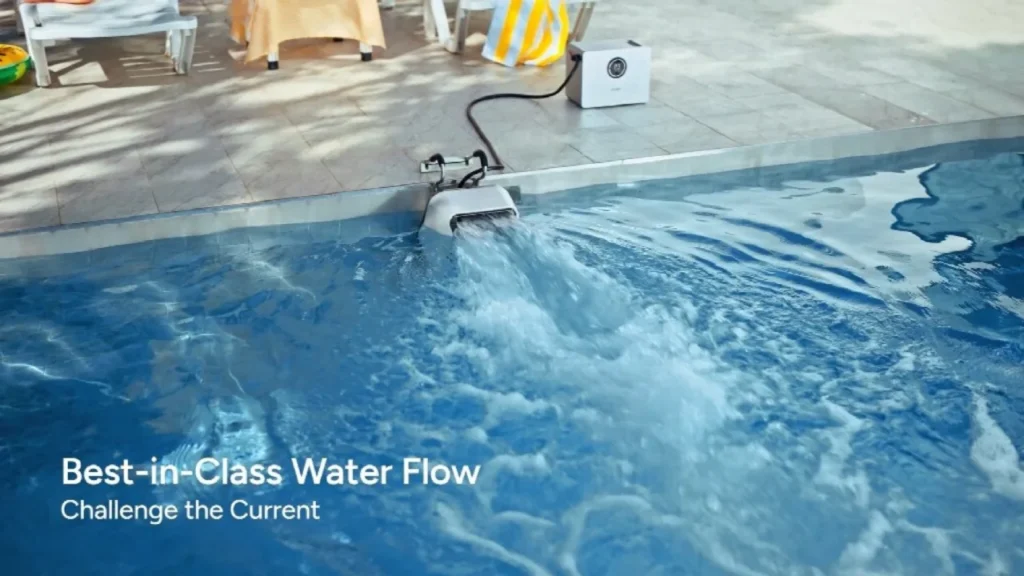
While traditional systems required cutting into pool walls and running dedicated electrical lines, modern battery-powered systems like the iGarden Swim Jet X Series bring this capability straight to the pool deck. By mounting directly onto an existing pool edge, these portable units let swimmers adjust flow intensities to match everything from gentle recovery sessions to high-resistance endurance training.
Built-In Systems vs. Endless Pools vs. Portable Swim Jets
When homeowners research ways to swim in place, they typically encounter three distinct solutions. Understanding how they differ in installation, cost, and swimming feel is key to choosing the right setup:
- Purpose-Built Endless Pools: These are dedicated, self-contained swimming installations built specifically around an integrated propulsion system. They deliver a smooth, wide current ideal for serious triathletes, but they require dedicated yard space, structural foundations, and a significant upfront budget.
- Traditional Built-In Jet Systems: Designed to be integrated into conventional pools during construction or major remodeling, these systems rely on heavy-duty plumbing and mains electricity. Retrofitting them into an existing pool is often invasive and costly.
- Portable Battery-Powered Swim Jets: Designed to work with compatible existing pools, portable units eliminate construction entirely. They run on rechargeable batteries rather than hardwired mains power, and they can be removed and stored away during the off-season.
For homeowners planning a brand-new luxury build, an integrated system may make sense. For those who already own a backyard pool and want to avoid tearing up their patio, a portable swim jet offers a far more practical upgrade path.
What Real-World Performance Actually Looks Like
Specification sheets often highlight flow rates and motor wattage, but numbers alone rarely capture what it feels like to swim against an artificial current. Factors like turbulence, stream width, and water depth play a major role in whether a current feels natural or choppy.
In a recent hands-on field test, reviewer Tech TRX put the iGarden Swim Jet X PRO 10 (X35-P60) through its paces in a residential pool to see how portable propulsion holds up in real use. Rather than focusing on static specs, the test demonstrated how variable output settings adapt to different members of a household:
- Low-Intensity Settings: Produce a gentle, steady resistance suited for warm-ups, beginners, or casual water jogging.
- Medium to High-Intensity Settings: Create a concentrated, powerful stream that holds experienced swimmers in place during freestyle or breaststroke drills.
Underwater footage from the test also highlights an often-overlooked setup factor: stream geometry and pool clearance. Because the water stream expands slightly as it moves away from the nozzle, positioning the unit at the proper depth and ensuring adequate clearance behind the swimmer are essential for staying centered in the current.
5 Factors to Check Before Adding a Portable Swim Jet
While portable counter-current units avoid the headaches of plumbing and electrical permits, they are not automatically universal. Before investing in a system, homeowners should evaluate five practical details:
- Pool Edge and Deck Compatibility: Not every pool coping or edge profile supports clamp-on or bracket mounting. Always verify the manufacturer’s requirements regarding wall rigidity, edge width, and surface material.
- Current Width and Consistency: Look beyond peak flow numbers. A smooth, wide, and laminar flow is much more comfortable to swim against than a narrow, overly turbulent jet.
- Battery Runtime vs. Workout Habits: Because portable units rely on rechargeable battery packs, compare the rated runtime at high-output settings against your typical workout duration.
- Weight and Off-Season Storage: Portability gives you the freedom to clear the deck when hosting guests or closing the pool for winter, so consider the unit’s weight and where you will store it safely.
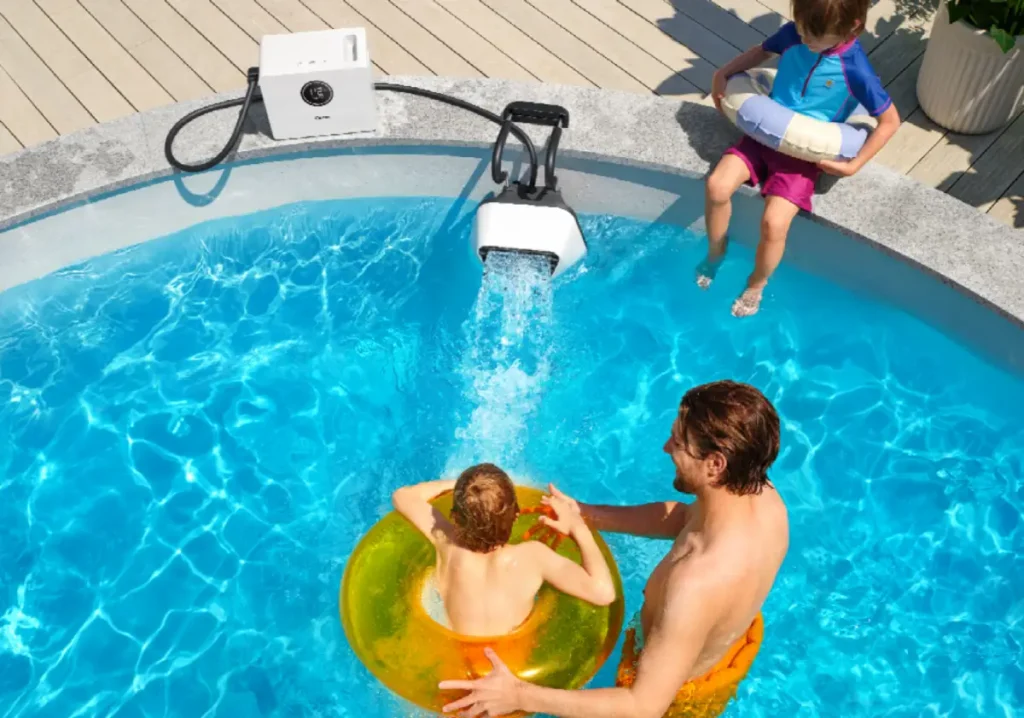
- Safety and Clearance Zones: A swim jet is a powerful piece of fitness equipment, not a flotation device. Always maintain the recommended clearance around intake and propulsion zones, and ensure children are supervised by an adult whenever the unit is in the water.
Getting More Value Out of the Pool You Already Own
You do not need an Olympic-sized lap lane to turn a backyard pool into a functional fitness space. By pairing an existing pool with a portable, battery-powered counter-current system, homeowners can bridge the gap between casual summer lounging and structured aquatic exercise—maximizing their backyard investment without a single day of construction.