You open the front door and the hallway greets you with a pile of shoes, a coat on the floor and a bag hanging off the door handle.
Most Australian homes have no mudroom to hide it all in. The front door often opens straight into the living room or a short hallway, so every pair of shoes and every jacket lands where everyone can see it.
Small entryway storage ideas can fix that without a renovation or a big budget. Ten hallway solutions below work with the space you already have, and several need no drilling at all.
Work through the list and pick the ones that fit your hallway width, your household and whether you rent or own. Start with the shoe count, then match the furniture to the depth your hallway can spare.
Why the hallway is the hardest room to store in
Most Australian homes were never built with a mudroom. The front door usually opens straight into the living room or a short hallway, so coats, shoes and bags land in the first metre and stay there.
The walkway is the real constraint. Aim for 90 cm of clear floor between anything you add and the opposite wall. In a hall under about 110 cm wide, a 35 cm unit leaves 75 cm to walk through, which is tight but workable.
Count before you buy. Keep two or three pairs per person by the door and store the rest elsewhere, then measure the hallway width and check the door swing.
Small entryway storage ideas: the 10-solution checklist
Work down the list in order of depth, starting with the pieces that take no floor space at all. Each solution states the depth it needs.
1. Slimline flip-drawer shoe cabinet
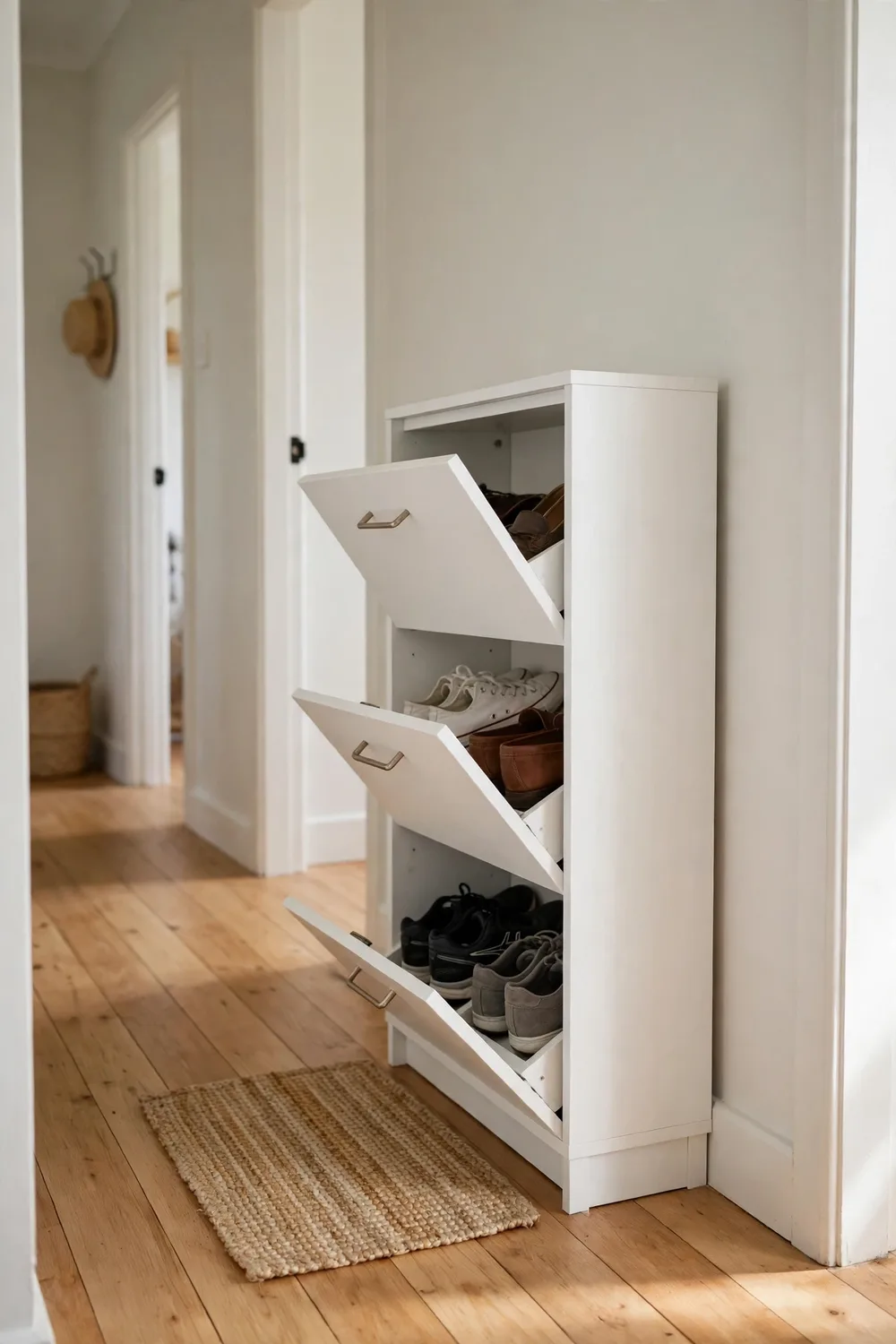
A flip-drawer cabinet is the best answer when depth is the problem. Shoes stand at an angle inside, toe down and heel up, so a full-length adult shoe fits in only 17–20 cm.
Measure the depth against your longest shoe before you buy, and leave a little air inside. Tall boots need 40–45 cm of clear height, so they usually will not fit the tilted slots.
The bamboo P&P cabinet is freestanding, with ventilated slatted doors and side hooks, and it is listed at $195.99 at Bunnings (Nov 2026). At 35 cm deep it belongs in a wider hallway, not a slimline spot.
- Depth — 20–25 cm for a slimline cabinet, 17–20 cm for tilting compartments
- Pairs per drawer — 2–3 in a tilting compartment, 4–6 in a tip-out drawer
- Example — the Levede two flip-drawer cabinet measures 80 × 24 × 100 cm
- Wider option — the FORET 7-tier cabinet, 80 cm wide and 32 cm deep, listed at $114.29 at Bunnings (Nov 2026), suits a hallway with more room to spare
2. Bench + wall hooks
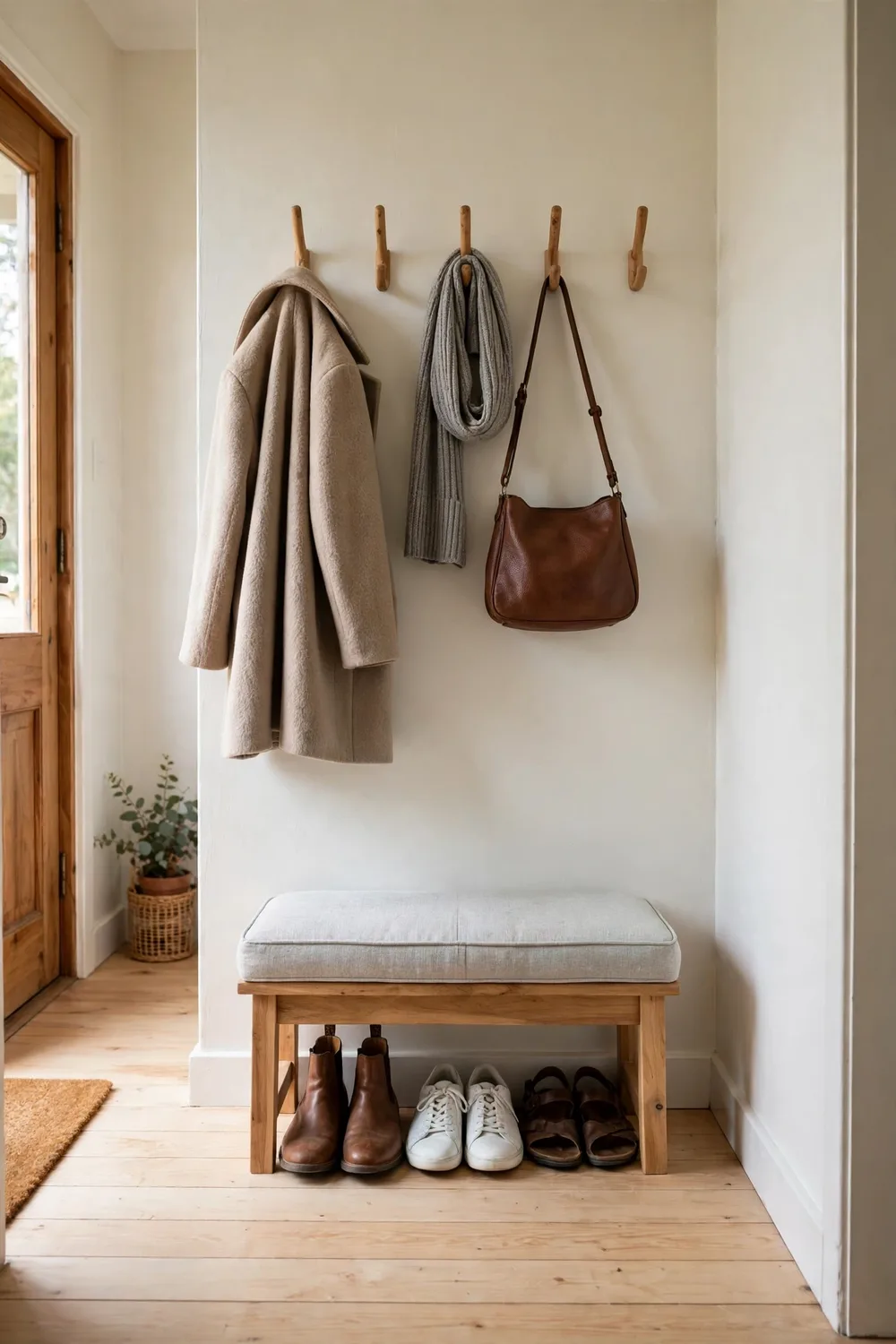
A bench does two jobs at once, giving you somewhere to sit while you put shoes on and storage underneath for the pairs you wear every day.
Keep the bench slim, no deeper than 35–40 cm, so it does not crowd the door swing. Shoes slide underneath, bags sit on top, and a lift-up seat hides the pairs you do not wear every day.
The Levede shoe bench with a seat measures 75 × 24 × 51 cm, supports up to 150 kg, and is listed at $129.99 at Bunnings (Nov 2026). For the full rundown, see our guide to why a shoe rack bench is a must-have for your home.
- Depth — 35–40 cm
- Sitting height — 43–48 cm per The House Chapter, and 40–45 cm per linenandnest
- Underneath — open cubbies or a shelf for everyday shoes
- Above — wall hooks for coats and bags
3. Wall-mounted hooks at varied heights
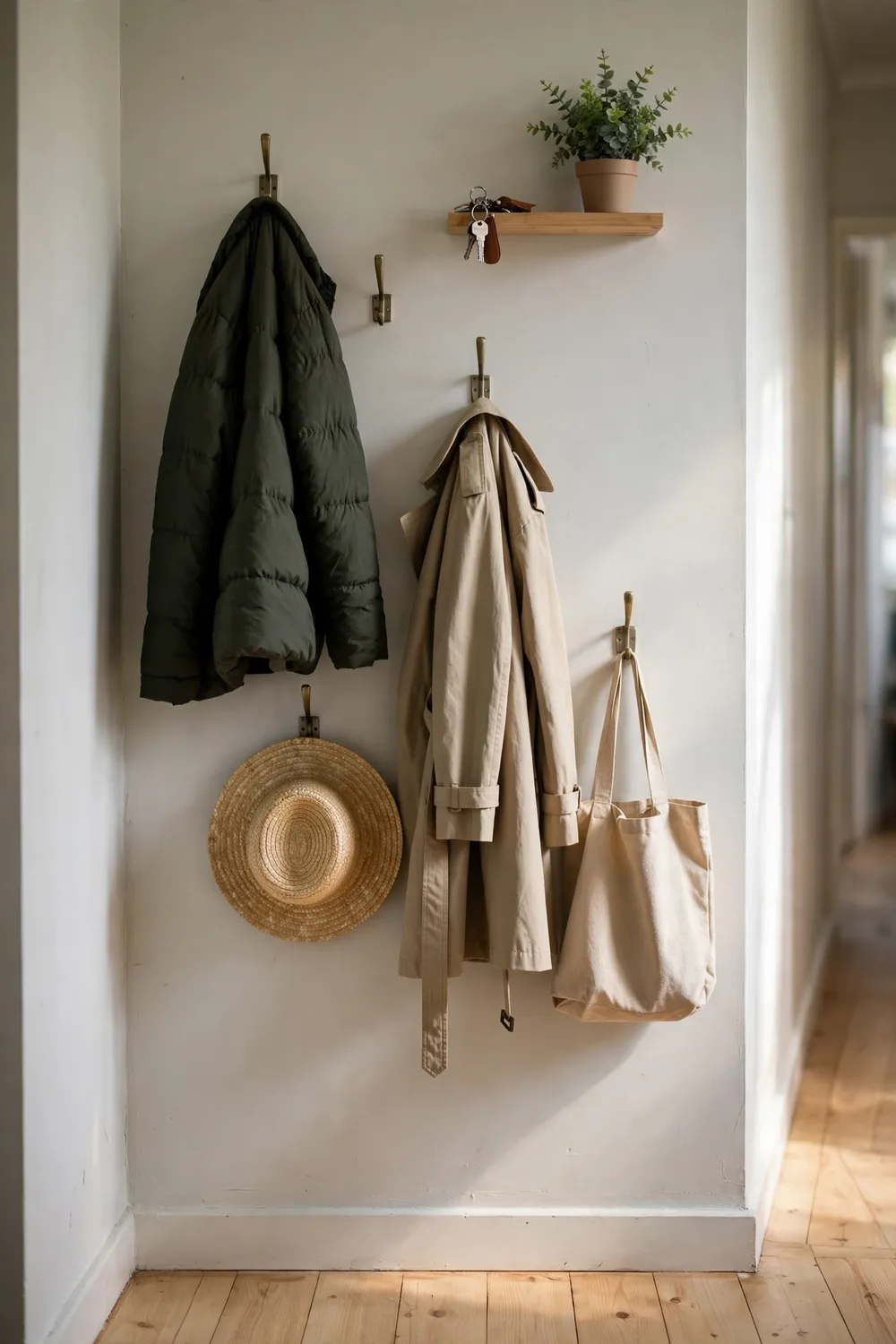
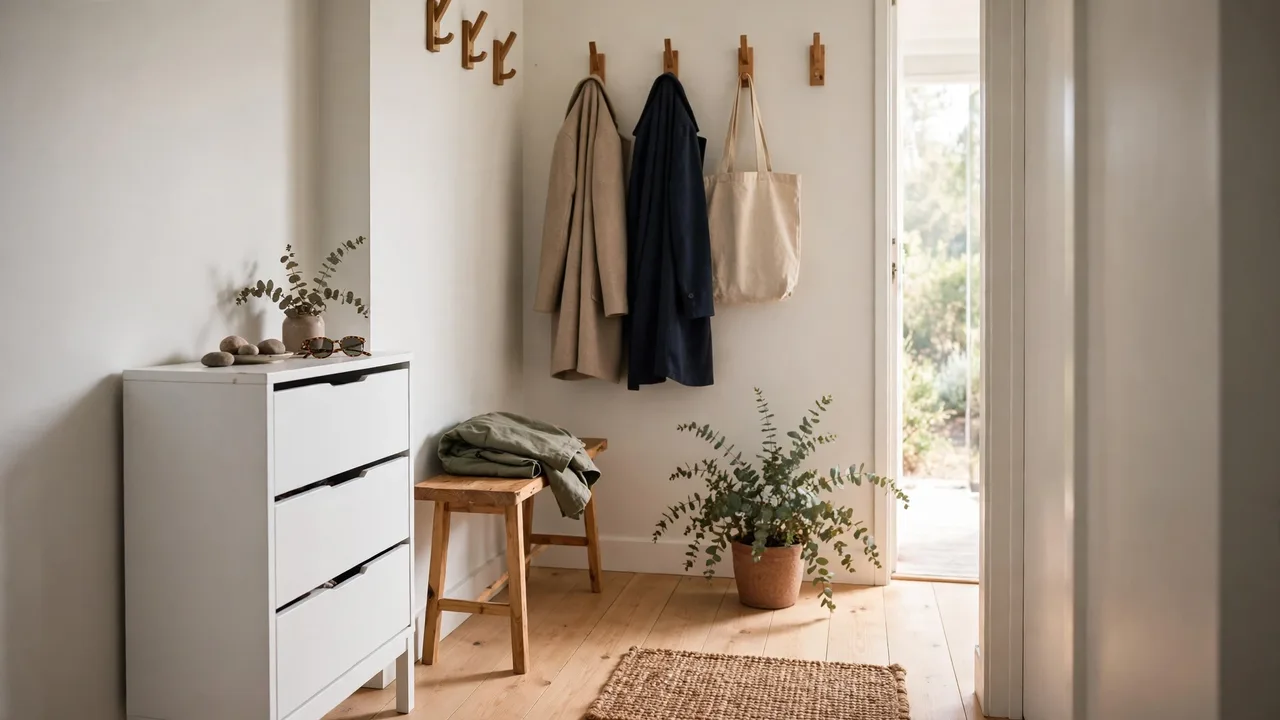
When the floor has nothing to give, the wall does the work. A row of hooks holds coats, bags, hats and the dog lead, and takes up no floor space at all.
Stagger the hooks instead of lining them up in one neat row. Bulky coats need room to hang without bunching, and hooks at two or three heights let kids reach their own.
- Height — 150–168 cm suits most adults
- Spacing — about 20 cm between fixings, staggered rather than in a row
- How many — 8–10 hooks in total for a family of four
- Add on — a shelf above for baskets of gloves, sunglasses and mail
4. Over-the-door organiser
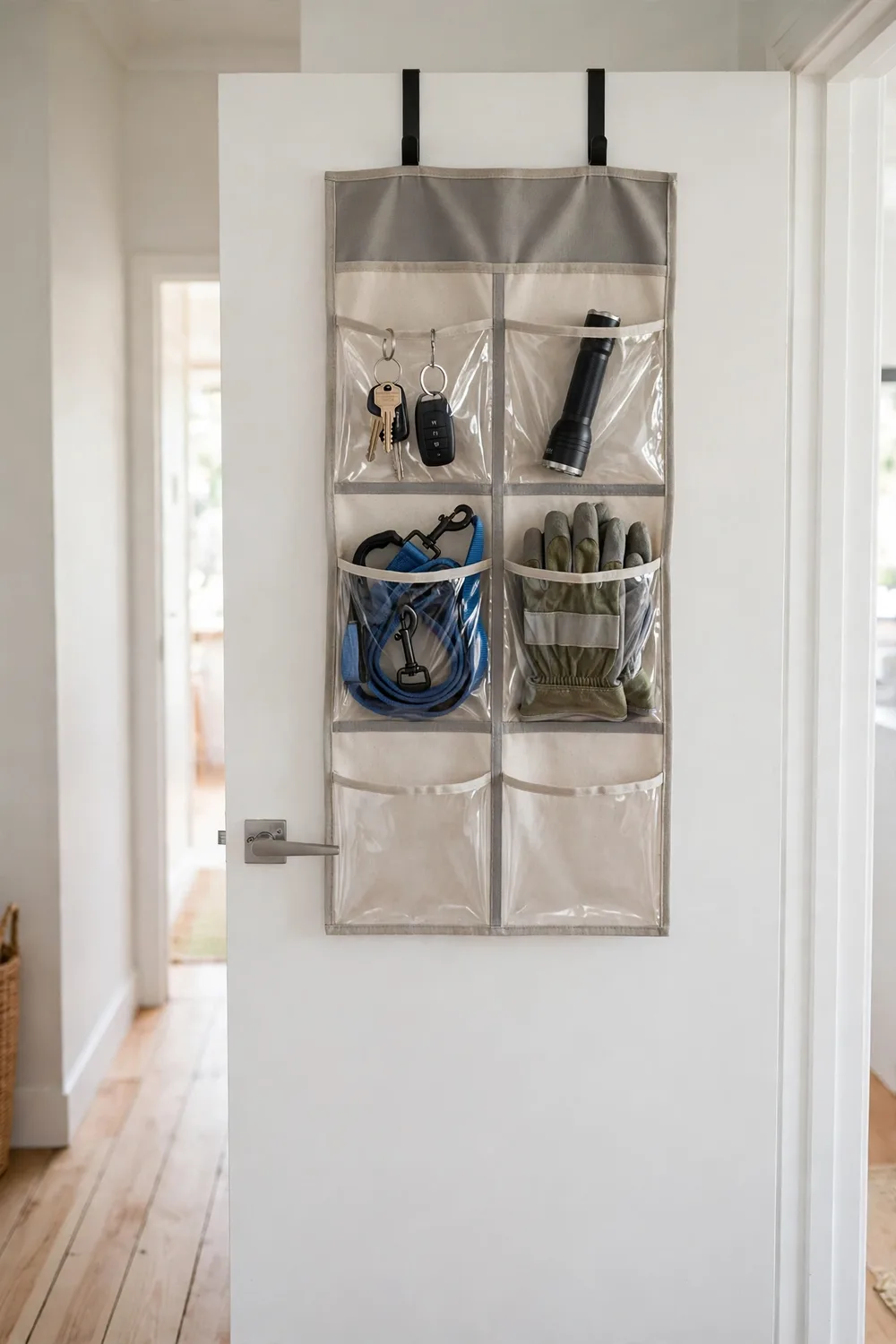
The back of the front door is storage space most people never use. An over-door organiser hangs on the top of the door, so it needs no drilling and comes off cleanly when you move.
Flat shoes fit in about 15 cm of depth, and over-door hooks take coats and bags when the wall has no free space. Check the door swing first, because an organiser that blocks the door is worse than no organiser at all.
- Best for — renters and hallways with no floor to spare
- Depth — about 15 cm for flat shoes
- Needs — a door that swings clear
- Pair it with — a basket beside the door for the pairs that do not fit
5. Narrow console + landing tray
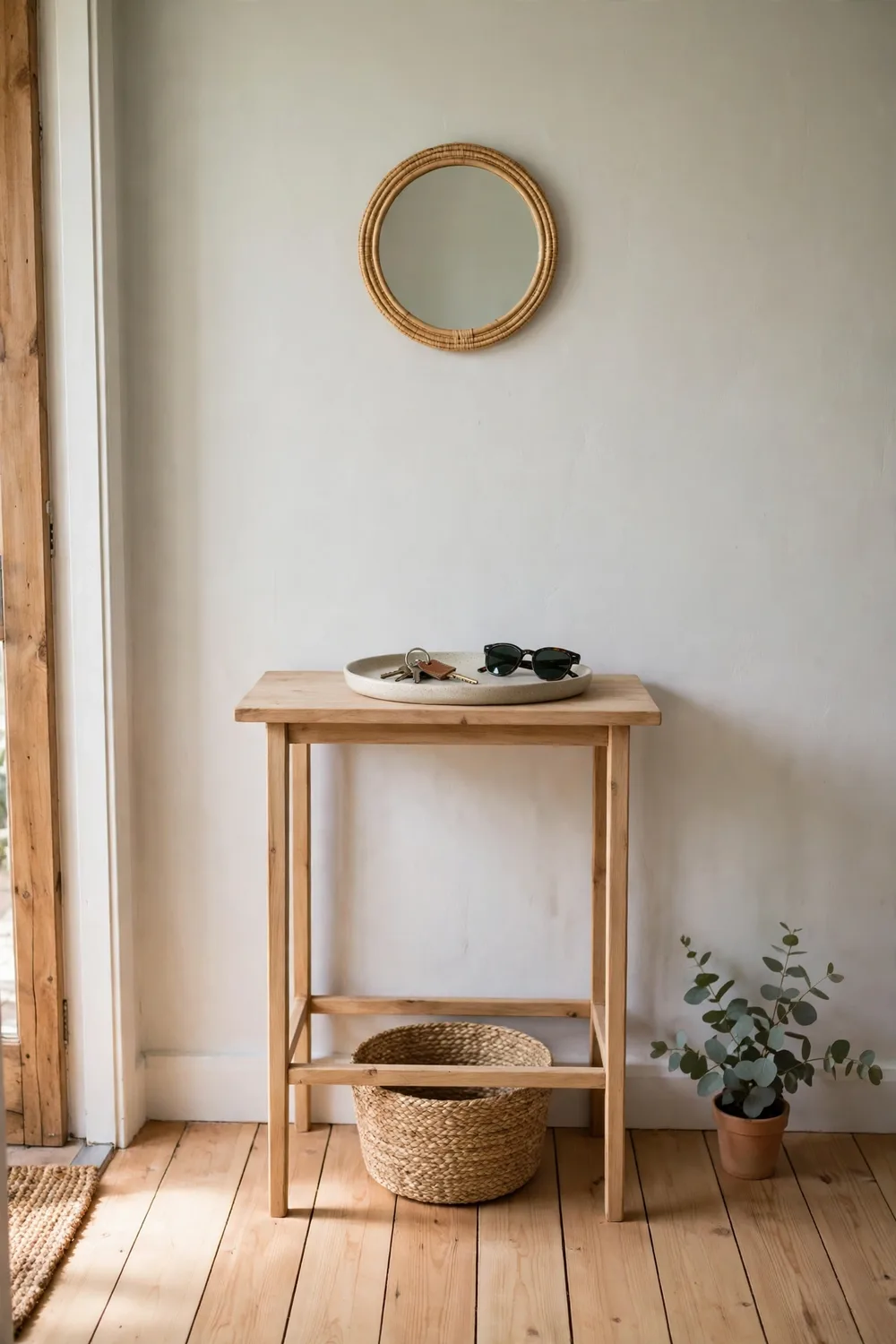
A console gives the hallway a landing spot. Keys, wallet and sunglasses get one home each instead of landing on the floor, and the top stays free for a lamp or a bowl.
Look for a slimline console about 20–25 cm deep. Some guides stretch that to 25–30 cm for a hallway with room to spare, but in a narrow hall the shallower the better, and the space underneath takes a slim basket or matching shoe trays.
For ideas on dressing the tabletop, see our guide to decorating a hall table.
- Tray — one shallow tray for keys, loose change and the dog lead
- Underneath — a slim basket or shoe trays
- Depth — 20–25 cm, up to 25–30 cm where the hallway allows
- Top — keep it clear enough to put things down
6. Floating shelves and cubbies
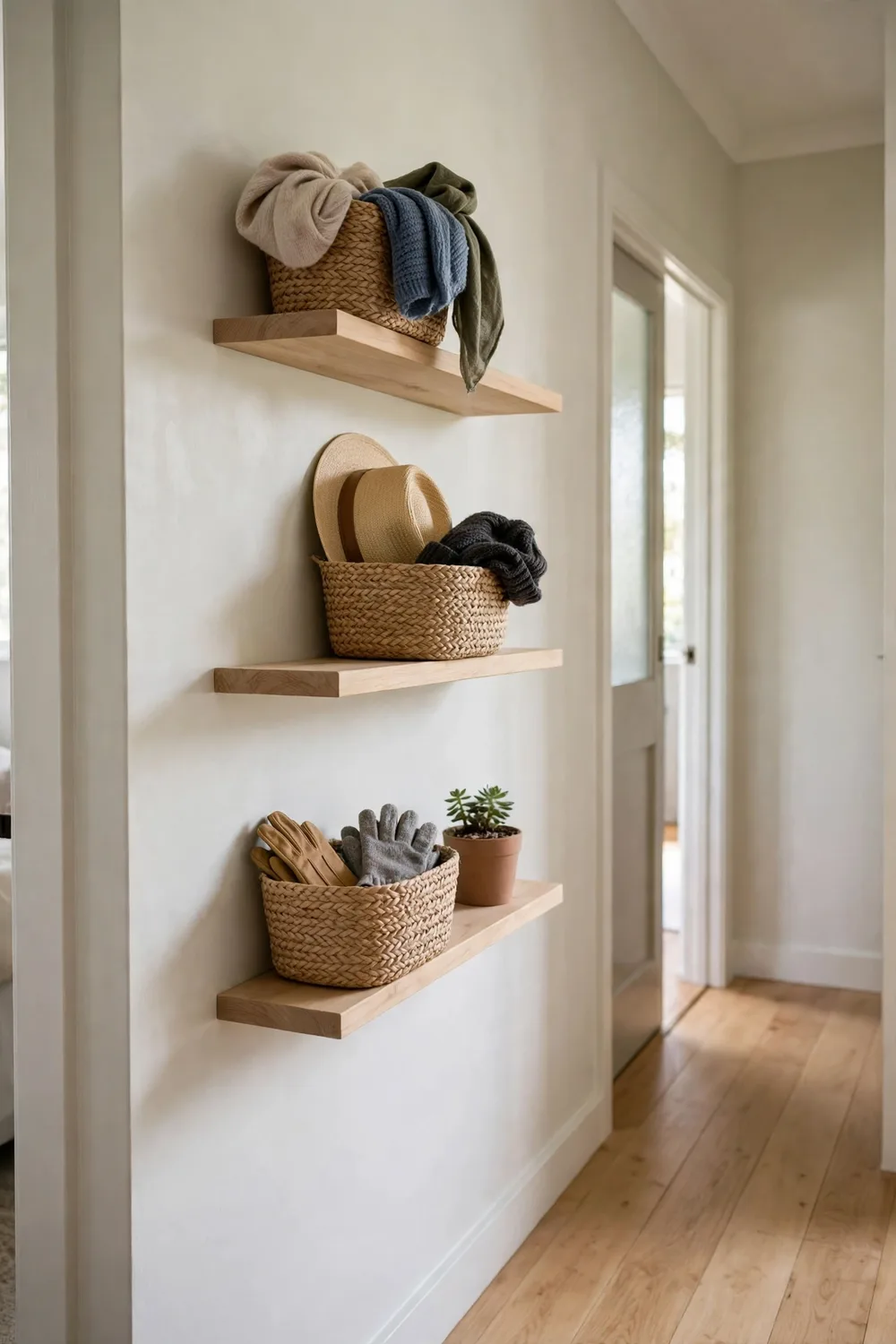
Floating shelves lift storage off the floor entirely. A shelf under a mirror holds the small things you grab on the way out, and open cubbies below keep everyday pairs where you can see them.
Keep open shelves honest. Six to eight pairs is the limit before the shelf starts reading as clutter. Renters can use no-drill adhesive shelving, though it will not hold as much weight as a screwed-in shelf and the adhesive can damage paint when it is removed.
- High — a shelf under a mirror for keys, sunglasses and mail
- Low — open cubbies or a shallow shelf for everyday shoes
- Stacked — cubbies stacked or staggered to fit an awkward wall
- Limit — 6–8 pairs on show, the rest stored elsewhere
7. Corner hall tree
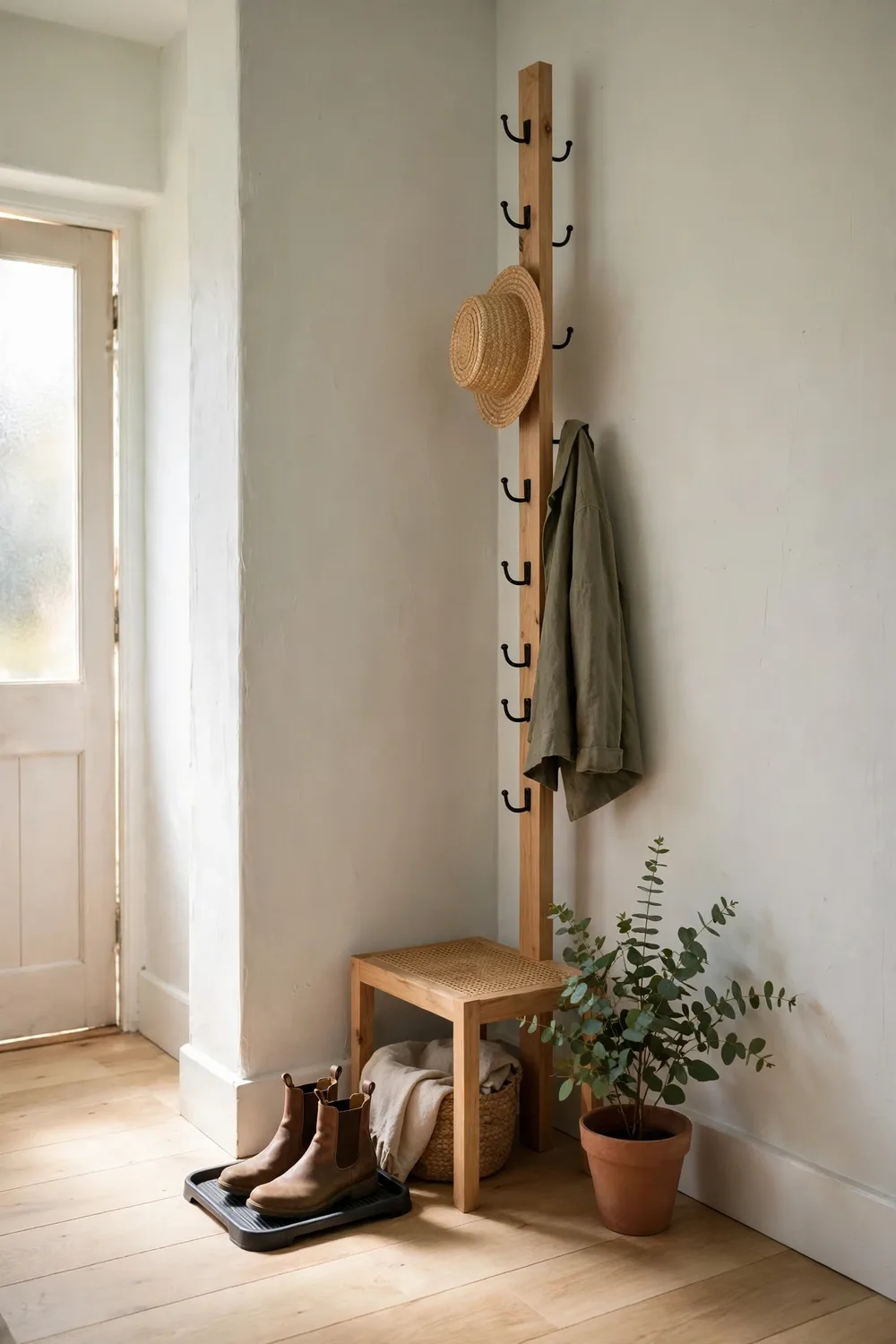
Corners are the most wasted space in a small entryway. A hall tree turns one into a complete drop zone, with hooks above, a bench and shoe storage below.
The size is the trade-off. A hall tree needs a full-height section of wall, and it only works if it does not become an overstuffed catchall, so give every hook and cubby a job.
Tall narrow units tip more easily than deep ones, so anchor a hall tree to the wall. In a rental, check with the landlord before drilling for an anchor.
- Hooks — coats, bags and hats up top
- Bench — a seat with shoe storage underneath
- High shelves — hats and seasonal gear
- Rule — one job per hook and cubby, or it becomes a catchall
8. Baskets under the bench
A basket is the simplest entryway storage there is. Slide one under a bench or a console and it becomes a cubby, and when it is full, that is the limit.
Give each person one basket for everyday shoes. Two cubbies per person is enough, and matching baskets keep the arrangement looking deliberate.
- One basket per person — when it is full, the shoes move elsewhere
- What goes in — the two or three pairs worn most often
- Where — under a bench, a console or a low shelf
- Material — woven baskets, which hide the mess
9. Boot tray for wet shoes
Wet shoes need a different home from dry ones. A boot tray with a raised lip catches the water and can be tipped out, and a mat in front takes the worst off first.
Never put wet shoes inside a closed cabinet. Damp trapped inside stays in the lining, damages the leather and builds smell, so wet pairs dry on the tray in open air first.
- Tray — a boot tray with a raised lip, 30–40 cm deep
- Mat — a doormat in front of the tray
- Umbrella — a slim stand no wider than 20 cm, or a wall-mounted clip
- Rule — wet shoes dry on the tray, then move to the cabinet
10. Mirror + go vertical
A mirror is the cheapest way to make a narrow hallway feel wider, and it doubles as a last check before you leave. A slim full-length mirror, about 40 cm wide and 150 cm tall, hung above the shoe cabinet reads as one vertical arrangement with it.
A tall slim cabinet projects only 18–25 cm into the hallway, and shelving above the door holds seasonal gear. The FORET 9-tier cabinet, 60 cm wide and 32 cm deep, is listed at $136.99 at Bunnings (Nov 2026), and like any tall narrow unit it should be anchored.
Wall cabinets are the shallowest option of all. IKEA TRONES cabinets are just over 18 cm deep and stack on top of each other, with pull-down doors that hide shoes, bags and pet gear.
- Mirror — about 40 cm wide and 150 cm tall, above the cabinet
- Cabinet — a tall slim unit, 18–25 cm deep
- Above the door — shelving with baskets for seasonal gear
- Anchor — fix tall narrow units to the wall, and renters check with the landlord first
Match the solution to your hallway
Pick by depth first. Measure the hallway, subtract the depth of the piece, and check what is left.
| Solution | Depth it needs | Best for |
|---|---|---|
| Slimline flip-drawer cabinet | 20–25 cm | Narrow hallways |
| Bench + wall hooks | 35–40 cm | Households that need a seat too |
| Wall-mounted hooks | No floor space | Ultra-narrow halls under 90 cm wide |
| Over-the-door organiser | About 15 cm off the door | Renters and doors with space behind them |
| Narrow console + landing tray | 20–30 cm | A landing spot for keys and wallet |
| Floating shelves and cubbies | 25–30 cm | Everyday shoes kept visible |
| Corner hall tree | One corner | Entries with a wasted corner |
| Baskets under the bench | 30–40 cm | Families who need one basket per person |
| Boot tray | 30–40 cm | Wet shoes and rainy days |
| Mirror + vertical storage | 18–25 cm | Small halls that need height |
Frequently asked questions
How do you store shoes in a small entryway?
Keep only the current rotation by the door, two or three pairs per person, and store the rest elsewhere. Then pick by depth. A tilting cabinet in about 17–20 cm, an open rack or shelf in 30–35 cm, or a row of hooks and a tray if you have no floor to spare.
How deep does shoe storage need to be?
An adult shoe is roughly 28–32 cm long. A tilting cabinet gets away with 17–20 cm because shoes stand at an angle, while a flat-shelf cabinet needs the full shoe length.
How deep should entryway furniture be?
Under 35 cm deep in a narrow hall. One guide puts a bench at 30–35 cm deep and a console at 25–30 cm, which leaves room to walk past without turning sideways.
What is the best shoe storage for a tiny entryway?
A slim cabinet with tilted compartments, 20–25 cm deep, stores the most pairs in the least space. An open bench with cubbies works better if you want shoes visible and easy to grab.
The bottom line
Good small entryway storage ideas start with the hallway you have, not the mudroom you wish you had. Measure the width, count the pairs that actually live by the door, and pick the shallowest solution that holds them.
One slim cabinet, a bench with hooks and a tray for wet shoes will sort most Australian entries. For the rest of the house, our storage solutions for small homes show how the same thinking works room by room.