Your tropical plants want a steamy jungle, and your living room refuses to be one. Ferns crisp at the edges, cuttings stall, and the humidity aroids crave never survives contact with an air-conditioned Australian home.
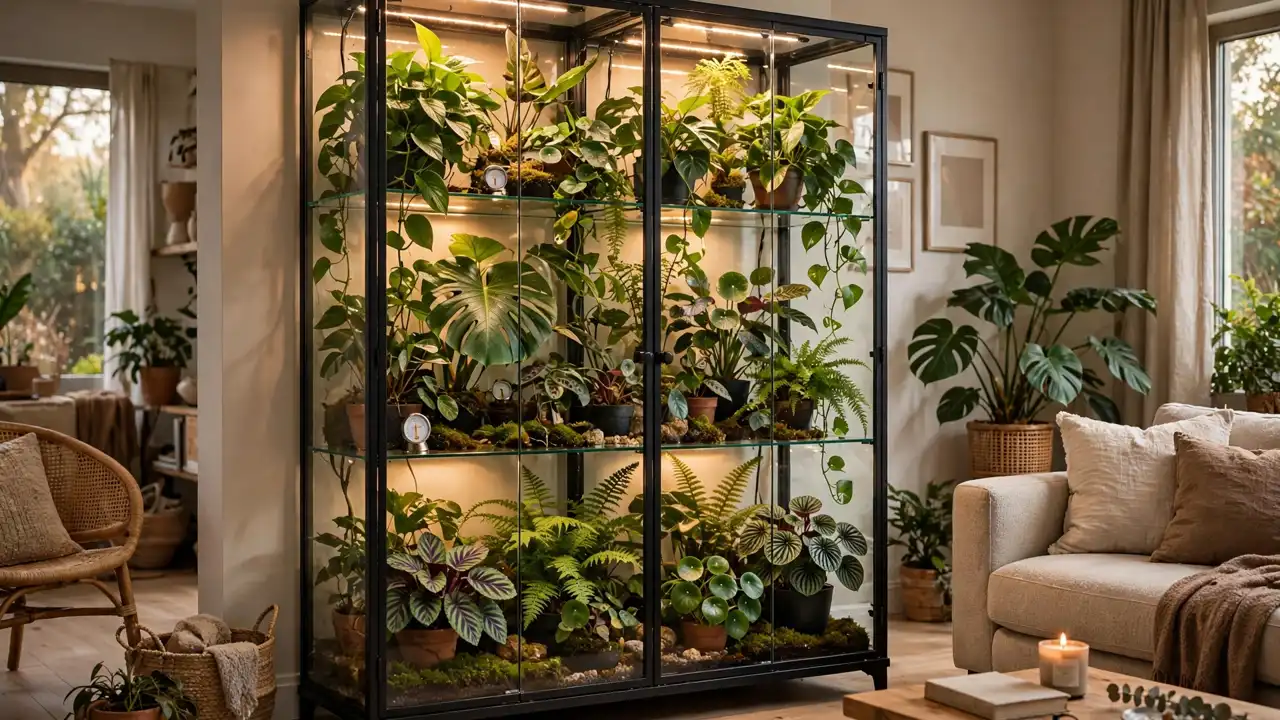
Glass display cabinets solve it by shrinking the jungle to furniture size. That is the whole idea behind the ikea cabinet greenhouse houseplants keepers build from IKEA’s steel and glass display range, a cabinet that holds warmth and moisture around the plants while the room outside stays comfortable for humans.
This guide chooses between the three cabinets people actually convert, walks the conversion step by step with the electrical safety done properly, and finishes with the running rhythm, light, air and water, that keeps the little greenhouse healthy.
Choosing the cabinet
IKEA lists these as display cabinets, and their printed specs decide which one fits your collection. Check the current Australian product page before you buy, because dimensions and load ratings can change by revision.
MILSBO tall, the vertical giant
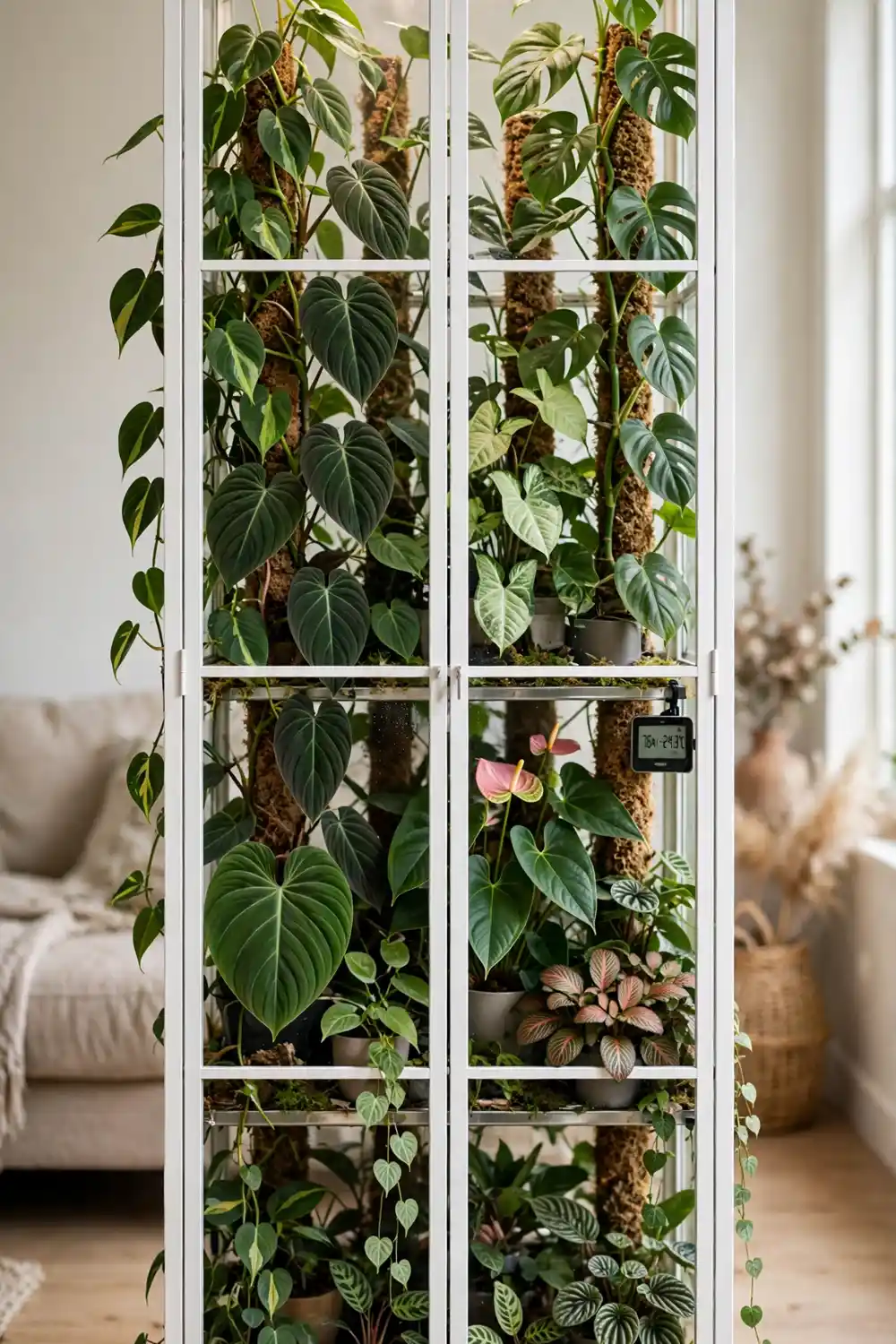
The tall MILSBO is the classic conversion, a steel and aluminium frame with tempered glass on all sides. IKEA lists it at 73 cm wide, 42 cm deep and 175 cm high, with three adjustable glass shelves, a lock and keys, and a frame that comes prepared for lighting, sold separately.
Its honest limit is weight. Each glass shelf is rated to about 5 kg, so big ceramic pots full of wet mix belong on the cabinet floor, with the light pots and cuttings up high. The height is what the big climbing aroids want, and like every tall cabinet it must be anchored to the wall.
- Footprint, 73 × 42 cm, 175 cm tall
- Shelves, three adjustable glass shelves, about 5 kg each
- Best for, tall climbers and a growing collection
- Watch, heavy pots stay on the cabinet floor
MILSBO wide, the tray table
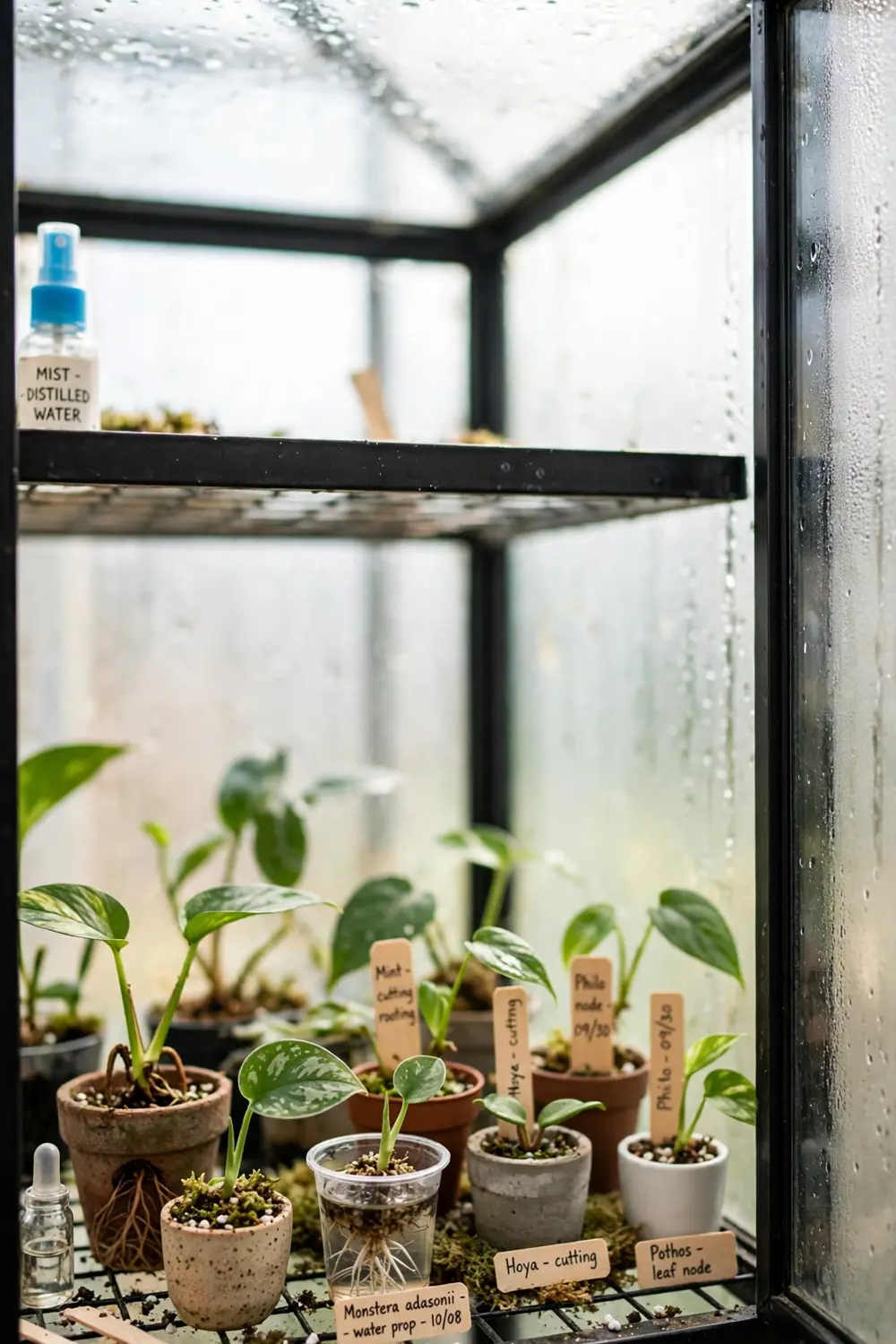
The wide MILSBO trades height for bench space, at about 101 cm wide, 38 cm deep and 100 cm high on the technical guides. That landscape shape suits propagation trays, seedling rows and broad, low displays better than its tall sibling.
It shares the family’s glass and powder-coated steel build and the same need to check the current listing before buying. Treat it as the propagator’s version of the same idea.
- Spread, about 101 × 100 cm of frontage and height
- Shape, landscape, trays sit side by side
- Suits, propagation and low, wide groupings
- Check, the live listing for its shelf ratings
RUDSTA, the magnetic one
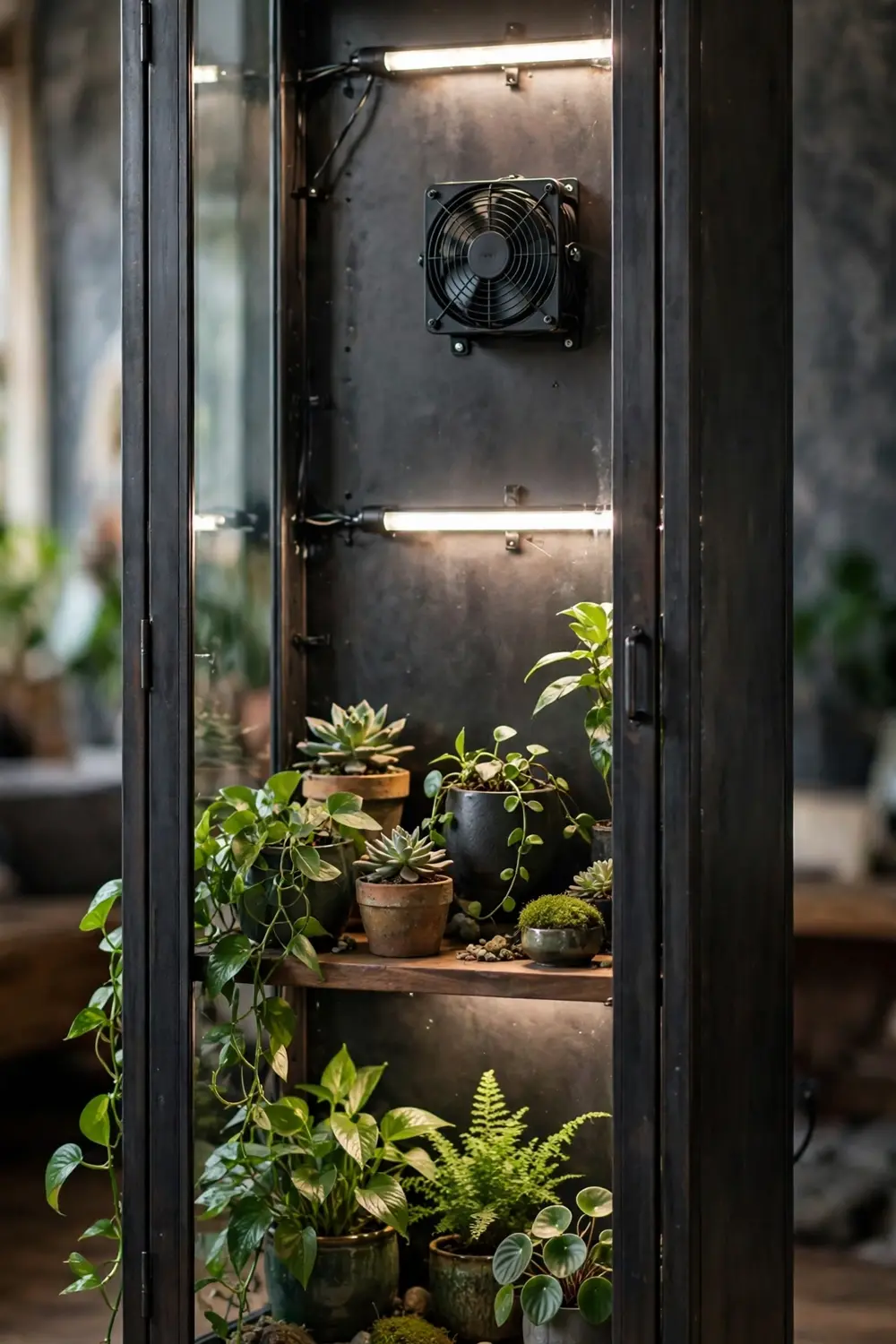
The RUDSTA family answers with a solid steel back panel, and that back is the trick. Lights, small fans and trellises mount to it with magnets and slide around as the collection changes, no adhesive and no drilling.
The wide RUDSTA runs about 80 × 37 × 120 cm and the tall about 42 × 37 × 155 cm, smaller volumes than the tall MILSBO. It also comes with prepared cable management, and it needs the same wall anchoring as any tall furniture.
- Back panel, solid steel, magnetic mounting
- Sizes, wide about 80 × 120 cm, tall about 42 × 155 cm
- Cabling, prepared cable management built in
- Trade-off, less growing volume than the tall MILSBO
| Cabinet | Best fit | Useful feature | Main constraint |
|---|---|---|---|
| MILSBO tall | Climbing aroids and moss poles | About 175 cm tall, top cable outlet | Glass on all sides, each shelf rated around 5 kg |
| MILSBO wide | Propagation trays and broad displays | About 101 cm wide | Less vertical clearance than MILSBO tall |
| RUDSTA tall or wide | Flexible layouts and magnetic accessories | Magnetic steel back, prepared cable management | Less overall growing volume than MILSBO tall |
The conversion, step by step
Step 1: Clean it and plan the shelves
Start with clean glass and a plan, because the shelf spacing decides everything downstream. Leave headroom above each shelf for the plant to grow into and for the light that will hang over it.
This is also when the heavy plants get assigned to the floor. A shelf rated around 5 kg is a promise, not a challenge.
- Order, clean first, plan second, plant last
- Headroom, growth space plus the light above
- Weight, the heaviest pots on the cabinet floor
Step 2: Route the power safely
A greenhouse cabinet runs lights and a fan in a damp box, so the electrics get their own step and their own rules. Use the cable outlet or cable management the cabinet already provides, and keep every power board and adapter outside the cabinet and above anywhere water can sit.
Protect the circuit with a safety switch, the RCD, and give cords a drip loop, a low sag before the socket, so condensation runs down and off instead of tracking into the plug. Anything beyond plug-in equipment belongs to a licensed electrician, and the cabinet itself never gets drilled for a cord.
- Route, the outlet or cable channel IKEA provided
- Position, boards and adapters outside, above water
- Protection, safety switch plus drip loops
- Boundary, plug-in only, no drilling, no hardwiring
Step 3: Fit the grow lights
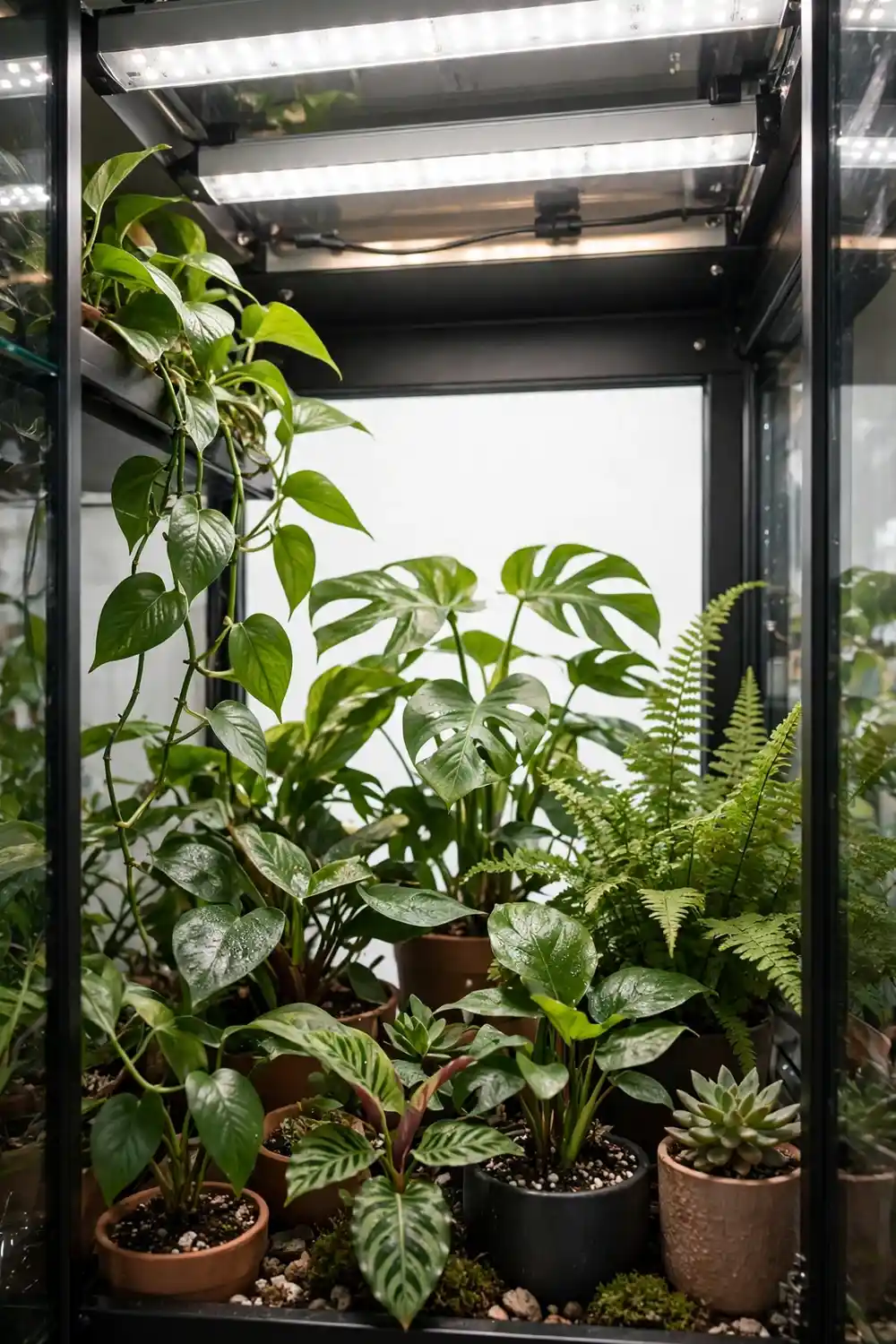
Glass doors alone do not feed a plant. Fit full-spectrum LED bars made for growing, one over each shelf, because a single light at the top leaves the lower shelves in gloom.
Secure every fixture as its manufacturer directs and measure the light at leaf level if you can. Decorative cabinet lighting is not grow lighting, whatever the box promises.
- Coverage, a light over every shelf
- Type, full-spectrum LED made for plants
- Measure, at the leaves, not at the glass
- Fixings, manufacturer instructions, always
Step 4: Add gentle airflow
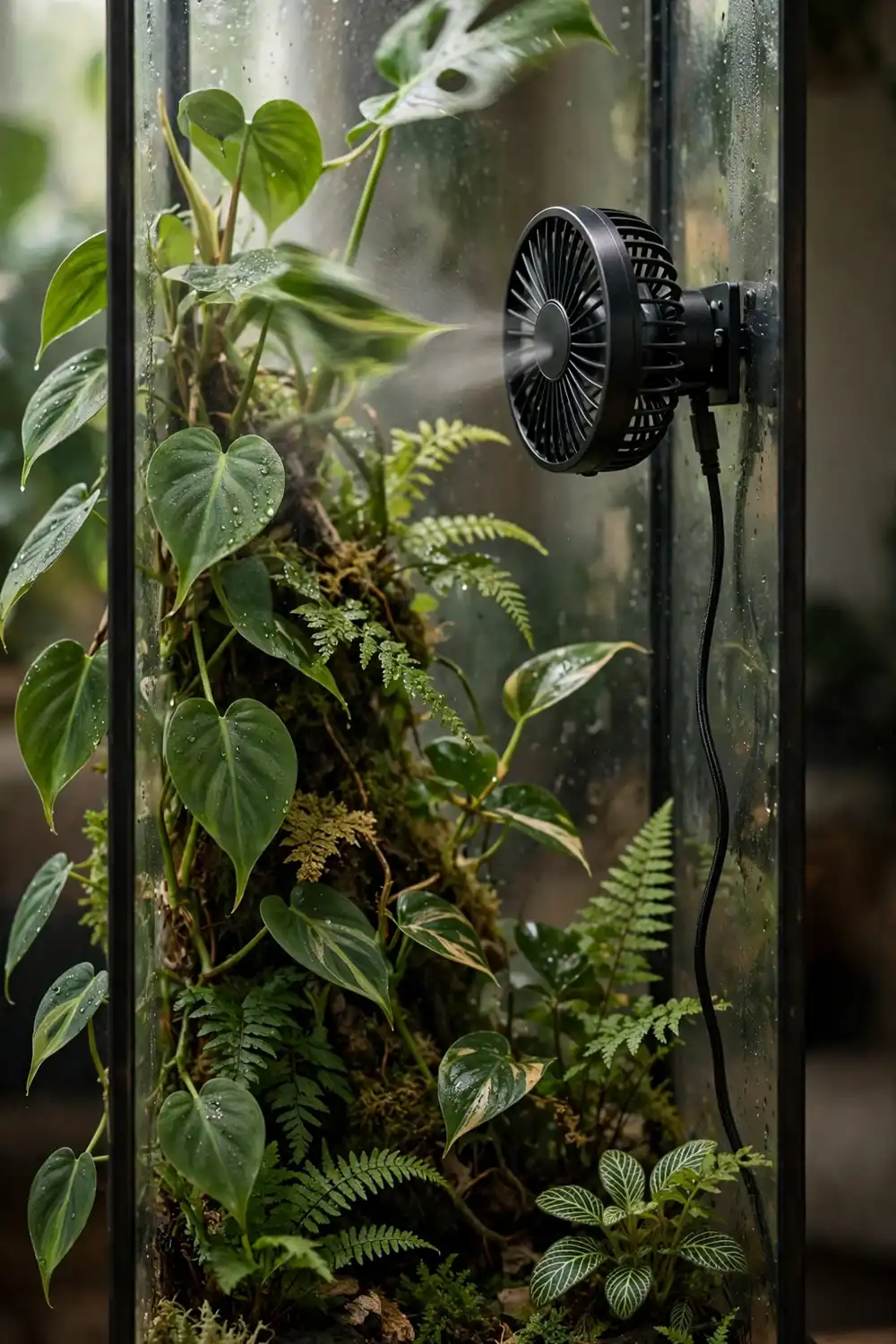
A sealed, still cabinet is a fungus incubator with good lighting. A small fan, the little USB kind, keeps the air inside moving so humidity evens out and condensation does not settle on leaves.
Gentle is the setting. The fan should stir the air, not blast delicate foliage, and remember that moving the same air around is not fresh air, so the doors still open on a regular rhythm.
- Fan, small, quiet, low speed
- Aim, circulation, never a direct blast
- Fresh air, doors opened regularly regardless
Step 5: Protect shelves and floor from water
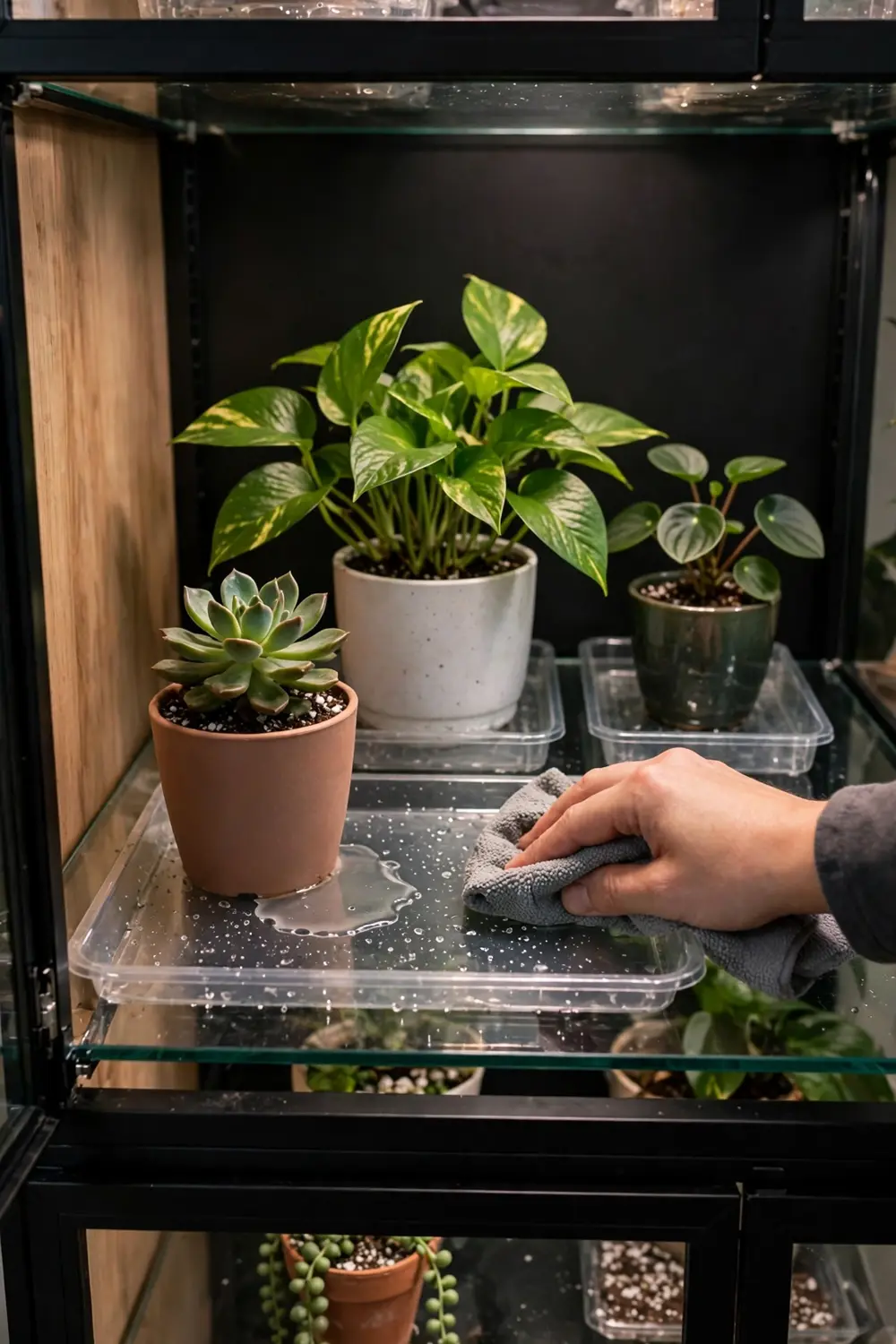
Every pot sits on a saucer or a waterproof tray, no exceptions, because drips are certain and glass shelves over a living room floor forgive nothing. Wipe spills as they happen and put a mat under the cabinet if the floor is timber.
The frame is powder-coated steel and glass, which handles the damp well. Your floorboards are the vulnerable surface in the room.
- Under every pot, a saucer or tray
- Spills, wiped up straight away
- Floor, a mat beneath the cabinet
Step 6: Run it empty, then stock it
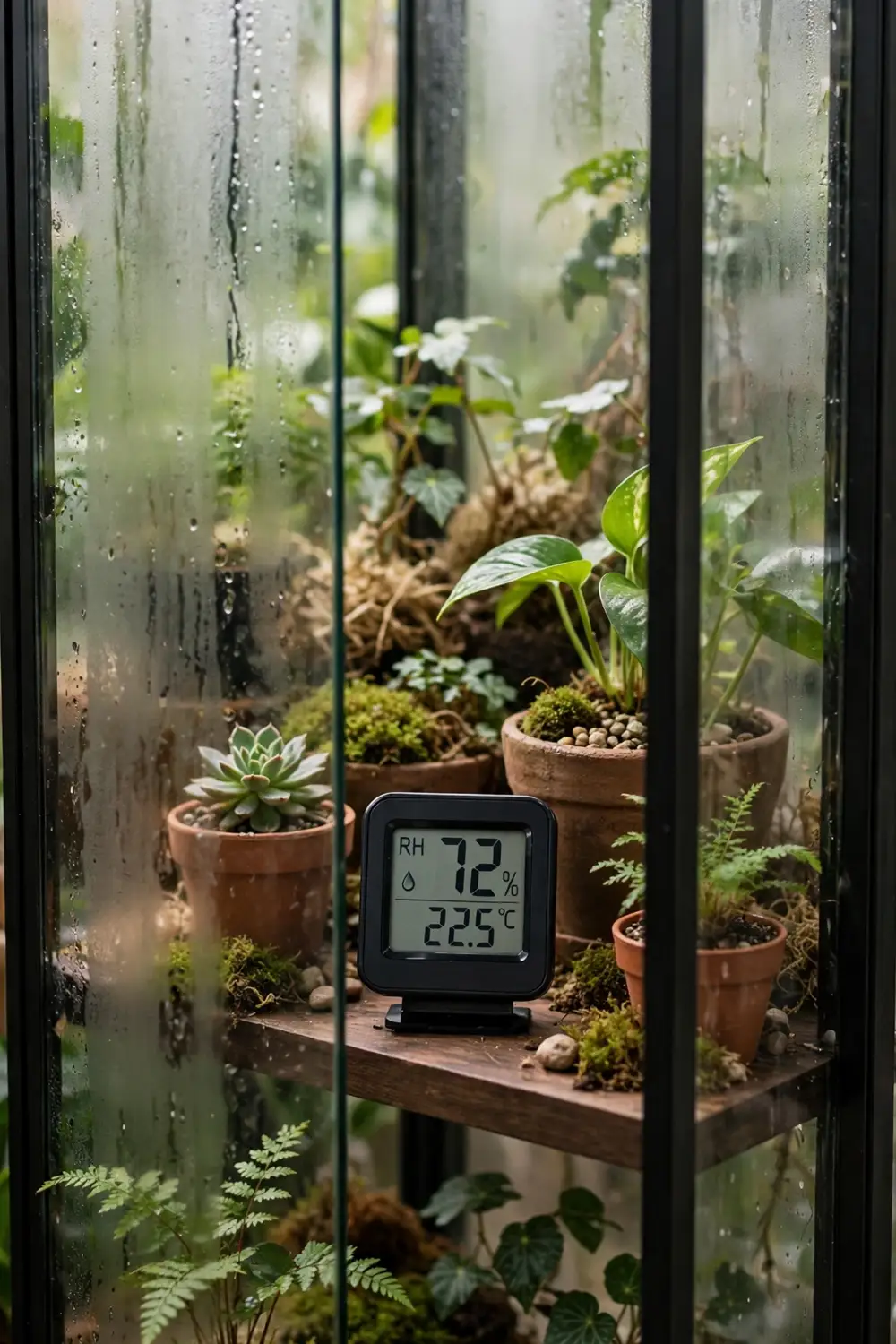
Before a single plant moves in, run the cabinet empty for at least one full light cycle. Watch the temperature and humidity swing, check where condensation forms, and fix the surprises while the only casualty would be your pride.
Then stock it gradually. A hygrometer inside tells you the truth day to day, and a humidifier, if you add one, stays controlled and outside the sealed box rather than fogging it from within.
- Test, one full light cycle, empty
- Watch, heat, humidity, condensation points
- Stock, gradually, with a hygrometer inside
- Humidifier, controlled, outside the cabinet
Running it: light, air and water
The daily rhythm is observation, not intervention. Light runs on a timer at the length your plants want, the fan keeps the air honest, and the doors open whenever you pass with a moment to spare.
Watering changes character inside glass. Enclosed plants dry out more slowly, so the fixed weekly soak that suited the windowsill will rot roots here, and the rule becomes check the mix with a finger and water only what is actually dry.
Seal the gaps last, if at all. Weatherstripping the doors lifts humidity, and it goes on only after the lights and fan are running well, added gradually while you watch the temperature and condensation respond.
Frequently asked questions
Are IKEA cabinets good for plants?
They can be, provided the cabinet has suitable shelves, room for lighting and a way to manage airflow. The MILSBO is the popular option, but check its dimensions and its roughly 5 kg shelf limit before converting, and expect to add the growing equipment yourself.
Do plant cabinets need a fan?
Not every cabinet does, but some form of ventilation is not negotiable. Opening the doors regularly may be enough for a lightly planted cabinet, while a small fan earns its place in a crowded or consistently humid setup.
What lighting goes inside a plant cabinet?
Full-spectrum LED grow lights are the practical choice. Pick fixtures that fit the shelves and cover every level, and judge them by the light measured at leaf level rather than how bright the cabinet looks from the sofa.
How do you protect shelves from water?
Saucers or waterproof trays under every pot, spills wiped promptly, and surfaces that tolerate regular cleaning. Check the shelf weight limit too, especially once large pots and water-filled trays get involved.
Can you keep tropical plants in a glass cabinet?
Yes, and tropical foliage is the classic use, ferns and humidity-loving plants benefit from the more humid conditions a cabinet holds. Needs still vary by plant, so monitor temperature, humidity, light and airflow, and do not keep the cabinet permanently sealed.
The bottom line
The cabinet is furniture, the greenhouse is the system you build inside it, lights per shelf, gentle moving air, power routed like it matters, and watering slowed to the cabinet’s own pace. Start simple, run it empty, and let the hygrometer argue with your assumptions.
New to houseplants generally? Our guide to houseplants for beginners covers the care foundations this cabinet builds on.