
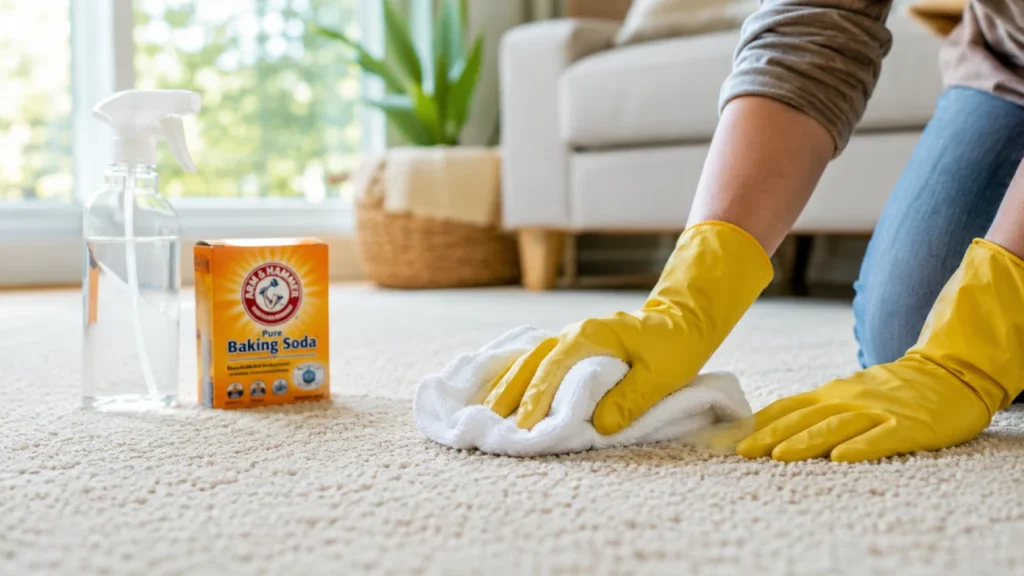
Featured Snippet: To clean vomit off carpet, scrape up solids, blot the area with a paper towel, apply a mix of water and enzyme cleaner or dish soap, let it sit for 10 minutes, then blot dry. Sprinkle baking soda to absorb odor and vacuum once dry.
It always happens at the worst possible moment. Your dog eats something questionable, your toddler catches a stomach bug, or a friend has one drink too many at your dinner party. Within seconds, you’re staring at a fresh vomit stain sinking into your carpet fibers, and you know the clock is ticking. If you’re searching for how to clean vomit off carpet, you already understand that speed matters more than almost anything else here.
The good news is that vomit stains, while unpleasant, are highly treatable if you act fast and use the right approach. According to the American Cleaning Institute, protein-based stains like vomit set permanently within 24 to 48 hours if left untreated, but they lift out completely when treated within the first hour. This guide walks you through the exact steps, tools, and products that professional carpet cleaners actually use, plus what to do about lingering odor and deep stains.
This article covers the fastest way to remove fresh vomit stains, the best home and store-bought cleaning solutions, how to handle dried or set-in stains, and how to eliminate the smell for good. You’ll also find a quick-reference table comparing cleaning methods and answers to the most common questions people search for on this topic.
Why Vomit Stains Carpet So Fast
Vomit contains stomach acid, bile, and partially digested food. This combination is acidic and protein-heavy, which means it bonds with carpet fibers almost immediately. The acid can also alter the dye in your carpet, causing a stain even after the mess itself is gone.
Carpet cleaning expert Melissa Maker, founder of Clean My Space, notes that “the biggest mistake people make is scrubbing right away. Scrubbing pushes the stain deeper into the padding instead of lifting it out.” This is why the order of your steps matters just as much as the products you use.
Step-by-Step: Cleaning Fresh Vomit From Carpet
Follow these steps as soon as you notice the mess. Speed genuinely determines your outcome.
Remove Solid Material First
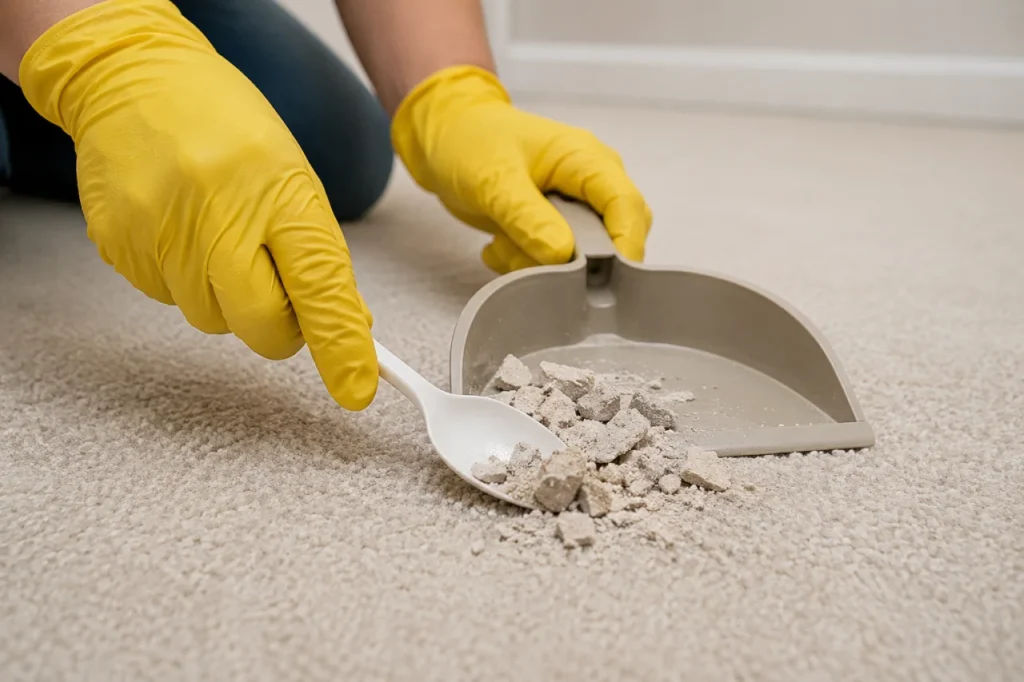
Put on rubber gloves. Use a spoon, dull knife, or piece of cardboard to scoop up as much solid material as possible. Work from the outside of the stain toward the center so you don’t spread it further.
Toss the solids into a plastic bag and seal it before throwing it away. This step alone removes most of the acidity and bulk that would otherwise soak into your carpet padding.
Blot, Don’t Rub
Grab paper towels or a clean cloth and blot the area firmly. Press straight down and lift, rather than wiping side to side. Rubbing spreads the stain and pushes liquid deeper into the fibers.
Repeat with fresh paper towels until they come up mostly dry. This can take five or six rounds, but it’s worth the effort.
Apply a Cleaning Solution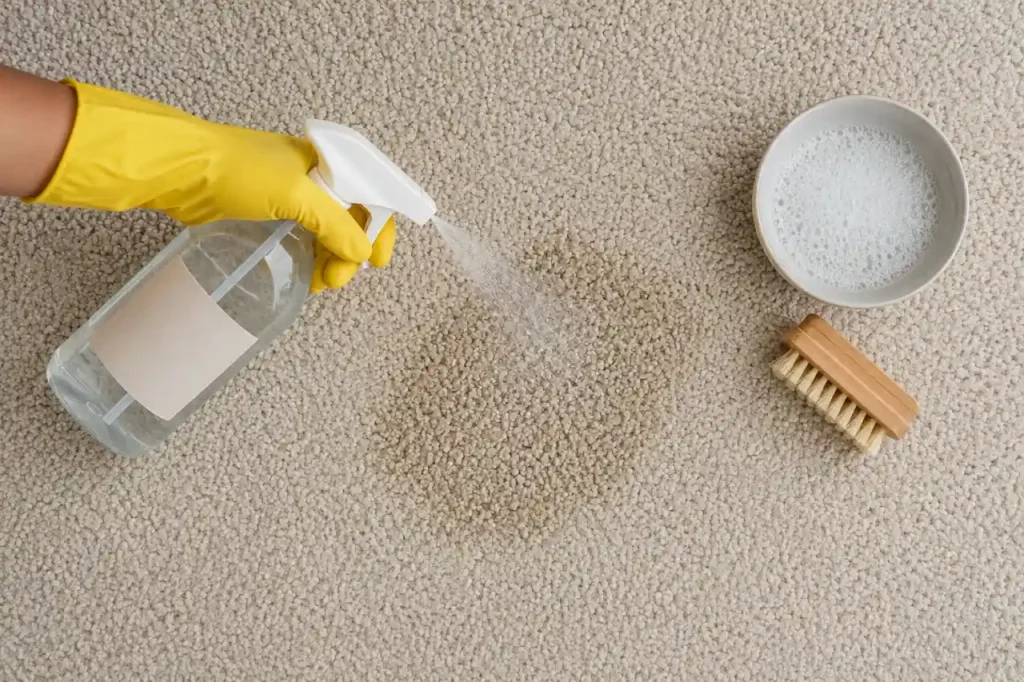 You have two solid options here, depending on what you have at home.
Option 1: Enzyme cleaner. Enzyme-based cleaners are the gold standard for biological stains because they break down proteins at a molecular level instead of just masking them. Spray the area generously and let it sit for 10 to 15 minutes.
Option 2: DIY dish soap solution. Mix one teaspoon of dish soap with two cups of warm water. Dish soap cuts through grease and protein residue effectively and works almost as well as enzyme cleaners for fresh stains.
Apply either solution directly to the stain, working it in gently with a soft brush or cloth. Avoid soaking the area completely, since too much moisture can seep into the padding and cause mold.
Rinse and Blot Again
Once the solution has had time to work, blot the area with a clean, damp cloth to lift the loosened residue. Follow with dry towels to absorb excess moisture. Press down with your foot on a folded towel for extra suction if the carpet still feels damp.
Deodorize With Baking Soda
Sprinkle a generous layer of baking soda over the treated area and leave it for at least four hours, or ideally overnight. Baking soda is a natural odor absorber that pulls moisture and smell out of carpet fibers. Vacuum thoroughly once it’s dry.
How to Handle Dried or Set-In Vomit Stains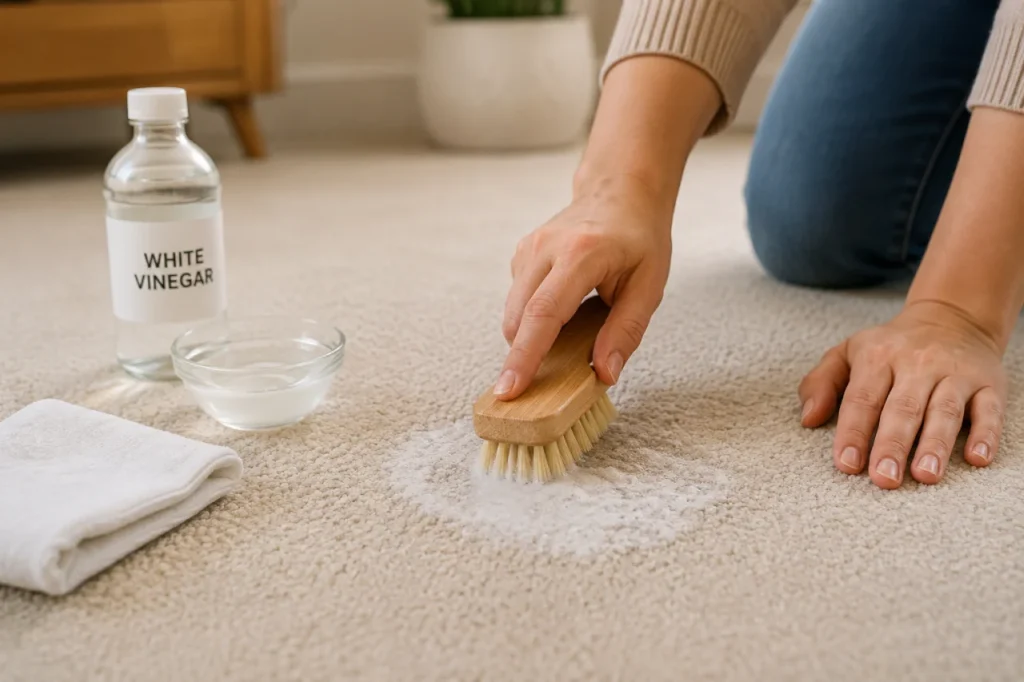 Dried stains take more effort, but they’re not impossible to remove. Here’s what to do differently:
- Scrape off dried residue with a dull knife or spoon.
- Vacuum the area to lift loose particles.
- Mix a solution of one part white vinegar to one part warm water and spray it directly on the stain.
- Let it sit for 10 minutes so the acid in the vinegar breaks down the old protein bonds.
- Blot with a clean cloth, then follow with an enzyme cleaner to finish the job.
- Repeat if needed. Set-in stains often require two or three treatment cycles.
For carpets with deep or old stains, a wet vacuum or carpet extractor pulls out embedded residue that blotting alone can’t reach. Renting one from a hardware store costs around $30 to $40 per day and works well for larger areas or multiple stains.
Comparing Cleaning Methods
| Method | Best For | Effectiveness | Cost |
|---|---|---|---|
| Enzyme cleaner | Fresh and set-in stains | High | $6–$12 per bottle |
| Dish soap + water | Fresh stains | Medium-High | Under $1 |
| Vinegar solution | Dried, odor-heavy stains | Medium | Under $1 |
| Baking soda | Odor removal | High (odor only) | Under $1 |
| Professional cleaning | Deep, widespread stains | Very High | $150–$300 |
A 2025 survey by the National Association of Carpet Cleaners found that enzyme cleaners outperformed vinegar and dish soap combinations in removing both stain and odor in over 80% of home carpet cases tested.
Removing the Smell for Good
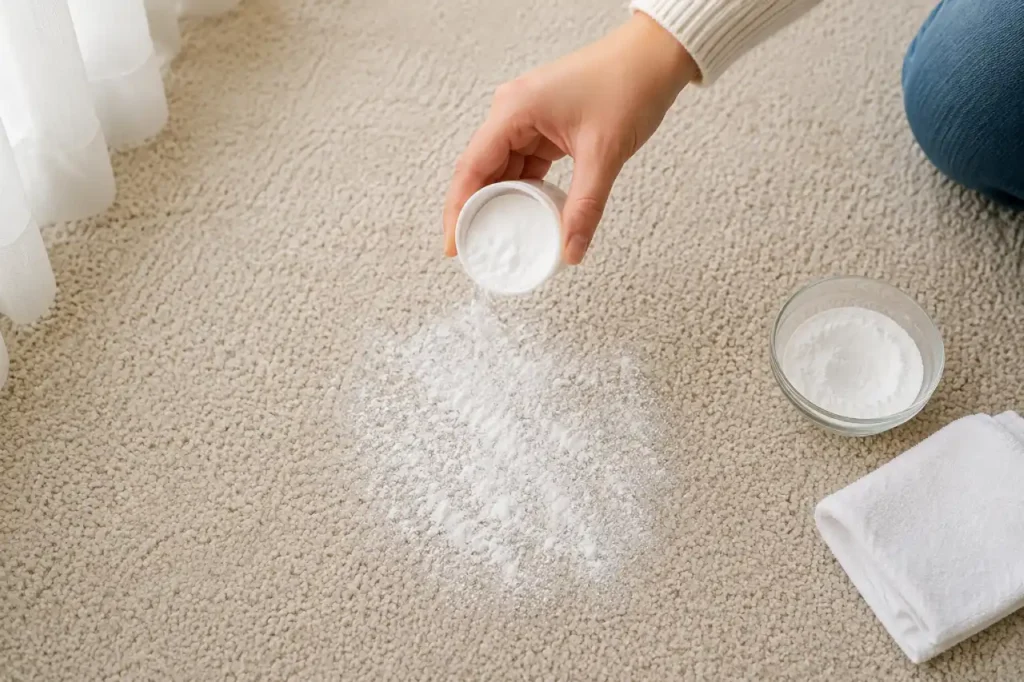
Even after the stain disappears, odor can linger in the padding underneath. If baking soda alone doesn’t fully clear the smell, try this:
- Mix equal parts white vinegar and water in a spray bottle.
- Lightly mist the area, avoiding oversaturation.
- Let it air dry completely, ideally near an open window or fan.
- Repeat the baking soda treatment once more if odor persists.
For persistent smell that won’t go away, the padding underneath the carpet may have absorbed liquid. In that case, a professional steam cleaning treatment reaches deeper layers that home methods can’t touch.
What Not to Do
Avoid these common mistakes, since they often make the situation worse instead of better:
- Don’t use hot water. Heat can set protein stains permanently, similar to how heat sets blood stains into fabric.
- Don’t scrub aggressively. This damages carpet fibers and spreads the stain.
- Don’t skip the blotting step before applying cleaner. Excess liquid dilutes the cleaning solution’s effectiveness.
- Don’t use bleach on colored carpet. It can strip the dye and leave a permanent light spot.
When to Call a Professional
If the stain covers a large area, has soaked through to the padding, or keeps returning after multiple treatments, it’s time to call a professional carpet cleaning service. Professionals use hot water extraction equipment that reaches deeper than home tools and can fully sanitize the affected area. This matters most in homes with pets, young children, or anyone with respiratory sensitivities, since lingering bacteria can affect indoor air quality.
Frequently Asked Questions
Does vomit permanently stain carpet?
Not if treated quickly. Fresh stains treated within an hour usually lift out completely. Stains left over 24 hours become much harder to remove fully.
Can I use carpet shampoo instead of enzyme cleaner?
Carpet shampoo can help but works better as a follow-up step after enzyme cleaner has broken down the protein residue first.
Why does the smell come back after cleaning?
Residual bacteria in the carpet padding often causes returning odor. Deep-clean with an enzyme treatment or call a professional for padding-level extraction.
Is vinegar or baking soda better for vomit stains?
Vinegar works best for breaking down dried residue. Baking soda works best for absorbing lingering odor. Using both together often gives the best result.
How long should cleaning solution sit before blotting?
Most solutions need 10 to 15 minutes to break down the stain fully. Longer isn’t always better, since some solutions can dry out and become harder to lift.
Final Thoughts
Cleaning vomit off carpet feels overwhelming in the moment, but the process itself is straightforward once you know the steps. Speed matters more than any specific product, so removing solids and blotting the area immediately gives you the best possible outcome. From there, enzyme cleaners, dish soap, or a vinegar solution can each finish the job depending on how fresh or set-in the stain is.
Keep a small cleaning kit ready with an enzyme cleaner, baking soda, and clean cloths so you’re never caught off guard. A little preparation now saves you from a much bigger headache later, and your carpet will thank you for it.
