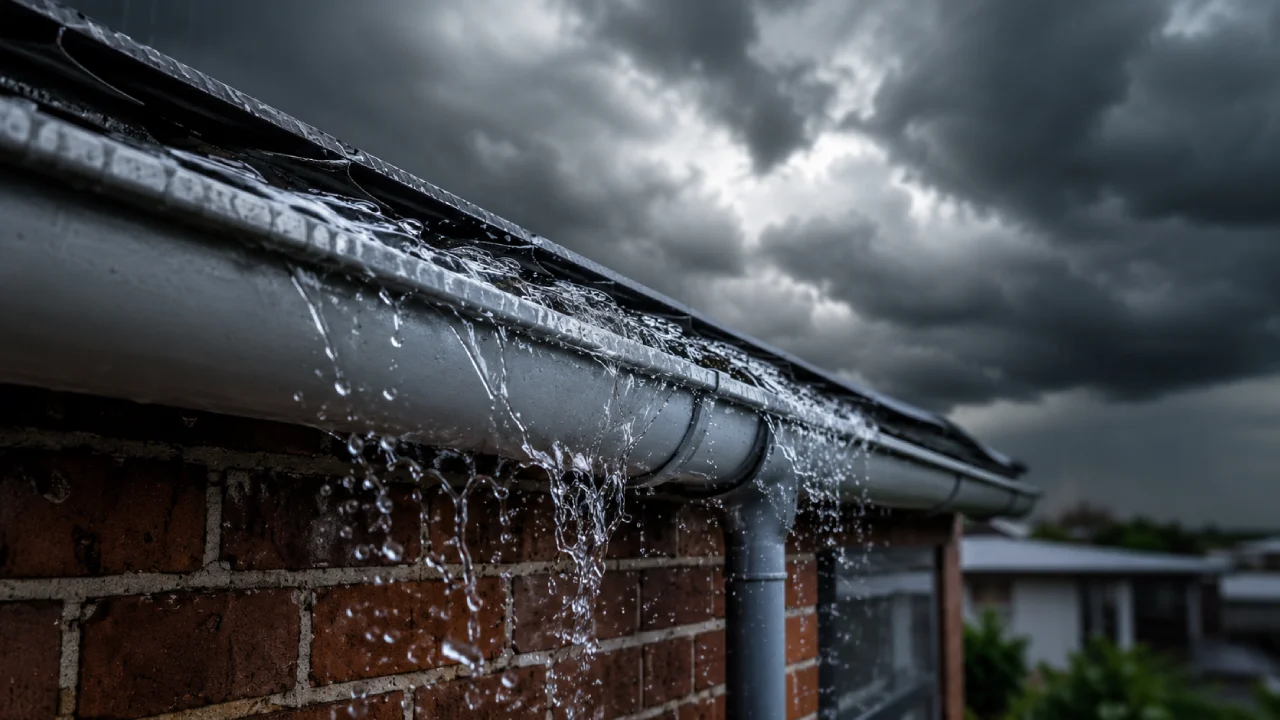
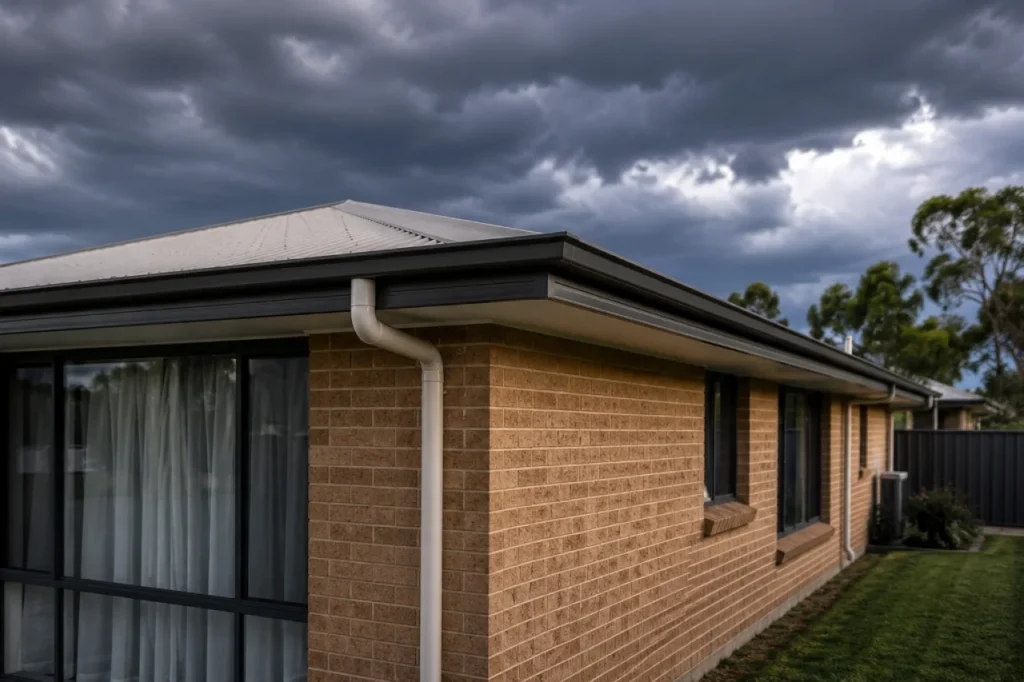
The sky is turning grey, the forecast says storms by tonight, and your gutters are still stuffed with last autumn’s leaves. This is the moment most homeowners realise a gutter clean before rain isn’t a nice-to-have chore. It’s damage control. When rain hits a clogged system, water has nowhere to go but over the edge, down your external walls, and straight toward your footings.
You don’t need a whole weekend or a truckload of gear to fix this. A focused hour, the right tools, and a clear plan can get your gutters ready before the first drop falls. This guide walks you through exactly what to check, what to clean, and what to skip when a storm is closing in fast.
What this article covers: how to tell if your gutters need cleaning before a storm, the fastest safe method to clear them, what to do when you’re short on time, and when to call a professional instead of climbing the ladder yourself. You’ll also get a quick-reference checklist and answers to the questions homeowners search most.
Quick Answer: Clean your gutters before rain by clearing large debris first, flushing downpipes with a hose, checking for sagging or loose brackets, and confirming water flows away from your footings. Do this at least once before every rainy season, and sooner if trees overhang your roof.
Why Clean Gutters Before It Rains
Gutters exist to move water away from your roofline and footings. Once leaves, twigs, and grit pack into the trough, that water has nowhere to go. It backs up under roof tiles, pools near your footings, and can seep into your subfloor.
A gutter that is 70% blocked behaves like it is 100% blocked the moment heavy rain hits — water does not trickle through debris fast enough to matter.
The financial stakes are real. Water damage claims are among the most common and costly home insurance losses, and clogged gutters are a frequent contributing cause. A few dollars in gloves and a scoop is a small price against a soaked subfloor or cracked footings.
Signs Your Gutters Need Attention Now
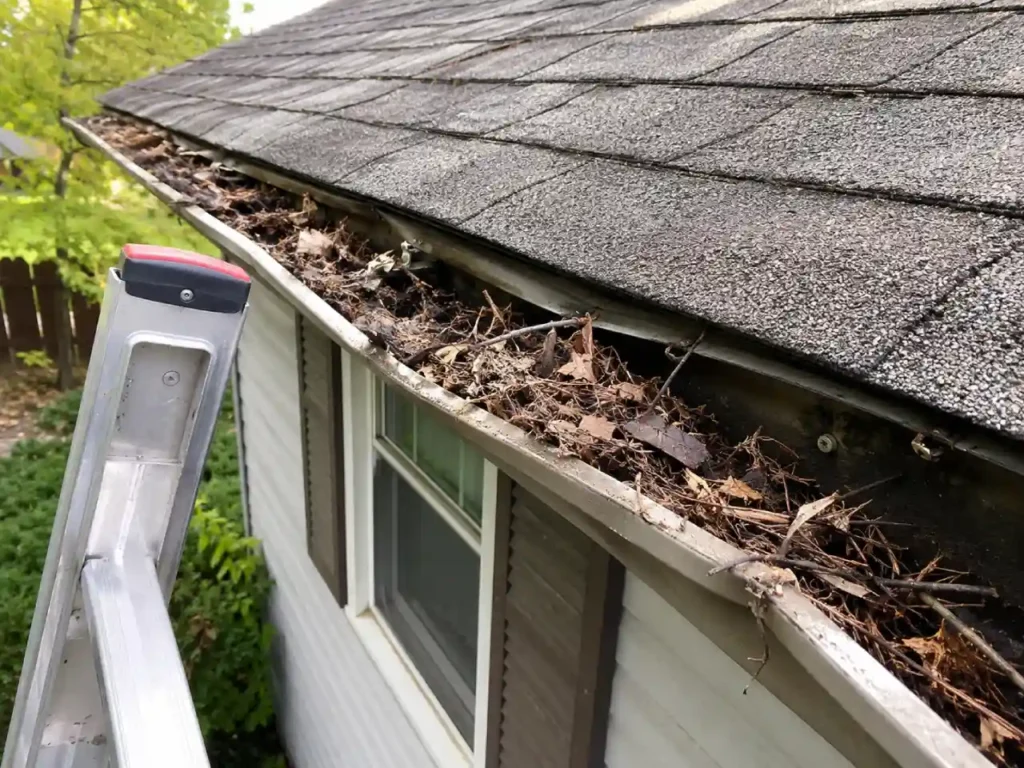
Look for these warning signs before the next storm rolls in:
- Visible plant growth or moss sprouting from the gutter line
- Water marks or streaking on the external walls below the gutters
- Sagging sections that pull away from the fascia board
- Overflow during light rain, not just heavy downpours
- Birds or pests nesting near the downpipe openings
If you spot even two of these, treat it as urgent. Rain is not the time to discover your gutters can’t keep up.
How to Clean Gutters Before a Storm Hits
Speed matters when a storm is on the way, but skipping safety steps causes more harm than the clog ever would. Ladder falls kill more than 30 Australians every year, and over 1,000 Queenslanders are hospitalised after falling off ladders each year — most of these injuries happen around the home, and a meaningful share of them happen during routine home maintenance like gutter cleaning. If you need a ladder, only buy one that meets the Australian Standard (AS/NZS 1892). Rushing is exactly how that happens.
Gather the Right Tools First
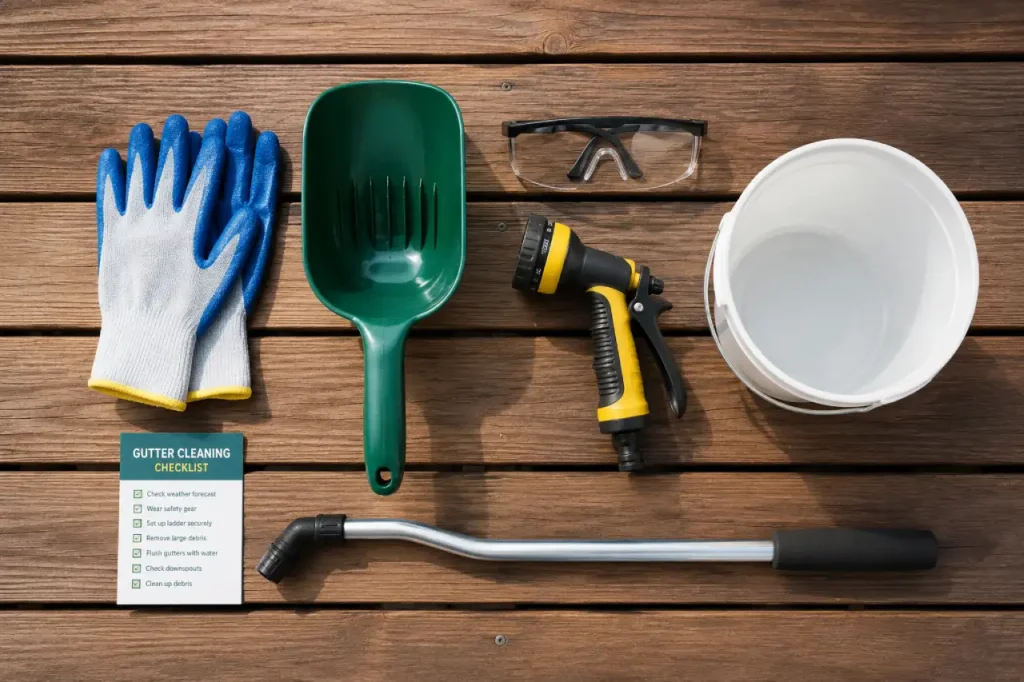
You want everything in reach before you climb, not halfway up a ladder patting your pockets. Keep this short list handy:
| Tool | Purpose |
|---|---|
| Sturdy extension ladder | Reach the gutter line safely |
| Work gloves | Protect hands from sharp edges and grime |
| Plastic gutter scoop or trowel | Remove compacted debris |
| Garden hose with spray nozzle | Flush fine debris and test flow |
| Bucket or tarp | Collect debris instead of dumping it on the lawn |
| Safety glasses | Shield eyes from flying grit and insects |
Clear the Big Debris First
Start near the downpipe and work toward the far end of the gutter run. Scoop out leaves, twigs, and compacted muck by hand or with your trowel, dropping it straight into a bucket. Working toward the downpipe instead of away from it pushes loose material into the very outlet you need clear, so always move away from the downpipe as you clean.
Flush and Test the Flow
Once the bulk debris is gone, run water from a hose through the gutter section by section. Watch where it collects. Slow drainage at any point usually signals a low spot, a bent section, or a partial downpipe clog that needs a plumber’s snake or a firm blast of water pressure.
Check Downpipes and Extensions
A clean gutter with a blocked downpipe is still a flood risk. Remove the downpipe strainer if one is fitted, clear any buildup, and confirm the extension carries water at least 1.2 to 1.8 metres from your footings. Short or missing extensions are one of the most overlooked causes of subfloor moisture.
When You’re Short on Time
If a storm is hours away, prioritise triage over perfection.
- Clear sections above entry doors, patios, and low rooflines first
- Confirm at least one downpipe per gutter run is fully open
- Redirect any clogged downpipe extensions away from the footings
A partial clean that keeps water moving beats a thorough clean you never finish in time.
DIY vs. Hiring a Professional

Not every situation calls for climbing up yourself. Consider the comparison below before deciding.
| Factor | DIY Cleaning | Professional Service |
|---|---|---|
| Cost | Low, mostly your time | See our Australian gutter cleaning cost guide |
| Speed | Depends on your schedule | Often same-day or next-day booking available |
| Safety | Ladder risk, especially on multi-storey homes | Trained crews with proper equipment |
| Thoroughness | Good for single-storey, accessible homes | Better for steep roofs, tall homes, or heavy buildup |
| Inspection value | Visual only | Often includes gutter and roof condition checks |
If your home is single-storey with easy roof access, DIY is usually fine. Two-storey homes, steep pitches, or gutters you haven’t cleaned in over a year are strong reasons to call a professional instead of risking a fall.
Gutter Clean Before Rain in Australia
Storm season timing varies a lot across Australia, so the “right time” to clean depends on where you live. Homes in Queensland and the Northern Territory face their wet season roughly between November and April, while southern states like Victoria and New South Wales see the heaviest storm risk in spring and summer. Whatever the calendar says, the rule stays the same: clean your gutters and downpipes before the region’s storm season builds, not after the first downpour has already tested them.
Finding Local Gutter Cleaners Near You
If a DIY clean isn’t practical, searching “gutter cleaning near me” is usually the fastest way to line up help before a storm. Most local gutter cleaning services can provide a quote within minutes and many offer same day gutter cleaning or emergency gutter cleaning when a storm warning is already in effect. A professional gutter cleaning company will typically clear both the gutters and the downpipe, check for blocked downpipes, and flag any drainage system issues before they turn into a bigger repair.
For residential gutter cleaning, ask upfront whether the quote includes downpipe clearing and a basic roof runoff check, since blocked downpipes are one of the most common causes of overflow during Australian storms. Booking a local gutter cleaner ahead of the rainy season, rather than during it, also tends to be cheaper and easier to schedule.
Preventing Future Clogs
Cleaning before every storm gets old fast. A few upgrades cut down how often you need to do it:
- Gutter guards reduce leaf buildup, though fine grit can still slip through cheaper mesh
- Seasonal trimming of overhanging branches limits debris reaching your roof
- Downpipe extensions keep water clear of your footings even during light clogs
- Twice-yearly cleaning keeps most homes ahead of major storms
None of these remove the need to check your gutters occasionally, but they stretch the time between full cleanings.
Frequently Asked Questions
How often should I clean gutters before rainy season?
Clean at least twice a year, once before spring storms and once before autumn rain. Homes with overhanging trees may need a mid-season check as well.
Can I clean gutters in light rain?
Yes, if the rain is light and gutters are free of major obstructions. Avoid it during heavy rain, lightning, or on a wet or icy roof surface.
What happens if I don’t clean gutters before rain?
Water overflows the sides, soaks fascia boards, and can seep into your footings or subfloor. Repeated overflow also accelerates rot and rust over time.
Is it safe to clean gutters alone?
It’s safer with a second person holding the ladder base and aware of your location. Solo cleaning increases fall risk, especially on extension ladders above one storey.
Do gutter guards mean I never have to clean gutters?
No. Guards reduce debris but don’t eliminate it entirely. Fine sediment, seeds, and pine needles still require occasional flushing.
How much does gutter cleaning cost?
Australian gutter cleaning costs vary by home size, roof height and how blocked the gutters are — see our Australian gutter cleaning cost guide for the full per-source breakdown.
How long does gutter cleaning take?
A single-storey home usually takes 30–60 minutes. Two-storey homes, heavy debris, or blocked downpipes can push the job to two hours or more.
Is gutter cleaning worth it before rain?
Yes. A short cleaning session costs far less than repairing water damage, rotted fascia, or a flooded subfloor caused by an overflowing gutter system.
Can clogged gutters damage the roof?
Yes. Overflow can back up under roofing edges, soak the fascia, and cause rot or leaks that spread into the roof structure over time.
Final Thoughts
A gutter clean before rain takes far less time than repairing water damage after the fact. Clear the big debris, flush the fine particles, check every downpipe, and confirm water lands well away from your footings. Skip the ladder if your roof is steep or hasn’t been checked in years, and book a professional instead.
Storms don’t wait for a convenient weekend, so keep this checklist handy. A clear gutter system protects your roof, external walls, and footings long after the rain has stopped. Take the twenty minutes now, before the forecast turns from cloudy to urgent.