
A first home in Australia can attract three kinds of government help at once, and most buyers only hear about one of them.
The grant, the stamp duty saving and the federal deposit help each run on different rules, different dates and different tests, and the numbers change sharply from one state to the next. A figure that was right last year can be wrong today, and a guide written for another state can cost you money.
This guide is the 2026 state-by-state answer to first home buyer grants australia. It lists what each state pays, what duty you skip, and which federal schemes stack on top, with the contract date beside every figure. Find your state in the table, then read the two sections that apply to you.
How the three kinds of help differ

A grant is cash paid to you once, usually after settlement, and it only ever comes from your state or territory. Stamp duty relief is tax you do not pay, and it is a separate benefit with its own test, so winning the grant does not guarantee the duty saving and losing one does not cost you the other.
The federal schemes are a third kind of help altogether. One is a guarantee that lets you borrow with a small deposit and no lenders mortgage insurance, one is shared equity where the Government owns part of the home with you, and one lets you release your own super savings early. None of them pays you a grant, and none of them replaces the state help, so the smart move is to work out the state figures first and then see which federal scheme fits on top.
Grants and stamp duty, state by state
| State | Grant (new homes) | Nil duty up to | Date regime |
|---|---|---|---|
| NSW | $10,000 (new home ≤$600,000; land plus build ≤$750,000) | $800,000 (land nil $350,000) | Contracts from 1 Jul 2023 |
| VIC | $10,000 (new home ≤$750,000) | $600,000 | Thresholds since 1 Jul 2017 |
| QLD | $30,000 (contracts ≥20 Nov 2023, value <$750,000; confirmed continuing from 1 Jul 2026) | About $700,000 — the $17,350 first-home deduction covers duty in full to that point (contracts on/after 9 Jun 2024); new homes and vacant land get the full concession with no cap from 1 May 2025 | Contracts ≥20 Nov 2023 (grant); concessions from 9 Jun 2024 and 1 May 2025 |
| SA | $15,000 (no cap for contracts ≥6 Jun 2024) | No cap — $0 duty on a new home, off-the-plan purchase or vacant land (contracts ≥6 Jun 2024); established homes pay full duty | Contracts ≥6 Jun 2024 |
| WA | $10,000 (secondary sources citing RevenueWA; cap $800,000 south / $1,000,000 north of the 26th parallel) | $600,000 (land nil $450,000) | Transactions from 7 May 2026 |
| TAS | $20,000 (secondary-corroborated; 1 Jul 2026–30 Jun 2027, no cap) | None — no relief from 1 Jul 2026 | Transactions 1 Jul 2026–30 Jun 2027 |
| NT | $50,000 HomeGrown Territory Grant (contracts 1 Oct 2024–30 Sep 2027) | None — no general concession; house-and-land package exemption to 30 Jun 2027 (secondary sources) | Contracts 1 Oct 2024–30 Sep 2027 |
| ACT | $0 — no grant (abolished 1 Jul 2019) | $0 duty at any price (from 1 Jul 2026, no income test) | From 1 Jul 2026 |
New South Wales
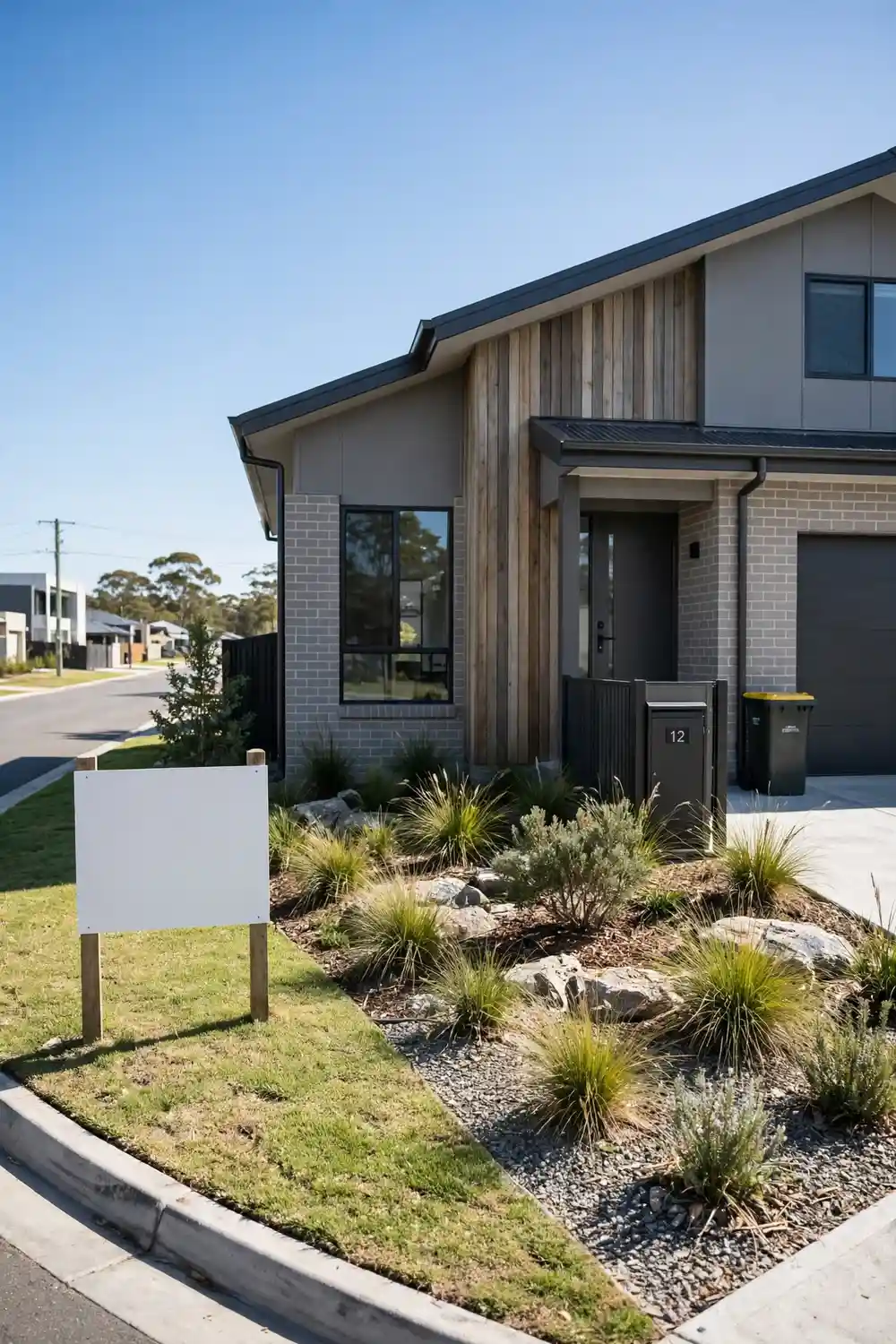
- Grant — $10,000 for a new or substantially renovated home priced at $600,000 or less, or vacant land plus a building contract totalling $750,000 or less.
- One grant per deal — a single grant is paid per property transaction, not one per buyer, and it is not means tested and not taxed.
- Residency — for contracts from 1 Jul 2023, move in within 12 months of settlement and live there for 12 continuous months.
- Duty — nil duty on homes up to $800,000 and a concessional rate from $800,001 to under $1,000,000, for contracts exchanged on or after 1 Jul 2023. Vacant land is nil up to $350,000 and concessional to under $450,000.
- Worked saving — at $800,000 a first home buyer saves the full $30,187 of standard duty, calculated from the Revenue NSW 2026–27 duty scale. At exactly $1,000,000 the saving is $0.
- Land packages — for a house and land package, duty is paid on the land value only, and our house and land package guide explains how that works.
- Watch out — the foreign purchaser surcharge still applies on top of the concession.
Victoria
- Grant — $10,000 for a new home valued up to $750,000, with off-the-plan homes assessed on the contract price, for contracts signed on or after 1 Jul 2013.
- Who qualifies — all title-holders must be applicants, each a natural person aged 18 or over, and at least one must be an Australian citizen or permanent resident.
- New Zealand citizens — for settlements on or after 26 Nov 2025, New Zealand citizens are eligible whether or not they hold a special category visa.
- Residency — live in the home for 12 continuous months within 12 months of settlement or construction finishing.
- Duty — nil duty up to $600,000 and a reduced rate from $600,001 to $750,000, for new, established and vacant land purchases, with thresholds unchanged since 1 Jul 2017.
- Choose one — the pensioner duty reduction is a once-only alternative to the first home buyer concession, so you pick one, not both.
Queensland

- Grant — $30,000 for contracts signed on or after 20 Nov 2023, with the value under $750,000 including land and contract variations, for new homes only.
- Still $30,000 — the grant was confirmed as continuing for eligible contracts signed from 1 Jul 2026, so the pre-budget prediction that it would fall back to $15,000 was wrong.
- Duty, established homes — the first-home deduction is up to $17,350 for contracts on or after 9 Jun 2024, stepping down to nil at $800,000. A $795,000 home attracts $19,890 in duty after the deduction.
- Duty, new homes and land — from 1 May 2025, new homes and vacant residential land get the full first-home concession with no price cap.
- Residency test — from 1 Aug 2026 a residency test applies to transfer duty concessions, so check your status at the date the liability arises.
- Separate benefits — the grant and the concession have separate tests. Renting the home out before moving in keeps the grant but may lose the concession.
South Australia
- Grant — up to $15,000 for a new home, off-the-plan purchase, substantially renovated home, comprehensive building contract or owner-builder project. Vacant land alone and established homes do not qualify.
- No cap — there is no property value cap for contracts on or after 6 Jun 2024. The cap was $650,000 for contracts from 15 Jun 2023 to 5 Jun 2024.
- Ownership rule — for contracts on or after 13 Feb 2025, you are ineligible if you or your spouse or domestic partner have ever held a relevant interest in any Australian residential property.
- Residency — live in the home for 6 continuous months within 12 months of settlement or completion, and apply within 12 months.
- Duty — $0 duty on an eligible new home, off-the-plan apartment or vacant land to build on, with no cap, for contracts on or after 6 Jun 2024. Established homes get no relief at all.
- Watch out — the foreign ownership surcharge is not relieved, and a refund can be claimed within 5 years of settlement if the relief was not claimed at settlement.
Western Australia
- Grant, two tests — secondary sources citing RevenueWA put the WA grant at $10,000, or the consideration if less, for new homes only, with no income test and one grant per transaction. The fetched wa.gov.au page does not state the dollar amount, so treat the figure as secondary-sourced.
- Grant cap — $800,000 south of the 26th parallel, including Perth, and $1,000,000 north of it, for transactions commencing on or after 7 May 2026. The southern cap was $750,000 before that date.
- Duty — nil duty on homes up to $600,000, then $16.15 per $100 over $600,000 to $800,000, for agreements from 7 May 2026. Vacant land is nil up to $450,000 and concessional to $550,000.
- Delinked — from 7 May 2026 the duty rate is no longer tied to the grant caps, so a buyer can get the duty concession even when the price sits above the grant cap. A home north of the 26th parallel can be over the duty threshold but within the grant cap, so run the two tests separately.
- Established homes — the duty concession applies to new and established homes alike.
- Watch out — foreign transfer duty of 7% is still chargeable even where the first home owner rate applies. The off-the-plan concession runs to 30 Jun 2028 and is capped at $50,000.
Tasmania
- Sourcing note — the SRO Tasmania pages could not be fetched for this guide, so every Tasmanian figure below is secondary-corroborated from the official SRO search index and six agreeing secondary sources, not from a fetched official page.
- Grant — $20,000 for transactions commencing 1 Jul 2026 to 30 Jun 2027, with no price cap. The home must be completed within 24 months of the transaction start date or only the $10,000 base is payable. The grant was $30,000 in 2025–26 and $10,000 in 2024–25.
- Duty — there is no first home buyer duty relief in Tasmania from 1 Jul 2026. The established-home exemption up to $750,000 ended on 30 Jun 2026 and was not extended, so standard rates apply.
- Bottom line for Tasmania — the state pays a generous grant for new homes in 2026–27 and no duty relief at all, which is the opposite mix to most other states.
Northern Territory
- What you get — the $50,000 HomeGrown Territory Grant for first home buyers building or buying a new home, including off-the-plan and owner-builder projects, for contracts signed or foundations laid from 1 Oct 2024 to 30 Sep 2027. No price cap is stated in the official guide.
- Occupancy — live in the home as your principal place of residence for 12 months, and apply by 30 Sep 2028.
- What you do not get — the $10,000 established-home grant ran only for contracts from 1 Oct 2024 to 30 Sep 2025 and is now closed. From 1 Oct 2027 the grant reverts to $10,000 for new homes only unless it is extended.
- FreshStart — the $30,000 FreshStart New Home Grant is for buyers who are not first home buyers, over the same 1 Oct 2024 to 30 Sep 2027 window, and it cannot be combined with the HomeGrown Territory Grant.
- Duty — there is no general first home buyer stamp duty concession in the Territory, so an established-home buyer pays standard duty. The House and Land Package Exemption runs to 30 Jun 2027, according to secondary sources citing the Territory Revenue Office.
Australian Capital Territory
- No cash grant — the ACT First Home Owner Grant is $0, abolished for transactions commencing from 1 Jul 2019. It was $7,000 for transactions from 1 Jan 2017 to 30 Jun 2019, and some guides still advertise it, so ignore any page that lists it as current.
- Duty, the 2026 rule — from 1 Jul 2026 the property value limit was removed, so no conveyance duty is payable at any price and there is no income test. The rule covers new homes, established homes and vacant residential land.
- The old rule — for 2025–26 the limit was $1,020,000 with a maximum concession of $35,238 and an income test of $250,000 for a buyer with no dependent children. Older guides still quote $1,020,000, and that figure is wrong for 2026–27.
- Who qualifies — all buyers must be 18 or over and individuals, with no property owned in the last 5 years, and you must live in the home for 1 continuous year within 1 year of settlement.
The federal schemes
Federal help sits apart from the state figures. It never pays you a grant, and it never replaces the state grant or the state duty saving, so work it out after the state numbers, not instead of them.
5% Deposit Scheme

- What it is — a government guarantee, not a grant or a loan. Housing Australia guarantees up to 15% of the property value to the lender, according to secondary sources citing Housing Australia’s Information Guide, so an eligible buyer can borrow up to 95% with a 5% deposit and no lenders mortgage insurance.
- Deposit — a minimum 5% deposit for first home buyers, or 2% for single parents and legal guardians.
- From 1 Oct 2025 — no income caps, no waitlists and no limit on places, after the scheme was expanded from the old Home Guarantee Scheme.
- Who — first home buyers, and anyone who has not owned property in Australia in the last 10 years, according to secondary sources. Apply only through a Participating Lender, and live in the property as an owner-occupier.
- Caps — NSW $1,500,000 capital city and $800,000 regional, VIC $950,000 and $650,000, QLD $1,000,000 and $700,000, WA $850,000 and $600,000, SA $900,000 and $500,000, TAS $700,000 and $550,000, ACT $1,000,000, NT Darwin $750,000 and rest of the Territory $600,000. Both the purchase price and the lender-assessed value must sit under the cap.
Help to Buy
- Shared equity — the Government pays part of the purchase price, up to 40% for a new home and 30% for an existing home, and takes a matching equity share. There are no monthly repayments, no rent and no interest to the Government while you live there, and you buy the share back over time or at sale.
- Deposit — a minimum 2% deposit.
- Income test — taxable income up to $103,000 for a single buyer, or $165,000 for single parents and joint applicants, on the prior-year Notice of Assessment for 2026–27, indexed each 1 July. The 5% Deposit Scheme has no income test, so this is the key difference between the two.
- Who — an Australian citizen aged 18 or over, buying as an owner-occupier, who owns no property in Australia or overseas.
- Caps — NSW $1,300,000 and $800,000, VIC $950,000 and $650,000, QLD $1,000,000 and $700,000, WA $850,000 and $600,000, SA $900,000 and $500,000, TAS $700,000 and $550,000, ACT $1,000,000, NT $600,000 in all areas. The NSW capital-city cap is lower than the 5% Deposit Scheme cap, so do not swap the two schemes.
- Stacking — Help to Buy cannot be combined with other government schemes, including the 5% Deposit Scheme, but the fact sheet says you can still claim state stamp duty concessions, grants and exemptions. The scheme opened on 5 Dec 2025 and Tasmania joined on 9 Jun 2026, according to secondary sources.
First Home Super Saver Scheme
- Your own money — the scheme lets you save a deposit inside super at a lower tax rate and release your own voluntary contributions toward a first home. It is not a grant and not a loan.
- Limits — release up to $15,000 of eligible voluntary super contributions per financial year, $50,000 in total per person, so $100,000 for a couple, plus ATO-calculated associated earnings. Figures here are secondary-corroborated, citing the ATO, because the ATO page could not be fetched.
- Release rate — 100% of non-concessional contributions and 85% of concessional contributions, since 15% was already paid as contributions tax.
- Order matters — contribute first, then request a determination, then request one release, then sign a contract within 12 months, which is automatically extended to 24 months, and notify the ATO within 90 days of signing.
- One use — the scheme can be used once per lifetime, and only voluntary contributions made on or after 1 Jul 2017 count. Employer super guarantee payments never count.
What stacks with what
State grant plus state duty relief combine in every state that has both, because they are separate benefits with separate applications and sometimes separate tests. Queensland spells it out, and renting the home out before moving in keeps the grant but may lose the concession.
State help plus the 5% Deposit Scheme combine, since the federal guarantee is about the deposit and the mortgage insurance while the state help is about the grant and the duty. State help plus Help to Buy also combine, because the Help to Buy fact sheet says so expressly.
The 5% Deposit Scheme and Help to Buy do not combine, since they are alternatives and you choose one. The First Home Super Saver Scheme sits alongside everything else, because it is your own savings released early, not government assistance.
In the Northern Territory, the HomeGrown and FreshStart grants do not combine, and FreshStart is for buyers who are not first home buyers. One grant is paid per transaction, so joint buyers share a single grant rather than each receiving one.
Frequently asked questions
Can I get the grant and the stamp duty concession?
Yes. They are separate benefits with separate tests and separate applications, and qualifying for one does not automatically qualify you for the other. Queensland and South Australia both state the separation expressly, so apply for each one on its own terms and check the contract-date rules for each.
What if I buy an established home?
No state pays a grant for an established home, apart from the Northern Territory $10,000 established-home grant, which ran only for contracts from 1 Oct 2024 to 30 Sep 2025 and is now closed. Duty relief depends on the state. New South Wales, Victoria, Queensland and the ACT give duty relief on established homes, while South Australia, Tasmania and the Northern Territory give none, so an established-home buyer in those three states pays standard duty.
Do we each get a grant?
No. A single grant is payable per property transaction, not one per person. Two first home buyers purchasing together receive one grant between them, and the New South Wales First Home Owner Grant page asks and answers this exact question.
Can the HomeGrown and FreshStart grants be combined?
No. The Northern Territory guide states that the two grants cannot be combined, and FreshStart is for buyers who are not first home buyers in any case. The $50,000 HomeGrown Territory Grant is the first home buyer grant, and the $30,000 FreshStart grant sits in a different lane for a different buyer.
Does my income affect the grant, and is the grant taxed?
No, for the state grants. The New South Wales grant is not means tested and you do not have to pay tax on it, and the Queensland grant states the same — income is irrelevant to its grant. Help to Buy is different, since it is a federal shared-equity scheme with an income test of $103,000 for a single buyer and $165,000 for joint applicants in 2026–27, so do not carry the grant answer across to that scheme.
The bottom line
First home buyer help in 2026 is a state-by-state patchwork, and the date of your contract decides which rules apply. The Northern Territory pays the biggest grant at $50,000 for new homes, Queensland pays $30,000, Tasmania pays $20,000 for a one-year window, and the ACT pays no grant at all but charges no conveyance duty at any price. Work out your state first, then add the federal scheme that fits, and never trust a figure without its date.
Before you sign anything, run your numbers through your state revenue office calculator and have your conveyancer confirm the grant, the duty and the residency test in writing. A calculator gives you the duty for your price and your contract date, and a conveyancer catches the ownership and residency rules that a table cannot show. If the deposit itself is the blocker, our guide to buying a house with no deposit is the companion read.