
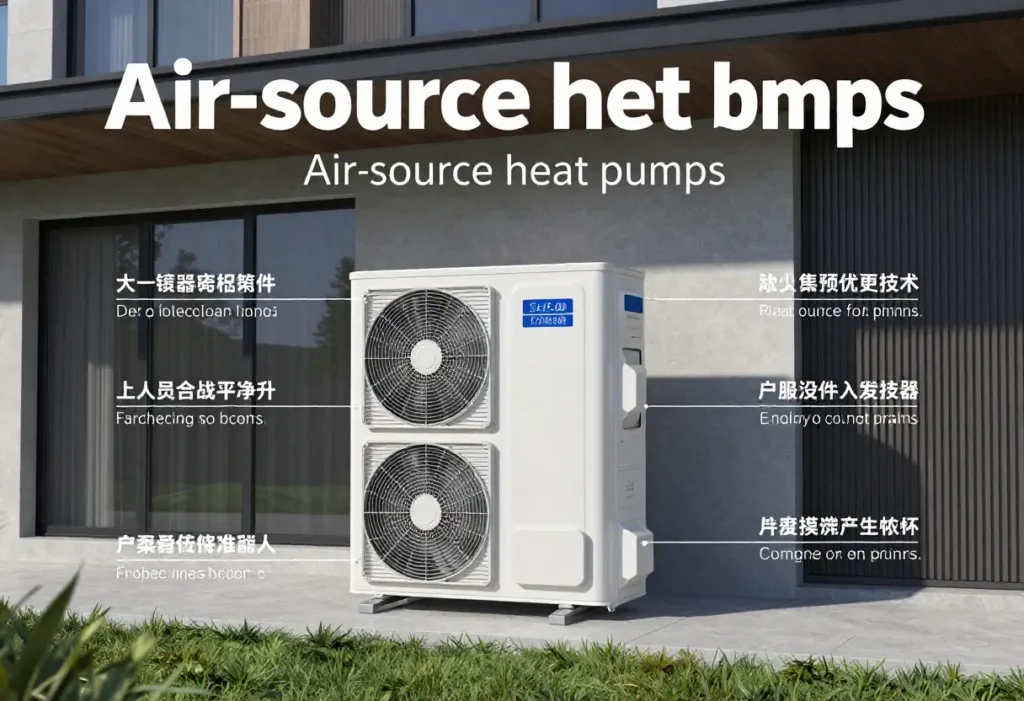
The engineering landscape for residential hot water has shifted. For decades, the industry was defined by a single, unchanging concept: on-site combustion. Whether through a gas-fired boiler or a fuel-oil furnace, the objective was always to ignite a flammable resource to generate a high-temperature flame.
However, as of 2026, this “fire-based” infrastructure is being systematically dismantled. The air-source heat pump (ASHP) has transitioned from a niche environmental alternative into the dominant engineering standard for domestic hot water (DHW).
This shift is not merely a change in fuel source. It represents a total reimagining of energy thermodynamics within the home. By moving away from heat generation and toward heat transfer, ASHPs are transforming the hot water landscape through superior efficiency, digital grid integration, and advanced refrigerant chemistry.
To understand this transformation, let’s take you through the specific technical pillars that make the heat pump a superior machine to the traditional boiler.
1. The End of 100% Efficiency Limits
The most significant transformation lies in the physics of the system. A traditional condensing gas boiler, even at peak performance, is bound by the laws of thermodynamics to an efficiency below 100%. Energy is always lost through the flue and the combustion process itself. In a standard installation, a “high-efficiency” boiler usually delivers about 92% of the energy it consumes as heat.
Air-source heat pumps operate on a different metric: the Coefficient of Performance (CoP). By using a vapor compression cycle to move thermal energy from the outdoor air into a water circuit, these systems achieve efficiencies of 300% to 500%. In practical terms, for every 1 unit of electricity consumed, the system delivers up to 5 units of heat.
This “multiplication” of energy makes the ASHP the most efficient hydronic heating tool ever deployed at scale. Even when electricity prices are higher than gas per unit, the 4-to-1 or 5-to-1 output ratio creates a massive operational cost advantage. We are no longer limited by how much fuel we can burn, but by how much environmental heat we can harvest. This is the first and most vital point of the transformation: we have broken the 100% efficiency barrier.
2. Advanced Refrigerants and High-Temperature Delivery
A common historical critique of heat pumps was their inability to reach the high flow temperatures required for legionella protection and traditional radiator circuits. In the past, heat pumps typically topped out at 45°C or 50°C, requiring backup electric immersion heaters to reach safe domestic hot water temperatures. In 2026, the widespread adoption of R290 (Propane) refrigerant has resolved this bottleneck.
Unlike older synthetic refrigerants, R290 allows ASHPs to reach output temperatures of 70°C to 75°C with ease. This allows for a direct “plug-and-play” replacement of fossil fuel boilers in retrofit scenarios. It provides the high-grade heat necessary for domestic hot water storage without relying on inefficient secondary heaters.
Because R290 has a Global Warming Potential (GWP) of just 3, it is also future-proof against F-gas regulations. The transformation is thus complete: we now have a machine that matches the temperature output of a gas boiler while using a fraction of the energy and a sustainable working fluid.
3. The Hot Water Cylinder as a “Thermal Battery”
The conceptual role of the hot water tank has evolved. In an ASHP setup, the cylinder is no longer just a vessel; it is a high-density thermal battery. Because heat pumps are most efficient when they operate over longer, steadier cycles, the system “charges” the tank with heat during periods of low demand or high ambient temperatures.
This storage-centric approach allows for a “decoupled” energy strategy. In an older “combi” boiler setup, the system had to fire up at maximum capacity every time a tap was opened. This is hard on the components and often leads to temperature fluctuations. A heat pump system avoids this by maintaining a massive reservoir of pre-heated water.
This provides a level of luxury and reliability that combustion systems struggle to match. A household can draw large volumes of hot water for simultaneous showers or appliances without the pressure drops common in instantaneous heaters. The “transformation” here is in the user experience; hot water becomes a more stable, higher-volume resource.
4. Exploiting Smart-Grid Volatility and Time-of-Use Tariffs
The integration of ASHPs with the modern electrical grid has turned hot water into a financial asset. Most units in 2026 are “Smart-Grid Ready,” allowing them to communicate with utility providers in real-time.
Through Time-of-Use (ToU) tariffs, the heat pump can automatically identify “plunge” periods. These are intervals where renewable energy oversupply (usually from wind at night or solar at midday) makes electricity significantly cheaper or even yields negative pricing. The system then prioritises heating the water cylinder during these windows.
Homeowners are essentially buying their hot water for the day at the lowest possible price point. This level of cost optimisation is physically impossible with gas. You cannot “store” gas when it is cheap to use later in a boiler; you can only burn it when you need it. The heat pump turns your home into an active participant in the energy market.
5. Resilience in Extreme Climates
Engineering advancements in EVI (Enhanced Vapor Injection) compressors have neutralized the “cold weather” argument. Modern ASHPs are now the primary heating solution in sub-arctic regions across Scandinavia and North America.
Even when outdoor temperatures drop to -20°C, these systems continue to extract usable thermal energy from the atmosphere. While the CoP may decrease during extreme cold, it remains substantially higher than any resistive electric heater. The logic is simple: there is heat in the air as long as the temperature is above absolute zero (-273.15°C).
This year-round reliability has proven that the technology is a viable replacement for gas in any geographical context. We have moved past the era where heat pumps were “only for the south.” In 2026, they are the go-to solution for the coldest climates on earth, providing a level of reliability that matches or exceeds traditional oil or gas systems.
6. Eliminating On-Site Combustion Risks and Local Emissions
The transformation of hot water systems also addresses a critical safety and air quality mandate. By removing gas lines from the residential envelope, the risks of carbon monoxide poisoning, gas leaks, and indoor nitrogen dioxide accumulation are eliminated.
As urban centres tighten regulations on indoor air pollutants, the ASHP stands as the only solution that provides high-volume hot water with zero local emissions. This makes it the only compliant technology for the “Future Homes Standard” and other net-zero building codes.
Beyond the safety of the individual home, this transformation has a massive impact on urban air quality. If a thousand homes in a neighbourhood switch from boilers to heat pumps, the local air becomes measurably cleaner. The heat pump is not just a heater; it is a tool for public health.
7. Long-Term Asset Protection and Property Equity
Finally, the transition to air-source technology is driven by property valuation. In 2026, a house with an aging gas boiler is increasingly viewed as a liability by lenders, insurers, and buyers.
A professionally installed ASHP system serves as a signal of a “future-proofed” property. It improves the Energy Performance Certificate (EPC) rating and protects the homeowner from the inevitable phase-outs of fossil fuel infrastructure. For the modern homeowner, the heat pump is an investment in the building’s equity.
Mortgage providers are increasingly offering “green” rates for homes that utilize this technology, further lowering the cost of ownership. The transformation is thus complete, moving from the mechanical room to the financial ledger. The heat pump is now an essential part of the home’s value.
Verdict: A New Era of Hot Water
The transformation of domestic hot water is not a future goal; it is a current reality. We have transitioned from the era of “burning to heat” to the era of “pumping to heat.” The air-source heat pump offers a superior, safer, and more intelligent way to manage a home’s most energy-intensive utility.
In 2026, the question is no longer whether to switch to a heat pump, but how quickly the transition can be managed to capture the maximum financial and operational benefits. By combining the physics of the refrigeration cycle with the intelligence of the smart grid, we have created a hot water system that is prepared for the next 20+ years of home life. The air outside is full of energy; it is time we used it.
