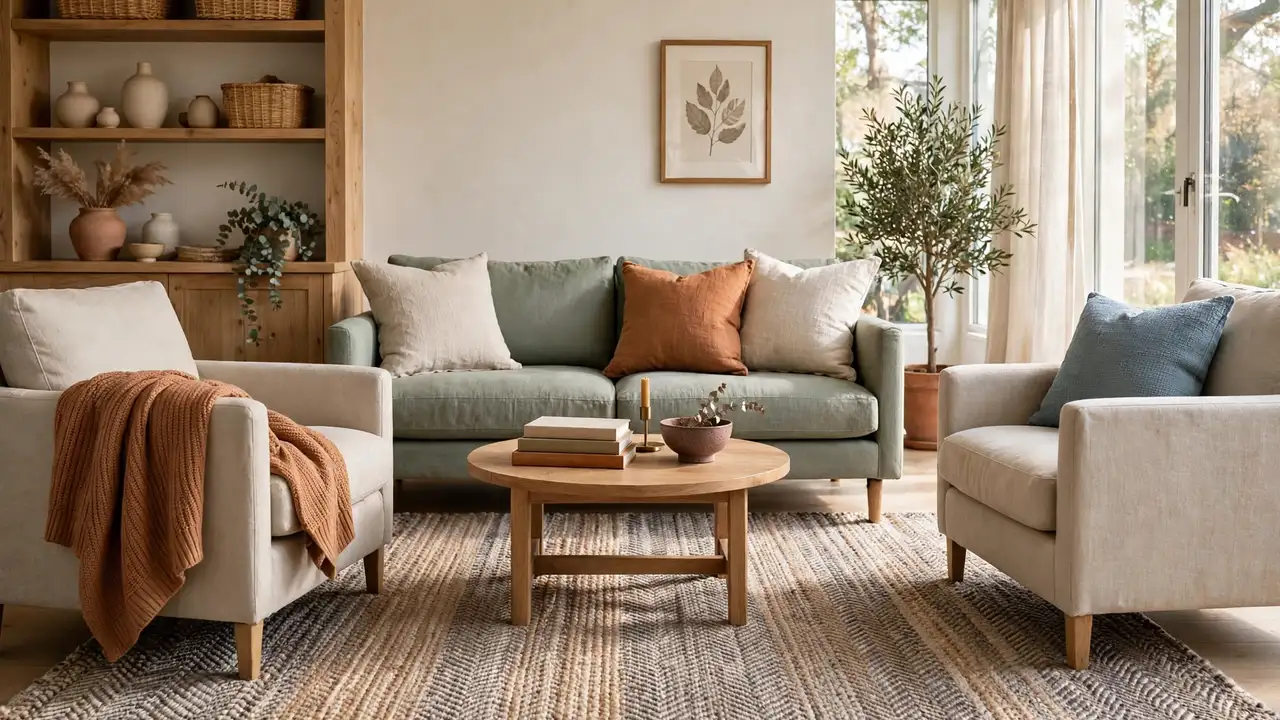
You can buy every piece of furniture on your list and still walk into a room that feels unfinished. The sofa is right, the chairs are right, and yet nothing quite holds together.
That gap is rarely about furniture. It is the layer that goes on top of it, the small repeatable things stylists reach for in room after room because they work in almost any home.
Interior styling essentials are not a shopping list for one look. They are the ten working parts below, each one earning its place by doing a specific job — adding height, softness, light, scent, memory or simply a reason for the eye to stop.
The ten essentials
1. Coffee table books
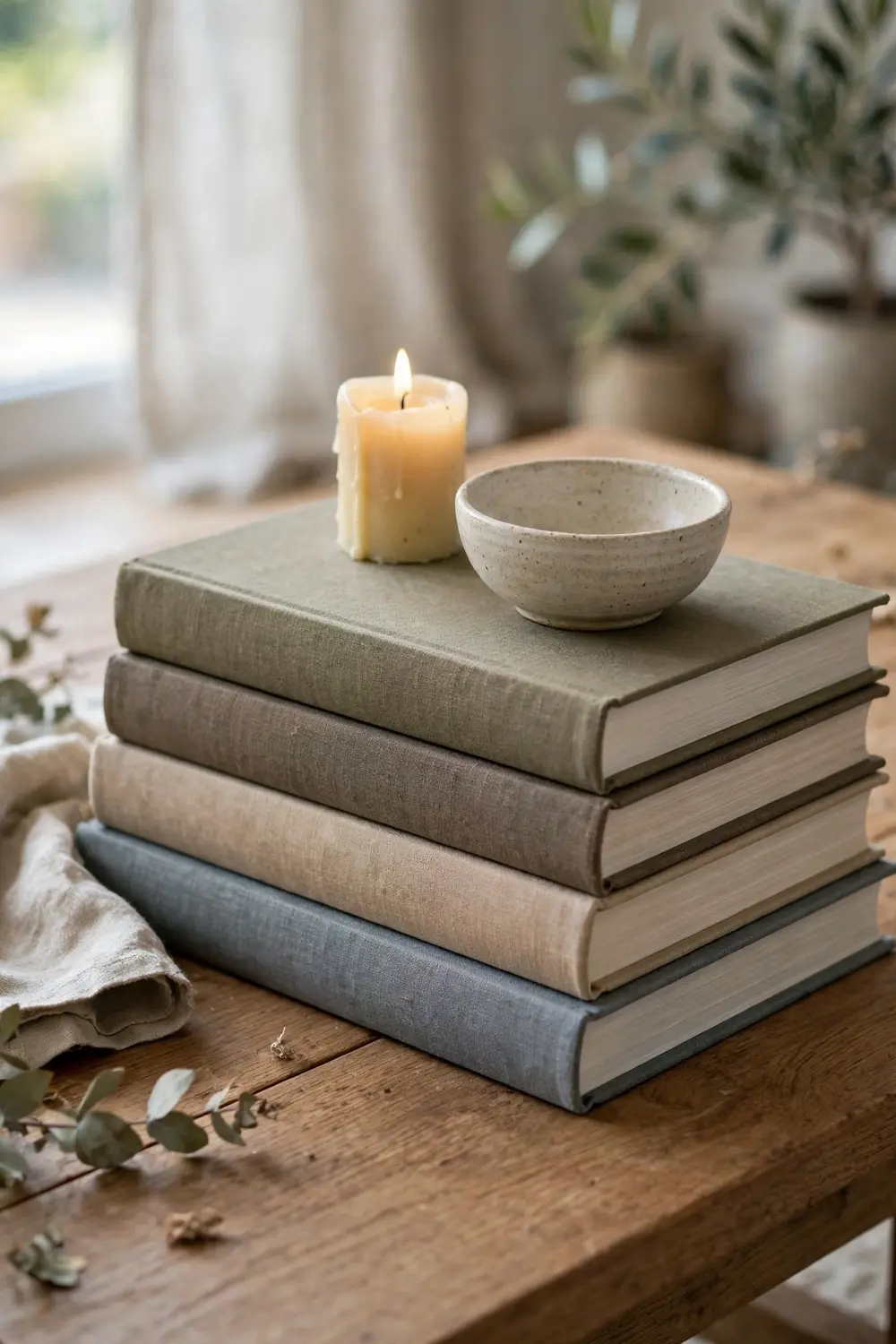
Big, beautiful books are the stylist’s scaffolding. They add height where a surface feels flat, bring in colour without commitment, and say something about the people who live there before a word is spoken.
Choose subjects you genuinely care about — travel, food, gardens, architecture, a favourite artist — because a book that gets opened beats a book bought for its spine. Two or three stacked is the working unit. The top one also makes a plinth, lifting a small object or a candle to a height where it gets noticed.
- Start with: two or three large-format hardbacks
- Where they work: coffee tables, sideboards, bedside stacks, open shelves
- Test of a good one: you would happily leave it open at a page
2. Cushions
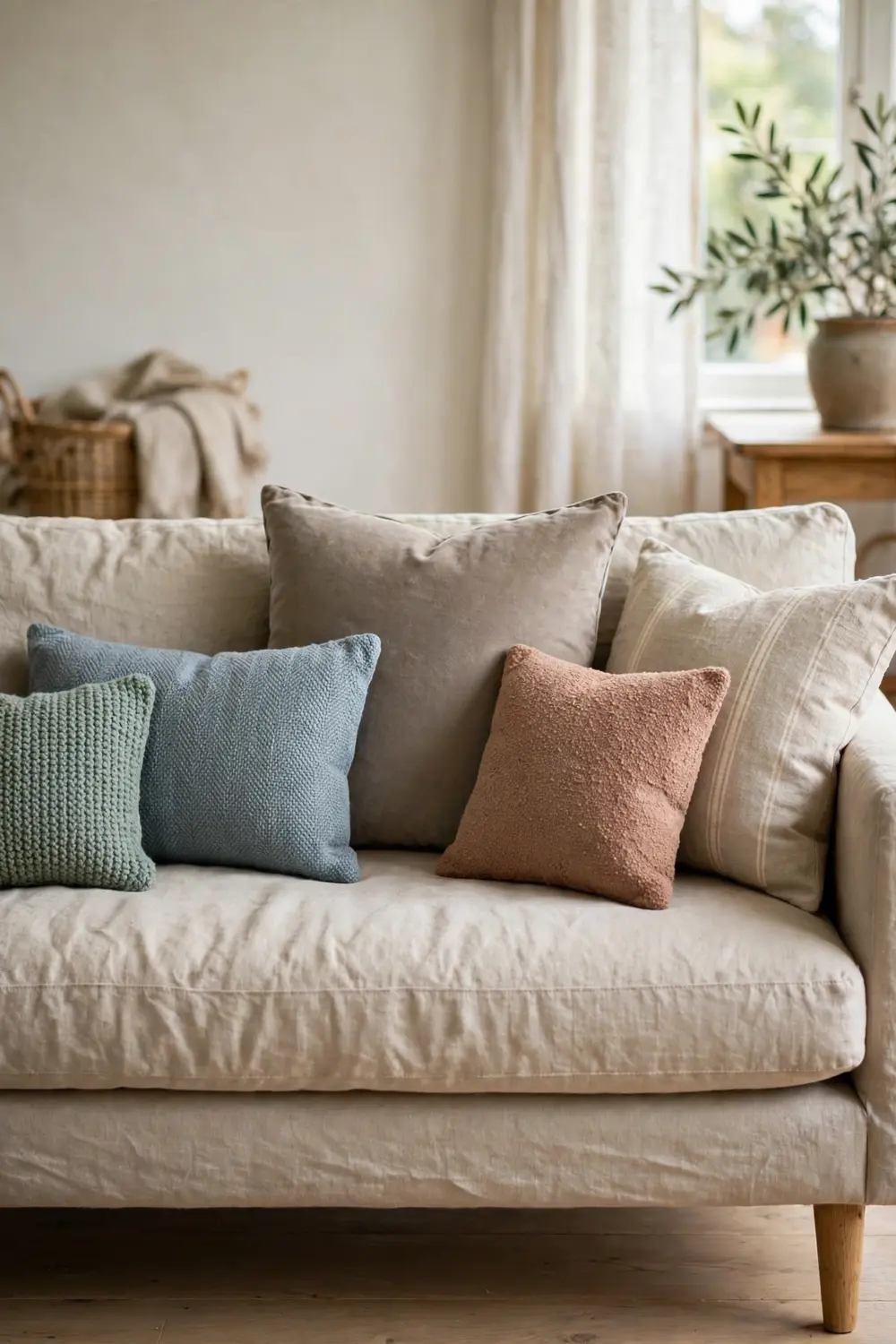
If a sofa feels hard to relax into, cushions are usually why. They are also the fastest way to change a room’s colour story without painting anything.
Work in odd numbers where you can — three or five across a sofa reads more settled than a matched pair at each end. Mixing is the point. A linen beside a velvet, a stripe beside a plain, a large square behind a smaller rectangle. Inserts with some feather in them hold a plumped shape far better than hollow fibre alone, which slumps by mid-evening.
- Numbers that behave: 3 or 5 on a three-seat sofa, 1 or 2 on an armchair
- Sizes: large squares at the back, smaller rectangles in front
- Fabrics to mix: linen, wool, velvet, a woven stripe or check
3. A great rug
A rug is the ground plan of a seating area. It tells everyone where the room’s centre is, softens the sound of a hard floor, and gives furniture a reason to be grouped the way it is.
The mistake is almost always size. A rug that floats in the middle of a room, touched by nothing, makes the furniture around it look stranded. Stylists size up so at least the front legs of the sofa and chairs sit on the rug, which ties the whole arrangement into one place. In a dining room the test is simpler — chairs should stay on the rug when pulled out.
- Sizing rule: front legs on, never a floating island
- Underfoot: wool for warmth and wear, flatweaves where chairs slide
- Pattern vs plain: pattern forgives crumbs, plain shows off the furniture
4. Candles
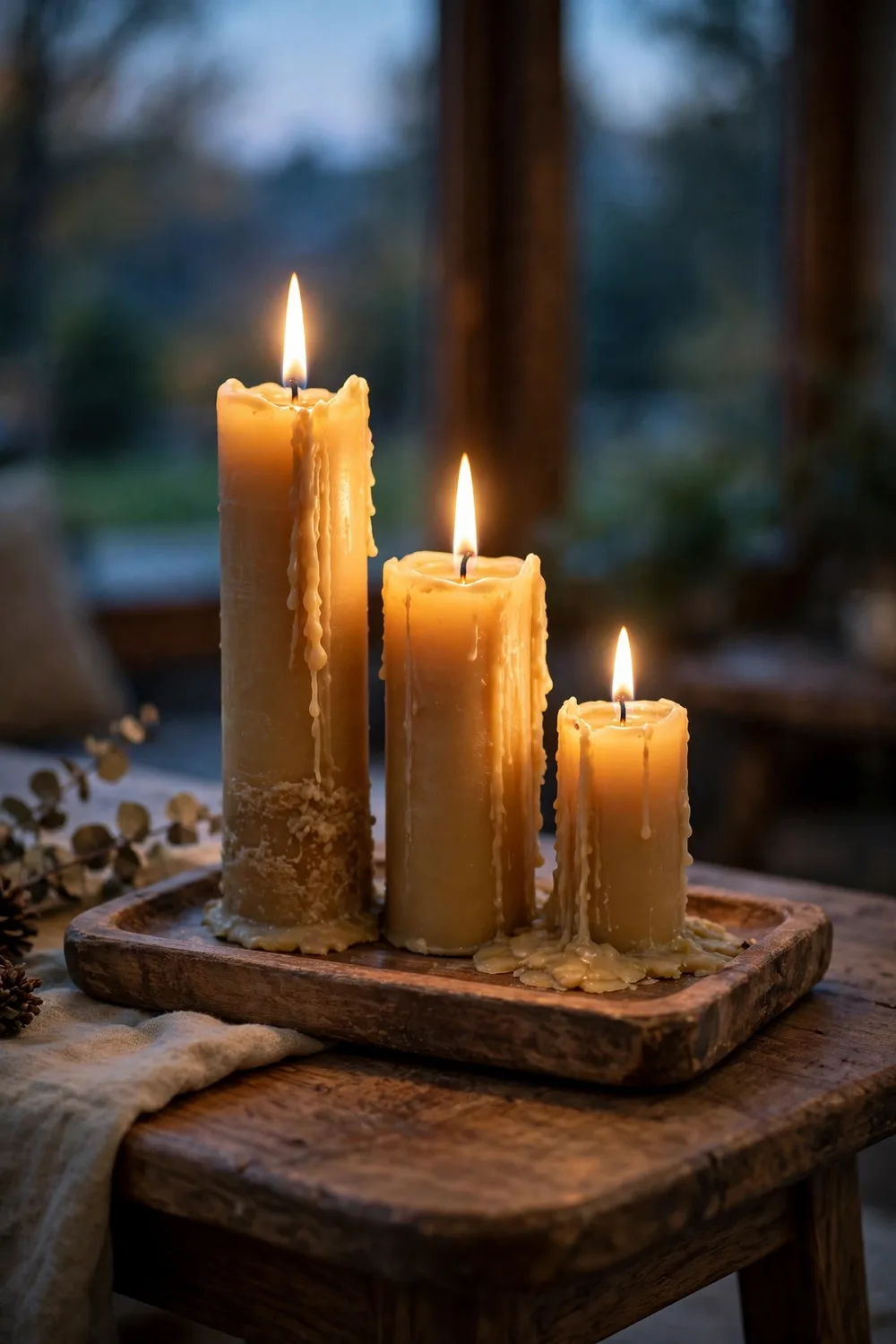
Candlelight flatters everything it touches, including people, and it does it for the price of a match. A grouped cluster on a tray or mantel gives a room a second, softer lighting scheme after dark.
Scent needs a lighter hand. The source list behind this article rates candles partly for fragrance, yet stylist Alice Stolz, selling homes, cautions against filling a house with scented candles — one gentle scent in one room is atmosphere, five competing ones is a headache. Unscented pillars carry the glow without the argument.
One restraint belongs in every candle entry. Never leave a burning candle unattended, and keep flames well clear of curtains, cushions and anything that drapes.
- Grouping: clusters of three, mixed heights
- Holders: glass hurricanes where breezes wander in
- Scent: one room, one scent, or none at all
5. Fresh flowers
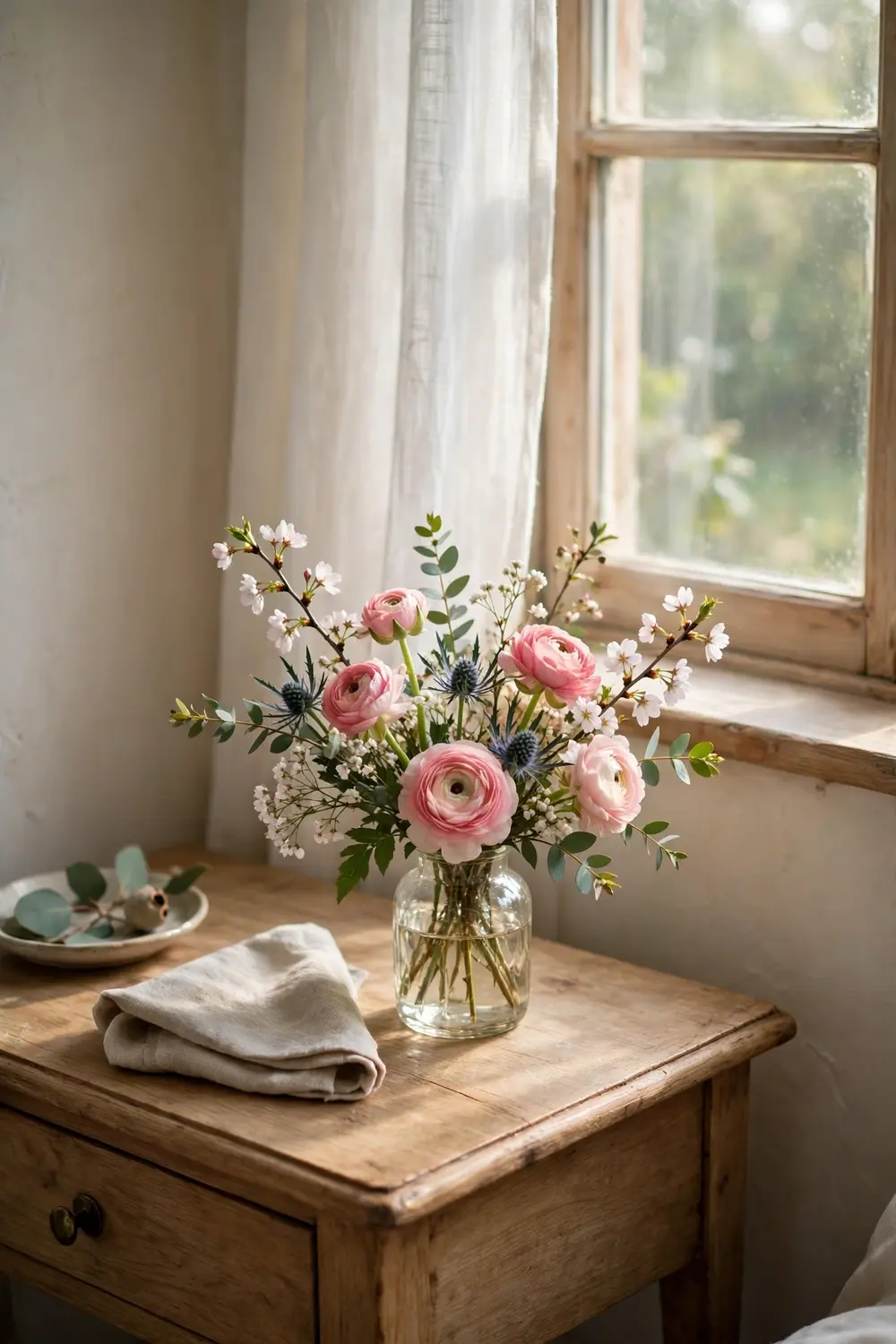
Nothing else on this list is alive, and a room can tell the difference. Flowers bring the season indoors, cost little when you buy what is already abundant, and make even a tidy room look cared for rather than merely clean.
A supermarket bunch goes further split up. Divide it between two or three small vases — one by the bed, one in the bathroom, one where you make coffee — and the whole house feels considered instead of one corner of it. Between bunches, a jug of foliage cut from the garden does the same job for nothing.
- Stretch a bunch: split it across small vases in several rooms
- Vessels: jugs, jars and bottles beat one grand vase
- Between bunches: garden foliage, eucalyptus, olive branches
6. Trays
A tray turns a scatter of objects into a composition. Candles, a small plant, a book and a scent bottle sitting loose on a coffee table look like clutter; the same things gathered on a tray look styled, because the tray gives them a border and a shared purpose.
This is the vignette principle in its simplest form — group related things, vary their heights, leave breathing room around the group. It works on hall tables and bathroom counters just as well as coffee tables, and our guide to decorating a hall table walks through the full method surface by surface.
- Materials: timber for warmth, metal for shine, woven for texture
- Load it with: 3 to 5 related pieces at different heights
- Golden habit: if it lives on a surface, it probably belongs on a tray
7. Ornaments and objects
Objects are where a house stops looking like a display and starts looking like a life. A ceramic bowl from a market, a stone picked up on a walk, a brass box that belonged to someone — these pieces carry the stories no shop can sell you.
Group them rather than scattering them. Threes and fives again, with a mix of heights and finishes, and editing matters as much as adding — one strong piece alone on a shelf often says more than six small ones in a row. Where objects grow into furniture-sized accents, our accent furniture guide covers that next scale up.
- Group in: odd numbers, mixed heights, mixed finishes
- Sources: markets, travels, family hand-me-downs, local makers
- Editing test: remove one piece and see if the group improves
8. Art
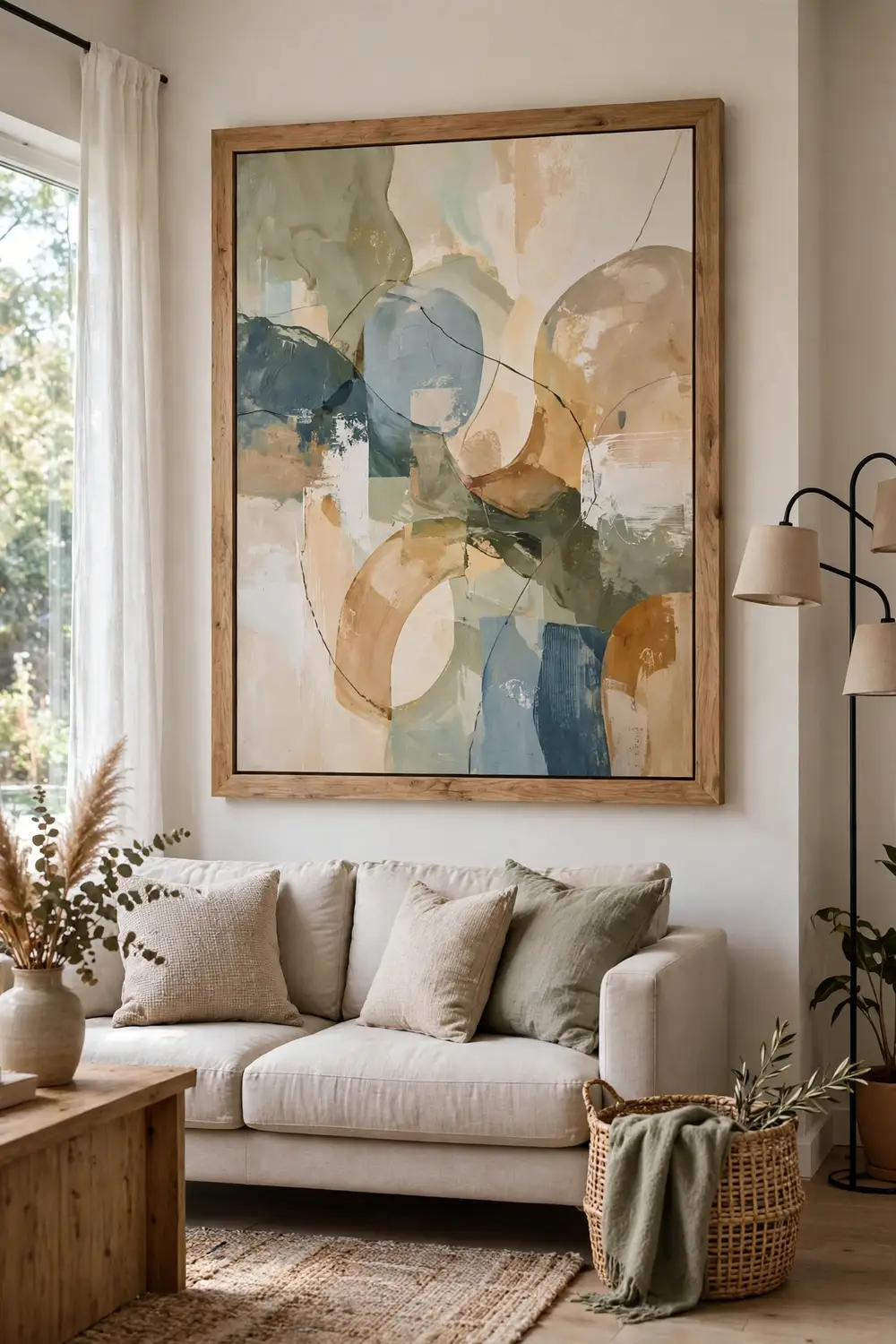
Walls are the largest empty surfaces in most homes, and art is what makes them part of the room instead of just its edges. It does not need to be expensive or even, strictly, art — framed prints, textiles, plates and photography all count once they are hung with intent.
Hang the centre of a piece around eye level where it will be viewed standing, and lower over furniture, where it should relate to the piece below it rather than float near the ceiling. Over a sofa, a work roughly two-thirds the width of the seat below it holds the wall in proportion.
- Hanging height: centre near eye level, lower above furniture
- Scale over sofas: about two-thirds the seat width
- Beyond paintings: prints, textiles, plates, framed photographs
9. Photographs
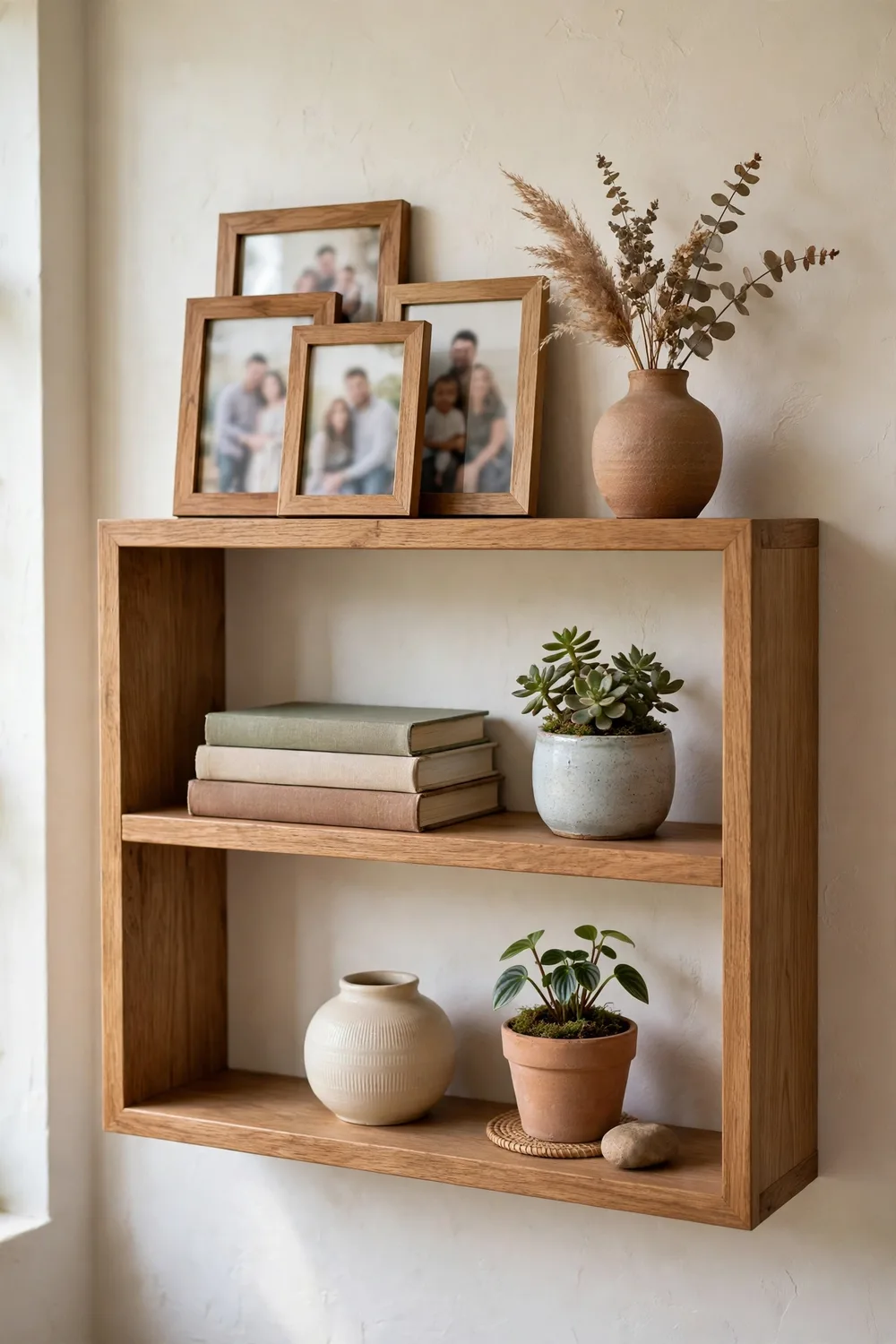
Among all ten essentials, photographs are the only one nobody else can buy. Framed images of your own people, places and history give a styled room its one unrepeatable layer.
Printed and framed is the point — a photo on a phone styles nothing. A picture ledge or mantel lets you rotate favourites without new holes in the wall, and mixing frame finishes within one display looks collected rather than matched. Black and white prints sit calmly beside almost any colour scheme when a wall feels busy.
- Display: picture ledges, mantels, a dedicated gallery wall
- Frames: mixed finishes, one family of tones
- Calming trick: black and white prints on a busy wall
10. Throws
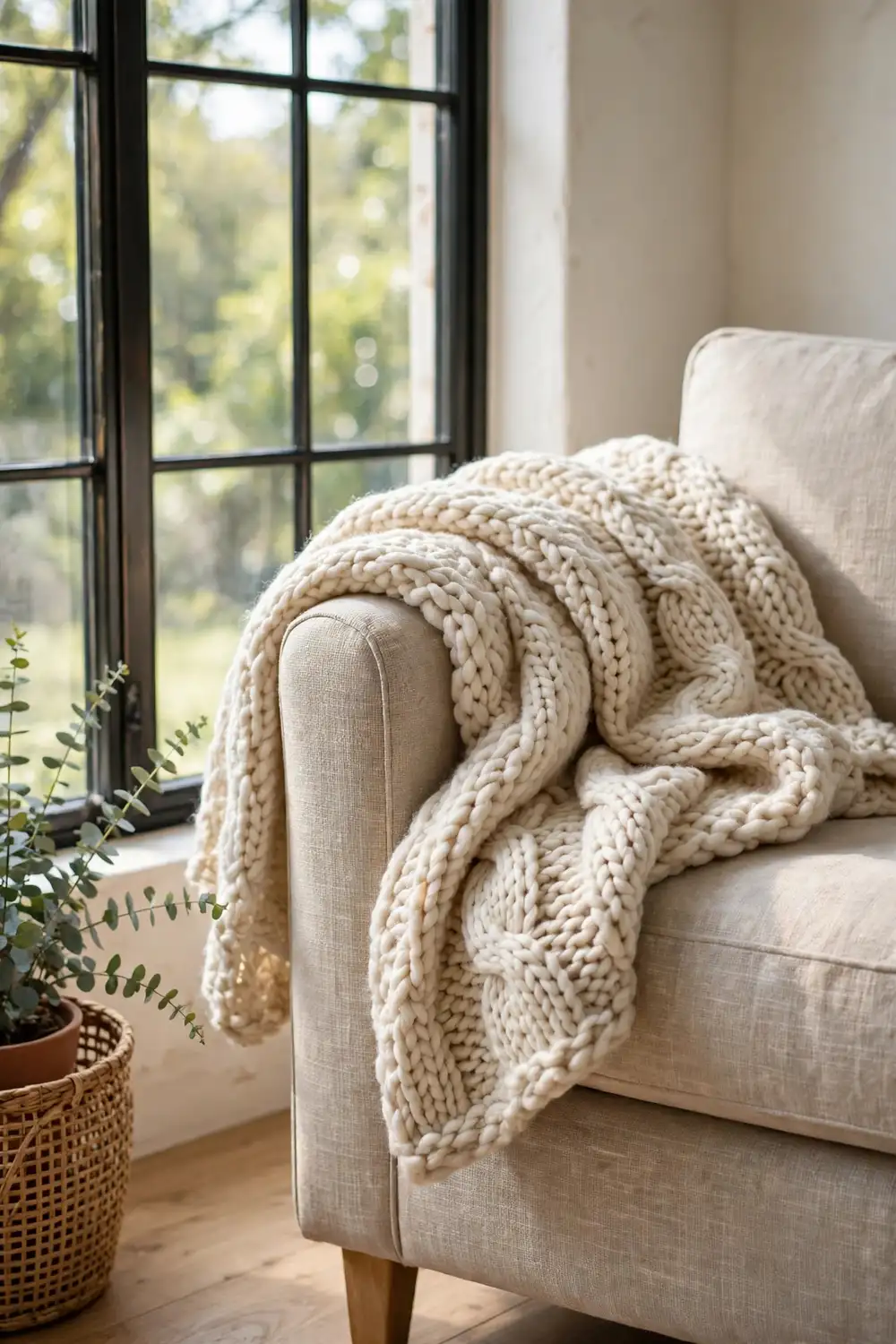
A throw is the softest piece of punctuation in a room. Draped over an arm of a chair or folded along the back of a sofa, it breaks up a large block of upholstery, adds a layer of texture, and waits there for the first cold evening or afternoon nap.
Texture is the whole job. A chunky knit against smooth leather, a fine weave over linen, a fringed edge where everything else is tailored. Folded longways over a sofa back it reads tailored; tossed loosely over an arm it reads relaxed, and the same throw does both. These are year-round pieces — a light cotton weave earns its place in January exactly as a wool one does in July.
- Textures: chunky knit, fine weave, fringed or tasselled edges
- Placement: over an arm, along a sofa back, folded on a bed’s foot
- Weight by season: cotton and linen light, wool heavy
How they work together
No single item on this list finishes a room. They work as a set of layers, each adding something the furniture cannot.
| Essential | What it adds | Where it earns its place |
|---|---|---|
| Coffee table books | Height and personality | Tables, shelves, sideboards |
| Cushions | Colour and comfort | Sofas and armchairs |
| A great rug | Grounding and warmth | Under the seating group |
| Candles | Glow after dark | Trays, mantels, tables |
| Fresh flowers | Life and seasonality | Vases across several rooms |
| Trays | Order for objects | Coffee and hall tables |
| Ornaments and objects | Story and character | Shelves and surfaces |
| Art | Finished walls | Eye level, above furniture |
| Photographs | The personal layer | Ledges, mantels, galleries |
| Throws | Texture and softness | Chair arms, sofa backs |
Start with three
Ten essentials can read like a shopping expedition, and it should not become one. Most homes already own half this list — the books are on a shelf, the throw is in a cupboard, the photographs are in a phone waiting to be printed.
Pick the three your rooms are missing most, live with them for a while, and layer the rest in as you find pieces you actually love. Styling that accumulates slowly looks like a home. Styling bought all at once looks like a shop — and if a refresh on a budget is the real project, our budget home refresh guide plans that process step by step.


