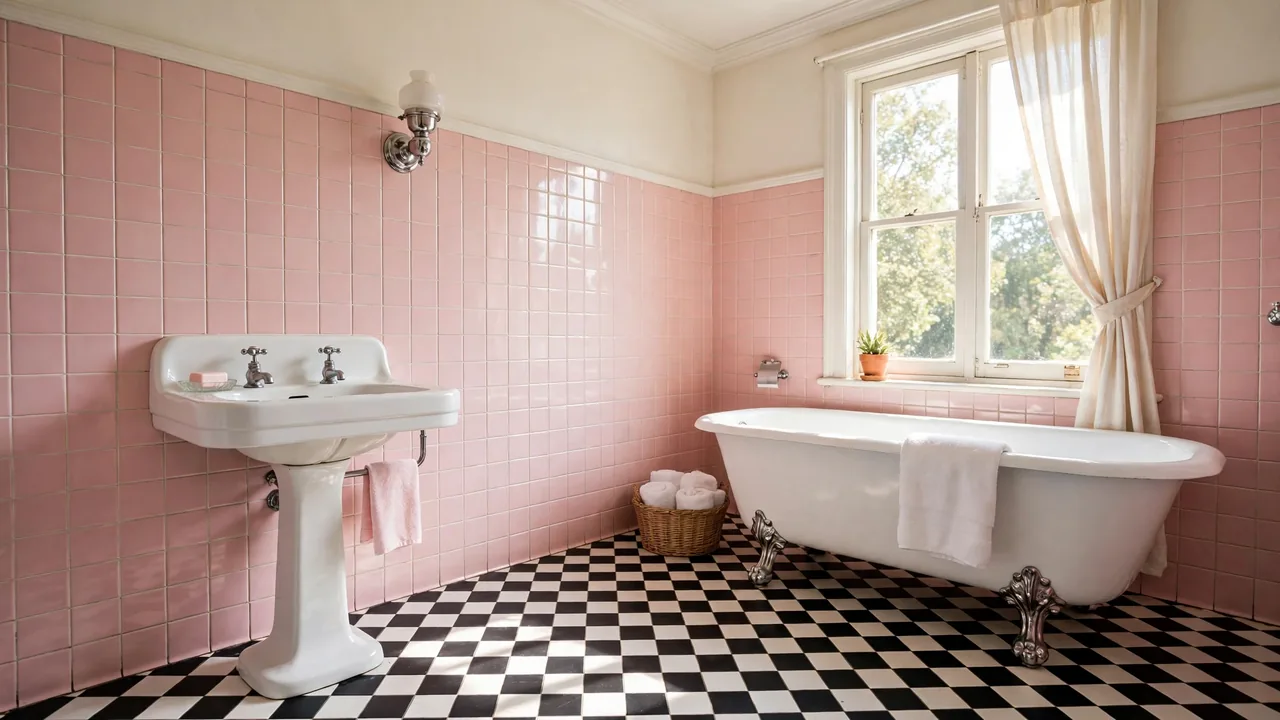
Open any renovation feed and the bathrooms blur together. Grey tiles, black tapware, the same white vanity, again and again. Retro bathroom ideas cut through that sameness, because the old looks were never short on personality.
The worry is going too far. Nobody wants a museum, or a coloured suite that dates again in five years. The trick is borrowing an era’s best pieces, not recreating the whole room.
Below are 14 ideas grouped by era — 1950s pastel, Art Deco, Victorian and mid-century — each one chosen because it works with modern plumbing, can be bought as a reproduction or found secondhand in Australia, and fits smaller bathrooms. Effort levels are marked, so weekend changes and renovation jobs are easy to tell apart.
Start with the table and pick your era. Then choose just one or two hero pieces from it and let everything else stay simple. That restraint is what keeps retro charming instead of costume.
| Era | Signature colours | Hero pieces | Suits |
|---|---|---|---|
| 1950s Pastel | Pink, mint, powder blue, chrome | Square wall tiles, checkerboard floor, coloured basin | Cheerful family bathrooms and original post-war homes |
| Art Deco | Black, white, metallic gold, deep green | Geometric tiles, stepped mirror, wall sconces | Ensuites and powder rooms that need a lift |
| Victorian | White, cream, unlacquered brass | Clawfoot bath, pedestal basin, crosshead taps | Bigger bathrooms in period homes, with room to breathe |
| Mid-Century | Teak tones, mustard, teal, white | Timber vanity, globe lights, terrazzo | Compact bathrooms and apartments |
1950s pastel — the cheerful one
Post-war bathrooms went all in on colour, and the look still feels like a smile. Think small square tiles, glossy colour and chrome everywhere. If your house is a 1950s brick home, this era is probably already in its bones — one Australian owner’s bathroom renovation of a 1950s cottage shows how well the original character can carry a modern update.
1. Pastel wall tiles in the small square format
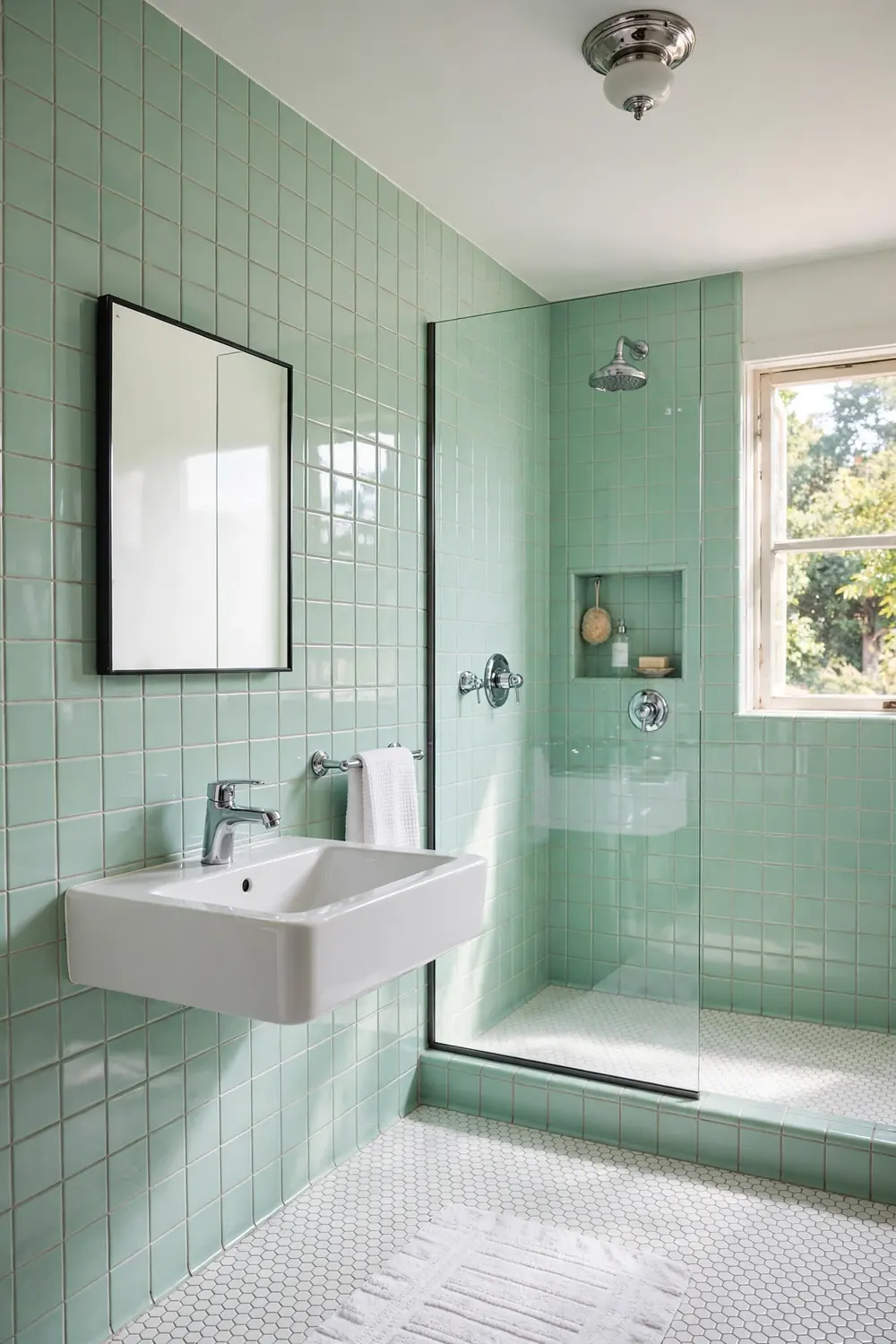
The signature 1950s wall is a grid of small square tiles in pink, mint or powder blue, usually finished with a contrasting border or a row of black. The small format is what makes it read as genuinely retro rather than just colourful.
Modern reproductions are easy to find, and the grout does half the visual work, so choose its colour as carefully as the tile. Keep the floor and fittings quieter so the wall colour stays the hero.
- Era — 1950s
- Effort — renovation job; tiles are not a weekend swap
- Best for — family bathrooms that feel flat and white
2. A checkerboard floor
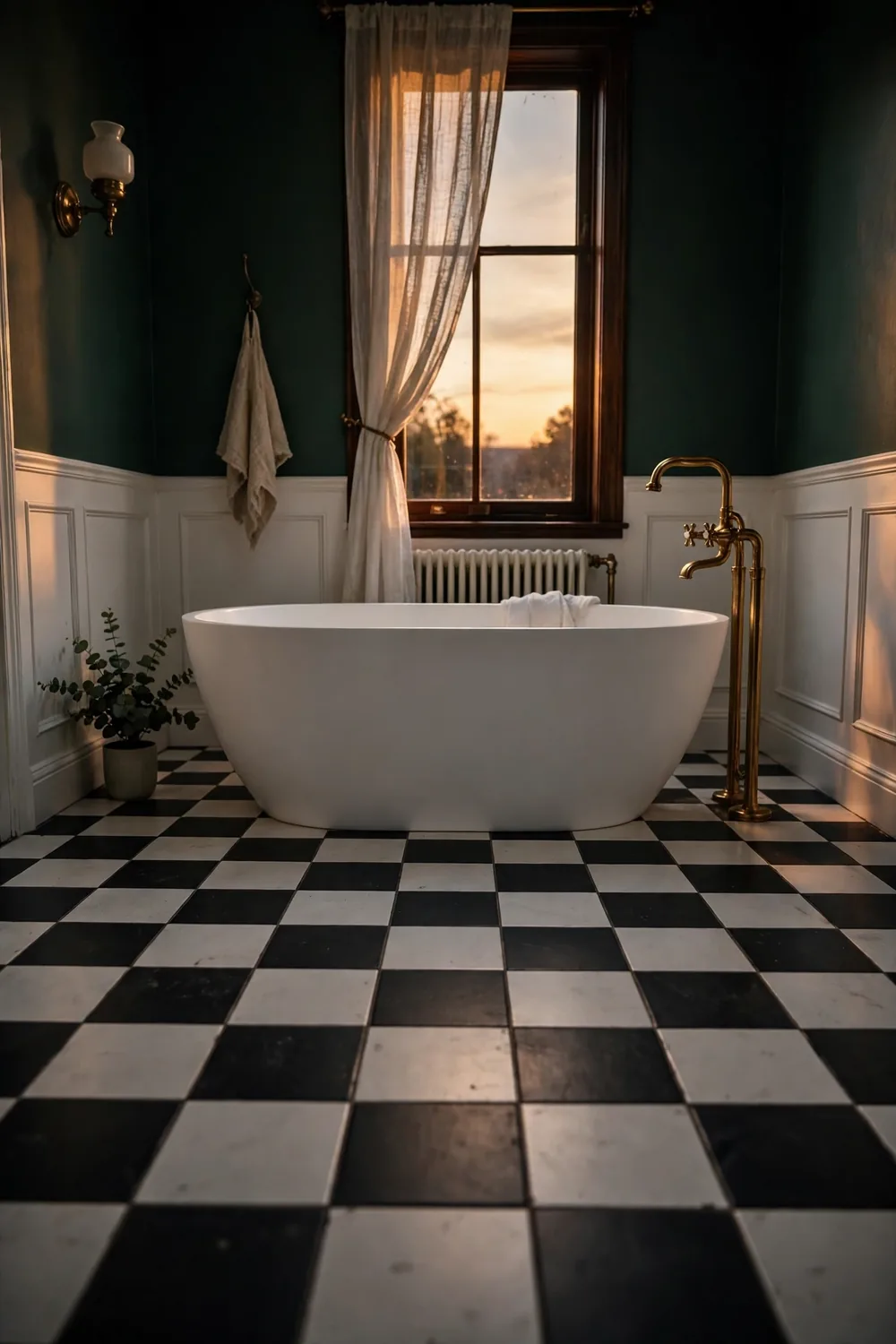
Black and white checks are the fastest way to make a bathroom feel vintage, and they work under almost every era on this list. The scale matters more than the colours. Small squares suit small rooms, while big pavers can overwhelm an ensuite.
Ceramic and porcelain versions shrug off bathroom water far better than the original marble at a fraction of the fuss. Before you commit, it is worth understanding what bathroom tiling actually costs in Australia, because the floor usually sets the tiling budget.
At a glance — effort: renovation · suits: every era · watch out: busy floors make small rooms feel smaller if the walls are patterned too.
3. A coloured basin or suite
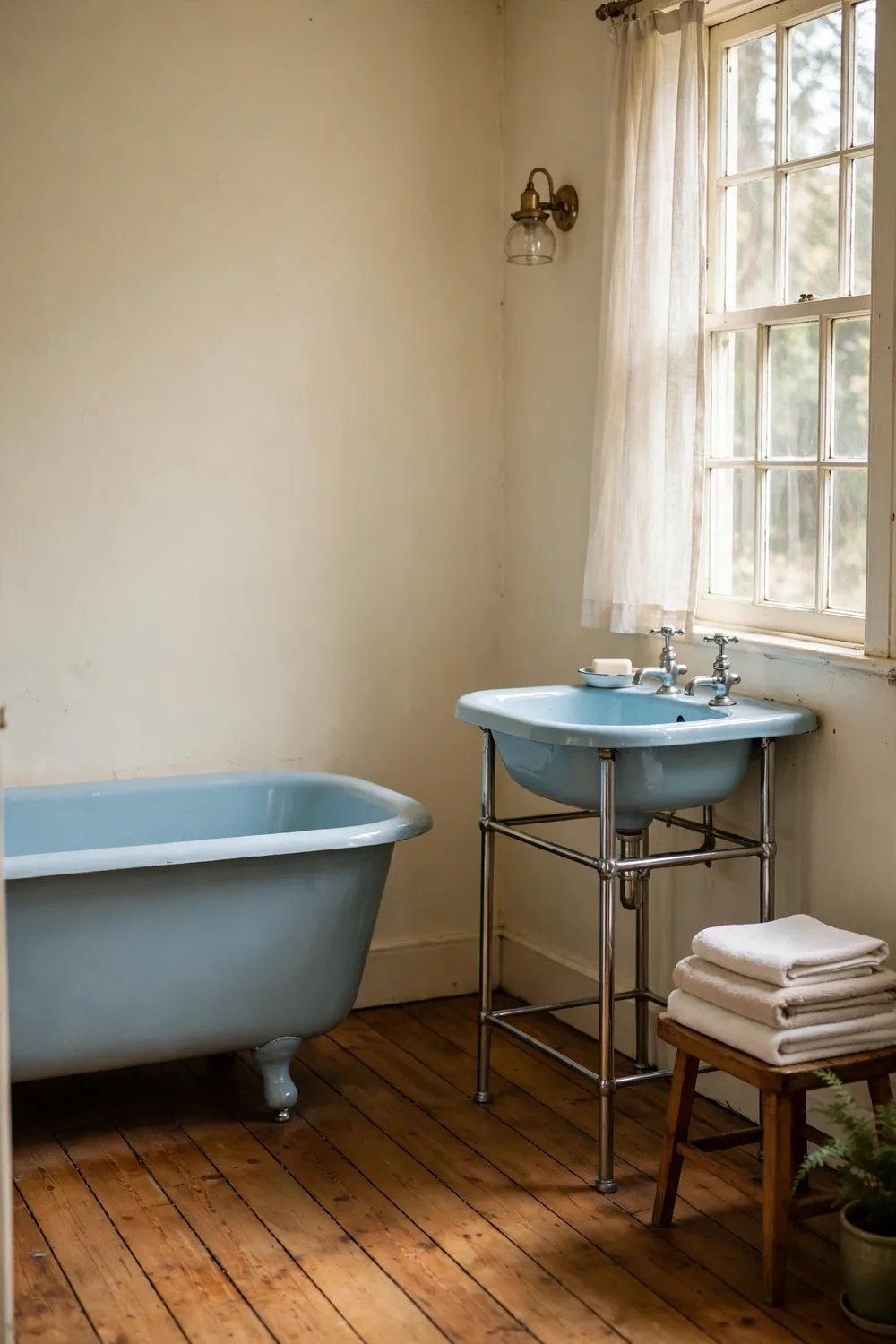
The full coloured suite — bath, basin and toilet in matching pink, mint or powder blue — is the boldest move in the 1950s playbook. A single coloured basin against white tiles gives you the flavour with far less commitment.
Be honest with yourself about resale before going all in. Coloured suites are polarising, and the next buyer may not share your taste. A coloured basin, though, is one fitting, and fittings can be changed.
- Look — one coloured piece on a white background
- Effort — one fitting, but a plumber does the swap in Australia
- Watch out — matching coloured toilets and baths are a long-term commitment
Art Deco — the glamorous one
Deco bathrooms are graphic and confident. Black and white geometry, mirrored surfaces and warm metallic light. It is the easiest era to use in a small ensuite, because the pattern does the decorating for you.
4. Black-and-white geometric floor tiles
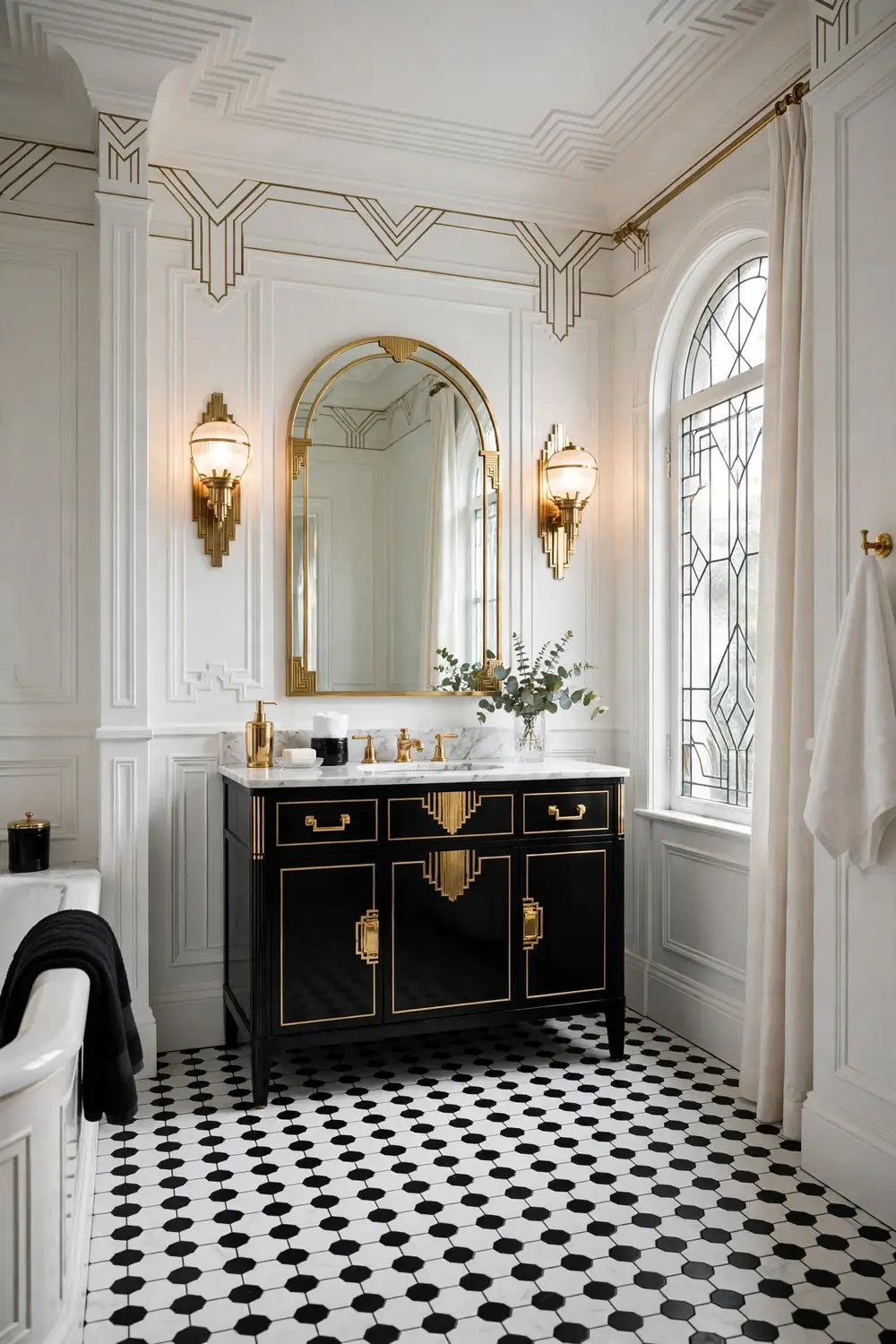
Hexagons, octagon-and-dot patterns and fan shapes all belong to this era, and all of them are back in mainstream tile ranges. The pattern carries the whole room, so walls can stay plain white.
Dark grout is the practical choice here. It keeps the geometry crisp and hides the discolouration that white grout picks up on a bathroom floor.
- Pattern — hex, octagon-and-dot or fan
- Suits — small floors, where a bold pattern reads as a rug would
- Note — sheet-mounted mosaics lay faster than individual pieces
5. A stepped or arched mirror with wall sconces
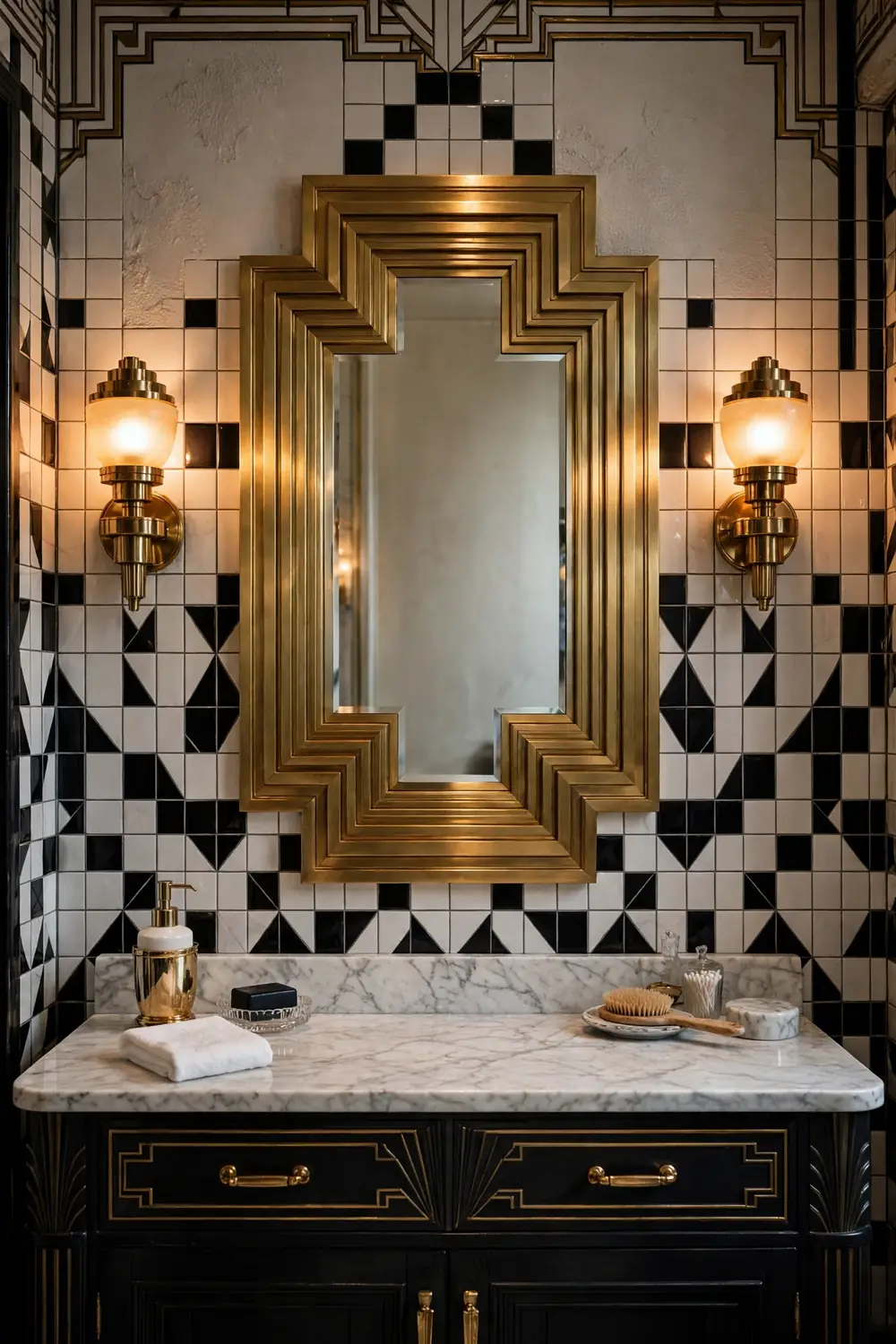
Deco mirrors step down at the corners or arch at the top, and they were lit from the sides, not from above. Copy that lighting arrangement and you get the era’s glow as well as its shape, because side light flatters faces and kills the shadows an overhead light throws.
A mirror can also do more for a small bathroom than any other single change — this site’s guide to using mirrors bigger than your bathroom vanity shows how far the trick stretches. Any new sconces are an electrician’s job, and the fittings need to be rated for bathroom use.
Quick facts — stepped or arched mirror · warm globes at face height, both sides · one electrician visit plus a mirror swap.
6. Chrome, glass and black accents
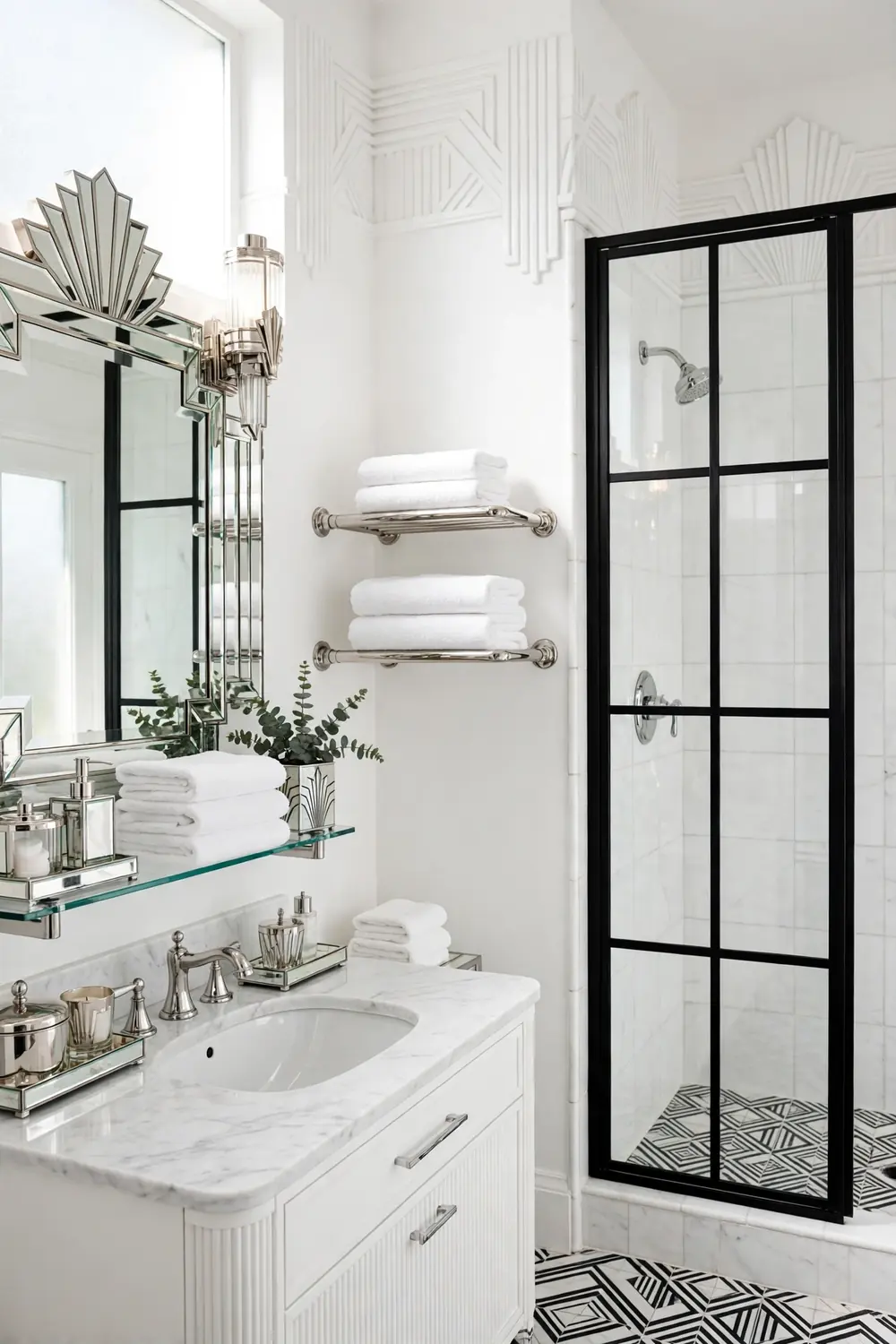
Not every Deco bathroom needs new tiles. Chrome towel rails, glass shelving, a black-framed shower screen and mirrored or black accessories can tilt a plain white bathroom towards Deco in a day.
This is the low-commitment end of the era. Everything listed here is surface-level, most of it is reversible, and it layers happily over a bathroom you are not ready to renovate.
- Swap-ins — chrome rails, glass shelves, black-framed screen, mirrored tray
- Effort — low; mostly accessories and surface fittings
- Best for — testing whether Deco is really your era
Victorian — the traditional one
Victorian style is about beautiful standalone pieces rather than fitted everything. A bath with feet, a basin on a pedestal, taps you turn with both hands. It asks for a little floor space, and it rewards it.
7. A clawfoot roll-top bath
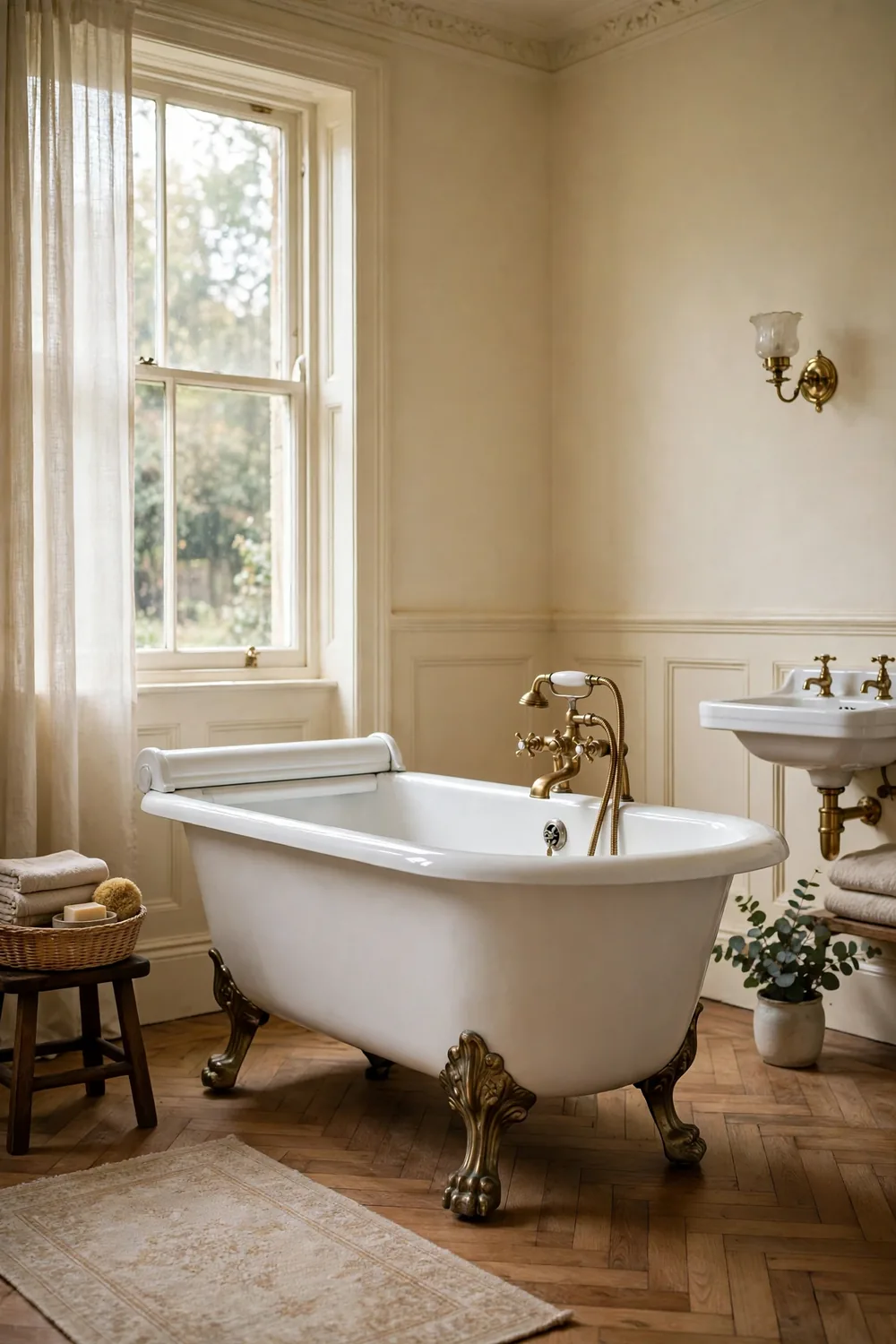
The clawfoot is the single most recognisable retro fixture there is, and a roll-top rim makes it genuinely comfortable to soak in. Original cast iron versions are extremely heavy, so floors need checking before one goes in, especially upstairs.
Acrylic lookalikes weigh far less and keep the silhouette. Either way, the bath sits away from the wall, which means you also gain a cleaning job behind it. For most people that trade is worth it.
- Needs — floor space around it, and a floor that can carry it
- Effort — renovation; plumbing position usually changes
- Watch out — cast iron weight on upper floors; get the structure checked
8. A pedestal basin with crosshead taps
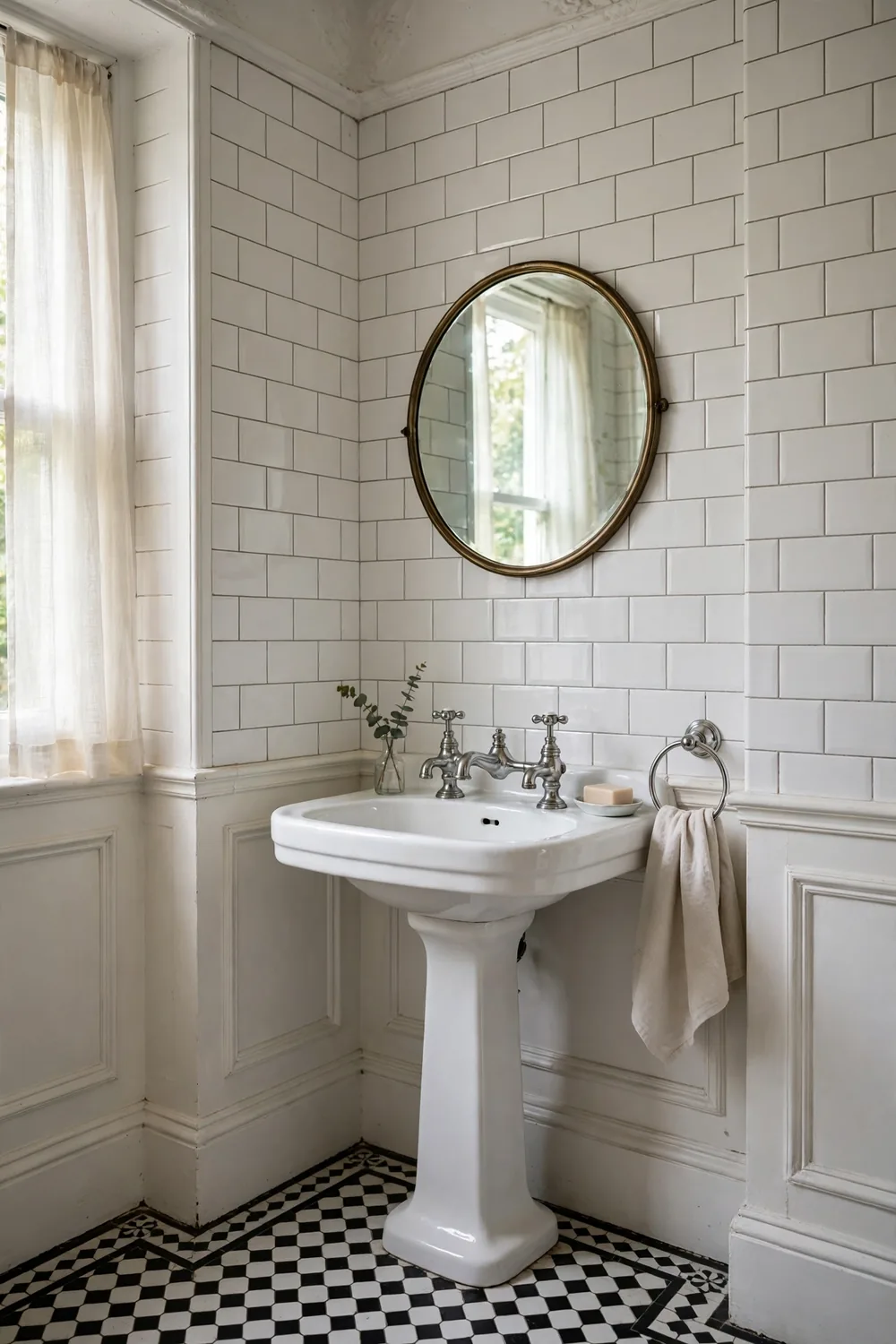
A pedestal basin suits this era because it is honest about what it is — a basin on a stand, with the pipework as part of the furniture. Crosshead taps, the kind with X-shaped handles, complete the picture.
The trade-off is storage. There is none. A small trolley, a wall shelf or a mirrored cabinet above has to do the work a vanity usually does, so this pick suits bathrooms where bench clutter is not a battle.
At a glance — effort: one fitting, plumber required · suits: powder rooms and low-clutter households · watch out: zero built-in storage.
9. Unlacquered brass tapware
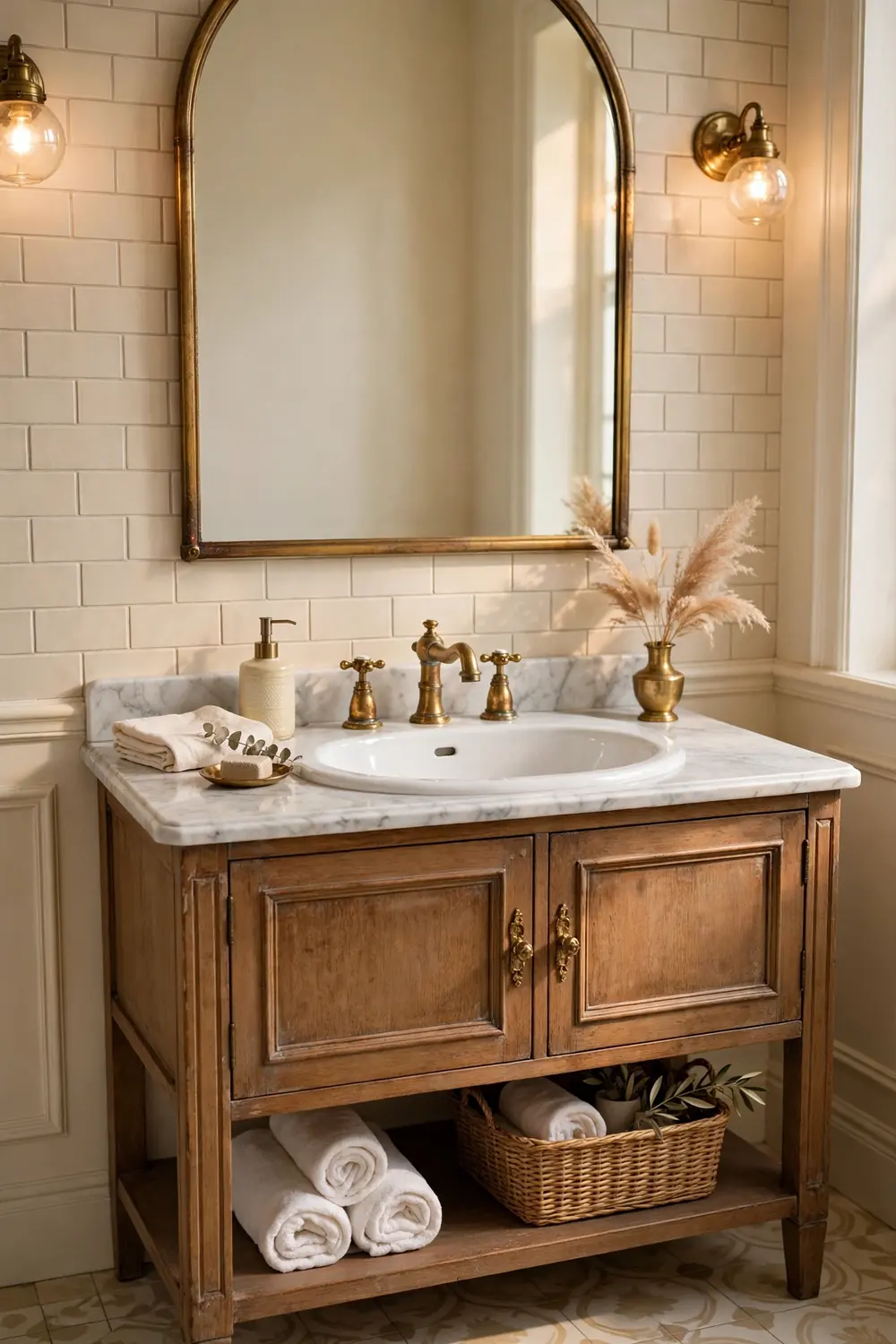
Most modern brass-look tapware is lacquered to stay shiny forever. Unlacquered brass does the opposite. It darkens, spots and develops a patina that looks more authentically old every year.
That living finish is the whole point, but it is not for everyone. If water marks bother you, choose a lacquered brushed-brass finish instead and keep the colour without the character changes.
- Finish — living brass that patinas with use
- Ages — darkens unevenly, fastest where hands and water touch it
- Note — secondhand tapware is worth a plumber’s once-over before you commit to it
Mid-century — the clean one
Mid-century bathrooms swapped ornament for proportion. Warm timber, simple shapes, a little atomic-age sparkle. Of the four eras, this is the one that slides most easily into a modern Australian apartment.
10. A timber vanity on tapered legs
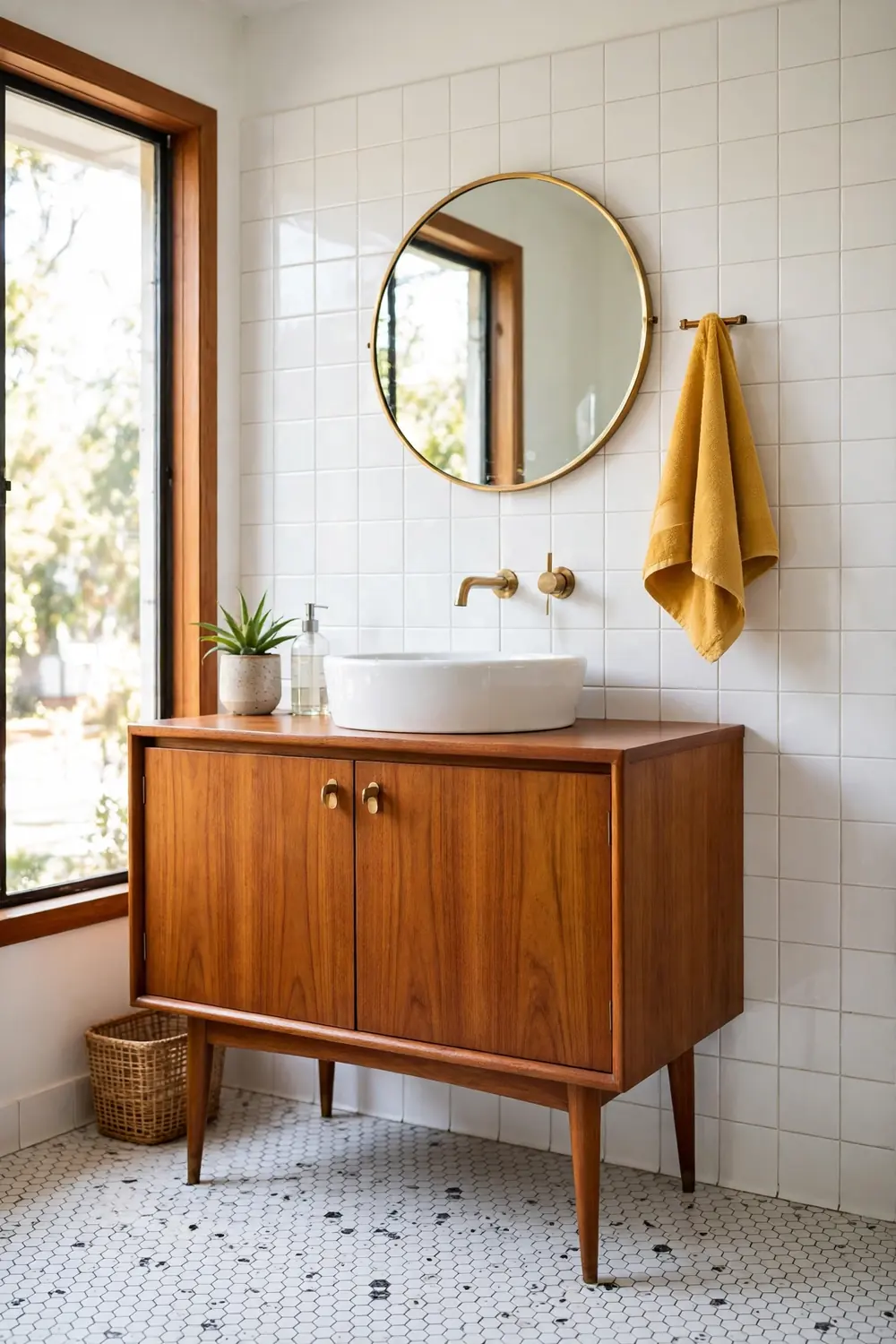
The mid-century vanity is a low, warm timber unit, often floating or standing on splayed tapered legs. It warms up a tiled room instantly, and its drawers quietly solve the storage problem the Victorians ignored.
Timber and bathrooms need a truce, though. Choose a vanity made or properly sealed for wet areas, and keep the exhaust fan habit strong, because standing steam is what ages timber fastest.
Quick facts — teak-toned, low and leggy · the best storage of any era here · only buy timber rated or sealed for bathroom use.
11. Globe lights and a round mirror
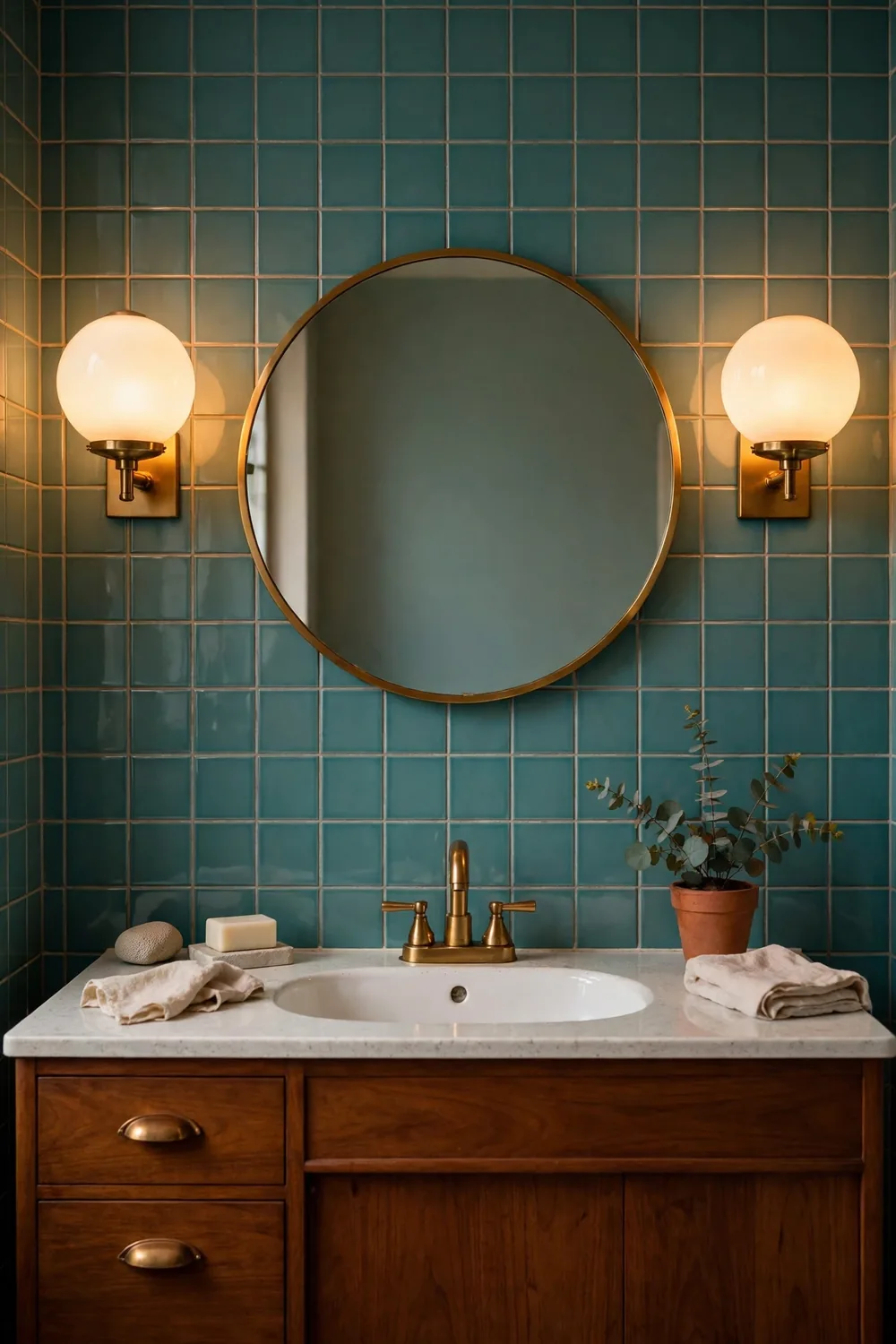
Opal glass globe lights are mid-century’s signature glow, on the wall or hanging as pendants. Paired with a big round mirror — or a starburst frame if you want the full atomic look — the combination refreshes a vanity wall without touching a tile.
It is also one of the cheapest era changes on this list, because it is all above the bench. As with any bathroom lighting, fittings must suit wet-area use and an electrician does the installation.
- Light — opal globes, warm white
- Mirror — round for calm, starburst for drama
- Best for — a dated vanity wall that needs one strong idea
12. Terrazzo-look surfaces
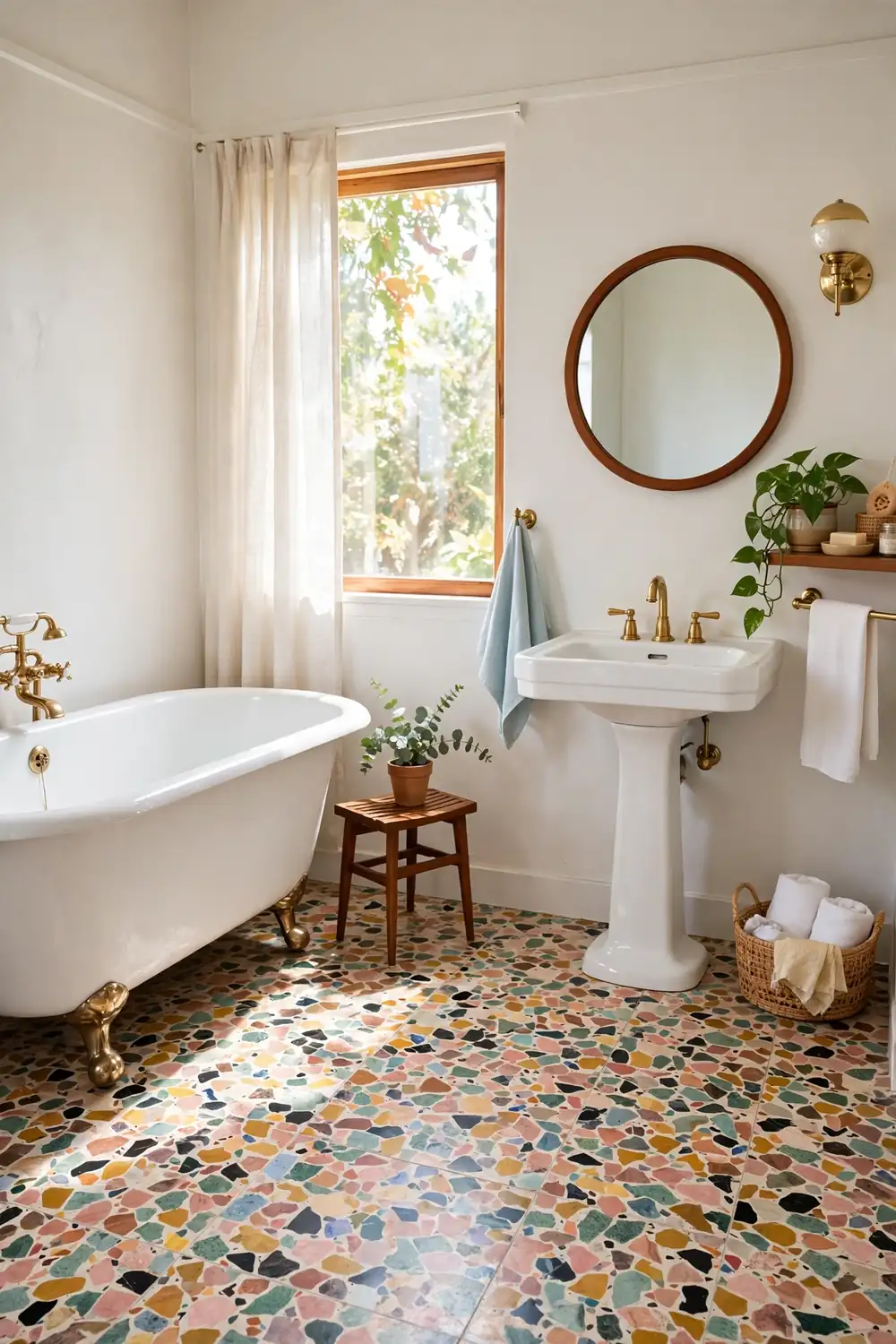
Real terrazzo was the hard-wearing hero of mid-century floors and benches, all chips of stone in cheerful colours. It is heavy and belongs in a proper renovation, but large-format porcelain tiles now copy it convincingly at a weight any floor can take.
Use it on one surface only — floor or bench, not both — and let plain tiles do the rest. The chips bring enough pattern on their own.
- Where — floor first; it hides a multitude of sins
- Effort — renovation for real terrazzo; a tile job for the porcelain lookalike
- Watch out — busy terrazzo plus busy walls is a fight nobody wins
Any era — the low-commitment ones
You do not have to renovate to get the feeling. These two ideas borrow retro character at accessory level, which makes them the natural starting point for renters and the undecided.
13. Swap-in retro accessories
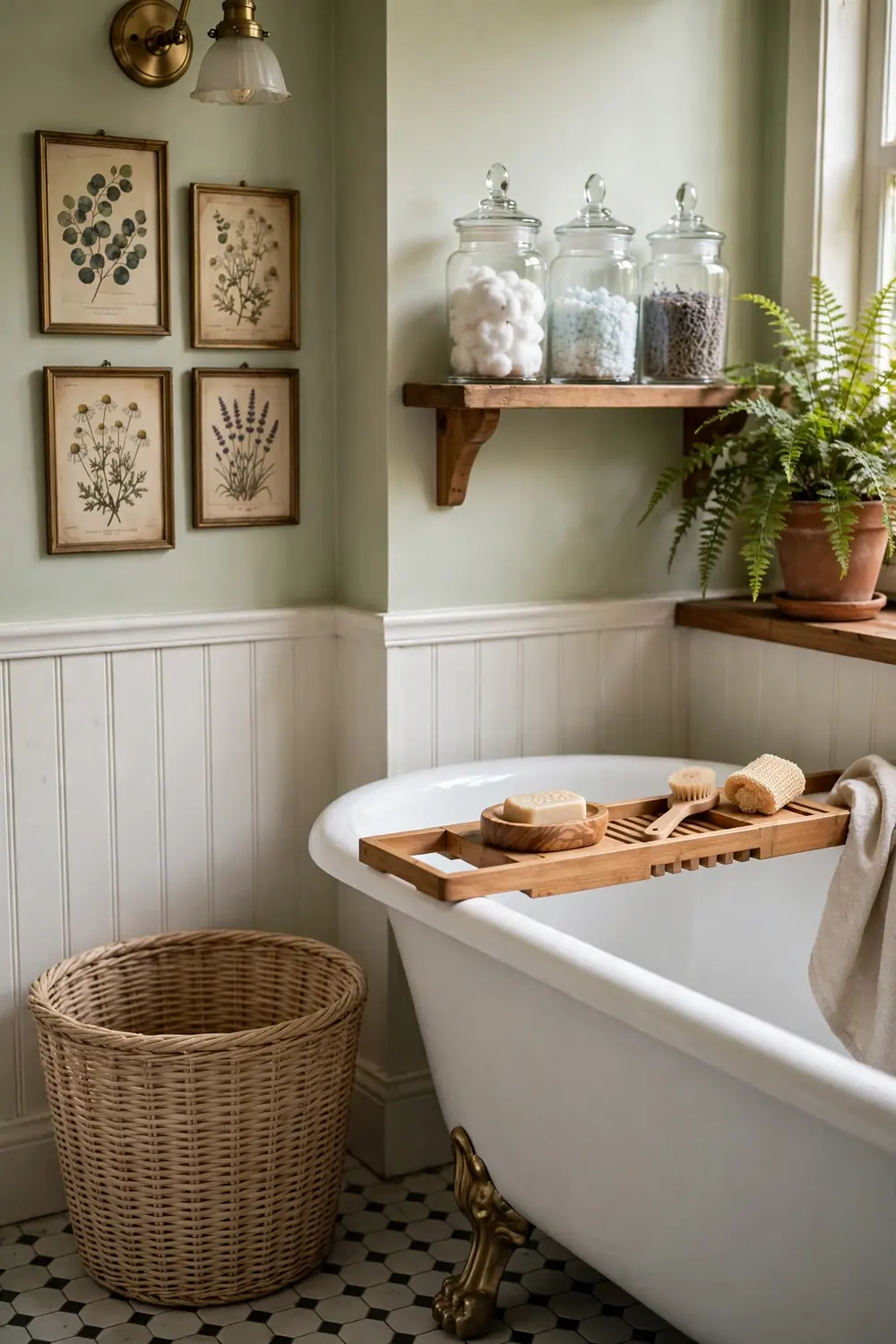
Glass apothecary jars, a woven laundry basket, framed vintage-style prints kept away from splash zones, a timber bath caddy, plants in ceramic pots. None of it is fixed, all of it photographs beautifully, and it can move house with you.
Work in one era’s colours so the collection reads as a decision rather than a jumble sale. Two or three pieces in the same accent colour will do more than ten unrelated finds.
- Add — apothecary jars, woven basket, framed prints, timber caddy
- Skip — actual vintage electrical items; keep old pieces decorative only
- Effort — an afternoon, and fully reversible
14. Peel-and-stick patterned floor tiles
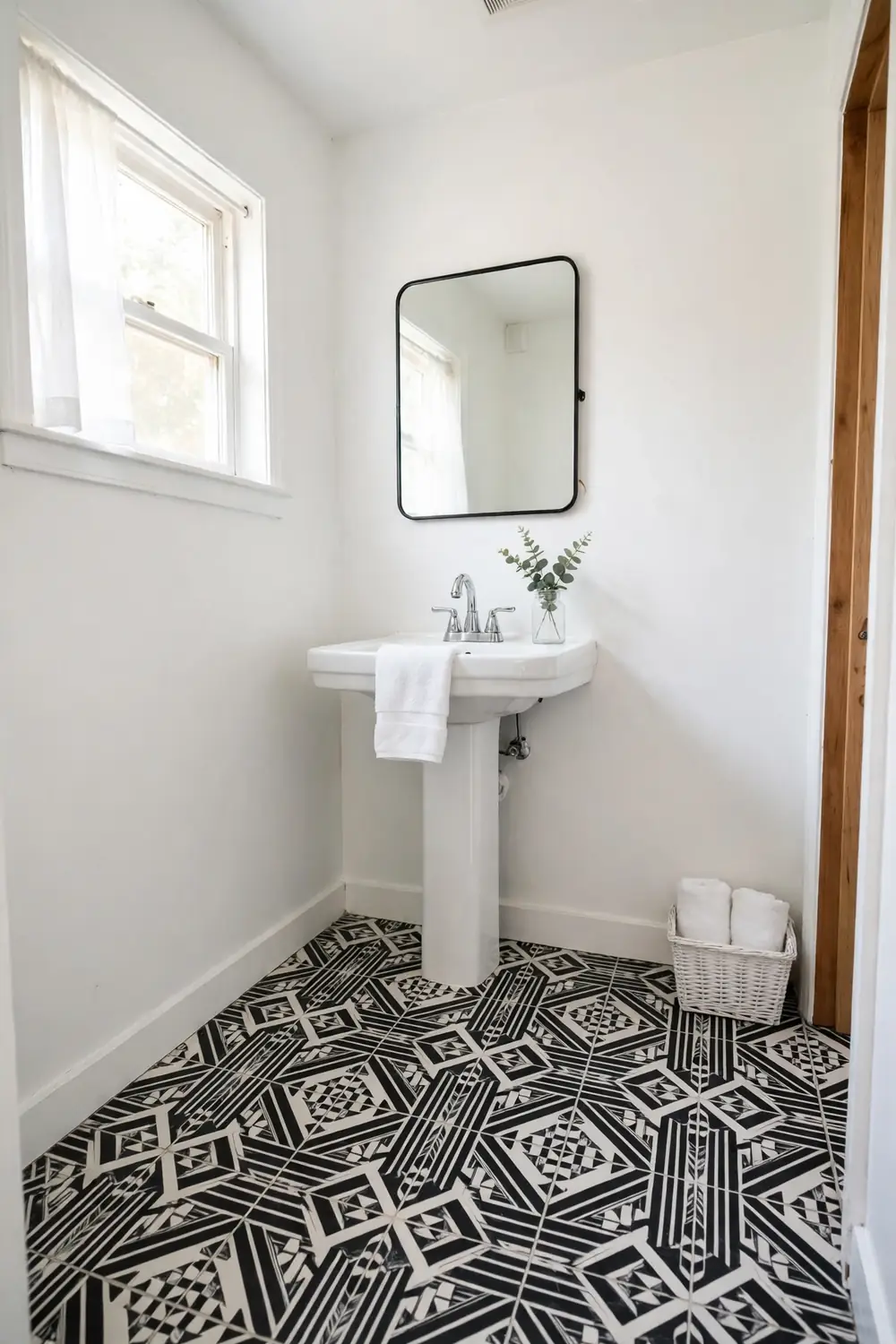
Peel-and-stick tiles in a checkerboard or Deco pattern can cover a tired rental floor in an afternoon and come up again when you leave. They are the renter’s version of ideas 2 and 4.
Keep them out of the shower recess and away from standing water, because the seams are not waterproofing. Check your lease before you start, and lift one corner after a month to make sure the adhesive and your floor are still friends.
At a glance — effort: an afternoon · suits: renters and trial runs · watch out: dry floor areas only, never inside the shower.
Making retro work in an Australian bathroom
A few local realities decide whether a retro bathroom ages gracefully here.
Licensed trades are not optional. In Australia, plumbing and electrical work must be done by licensed tradespeople, and in most states waterproofing has to be done by a licensed waterproofer as well. Vintage looks do not change those rules, so budget the tradies into any idea that touches pipes, wires or waterproofing.
Respect the asbestos years. Many Australian bathrooms built or renovated before 1990 contain asbestos cement sheeting in walls and wet-area linings. Do not drill, cut, sand or rip out old bathroom sheeting yourself. If you suspect it, get it tested and use licensed removal where it is needed.
Source smart. Reproduction ranges from Australian bathroom suppliers cover most looks on this list, and salvage yards and online marketplaces are rich hunting for genuine pieces. Have your plumber check secondhand tapware and fittings before you build a plan around them, because old fittings and modern pipework do not always agree.
Keep the invisible parts modern. Use modern valves, cartridges and seals behind vintage-style faces, and run a good exhaust fan every shower. Retro bathrooms predate decent ventilation, and mould is the one vintage feature nobody wants back. On that point, the looks that survive are the ones chosen for how you live — this site’s take on bathroom trends that actually last makes the same argument from the other direction.
Rules that stop retro tipping into dated
- One era per room. Pick your decade and let the rest support it. Mixed eras read as indecision.
- Stop at two hero pieces. A clawfoot bath and a checkerboard floor is a statement. Add coloured tiles, brass and a starburst mirror and it becomes a theme park.
- Keep one metal family. Chrome with chrome, brass with brass. Two finishes can work, three is a crowd.
- Light for 2026, not 1956. Period-style fittings, modern brightness. Nobody’s makeup or shaving improves in authentic gloom.
- Ventilate like a modern. The fan matters more than any fixture on this page.
- Test bold colour small first. A basin or a painted vanity can be changed. A room of pink tiles is a marriage.
Quick picks, by effort
- Renting — swap-in accessories (idea 13), peel-and-stick floor on dry areas (idea 14), chrome and glass accents (idea 6)
- A weekend plus one tradie visit — a stepped mirror and sconces (idea 5), globe lights and a round mirror (idea 11), a coloured basin (idea 3)
- Full renovation — checkerboard or geometric floors (ideas 2 and 4), pastel wall tiles (idea 1), a clawfoot bath (idea 7), terrazzo (idea 12)
Pick the era that suits your house, steal its two best pieces, and leave the rest of the room calm. Retro done that way does not date — it settles in.


