Your last plant probably didn’t die because you forgot it for a week. It died in January — cooked behind a west-facing window, dried out by the air-conditioning, or left alone while everyone was at the beach.
If that sounds familiar, the problem was almost never you. It was the match. A thirsty plant in a dark room is dead before you start, no matter how carefully you water it.
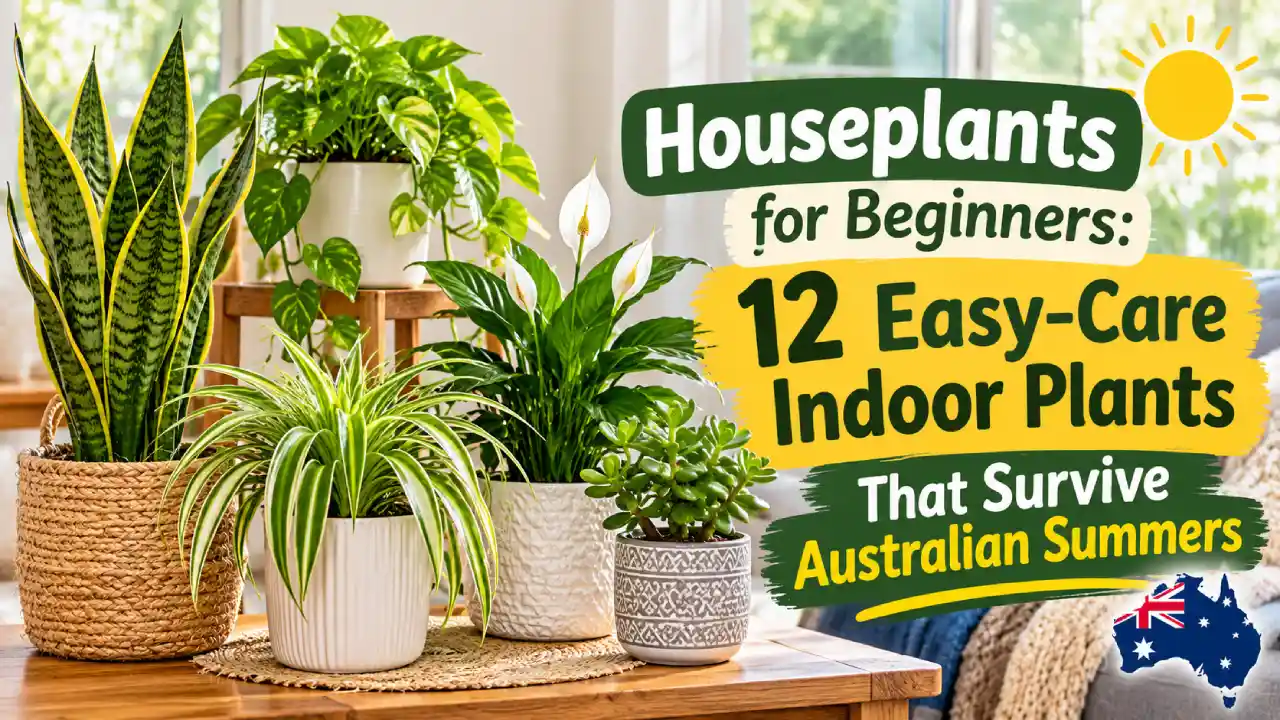
So this guide works the other way around. It shortlists 12 easy-care indoor plants for Australian summers — the kind people call hard to kill. They store water, forgive missed waterings and cope with heat, bright glass and holiday neglect, and they sit side by side in one table with light, water and pet-safety needs spelled out, plus quick picks for dark rooms, pet homes and holidays.
Before you choose, run two checks. Which way does the window face, and how often will you honestly water? Match the plant to those two answers, and summer largely takes care of itself.
First, three things that decide whether any houseplant survives summer
Light works differently here. In Australia the midday sun comes from the north, so a north-facing window is your brightest spot and a west-facing one is the harshest. Afternoon sun through glass can scorch leaves in a single 38-degree day.
When nurseries say “bright, indirect light”, they mean near a window but out of the direct sunbeam — blinds or a sheer curtain do the filtering for you.
Air-conditioning dries the air. It won’t kill the tough plants on this list, but don’t sit pots directly in the cold blast, and expect the soil to dry unevenly.
Summer watering is about checking, not schedules. Heat makes pots dry faster, yet overwatering in a hot, still room rots roots just as quickly. Push a finger 3–4 cm into the mix before you reach for the watering can.
Dry means water thoroughly. Still damp means walk away. Treat every watering interval in this article as a starting point rather than a rule, because pot size, potting mix, light and room temperature all change it. The finger test always wins.
What to put it in — the part beginners skip
A good plant in the wrong pot still dies, and the usual culprit is water with nowhere to go.
Whatever you choose from the list below, it needs a pot with a drainage hole. That part is non-negotiable. Fill it with a quality indoor potting mix that drains freely rather than garden soil, which compacts and stays wet.
The simplest setup is to keep the plant in its plastic nursery pot, sit that inside a decorative pot with no hole, and lift it out to water at the sink. Repotting can wait until spring, and then only go one size up, and only when roots are crowding out of the drainage holes.
The 12 plants
Every plant on the list, side by side:
| Plant | Summer light | Water when | Safe for pets? |
|---|---|---|---|
| Snake Plant | Bright through to low | Mix fully dry, roughly every 2–3 weeks | No |
| ZZ Plant | Bright indirect through to low | Mix fully dry | No |
| Devil’s Ivy | Bright indirect to medium | Top of the mix dries; leaves soften when thirsty | No |
| Spider Plant | Bright indirect | An occasional thorough drink | Yes |
| Cast Iron Plant | Low to medium | Sparingly, once dry | Yes |
| Ponytail Palm | The sunniest indoor spot | Deeply but rarely | Yes |
| Rubber Plant | Bright indirect | Keep lightly moist | No |
| Monstera | Bright indirect | Top few centimetres dry | No |
| Heartleaf Philodendron | Medium to bright indirect | Top of the mix dries | No |
| Aloe Vera | The brightest spot you have | Bone dry, roughly every 2–3 weeks | No |
| Jade Plant | Sunny windowsill | Mix fully dry | No |
| Peace Lily | Medium to bright indirect | Keep moist; it droops when thirsty | No |
1. Snake Plant (Sansevieria)
More snake plants die from overwatering than from neglect, which tells you most of what you need to know.
The stiff, upright leaves hold water in reserve, so a forgotten fortnight barely registers. The plant also handles everything from bright light to a dim hallway without complaint.
- Light — anything from bright to low
- Water — only once the mix is fully dry; every 2–3 weeks in summer
- Pets — toxic if chewed, so keep the pot out of reach
2. ZZ Plant (Zamioculcas zamiifolia)
Under the soil, a ZZ plant keeps fat rhizomes full of stored water. That hidden tank is why it survives office desks and dark corners while you are away over summer.
Bright indirect light keeps it growing fastest, but low light only slows it down rather than killing it.
At a glance — water sparingly and only once the mix has fully dried; toxic if eaten, so place it where curious pets can’t graze.
3. Devil’s Ivy (Epipremnum aureum)
You have seen this one trailing out of a hanging pot in half the cafés in Australia.
It grows quickly in summer warmth and is honest about thirst. The leaves soften and droop a little, then stand back up within hours of a drink. When a stem gets long, snip it, stand the cutting in a jar of water, and within a few weeks you have a second plant for free.
- Sun — bright indirect is ideal; medium light will do
- Drink — when the top of the mix dries out
- Good to know — toxic to pets if chewed, so shelves and hanging pots are its natural home
4. Spider Plant (Chlorophytum comosum)
Start here if you have cats or dogs.
The spider plant shrugs off irregular watering and throws out dangling baby plantlets that you can snip off, pot up and give away.
- Best for — pet homes; it is non-toxic to cats and dogs
- Light — bright indirect
- Water — an occasional thorough drink through summer
Brown tips on the leaves look alarming but usually just mean dry air or stop-start watering. Cosmetic, not fatal.
5. Cast Iron Plant (Aspidistra)
Victorian parlours had no heating, no cooling and very little light, and this plant thrived in them anyway. That is how it earned its name.
It is the pick for the lowest-light spot in the house, the dim corner where most other plants give up. Growth is slow, and if everything else has failed in a dark room, try this one and then mostly leave it alone.
- Needs — low to medium light; the strongest low-light plant on this list
- Watering — minimal, even in the middle of summer
- Pets — non-toxic to cats and dogs
6. Ponytail Palm (Beaucarnea recurvata)
Not a palm at all, despite the name. It is a desert succulent, and the swollen trunk at its base works as a water tank.
That trunk is why it can go weeks between drinks in summer. Give it the sunniest indoor spot you have, because it is one of the few houseplants that genuinely enjoys strong light, then water deeply but rarely.
Quick facts — sunniest spot in the house · water deeply, weeks apart · considered pet-safe, although cats find the arching leaves very hard to leave alone.
7. Rubber Plant (Ficus elastica)
Summer is this plant’s growing season, and a warm room suits it.
The big, glossy leaves repay a little attention. Wipe the dust off them about once a month, because dust blocks the light the plant is trying to use. A spot set back from a north-facing window is ideal.
- Light — bright indirect
- Water — keep the mix lightly moist, never soggy
- Watch out — the milky sap is an irritant, so wash your hands after pruning and keep it away from pets that chew leaves
8. Monstera (Monstera deliciosa)
The monstera looks like a high-maintenance statement plant and behaves like the opposite. It is also the plant most people picture in biophilic home design schemes.
Warmth speeds it up, so through summer it grows quickly. Give the stems a moss pole or any sturdy support to climb and the leaves will grow larger and start to split.
- Position — bright indirect light; keep it back from west-facing glass, because those big leaves scorch fast
- Water — when the top few centimetres of mix have dried
- Pets — toxic if eaten
9. Heartleaf Philodendron (Philodendron hederaceum)
Think of this as devil’s ivy’s quieter cousin.
It trails happily from shelves and hanging pots and bounces back from a missed watering without sulking. Cuttings root almost as easily as pothos cuttings do. The ‘Brasil’ variety, with its lime-green stripe, needs the brighter end of the range to keep its colour.
- Sun — medium to bright indirect
- Water — when the top of the mix dries; forgiving if you miss one
- Note — toxic to pets if chewed, so hang it high
10. Aloe Vera
Aloe earns its bench space in an Australian summer, because the gel inside its leaves is a long-standing home remedy for minor sunburn.
Treat that gel as comfort care rather than a medical treatment. Patch-test it first, because the yellow latex just under the skin irritates some people, and see a pharmacist or doctor for anything serious.
- Light — the brightest spot you have, with a gritty, free-draining mix
- Water — a soak every 2–3 weeks in summer, and only once the mix is bone dry
- Pets — toxic to cats and dogs if eaten, so keep the pot where they won’t graze
11. Jade Plant (Crassula ovata)
A slow, sturdy succulent that can live for decades on a sunny windowsill.
It stores water in its fat leaves and needs almost nothing through summer. An excellent first plant for a bright kitchen window.
Quick facts — sunny sill · one deep water once the mix has dried completely · mildly toxic to pets if eaten, so choose a sill they can’t reach.
12. Peace Lily (Spathiphyllum)
The peace lily is a drama queen, and usefully so.
When it needs water the whole plant droops, dramatically, then stands back up within hours of a drink. No other common houseplant teaches watering judgement as clearly, which is why beginners learn fast with one in the house. It also appreciates bathroom humidity.
- Light — medium to bright indirect
- Water — keep the mix consistently moist rather than wet
- Safety — all parts are toxic if eaten; keep away from pets and small children
Summer care rules that apply to all of them
- Water in the morning so leaves dry before the heat of the day, and always tip out the saucer afterwards. No plant on this list wants wet feet.
- Pull pots back from west-facing glass on extreme-heat days, or hang a sheer curtain. Leaves burn through glass faster than most people expect — one reason homeowners look at low-e glass for west-facing rooms.
- Going away? Group the pots together in the bath on a wet towel and water deeply before you leave. The water-storing plants on this list — snake plant, ZZ plant, ponytail palm, jade and aloe — will handle about two weeks that way. Thirstier plants like the peace lily, spider plant and philodendron will want a top-up sooner in hot weather. For longer trips, a self-watering pot or a neighbour with one simple instruction (“only water the peace lily”) beats a complicated schedule.
- Feed lightly in the growing season. Half-strength liquid fertiliser once a month through spring and summer is plenty for these plants. Skip it entirely in winter.
- Watch for the real summer killers. Soggy mix in a hot room brings root rot. A sudden move from shade into full sun scorches leaves. A pot baking on a hot windowsill cooks roots. All three are placement problems rather than care problems, so fix the spot and the plant recovers.
- Check for pests while you water. Fungus gnats breed in mix that never dries out, so letting the top layer dry between waterings keeps them away. Mealybugs show up as small white cottony clusters on stressed plants. Catch them early, isolate the plant and wipe them off with a damp cloth.
Quick picks
- Dark room — cast iron plant, ZZ plant, snake plant
- Sunny windowsill — ponytail palm, aloe vera, jade plant
- Pet-friendly — spider plant, cast iron plant, ponytail palm
- Going on holidays — snake plant, ZZ plant, ponytail palm
- Fast results — devil’s ivy, heartleaf philodendron, monstera
Questions beginners ask
What is the easiest indoor plant for an apartment?
The snake plant — the lowest-maintenance plant on this list. It tolerates low light, small pots and long gaps between waterings, which covers most apartment problems in one plant. The ZZ plant runs it close for the same reasons.
Which indoor plants are safe for cats and dogs?
From this list, the spider plant, cast iron plant and ponytail palm are non-toxic to cats and dogs. For any plant not listed here, check the ASPCA toxic and non-toxic plant list before buying, because common names can mislead.
What indoor plants grow in low light?
The cast iron plant is the strongest low-light performer here, followed by the ZZ plant and snake plant. Low light slows growth rather than killing these three, but no plant survives a room with no natural light at all.
How often should I water indoor plants?
There is no honest fixed schedule, because pot size, mix, light and temperature all change the answer. Use the finger test — water thoroughly when the top 3–4 cm feel dry, then wait — and treat the intervals in the table above as starting points for summer.
Do indoor plants really purify the air?
Not in any way you would notice at home. The often-quoted NASA research used sealed test chambers, and at normal household plant counts the effect on room air is negligible. Open a window for fresh air, and choose plants for how they look and how they make the room feel.
Start with two or three that suit your light, learn how they behave through one summer, and build from there. The same water-storing logic works outdoors too, in drought-resistant plants for low-maintenance landscaping. Easy-care doesn’t mean no care. It means the plant meets you halfway.