
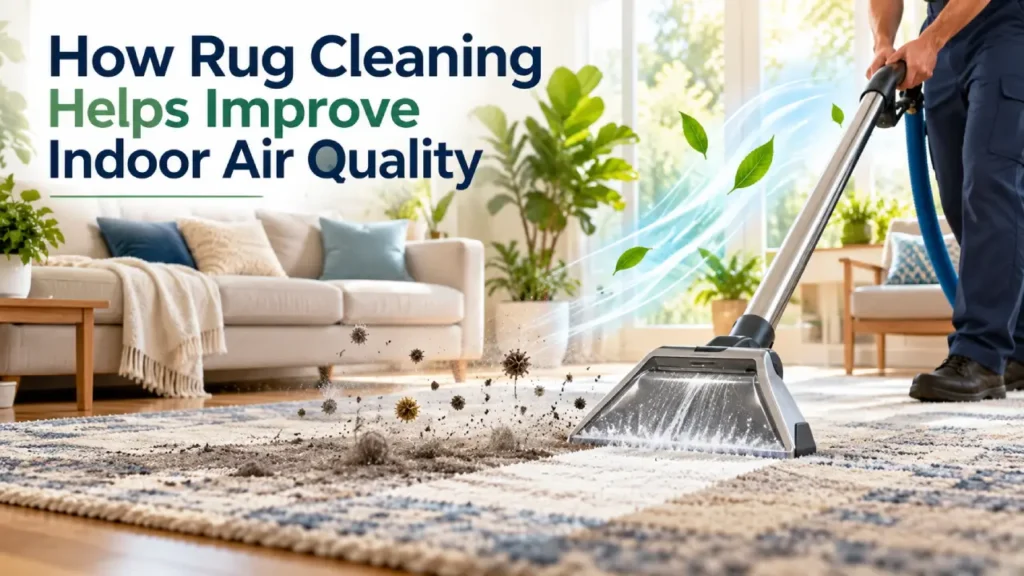
A rug can look tidy while holding more dust than you realise. Fine dirt settles between the fibres, pet hair works its way into the pile, and everyday spills leave residues that a quick vacuum may miss.
For Australian households, rug cleaning is about more than keeping the living room presentable. Removing accumulated dust and managing moisture can help support better indoor air quality. The difference comes from how the rug is cleaned, how thoroughly it dries and how it is maintained afterwards.
What Collects Inside Your Rugs?
Rugs sit where daily life happens. Shoes cross them, pets sleep on them, and children use them as a comfortable place to play. Over time, their fibres collect material from both inside and outside the home.
This can include:
- Dust and fine soil carried in on footwear.
- Pollen brought indoors on clothes and pets.
- Pet hair and dander.
- Food crumbs and dried spill residues.
- Dust mite allergens.
- Moisture from spills, leaks or wet cleaning.
Some of this material stays within the rug until it is removed. Walking across the pile, moving furniture or disturbing a dusty rug can release particles back into the surrounding air.
How Rug Cleaning Can Support Better Indoor Air
-
Removes Accumulated Dust
Regular cleaning removes dust from a surface where it would otherwise continue to build up. This matters particularly in busy rooms, where rugs receive constant foot traffic.
Vacuuming is an important first step. A well-maintained vacuum with effective filtration helps collect particles, while a HEPA filter can reduce the amount of fine dust escaping through the machine’s exhaust. Slow, overlapping passes are generally more useful than rushing over the surface.
-
Helps Reduce Allergen Build-Up
Rugs can hold pollen, pet dander and dust mite allergens. Cleaning can reduce this accumulated material, although it does not make a home allergen-free or guarantee relief from asthma or allergy symptoms.
Cleaning itself can temporarily stir up dust. Asthma Australia recommends that, where possible, someone without asthma or dust mite allergies carries out dusty cleaning tasks. Sensitive household members should avoid the immediate area while this work takes place.
-
Addresses Residues Behind Unpleasant Smells
Food spills, pet accidents and everyday grime can leave a rug smelling stale. Spraying fragrance over the area may cover the smell temporarily, but the original residue remains.
Suitable cleaning targets the material causing the odour. However, a fresher smell should not be treated as proof of cleaner air. A rug can smell pleasant and still contain dust, just as some indoor pollutants have little noticeable smell.
-
Helps Manage Moisture When Done Correctly
Moisture control is essential to good indoor air quality. A rug that stays damp after a spill or cleaning can create conditions that support mould growth, particularly if moisture becomes trapped underneath it.
Effective rug care therefore includes drying the pile, backing and underlying floor. Cleaning without adequate drying can introduce a new problem instead of resolving the original one. The US Environmental Protection Agency identifies moisture control as a key part of managing indoor biological contaminants.
Why the Cleaning Method Matters
There is no single cleaning method suitable for every rug. Wool, cotton, synthetic fibres, silk and blended materials can respond differently to water, heat, agitation and cleaning products.
The rug’s construction matters too. A method that suits a durable synthetic rug may damage delicate fibres, unstable dyes or an adhesive backing.
For homeowners considering professional rug cleaning in Perth, it helps to discuss the rug’s material, condition and care instructions before choosing a treatment. Mention pet accidents, previous cleaning attempts and any sensitivity to fragrances so these can inform the cleaning plan.
A useful assessment should consider:
- Fibre type and manufacturer’s instructions.
- Colourfastness and existing damage.
- The amount of embedded soil.
- Stains, odours and previous treatments.
- Drying conditions and expected drying time.
Everyday Rug Care and Deeper Cleaning
Regular home maintenance and occasional deeper cleaning serve different purposes. Neither should be judged only by how bright the rug looks afterwards.
| Rug care task | What it helps address | Important consideration |
| Routine vacuuming | Loose dust, hair and surface debris | Use suitable attachments and maintain filters |
| Cleaning beneath the rug | Dust and grit on the floor and underlay | Check for hidden dampness |
| Prompt spill treatment | Liquid and residues before they spread | Blot gently and follow the care label |
| Suitable deeper cleaning | Soil and residues beyond routine vacuuming | Match the method to the rug’s fibres and construction |
| Thorough drying | Moisture remaining after cleaning | Check the backing as well as the surface |
| Reducing tracked-in dirt | Soil entering from outdoors | Use entrance mats and remove outdoor shoes |
How Often Should You Clean Your Rugs?
The right routine depends on how the rug is used. A hallway runner in a home with pets needs different attention from a decorative rug in a rarely used room.
Vacuum regularly, giving busy areas more attention. Follow the manufacturer’s guidance for deeper cleaning, and arrange an assessment when routine care is no longer removing the build-up.
Reasons to review your cleaning routine include:
- Grit remaining in the pile after vacuuming.
- Persistent odours.
- Repeated spills or pet accidents.
- Noticeable dirt beneath the rug.
- Heavy use during renovations or household changes.
Do not wait for a scheduled clean if a rug becomes wet from a leak or flooding. Identify the moisture source and seek advice about safe treatment and drying.
Simple Habits That Keep Rugs Cleaner Between Visits
Stop Dirt at the Entrance
Place mats near entry doors and encourage family members to leave outdoor shoes at the entrance. This reduces the amount of soil carried through the home.
Look After Your Vacuum
Empty the dust container or replace bags as directed. Clean or replace filters according to the manufacturer’s instructions, and check the head for tangled hair.
Clean Underneath the Rug
Lift the rug periodically to clean the floor below it. Check the underlay and backing for moisture, especially after spills or wet weather.
Avoid Over-Wetting Spills
Blot liquids with a clean, absorbent cloth. Avoid soaking the area or repeatedly adding products, which can spread the stain and make drying more difficult.
Choose Products Carefully
Use products approved for the rug material and follow the stated dilution. More detergent does not necessarily produce a better result. Discuss fragrance-free options if strong scents bother anyone in the household.
Rug Cleaning Is One Part of Better Indoor Air Quality
Clean rugs help reduce one reservoir of household dust, but other sources still need attention. Cooking emissions, smoking, dampness and poorly maintained appliances can also affect the air indoors.
A broader approach includes controlling pollution sources, managing moisture and providing suitable ventilation. Open windows when outdoor air conditions are suitable; during bushfire smoke or high-pollen conditions, follow local air quality advice. The EPA recommends combining source control, ventilation and, where appropriate, air filtration.
Give Your Rugs Care That Goes Beyond Appearance
A rug does not need a visible stain to benefit from attention. Regular vacuuming, suitable deeper cleaning and complete drying help manage the dust and residues that collect through everyday use.
If your rug remains dusty, smells stale or needs more care than routine vacuuming can provide, contact Elite Carpet Dry Cleaning Perth to discuss its condition and suitable cleaning options.
